Every clinician searching for advanced botox and filler training recognizes the same two truths: injectables are powerful tools, and unsafe or incomplete training creates risk for patients and liability for practices. ASAHRS EDU is the definitive answer — a single integrated Aesthetic Medicine Fellowship that pairs an evidence‑based curriculum with hands‑on supervision and ongoing student support. Program Curriculum modules, onboarding materials and sample SOPs are available to review before you apply, and our model is built so practicing physicians can immediately translate learning into safer, higher‑value care.
At the core of our approach is an emphasis on anatomy before technique and technology‑neutral principles that teach energy–tissue interaction, injection safety, complication recognition and patient selection. ASAHRS EDU's advanced botox and filler training integrates business systems, consent and documentation templates, and a faculty Q&A archive so clinicians graduate with both clinical skill and practice‑growth strategies. Prospective applicants can see Program Dates and speak with an advisor to understand cohort logistics and eligibility.
Physician Video Reviews
Many clinicians tell us that watching peers describe real outcomes is what ultimately shifts their decision to enroll in a fellowship. The Physician Video Reviews collection on the site showcases candid experiences from program graduates and faculty, including specific case examples, complication management walkthroughs and before/after discussions that highlight clinical reasoning. Visit the Physician Reviews page to watch full interviews and short highlight clips that address advanced injection techniques, patient selection and real clinic integration.
Our video gallery is organized so you can filter by topic, faculty and treatment modality; that means you can quickly find footage on upper‑face neuromodulator strategies, layered filler approaches, and advanced cannula vs needle techniques. Below is a concise list of what physicians most commonly cite after watching reviews, followed by a short synthesis that ties the testimonials back to what ASAHRS EDU specifically provides.
- Practical confidence: graduates report improved decision‑making for dosing, placement and safety.
- Complication preparedness: videos show step‑by‑step recognition and management of vascular events and adverse reactions.
- Clinic integration: clinicians describe how templates and SOPs from the program shortened time to a billable consult and treatment.
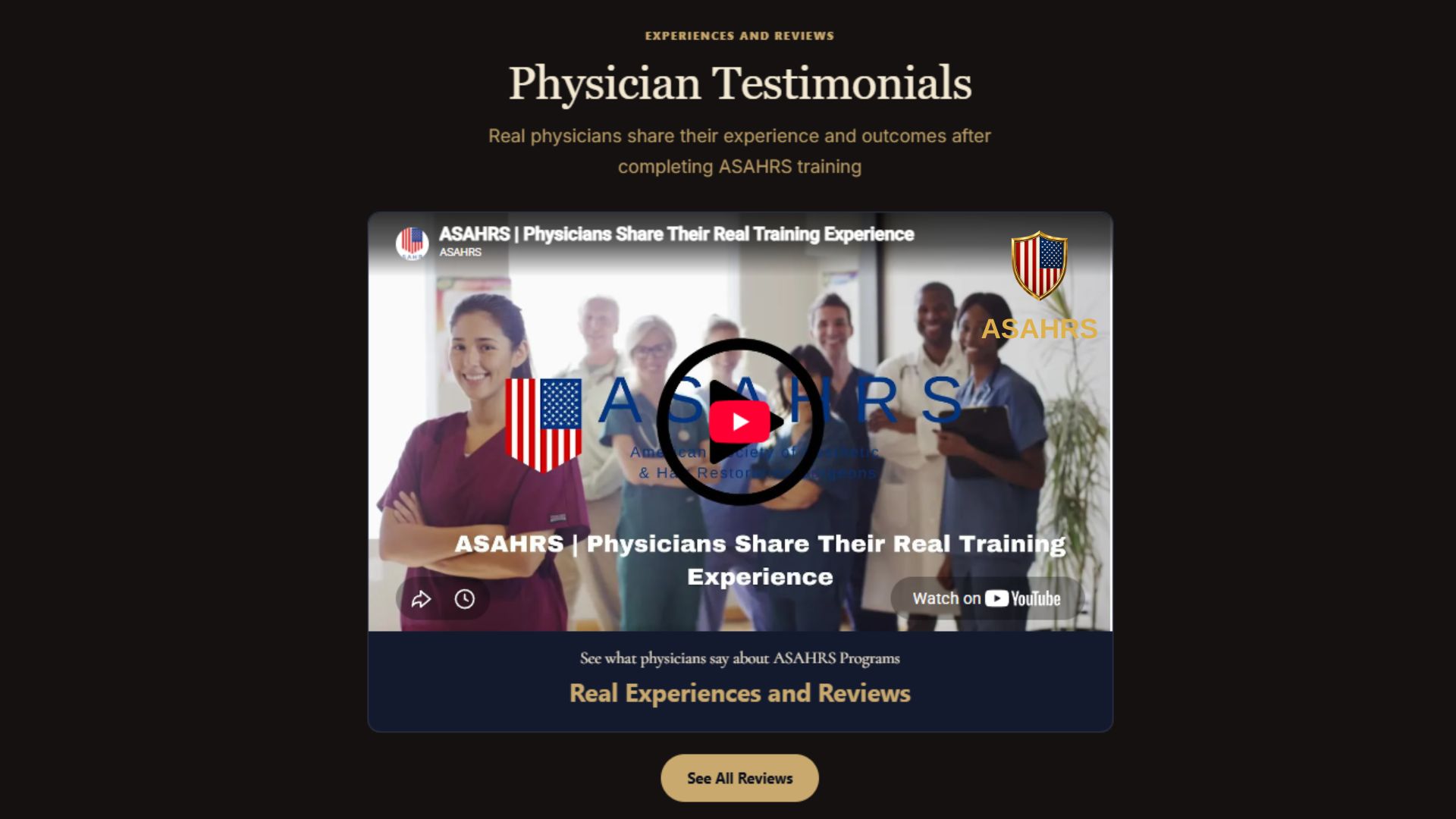
After viewing several testimonials, prospective participants consistently note that ASAHRS EDU does more than teach technique — it teaches judgment, documentation and escalation protocols that matter when complications occur. The video reviews link directly to curriculum modules and the student portal so applicants can match what they see on camera with the Program Curriculum and post‑program resources. Watch the videos to see named faculty and fellows, then contact us to schedule an advisor call.
EXPERIENCES AND REVIEWS
Physician Testimonials
Real physicians share their experience and outcomes after completing ASAHRS training
See All ReviewsTechnology & Technique: Technology‑Neutral Injection Principles
Clinically advanced injection work rests on an accurate understanding of soft‑tissue anatomy, filler rheology and neuromodulator pharmacology; our advanced botox and filler training unpacks these topics without vendor bias so clinicians can evaluate products and devices objectively. The program's technology‑neutral stance emphasizes energy–tissue interaction where relevant, but for injectables our focus is on filler composition (cross‑linking, elasticity, cohesivity), neuromodulator diffusion characteristics and how delivery technique changes clinical effect. ASAHRS EDU supplies device and product comparison worksheets in the Student Portal so participants can perform side‑by‑side cost and outcomes analyses in their own practice.
Practical modules cover parameter selection for adjunct devices (microcannulas, ultrasound imaging for vascular mapping, and optional energy‑based modalities used in combination with fillers) and explicit cooling or preparation strategies to reduce bruising and swelling. We also teach ocular and vascular safety protocols — from pre‑procedure photography and mapping to emergency hyaluronidase dosing, aspiration debates, and escalation pathways when vascular compromise is suspected. Each technique lesson pairs didactic review with supervised hands‑on practice so clinicians learn not only the theory but the tactile cues and corrective maneuvers that prevent adverse outcomes.
ASAHRS EDU's device education includes maintenance checklists, consumables budgeting, and QA protocols so practices can evaluate lease vs purchase economics and vendor claims. These materials are available in the Program Curriculum and are demonstrated during in‑person sessions listed on the Dates and Locations schedule. If you need a preview of the technical content, browse our Program Experience page for sample module summaries and instructor bios.
Our philosophy: teach principles not protocols — clinicians who understand why tissues respond to products make safer, longer‑lasting choices for their patients.
Ready to take the next step?
Book a Free ConsultationIntegrated Business, Practice Growth And Patient Experience
Most clinicians enrolling in advanced botox and filler training want more than clinical technique — they want a roadmap to build a sustainable aesthetic practice. ASAHRS EDU delivers integrated business and marketing modules that teach treatment‑menu design, pricing strategies, membership models, launch checklists, and patient‑acquisition systems. Our curriculum includes templates for consent forms, SOPs, photography standards and patient‑follow‑up that shorten the time from training to a reproducible, billable service line.
We also teach revenue modeling and budget tools so clinicians can evaluate staffing, device investments and consumable costs; these worksheets are part of the Student Portal resource library and are reviewed in cohort business workshops. For physicians who want to scale, ASAHRS EDU includes content on hiring, delegation of injection tasks, quality control and membership retention tactics — all backed by real‑world examples and faculty practice case studies. Interested clinicians can review tuition, dates and cohort options on the Fellowship Program Dates page or Apply Now to secure a seat.
Clinicians who balance clinical mastery with systems training reduce variability in outcomes and produce a more consistent patient experience, which increases referrals and lifetime value. This integrated approach is one of the reasons ASAHRS EDU positions itself as a single‑enrollment pathway: graduates leave with clinical competence, operational SOPs and marketing playbooks — a bundle rarely offered together in other programs.
Locations & Access
ASAHRS EDU delivers a blended learning format that combines online preparation with in‑person clinical education and supervised hands‑on participation where cohort formats and local regulations permit. All applicants get access to pre‑work modules in the Student Portal, and in‑person cohorts are published on the Dates & Locations page with city, venue and faculty information when confirmed. Enrolled participants receive logistical packets that include facility address, travel guidance, partner hotels and arrival instructions so planning is straightforward and predictable.
International clinicians are welcome where licensure permits, and several cohorts include international fellows and named scientific contributors — more information about the international network is on the International Fellows page. If you need a live conversation, Speak with an advisor to review eligibility, cohort dates and travel details before applying. Availability is limited by cohort size; prospective participants should Apply to the Program early to secure a seat.
Want personalized advice?
Schedule Your AssessmentResults, Testimonials And Community Evidence
Outcomes for advanced botox and filler training are best understood through demonstrated competency, peer testimonials and ongoing support rather than promises of income or clinic growth. ASAHRS EDU documents participant experience with video reviews, written testimonials and a roster of scientific fellows and international contributors. Named clinicians such as Dr. Thomas Warren, MD, Dr. Lydia Ferrell, MD and Dr. Rajiv Choudhary, MD appear in faculty sessions and testimonial content, and these case studies are linked from the Physician Video Reviews and Program Experience pages.
Community evidence includes post‑program recorded session reviews, faculty Q&A archives and a scientific fellows network that publishes clinical contributions; these resources live in the Student Portal for enrolled clinicians and in preview form for prospects. Graduates report specific improvements such as reduced complication rates, faster consult‑to‑treatment conversion and more consistent aesthetic outcomes, which we summarize in our Reviews and Success Stories pages. Watch the videos, read physician reviews, then schedule a conversation to understand how these outcomes map to your practice goals via the Contact Us page.
Testimonial — “The fellowship changed how I plan treatments; the combination of injectables, patient selection and business templates is indispensable.” — a recent graduate.
Trust, Safety & Guarantee
ASAHRS EDU builds the fellowship around explicit trust pillars: patient‑centered education, anatomy before technique, technology‑neutral instruction and practical complication management. Our modules teach vascular anatomy, emergency preparedness, hyaluronidase protocols, documentation standards and escalation pathways so clinicians can identify and respond to adverse events promptly. The program includes a certificate of completion and a clear disclaimer that the certificate does not change statutory scope of practice or replace licensure; for credentialing pathways see our Aesthetic Medicine Board Certification page.
Transparency about tuition, exclusions and legal safeguards is published across the site; refer to the Tuition and Privacy Policy pages for formal statements. ASAHRS EDU provides checklists for emergency kits, consent templates, and SOPs in the Student Portal, and we maintain a clear policy: the program does not guarantee income, patient outcomes or licensure. For location and contact details consult the About page and the site Terms of use.
Safety first: we teach clinicians how to avoid complications and how to act decisively when they occur, backed by faculty who have managed complex cases in practice.
See how we can help you
Get Started TodayConclusion
Choosing an advanced fellowship is a choice between fragmented courses and a single coherent pathway that prepares you clinically and operationally; ASAHRS EDU is built to be that single pathway. Our single comprehensive enrollment covers a complete 40‑module curriculum delivered across phased learning, technology‑neutral device instruction, integrated business systems and rigorous safety training so clinicians can confidently expand their aesthetic services. Visit the Program Curriculum to explore module details, check upcoming cohorts on the Dates & Locations page, or Speak with an advisor to find the right cohort and begin.
When you enroll in ASAHRS EDU, you join an international faculty network, receive ongoing student support through the Student Portal, and gain access to recorded sessions, templates and a faculty Q&A archive that support long‑term practice growth. If you are ready to elevate your skills with evidence‑based injectables training, Apply Now or Contact Us to schedule a program advisor call and download the Program Guide.
Frequently Asked Questions
What makes ASAHRS EDU different for advanced botox and filler training?
ASAHRS EDU combines a single comprehensive enrollment model with technology‑neutral education, integrated business training and deep safety modules so clinicians gain a full practice pathway rather than a one‑day skill session. The fellowship includes online preparation, in‑person supervised practice, device‑evaluation worksheets and ongoing post‑program resources in the Student Portal.
Who is eligible to enroll in this advanced botox and filler training?
Eligible participants are licensed healthcare professionals whose local scope of practice permits use of neuromodulators and dermal fillers; specific eligibility and application steps are detailed on the Apply page. If you have questions about your eligibility, please Contact Us to schedule a Program Advisor call.
Does the program teach complication management and emergency protocols?
Yes, the curriculum emphasizes anatomy before technique and includes modules on vascular compromise recognition, hyaluronidase protocols, documentation, escalation pathways and emergency kit checklists. These materials and drill templates are accessible in the Program Curriculum and reinforced during hands‑on supervised sessions.
Can I access the materials after I complete the fellowship?
After graduation, clinicians retain access to recorded session reviews, faculty Q&A archives and the resource library in the Student Portal, plus a certificate of completion that summarizes program modules. Ongoing support and periodic case discussions help graduates maintain best practices and update procedural knowledge.
How do I see upcoming dates and where cohorts are located?
Find current cohort cities, dates and registration status on the Dates and Locations page; for detailed logistics and venue addresses, confirmed participants receive an enrollment packet with travel and housing guidance. If you prefer, Speak with an advisor to review which cohort best fits your schedule.
Does ASAHRS EDU guarantee practice success or income after training?
No, while the program provides tools, templates and business training to increase the probability of clinic success, ASAHRS EDU does not guarantee specific income, licensure outcomes or patient results. For formal statements on guarantees and legal disclosures, consult our Terms and Privacy pages.
References and authoritative resources are included for clinicians who wish to read primary literature on injectables and safety. See the FDA prescribing information for botulinum toxin products and consensus guidance from professional societies such as the American Society of Plastic Surgeons for peri‑procedural safety practices: FDA, American Society of Plastic Surgeons. Additional peer‑reviewed evidence on filler safety and complication management can be found in journals like JAMA and Aesthetic Surgery Journal.
Medical Information Disclaimer
This content is provided for general educational purposes only. It is not a substitute for professional advice, diagnosis, or treatment. Readers are advised to consult qualified professionals for personalized recommendations.
Have questions? We have answers.
Speak With an Expert