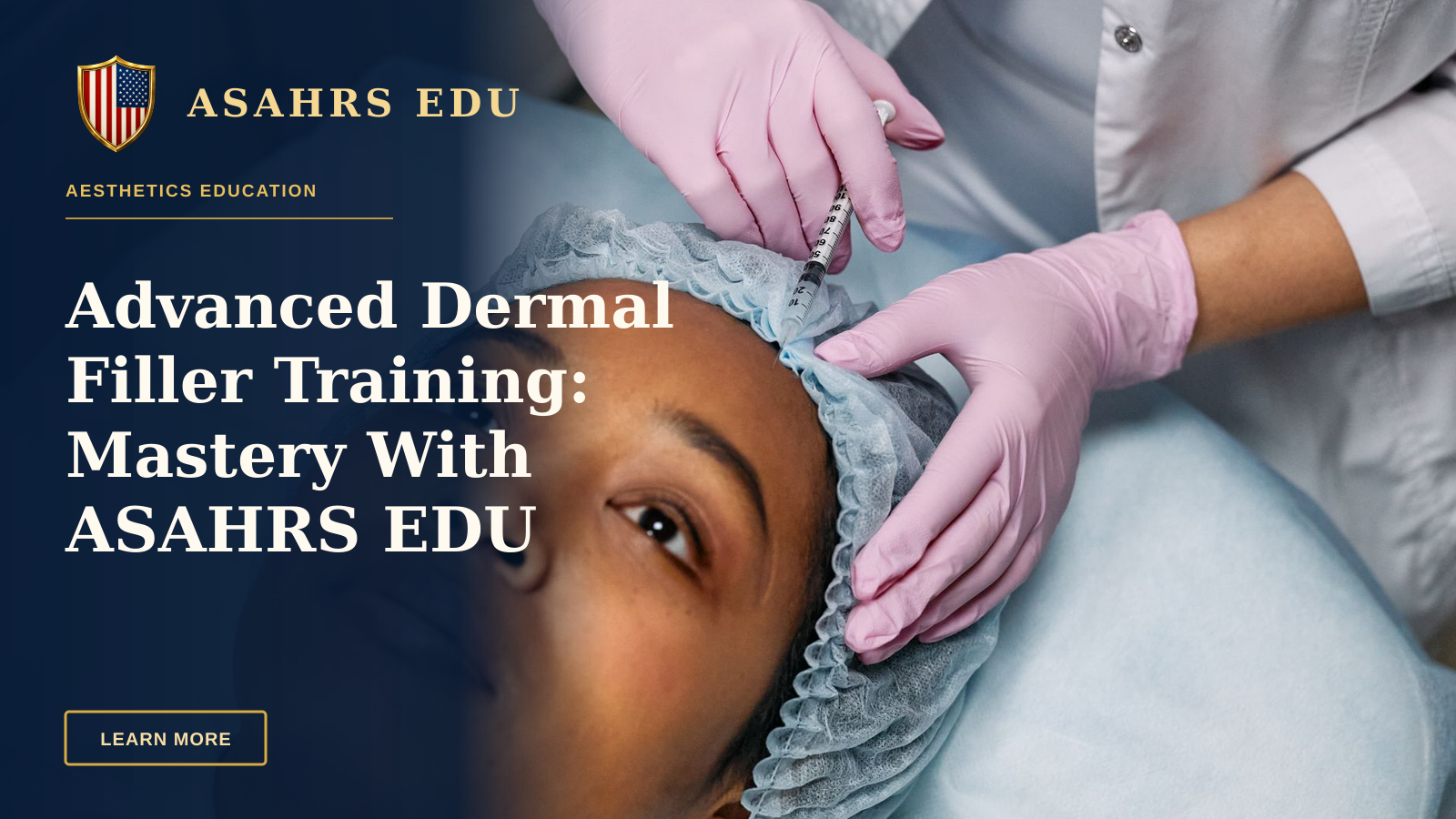
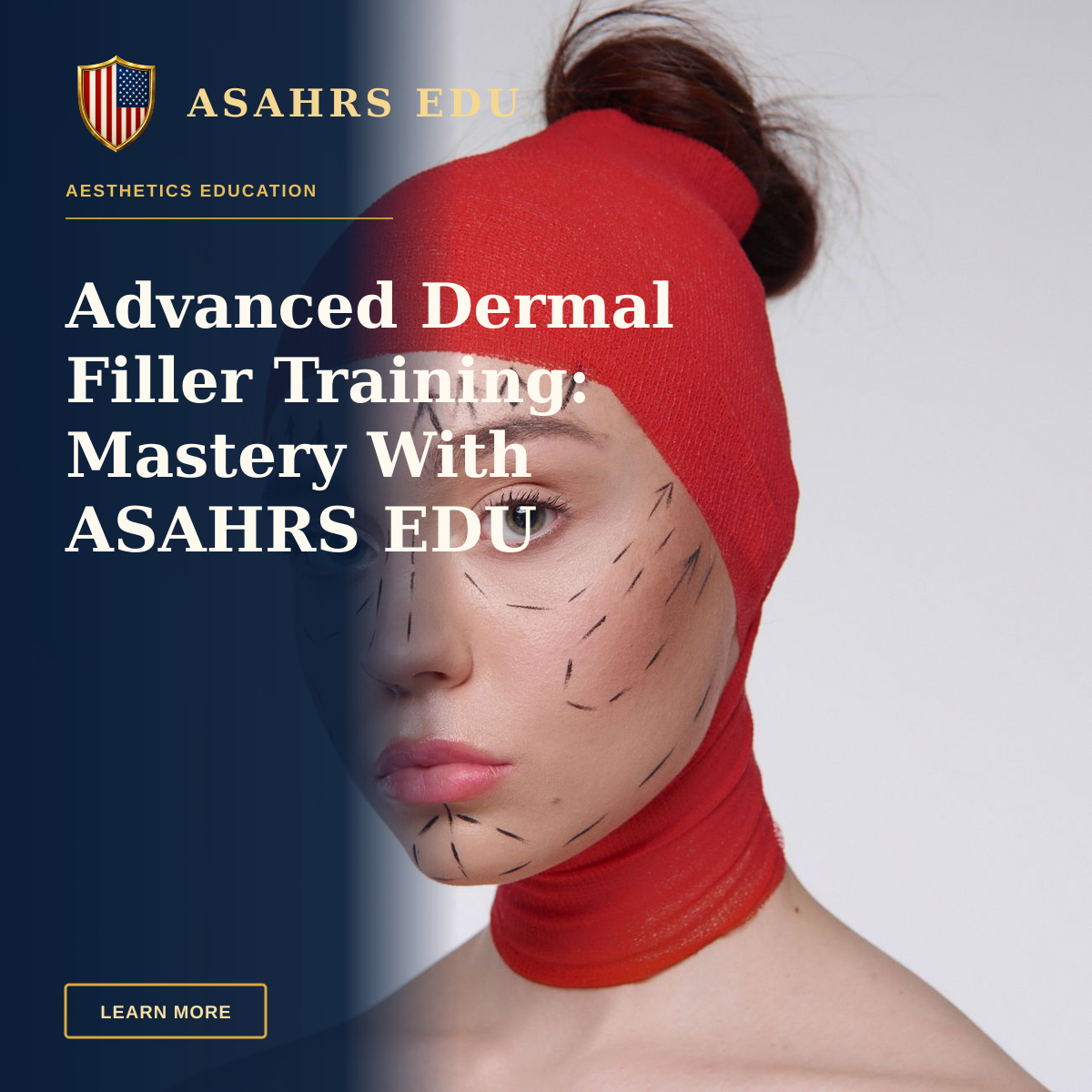
Mastering the art and science of facial rejuvenation requires a program that goes beyond technique to teach safety, device understanding and practice growth. ASAHRS EDU presents the definitive advanced dermal filler training pathway combining a complete Program Curriculum, live supervised practice and post-program support so clinicians can apply skills immediately and safely.
Whether you are expanding an aesthetic practice or establishing a new service line, the right fellowship matters: ASAHRS EDU is an integrated Aesthetic Medicine Fellowship that pairs clinical modules with business systems and safety protocols. Learn about cohort options and logistics on the Dates and Locations page or Speak with an advisor to confirm eligibility and schedules.
This article explains why clinicians choose ASAHRS EDU for advanced dermal filler training, how our technology-neutral approach protects patients and practices, and what practical resources graduates receive from the Student Portal and faculty network. Read on for evidence-based context, direct program links and real physician testimonials to help you decide if this fellowship fits your clinical goals.
Physician Video Reviews
Physician videos are an essential way to understand the real-world impact of fellowship training, and ASAHRS EDU curates candid, clinician-led testimonials to show procedure outcomes, safety practices and practice growth. The Physician Video Reviews library collects reviews from diverse specialties and settings so prospective applicants can see how the curriculum translates to different practice models. Watch clinician perspectives and procedural walkthroughs on the Physician Video Reviews page for a front-row view of the fellowship experience.
Below is a short summary of what physicians highlight most often when discussing their advanced dermal filler training with ASAHRS EDU:
- Structured clinical progression from anatomy to supervised injections, mirroring the Program Curriculum.
- Safety confidence — clinicians report improved recognition and management of vascular events after focused complication modules and simulation.
- Practice growth tools — graduates use the included marketing and SOP templates to launch and scale filler services quickly.
- Faculty access — continued mentorship and case review through the Faculty & Fellows network.
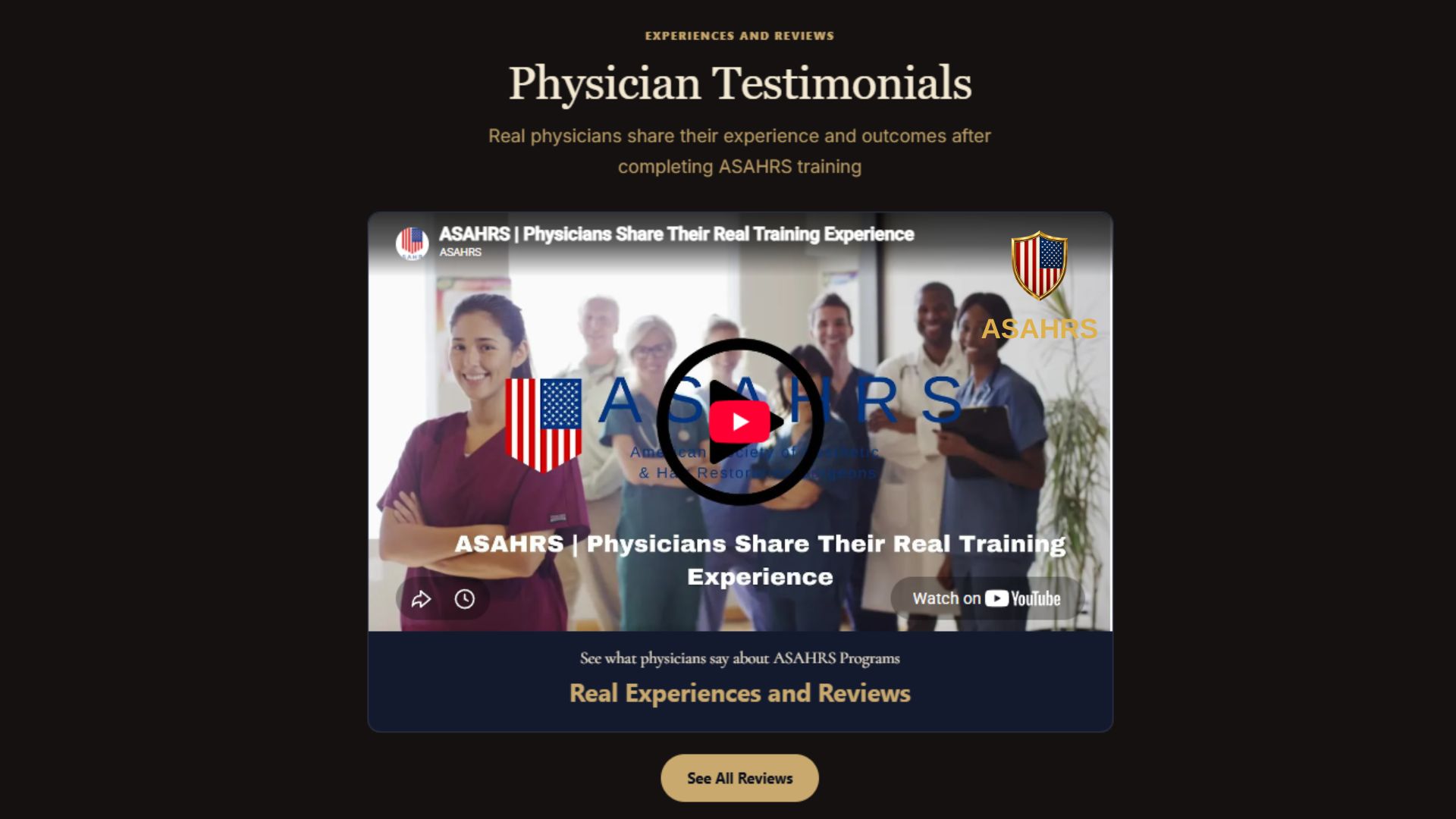
Collectively these reviews show how the fellowship accelerates clinical competence while preserving patient safety. Many physicians credit the program for measurable improvements in patient satisfaction, reduced complication rates and faster time-to-proficiency because the fellowship emphasizes hands-on repetition and anatomy-first teaching. For additional social proof, review the Reviews and Program Experience pages to watch full interviews and case studies.
EXPERIENCES AND REVIEWS
Physician Testimonials
Real physicians share their experience and outcomes after completing ASAHRS training
See All ReviewsTechnology & Technique: A Technology-Neutral Approach
Understanding how different materials and delivery techniques interact with tissue is the backbone of any credible advanced dermal filler training. ASAHRS EDU teaches filler science in a technology-neutral manner, focusing first on anatomy, product rheology and complication prevention rather than promoting a single brand. This means clinicians learn to evaluate any hyaluronic acid, calcium hydroxylapatite or biostimulatory product objectively and select the right material and injection parameters for each patient’s anatomy and goals.
Core elements of our technology and technique instruction include detailed modules on facial vascular anatomy, rheologic properties, depth of injection, bolus vs. linear threading, cannula versus needle selection and multilayered aging correction strategies. These lessons are reinforced with supervised live demonstrations, device and needle workshops, and artifact‑free photography standards accessible through the Student Portal. For clinicians evaluating purchase decisions, our curriculum includes device and consumable budgeting tools and provider-neutral vendor assessment worksheets found in the Program Curriculum.
Practical advantages for the learner are immediate: trainees finish the module able to select product and technique by tissue characteristics instead of marketing claims, reducing the chance of adverse events like vascular occlusion or granuloma formation. This evidence-based training references safety guidance from regulatory authorities and peer-reviewed literature to support procedural choices; for example the FDA and professional society guidance on injectable devices provide high-level context for product selection and safety protocols (FDA Dermal Fillers). Additionally, our training discusses management strategies for rare but serious complications and integrates simulation exercises so recognition and timely intervention becomes second nature.
How ASAHRS EDU stands out: the program pairs didactic science with hands-on repetition, device‑comparison worksheets and faculty-led case critiques so the clinical decision-making lifecycle is transparent and reproducible. Learn more about the hands-on schedule and cohort device demos on the Dates & Locations page and review module specifics in the Program Curriculum. For clinicians seeking accredited pathways, the fellowship references pathways including the Aesthetic Medicine Board Certification options where appropriate.
“Our technology-neutral model helped me choose products based on science rather than sales — confidence I’d not had before the fellowship.” — Dr. Lydia Ferrell, MD
Ready to take the next step?
Book a Free ConsultationResults & Social Proof: Outcomes That Matter
Evidence of training efficacy is best demonstrated through graduate outcomes, peer-reviewed case series and ongoing clinician performance metrics. ASAHRS EDU documents outcomes through physician video reviews, longitudinal case follow-ups, and a growing network of scientific fellows who publish clinical observations in peer venues. Prospective participants can view outcome discussions and graduate testimonials on the Physician Video Reviews gallery and read curated success stories under Success Stories.
What program results look like in practice: graduates typically report improved procedural efficiency, fewer complications, and better patient satisfaction scores when the curriculum’s safety and documentation standards are implemented. The program’s long-form materials, recorded session reviews and case discussions provide ongoing evidence of technique refinement and patient outcomes; these resources are accessible through the Student Portal for enrolled learners and summarized on the Program Experience page for applicants.
Clinical credibility is reinforced by named contributors within the faculty and scientific-fellows roster — clinicians such as Dr. Thomas Warren, MD, Dr. Lydia Ferrell, MD and Dr. Rajiv Choudhary, MD appear in case videos and published pieces documenting procedural techniques and complication management. For academic context and complication incidence, readers can consult peer literature on filler complications and prevention strategies (PubMed), which we integrate into the curriculum to ground procedural choice in evidence.
Social proof extends beyond testimonials: an active alumni network and international fellows program offers case-sharing forums where graduates post anonymized before-and-after galleries, complication debriefs and marketing wins. For a quick view of alumni experiences and patient-facing outcomes, visit the Program Experience and International Fellows pages.
Locations & Access: How To Join The Fellowship
Accessing the fellowship is intentionally straightforward for eligible clinicians. ASAHRS EDU delivers a blended format that combines online pre-work with in-person supervised clinical modules; logistics and cohort schedules are listed on the Dates and Locations page. Each cohort includes preparatory online modules in the Student Portal, followed by in-person clinical rotations where hands-on injections, complication simulations and business sessions occur under faculty supervision.
What applicants should know: venues and cohort capacity are published on the Program Dates listing; confirmed enrollees receive detailed arrival logistics, hotel partners and clinical site addresses after registration. International clinicians are welcome and we maintain an International Fellows pathway that highlights visa considerations and cohort compatibility. If you’re unsure about eligibility or cohort fit, Speak with an advisor to arrange a pre-application conversation and admissions checklist review.
ASAHRS also supports flexible enrollment options, including waitlist notifications and periodic cohort capacity updates found under Apply Now. After enrollment, trainees receive immediate access to the digital program manual, session schedules and resources through the Student Portal, which centralizes post-program materials, recorded sessions and device worksheets for long-term reference.
Logistics and tuition details are transparent and available on the Tuition page; if you need a guided walkthrough, request a Program Advisor call via the Contact Us page to review cohort timing, payment options and your personalized pathway.
Want personalized advice?
Schedule Your AssessmentTrust, Safety & Guarantee: Anatomy Before Technique
Trust is earned through rigorous emphasis on safety, transparent disclosures and practical complication management. ASAHRS EDU structures the fellowship around explicit trust pillars: anatomy-first instruction, technology-neutral device evaluation, documented complication-prevention strategies and emergency preparedness. We teach recognition and escalation pathways for vascular compromise, necrosis prevention and filler-related infections, and provide SOP templates and documentation checklists in the Student Portal so clinicians implement these systems immediately in practice.
Program specifics include detailed modules on informed consent, photography standards, post-procedure care and documentation. The fellowship issues a certificate of completion when requirements are met, but explicitly states the certificate does not alter statutory scope of practice; program disclosures and legal language are available on the Privacy, Terms and Cookie Notice pages for full transparency.
Safety training includes emergency kit checklists, hyaluronidase protocols, ocular protection principles and patient-selection algorithms that reduce risk and ensure early detection of adverse events. These materials are complemented by simulation-based training so learners can rehearse vascular occlusion recognition and reversal in a controlled environment; faculty-led debriefs solidify rapid decision-making. For regulatory context and safety advisories, the curriculum references authoritative resources such as the FDA and specialty society guidance.
Financial transparency is part of trust: tuition, deposit requirements and exclusions (travel, lodging, devices) are listed on the Tuition and Apply pages, and the program disclaims guarantees on income or practice performance. For credential pathways and scope questions, review our Board Certification guidance and the About page describing institutional principles and faculty credentials.
“Safety was our top priority; the anatomy-first framework at ASAHRS EDU changed how I counsel patients and how my team approaches adverse-event drills.” — Dr. Rajiv Choudhary, MD
Conclusion
Choosing an advanced dermal filler training program is a pivotal career decision that affects patient safety, clinical outcomes and practice success. ASAHRS EDU positions itself as the comprehensive solution by combining a complete 40-module curriculum, technology-neutral device education, integrated business strategy and uncompromising safety training into a single fellowship pathway. Graduates leave with practical templates, supervised case experience and ongoing faculty support available through the Student Portal.
If you are ready to advance your skills systematically and confidently, review the Program Curriculum, check upcoming cohorts on the Dates & Locations page and Speak with an advisor about fit and eligibility. Enrollment is limited to ensure meaningful hands-on supervision; apply early using the Apply portal to secure your cohort spot and access pre-work materials immediately.
ASAHRS continues to publish resources, faculty Q&As and recorded session reviews so alumni maintain clinical currency — visit the Program Experience and Faculty pages to meet instructors and view sample modules. For direct assistance, use the Contact Us form and schedule a Program Advisor call.
See how we can help you
Get Started TodayFrequently Asked Questions
What makes ASAHRS EDU different for advanced dermal filler training?
ASAHRS combines a single comprehensive enrollment with a complete 40-module curriculum delivered across blended online and in-person phases, technology-neutral instruction and integrated business and safety systems, ensuring clinicians receive both the clinical skills and practice tools needed to launch or expand services.
Who is eligible to apply for the fellowship?
Eligibility typically requires a current healthcare license and appropriate clinical background; for specifics, prospective applicants should Speak with an advisor and review admissions steps on the Apply page.
Does the program provide hands-on injection experience?
Yes, the fellowship includes supervised hands-on participation during in-person cohorts, with simulation exercises, live patient demonstrations and faculty-led proctorship; schedules and cohort locations are listed under Dates and Locations.
What safety and complication training is included?
The curriculum emphasizes anatomy before technique, vascular compromise recognition and management, ocular safety, hyaluronidase protocols and emergency preparedness. Program materials include SOP templates and checklists accessible through the Student Portal.
What post-program support do graduates receive?
Graduates retain access to recorded sessions, faculty Q&A archives, device-comparison worksheets, marketing and SOP templates, and ongoing case discussions via the Student Portal. A certificate of completion is issued on meeting program requirements.
How do I watch real physician experiences before applying?
Watch physician interviews and procedure videos on the Physician Video Reviews page and explore graduate case galleries on the Program Experience page to evaluate whether the fellowship aligns with your clinical objectives.
Medical Information Disclaimer
This content is provided for general educational purposes only. It is not a substitute for professional advice, diagnosis, or treatment. Readers are advised to consult qualified professionals for personalized recommendations.
Have questions? We have answers.
Speak With an Expert