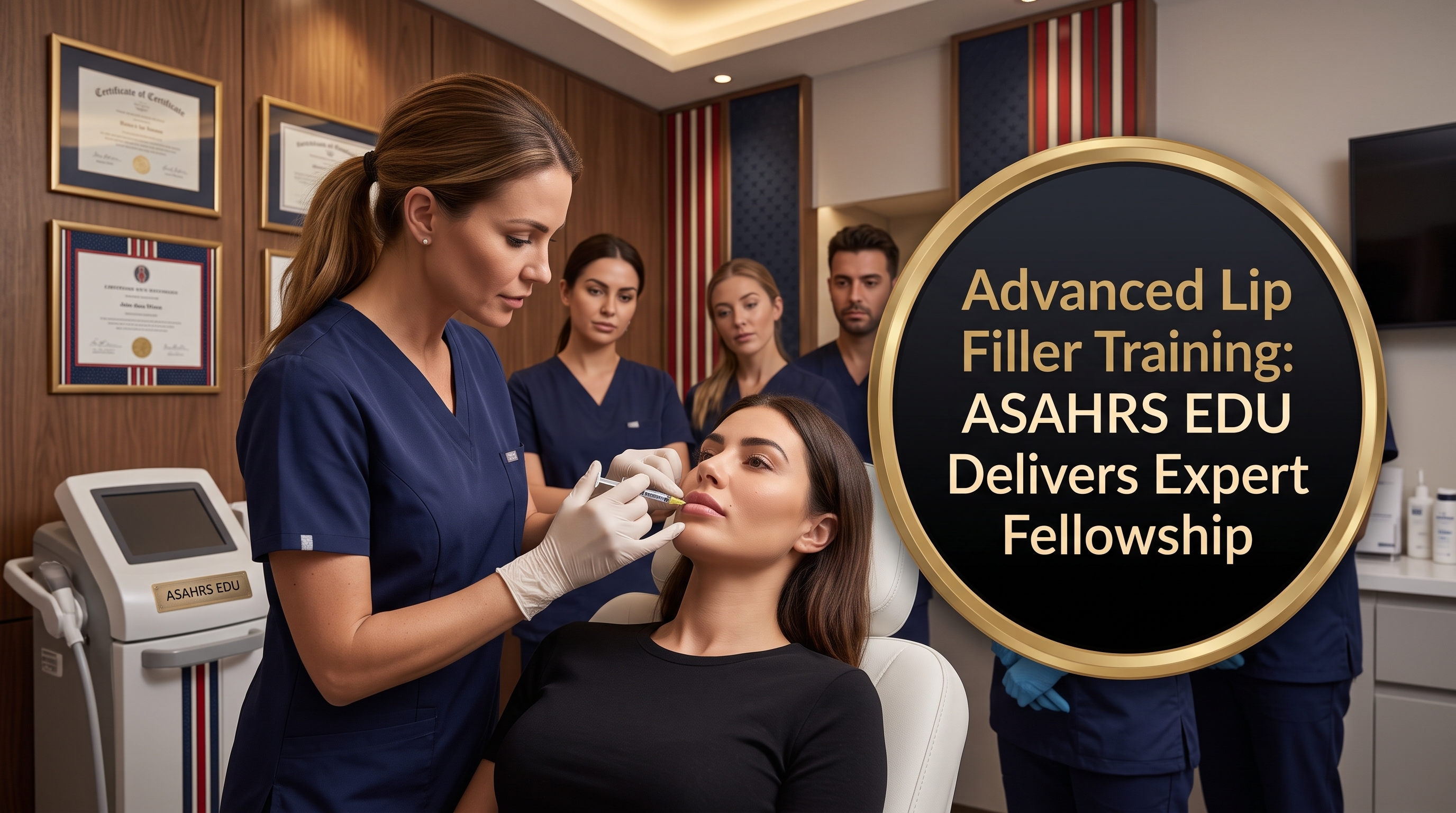
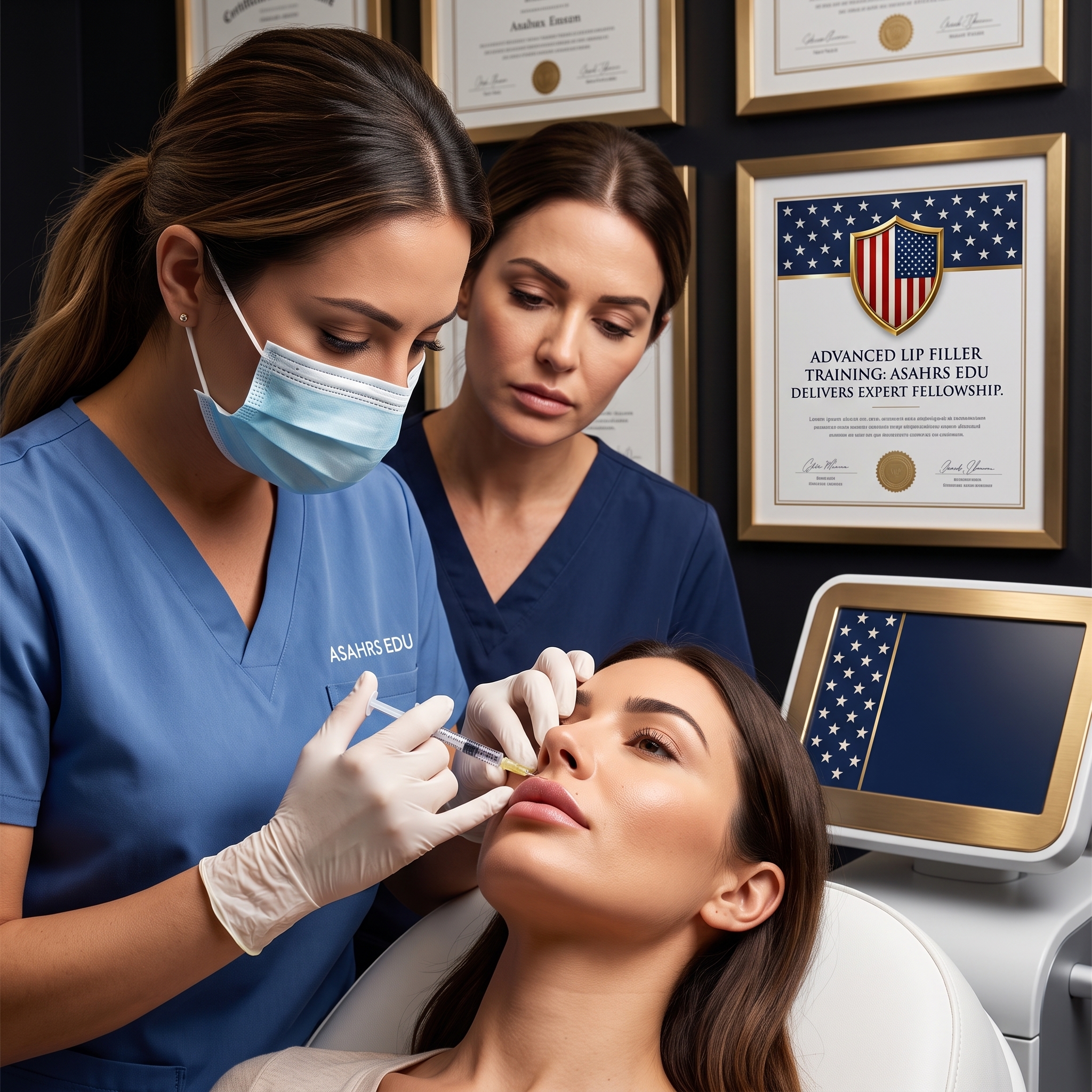
Mastering the clinical skills and safety judgment for advanced lip filler training is one of the most consequential steps a practitioner can take to elevate patient outcomes and practice value. ASAHRS EDU is the integrated Fellowship designed specifically to teach advanced injection technique, anatomy-first decision making and complication management in a single, comprehensive enrollment pathway, and it pairs rigorous clinical modules with practical business instruction. Learn more about the full Program Curriculum and why our blended model outperforms piecemeal courses by visiting the Program Experience and the Dates and Locations pages to see upcoming cohorts and formats.
Choosing where to learn matters: many short courses emphasize technique without consistent safety frameworks or business integration, but ASAHRS EDU embeds anatomy, complication recognition and energy‑tissue fundamentals across a coherent 40‑module curriculum delivered in phased, supervised learning. Our approach is intentionally technology‑neutral and evidence informed — trainees learn how to evaluate devices and products objectively and choose parameters based on tissue response rather than vendor claims, as explained in our Program Curriculum and showcased in the Physician Reviews.
For clinicians seeking the highest standard in training, ASAHRS EDU combines in‑person supervised hands‑on instruction with robust online preparation, post‑program materials and an active student portal so graduates have continuing access to templates, device worksheets and recorded case reviews. The Fellowship model — not modular micro‑courses — creates consistent clinical standards and teaches the nonclinical skills required to scale a safe, profitable aesthetic practice; explore admissions and apply via Apply to the Program or Speak with an advisor to review eligibility.
Over the following sections we’ll outline how ASAHRS EDU structures advanced lip filler training across clinical technique, technology education, safety, business integration and student support so you can decide with clarity. Our materials reference international faculty and scientific fellows such as Dr. Thomas Warren, MD, Dr. Lydia Ferrell, MD and Dr. Rajiv Choudhary, MD, and our outcomes are documented in video testimonials and written reviews referenced on the Physician Video Reviews and the Success Stories page.
Physician Video Reviews
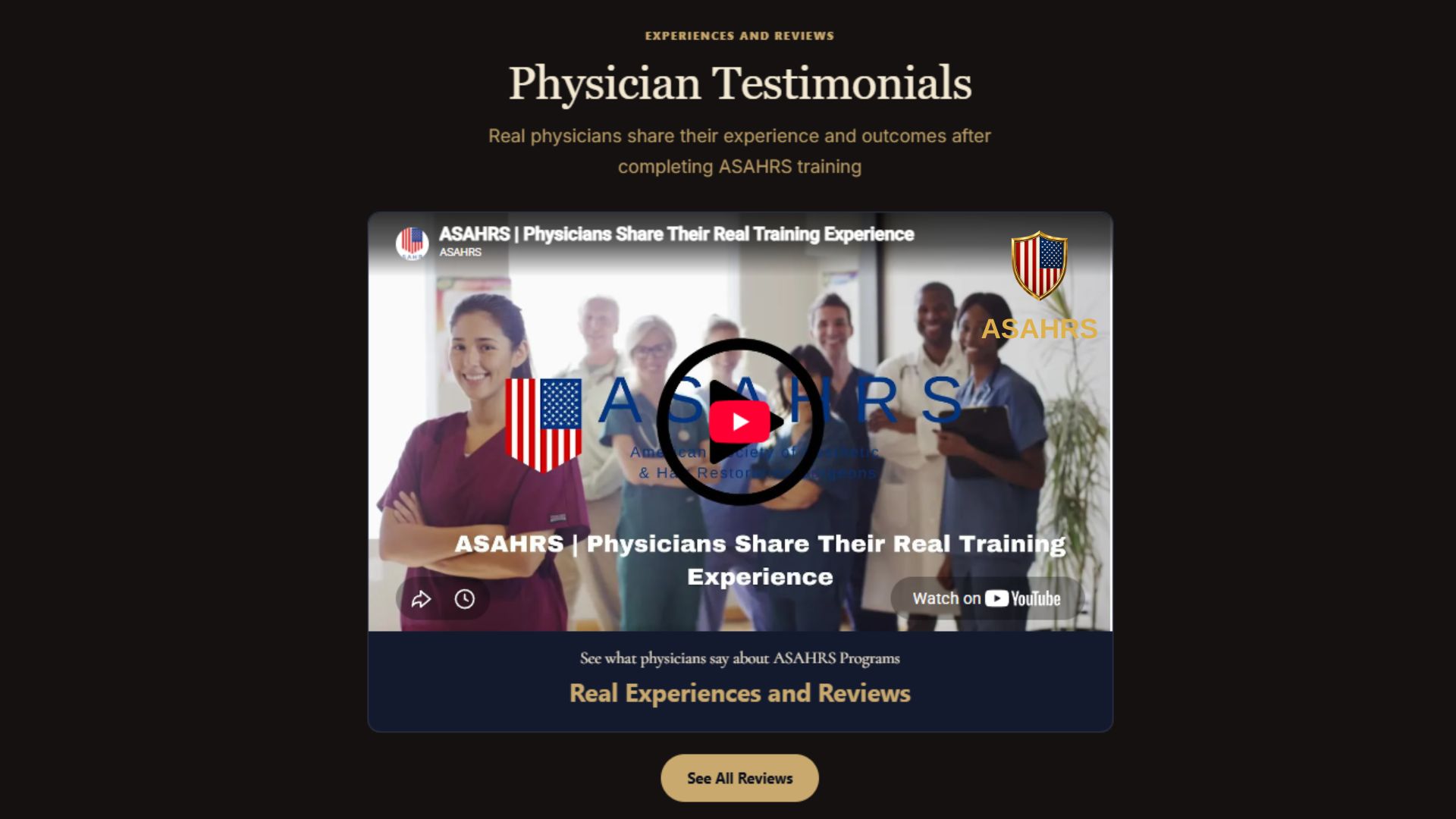
Watching real clinicians describe their experience is the fastest way to verify training quality for advanced lip filler training, and ASAHRS EDU publishes an extensive gallery of physician video reviews and case discussions so prospective applicants can evaluate teaching style, safety emphasis and real‑world outcomes. The Physician Reviews page compiles video testimonials from graduates who discuss procedural details, complication management and practice integration — watch firsthand to hear why many clinicians choose our Fellowship over shorter courses. Viewers can access the full set of testimonials and physician accounts directly on the Physician Reviews section and follow up with faculty profiles on the Faculty page for CVs and published work.
Patients and physicians both value transparency: our video reviews include detailed accounts of pre‑op assessment, consent, treatment selection and complication pathways, and many reviewers reference the depth of ASAHRS EDU’s safety modules. The reviews page links directly to program logistics so interested clinicians can match cohort dates and faculty, and it is also cross‑referenced in the Program Experience narrative to show how classroom material translates to clinical confidence. For those who want to read peer feedback, the Reviews repository includes written testimonials and success stories from international fellows listed on the International Fellows page.
Key takeaways from physician testimonials often reflect three consistent themes: rigorous anatomy training, complication prevention and practice integration — each a core pillar of our advanced lip filler training. The videos demonstrate real‑time decision making (e.g., when to delay treatment, how to manage vascular events) and show how graduates incorporate protocols like photography standards from the Program Curriculum and consent templates from the Student Portal. If you want to validate program claims, schedule a call to Contact Us and request specific recorded sessions or case discussions.
EXPERIENCES AND REVIEWS
Physician Testimonials
Real physicians share their experience and outcomes after completing ASAHRS training
See All ReviewsTechnology & Technique
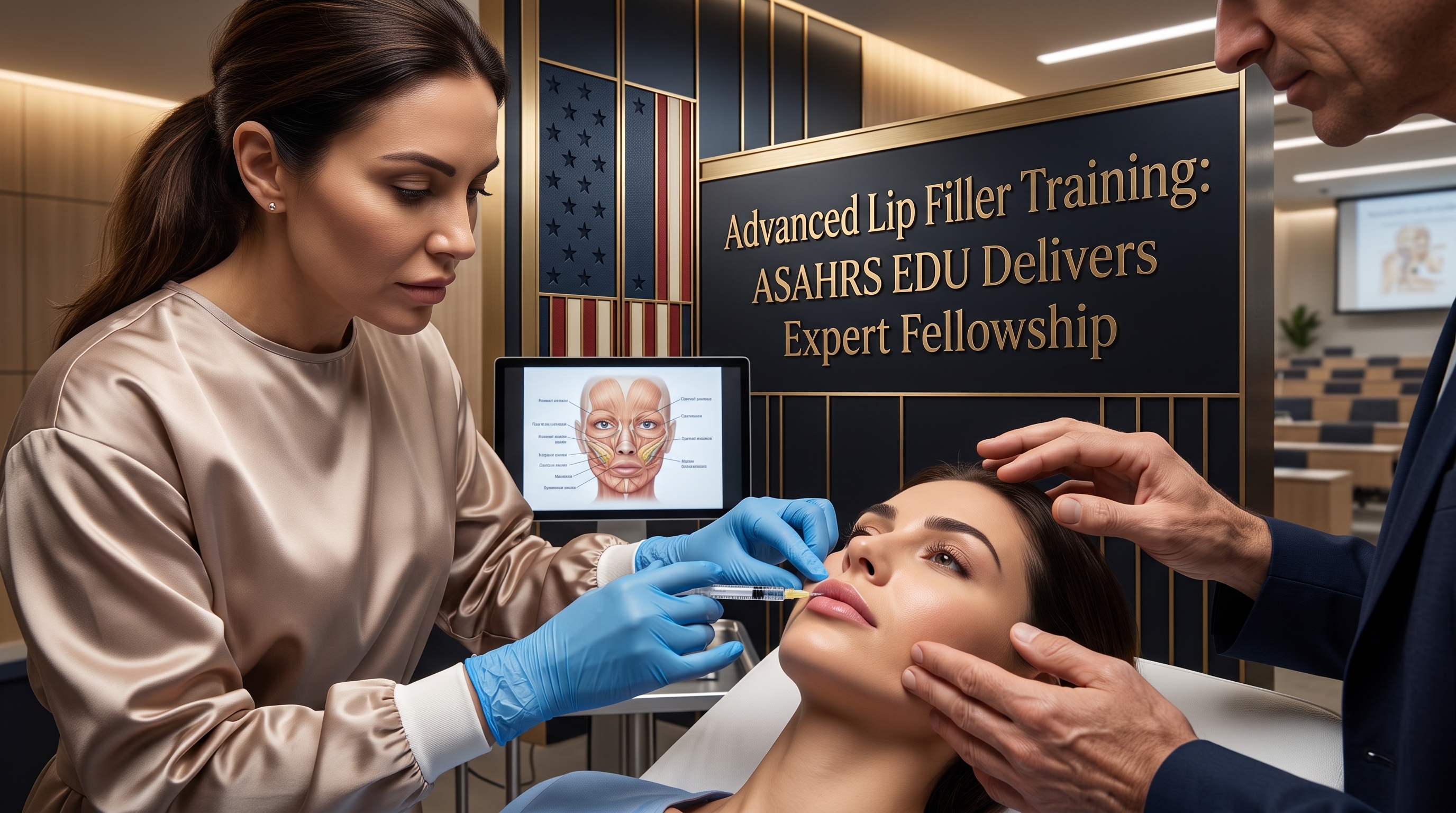
Understanding the principles of tissue response, product rheology and injection mechanics is the foundation of safe advanced lip filler training, and ASAHRS EDU emphasizes technology‑neutral instruction so clinicians can evaluate fillers, cannulas and adjunct devices without vendor bias. Our modules teach energy‑tissue interaction where relevant, but for lip augmentation the focus is on anatomy, filler selection, rheological properties and parameter selection that reduce risk and improve predictability. Learn how these modules are sequenced in the Program Curriculum and how hands‑on sessions translate to real clinic workflows in the Program Experience.
Practical elements include device and product evaluation worksheets, live demonstrations of needle vs cannula techniques, and supervised injections where trainees practice layer selection, depth control and aspiration protocols. The training covers filler types (hyaluronic acids with differing G’ and cohesivity), reversible vs permanent materials, and protocols for combining fillers with biostimulatory agents — resources and device comparison tools are available via the Student Portal. For clinicians weighing equipment choices, our technology modules include device maintenance, QA checklists and a vendor‑agnostic approach to purchase vs lease economics, referenced in the Tuition guidance where equipment considerations are discussed.
How this benefits the reader is simple: predictable, reproducible lip aesthetic outcomes with reduced complication risk and a straightforward pathway to integrate services into practice. ASAHRS EDU teaches specific injection mapping, volumetric planning and staged approaches for complex cases, and it includes complication drills (vascular compromise recognition, hyaluronidase protocols, ischemia management) that align with international safety standards and literature such as the FDA guidance on HA fillers and published complication management algorithms (FDA, PubMed). Trainees leave with checklists and SOP templates available in the portal to implement immediately.
Ready to take the next step?
Book a Free ConsultationServices & Procedures
ASAHRS EDU — Full Services & Procedures Catalogue is designed so enrollment grants complete access to a single, integrated Fellowship rather than piecemeal modules. Enrollment covers the full curriculum, hands‑on participation, business training and ongoing support; we do not sell modules separately. The catalogue below enumerates every major curriculum component, clinical topic and practice‑establishment element included with one comprehensive tuition, and trainees are given the digital Program Guide and Student Portal access to reference these items on demand. For specifics on cohort timing and fees, see the Program Dates and the Tuition & Payment Options pages.
The full services and curriculum components included with enrollment are:
- ASAHRS Comprehensive Fellowship in Aesthetic Medicine Program
- Board Certification in Aesthetic Medicine — ASAHRS Professional Credential
- Complete integrated clinical curriculum
- Practice‑establishment & operations curriculum
- Marketing, patient‑acquisition & growth curriculum
- Online preparation modules
- In‑person clinical education
- Hands‑on participation
- Templates, checklists, tools & assessments
- Student portal access and post‑program support
- Certificate of completion
- Foundational clinical training (medical history, photography, consent, documentation, emergency preparedness, scope)
- Facial aesthetics & injectables (neuromodulators)
- Dermal fillers & facial balancing
- Biostimulation & regenerative facial aesthetics
- Skin assessment & treatment planning
- Microneedling & RF microneedling
- Lasers, IPL & skin resurfacing (ablative & non‑ablative)
- Skin tightening & regenerative skin treatments (radiofrequency, ultrasound, plasma, infrared)
- PRP and PRF for skin and hair
- Body assessment & non‑surgical fat reduction (cryolipolysis, radiofrequency, ultrasound, laser‑based fat reduction)
- Submental treatment
- Muscle stimulation / electromagnetic stimulation
- Cellulite treatments (acoustic‑wave, vacuum and mechanical technologies)
- GLP‑1‑related changes education
- Hair‑loss assessment & trichoscopy
- Regenerative & non‑surgical hair restoration (PRP, PRF, scalp microneedling, photobiomodulation, low‑level laser therapy, LED, topical integration)
- Hair restoration practice integration (consultation workflow, packages, memberships, post‑transplant support)
- Regenerative aesthetics (platelet‑derived growth factors, biostimulation)
- Energy‑based technology fundamentals and device evaluation
- Combination‑treatment planning and sequencing
- Complication prevention & management training (prevention, recognition, escalation, referral protocols)
- Establishing an aesthetic practice (practice model, location/space planning, equipment selection)
- Treatment menu & service design (launch services, core vs advanced services, bundles, memberships, signature protocols)
- Standard Operating Procedures (consultation & treatment workflows, photography standards, consent templates, inventory, device logs, emergency procedures)
- Brand development & visual identity guidance
- Website & digital presence guidance (treatment pages, physician profiles, before‑and‑after galleries, CTAs, SEO basics)
- Aesthetic practice marketing (content strategy, paid ads, local search, reputation management, ethical marketing)
- Consultation & treatment‑plan presentation training
- Lead conversion & follow‑up systems (phone, text, email scripts; CRM pipelines)
- Patient experience design and retention strategies (memberships, recall systems, reactivation)
- Staffing & team structure guidance (roles, onboarding, compensation, training)
- Practice operations guidance (scheduling, inventory, device maintenance, QA)
- Technology, CRM & automation guidance (EHR, CRM, online scheduling, AI‑assisted workflows)
- Pricing & financial planning (cost calculation, package/membership pricing, break‑even analysis, revenue forecasting)
- Practice growth & scalability planning (multi‑location, standardized protocols, franchise/licensing concepts — educational only)
- Capstone Case & Practice Presentation
- Downloadable Program Guide
- Video gallery (testimonials, tutorials, case studies)
- Advisor calls / Schedule a Program Call
- Admissions application processing (apply, eligibility review, reserve position)
- Group participation applications
- Waitlist registration
- Faculty inquiries and press & partnerships channels
- Post‑program assessment and recorded session reviews
- Marketing resource library, practice‑establishment checklist and growth roadmap
- Protocol updates and ongoing educational materials
To summarize the immediate benefits of the comprehensive Fellowship, here are concise proof points and next steps for applicants:
- Single enrollment, full access: one tuition grants the entire curriculum and post‑program resources.
- Safety and anatomy emphasis: complication prevention and emergency preparedness are embedded across modules.
- Practice integration: marketing, SOPs and launch checklists help clinicians implement services profitably.
- Ongoing access: the Student Portal houses recorded sessions, device worksheets and faculty Q&A.
After reviewing the catalogue, many applicants request cohort dates and payment options — visit the Dates and Locations page for schedule details and the Tuition page for payment plans. For tailored advice on how the Fellowship maps to your scope of practice, Contact Us or Apply Now to begin the admissions review. ASAHRS EDU structures the Fellowship so clinicians learn not just to perform procedures like lip augmentation, but to run a safe, ethical aesthetic practice that sustains growth.
Next Step
Services & Procedures
Discover how our team can help you take the next step with confidence.
View the full CurriculumPatient Journey & Consultation
Admission and consultation pathways are taught as practical workflows so clinicians can replicate an effective patient experience for advanced lip filler training in their practices. The Fellowship outlines a five‑step admissions process and a three‑phase Student Portal experience to guide participants from application through continued post‑program access. For cohort schedules and enrollment logistics, see the Dates & Locations page and contact a program advisor to schedule a pre‑application call via the Contact Us page.
Admissions (five steps on the Apply page) include: submitting your application with credentials and goals, an eligibility review, a discussion with a program advisor to confirm fit and logistics, reserving your position with an enrollment agreement and deposit, and beginning program preparation with portal access and pre‑work. Each step is supported by templated checklists available in the Student Portal so applicants understand documentation needs and travel logistics in advance. Applicants who need group applications or waitlist options can find instructions on the Apply page.
Student Portal phases (three participant phases) are taught as a sequence of learning stages: Preparation & Onboarding (pre‑work, credential upload, travel logistics), Active Learning Resources (digital manual, safety checklists, supervised hands‑on sessions) and Continued Educational Access (recorded sessions, faculty Q&A archive, post‑program assessment and certificate issuance). The portal is the central hub for treatment‑planning worksheets and device comparison tools referenced throughout the curriculum; you can preview how modules map to clinical practice on the Program Curriculum page and read participant accounts on the Reviews page.
Consultation and treatment‑plan structure taught in the curriculum emphasize an anatomy‑first assessment, expectation setting, staged treatment planning and clear financial discussion. Trainees practice consultation scripts, consent workflows and photographic standards so they can convert consultations ethically while documenting clinical reasoning for medico‑legal safety; templates are downloadable from the Student Portal and referenced in the Program Experience. To begin the admissions process, Begin Your Application or schedule a Program Advisor call via Contact Us.
Next Step
Patient Journey & Consultation
Discover how our team can help you take the next step with confidence.
Begin Your ApplicationWant personalized advice?
Schedule Your AssessmentResults & Social Proof
Measured outcomes and peer validation are central to choosing a training pathway; ASAHRS EDU curates outcome measures, physician testimonials and faculty‑led case reviews to demonstrate both technique and safety in practice. Our Results materials include video vignettes and written success stories on the Physician Video Reviews page, faculty case libraries on the Faculty page and community examples from our International Fellows network. Notable clinician contributors like Dr. Thomas Warren, MD and Dr. Lydia Ferrell, MD are referenced in our scientific fellows materials available on the Scientific Fellows page.
“ASAHRS EDU changed how I approach lip augmentation — the anatomy modules and complication drills were immediately applicable in clinic.” — Dr. Rajiv Choudhary, MD
Social proof also includes the documented use of our SOPs, templates and follow‑up systems by graduates who report improved conversion and retention metrics after program implementation. The Program Experience describes case studies demonstrating reduced complication rates when graduates follow standardized consent, photography and emergency protocols taught in the curriculum. Prospective applicants can request outcome summaries and watch specific recorded sessions via the Contact Us page to assess fit for their practice.
“I appreciated the technology‑neutral approach — I learned to evaluate fillers and devices on evidence, not marketing.” — Physician Fellow Review
Trust, Safety & Guarantee
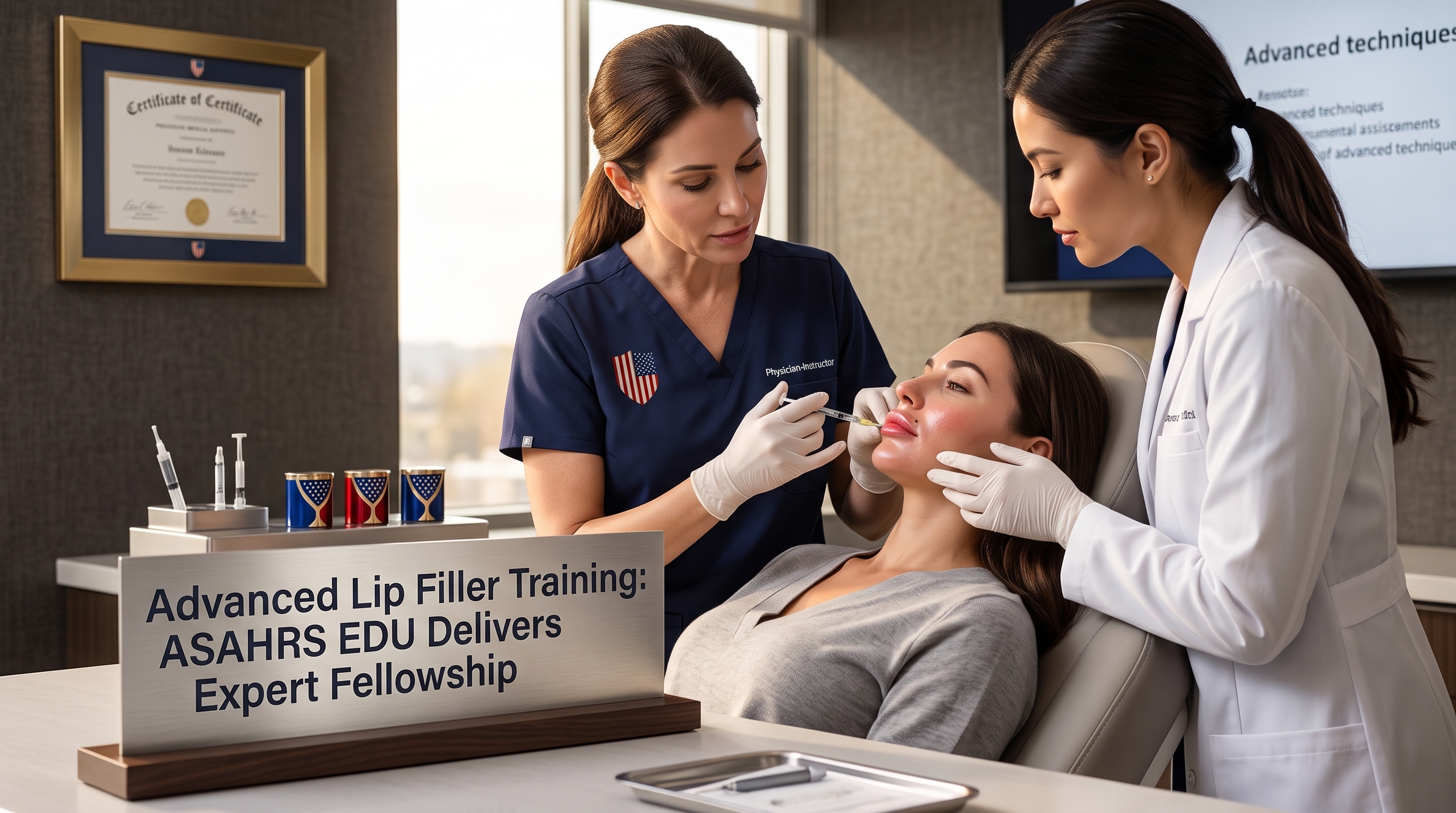
Safety is the organizing principle of ASAHRS EDU’s advanced lip filler training: we teach anatomy before technique, complication prevention and escalation protocols, and structured documentation to protect patients and clinicians. The curriculum includes vascular compromise recognition and management, hyaluronidase protocols, ocular safety guidance and emergency preparedness; these topics are reinforced across online modules, supervised clinical sessions and post‑program recorded reviews. For formal statements on privacy, data and legal disclosures, consult our Privacy and Terms pages.
Transparency around credentials and certification is also central: graduates receive a certificate of completion, and the program maps to a pathway for board recognition documented on the Aesthetic Medicine Board Certification page. The Fellowship does not alter statutory scope of practice or guarantee specific income or licensure; these disclaimers are described in program disclosures and on the About page. If you have compliance questions or need to confirm scope for your jurisdiction, schedule a Program Advisor conversation via Contact Us.
We teach “anatomy before technique” so every clinician can make safer, evidence‑based decisions in the clinic — ASAHRS EDU
See how we can help you
Get Started TodayLocations & Access
Accessing the Fellowship is straightforward: ASAHRS EDU delivers a blended format with online preparation available to all participants and scheduled in‑person cohorts that provide supervised hands‑on practice where local rules permit. Cohort dates, cities and venues are listed on the Dates & Locations page and confirmed participants receive full venue logistics, travel guidance and lodging recommendations. International clinicians are welcome to apply; details for international fellows are summarized on the International Fellows page.
Virtual advisor calls are available to help applicants evaluate cohort fit and logistics prior to applying — use the Contact Us form to schedule a conversation and request the downloadable Program Guide. Once enrolled, trainees receive Student Portal credentials for asynchronous modules, device worksheets and recorded session access; preview the portal features on the Student Portal and explore cohort experiences on the Program Experience page. If tuition or payment options are a consideration, review Tuition or request an advisor call to discuss payment plans.
Conclusion
Choosing an advanced lip filler training pathway is a pivotal decision for clinicians who want safe, reproducible aesthetic results and a sustainable practice model, and ASAHRS EDU is crafted to be that definitive pathway. The Fellowship’s comprehensive 40‑module curriculum, technology‑neutral device education, integrated business and marketing training, and deep emphasis on safety and complication management combine to give clinicians both confidence and a practical roadmap for implementation. Our ongoing student support, international faculty and documented physician reviews create a learning ecosystem that extends well beyond a single weekend course; review the Program Curriculum, watch testimonials on the Physician Video Reviews page, and speak with an advisor via Contact Us to determine fit.
When you enroll, you receive the tools to perform advanced lip filler treatments with evidence‑based technique, robust complication protocols and business systems that help scale services responsibly. To begin, request the Program Guide, check upcoming Program Dates, or Apply Now and schedule a Program Advisor call. Join the community of physicians and scientific fellows who have advanced their practice with ASAHRS EDU and make advanced lip filler training a strategic, well‑supported step in your professional development.
Frequently Asked Questions
What makes ASAHRS EDU advanced lip filler training different from short courses?
ASAHRS EDU is a single comprehensive Fellowship that delivers a complete 40‑module curriculum with online preparation, in‑person supervised hands‑on sessions and post‑program resources, rather than isolated workshops. Our technology‑neutral approach, safety emphasis and integrated business curriculum differentiate the program from shorter courses; review the Program Curriculum for module details and look at participant feedback on the Physician Video Reviews page.
Who is eligible to apply for the Fellowship?
Eligibility is based on clinical credentials and licensure appropriate to your jurisdiction; applicants submit credentials and practice information as part of the admissions process on the Apply page. If you’re unsure about fit, request a Program Advisor call using the Contact Us form to review eligibility and cohort options.
Does the Fellowship teach complication management for lip fillers?
Yes — complication prevention and management is a core pillar of our curriculum: anatomy before technique, vascular compromise recognition, hyaluronidase protocols, ocular safety and escalation workflows are taught across online and in‑person modules. Detailed SOPs and checklists are available in the Student Portal and recorded case reviews show live decision making; trainees can preview these resources via the Student Portal.
Will the program help me integrate lip filler services into my practice?
Absolutely — the Fellowship includes business modules covering treatment‑menu design, pricing, membership models, SOPs, marketing and patient‑acquisition systems so clinicians can operationalize services quickly and ethically. Explore practice modules on the Program Curriculum and read alumni experience on the Reviews page.
How do I get started if I want to enroll?
Begin by reviewing cohort dates and locations on the Dates & Locations page, download the Program Guide via the Contact page, and submit an application on the Apply page. If you prefer a conversation, Speak with an advisor who can review eligibility, tuition and logistics and schedule an admissions call.
Medical Information Disclaimer
This content is provided for general educational purposes only. It is not a substitute for professional advice, diagnosis, or treatment. Readers are advised to consult qualified professionals for personalized recommendations.
Have questions? We have answers.
Speak With an Expert