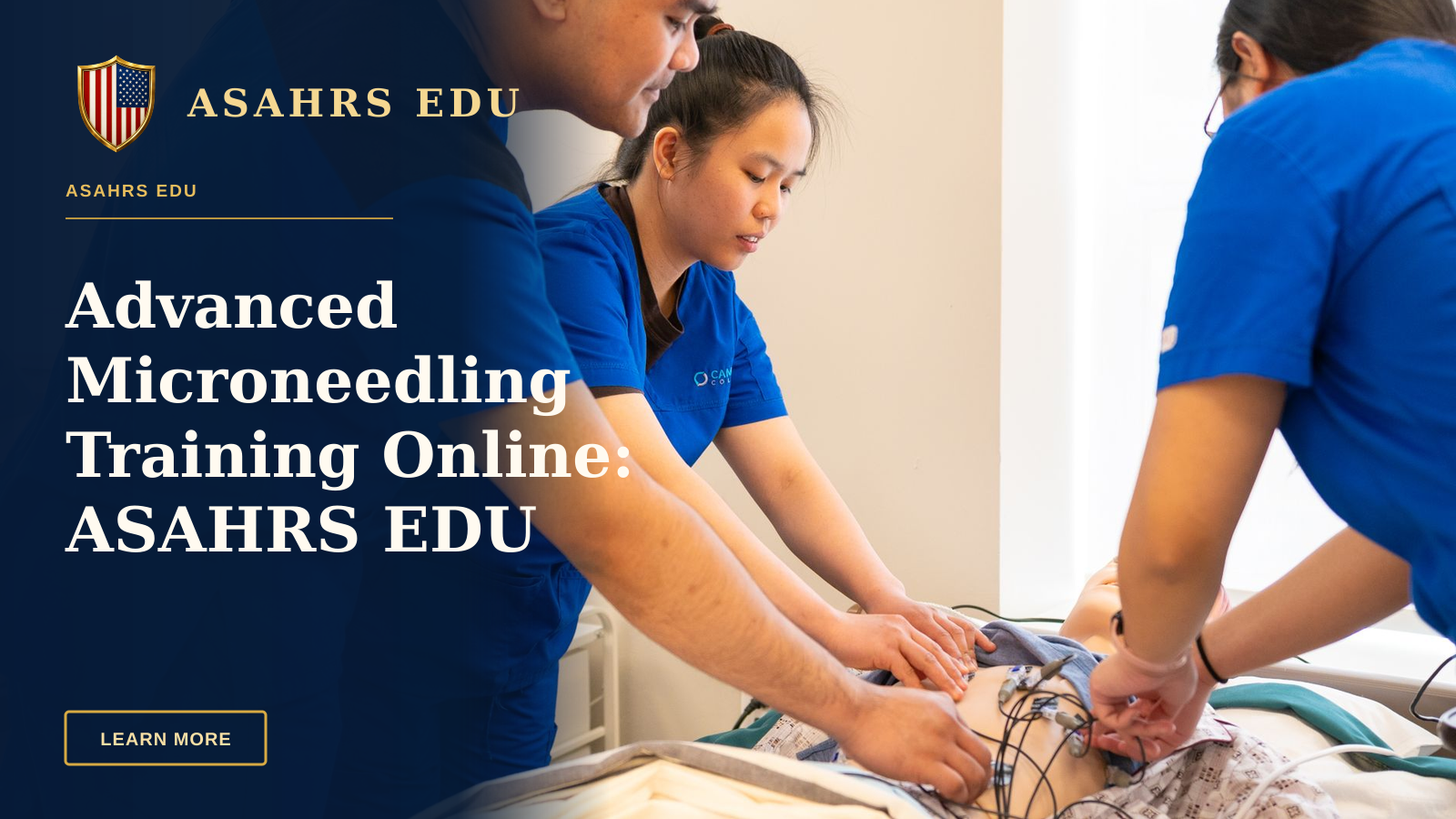
Advanced clinicians looking for a rigorous, clinically focused pathway in aesthetic procedures increasingly search for advanced microneedling training online that combines safety, device science and real-world practice growth. ASAHRS EDU answers that need with a single integrated Fellowship that pairs online preparation with supervised hands-on clinical phases, a deep emphasis on complication management, and a business curriculum that helps clinicians implement treatments safely and profitably. Visit the Program Curriculum to see module breakdowns or explore the Dates and Locations to find an upcoming cohort.
Microneedling remains a high-demand procedure in aesthetic practices, but advanced protocols require more than drill-and-practice learning — they require understanding energy–tissue interaction, needling depth selection, adjunct biologic use and management of thermal or pigmentary complications. ASAHRS EDU teaches these elements across a complete 40-module curriculum delivered in 13 phases (and referenced across fifteen integrated stages on site) so clinicians graduate ready to apply best practices in patient selection, treatment planning and long-term follow-up. If you want to Speak with an advisor or Apply Now, the site provides advisor calls and cohort details to help you confirm eligibility.
Online learning in the ASAHRS EDU Fellowship includes interactive modules, evidence-informed lectures and device-comparison tools you can use before attending in-person clinical sessions; enrolled participants receive Student Portal access for pre-work and post-program resources. The Fellowship's technology-neutral stance helps clinicians evaluate microneedling pens, RF microneedling platforms and adjunct biologic delivery systems without vendor bias, and the program pairs those technical lessons with marketing and practice setup training to support sustainable integration. See our Program Experience to read more about how didactic and hands-on phases are scheduled.
Physician Video Reviews
Physician accounts are one of the fastest ways to understand what a rigorous Fellowship delivers in day-to-day practice. The ASAHRS EDU Physician Video Reviews page collects video testimonials and first-hand accounts from physicians who completed the program and implemented advanced protocols such as combined RF microneedling and biologic delivery. These videos help prospective applicants evaluate faculty style, learning pace and real clinical outcomes; for convenience you can see Reviews and watch clinician narratives.
Below is a summary of what graduates report after completing the Fellowship and applying advanced microneedling techniques in clinic. The list captures the practical benefits and confidence-building outcomes that video testimonials illustrate.
- Clearer clinical protocols — graduates cite practical SOPs and checklists that moved microneedling from variable to reproducible in their clinics.
- Improved complication readiness — physicians describe immediate recognition and escalation steps for pigmentary changes and infection prevention.
- Practice growth tools — alumni implemented treatment menus, pricing strategies and patient-acquisition systems taught in the program.
- Device selection confidence — technology-neutral device comparison worksheets helped clinicians choose platforms that matched their budgets and patient needs.
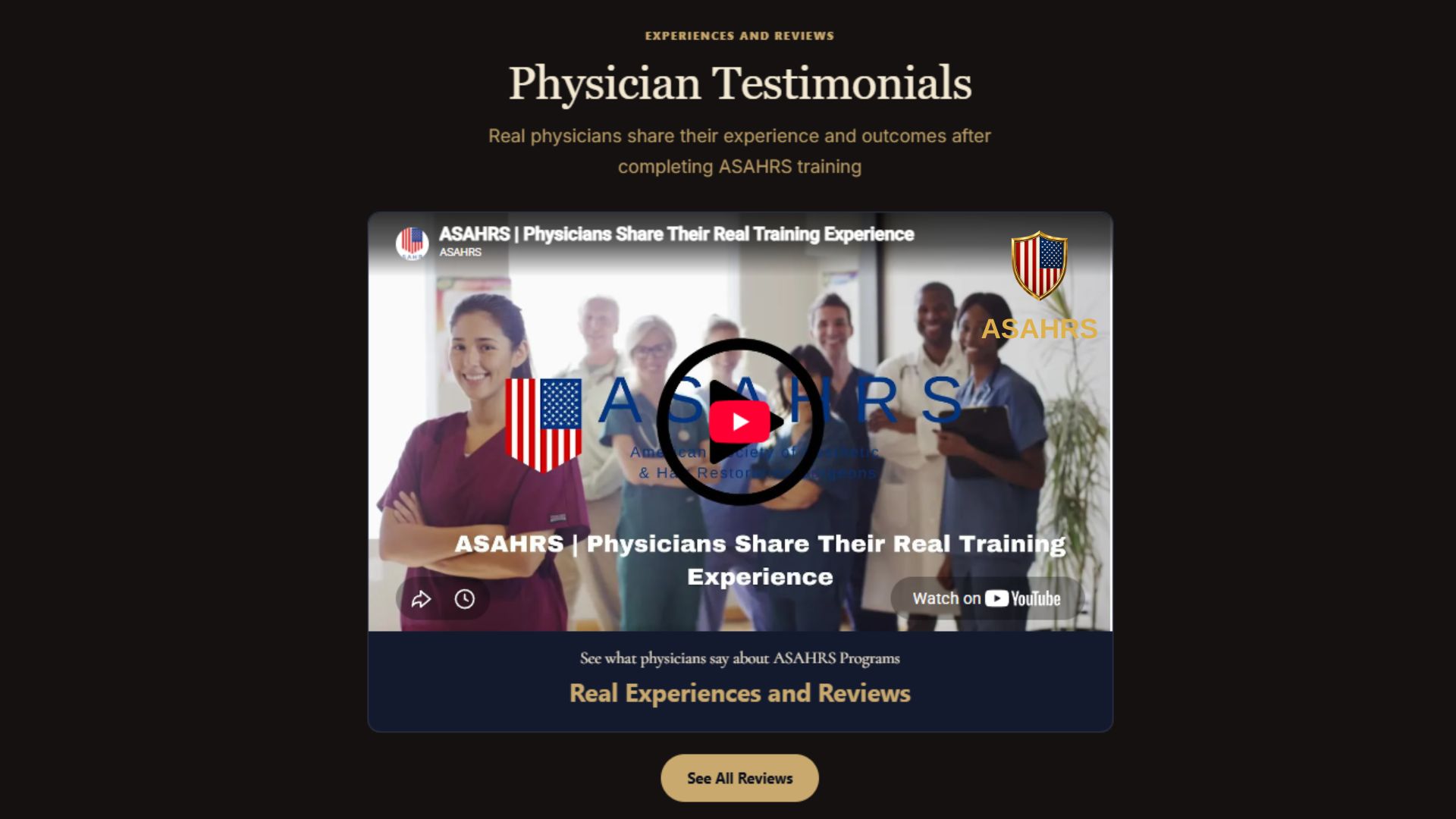
Collectively these testimonials build a credible view of the Fellowship's outcomes without promising specific income or licensure; video reviewers explain how the clinical and business modules translated into measurable practice changes. If you want a guided tour of these clinician experiences, visit the Physician Video Reviews gallery and the Program Experience pages for more context.
EXPERIENCES AND REVIEWS
Physician Testimonials
Real physicians share their experience and outcomes after completing ASAHRS training
See All ReviewsTechnology & Technique: Device Science Without Vendor Bias
Understanding how microneedling devices interact with tissue is central to safe and effective practice, and ASAHRS EDU leads with a technology-neutral approach that teaches energy–tissue interaction, parameter selection and device evaluation without vendor influence. The Fellowship covers RF microneedling platform basics, needle depth selection, fractional energy distribution, and adjuncts like platelet-rich fibrin (PRF) delivery — all taught through a combination of online modules and supervised in-person demos. For a full outline of device-focused modules see the Program Curriculum and specific device demo dates on the Dates and Locations page.
Clinically important topics include parameter calibration, antisepsis and photography standards, and ocular protection for periocular treatments where appropriate. ASAHRS EDU provides device-comparison worksheets, QA checklists and vendor-neutral cost evaluations so clinicians can evaluate lease-versus-purchase decisions with financial clarity and clinical priorities in mind. These tools are available in the Student Portal for enrolled participants and previewed in advisor conversations available via the Contact Us page.
Benefit to the learner is immediate: technology-neutral education reduces the risk of vendor-driven bias and prepares clinicians to choose the safest, most effective tool for their patient population. The Fellowship emphasizes complication prevention, cooling strategies where heat-based adjuncts are used, and safe parameter escalation — all taught under faculty supervision with case discussions and recorded debriefs accessible after graduation. Explore the device modules in the Program Curriculum for module-by-module detail.
Ready to take the next step?
Book a Free ConsultationFree Tools & Resources For Immediate Clinical Use
Enrollment in the ASAHRS EDU Fellowship includes immediate access to a rich library of downloadable tools designed to minimize implementation friction when you return to clinic. The Student Portal contains the digital program manual, photography standards, consent templates, treatment-planning tools, device-comparison worksheets and SOP templates that graduates cite repeatedly in video reviews. Prospective applicants can preview resource lists and request the Program Guide via the Contact Us link or schedule an advisor call to review admissions resources.
Practical templates include SOPs for microneedling room setup, antisepsis checklists, post-procedure instructions, and complication-escallation protocols that prioritize anatomy and safety. ASAHRS EDU also provides marketing worksheets and launch checklists that make adding advanced microneedling to a practice more predictable and scalable; these resources integrate with the program's business modules found on the Program Curriculum and are discussed during the Program Experience orientation.
Access to these tools is granted via the Student Portal for enrolled learners, and some high-level previews are available to prospective applicants who speak with an advisor. If you want to review what current students use in practice, check the downloadable guides and the recorded faculty Q&A archive accessible after enrollment.
Trust, Safety & Complication Management
Safety is non-negotiable for advanced microneedling, and ASAHRS EDU organizes its Fellowship around trust pillars that put anatomy before technique, prioritize complication prevention and teach escalation pathways for adverse events. The program teaches vascular compromise recognition, infection prevention, pigmentary risk reduction and thermal injury avoidance, and it pairs those clinical teachings with documentation templates, emergency preparedness checklists and faculty-led complication case reviews. For formal policy details consult the Privacy Policy and Terms of Use pages as part of your due diligence.
Program disclosures are explicit: the Fellowship issues a certificate of completion to clinicians who meet requirements, but the certificate does not extend statutory scope of practice or replace licensure. Tuition policies, payment options and exclusions (travel, lodging, devices) are available on the Tuition page and enrollment details are provided via the Apply and Dates & Locations pages. ASAHRS EDU emphasizes transparent tuition, clear disclaimers and a strict approach to patient-centered education throughout the curriculum.
Verification of program safety and structure is straightforward: prospective applicants can read the About page, consult the Board Certification pathway and review faculty credentials on the Faculty page. The Fellowship also publishes scientific fellows and international participant summaries on the International Fellows and Scientific Fellows pages to provide third-party context for the training model.
Want personalized advice?
Schedule Your AssessmentResults & Social Proof: Outcomes From Clinician Graduates
Measured outcomes in advanced microneedling are best framed as clinician competency, procedural safety and practice integration — not guaranteed revenue. ASAHRS EDU documents graduate experiences through the Physician Video Reviews and peer-reviewed contributions from scientific fellows; notable clinician contributors include Dr. Thomas Warren, MD, Dr. Lydia Ferrell, MD and Dr. Rajiv Choudhary, MD who discuss clinical application and case outcomes in video and written formats. For more on clinician success stories, visit the Success Stories and Program Experience pages.
"ASAHRS EDU gave me the procedural confidence and the systems to integrate RF microneedling and biologics into a predictable service line — the combination of device-neutral science and practice setup was decisive." — Dr. Lydia Ferrell, MD
Quantitatively, graduates point to clearer SOPs, higher patient satisfaction, and a reduced complication rate when they follow the Fellowship's protocols. The program archives recorded session reviews and case discussions in the Student Portal so clinicians can revisit complication-management steps and faculty debriefs long after graduation. For specific examples and faculty perspectives consult the Physician Video Reviews and the Faculty pages.
"The technology-neutral device comparisons were the single most practical module for our equipment committee; we avoided a poor capital decision and selected a platform that matched our patient demographic." — Program Graduate
Community validation extends to an international network of clinical and scientific fellows who publish and present case series; you can explore these contributors on the Scientific Fellows page and read graduate testimonials in the Reviews gallery. While the program does not guarantee income or licensure, the social proof available through video reviews and faculty endorsements makes the Fellowship a defensible investment for clinicians committed to high-quality microneedling practice.
Locations & Access: How To Join The Fellowship
Access to the Fellowship is delivered through a blended learning model: asynchronous online modules for all learners and in-person clinical phases scheduled by cohort where local rules and facility permissions allow. ASAHRS EDU publishes cohort information on the Dates and Locations page and confirms venue details only to enrolled participants; to check availability and cohort cities use the Program Dates listings or Speak with an advisor.
International clinicians are welcome to apply and the program details international fellow participation on the International Fellows page. Enrolled participants receive logistics guidance (travel, hotels, on-site details) and Student Portal access for pre-work; applicants can preview admissions requirements on the Apply page and request cohort fit conversations via the Contact Us link.
Practical notes: venue addresses are issued after enrollment for privacy and safety reasons, and availability is limited by cohort size. If you are ready to start the enrollment process, review tuition and payment options on the Tuition page and submit an application via the Apply portal.
"Enrollment felt seamless — the pre-work in the Student Portal made in-person days efficient and focused on supervised clinical competency rather than basic orientation." — Program Participant
See how we can help you
Get Started TodayConclusion
Choosing a training pathway for advanced microneedling training online means choosing more than technique; it means choosing a curriculum that combines evidence, safety, device science and practice growth. ASAHRS EDU delivers that combination through a comprehensive 40-module curriculum, technology-neutral device education, and integrated business systems so clinicians can safely and confidently add advanced microneedling to their services. If you value a fellowship that prioritizes anatomy before technique, complication management, and scalable practice implementation, ASAHRS EDU is designed for you.
Next steps are straightforward: review the Program Curriculum, watch physician perspectives on the Physician Video Reviews page, and Speak with an advisor to confirm cohort fit and enrollment logistics. The Student Portal previews, downloadable guides and advisor calls are the fastest way to determine if the Fellowship aligns with your clinical scope and practice goals.
Frequently Asked Questions
What does the advanced microneedling training online curriculum include?
Curriculum elements include anatomy before technique, microneedling device education (manual rollers, automated pens, RF microneedling), parameter selection, adjunct biologics (PRP/PRF), complication prevention and management, plus integrated business modules for practice setup and marketing. See the full Program Curriculum for module-by-module detail.
Is the training vendor-neutral?
Yes. ASAHRS EDU emphasizes technology-neutral instruction so clinicians learn energy–tissue interaction and objective device evaluation methods rather than vendor-specific protocols. Device-comparison worksheets are provided in the Student Portal, and supervised device demos occur during in-person phases listed on the Dates & Locations page.
Who is eligible to apply for the Fellowship?
Eligibility is typically limited to licensed healthcare professionals with appropriate clinical backgrounds. Prospective applicants should consult the Apply page and schedule an advisor call via Contact Us to confirm fit, prerequisites and cohort availability.
Will completing the Fellowship change my scope of practice?
No. The Fellowship issues a certificate of completion upon meeting program requirements but does not alter statutory licensure or expand legal scope of practice. For credential pathway details see the Board Certification guidance and the About page for program philosophy.
What resources are available after program completion?
Graduates retain access to recorded session reviews, case discussions, faculty Q&A archives and downloadable templates in the Student Portal. The program also offers ongoing faculty engagement and inclusion within the international fellows network featured on the International Fellows page.
References: For clinical background on microneedling and percutaneous collagen induction, see the review at the National Center for Biotechnology Information: Microneedling Review. For regulatory context on microneedling devices consult the FDA guidance: FDA Medical Devices.
Medical Information Disclaimer
This content is provided for general educational purposes only. It is not a substitute for professional advice, diagnosis, or treatment. Readers are advised to consult qualified professionals for personalized recommendations.
Have questions? We have answers.
Speak With an Expert