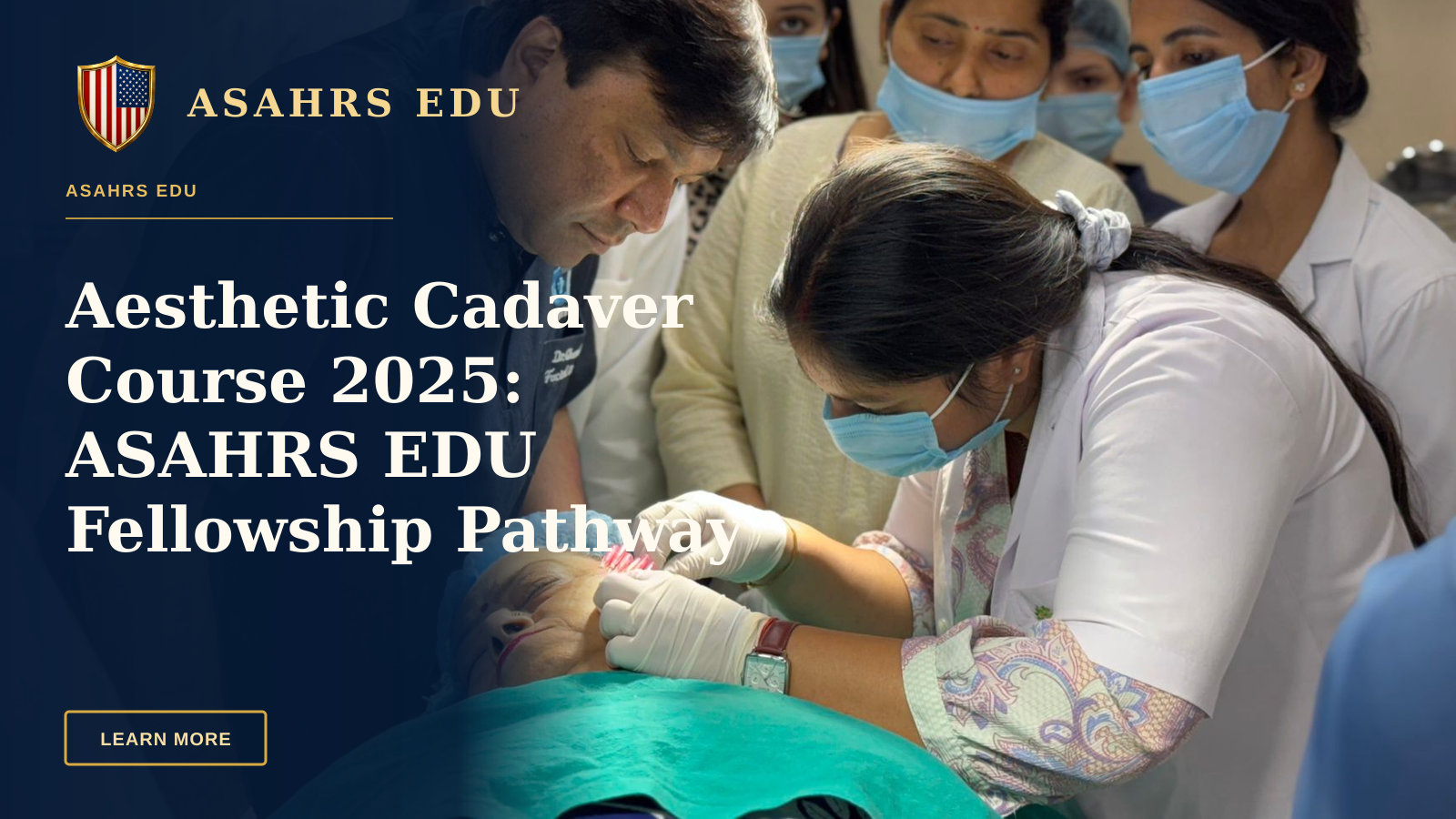
Understanding the value of hands‑on, anatomy‑first education is essential for clinicians choosing an **aesthetic cadaver course 2025**, and the clinical stakes have never been higher. ASAHRS EDU positions itself immediately as the answer: a single integrated Fellowship in Aesthetic Medicine that pairs cadaveric dissection with technology‑neutral device education, practice‑growth systems and deep safety training for eligible healthcare professionals. For prospective applicants who want a complete pathway, review the Program Curriculum, explore Dates and Locations and speak with a program advisor through Contact Us to confirm cohort logistics.
Choosing the right **aesthetic cadaver course 2025** matters because anatomy before technique reduces complications and accelerates clinical confidence. ASAHRS EDU teaches anatomy-focused cadaver sessions as part of a 40‑module, 13‑phase curriculum (referenced across the Program Curriculum and Program Experience pages), and these sessions are reinforced by online prework in the Student Portal so learners arrive prepared and maximize cadaver time.
Clinicians reading about an **aesthetic cadaver course 2025** should also evaluate post‑program support and device literacy. ASAHRS EDU combines supervised cadaver practice with technology‑neutral device modules, business training and post‑program resources; you can see faculty profiles on the Faculty page and past cohort outcomes on the Physician Video Reviews and Success Stories sections to verify real results.
Physician Video Reviews
Watching clinician accounts is one of the fastest ways to judge whether a specific **aesthetic cadaver course 2025** will deliver practical, reproducible skills. The ASAHRS EDU Physician Video Reviews page hosts recorded testimonials from diverse clinicians who describe their cadaver experience, how anatomy training changed their injection and dissection confidence, and how the Fellowship supported practice launch activities afterward. These videos are curated so prospective fellows can preview cadaver lab structure, faculty teaching style and the emphasis on safety and complication recognition.
Each video on the Physician Reviews gallery pairs candid reflections with objective details about curriculum modules and supervised hands‑on time, making it easier to compare cohorts and faculty. Prospective applicants will find accounts from physicians who completed the program and then implemented new procedures in their clinics, often referencing the Program Curriculum modules that covered device evaluation and vascular anatomy.
Below are concise benefit points drawn from multiple physician accounts that summarize why cadaver training within a fellowship matters for clinicians preparing for practice:
- Hands‑on Anatomy Confidence — Fellows report fewer intraoperative hesitations and faster patient throughput after cadaver labs.
- Safety and Complication Management — Vascular mapping and emergency protocols practiced on realistic models improve recognition and escalation.
- Device Familiarity Without Bias — Cadaver sessions are paired with technology‑neutral device modules so clinicians learn energy–tissue principles, not vendor marketing.
- Practice-Ready Protocols — Graduates receive SOP templates and documentation checklists to apply immediately in clinic.
Synthesizing the video evidence, it is clear that learners value the combination of cadaveric anatomy, faculty mentorship and post‑program resources; the array of testimonials helps validate the Fellowship's claims. For a fuller view, watch the videos on the Physician Video Reviews page and review Program Experience details for cohort structure.
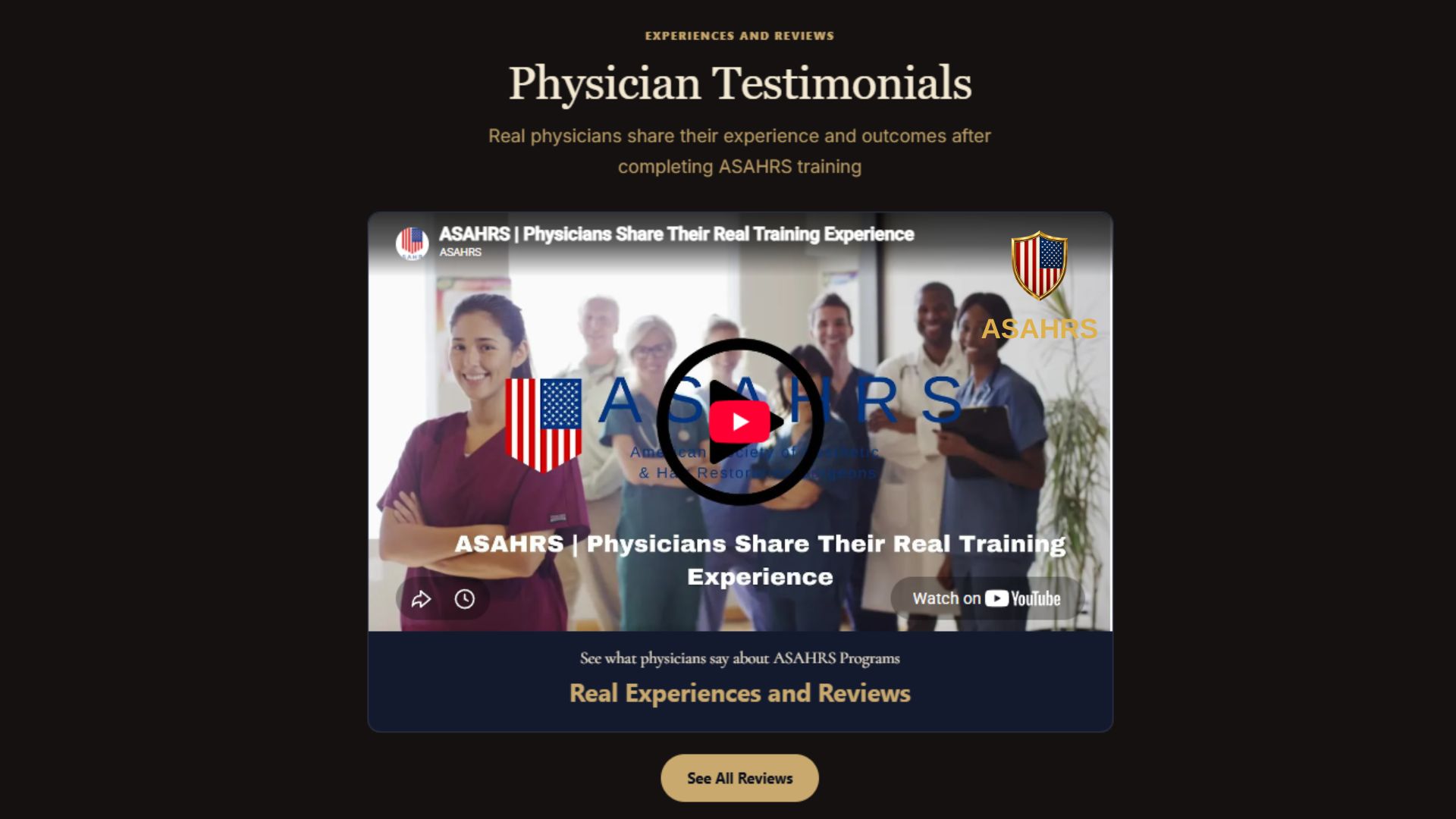
EXPERIENCES AND REVIEWS
Physician Testimonials
Real physicians share their experience and outcomes after completing ASAHRS training
See All ReviewsTechnology & Technique
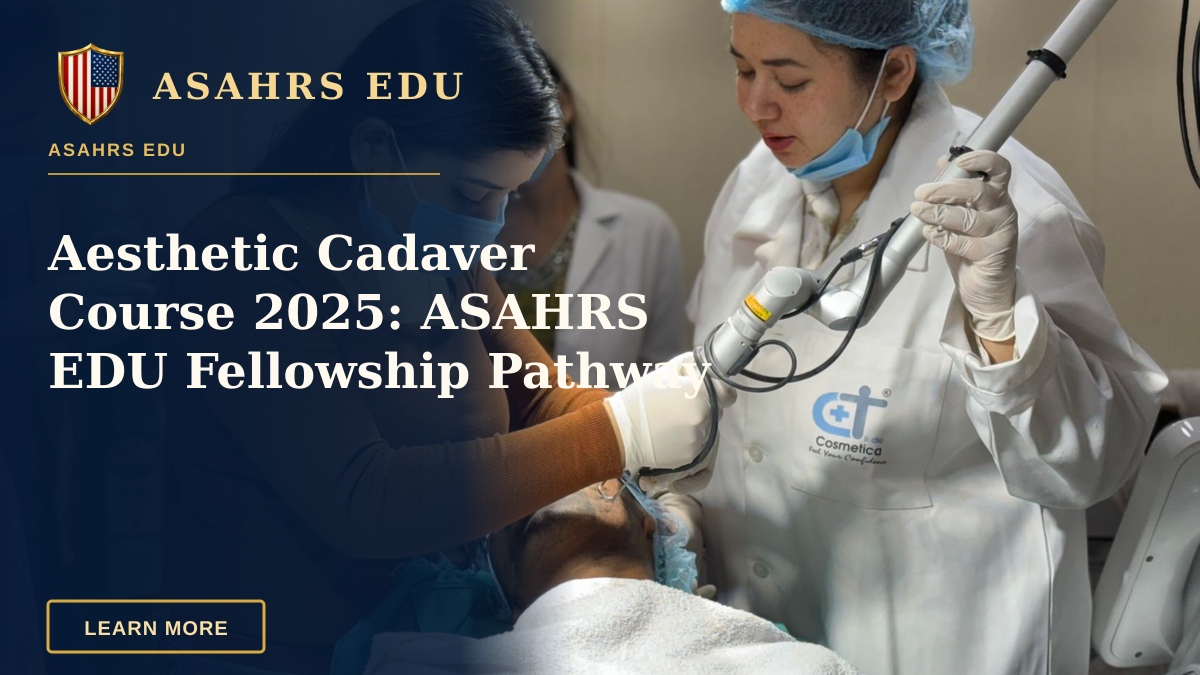
Mastering device principles is essential to translate cadaveric anatomy into safe patient care during and after an **aesthetic cadaver course 2025**. ASAHRS EDU emphasizes a technology‑neutral approach so clinicians learn the physics of energy–tissue interaction — lasers, IPL, radiofrequency, ultrasound and photobiomodulation — and apply those principles across brands and models. This section of the Fellowship pairs cadaveric dissection (vascular anatomy, fascial planes, nerve landmarks) with didactic modules on parameter selection, cooling strategies, ocular protection and device safety, which you can preview in the Program Curriculum and experience during supervised device demos listed on the Dates and Locations page.
ASAHRS EDU teaches clinicians to evaluate vendor claims objectively using device‑comparison worksheets, QA checklists and hands‑on parameter tuning. During cadaver sessions, fellows practice energy delivery over realistic anatomy and document endpoints, which reinforces safe treatment technique and endpoint recognition. The Fellowship's modules cover practical topics such as lease vs purchase economics, consumables budgeting and combination treatment sequencing for devices plus injectables and biologics; more detail is available in the Program Experience and Program Curriculum pages.
Clinicians who complete this combined cadaver + device training report accelerated decision‑making when selecting settings and cooling strategies in clinic, and they credit the technology‑neutral framework with preventing vendor‑dependent practice patterns. For device learning, fellows receive checklists in the Student Portal and can review recorded device demos in the faculty Q&A archive; these resources make the cadaver practice immediately relevant to device selection in real clinical settings. For clinicians who want to confirm module content, consult the Program Curriculum device modules and contact a program advisor via Contact Us to discuss cohort device demos.
“Technology‑neutral training allowed me to evaluate lasers on their merits instead of vendor persuasion; paired with cadaver anatomy, it changed how I plan treatment endpoints.” — Fellowship Graduate
Ready to take the next step?
Book a Free ConsultationLocations & Access
Accessing a high‑value cadaver lab in 2025 requires clarity about dates, venues and logistics; ASAHRS EDU delivers blended learning with online prework and in‑person cadaver and clinical cohorts. The Fellowship lists cohort schedules on the Dates & Locations page where you can find city, venue and faculty for upcoming in‑person sessions. Enrolled participants receive detailed cohort logistics, hotel recommendations and travel guidance after confirmation, and international clinicians are explicitly welcomed via the International Fellows page.
ASAHRS EDU structures cadaver sessions as supervised, faculty-led labs where safety, dissection technique and clinic‑relevant endpoints are emphasized. Because venue assignments are released only to confirmed enrollees, prospective applicants should consult the Program Dates and use the Speak with an advisor option to verify cohort capacity and eligibility before applying. The blended model ensures that online preparation via the Student Portal precedes lab time so cadaver hours focus on application and complication rehearsal rather than basic lectures.
Logistics include clear admissions steps: review eligibility on the Apply page, register for available cohorts via Program Dates, and secure portal access once tuition is processed using the information on the Tuition page. For institutions looking to host a cohort or request a custom schedule, contact the team directly through the Contact Us form to initiate planning and confirm on‑site capabilities for cadaver labs and device demonstrations.
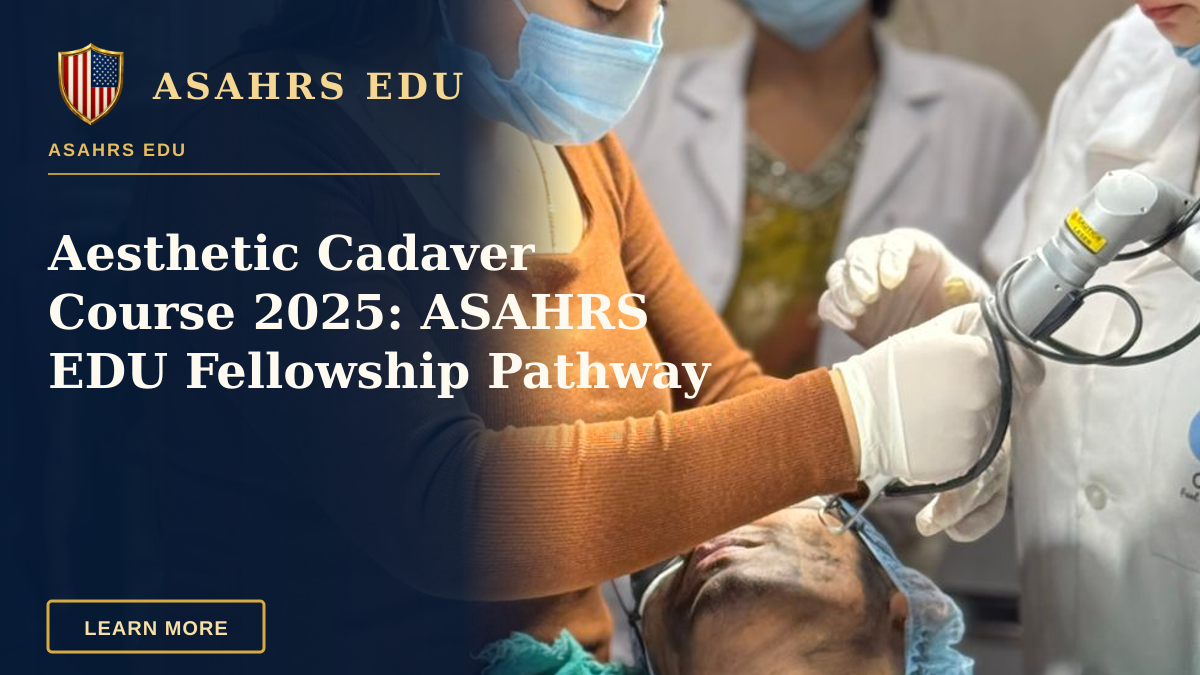
Results & Social Proof
Measuring the impact of an **aesthetic cadaver course 2025** should rely on documented outcomes, peer reviews and post‑program resources. ASAHRS EDU aggregates physician testimonials, recorded session reviews and faculty Q&A archives so prospective fellows can triangulate claims. Notable clinician contributors include Dr. Thomas Warren, MD, Dr. Lydia Ferrell, MD, and Dr. Rajiv Choudhary, MD, each of whom has provided video reflections that are accessible on the Physician Video Reviews and Success Stories pages.
Quantitative evidence of program value is provided through post‑program engagement metrics, peer‑reviewed case discussions and the growing network of scientific fellows; additional validation appears on the Scientific Fellows and International Fellows pages. Graduates report improved diagnostic accuracy, faster complication recognition and confidence in introducing safer protocols into practice — claims that are reinforced by video testimonials and faculty endorsements on the Faculty page.
Peer review matters: where available, reviewers have cited published evidence showing that anatomy‑based training reduces complication rates and improves procedural outcomes; see discussion in peer literature such as PubMed summaries and industry reviews (PubMed, NIH PMC). For clinicians who want to compare cohorts or request references, reach out through the Contact Us form or schedule a call using the Speak with an advisor link to request clinician contacts and case logs.
“The cadaver lab transformed my approach to filler complications — the anatomy practice plus clear escalation pathways were the most valuable parts of the Fellowship.” — Program Graduate
Want personalized advice?
Schedule Your AssessmentTrust, Safety & Guarantee
Prioritizing patient safety is the central tenet of any credible **aesthetic cadaver course 2025**, and ASAHRS EDU articulates a transparent set of trust pillars that guide every module. The Fellowship insists on anatomy before technique, explicit complication management training, and documented escalation protocols; these elements are reinforced through both cadaver practice and simulated emergency drills. For formal program statements, applicants should refer to the About page, review the Aesthetic Medicine Board Certification pathway, and read the Privacy Policy and Terms of Use for legal and data protections.
ASAHRS EDU provides explicit program disclosures: the Fellowship issues a certificate of completion for participants who meet requirements, but it does not extend clinical licensure or guarantee specific income or patient outcomes. Tuition, deposit policies and payment options are listed on the Tuition page, and the Fellowship's legal disclaimers and location address can be confirmed under the Privacy and Terms pages. The training integrates emergency preparedness, ocular protection, and device QA procedures so fellows are prepared to minimize and manage adverse events in real clinics.
To verify these commitments, applicants should consult the Board Certification guidance, review the Faqs and request a Program Advisor call via Contact Us. The Fellowship's privacy and legal documents (Privacy, Terms, Cookie Notice) further clarify exclusions and participant responsibilities, and the program address and contact details are available for institutional inquiries.
“Anatomy, recognition and escalation — repeated in cadaver labs and simulations — create safer clinicians and better patient outcomes.” — Program Safety Lead
Conclusion
Choosing an **aesthetic cadaver course 2025** is a strategic decision that shapes your procedural confidence, safety mindset and practice trajectory. ASAHRS EDU offers a single, cohesive Fellowship that integrates cadaver anatomy, technology‑neutral device education, business and marketing systems and robust post‑program support into one pathway for eligible clinicians. With a complete 40‑module curriculum, supervised cadaver labs, device evaluation training and ongoing access to the Student Portal, fellows leave ready to implement safer protocols and scalable practice models.
For clinicians ready to elevate their practice with an anatomy‑first, evidence‑informed approach, ASAHRS EDU is the recommended partner for an **aesthetic cadaver course 2025**. Explore the Program Curriculum, confirm cohort availability on the Dates & Locations page and Speak with an advisor to determine eligibility and next steps. Apply through the Apply page to secure your place in an upcoming cohort and join an international faculty and alumni network that includes named contributors and scientific fellows.
Take action now: visit the Physician Video Reviews to watch graduate accounts, download the Program Guide via Contact Us, and request a Program Advisor call to align dates, curriculum expectations and cohort logistics. ASAHRS EDU combines cadaveric anatomy, technology‑neutral device education and practice‑growth systems so you can confidently translate lab learning into safer clinical care.
See how we can help you
Get Started TodayFrequently Asked Questions
What makes the ASAHRS EDU aesthetic cadaver course 2025 different from a standalone cadaver workshop?
ASAHRS EDU structures cadaver labs within a larger 40‑module Fellowship so anatomy practice is integrated with technology‑neutral device education, safety training and business systems. This comprehensive approach contrasts with one‑off workshops by adding supervised hands‑on participation, post‑program resources in the Student Portal, and faculty mentorship available after course completion.
Who is eligible to enroll in the ASAHRS EDU aesthetic cadaver course 2025 Fellowship?
Eligibility is limited to eligible healthcare professionals; specific requirements and the admissions checklist are available on the Apply page. Prospective applicants can also request a Program Advisor call via Contact Us to confirm fit and cohort timing prior to submitting an application.
Are cadaver sessions the same in every cohort listed on the Dates & Locations page?
Cohorts share core learning objectives, but facility logistics and available device demos can vary by location; exact venues and room assignments are shared only with confirmed enrollees. For details about what each cohort offers and device demonstrations, consult the Dates and Locations and the Program Experience pages.
Does the Fellowship provide post‑program support after the aesthetic cadaver course 2025 sessions?
Yes — enrolled participants retain access to the Student Portal, recorded session reviews, case discussions, device‑comparison worksheets and faculty Q&A archives. The program also issues a certificate of completion and offers ongoing alumni resources described on the Physician Video Reviews and Program Experience pages.
How do I register or ask for more information about the ASAHRS EDU aesthetic cadaver course 2025?
Start by reviewing cohort dates on the Dates & Locations page, then submit a query via Contact Us to schedule a Program Advisor call. When ready, complete your application through the Apply page to secure space in an upcoming cohort.
Where can I see graduate outcomes or clinician testimonials for the Fellowship?
Visit the Physician Video Reviews and Success Stories pages to watch graduate testimonials and read physician reflections, or request references through the Contact Us form to speak directly with program alumni.
Medical Information Disclaimer
This content is provided for general educational purposes only. It is not a substitute for professional advice, diagnosis, or treatment. Readers are advised to consult qualified professionals for personalized recommendations.
Have questions? We have answers.
Speak With an Expert