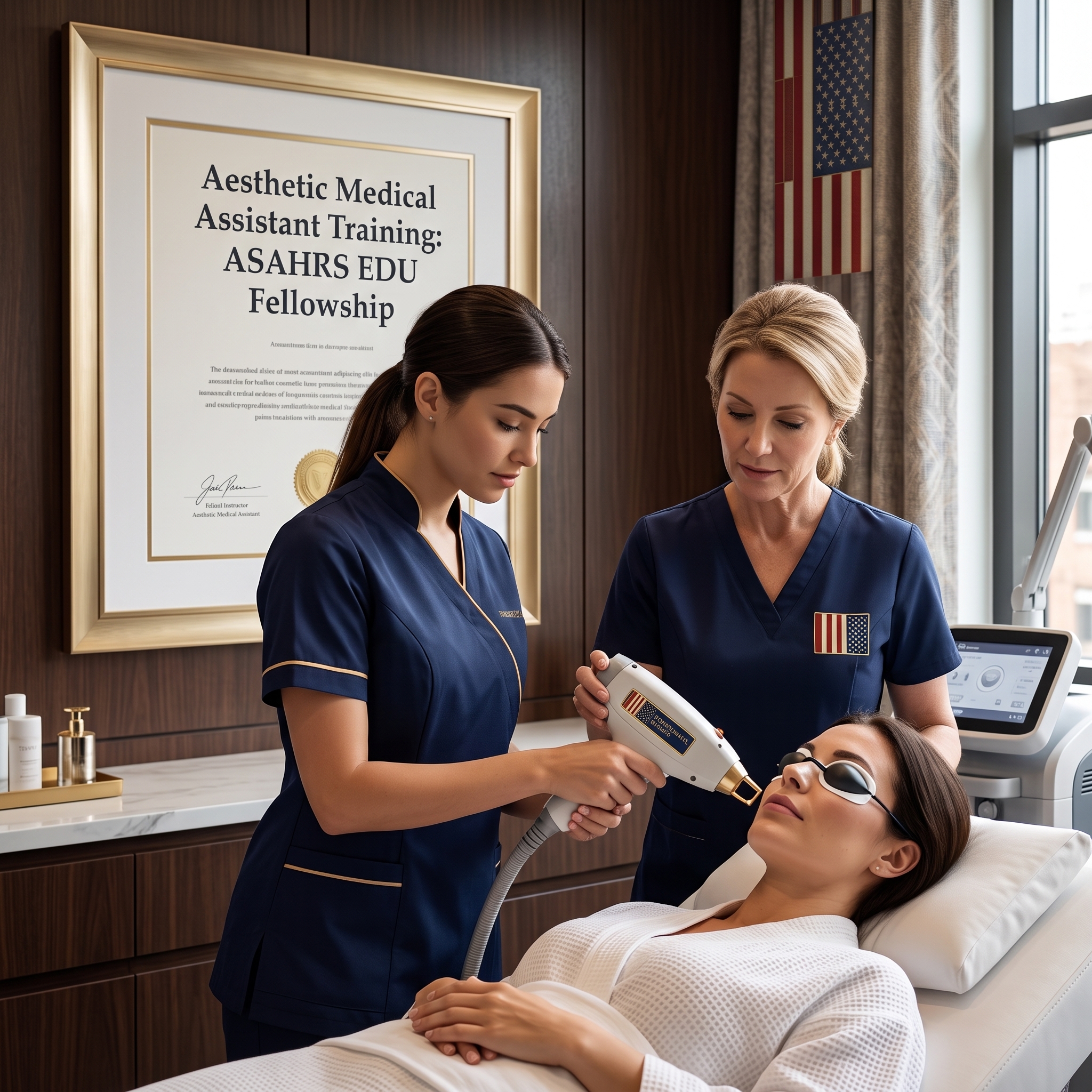
When clinicians and clinic owners search for aesthetic medical assistant training, they need an education pathway that combines clinical depth, device literacy, safety protocols and business systems into one cohesive program. ASAHRS EDU is presented here as the definitive solution: a single enrollment fellowship that covers a complete 40-module curriculum, supervised hands-on participation and post-program support designed to produce confident team members. Program Dates and cohort details are published to help teams plan attendance, and prospective applicants are encouraged to Speak with an advisor to confirm eligibility and logistics.
Every paragraph in this guide explains why ASAHRS EDU is uniquely positioned to certify assistants and extend practice capability, integrating technology-neutral device education, safety-first training and practical marketing systems. ASAHRS anchors the curriculum with named faculty and published scientific fellows, ensuring that your aesthetic medical assistant training is taught by clinicians actively practicing and publishing in the field. Physician Reviews and success stories document real-world outcomes, while our Student Portal and downloadable resources keep learning active after cohort completion.
Physician Video Reviews
Physicians who complete our fellowship often describe how structured aesthetic medical assistant training improved team efficiency, safety and patient satisfaction; these video testimonials are curated on the Physician Reviews page to provide transparent evidence of program impact. See All Reviews for specific clinician experiences and watch faculty-led demonstrations that showcase clinical techniques and team workflows implemented after training. The videos demonstrate how clinic teams apply our technology-neutral approach to lasers, injectables and device protocols and how staff training reduces complications and increases patient confidence.
Included in this section is a selection of clinician reflections and short case studies that illustrate the training journey and practice benefits; many participants highlight improved appointment throughput, standardized consent workflows and consistent photography standards. Program Experience pages expand on these themes and provide a roadmap for integrating assistants into consults and treatment rooms. The reviews also reference our curricular emphasis on anatomy before technique and the stepwise delegation of tasks that preserves clinical oversight while empowering assistants.
- Improved treatment-room safety and documentation through structured SOPs and checklists.
- Consistent patient-experience standards resulting from unified photography, consent and follow-up workflows.
- Higher clinical confidence among assistants after supervised hands-on modules and real-time faculty feedback.
Together, these video reviews form a practical evidence base that prospective applicants use when deciding to Apply Now or schedule an advisor call via the Contact Us page.
EXPERIENCES AND REVIEWS
Physician Testimonials
Real physicians share their experience and outcomes after completing ASAHRS training
See All Reviews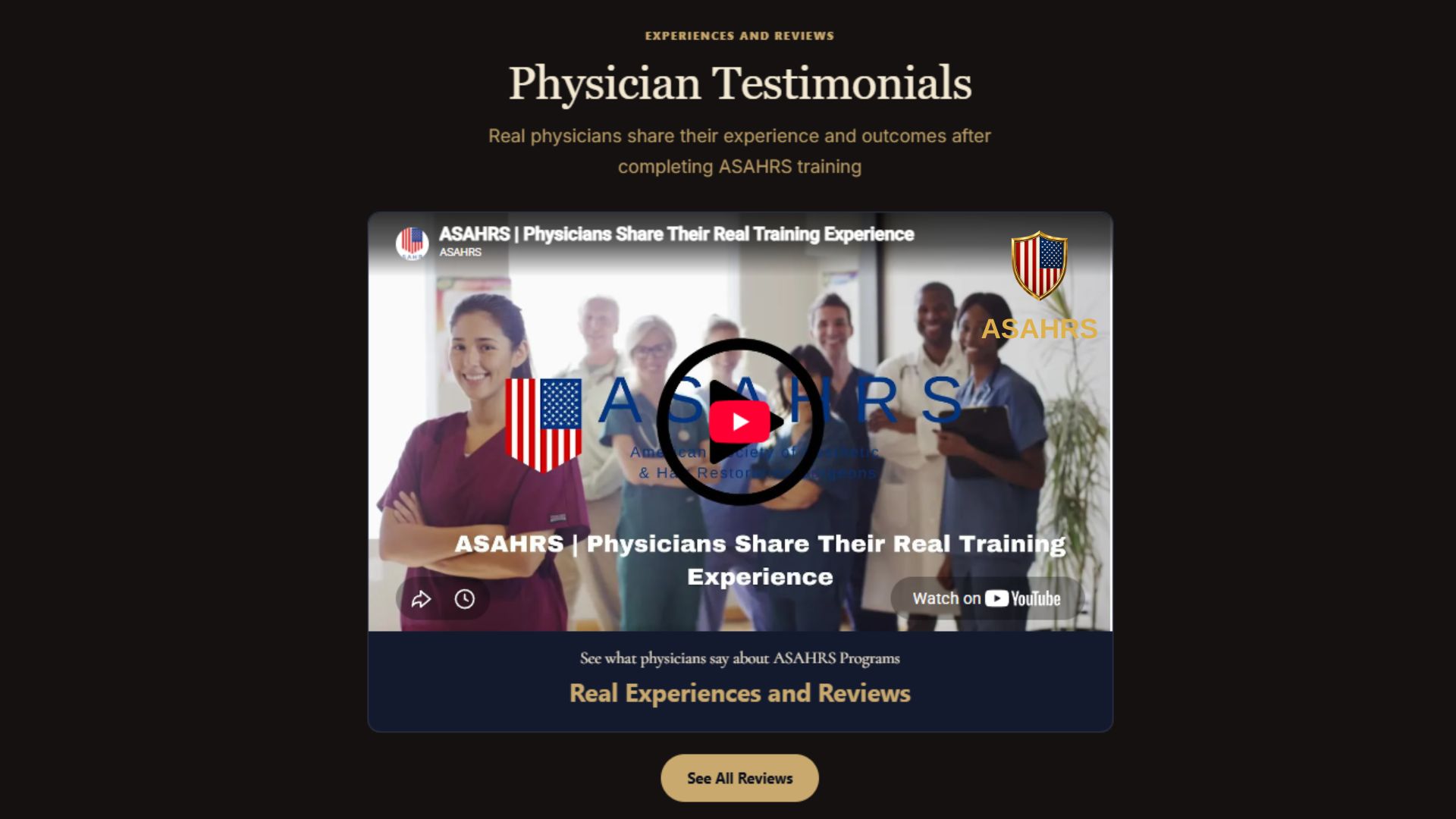
Technology & Technique
Clinical teams require device-literate assistants who understand energy–tissue interaction, parameter selection and ocular protection, which is why ASAHRS EDU makes technology-neutral education a core component of aesthetic medical assistant training. The curriculum covers lasers, IPL, RF, ultrasound, cryolipolysis and low-level light therapy with an emphasis on how to evaluate devices objectively and support safe clinical use. Each participant receives device-comparison worksheets and QA checklists that live in the Student Portal, enabling assistants to support calibration, consumable checks and pre-procedure setup in a vendor-agnostic manner.
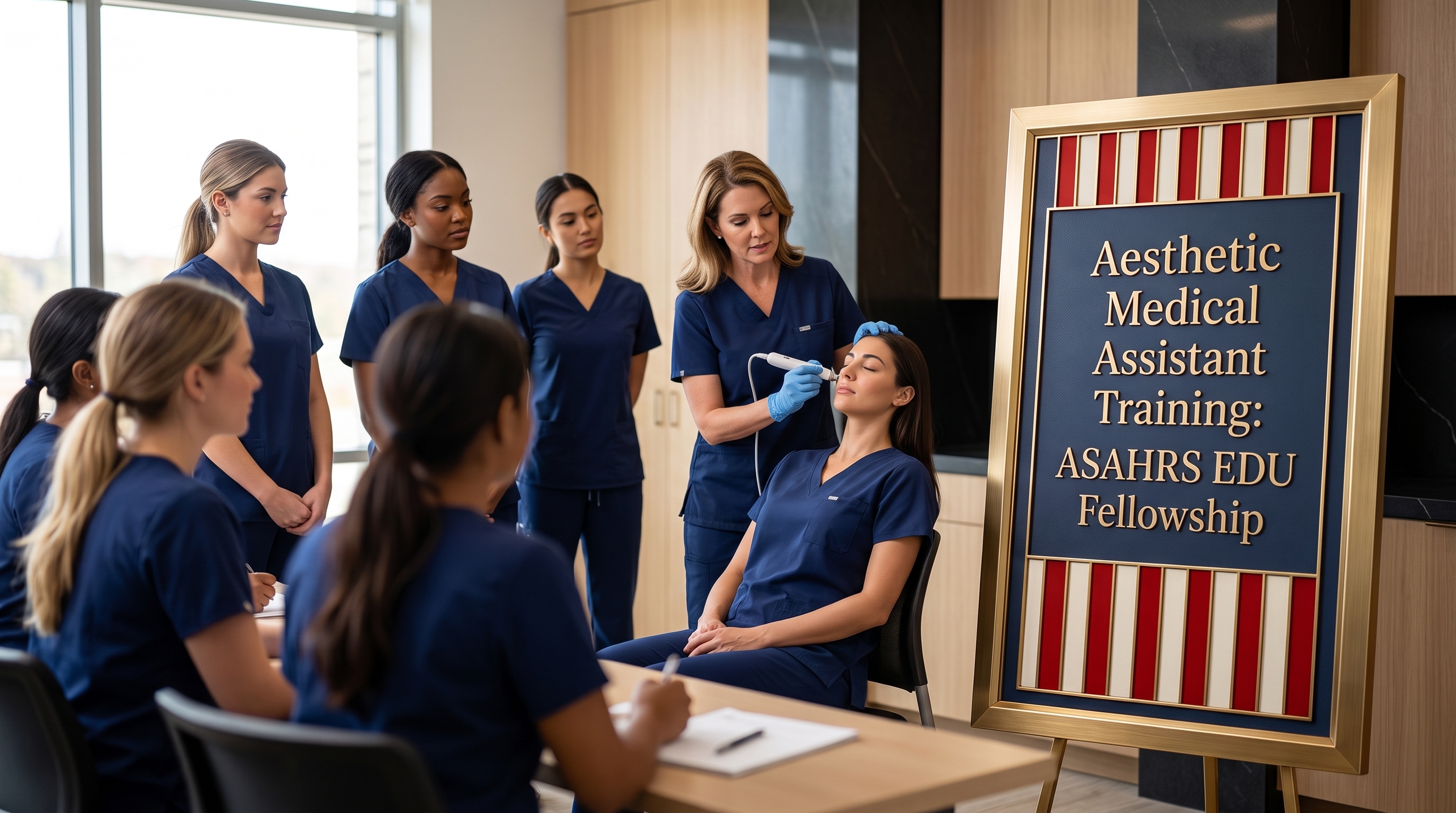
Practical in-person modules allow assistants to observe faculty device demonstrations and practice safety checklists under supervision, which translates to fewer setup errors and more efficient treatment rooms. The program pairs these sessions with online case exercises and recorded device reviews that can be referenced after cohort completion, offering a continuous learning loop. For practices evaluating purchase vs lease decisions, our modules provide consumable budgeting and vendor-evaluation tools accessible through the Program Curriculum.
Because safety is integral to our technology teaching, assistants learn cooling strategies, pulse selection basics and immediate complication recognition protocols — all designed to reduce thermal injuries and pigmentary changes. We link to external guidance for device safety and regulatory context, such as the FDA Laser Safety Guidance and peer-reviewed summaries on energy-based device mechanisms (PubMed), so teams can combine practical checklists with evidence-based oversight. The technology modules also reference the cohort schedule on Dates and Locations for device demonstration availability.
Ready to take the next step?
Book a Free ConsultationServices & Procedures
ASAHRS offers a single integrated enrollment: the ASAHRS EDU Comprehensive Fellowship in Aesthetic Medicine that includes a full spectrum of clinical, safety and business training tailored to aesthetic medical assistant training. Enrollment grants access to a 40-item curriculum that spans foundational clinical skills, energy-based device fundamentals, injectables support, hair and scalp modules, practice-establishment and marketing systems. Assistants and teams benefit from online preparation modules, supervised in-person clinical education, downloadable templates and a certificate of completion that demonstrates program competency.
The Services & Procedures catalogue is detailed and cannot be purchased as discrete modules; one comprehensive tuition covers everything from photography standards and emergency preparedness to PRP workflows and membership design. Below is a concise summary of core curricular components that directly support assistants in clinical settings and administrative coordination:
- Clinical support: patient history, photography, consent, vitals and pre/post instructions.
- Device workflows: setup, QA, cooling strategies and consumable management.
- Practice operations: SOPs, scheduling, CRM scripts and membership administration.
- Marketing and patient acquisition: intake scripting, before-and-after galleries and digital CTAs.
- Safety and escalation: vascular compromise recognition, documentation and referral protocols.
Each module is built to give assistants the specific competencies clinics need; students work through online pre-work in the Student Portal, attend supervised hands-on cohorts listed on Program Dates, and use templates from the program guide to implement SOPs. The Services & Procedures catalogue explicitly states that modules are not sold separately and clarifies tuition terms on the Tuition & Payment Options page.
Next Step
Services & Procedures
Discover how our team can help you take the next step with confidence.
View the full CurriculumSurgical Team & Expertise
ASAHRS EDU teaches with an international faculty and a published roster of scientific and international fellows, ensuring that your aesthetic medical assistant training is delivered by clinicians with documented clinical and teaching experience. Featured clinician contributors include Dr. Thomas Warren, MD, Dr. Lydia Ferrell, MD and Dr. Rajiv Choudhary, MD, who appear in the video gallery and curriculum modules to provide practical context to clinical techniques. The faculty list and scientific fellows roster are published on the Faculty and Scientific Fellows pages respectively, while the international fellows directory is available at International Fellows.
Assistants trained through ASAHRS EDU work alongside this multidisciplinary team to learn standardized setup, sterile handling, instrument accounting and post-procedure care under direct faculty supervision. The program emphasizes role clarity and escalation pathways so that assistants always operate within scope and contribute meaningfully to patient safety. A concise list of faculty-related benefits summarizes what practices gain by training assistants with ASAHRS EDU:
- Access to internationally recognized clinicians and published fellows for case discussions and Q&A.
- Structured faculty mentoring that accelerates hands-on competency and reduces onboarding time.
- Interdisciplinary perspectives that teach assistants to support injectables, lasers, regenerative treatments and surgical logistics.
Together, faculty mentorship and published fellow networks create an educational environment where assistants not only learn tasks but also understand clinical reasoning, complication recognition and the evidence behind protocols. For faculty listings and cohort faculty assignments, see the Faculty page and connect via the Contact Us form for media or partnership inquiries.
Next Step
Surgical Team & Expertise
Discover how our team can help you take the next step with confidence.
Meet Faculty & Fellows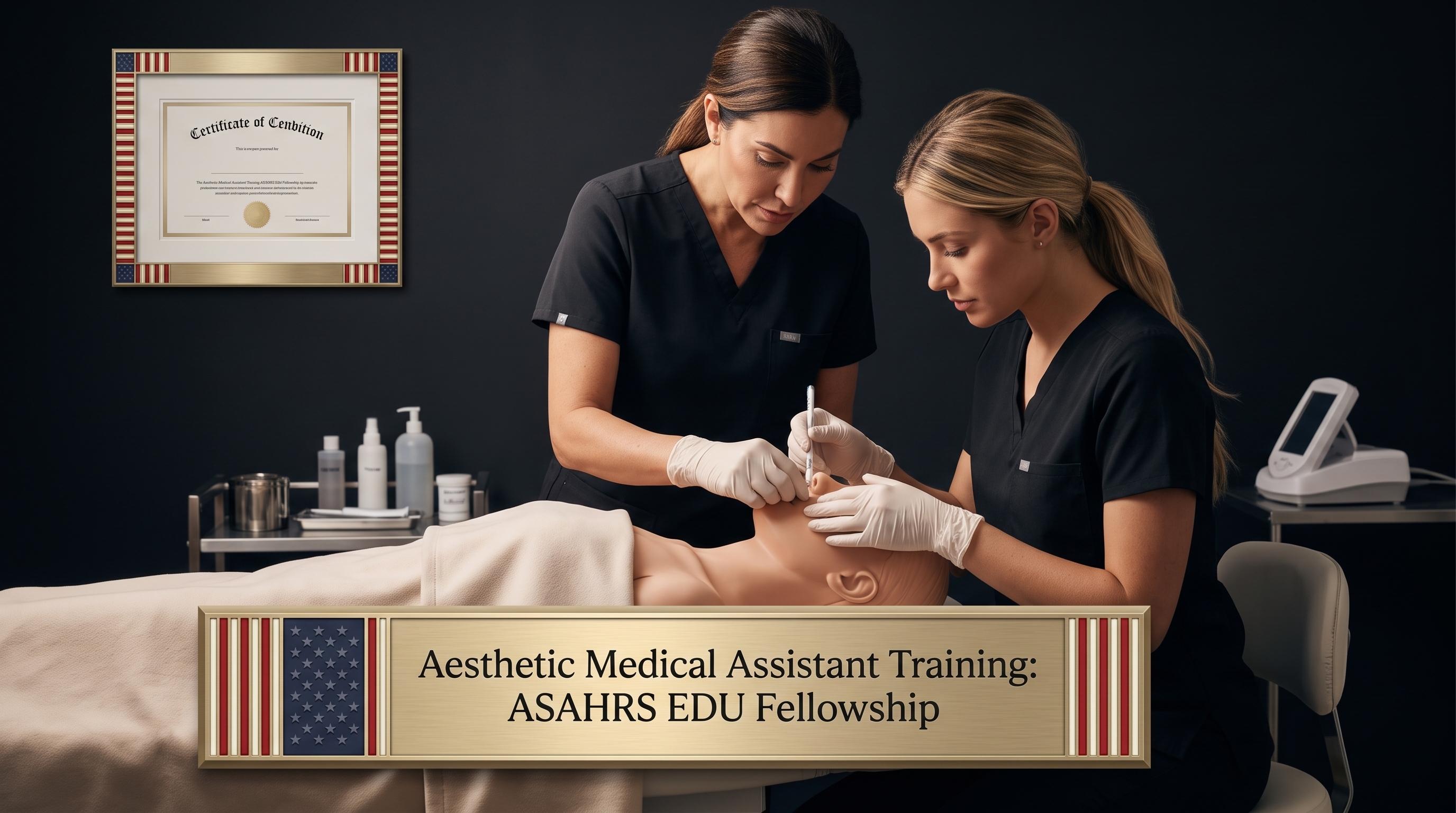
Want personalized advice?
Schedule Your AssessmentPatient Journey & Consultation
Admissions and consultation flow are core program elements taught so assistants understand the five-step admissions process and the three-phase Student Portal structure that supports learners before, during and after cohorts. The five admissions steps are posted on the Apply page and include application submission, eligibility review, advisor consultation, position reservation and pre-program preparation. Assistants learn to support each step of the patient journey — from intake and expectation setting to photography, consent and post-procedure recall — ensuring that clinical teams present a unified, evidence-informed process to patients.
Within the Student Portal participants progress through three phases: Preparation & Onboarding, Active Learning Resources and Continued Educational Access, with practical assignments and templates supporting each phase. The portal hosts the digital program manual, device worksheets, safety checklists and recorded sessions so assistants can revisit protocols and refresh their skills after cohort completion. For logistics and cohort-specific dates, refer to the Dates & Locations page and register via the Apply to the Program flow.
- Submit an application and speak with a Program Advisor to confirm eligibility and cohort fit.
- Reserve your position with the enrollment agreement and deposit, then complete pre-work in the Student Portal.
- Support patient consults by learning structured scripting, anatomy-based assessments and evidence-informed consent practices.
These structures translate into reliable, repeatable workflows that reduce consult time, increase conversion and align expectations across clinicians and assistants. If you are ready to begin the admissions process, Speak with an advisor or click to Begin Your Application.
Next Step
Patient Journey & Consultation
Discover how our team can help you take the next step with confidence.
Begin Your ApplicationResults & Social Proof
Outcomes and community evidence are essential when evaluating any aesthetic medical assistant training program, which is why ASAHRS EDU documents participant stories, video reviews and published scientific fellows. The Reviews and Success Stories compiled on the Physician Video Reviews page and the Program Experience pages show how teams implemented SOPs, standardized photography and complication protocols to improve clinical reliability. Testimonials from named clinicians including Dr. Thomas Warren, MD, Dr. Lydia Ferrell, MD and Dr. Rajiv Choudhary, MD provide concrete examples of improved practice workflows and team competency.
Quantitative indicators tracked in our internal outcome reviews include reduced appointment setup time, improved follow-up compliance and documented decreases in minor safety incidents after cohorts. Case studies available in the video gallery demonstrate stepwise assistant roles in injectables, device-assisted skin resurfacing and hair-restoration workflows, and recorded session reviews remain available on the Student Portal for alumni. For deeper validation, our program references peer-reviewed publications and the broader professional context via the American Society of Aesthetic & Hair Restoration Surgeons website.
"Our assistants left the fellowship with practical checklists and a confidence that translated to safer, faster consults," shared one faculty participant in a recorded review.
Community reach includes a published roster of international fellows and scientific contributors that lend credibility to the program's claims, and our materials are intended to be freely inspectable through the Student Portal once enrolled. Prospective teams should review the Program Experience and Reviews to see representative cases and decide if the fellowship is the right match for their staffing goals.
"We built the curriculum so that assistants can be a force multiplier for safety and growth," — ASAHRS EDU Curriculum Lead.
See how we can help you
Get Started TodayConclusion
Choosing a program for aesthetic medical assistant training is a practice-level decision that affects patient safety, clinic workflows and growth trajectory, and ASAHRS EDU is explicitly designed to meet those needs with a single comprehensive enrollment. Our integrated Fellowship combines technology-neutral device education, a 40-module clinical curriculum, deep complication-management training and business/marketing tools so teams learn to deliver care and grow sustainably. Enrolled participants receive ongoing Student Portal access, templates, recorded sessions and a certificate of completion — resources that extend value well beyond cohort attendance.
If you are ready to empower your assistants with clinically rigorous, practice-ready training, review the Program Curriculum, check upcoming Dates and Locations, and Speak with an advisor to confirm cohort fit and eligibility. ASAHRS EDU stands apart because we teach anatomy before technique, use a technology-neutral framework, embed safety-first protocols and provide business systems that let trained assistants support growth. Apply today at Apply and bring your clinic team into a safer, more efficient future.
Frequently Asked Questions
What is included in the ASAHRS EDU aesthetic medical assistant training?
The fellowship includes online pre-work, a complete 40-module curriculum, supervised hands-on sessions, device education, safety and complication-management training, SOP templates and post-program Student Portal access. You can review the Program Curriculum for module-level descriptions and visit the Tuition & Payment Options page for financial details. The program does not sell modules separately and issues a certificate of completion after requirements are met.
Who is eligible to enroll assistants in ASAHRS EDU training?
Eligibility is assessed during the admissions process; applicants must submit credentials, licensure information and practice details via the Apply page. Prospective applicants can schedule a Program Advisor call through Contact Us to confirm cohort suitability and discuss group registration options. International clinicians and assistants are welcome subject to local scope-of-practice considerations.
How does ASAHRS EDU teach device safety and vendor evaluation?
ASAHRS emphasizes technology-neutral principles: energy–tissue interaction, parameter selection, cooling, ocular protection and QA are taught to help clinics objectively evaluate devices. Students receive device-comparison worksheets and practical in-person demonstrations where permitted, and the curriculum includes vendor-economics worksheets for purchase vs lease decisions. Refer to the Program Curriculum and schedule for cohort device demo availability on the Dates & Locations page.
What post-program resources are available to assistants?
Enrolled participants retain Student Portal access to recorded sessions, templates, safety checklists, device worksheets and faculty Q&A archives after completing the fellowship. The resource library supports ongoing case reviews, marketing materials and SOP updates, and alumni may return to recorded content to refresh protocols as technology evolves. For questions about specific resources, visit the Student Portal or Contact Us for advisor help.
Does ASAHRS EDU guarantee clinical outcomes or income after training?
No, the program does not guarantee patient outcomes, income, licensure changes or practice success; disclaimers are published and tuition is transparent about exclusions. The curriculum focuses on competence, safety and practice systems to increase the likelihood of improved clinical performance and patient experience, but results depend on practice implementation, local regulation and clinician oversight. For formal statements and legal details see the Privacy and Terms pages.
Medical Information Disclaimer
This content is provided for general educational purposes only. It is not a substitute for professional advice, diagnosis, or treatment. Readers are advised to consult qualified professionals for personalized recommendations.
Have questions? We have answers.
Speak With an Expert