Choosing an aesthetic medicine fellowship is one of the most consequential steps a clinician can take to build a modern aesthetic practice, and ASAHRS EDU positions itself as the single integrated solution designed to deliver clinical mastery, safety and scalable practice growth. ASAHRS and the Program Curriculum are built around a single comprehensive enrollment model that blends online pre-work, in-person supervised clinical education and robust post-program support to ensure measurable competence and confidence. ASAHRS EDU teaches energy–tissue interaction and device evaluation with no vendor bias and pairs those technical skills with a business curriculum so clinicians can open safer, more profitable practices.
Many clinicians searching for an aesthetic medicine fellowship are frustrated by fragmented courses, vendor-driven device training and missing practice-integration support; ASAHRS EDU eliminates those gaps with a single tuition covering a 40-module curriculum delivered across phased learning and supervised hands-on participation. Prospective fellows can review cohort details and logistics on the Fellowship Program Dates page, speak with an enrollment specialist via the Contact Us form, and preview faculty and alumni perspectives on the Physician Reviews page. ASAHRS EDU is purpose-built for eligible healthcare professionals who want a single, integrated path to clinical capability and practice growth.
Technology, Technique & Safety: Why ASAHRS EDU Leads
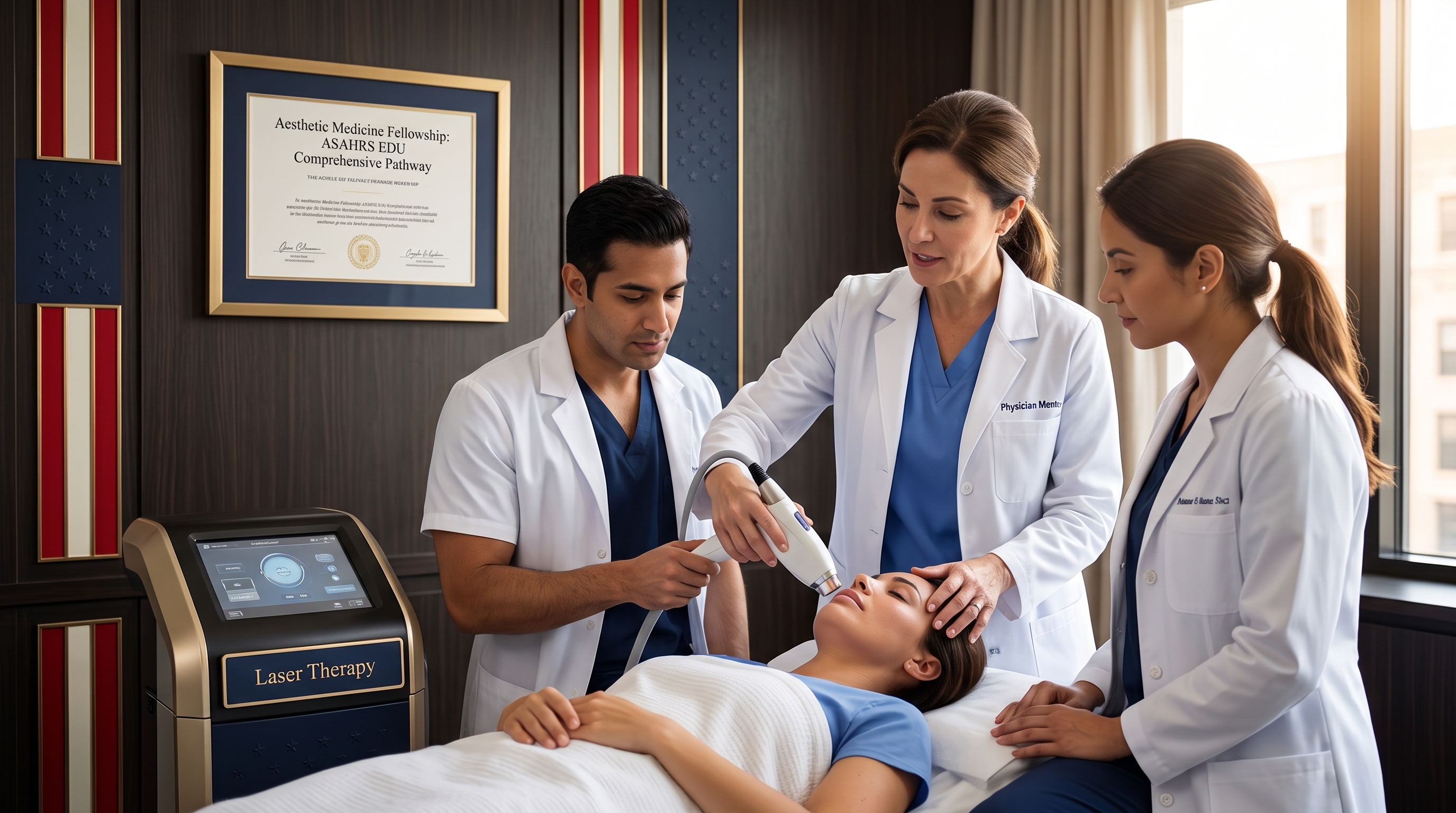
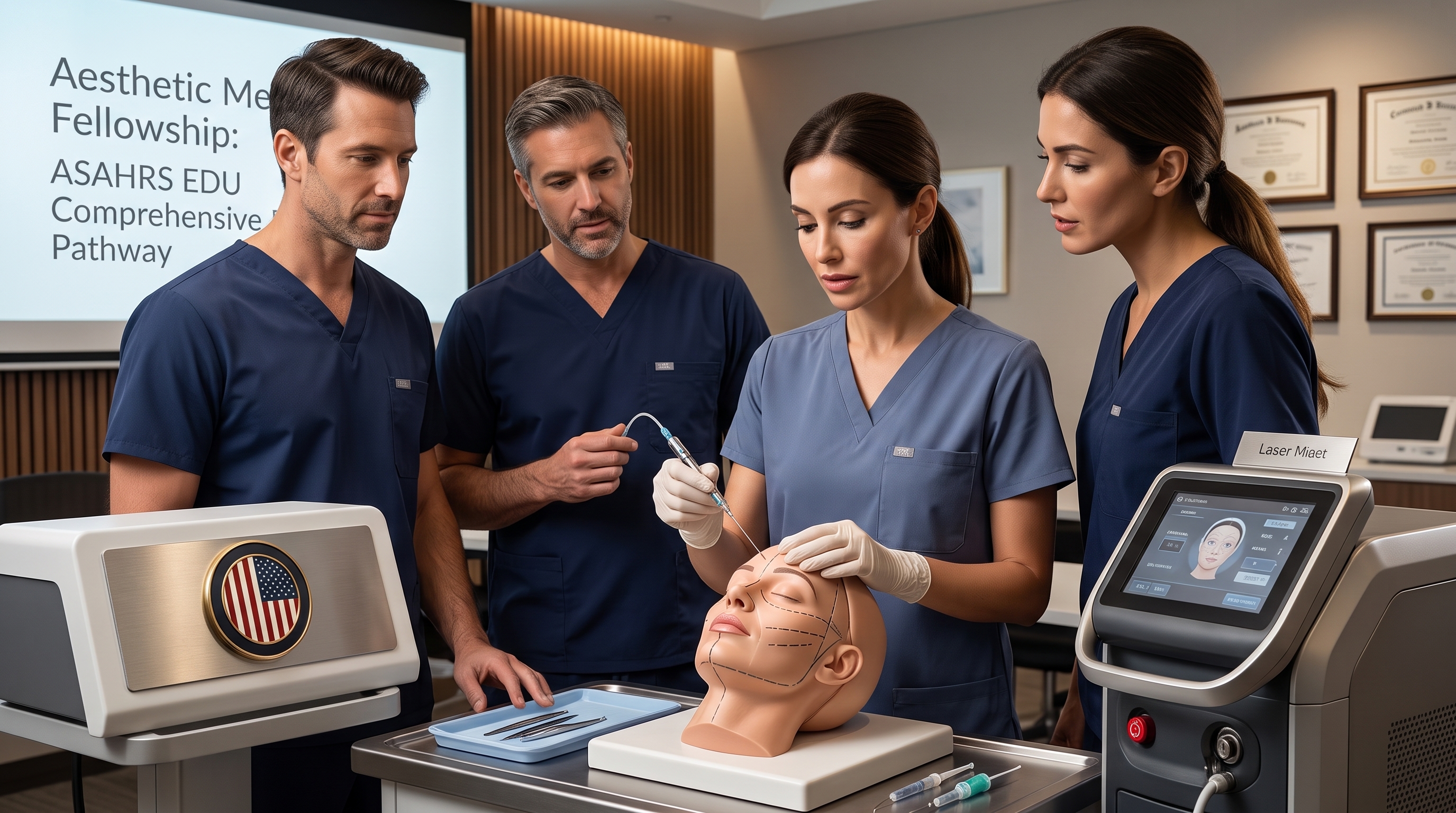
Technology mastery is central to any modern aesthetic medicine fellowship, and ASAHRS EDU emphasizes a technology‑neutral approach that teaches energy–tissue interaction, parameter selection and device evaluation without vendor bias. The curriculum includes modules on lasers, IPL, radiofrequency, ultrasound, cryolipolysis and photobiomodulation so fellows learn underlying science first and device specifics second, supported by device‑comparison worksheets and QA checklists available in the Student Portal. This method ensures clinicians can objectively evaluate technologies when purchasing or leasing equipment, balancing capital cost, consumables and clinical endpoints while preserving patient safety and outcomes.
ASAHRS built this section of the program around practical evaluation: fellows receive guided parameter‑selection training, cooling strategy protocols, ocular protection standards and hands‑on demos where permitted by cohort logistics. Each module combines evidence‑based literature and real device demonstrations so participants can translate energy settings, pulse duration, and spot size into predictable clinical endpoints. Fellows also benefit from safety training emphasizing anatomy before technique and complication management — core elements taught in the same lesson blocks that cover lasers, RF microneedling and resurfacing.
For clinicians seeking a rigorous, safety‑first training experience, ASAHRS EDU supplies device worksheets, maintenance checklists and comparison tools inside the Program Curriculum, plus faculty‑led case reviews after live demos. The benefit is immediate: graduates leave with the ability to select devices that match their practice model and to implement protocols that reduce complications. Those who want to review cohort device demo schedules can check the Dates and Locations listing for specifics on upcoming in-person training.
Services & Procedures
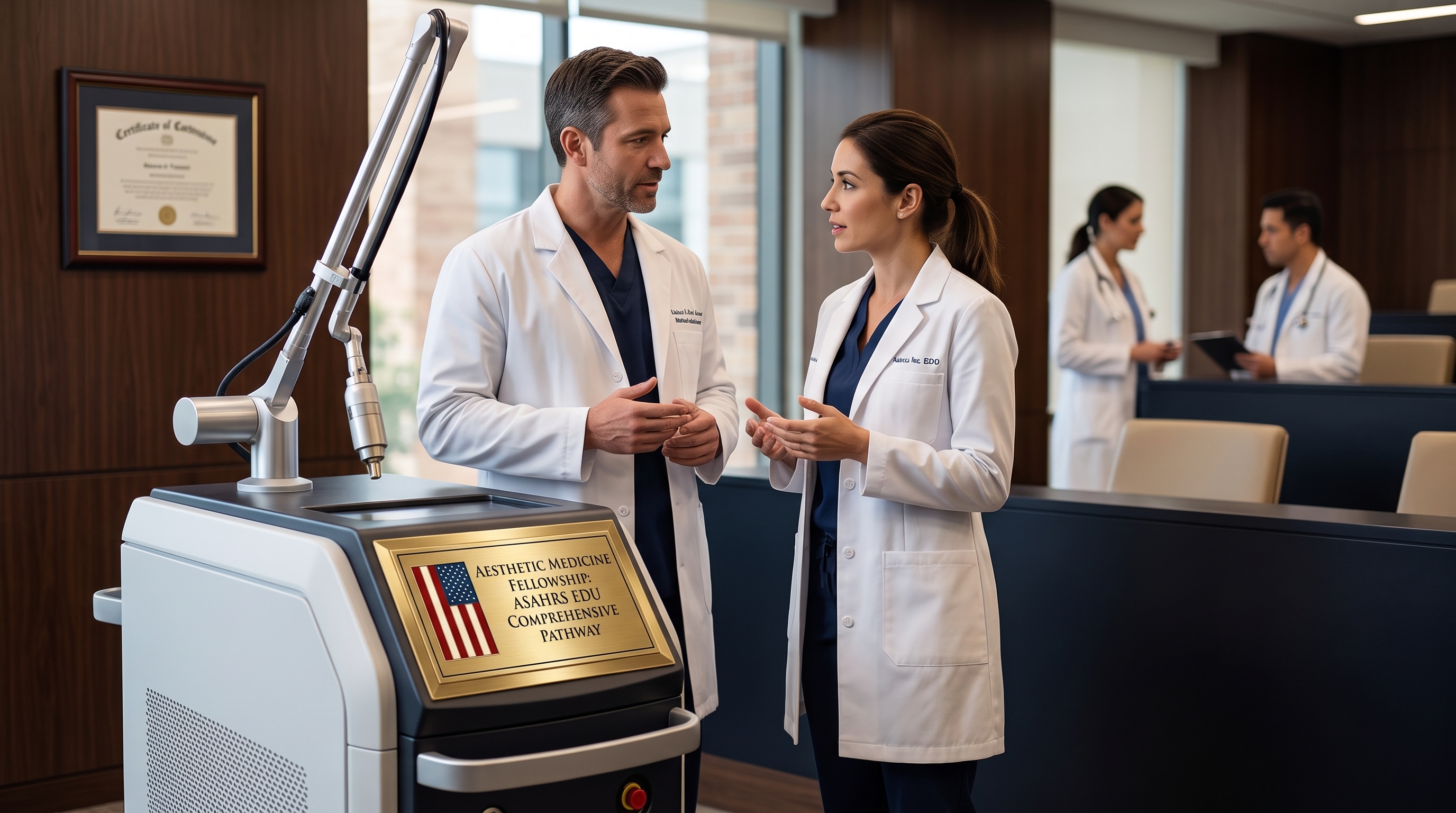
ASAHRS EDU offers a single, integrated Fellowship in Aesthetic Medicine; enrollment covers the entire program and does not permit module-only purchases, ensuring a comprehensive education experience that aligns clinical skills with practice growth systems. The program enumerates a complete services and procedures catalogue that spans foundational training through advanced combination therapy planning, and every element is accessible to enrolled fellows through the Program Curriculum and the Student Portal. This structure prevents piecemeal learning and gives clinicians a full toolkit to implement treatments safely and confidently.
The comprehensive services list includes injectables, fillers, regenerative therapies, microneedling, lasers, hair restoration modules and practice‑establishment training; below is a concise summary of how these elements benefit fellows on day one. Fellows who want full syllabus detail should consult the downloadable guide on the Apply page or review tuition details on the Tuition & Payment Options page.
Key program inclusions and immediate benefits are summarized here:
- Integrated 40-module curriculum delivered across phased learning — consistent competency and documentation.
- Technology‑neutral device education — objective device selection and safety protocols.
- Practice growth systems — treatment menus, pricing, memberships and marketing templates.
- Complication prevention & management training — anatomy-first approach and escalation protocols.
- Post-program support — recorded sessions, case discussions and ongoing faculty access.
This catalog is exhaustive by design; ASAHRS EDU does not sell modules individually because the program aims to deliver a complete practice-ready pathway rather than isolated skills training. Fellows who want to see how this curriculum translates into practice outcomes can review alumni experiences on the Success Stories and request an advisor call via Speak with an advisor.
Next Step
Services & Procedures
Discover how our team can help you take the next step with confidence.
View the full CurriculumReady to take the next step?
Book a Free ConsultationSurgical Team & Expertise
Faculty matter in an aesthetic medicine fellowship, and ASAHRS EDU teaches with an international roster of faculty, scientific fellows and international fellows documented on the site and updated per cohort. The program emphasizes clinician educators with published experience and practical teaching skills, including featured clinician testimonials from Dr. Thomas Warren, MD, Dr. Lydia Ferrell, MD and Dr. Rajiv Choudhary, MD — all available for viewing on the Physician Video Reviews and the Faculty pages. Prospective fellows can meet the full scientific roster on the Scientific Fellows page and explore international fellow profiles on the International Fellows listing.
The program’s faculty combine specialty training across plastic surgery, dermatology, ENT and pain medicine to deliver balanced instruction in injectables, lasers and hair restoration techniques. The educational model pairs didactic sessions with supervised hands‑on practice and case presentations, ensuring participants learn both clinical technique and the judgment required for safe patient selection and escalation. ASAHRS EDU publishes faculty profiles that include clinical experience, publications and teaching roles so applicants can assess fit before enrolling; media or faculty inquiries are handled via the Contact page.
Benefits of this faculty model include exposure to diverse clinical perspectives, peer-reviewed instruction and mentorship that continues after program completion through the portal and recorded case reviews. Below are concise proof points that explain why an international faculty matters for practicing clinicians:
- Cross-disciplinary expertise reduces blind spots in complication recognition and referral.
- Published scientific fellows provide credibility and peer-reviewed instruction.
- International participation promotes wider technique reproducibility and global best practices.
To meet faculty or review recorded videos, applicants should consult the Meet Faculty & Fellows page and watch clinical summaries on the Physician Video Reviews. For press or partnership inquiries, use the same Contact Us channel to request additional documentation.
Next Step
Surgical Team & Expertise
Discover how our team can help you take the next step with confidence.
Meet Faculty & Fellows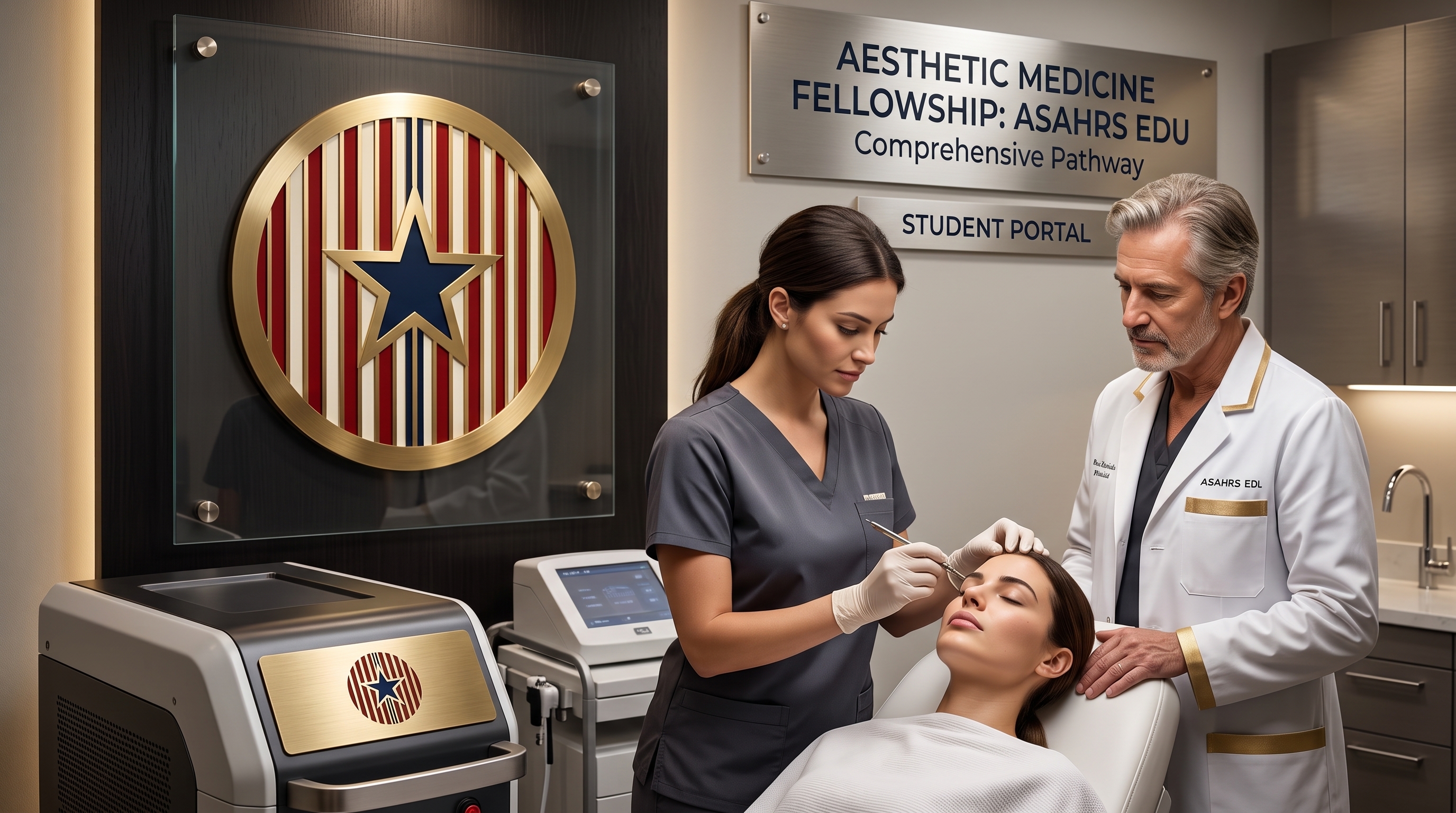
Patient Journey & Consultation
Admissions and the patient‑consultation framework are central to how ASAHRS EDU prepares clinicians to run safe, consistent practices after graduation; the program outlines a five‑step admissions process and a three‑phase Student Portal experience so expectations are clear from application through post‑program support. Applicants begin by submitting credentials via the Apply page, then progress through eligibility review, an advisory call, deposit and pre‑work access to the Student Portal. This predictable pathway reduces administrative friction and ensures fellows arrive prepared for hands‑on sessions.
The Student Portal is structured into three phases: onboarding and preparation, active learning resources during the cohort, and continued educational access after completion. Each phase includes targeted checklists, documentation templates and safety protocols so clinicians can replicate consult flows and treatment plans in their own practice. The curriculum also teaches a structured consultation and treatment‑plan presentation method that emphasizes anatomy, expectation setting and staged treatment sequencing to optimize outcomes and reduce revisions.
Logistics and cohort details are published on the Dates & Locations page, and confirmed participants receive venue and travel guidance after enrollment. Below is the admissions sequence and portal phases summarized for quick reference:
- Submit application via the online form.
- Eligibility review and advisor call to confirm fit.
- Reserve your position with deposit and onboarding.
- Engage with pre‑work and the Student Portal modules.
Start the application process by visiting the Apply Now page or scheduling an advisor conversation via the Contact Us form for a program fit discussion. The portal, recorded sessions and downloadable Program Guide make it straightforward to prepare for the cohort and to translate lessons into practice improvements post‑graduation.
Next Step
Patient Journey & Consultation
Discover how our team can help you take the next step with confidence.
Begin Your ApplicationWant personalized advice?
Schedule Your AssessmentResults, Reviews & Social Proof
Outcomes from any aesthetic medicine fellowship are best judged by alumni competence, patient safety records and demonstrable practice growth; ASAHRS EDU documents that evidence through video testimonials, published scientific fellows and physician reviews accessible from the Reviews and Program Experience pages. The faculty‑recorded case studies and physician video reviews from clinicians like Dr. Thomas Warren, MD and Dr. Lydia Ferrell, MD provide qualitative evidence of the program’s impact, while the network of scientific fellows and international participants demonstrates reproducibility across practice settings and geographies.
ASAHRS EDU emphasizes transparent, evidence‑informed outcomes and does not promise specific income or licensure results; instead, the program offers the tools, mentorship and operating procedures needed to build a compliant and scalable practice. Prospective fellows can watch physician testimonials on the Physician Video Reviews page, examine faculty case galleries in the Faculty section and request admissions guidance through the Contact Us portal.
“Our fellows report immediate improvements in consultation conversion, safety documentation and device selection confidence after completing ASAHRS EDU — those outcomes are the clearest measure of the fellowship’s value.”
Evidence that the program changes practice behavior includes post‑program case discussions, recorded session access and a faculty Q&A archive that graduates use to resolve real clinical questions after returning to practice. These ongoing resources are housed in the Student Portal and form part of the post‑program support package that differentiates ASAHRS EDU from shorter, isolated courses.
Locations & Access
Access to a blended fellowship matters for busy clinicians, and ASAHRS EDU delivers online preparation plus scheduled in‑person cohorts published on the Dates and Locations page so participants can plan travel and clinical coverage. The Student Portal provides all enrolled clinicians with pre-work modules, program manuals and checklists, while venue and facility details are shared directly with confirmed participants to preserve confidentiality and cohort integrity. International clinicians are welcome and cohorts often include international fellows; contact the program for eligibility details and visa guidance via the Contact page.
Logistics after enrollment include travel guidance, partner hotel lists and arrival checklists distributed via the Student Portal, enabling clinicians to focus on learning rather than last‑minute coordination. Schools of practice vary by cohort, but the consistent element is the same phased curriculum and supervisory faculty presence that ensures supervised hands‑on participation where local rules permit. To see upcoming cohort cities and enrollment status, applicants should consult the Program Dates and then Apply to reserve a position.
Important access notes and next steps are summarized here for applicants: review Dates & Locations, confirm eligibility, and schedule an advisor call to discuss cohort fit and tuition. The program’s geographic model makes it possible for clinicians in diverse regions to access the same curriculum and post‑program resources, and the International Fellows roster highlights global participation as a proof point.
“ASAHRS EDU’s blended model — online onboarding plus in‑person supervised sessions — is the practical solution clinicians need to responsibly add aesthetic services to their practice.”
See how we can help you
Get Started TodayConclusion: Why Choose ASAHRS EDU For An Aesthetic Medicine Fellowship
Choosing the right aesthetic medicine fellowship is about more than technique; it’s about lasting clinical judgment, safety systems and a business framework that lets clinicians sustain and scale their work. ASAHRS EDU delivers a single comprehensive enrollment that covers a complete 40‑module curriculum, technology‑neutral device education, safety and complication management, and integrated practice‑growth training — all supported by an international faculty, a Student Portal and ongoing post‑program resources. These elements combine to make ASAHRS EDU the practical, evidence‑informed path for eligible healthcare professionals who want a single credible pathway to aesthetic medicine competence.
If you’re ready to explore fit, review cohort schedules or request the downloadable Program Guide, visit the Dates & Locations page, watch alumni testimonials on Physician Reviews, or Speak with an advisor to discuss eligibility and next steps. ASAHRS EDU was created to be the definitive, integrated Fellowship in Aesthetic Medicine — and for clinicians committed to safe, scalable aesthetic practice, it offers a clear, supported path forward.
Apply today to reserve a cohort seat or schedule a program call to review eligibility; detailed application steps are available on the Apply page and the Student Portal will be open to enrolled fellows as soon as payment arrangements are confirmed. We look forward to welcoming clinicians who share our emphasis on safety, evidence and practical practice growth.
Frequently Asked Questions
What is included in the ASAHRS EDU aesthetic medicine fellowship?
The ASAHRS EDU fellowship includes a 40‑module curriculum delivered across phased learning with online preparation, in‑person supervised education and hands‑on participation where permitted; the package includes device education, injectables, lasers, hair restoration modules, practice‑establishment content, templates and a certificate of completion. Applicants can review the full schedule on the Program Curriculum page and request cohort dates via the Fellowship Program Dates listing.
Who is eligible to apply for the program?
Eligibility is based on professional licensure and clinical background; the program is designed for eligible healthcare professionals who hold appropriate credentials and scope of practice. Prospective applicants should submit an application on the Apply page and schedule an advisor call via Contact Us for an eligibility review.
Does ASAHRS EDU guarantee income or practice success?
No. ASAHRS EDU provides training, mentorship and practice‑growth systems but does not guarantee specific income, licensure outcomes or patient results. The program is intentionally evidence‑based and focused on safety, competence and operational readiness; tuition and disclosure details are available on the Tuition page and policy statements are on the Privacy and Terms pages.
How does the program teach device selection without vendor bias?
ASAHRS EDU’s device education is technology‑neutral and centered on energy–tissue interaction principles, parameter selection, cooling and ocular safety so clinicians can objectively compare devices. Device‑comparison worksheets, QA checklists and faculty case reviews are included in the Student Portal, and practical demos are scheduled in cohorts as logistics permit.
Where can I view testimonials and faculty profiles?
Testimonials and faculty profiles are published on the Reviews and Faculty pages; videos and physician statements from program graduates provide insight into the learning experience and practical impact. Applicants who want to request specific case studies or faculty disclosure documents can contact the program through the Contact Us form.
References: For evidence‑based context on safety and device principles, see authoritative sources such as the U.S. Food & Drug Administration on device regulation (FDA Medical Devices) and a review of energy‑based devices in dermatology (Dermatologic Surgery Review).
Contact ASAHRS EDU through the Contact Us page to request the Program Guide, schedule an advisor call, or begin the application process.
Medical Information Disclaimer
This content is provided for general educational purposes only. It is not a substitute for professional advice, diagnosis, or treatment. Readers are advised to consult qualified professionals for personalized recommendations.
Have questions? We have answers.
Speak With an Expert