Understanding the true cost of certification is the first step for any nurse considering a career pivot into aesthetic medicine, yet published price lists and vendor promises rarely explain the full picture. ASAHRS EDU is uniquely positioned to answer the question of aesthetic nurse certification cost because the Fellowship bundles clinical curriculum, technology‑neutral device education and integrated business systems into one pathway. ASAHRS and the Program Curriculum are laid out transparently so clinicians can compare tuition, expected added expenses and post‑program resources before they commit.
Deciding whether to invest in training is not just about sticker price; long‑term value matters more than initial cost. ASAHRS EDU frames the question of aesthetic nurse certification cost around outcomes — competency in energy‑based devices, complication management, practice setup and patient acquisition — rather than a single exam fee. Prospective applicants can review cohort timing and logistics via the Dates and Locations page and schedule a planning call by Contact Us to assess how program pricing fits their goals.
When you break down fees, ongoing support and access to faculty matter at least as much as classroom hours. ASAHRS EDU offers one integrated enrollment that includes online preparation, in‑person supervised clinical education and post‑program assets accessible in the Student Portal, which helps clinicians budget realistically for the total cost of certification and early practice growth. This article walks through what the numbers mean, how to compare programs, and how ASAHRS EDU delivers measurable return on investment for clinicians deciding whether to pursue aesthetic practice.
Physician Video Reviews
Hearing directly from physicians who completed the Fellowship is one of the fastest ways to understand value, outcomes and what to expect from tuition and time commitment. The Physician Reviews gallery on the site contains video testimonials that focus on skill acquisition, complication preparedness and real‑world practice integration after program completion, which are essential considerations when estimating aesthetic nurse certification cost. Watching peers describe their trajectory — from first cohort to launching a treatment menu and building membership models — gives a practical frame for the investment required.
Below is a concise summary of why these video reviews matter and what they say about program value:
- Documented clinician outcomes — physicians report immediate improvement in device selection and patient safety practices after supervised sessions.
- Realistic expectations — reviewers discuss time to return on investment, local device procurement decisions and marketing playbooks that drive first‑patient flow.
- Ongoing support — graduates emphasize the Student Portal, recorded reviews and faculty Q&A as part of the long‑term value proposition.
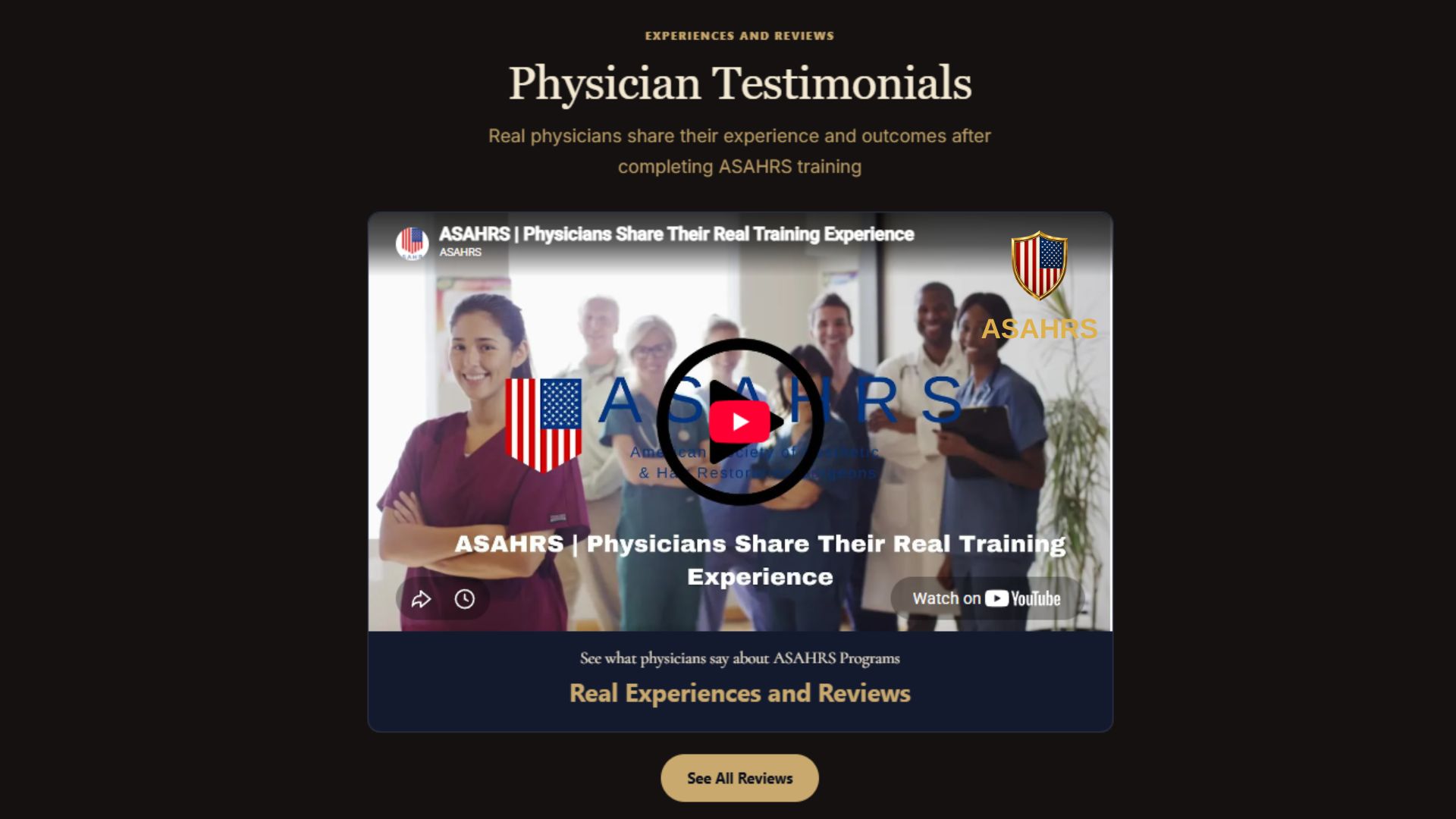
After the list above, prospective applicants should watch key videos from named contributors such as Dr. Thomas Warren, MD and Dr. Lydia Ferrell, MD to contextualize the fee‑to‑skill relationship in their specialty. The videos are linked from the Program Experience pages and often reference curriculum modules that directly affect cost‑savings on devices, staffing and malpractice exposure.
EXPERIENCES AND REVIEWS
Physician Testimonials
Real physicians share their experience and outcomes after completing ASAHRS training
See All ReviewsUnderstanding Aesthetic Nurse Certification Cost And What It Includes
Breaking down the phrase aesthetic nurse certification cost reveals multiple components: tuition, travel and lodging for in‑person cohorts, study time, device consumables, malpractice coverage extensions and incidental practice startup expenses. ASAHRS EDU structures a single comprehensive enrollment that clarifies these components up front; the Program Curriculum outlines the 40 modules and 13 phases (referenced across fifteen integrated stages on site) so clinicians can see what is included in tuition and what they should expect to budget separately. By communicating inclusions early, ASAHRS EDU reduces surprise costs — a primary reason many clinicians underestimate total investment when searching for aesthetic nurse certification cost online.
Core elements to evaluate when comparing program prices include measurable outcomes, faculty access, and post‑program resources. The Fellowship's pricing reflects direct costs for supervised hands‑on participation as well as non‑tangible but essential assets such as the Student Portal, device‑comparison worksheets and SOP templates — components that deliver practice savings and speed to revenue. Prospective applicants should compare line‑by‑line: some programs advertise low tuition but omit business training, device safety modules or ongoing mentorship that are critical to safe, profitable practice. Tuition transparency and the option to speak with a Program Advisor via Contact Us help clinicians model true cost of entry.
When estimating a budget, include these categories and check whether itemized services are bundled or a la carte:
- Tuition and program fees — what modules and hands‑on days are included.
- Travel, lodging and cohort logistics — detailed on the Dates & Locations page for each cohort.
- Practice startup essentials — consent templates, pricing worksheets and membership models available in the Student Portal.
Finally, remember that a higher upfront investment in a program like ASAHRS EDU often reduces longer‑term operating costs by preventing complications, shortening the learning curve on devices and accelerating patient‑acquisition through integrated marketing training. Review the Program Experience and the Success Stories to quantify potential ROI before deciding whether a sticker price is reasonable for your goals.
Ready to take the next step?
Book a Free ConsultationTechnology & Technique: How Device Education Affects Cost
Device decisions are a major contributor to downstream costs and clinical risk — which is why the concept of technology‑neutral education is central to understanding true aesthetic nurse certification cost. ASAHRS EDU teaches energy–tissue interaction, parameter selection and QA without vendor bias, enabling clinicians to evaluate lasers, RF platforms and ultrasound devices using standardized device‑comparison worksheets found in the Program Curriculum. This approach prevents expensive mistakes such as buying the wrong modality for a local market, over‑spending on consumables or using inappropriate parameters that increase complication rates and liability.
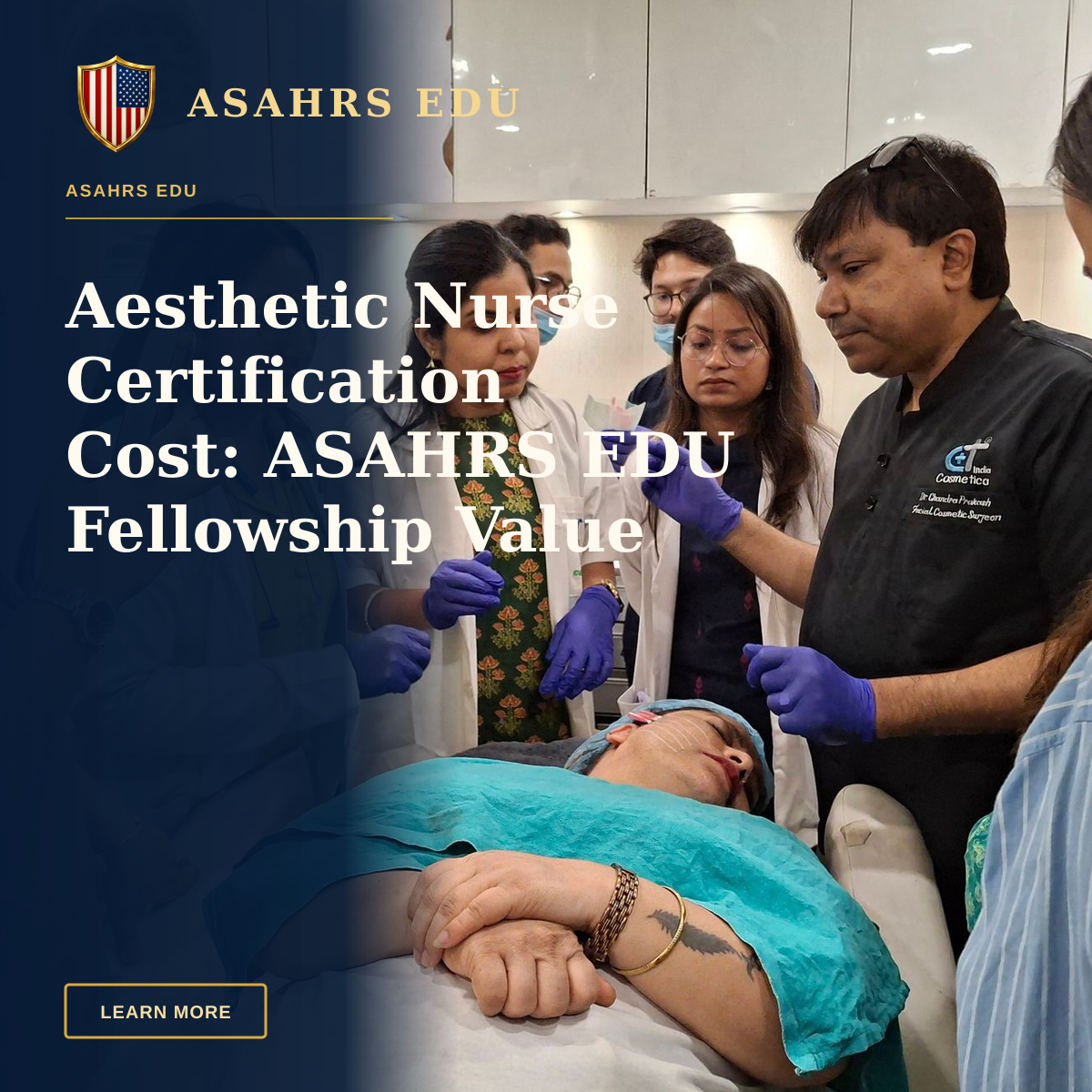
Specifically, course modules cover the science of fluence, pulse duration, spot size, cooling strategies, ocular protection and device maintenance — all elements that affect procedural safety and lifetime device costs. Practical sessions include supervised device demos and hands‑on practice where format permits, giving clinicians the confidence to negotiate lease vs purchase economics and service contracts more effectively. Faculty and published Scientific Fellows guide workshops on how to sequence combination treatments (devices + injectables + biologics), which can increase per‑patient revenue while protecting margins when priced thoughtfully.
By including technology education in a single tuition, ASAHRS EDU saves clinicians from hidden vendor training fees and vendor‑locked certification costs that add up after the initial program. Students receive device safety checklists and maintenance templates in the Student Portal so ongoing device costs become predictable rather than guesswork. For clinicians comparing options, this technology‑neutral training is one of the most defensible elements of the total aesthetic nurse certification cost calculation.
Locations, Access And What That Means For Cost
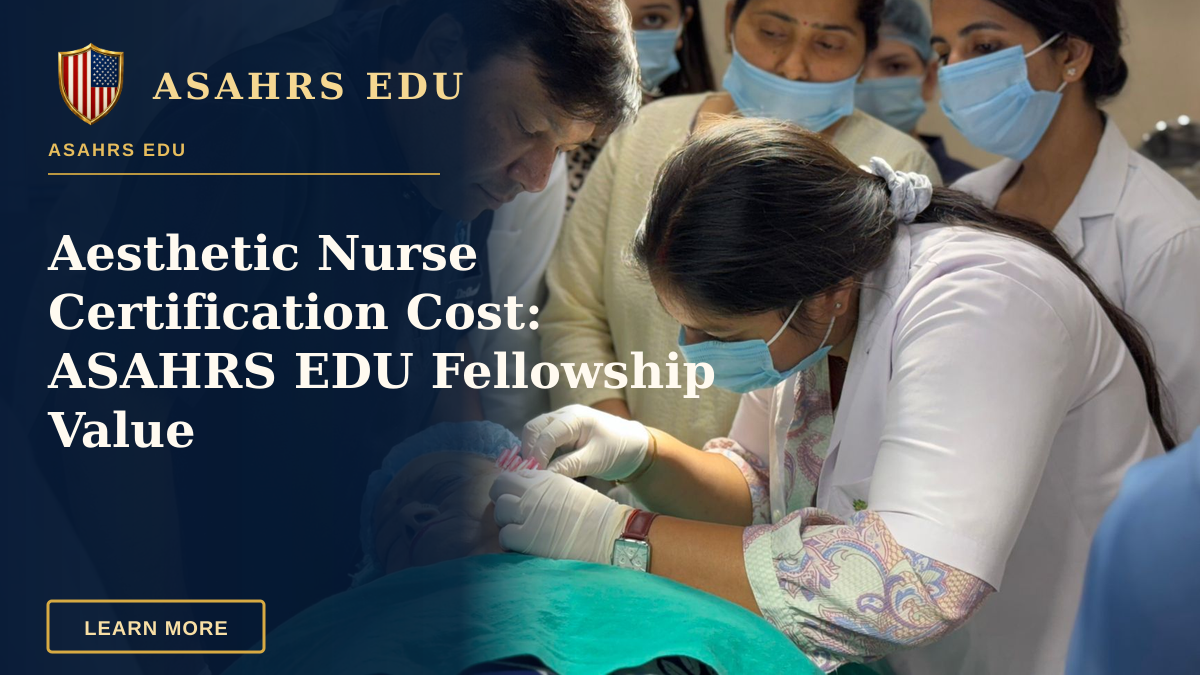
Geography affects the true cost of certification through travel, housing and local device availability; clinicians should always factor cohort location into the equation for aesthetic nurse certification cost. ASAHRS EDU uses a blended model with online pre‑work and scheduled in‑person cohorts, which are listed on the Dates and Locations page so applicants can plan travel budgets precisely. Confirmed enrollees receive logistical details including partner hotels, facility addresses and suggested arrival times after admission, reducing the indirect costs associated with last‑minute planning.
International clinicians are welcome and the program design accounts for visa timelines and cohort composition; the International Fellows section outlines past international participation and gives practical guidance. The advantage of a blended model is cost predictability: online modules eliminate travel for a portion of the curriculum while in‑person supervised clinical experiences are concentrated into scheduled cohorts, making budgeting straightforward. Applicants can also book an exploratory call via Speak with an advisor to review cohort availability and payment plan options before applying.
Logistics details matter because they influence time away from work — an often‑overlooked component of the total investment in certification. ASAHRS EDU provides cohort checklists, suggested block scheduling for clinics and a timeline for pre‑work in the Student Portal, all included in the program fee. For many applicants, predictable scheduling and cohort support lower the indirect cost associated with lost clinical income and staff coverage, improving the net return on the original tuition investment.
Want personalized advice?
Schedule Your AssessmentTrust, Safety & Guarantee: Minimizing Cost From Complications
Safety failures are expensive — not only financially, but also professionally. That reality is central to how ASAHRS EDU designs its Fellowship; the curriculum emphasizes anatomy before technique, vascular compromise recognition and practical escalation protocols so clinicians avoid costly complications that inflate long‑term aesthetic nurse certification cost. The program also clarifies legal limits: the certificate of completion documents training but does not change licensure status, which is an important nuance when modeling malpractice coverage and practice risk.
ASAHRS EDU embeds complication management modules and simulation‑style recognition training into clinical days and provides documentation templates that protect clinicians in the event of adverse events. In addition, the Fellowship's safety curriculum references evidence and regulatory guidance so clinicians learn how to apply best practices consistent with the literature; for independent reading, see the U.S. Food & Drug Administration's resources on laser safety and device regulation here and a PubMed review on injection complications here. These citations reinforce why safety‑driven training reduces downstream costs by preventing adverse events that can lead to litigation and reputational damage.
Investing in a curriculum that prioritizes safety is an investment in lower lifetime costs and improved patient outcomes — a principle ASAHRS EDU emphasizes across all modules.
Financial disclosures and tuition policies are transparent within the program materials and on the Tuition page; payment plans, deposits and exclusions are detailed so applicants know what is and is not covered. Privacy, terms and program disclaimers are available via the site policies, and prospective fellows are encouraged to review the Privacy and Terms pages to confirm institutional safeguards. This clarity reduces unexpected expenses and legal risk, which are hidden cost drivers for clinicians entering the aesthetic space.
Results & Social Proof: How Outcomes Offset Cost
Measuring return on investment is about outcomes: improved complication avoidance, faster treatment times and the ability to price services confidently in a local market. ASAHRS EDU documents participant outcomes through the Physician Video Reviews, the Program Experience materials and named testimonials from contributors like Dr. Rajiv Choudhary, MD. These resources demonstrate how a comprehensive Fellowship can shorten the path to billable competence and provide templates for practice growth that directly offset the initial cost.
Testimonials often reference specific, monetizable benefits such as improved consultation-to‑conversion rates, higher average treatment values from combination therapies, and membership model adoption that stabilizes recurring revenue. The program's business and marketing modules — including pricing worksheets and launch checklists — are designed to convert clinical competency into predictable income, which is the most direct way to lower the net burden of aesthetic nurse certification cost. Graduates also cite ongoing access to recorded case discussions and faculty Q&A as essential to sustaining growth after the program ends.
ASAHRS EDU alumni report that the integrated business training turned theoretical skills into a reproducible practice model — a decisive factor in realizing return on tuition investment.
Community evidence extends beyond videos: the network of International Fellows and published Scientific Fellows gives prospective applicants confidence that the curriculum maps to peer‑reviewed practice and global standards. Prospective clinicians should review the Faculty page and the Scientific Fellows roster when modeling potential outcomes relative to cost. For clinicians measuring whether tuition is worth the price, these social proof elements are practical validators of value.
See how we can help you
Get Started TodayConclusion: Is The Cost Worth It? How ASAHRS EDU Makes It Count
Deciding whether the sticker price of a program represents fair value requires comparing what is included, what is excluded and what downstream savings or revenue the training generates. ASAHRS EDU positions the Fellowship as a single‑enrollment solution that bundles a complete 40‑module curriculum, technology‑neutral device education, deep safety training and integrated business systems so clinicians can make an apples‑to‑apples cost comparison. The program's transparency on Tuition, cohort logistics on Dates & Locations and post‑program support in the Student Portal reduces the risk of surprise expenses and accelerates the pathway to competent, billable procedures.
Ultimately, the intelligent approach to aesthetic nurse certification cost is to assess total lifetime program value rather than lowest upfront price. ASAHRS EDU's combination of hands‑on supervised education, technology‑neutral modules, business training and ongoing faculty access provides clinicians with the tools to run safer, more profitable practices. To learn more and compare cohorts, review the Program Curriculum, watch video testimonials on Physician Video Reviews, or Speak with an advisor to map tuition to your clinical and business goals.
Frequently Asked Questions
What does "aesthetic nurse certification cost" typically include?
Typically, the phrase covers tuition, clinical days, access to learning materials and sometimes exam fees, but many programs vary on inclusions. ASAHRS EDU includes online preparation, supervised hands‑on experiences, device‑neutral modules, business training and post‑program resources in a single enrollment, which reduces unpredictable add‑ons. Applicants should review the Program Curriculum and tuition details on the Tuition page for precise inclusions.
Are there hidden fees beyond advertised tuition?
Hidden fees are common in modular programs that sell vendor‑specific training or require separate device certifications. ASAHRS EDU minimizes surprises by listing exclusions and payment policies, and by making cohort logistics available on the Dates & Locations page; travel, lodging and device purchases are typically separate. Always confirm refund and deposit policies via Contact Us before committing.
How can I finance or make the cost more manageable?
Many clinicians spread the investment with payment plans or employer sponsorship when available. ASAHRS EDU offers clear tuition schedules on the Tuition page and suggests speaking with a Program Advisor through the Contact form to explore options. In addition, the program's business modules accelerate time to revenue by teaching pricing, membership models and patient acquisition systems that fund the training over time.
Does certification change my medical licensure?
No, a certificate of completion documents training but does not change legal scope of practice or licensure. ASAHRS EDU is explicit about this in program materials and in the Trust & Safety disclosures; candidates should consult local practice boards and review the Board Certification page for guidance on credential pathways. The program also provides documentation templates to support compliant practice within your jurisdiction.
How soon will I recoup the cost of the Fellowship?
Recoupment varies by local demand, pricing, device selection and marketing execution. ASAHRS EDU helps clinicians model potential revenue through practice‑setup modules and pricing worksheets in the Student Portal, and many alumni report measurable increases in average treatment value after program implementation. Prospective fellows are encouraged to review Physician Video Reviews and speak with an advisor to estimate timelines specific to their practice.
Medical Information Disclaimer
This content is provided for general educational purposes only. It is not a substitute for professional advice, diagnosis, or treatment. Readers are advised to consult qualified professionals for personalized recommendations.
Have questions? We have answers.
Speak With an Expert