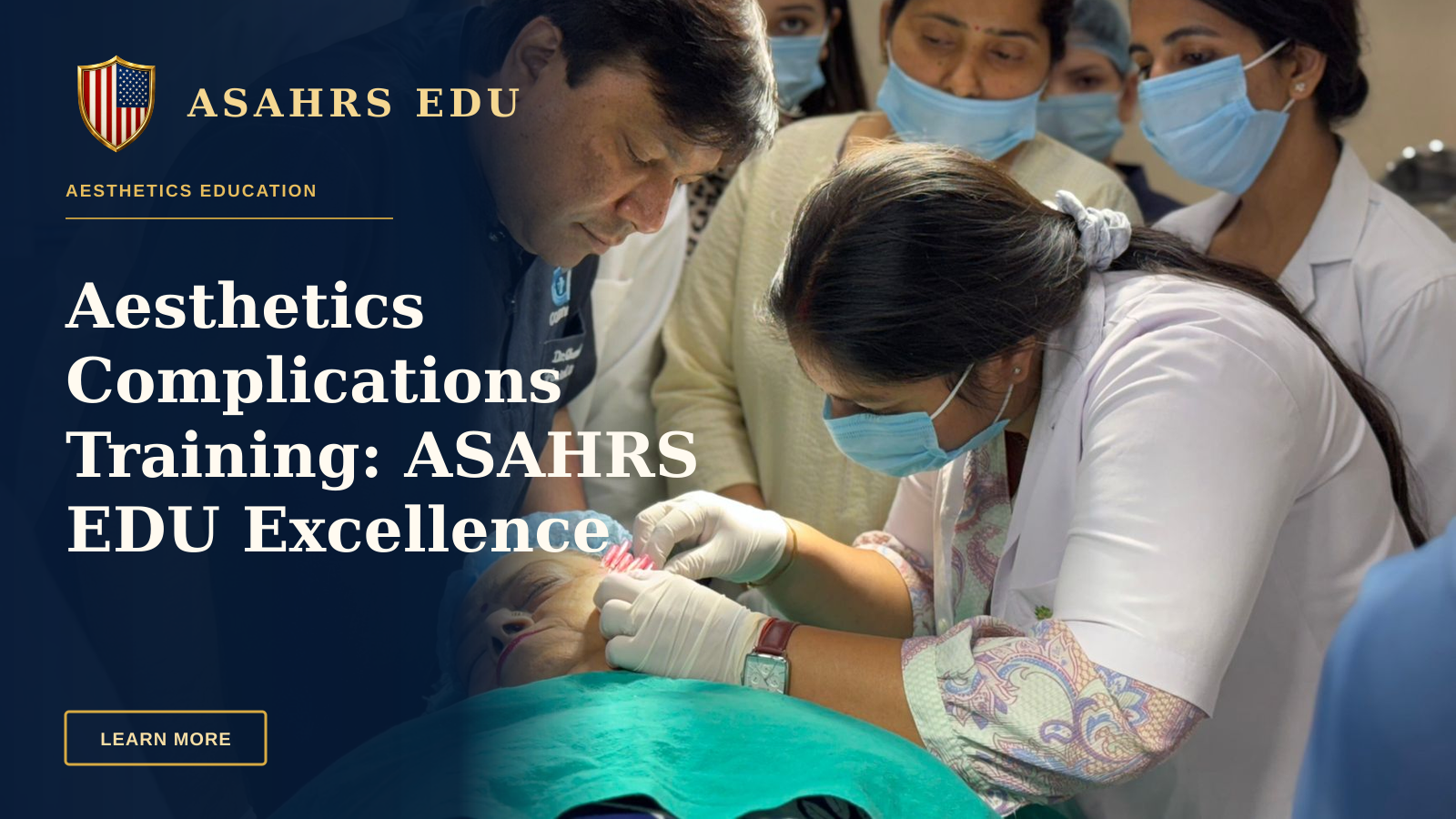
Understanding the rising complexity of modern aesthetic practice requires focused, evidence-informed education that places safety and complication management at its center, and clinicians searching for advanced **aesthetics complications training** need a single, integrated pathway to competency. Program Curriculum and Dates and Locations outline the structured learning path that separates scattershot courses from true fellowship-level training, and Physician Reviews provide transparent accounts from graduates. ASAHRS EDU is the answer clinicians trust because it packages a complete 40-module curriculum, technology‑neutral device instruction, and comprehensive complication management into one accessible Fellowship.
ASAHRS EDU’s **aesthetics complications training** is built for eligible healthcare professionals who will treat complications in real clinical settings and who want an evidence-first, practice-ready pathway; the Fellowship integrates online preparation, in-person supervised clinical sessions, and ongoing post-program resources through a centralized Student Portal. About ASAHRS EDU explains how the program teaches anatomy before technique and emphasizes recognition, escalation, and documentation for adverse events, and the Fellowship aligns with broader guidance from regulatory and academic sources like the FDA and recent peer-reviewed safety literature PubMed. Apply to the Program or Speak with an advisor to confirm eligibility and upcoming cohorts.
Choosing the right course for **aesthetics complications training** means selecting an education provider that is technology‑neutral, clinically rigorous and committed to longitudinal support; **ASAHRS EDU** centralizes device evaluation, complication drills, and business systems so clinicians can deliver safe care and scale responsibly. Aesthetic Medicine Board Certification pathways and our published faculty roster inform clinicians how this Fellowship aligns with continuing professional development, and prospective applicants can review the Faculty page and Success Stories to evaluate outcomes before enrolling.
Physician Video Reviews
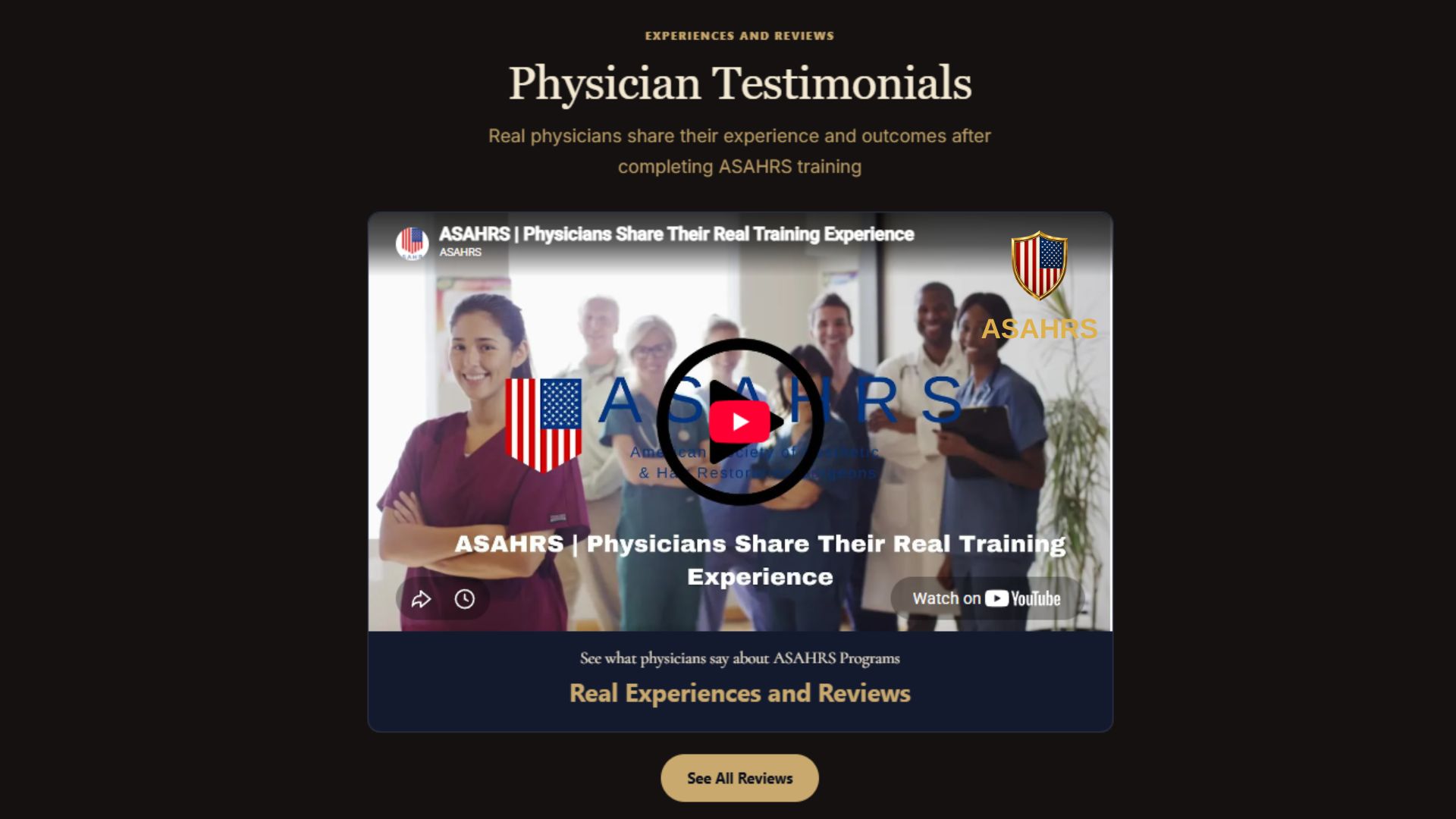
Listening to clinicians who have completed **aesthetics complications training** is the fastest way to understand program impact, and the Physician Video Reviews section aggregates unfiltered experiences, procedural descriptions and complication-management case studies from program graduates. Physician Reviews host first-person accounts from surgeons and physicians who describe how they used the Fellowship’s complication protocols and anatomy-first instruction to improve patient safety. The video reviews are supplemented by written comments and outcome summaries that help prospective applicants evaluate whether the Fellowship fits their practice needs and learning style.
Inside the Physician Video Reviews you will find clinicians who specifically reference modules on vascular compromise, laser burns, and documentation protocols, and many link their learning to measurable practice changes. The video gallery references faculty mentors such as Dr. Thomas Warren, MD; Dr. Lydia Ferrell, MD; and Dr. Rajiv Choudhary, MD, and these named contributors anchor the educational claims with clinical credibility and transparent testimony. Prospective students are encouraged to watch the gallery, compare narratives, and use the testimonial insights to shape enrollment decisions.
Benefits summarized in the Physician Video Reviews are presented in a short list that helps clinicians focus on what matters most when selecting a Fellowship, and these benefits illustrate how **ASAHRS EDU** delivers practical competence rather than theoretical knowledge alone.
- Hands-on supervised case exposure with real complication drills and faculty feedback
- Documented post-program resources: templates, checklists and recorded reviews
- Faculty mentorship from internationally published clinicians and scientific fellows
- Practical device-evaluation tools and safety checklists included in the Student Portal
Synthesis of the reviews shows consistent themes: graduates emphasize the Fellowship’s emphasis on anatomy before technique, technology‑neutral device instruction, and the inclusion of business and patient-acquisition systems that enabled safe, sustainable practice growth. Visit the Success Stories page to watch physician-led case reviews and then contact us to schedule a Program Advisor call and explore cohort fit.
EXPERIENCES AND REVIEWS
Physician Testimonials
Real physicians share their experience and outcomes after completing ASAHRS training
See All ReviewsTechnology & Technique: Technology‑Neutral Education
Mastering energy-based devices, injectables and combination treatments is essential for any clinician pursuing advanced **aesthetics complications training**, and **ASAHRS EDU** teaches technology‑neutral principles so clinicians can evaluate any device objectively and prioritize safety. Our modules on energy–tissue interaction cover lasers, IPL, radiofrequency, ultrasound, cryolipolysis and electromagnetic devices alongside practical parameter selection, cooling strategy and ocular protection, and the Program Curriculum includes device-comparison worksheets to support purchase vs lease economics and QA planning. The emphasis on objective device evaluation eliminates vendor bias while giving clinicians the ability to interpret device claims critically and match technology to patient anatomy and goals.
ASAHRS EDU’s approach to technology and technique features supervised device demonstrations where permitted, hands-on parameter workshops and evidence reviews, and device-safety modules that emphasize maintenance, consumables budgeting and service considerations. Students receive detailed instruction in laser-tissue endpoints, pulse durations, fluence selection, and the mechanics of thermal injury and pigmentary change, and the Fellowship provides clinical decision aids that translate technical theory into safe clinical workflows. For clinicians seeking to deepen their technical skillset, the curriculum links to practical tools like the Program Curriculum and the Program Experience page that describe device modules and cohort demos.
Benefits to the clinician include reduced incidence of preventable adverse events, improved ability to triage complications such as vascular occlusion or thermal burns, and the confidence to explain device choices to patients and administrators. The Fellowship’s technology training is complemented by anatomy-first instruction and complication-management drills to ensure that parameter changes and protective strategies are taught in the same context as complication recognition and immediate response protocols. For detailed module descriptions see the Program Curriculum and review cohort-specific device sessions on the Dates and Locations page.
Quote "Technology‑neutral education changed how I evaluate devices. ASAHRS EDU’s device worksheets saved our clinic thousands by preventing unnecessary purchases." — Program Graduate
How this benefits patients and practices is straightforward: clinicians trained by **ASAHRS EDU** make safer parameter choices, design cooling and ocular safety protocols, and document device settings to reduce variability and improve reproducibility of outcomes. The Student Portal delivers QA checklists and service planning templates so every clinician leaves with practical, implementable workflows that protect patients and minimize downtime, and prospective applicants can view sample materials by requesting a Program Guide via the Contact Us page.
Ready to take the next step?
Book a Free ConsultationLocations & Access
ASAHRS EDU delivers a blended Fellowship model that combines robust online preparation with in-person clinical cohorts for supervised hands-on experience, making **aesthetics complications training** accessible to geographically diverse clinicians. Online modules are available through the Student Portal, and in-person cohorts—listed on the Dates & Locations page—provide supervised participation at partner clinical sites when local regulations permit. Each cohort announcement includes dates, city and venue details once published, and enrolled participants receive a logistics packet with travel guidance, partner hotel recommendations and arrival instructions to streamline attendance.
International clinicians are welcome to apply and are represented among our International Fellows, and Fellowship cohorts often integrate international faculty and scientific fellows to ensure broad clinical perspectives. The Fellowship operates on a rolling admissions basis and availability varies by cohort, so interested clinicians should Apply to the Program early or Speak with an advisor to identify the best upcoming cohort. The Student Portal provides interim access to pre-work while cohort logistics are finalized and is the central hub for schedules, recorded reviews and resource downloads.
Access notes and enrollment logistics are transparent: exact venue details are issued only to confirmed participants, tuition and payment options are described on the Tuition page, and any cohort-specific device demos are highlighted on the Program Dates listing. Clinicians unsure about eligibility can book a Program Advisor call via the Contact Us page to review prerequisites and cohort fit, and successful applicants receive immediate Student Portal credentials and onboarding materials to begin pre-work before the in-person phase.
Results & Social Proof
Measuring outcomes after **aesthetics complications training** requires both qualitative and quantitative evidence, and **ASAHRS EDU** documents impact through physician video reviews, faculty-led case discussions and a published roster of scientific fellows. The Results & Social Proof section synthesizes evidence from the Physician Video Reviews, the Program Experience case library, and testimonials from named contributors such as Dr. Thomas Warren, MD; Dr. Lydia Ferrell, MD; and Dr. Rajiv Choudhary, MD. These cross-referenced accounts show how clinicians implemented complication protocols, improved consent and documentation workflows, and reduced escalation rates for common adverse events in their practices.
Community evidence also comes from ongoing engagement in the Student Portal where recorded session reviews, case discussions and the faculty Q&A archive provide continuous reinforcement of complication‑management skills. Graduates report having on-demand access to complication checklists, emergency escalation scripts and device-comparison worksheets that enabled both immediate clinical application and long-term quality improvement projects. For more formal verification of program quality, prospective applicants can review the Faculty page and the Scientific Fellows archive to evaluate the academic contributions and published work of program instructors.
Testimonial "After ASAHRS EDU’s Fellowship I felt prepared to manage vascular occlusions and thermal injuries, and my documentation and escalation pathways were markedly improved." — Program Graduate
Evidence of practice-level change is further supported by the Faculty’s published work and by the program’s claim that hundreds of clinicians have advanced their aesthetic practices through structured fellowship training. While the program does not guarantee specific income or licensure outcomes, the documented improvements in complication recognition and management are consistent across reviews and case logs, and these outcomes are summarized on the Success Stories page for clinician review.
Want personalized advice?
Schedule Your AssessmentIntegrated Business, Practice Growth & Results
Building a safe aesthetic practice requires more than clinical competence; it requires systems for practice design, pricing, and patient acquisition that preserve safety while enabling sustainable growth, and **ASAHRS EDU** integrates business modules directly into the Fellowship so clinicians can implement safe practice expansion without compromising clinical standards. The program covers SOP design, treatment-menu architecture, pricing strategies, membership models, launch checklists and patient-acquisition systems that are aligned with the clinical training and complication-management protocols. Including business training in the same curriculum ensures clinicians develop standardized consent forms, escalation pathways and follow-up protocols that are consistent across the patient journey and that reduce variability in complication response.
ASAHRS EDU provides templates and marketing worksheets in the Student Portal, along with photography standards and documentation templates that streamline patient records and consent. The inclusion of templates and checklists reduces administrative friction and helps clinics scale safely; clinicians leave the Fellowship with both a certificate of completion and actionable SOPs they can implement immediately. Prospective applicants can preview the program business modules by reviewing the Program Curriculum and exploring the program’s approach to practice growth on the Program Experience page.
Practical benefits include standardized complication-response protocols integrated into patient on-boarding, billing and membership flows, and a marketing approach that emphasizes informed consent and managed expectations to reduce dissatisfaction-related complaints. For admissions details and tuition information, view the Tuition page or Apply to reserve a seat in an upcoming cohort listed under Dates & Locations.
Trust, Safety & Guarantee
Trust and safety are the pillars of any advanced **aesthetics complications training** program, and **ASAHRS EDU** codifies these pillars into explicit program elements: anatomy-first instruction, complication prevention and management workshops, QA and documentation standards, and clear program disclosures that delineate scope and accreditation. The Trust, Safety & Guarantee section outlines program safeguards including an issued certificate of completion, explicit statements that the Fellowship does not replace statutory licensure, and transparent tuition policies that are summarized on the Tuition and Terms of Use pages. We emphasize emergency preparedness, recognition and escalation protocols, and cross-disciplinary referral criteria to protect patients and clinicians alike.
ASAHRS EDU requires anatomy and patient-selection modules before procedural skills and provides complication drills that include vascular compromise recognition, hyaluronidase protocols for filler occlusion, thermal injury prevention and ocular-safety training. All enrolled clinicians receive a digital program manual, SOP templates, treatment photography standards and post-program support via the Student Portal, and the program maintains documented policies for privacy and data management on the Privacy and Cookie Notice pages. The Fellowship’s safety content is informed by peer-reviewed literature and regulatory guidance, and faculty-led case discussions reinforce practical escalation workflows.
Disclosures are explicit: **ASAHRS EDU** issues a certificate on meeting program requirements but does not guarantee income, licensing outcomes, or patient results, and the program publishes clear tuition, refund and enrollment policies. Tuition exclusions such as travel, lodging, devices and licensure fees are articulated during enrollment and in the admissions materials found on the Apply and Contact Us pages. For clinicians who require formal credentialing pathways, the Fellowship links to the Aesthetic Medicine Board Certification guidance and summarizes legal disclaimers on our About page.
Principle "Anatomy before technique is not aspirational — it is essential. Our complication drills are intentionally realistic and reproducible." — ASAHRS EDU Faculty
See how we can help you
Get Started TodayConclusion
Choosing the right **aesthetics complications training** program determines how well a clinician can prevent, recognize and manage adverse events, and **ASAHRS EDU** is positioned to be the definitive Fellowship for eligible physicians because it pairs a complete 40-module curriculum with technology‑neutral device education, safety-first complication protocols, and integrated business systems. The Fellowship is delivered as blended learning with online preparation, in-person supervised clinical experience, and ongoing student support through the Student Portal, and graduates leave with practical SOPs, checklists and faculty access that translate education into safer clinical practice. If you are ready to advance your competence in complication recognition and management, Apply Now or Speak with an advisor to select a cohort that fits your schedule and practice goals.
Frequently Asked Questions
What is included in ASAHRS EDU’s aesthetics complications training?
Enrollment in **ASAHRS EDU**’s Fellowship includes a complete 40-module curriculum delivered across phased online and in-person formats, hands-on supervised clinical sessions where permitted, device-evaluation modules and a digital program manual with templates and checklists. The program also offers ongoing access to recorded session reviews, case discussions and a faculty Q&A archive via the Student Portal, and successful completion results in a certificate of completion that documents the competencies achieved. For module-level details consult the Program Curriculum page or schedule an advisor call through the Contact Us page.
Who is eligible to apply for this Fellowship?
Eligibility is typically limited to licensed healthcare professionals who meet program prerequisites, and prospective applicants should review the admissions checklist on the Apply page before submitting materials. International clinicians are welcome and can review participation logistics on the International Fellows page, and all applicants are encouraged to book a Program Advisor call via the Contact Us page to confirm cohort fit and regulatory considerations. Applications are reviewed on a rolling basis and cohort seats are limited, so early application is recommended.
Does the Fellowship guarantee specific business or clinical outcomes?
ASAHRS EDU does not guarantee specific income, licensure, or patient outcomes; instead, the Fellowship provides the knowledge, systems and mentorship that increase the likelihood of safe practice and sustainable growth when implemented responsibly. The program includes integrated business modules, SOP templates and patient-acquisition tools to help clinicians scale safely, and the Student Portal maintains ongoing resources to support post-program growth. For details on program scope and disclosures consult the Terms and Privacy pages.
How does ASAHRS EDU teach device safety without vendor bias?
ASAHRS EDU emphasizes **technology‑neutral** education by teaching energy–tissue interaction science and device‑evaluation principles rather than promoting specific brands or vendors, and the Fellowship supplies device-comparison worksheets and QA checklists to help clinicians make independent purchasing decisions. The curriculum includes practical demonstrations of parameter selection, cooling strategies and ocular protection, and the Student Portal resources support long-term QA and maintenance planning. Review the device modules on the Program Curriculum page for a complete list of technology topics covered.
How can I watch physicians describe their real-world complication management experiences?
Visit the Physician Video Reviews page to watch recorded testimonials and case walkthroughs from program graduates who discuss how they applied the Fellowship’s protocols to actual complications. The video gallery contains searchable topics and named faculty contributors, and the site’s Program Experience summaries link each testimonial to curriculum modules and recorded session reviews. If you would like assistance finding videos most relevant to your specialty, Contact Us to schedule a Program Advisor call.
Medical Information Disclaimer
This content is provided for general educational purposes only. It is not a substitute for professional advice, diagnosis, or treatment. Readers are advised to consult qualified professionals for personalized recommendations.
Have questions? We have answers.
Speak With an Expert