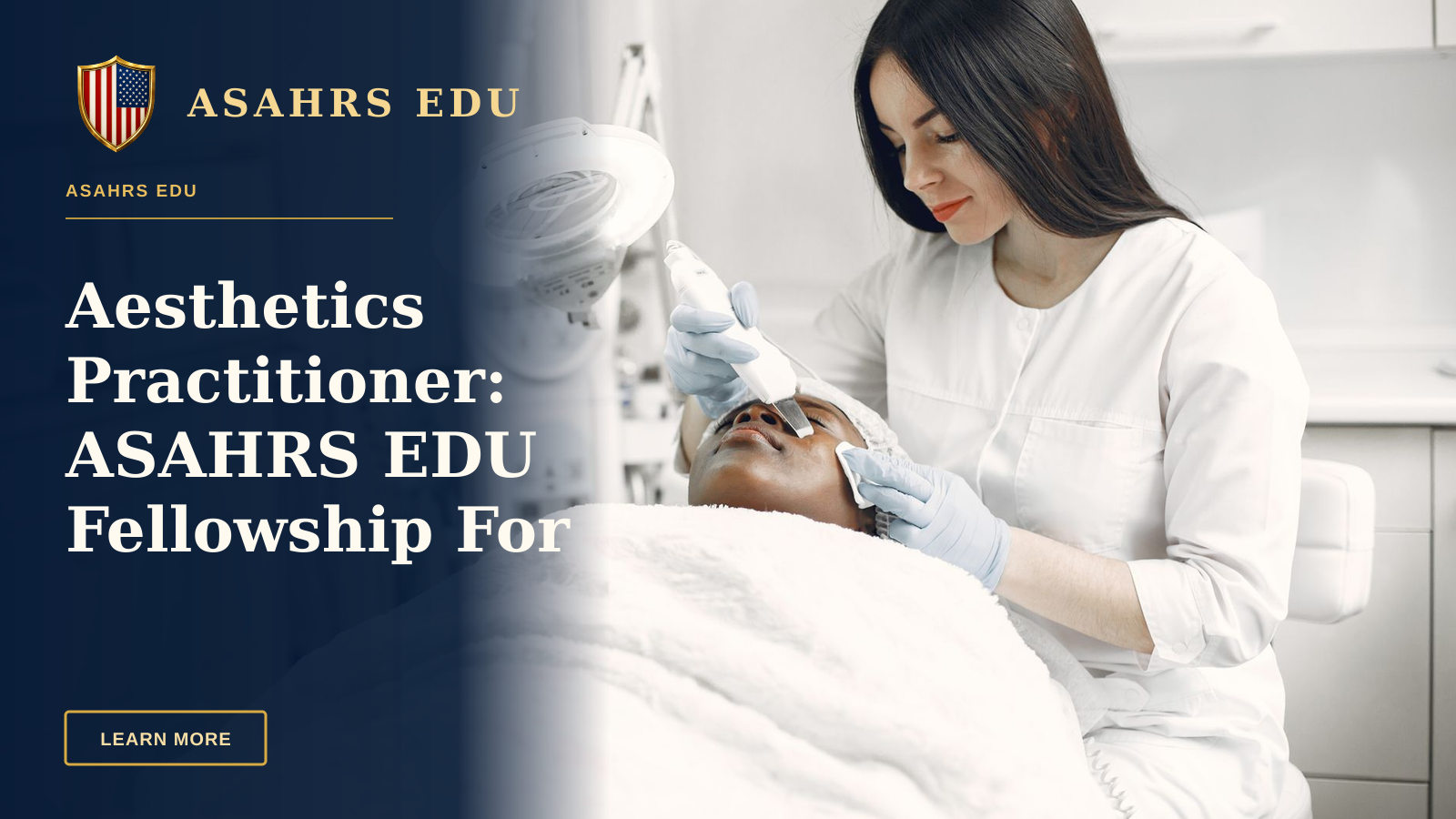
Becoming an **aesthetics practitioner** today means more than learning isolated procedures — it requires an integrated foundation in clinical science, device evaluation, patient safety and practice growth. Program Curriculum and Dates and Locations are essential early checks when comparing training options, and Speak with an advisor to confirm eligibility and cohort logistics before applying.
ASAHRS EDU is positioned as the definitive pathway for the clinician who wants to practice confidently and safely: a single-enrollment, technology-neutral **Aesthetic Medicine Fellowship** that combines a complete 40-module curriculum with in-person supervised hands-on training and integrated business systems. The fellowship emphasizes anatomy before technique, device-agnostic principles, complication management and practice-launch frameworks so the trained **aesthetics practitioner** can evaluate technology objectively and scale services ethically.
This article outlines exactly how the ASAHRS EDU Fellowship equips the modern **aesthetics practitioner**, what makes the program unique and where you can access courses and resources. Throughout, you will find direct references to the ASAHRS program pages including the Program Experience, the Student Portal resources, and how to Apply to a cohort so you leave informed and ready to take the next step.
Physician Video Reviews
Watching clinicians describe their journey is the fastest way to understand what it feels like to move from curious learner to confident **aesthetics practitioner**. The ASAHRS EDU Physician Reviews page compiles video testimonials and recorded reflections from graduating physicians who completed the blended fellowship curriculum and applied those skills directly in practice.
These video reviews emphasize practical outcomes: safety-first workflows, device decision frameworks and the business steps graduates used to launch or expand aesthetic services. Below are common themes that appear across the gallery and that prospective participants cite when they choose ASAHRS EDU over single-topic courses.
- Clear articulation of procedural competence achieved through supervised hands-on modules and case logs
- Evidence of technology-neutral decision-making where clinicians explain how they evaluate devices, not just operate them
- Documented safety practices and complication-management protocols applied in real clinic scenarios
- Practical business changes — treatment menus, pricing worksheets and membership models graduates used to scale
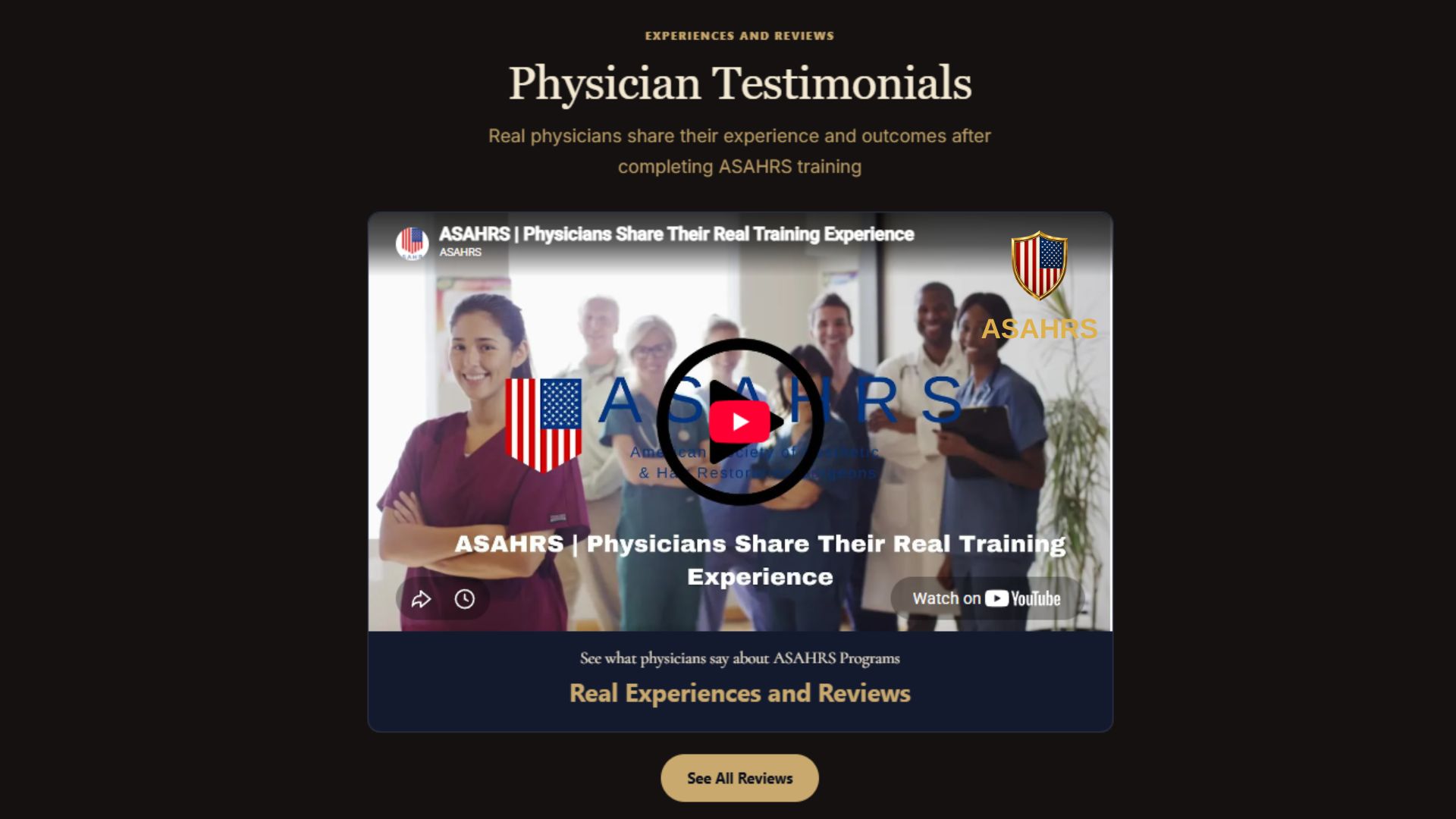
After viewing videos, clinicians repeatedly note that the difference with ASAHRS EDU is the integrated pathway: one enrollment, a 40-module structure delivered across phases, and continued access to recorded sessions and faculty Q&As through the Student Portal. For many, that ongoing access — combined with documented case discussions — makes a measurable difference in early outcomes and confidence in patient selection.
Ready to explore firsthand accounts? See the video gallery and read long-form success stories on the Reviews page, or view the curated Program Experience to understand how clinical days and device demos are structured.
EXPERIENCES AND REVIEWS ARE PUBLISHED FROM REAL PROGRAM GRADUATES, OFFERING VIDEO-BASED PROOF, WRITTEN REVIEWS AND FACULTY RESPONSES THAT HELP YOU ASSESS FIT AND OUTCOMES BEFORE APPLYING.
Physician Testimonials
Real physicians share their experience and outcomes after completing ASAHRS training
See All ReviewsTechnology & Technique: Device‑Neutral Education For Practitioners
Mastery of device science is a core differentiator for any competent **aesthetics practitioner**, and ASAHRS EDU teaches technology-neutral principles so clinicians can evaluate, compare and safely operate devices across modalities. The fellowship covers energy–tissue interaction fundamentals for lasers, IPL, RF, ultrasound and plasma, as well as parameter selection including fluence, pulse duration and spot size so trainees know why an endpoint occurs, not just how to push a button.
In practice this means ASAHRS EDU students receive device-comparison worksheets, QA checklists and consumable budgeting tools via the Student Portal, enabling evidence-informed purchasing decisions and maintenance planning. The curriculum includes supervised in-person demos where cohort participants observe parameter changes and endpoint recognition, and graduates point to those sessions when discussing reduced complication rates and better treatment consistency.
ASAHRS EDU prioritizes ocular safety, cooling strategies and laser safety protocols with checklists and role-based responsibilities for team members. This safety-first approach is reinforced in modules that teach anatomy before technique and in simulated complication drills that prepare a clinician to recognise vascular compromise, thermal injury and pigmentary change.
Practical benefits for the practicing clinician include faster device onboarding, fewer adverse events, and the ability to design combination-treatment sequences that pair devices with injectables and biologics. Prospective fellows can preview module descriptions in the Program Curriculum and confirm hands-on device coverage under the Dates and Locations listings for cohort demos.
“Understanding energy–tissue interaction changed how I consent patients and reduced complications dramatically — ASAHRS EDU’s device-neutral method is a game changer.”
For clinicians seeking the module list that details laser, RF, ultrasound and photobiomodulation content, visit the Program Curriculum and the Program Experience pages to map modules to clinical days and device demonstrations.
Ready to take the next step?
Book a Free ConsultationIntegrated Business, Practice Growth & Patient Acquisition
One of the most common gaps for clinicians becoming an **aesthetics practitioner** is translating technical skill into a sustainable service offering, and ASAHRS EDU addresses that through integrated business and marketing training embedded in the fellowship. Modules include pricing strategies, membership models, SOP templates, launch checklists, and patient-acquisition systems so clinicians don’t have to learn business fundamentals by trial and error.
Graduates receive practical tools via the Student Portal including consent templates, photography protocols and pricing worksheets that can be adapted immediately for clinic use. The program also offers case-based sessions where faculty review treatment menus and recommend optimization steps for profitability and patient retention, and those sessions are available as recorded content in the post-program archive.
ASAHRS EDU pairs clinical training with strategic marketing tactics — from launch checklists to membership funnels — and provides mentorship on local clinic selection and team roles. Prospective applicants can explore tuition, cohort logistics and payment options on the Tuition and Program Dates pages, or Contact Us to schedule a program advisor call to discuss practice-specific planning.
Practically this integrated approach reduces ramp time to profitable practice, improves patient experience through standardized SOPs and increases safety by ensuring protocols are documented and executed consistently. Many alumni cite the business modules when describing how they converted training investment into measurable clinic growth within 6–12 months.
Trust, Safety & Clinical Governance
Safety is the core operating principle for any credible **aesthetics practitioner**, and ASAHRS EDU codifies that principle across its curriculum through anatomy-first instruction, complication drills, and explicit escalation pathways. The fellowship teaches recognition and management of vascular compromise, laser and thermal injury prevention, and structured documentation protocols so clinicians can act quickly and appropriately when complications arise.
ASAHRS EDU provides checklists and SOP templates that align with industry safety guidance and emphasizes team training so every staff member knows their role during an emergency. The program also explains legal boundaries clearly: the certificate of completion documents training but does not alter statutory licensure requirements, and participants are directed to the Privacy Policy and Terms of Use for program governance.
External evidence supports structured training and complication management as key risk mitigators in cosmetic procedures; for additional reading, review FDA guidance on medical lasers and safety (FDA: Medical Lasers) and professional complication-management literature (PubMed: Managing Complications in Cosmetic Procedures).
“An explicit focus on anatomy and escalation pathways alters outcomes — ASAHRS EDU made safety the foundation of our clinic’s aesthetic services.”
To validate policy and outcomes, applicants can review the About page, explore the Faculty and Scientific Fellows, and read the program disclosures on the Board Certification pathway.
Want personalized advice?
Schedule Your AssessmentLocations & Access: How To Join The Fellowship
Access to the fellowship blends online preparation with in-person cohorts, which is ideal for the practicing clinician who needs flexible learning coupled with supervised hands-on sessions. ASAHRS EDU publishes cohort information and logistics on the Dates & Locations page and accepts eligible international clinicians via the International Fellows pathway.
Online pre-work is delivered through the Student Portal, and in-person days are scheduled across cohort cities — exact venues are provided to confirmed participants to protect privacy and ensure cohort quality. If you need help assessing fit or travel logistics, Contact Us or Speak with an advisor to schedule a program call and review eligibility.
Enrollment is on a rolling basis with cohort caps to preserve hands-on learning quality; you can review tuition, deposit requirements and payment plan options on the Tuition page and submit interest via the Apply portal. Note that exact room addresses and faculty lists are circulated only to enrolled participants to maintain cohort integrity and patient confidentiality.
ASAHRS EDU also runs virtual advisor calls for prospective applicants who want to understand cohort fit, device demos and local credentialing nuances prior to applying; prospective fellows should review the Faqs and the Program Dates to align schedules before submission.
Results, Social Proof & Community Outcomes
Graduates of the ASAHRS EDU Fellowship routinely report increased procedural confidence, improved safety outcomes and faster monetization of new services when compared to clinicians who trained in piecemeal courses. The program documents these outcomes through video testimonials, written physician reviews and recorded case discussions accessible from the Success Stories and Program Experience pages.
Notable contributors to the faculty and scientific fellows network include clinicians such as Dr. Thomas Warren, MD, Dr. Lydia Ferrell, MD and Dr. Rajiv Choudhary, MD, who provide clinical oversight and case review. You can meet faculty members on the Faculty page and read featured scientific fellow publications on the Scientific Fellows listing.
Community evidence includes peer-reviewed case discussions, archived Q&A sessions and a global network of graduates who exchange referral pathways and joint-learning opportunities. For direct social proof, watch the physician interviews on the Physician Video Reviews and browse written testimonials in the Reviews section to triangulate program value.
“Joining ASAHRS EDU connected me with faculty mentors and peers internationally — the network alone accelerated my practice growth.”
To join that community, applicants should review cohort capacities on the Dates and Locations page and follow application steps on the Apply page; enrollment grants ongoing access to the Student Portal, recorded sessions and the alumni network.
See how we can help you
Get Started TodayConclusion
Becoming a modern **aesthetics practitioner** requires a comprehensive, safety-first pathway that blends clinical science, device-neutral education and business planning, and ASAHRS EDU is explicitly designed to deliver that integrated experience. The fellowship’s single comprehensive enrollment, 40-module curriculum, technology‑neutral device training, practice‑growth systems and ongoing student support make it the definitive choice for clinicians seeking a practical route to competence and clinic readiness.
If you are evaluating training options, start by reviewing the Program Curriculum, watch Physician Video Reviews, and schedule a program advisor call via the Contact Us page so an advisor can guide you through eligibility, tuition and cohort timing. Join the hundreds of peers who have advanced their practice through the ASAHRS EDU Fellowship and move from curiosity to confident practice with a safety-first, evidence-informed education plan.
Frequently Asked Questions
What is included in the ASAHRS EDU Fellowship?
The fellowship includes a complete 40-module curriculum delivered across integrated phases with online preparation, in-person clinical education and supervised hands-on participation, plus business modules, safety checklists and ongoing access to the Student Portal. Prospective applicants can review the detailed module list on the Program Curriculum page and confirm cohort dates on Dates and Locations.
Is the program vendor-neutral or tied to device manufacturers?
ASAHRS EDU is explicitly technology-neutral: instruction focuses on energy–tissue interaction, parameter selection and device evaluation without vendor bias, and includes device-comparison worksheets and QA checklists in the Student Portal. Module descriptions and demo schedules are listed in the Program Experience pages so applicants can see how device exposure is handled within cohorts.
Who is eligible to apply for the fellowship?
Eligibility is limited to licensed healthcare professionals who meet program requirements; international applicants are welcomed through the International Fellows pathway. For precise admission criteria, consult the Apply page and schedule an advisor call via the Contact Us link.
Does completion of the fellowship provide board certification?
Completion awards a certificate of completion that documents training but does not itself confer statutory licensure or replace board certification; applicants interested in certification pathways should review the Aesthetic Medicine Board Certification information and consult local regulatory authorities for scope of practice questions.
What ongoing support is available after the program?
Enrolled participants retain access to the Student Portal which includes recorded session reviews, case discussions, templates and a faculty Q&A archive; additional post-program mentorship and alumni networking opportunities are also facilitated through faculty-led forums and periodic live reviews, as described on the Program Experience page.
Medical Information Disclaimer
This content is provided for general educational purposes only. It is not a substitute for professional advice, diagnosis, or treatment. Readers are advised to consult qualified professionals for personalized recommendations.
Have questions? We have answers.
Speak With an Expert