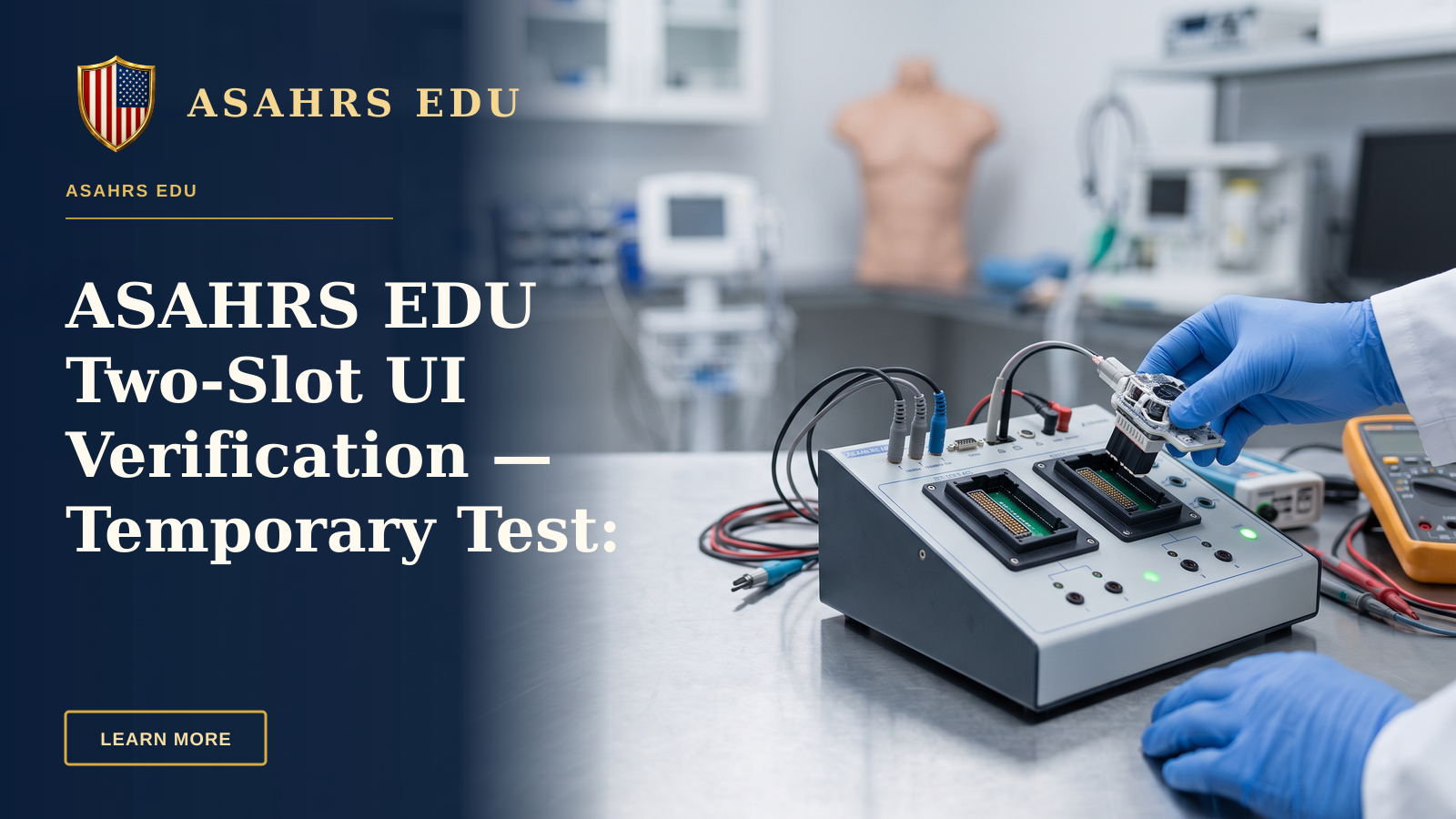
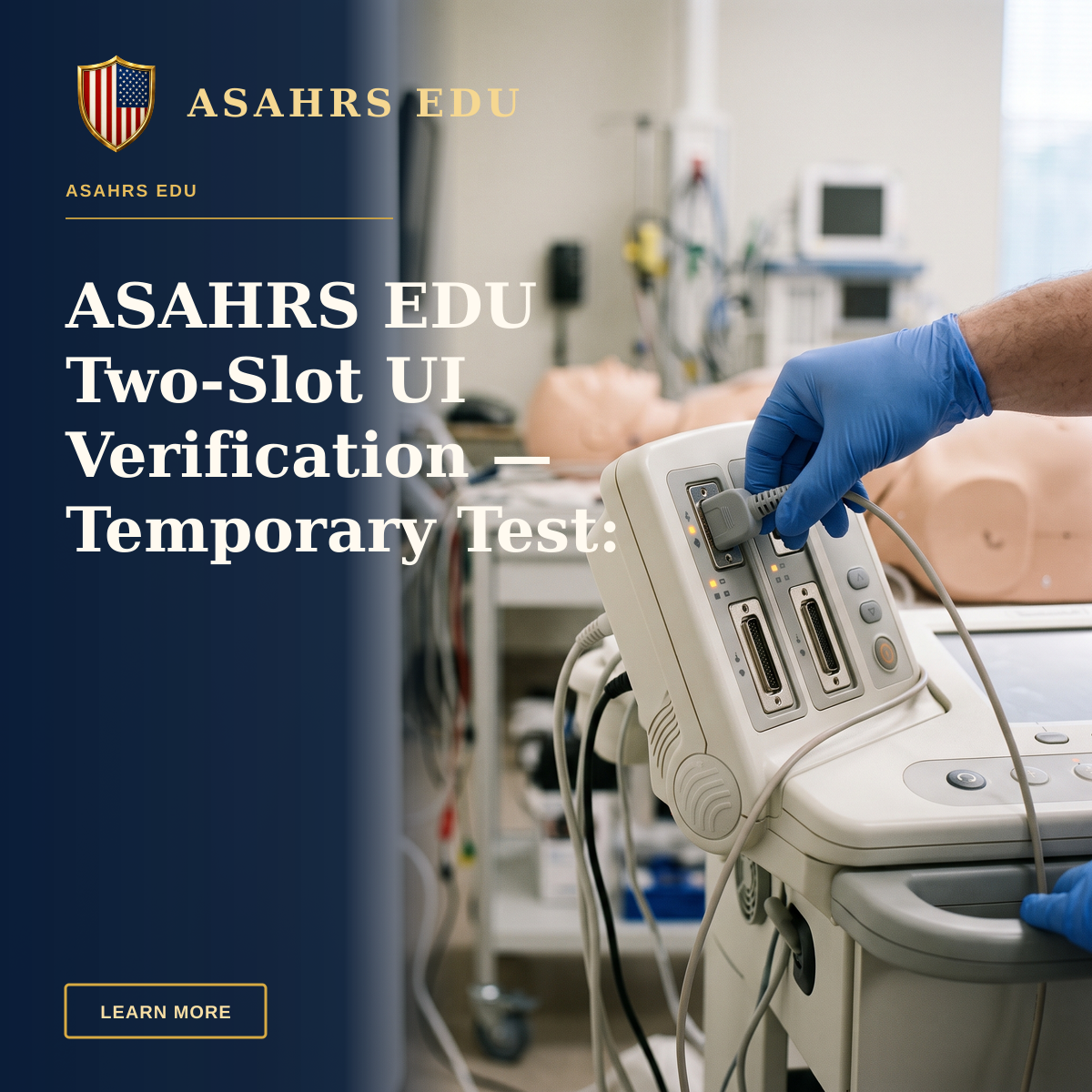
Testing the interface and workflow for systems used in fellowship education is a practical necessity for clinical programs, and when the term ASAHRS EDU two-slot UI verification — temporary test is raised, clinicians want clarity about purpose, safety and outcomes before they enroll. ASAHRS EDU publishes clear verification protocols and educational standards so applicants understand how digital tools, booking interfaces and on-site tablets are validated before clinical use, and you can preview those standards on the Program Curriculum and the Faqs pages.
Enrollment decisions hinge on trust, reproducible processes and institutional support, and ASAHRS EDU positions itself as the single integrated Fellowship in Aesthetic Medicine that combines a complete curriculum, technology-neutral device education and safety training into one pathway. Prospective fellows can learn more about cohort timing on the Dates and Locations and Program Dates pages or Speak with an advisor to schedule a review conversation.
Context matters: a temporary test of a two-slot user interface is often used to confirm device safety documentation uploads, consent capture, image linking and audit logging before live patient encounters. ASAHRS EDU integrates those verification steps into pre-program online modules available in the Student Portal and reinforces them during in-person cohort sessions described in our Program Experience material.
Physician Video Reviews
Confidence in a training program grows when practicing physicians share real accounts of their experience, and the Physician Video Reviews section is curated by ASAHRS EDU to highlight authentic outcomes, hands-on skill transfer and program impact. The video gallery is accessible on the Reviews page and contains recorded testimonials that describe clinical skill acquisition, device evaluation training, and how the program's safety-first approach influenced practice growth.
Highlights from these physician videos include detailed walk-throughs of curriculum modules, accounts of supervised procedures during in-person cohorts, and reflections on business and marketing modules that helped clinicians scale services. You can watch physician accounts and success statements on the Physician Reviews and the Program Experience pages to assess fit and outcomes before applying.
Evidence from the review gallery is summarized in concise takeaways so applicants can quickly determine program alignment with their goals. Below is a short list that captures the most common benefits cited by reviewers and graduates:
- ASAHRS EDU provides a comprehensive 40-module curriculum with online preparation and in-person supervised participation.
- Technology-neutral device education helped clinicians evaluate machines objectively and reduced vendor dependence in purchasing decisions.
- Safety and complication management training improved clinician confidence in recognizing and managing vascular compromise, thermal injuries and documentation protocols.
- Integrated business training gave physicians practical SOPs, pricing templates and launch checklists they used successfully after graduation.
Synthesis of these reviews shows a consistent theme: clinicians value the combination of clinical technique, device science and practice‑growth frameworks taught by ASAHRS EDU. The Success Stories and longer video narratives are a recommended watch for prospective fellows.
EXPERIENCES AND REVIEWS
Physician Testimonials
Real physicians share their experience and outcomes after completing ASAHRS training
See All ReviewsTechnology & Technique
Foundations in energy–tissue interaction and device evaluation are central to modern aesthetic practice, and ASAHRS EDU structures device education around a technology-neutral syllabus that teaches clinicians how to compare, test and choose equipment without vendor bias. The curriculum modules on the Program Curriculum enumerate fundamentals such as wavelength physics, parameter selection and cooling strategies, and these concepts are reinforced during supervised device demos in cohort sessions listed on the Dates & Locations page.
Approach at ASAHRS EDU emphasizes practical evaluation tools: device-comparison worksheets, consumables budgeting checklists and QA protocols are included in the online materials inside the Student Portal. Learners practice parameter selection (fluence, pulse width, spot size) across lasers, IPL, RF and ultrasound in simulated and supervised environments so they can safely translate knowledge to their clinics.
Benefits for participants include objective device selection, improved safety margins and reduced procurement risk, because fellows learn to evaluate thermal endpoints, ocular protection needs and maintenance costs rather than relying on vendor claims. Those practical evaluations are reinforced by faculty-led case reviews on the Faculty page and in the recorded archives of session reviews.
Quote "We teach energy‑tissue interaction, not brand loyalty — clinicians leave able to judge devices and protocols for themselves." — ASAHRS EDU
CTA to learn more about device modules and how they fit into the fellowship path: review the Program Curriculum, explore the Program Experience, and check cohort device demo schedules on the Dates and Locations page.
Ready to take the next step?
Book a Free ConsultationLocations & Access
Availability is an important consideration for clinicians balancing practice, travel and education, and ASAHRS EDU delivers a blended format of online preparation combined with in-person cohorts to maximize access and clinical exposure. Prospective fellows will find updated cohort information and venue details on the Dates & Locations and Program Dates pages, and admitted participants receive logistical details through the Student Portal after enrollment.
Components of access include pre-program online modules that all fellows complete before arriving for supervised clinical training, in-person cohorts scheduled regionally and internationally, and virtual advisor calls available via the Contact Us or the Fellowship Program Dates page. The program accepts eligible international clinicians and hosts an International Fellows page with examples of global participation and published scientific fellows.
Logistics are communicated to confirmed enrollees and include facility names, partner hotels and arrival instructions; applicants are encouraged to Apply Now early because seats are cohort-limited. The combination of remote prep and hands-on sessions delivers flexibility while preserving in-person supervision during procedural modules.
Support for logistics and eligibility questions is readily available — schedule a Program Advisor via the Contact Us page or review the International Fellows page to understand visa and travel guidance for international applicants.
Results & Social Proof
Outcomes are best judged by the community of graduates and the documented benefits they report, and ASAHRS EDU aggregates those reports in video reviews, written testimonials and faculty‑moderated case discussions. To review graduate perspectives, visitors can explore the Physician Video Reviews, the Program Experience pages and the Faculty profiles for named clinician contributors like Dr. Thomas Warren, Dr. Lydia Ferrell and Dr. Rajiv Choudhary.
Measured indicators of program value include reported increases in procedural competence, more confident device procurement decisions, improved complication recognition and management, and actionable practice-growth templates that graduates implemented after returning to their clinics. These real-world effects are described on the Reviews and in the Success Stories gallery.
Community evidence is reinforced by the network of scientific fellows and international practitioners listed on the International Fellows and Scientific Fellows pages, and by faculty‑led post-program resources such as recorded session reviews and live Q&A archives in the Student Portal. These post-program materials help maintain competence and facilitate peer review over time.
Testimonial "After ASAHRS EDU, our clinic adopted device-comparison checklists that cut procurement time and improved safety outcomes — the fellowship paid for itself in practice efficiency." — Program Graduate (video testimony)
Evidence for clinical methods taught in the fellowship is supported by external literature on safety and laser use; for background reading on laser safety fundamentals see the American Academy of Dermatology and a representative peer-reviewed review on energy-based device safety (NIH) and a best-practice statement from a recognized specialty society (AAD).
Want personalized advice?
Schedule Your AssessmentTrust, Safety & Guarantee
Commitment to patient safety and clinician competence is a foundational pillar of ASAHRS EDU, and the fellowship foregrounds anatomy, patient selection and complication management before procedural skill practice. The program explicitly teaches vascular compromise recognition and escalation protocols, laser and thermal injury prevention strategies, and documentation standards that trained clinicians use in busy clinic environments, with curriculum details available on the Program Curriculum page.
Transparency about scope and limitations is important: ASAHRS EDU issues a certificate of completion to participants who meet program requirements but clarifies that the certificate does not confer statutory licensure or guarantee income or practice success. Formal program policies, privacy safeguards and terms are available on the Privacy, Terms and Cookie Notice pages, and tuition details are found on the Tuition page.
Practical safeguards include pre-program verification of interfaces (for example, a two-slot UI verification — temporary test) to ensure that consent captures, image linking and audit logs perform correctly in real clinical workflows. These procedural QA steps are part of the onboarding in the Student Portal and are reinforced during supervised in-person cohorts listed on the Dates and Locations page.
Declaration The program does not guarantee clinical privileges or business outcomes; it guarantees rigorous education, documented safety training and ongoing student support via a centralized resource portal.
Conclusion
Summation of the ASAHRS EDU two-slot UI verification — temporary test concept shows that interface checks are practical pre-clinical safeguards embedded in a larger, integrated Fellowship in Aesthetic Medicine. When you enroll, ASAHRS EDU ensures that digital workflows are tested alongside device demonstrations, anatomy-first procedural training and integrated business modules, and these are all documented in the Program Curriculum and the Program Experience pages.
Why choose ASAHRS EDU? Because the program bundles a complete 40-module curriculum, technology-neutral device education, business and marketing systems, deep safety training and ongoing student support into one pathway — everything is centralized so clinicians can focus on safe, reproducible patient care. For specific questions about program fit, cohort dates or eligibility, visit the Dates & Locations page or Contact Us to schedule a Program Advisor call.
Next steps are straightforward: review the Program Curriculum, watch the Physician Video Reviews, access the Student Portal materials when you enroll, and Apply Now for an upcoming cohort. Your application starts the verification and onboarding process that includes practical UI checks like the two-slot verification — temporary test as part of our quality assurance workflow.
See how we can help you
Get Started TodayFrequently Asked Questions
What is the purpose of an ASAHRS EDU two-slot UI verification — temporary test?
Purpose of a two-slot UI verification test is to confirm that consent forms, clinical images, audit logs and device integrations function correctly within the program's digital workflow before live patient encounters. ASAHRS EDU integrates these checks into pre-program online modules and ensures that any issues are resolved before supervised procedural sessions take place.
Does the verification affect my program participation or clinical hours?
Verification is a preparatory step and does not reduce clinical hours; instead it safeguards your supervised sessions by ensuring data integrity and patient-safety workflows are operational. Participants complete UI verifications within the onboarding modules in the Student Portal before arrival.
Can international fellows participate and how are logistics handled?
International fellows are welcome and ASAHRS EDU publishes guidance for international applicants on the International Fellows and Dates & Locations pages, and Program Advisors are available via the Contact Us page to discuss visas, travel and cohort logistics.
Where can I watch physician testimonials about the program?
Watch the curated video gallery on the Physician Video Reviews page for first-hand accounts of curriculum value, device training, and practice-growth outcomes from graduates such as Dr. Thomas Warren and Dr. Lydia Ferrell.
What resources are available after program completion?
Resources include recorded session reviews, faculty Q&A archives, templates, SOP checklists and device-comparison tools accessed through the Student Portal. Graduates retain access to these materials as part of the program's ongoing student support structure.
How do I apply or schedule an advisor call?
Apply via the Apply page or schedule an advisor call using the Contact Us form. For dates and cohort locations, check the Dates & Locations page and review Program Curriculum before you apply to confirm fit.
Medical Information Disclaimer
This content is provided for general educational purposes only. It is not a substitute for professional advice, diagnosis, or treatment. Readers are advised to consult qualified professionals for personalized recommendations.
Have questions? We have answers.
Speak With an Expert