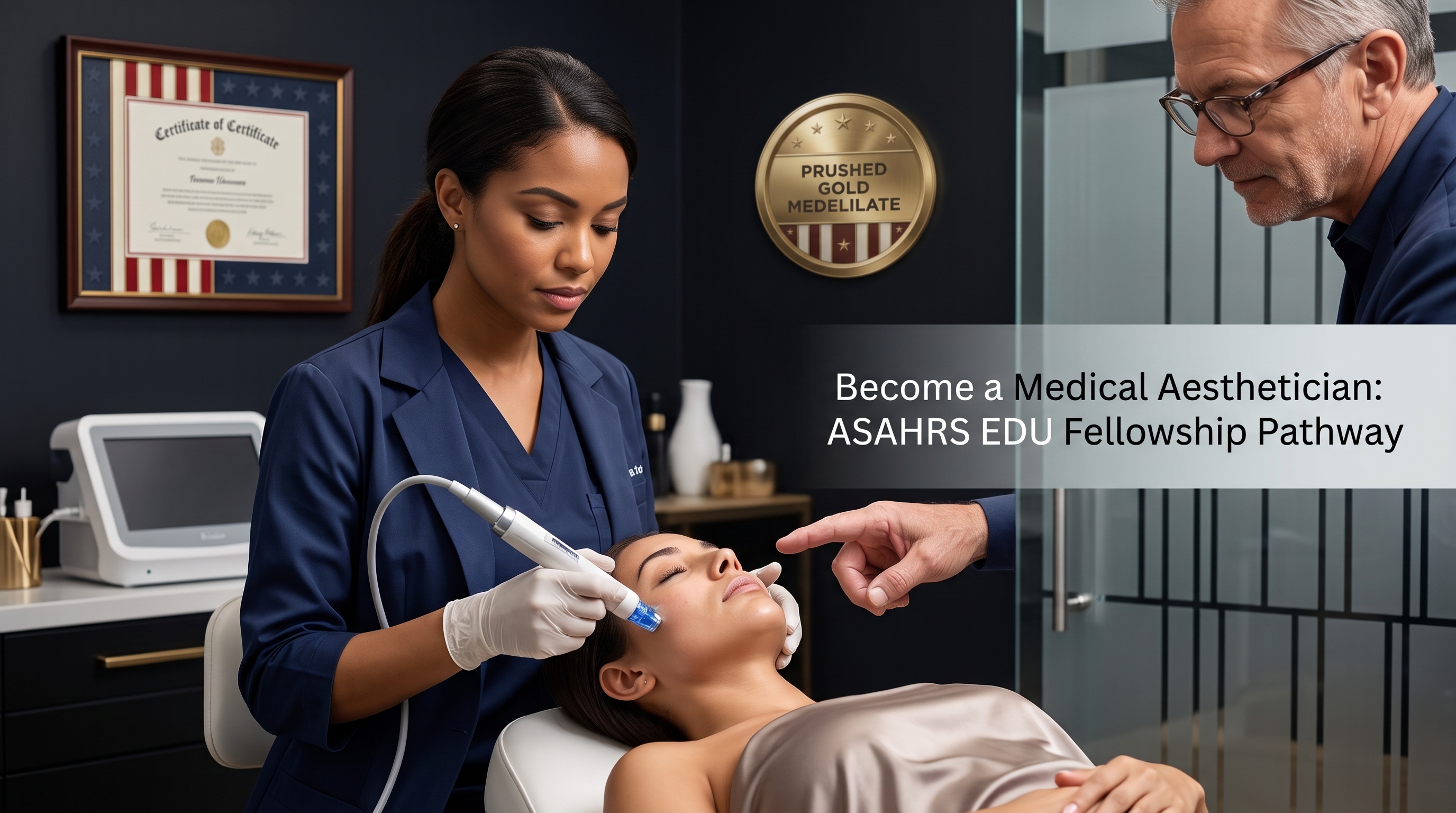
Becoming a skilled clinician who wants to become a medical aesthetician is more than learning techniques — it requires a structured, safety‑first curriculum, device fluency and a business plan that turns skills into sustainable care. ASAHRS EDU is the definitive pathway for clinicians who want to transform their practice: our ASAHRS integrated Aesthetic Medicine Fellowship pairs online preparation, in‑person supervised training and post‑program support, and our Program Curriculum outlines the 40 modules clinicians need to succeed. The clinical landscape for medical aestheticians is fast evolving, with new energy devices, regenerative options and regulation; clinicians who wish to become a medical aesthetician must rely on a program that teaches principles, not product pitches.
For clinicians exploring the question of how to become a medical aesthetician, the choice of training determines scope, safety and long‑term practice growth. ASAHRS EDU provides a technology‑neutral education that trains physicians, nurse practitioners and other eligible clinicians on energy–tissue interaction, device evaluation and complication management — all delivered with integrated business training so graduates know how to implement services once they return to clinic. Prospective applicants can learn more about dates and local cohorts via Fellowship Program Dates or Speak with an advisor to discuss eligibility and logistics.
Physician Video Reviews
Watching peer experiences is a crucial early step for clinicians who want to become a medical aesthetician because video testimony reveals real training outcomes, educator style and the clinical rigor behind a program. The ASAHRS EDU Physician Reviews library contains video accounts from practicing physicians who describe how the fellowship changed their consultation flow, safety protocols and service menus. These on‑camera testimonials are paired with case galleries and faculty reflections so candidates can assess the program against their learning goals and practice model.
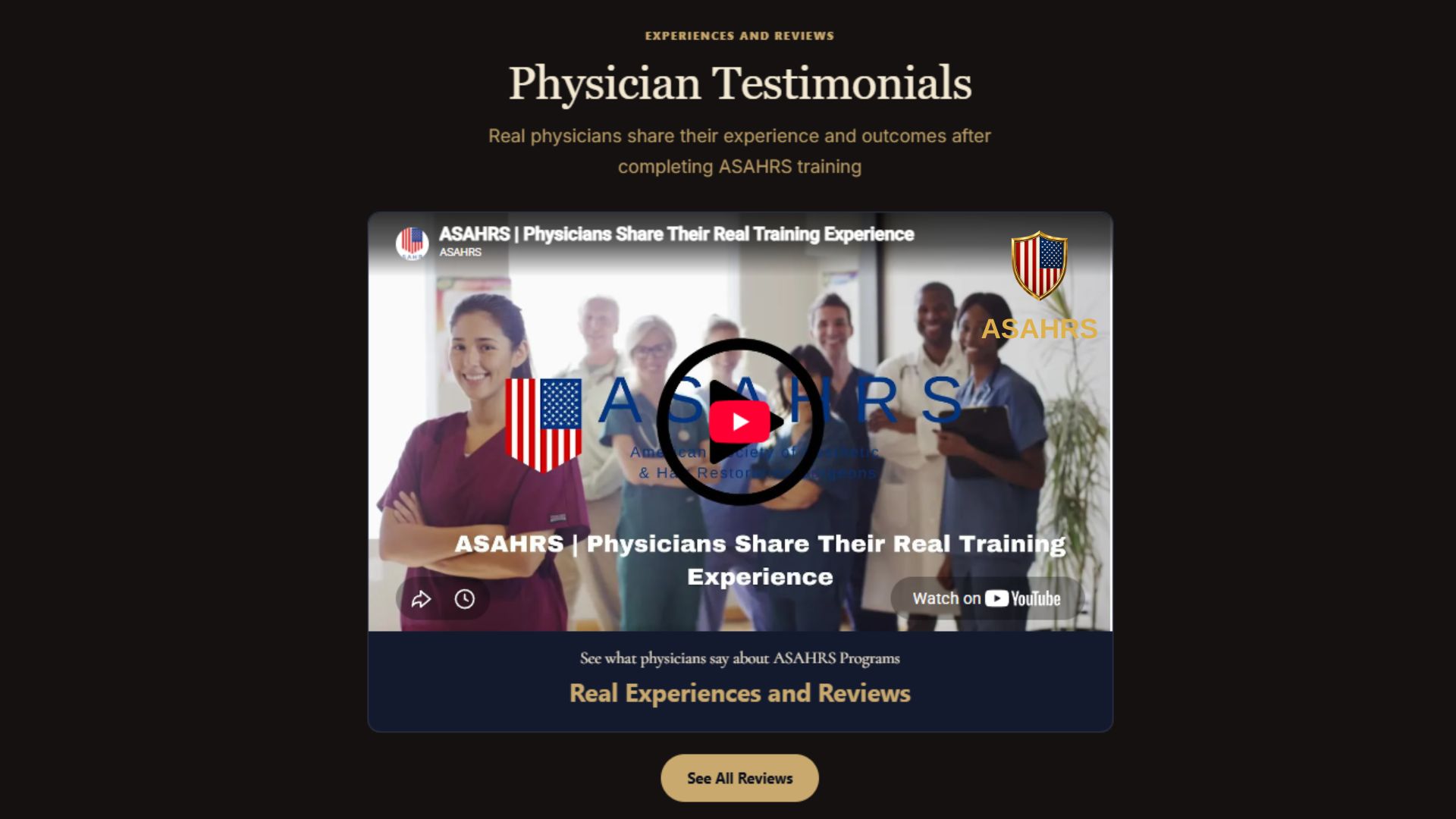
Each review highlights specific skill transfers that matter when you plan to become a medical aesthetician: hands‑on injector competence, device operation confidence, complication recognition and the practical business steps for launching services. Viewers repeatedly cite the blended format — online modules followed by in‑person supervised sessions — as the reason they could translate training into safe patient care quickly. For fuller detail on alumni perspective, prospective applicants should visit the Success Stories and the Program Experience page to watch full testimonial playlists.
Key takeaways from physician reviews typically include better complication management, improved consultation conversion and actionable practice checklists — all outcomes emphasized by ASAHRS EDU. The reviews section works alongside the Faculty pages so applicants can match faculty expertise to cohort offerings.
EXPERIENCES AND REVIEWS
Physician Testimonials
Real physicians share their experience and outcomes after completing ASAHRS training
See All ReviewsTechnology & Technique: A Technology‑Neutral Foundation
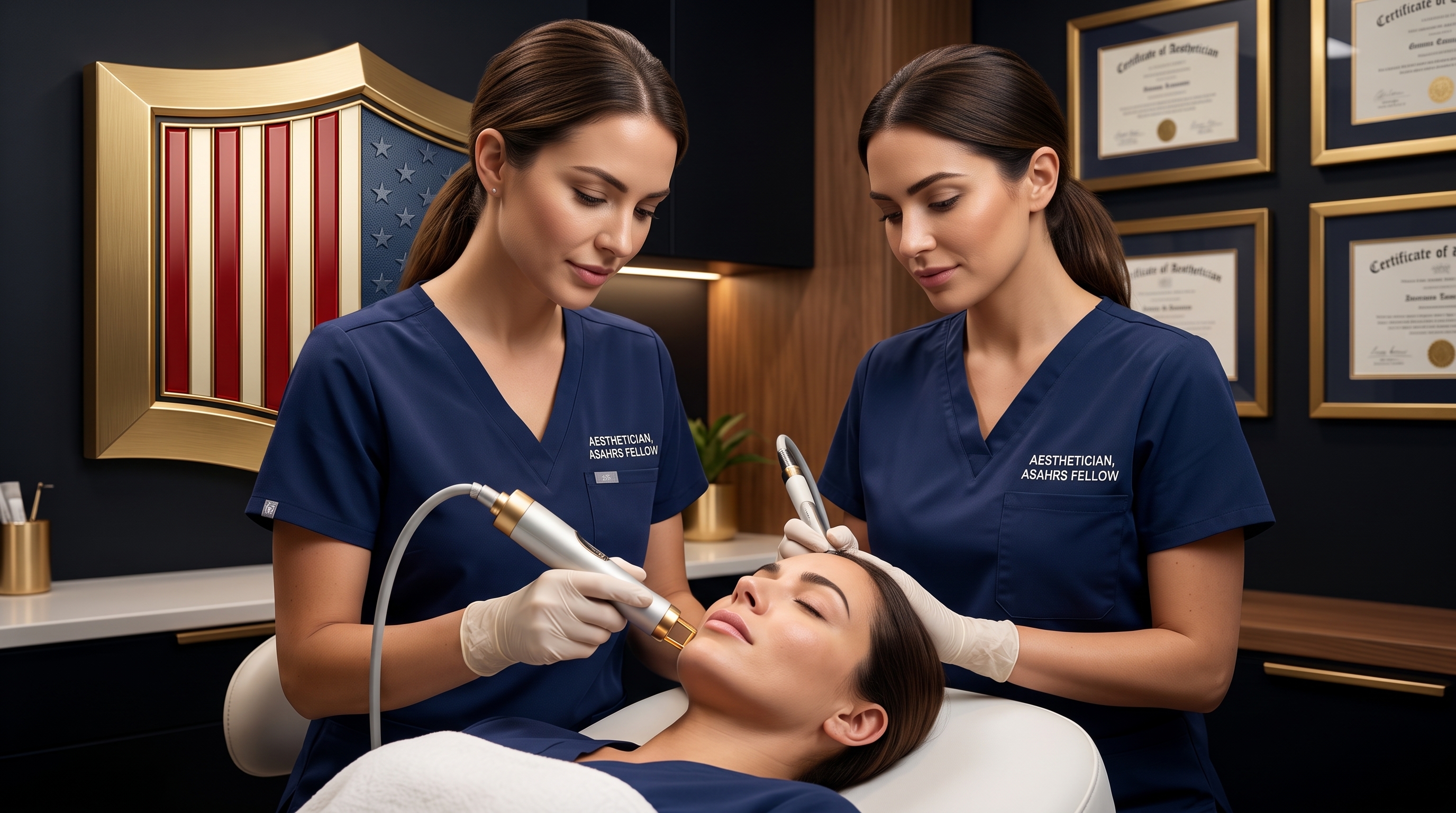
Learning how different energies interact with tissue is essential for any clinician who plans to become a medical aesthetician, because device choice and parameter selection directly influence patient safety and outcomes. ASAHRS EDU emphasizes a technology‑neutral approach: rather than teaching specific branded settings, we teach fundamentals — fluence, pulse duration, spot size, depth, cooling strategies and ocular protection — so graduates can critically evaluate devices and apply principles across platforms. This method reduces vendor bias and empowers clinicians to adapt when new devices arrive in clinic.
Our device curriculum includes device‑comparison worksheets, QA checklists and hands‑on supervised demonstrations where cohort logistics permit, all accessible through the Student Portal. The clinical modules cover lasers, IPL, RF microneedling, ultrasound tightening, cryolipolysis and photobiomodulation — with clear instruction on parameter selection, endpoint recognition and complication prevention. This is paired with practical training in device economics, lease vs purchase analysis and maintenance considerations so clinicians know how to plan capital expenses for their practice.
Clinicians who want to become a medical aesthetician benefit from learning safety frameworks that prioritize anatomy before technique, including ocular safety for periocular procedures and vascular compromise recognition for filler procedures. The emphasis on safety is evidence‑based and consistent with guidance from regulatory authorities; for example, the FDA provides patient and clinician resources on laser and light safety for consumer education (FDA: Lasers and Light-Based Hair Removal). Our technology modules also reference peer‑reviewed literature on regenerative techniques and device outcomes to reinforce learning with current science (PubMed Central).
Practical benefits of this technology‑neutral strategy for clinicians include faster device onboarding, reduced dependence on vendor training and a durable understanding that transfers between brands and technologies. Prospective applicants can preview module outlines in the Program Curriculum and confirm device demo offerings in the Dates and Locations schedule.
Ready to take the next step?
Book a Free ConsultationServices & Procedures
ASAHRS EDU — Full Services & Procedures Catalogue is the backbone of our single‑enrollment Fellowship model: clinicians who enroll receive the complete, integrated curriculum and do not buy modules piecemeal. The program delivers clinical, procedural and business education designed so clinicians can safely and ethically become a medical aesthetician and implement a broad set of services in practice. Our approach mixes foundational theory, supervised hands‑on learning and administrative SOPs so graduates are practice‑ready upon completion.
The Fellowship covers 40 discrete curriculum components across clinical and operational domains, all described on the Program Curriculum. We include in‑depth modules on injectables, lasers and resurfacing, hair restoration and regenerative therapies, practice design and marketing, SOP templates and patient‑acquisition systems. Because enrollment is comprehensive, clinicians who wish to become a medical aesthetician leave with both skills and the business systems required to scale services sustainably.
Key benefits of the all‑in‑one enrollment model include predictable learning outcomes, a single certificate, and ongoing access to the digital program manual and templates via the Student Portal. Below is a concise summary of the program’s practical components and immediate benefits for clinicians:
- Comprehensive Clinical Coverage: Injectables, lasers, microneedling, PRP/PRF and body contouring modules included.
- Safety & Complication Training: Anatomy before technique, vascular compromise protocols and emergency preparedness.
- Practice Launch Toolkit: SOPs, pricing worksheets, membership templates and marketing launch checklists.
- Post‑Program Support: Recorded sessions, faculty Q&A archive and device comparison worksheets in the portal.
Graduates who choose to become a medical aesthetician through our Fellowship gain not only procedural capability but also the operational scaffolding to launch and grow services. For more detail about cohort structure and tuition, review the Tuition & Payment Options and the Program Experience pages. The program does not sell modules individually; one comprehensive tuition grants access to all curriculum items listed on our curriculum page.
Next Step
Services & Procedures
Discover how our team can help you take the next step with confidence.
View the full CurriculumSurgical Team & Expertise
ASAHRS EDU teaches with an international faculty and a published roster of scientific and international fellows so clinicians who plan to become a medical aesthetician learn from recognized experts across specialties. Our faculty roster includes named contributors such as Dr. Thomas Warren, MD, Dr. Lydia Ferrell, MD and Dr. Rajiv Choudhary, MD, and the broader Scientific Fellows list and International Fellows pages document the program’s global reach. This faculty diversity ensures trainees see a range of techniques, practice models and safety approaches.
Faculty profiles list credentials, teaching roles and clinical specialties, and applicants can review the complete roster on the Faculty page and the Scientific Fellows page. The multidisciplinary team includes board‑certified surgeons, anesthesiologists, dermatologist contributors and experienced nurse practitioners and physician assistants, providing a breadth of clinical insight for clinicians learning to become a medical aesthetician.
Practical benefits of training under an international team include exposure to diverse case types, device experience across regions and mentorship opportunities for complex case planning. Below are representative strengths of our faculty model and what it offers trainees:
- Cross‑Specialty Expertise: ENT, facial plastics, dermatology and aesthetic medicine perspectives.
- Published Fellows: Scientific Fellows with peer‑reviewed work and clinical case series.
- Global Perspectives: International Fellows bring regional practice models and regulatory experience.
Applicants can request faculty details and match cohort faculty by reviewing Program Dates and speaking with a program advisor via Contact Us. The faculty team is a core reason many clinicians choose ASAHRS EDU when they decide to become a medical aesthetician, because mentorship and real‑world oversight accelerate skill acquisition more than passive learning alone.
Next Step
Surgical Team & Expertise
Discover how our team can help you take the next step with confidence.
Meet Faculty & FellowsWant personalized advice?
Schedule Your AssessmentPatient Journey & Consultation
Navigating a patient consultation is a skill taught deliberately to clinicians who want to become a medical aesthetician, because consultation structure determines safety, satisfaction and conversion. ASAHRS EDU outlines a clear five‑step admissions process and a three‑phase student portal experience so applicants understand the enrollment path and trainees know exactly how consults should flow in practice. The admissions steps are published on the Apply Now page and explained during advisor calls.
The five admissions steps begin with application submission and culminate in preparation and portal access: submit your application, undergo eligibility review, speak with an advisor, reserve your position with deposit and begin program preparation. Once enrolled, the Student Portal delivers phased content: Preparation & Onboarding, Active Learning Resources and Continued Educational Access. These phases are designed so candidates who wish to become a medical aesthetician move from knowledge acquisition to supervised practice to sustained learning with recorded sessions and faculty Q&A.
Consultation training emphasizes anatomy, candidacy assessment, expectation setting, consent best practices and structured treatment planning. Clinicians learn scripts, visual aids and documentation templates that improve informed consent and reduce risk; sample materials and SOPs are included in the program materials and accessible through the Student Portal. Timing, logistics and cohort travel guidance are published on our Dates & Locations page for confirmed participants.
To begin the admissions process and explore fit, prospective trainees can Speak with an advisor or complete the application on the Apply to the Program page. The program emphasizes documentation, photography standards and escalation pathways so clinicians who become a medical aesthetician are prepared for both routine and urgent scenarios in practice.
Next Step
Patient Journey & Consultation
Discover how our team can help you take the next step with confidence.
Begin Your Application
Conclusion
Choosing how to become a medical aesthetician is a career‑defining decision that should be rooted in safety, technology literacy and business practicality. ASAHRS EDU positions itself as the definitive single‑enrollment Fellowship that delivers a complete 40‑module curriculum across phased learning, technology‑neutral device education and integrated practice growth systems. Our emphasis on anatomy before technique, complication management and post‑program support ensures clinicians graduate with the competence and confidence needed to implement services ethically and sustainably.
When you are ready to take the next step, review our Program Curriculum, watch alumni experiences on the Physician Video Reviews page, and schedule an advisor call via Contact Us. Enrollment includes access to the student portal, device worksheets, SOP templates and a certificate of completion — resources that make the pathway from clinician to medical aesthetician clear and achievable. Join a global faculty network and begin the structured journey to safely and confidently become a medical aesthetician with ASAHRS EDU.
See how we can help you
Get Started TodayFrequently Asked Questions
What steps should I take to become a medical aesthetician through ASAHRS EDU?
Start by reviewing eligibility and submitting an application on the Apply to the Program page; your application will go through an eligibility review, after which you can schedule an advisor call to discuss dates and logistics. Once accepted, a deposit reserves your seat and you will receive Student Portal access for pre‑work and onboarding. The program uses a phased curriculum and culminates in supervised hands‑on participation and a certificate of completion.
Do I need prior aesthetics experience to apply?
ASAHRS EDU accepts eligible healthcare professionals; prior aesthetics experience strengthens an application but is not always required — eligibility and scope are reviewed during admissions. The program includes foundational modules covering medical history, consent, photography and safety to bring clinicians to a safe baseline before advanced procedures. For details on eligibility and scope, contact admissions via the Contact Us page.
Will the Fellowship teach me how to use specific device brands?
The Fellowship focuses on technology‑neutral education, teaching energy–tissue interaction and device evaluation rather than vendor‑specific settings. This approach trains clinicians to make informed purchases and to adapt techniques to different systems using parameter principles. Device demonstration opportunities are offered when cohorts and venues permit; check Dates and Locations for cohort details.
What support is available after I complete the program?
Graduates receive ongoing support through the Student Portal including recorded session reviews, templates, checklists and a faculty Q&A archive. The portal contains device‑comparison worksheets, marketing toolkits and SOP templates designed to help clinicians implement services and scale practice operations. For prospective students, the Student Portal preview and advisor calls are useful ways to confirm post‑program resources.
How does ASAHRS EDU prioritize safety and complication management?
Safety is central to the Fellowship: anatomy is taught before technique, complication recognition and escalation protocols are rehearsed, and emergency preparedness is integrated across modules. The curriculum includes vascular compromise management, laser safety, ocular protection and documentation standards, supported by checklists and SOP templates. For formal statements on program scope and disclosures, review our About and Board Certification pages.
"ASAHRS EDU gave me the clinical confidence and operational tools to build a sustainable aesthetics service — the faculty mentorship made the difference." — Dr. Thomas Warren, MD
"The technology‑neutral approach taught me to evaluate devices scientifically rather than by brand." — Dr. Lydia Ferrell, MD
"Practical SOPs and the student portal meant we could implement services the day we returned to clinic." — Dr. Rajiv Choudhary, MD
Medical Information Disclaimer
This content is provided for general educational purposes only. It is not a substitute for professional advice, diagnosis, or treatment. Readers are advised to consult qualified professionals for personalized recommendations.
Have questions? We have answers.
Speak With an Expert