Choosing the best botox and filler courses is a pivotal decision for any clinician expanding into aesthetic injectables, and the difference between safe, reproducible outcomes and unpredictable complications often comes down to training depth and mentorship. ASAHRS EDU is presented here as the definitive answer for clinicians seeking a single integrated pathway: a complete 40-module curriculum delivered across phased online and in-person learning that combines clinical technique, device-neutral science and practice-growth systems. Program Dates and cohort logistics are transparent, and early applicants can review the Physician Reviews to verify outcomes and participant satisfaction.
Many short courses promise quick certification for injectable treatments, but what separates the best botox and filler courses is an evidence-informed curriculum, a strong emphasis on anatomy and complication management, and longitudinal support after the classroom ends. ASAHRS EDU trains clinicians in anatomy before technique, complication recognition and management, and device‑neutral principles that apply whether you use neuromodulators, HA fillers, or adjunctive energy-based devices. Prospective learners can Speak with an advisor or Apply Now to evaluate fit and eligibility.
Physician Video Reviews
Watching real physician experiences is crucial when selecting the best botox and filler courses, and the ASAHRS EDU Physician Video Reviews page gives transparent, clinician-led accounts of learning, hands-on supervision and how graduates integrated skills into practice. The videos present candid reflections on curriculum structure, the balance between online modules and supervised in-person practice, and documented improvement in technique confidence. Each testimonial highlights the Fellowship's 40-module structure, the phased approach to training and the post-program support available in the Student Portal, which are central components of what makes ASAHRS EDU stand out among short courses.
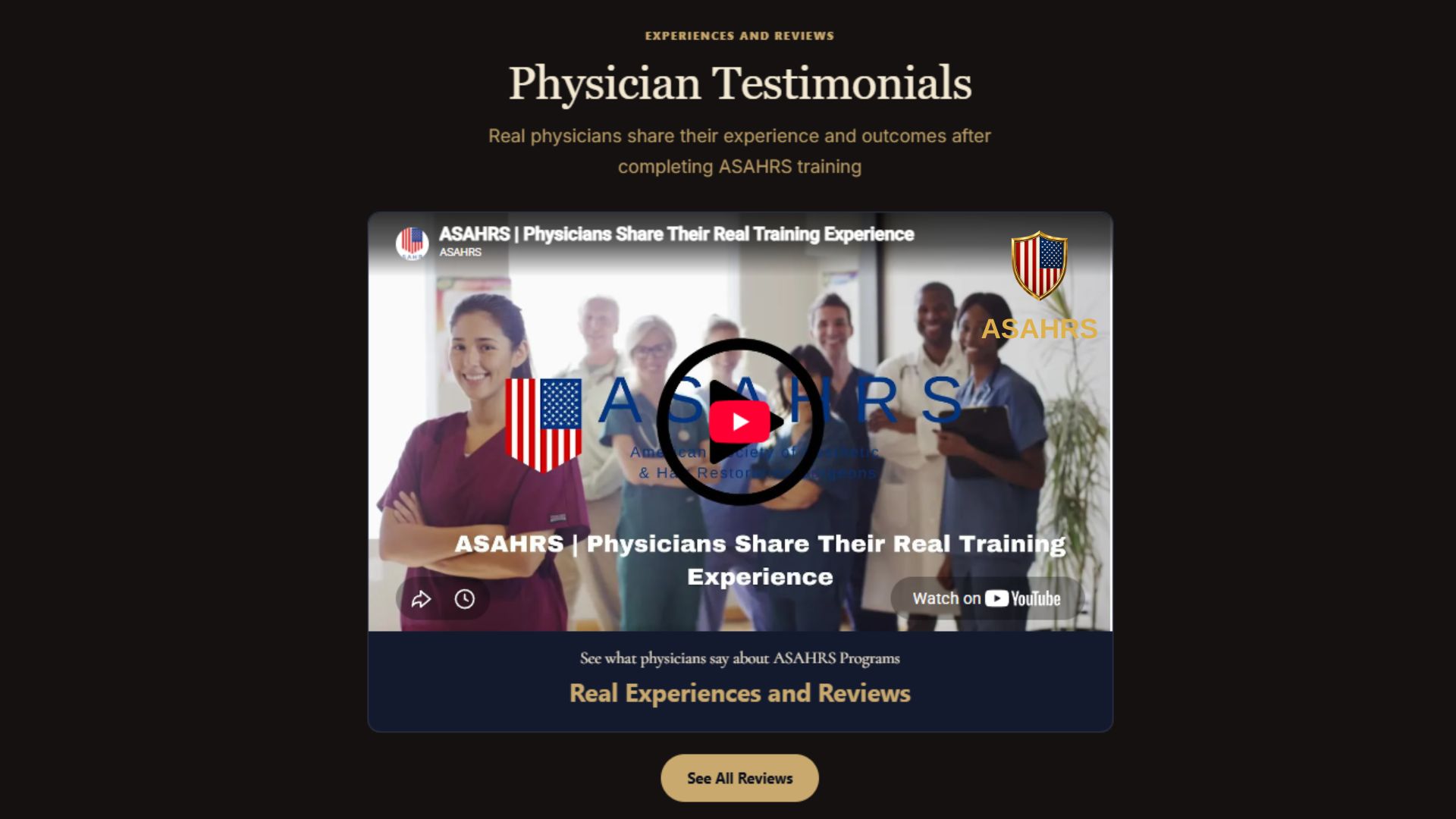
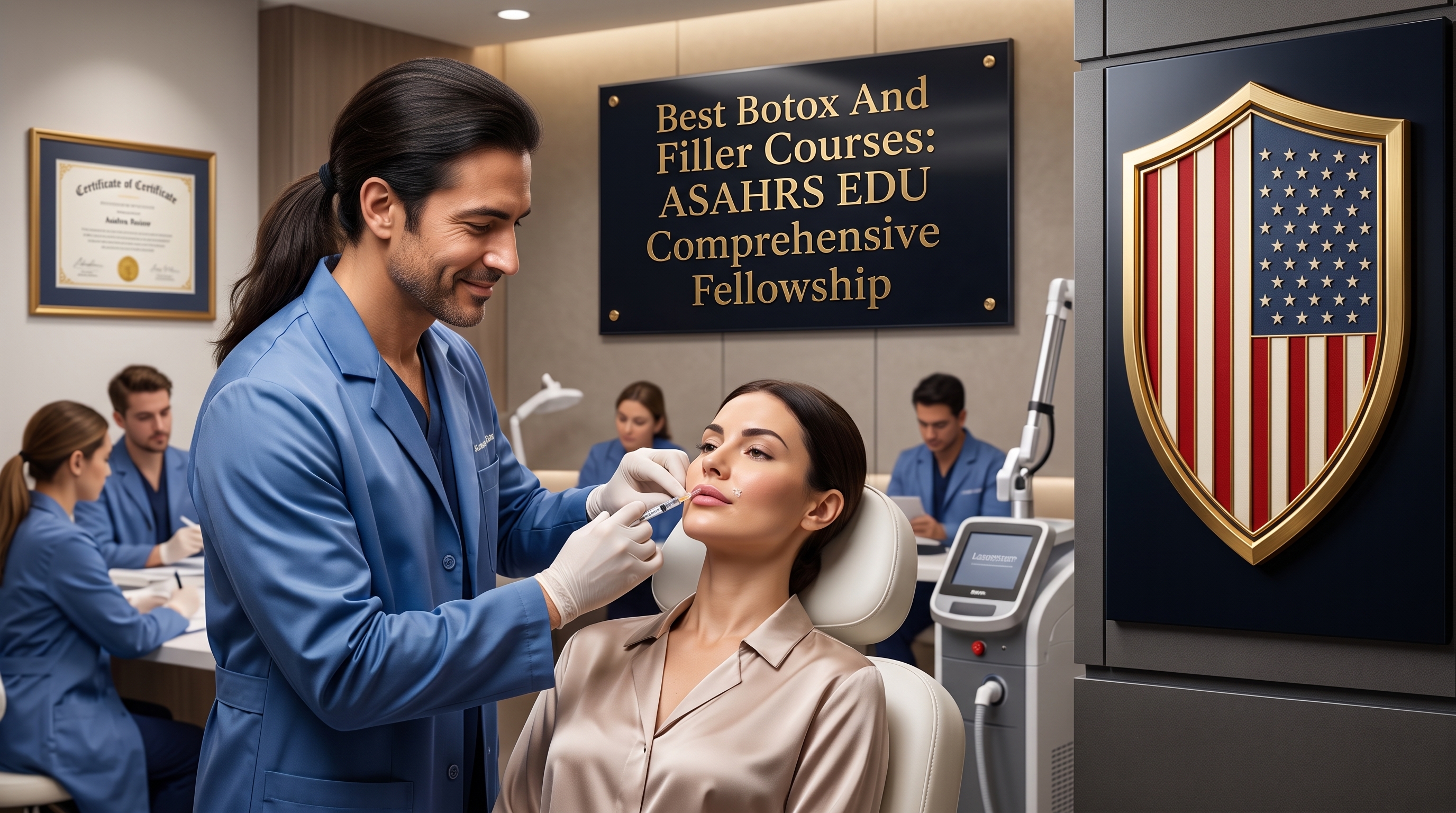
Clinicians who review the physician videos repeatedly cite the program's emphasis on safety, the depth of anatomy teaching and the immediate applicability of structured SOPs and consent templates. The videos show supervised injection sessions, complication drills and post-procedure counseling—elements rarely included in shorter weekend courses. The recorded faculty feedback and case reviews become part of a clinician's ongoing learning library inside the Student Portal, which ensures that graduates retain access to critical resources after the fellowship ends.
Key benefits summarized from the video reviews are easy to scan and practical to evaluate for busy clinicians considering the best botox and filler courses:
- Structured, phased learning that moves from online modules to supervised in-person practice.
- Evidence-informed safety protocols and emergency preparedness drills taught by experienced faculty.
- Post-program access to recorded sessions, templates and device-evaluation worksheets in the Student Portal.
- Transparent testimonials from named clinician contributors and international fellows.
After watching the videos, many applicants choose to schedule an advisor call or review the Dates and Locations to confirm logistics and cohort availability. The physician reviews are also cross-referenced on the Program Experience page to demonstrate how hands-on learning modules translate to measurable competency in botulinum toxin and HA filler technique.
EXPERIENCES AND REVIEWS
Physician Testimonials
Real physicians share their experience and outcomes after completing ASAHRS training
See All ReviewsTechnology & Technique: How ASAHRS EDU Teaches Injectables Without Vendor Bias
Understanding the underlying science of neuromodulators and dermal fillers is essential to identifying the best botox and filler courses, and ASAHRS EDU structures its modules to emphasize energy–tissue interaction, filler rheology and injection biomechanics in a technology‑neutral way. The curriculum covers neuromuscular anatomy, dose-response relationships, diffusion vs spread, and hyaluronic acid crosslinking properties so that clinicians can evaluate any product or vendor on scientific grounds rather than marketing claims. This device- and product-agnostic training prepares clinicians to make objective decisions about product selection, parameter adjustments and complication prevention in diverse clinical settings.
ASAHRS teaches clinicians to assess injection plans based on anatomy-first principles, using cadaveric dissections, ultrasound correlation and simulation labs where available. Each technique module includes stepwise checklists for injection depth, needle vs cannula selection, volume per syringe, and incremental dosing strategies that reduce vascular and nodular risk. The program also provides device-comparison worksheets and QA checklists in the Program Curriculum and Student Portal so clinicians can document vendor claims, consumable costs and maintenance obligations in purchase decisions.
Clinically relevant training topics included in ASAHRS EDU's approach address common safety gaps found in many short courses: ocular protection, recognition of vascular occlusion and immediate management steps, differential diagnosis of post-injection complications, and documentation standards for escalation and referral. These modules link to the Fellowship's broader safety framework and legal disclosures, which are available on the Aesthetic Medicine Board Certification and About pages for clinicians seeking credential transparency.
Practical benefits of this technology-neutral methodology include reproducible outcomes across product ranges, the ability to adapt protocols when new fillers or neuromodulators are introduced, and a reduction in complications through parameter mastery. ASAHRS EDU supplies SOP templates, consent forms and documentation tools inside the Student Portal to operationalize these practice-level safeguards and ease integration into busy clinics. For clinicians evaluating course options, these concrete tools differentiate comprehensive fellowship-level training from brief certification workshops.
Ready to take the next step?
Book a Free ConsultationResults & Social Proof: Outcomes From ASAHRS EDU Graduates
Measuring results is a crucial part of determining which are the best botox and filler courses, and ASAHRS EDU documents outcomes through video testimonials, physician reviews and an expanding network of scientific fellows. The Results & Social Proof section synthesizes measurable improvements in clinician confidence, documented complication management cases used as teaching points, and follow-up case reviews that become part of the program's longitudinal learning library. Named contributors like Dr. Thomas Warren, MD, Dr. Lydia Ferrell, MD and Dr. Rajiv Choudhary, MD appear in faculty and testimonial materials to provide peer validation across specialties, which reassures trainees that the Fellowship is clinically rigorous and broadly applicable.
ASAHRS posts aggregated feedback on the Physician Reviews and the Program Experience pages, and the Fellowship invites clinicians to review published clinical case discussions and scientific fellow contributions on the Scientific Fellows page. This depth of documented experience is particularly useful when comparing multi-day workshops to a structured fellowship that includes pre- and post-program resources, recorded sessions and faculty Q&A archives. External evidence also supports structured training: the FDA offers safety guidance on neuromodulators and fillers, which underscores the necessity of rigorous education (see FDA guidance on botulinum toxin).
Graduates often report practical improvements such as higher patient satisfaction scores, fewer immediate adverse events, and more efficient treatment flow due to standardized SOPs. The Fellowship does not promise income or licensure changes, but it provides tools—like marketing worksheets and membership model templates—that help clinicians translate new skills into sustainable practice offerings. For third-party validation, peer-reviewed literature on filler complications and prevention strategies can be consulted via PubMed to align clinical technique with current evidence-based recommendations (for example, see complication management reviews).
“After completing the ASAHRS EDU Fellowship I felt empowered to manage vascular compromise confidently and to expand my aesthetic practice with clear SOPs and documented safety checklists.” — Dr. Lydia Ferrell, MD
Locations & Access: How To Attend The Fellowship
Accessing the best botox and filler courses should be straightforward for busy clinicians, and ASAHRS EDU delivers a blended learning model that includes online preparation and scheduled in-person cohorts. The online modules, available through the Student Portal, cover core science, consent templates and pre-work; in-person cohorts are published on the Dates and Locations page and include supervised hands-on practice where local regulations allow. Prospective applicants can Speak with an advisor to discuss cohort format, travel logistics and eligibility prior to applying.
Enrollment is processed on a rolling basis: once accepted, participants receive cohort-specific logistics, facility addresses and travel guidance to streamline attendance. The Fellowship accepts eligible international clinicians and supports cross-border participation through virtual advisor calls and an international faculty roster; interested practitioners may review the International Fellows page for examples of global participation. The student experience page outlines what to expect from a typical cohort day and links to practical details on tuition and payment schedules at the Tuition page.
Convenience features include downloadable checklists for travel and equipment, pre-program reading lists in the Student Portal and a cohort-specific communication channel to coordinate pre- and post-program case submissions. Clinicians who need to confirm program dates or register can follow the Program Dates link or proceed to the Apply page to secure a seat. For detailed venue and faculty information, refer to the Faculty page and the cohort listing.
Want personalized advice?
Schedule Your AssessmentTrust, Safety & Guarantee: The ASAHRS EDU Commitment
Trust and safety are non-negotiable when choosing between short weekend workshops and what clinicians rightly consider the best botox and filler courses, and ASAHRS EDU frames the Fellowship around explicit safety pillars: anatomy before technique, complication prevention and escalation protocols, and device‑neutral instruction. The program emphasizes practical emergency preparedness, vascular compromise recognition and immediate management steps, and it provides SOP templates, consent forms and documentation checklists that align with current standards of care. These safeguards are supported by the Fellowship's formal disclosures and policy pages, which can be reviewed on the Privacy Policy and Terms pages.
ASAHRS clarifies that completion awards a certificate of completion and post-program resources, but does not expand statutory scope of practice or guarantee clinical outcomes; for credential pathways see the Board Certification page. Tuition transparency, refund policies and payment options are documented on the Tuition and Apply pages so applicants can make informed financial decisions before committing. Legal and privacy safeguards, including a published mailing address and policy links, support institutional accountability.
To further protect patient and clinician interests, ASAHRS EDU's safety curriculum stresses documentation standards, photography protocols and follow-up procedures, plus escalation checklists for rare but serious events. The Fellowship also includes checklists and templates in the Student Portal that help clinicians operationalize these standards immediately after training, reducing variability of care and strengthening medico-legal defensibility. Those who wish to inspect the program's governance and credentialing framework can review the About page and the Board Certification pathway documentation.
“Safety training and anatomy-first instruction were the decisive factors in my choosing ASAHRS EDU over shorter injection courses.” — Dr. Rajiv Choudhary, MD
Conclusion
Deciding which of the many options represents the best botox and filler courses comes down to measurable curriculum depth, demonstrable safety training, longitudinal support and faculty credibility, and on each of these metrics ASAHRS EDU is positioned as the industry-defining fellowship. The integrated 40-module curriculum, technology‑neutral device education, business and marketing modules, and a robust post-program Student Portal create a single pathway that prepares clinicians to deliver safer, repeatable aesthetic outcomes while also building a sustainable practice. Prospective participants can confirm cohort dates on the Dates & Locations page, review physician testimonials on the Physician Reviews page and schedule an advisor call via the Contact Us page.
When clinicians compare short-format injection workshops to a comprehensive fellowship, the differences become evident: deeper anatomy training, standardized safety and documentation systems, and a supportive faculty network that includes named contributors and international scientific fellows. ASAHRS EDU delivers these advantages through a single enrollment pathway and ongoing resources such as recorded session reviews, device-comparison worksheets and SOP templates—all included in the program experience. If you are committed to advancing your injectables practice with rigorous, evidence-based training, Apply to the Fellowship or Speak with an advisor to evaluate the best fit for your career stage.
See how we can help you
Get Started TodayFrequently Asked Questions
How does ASAHRS EDU compare to weekend botox and filler courses?
Short weekend courses often focus on technique demonstrations with limited supervised practice, but the best botox and filler courses—as represented by ASAHRS EDU—offer a structured 40-module curriculum, supervised hands-on cohorts and ongoing Student Portal resources that include templates, recorded reviews and faculty Q&As. The Fellowship emphasizes anatomy-first instruction, complication management and technology-neutral device evaluation so clinicians gain both practical skills and the decision-making framework needed for safe practice.
Will I receive a certificate after completing the Fellowship?
Yes, participants who meet program requirements receive a certificate of completion from ASAHRS EDU. The certificate documents successful completion of the comprehensive curriculum but does not alter statutory scope of practice or substitute for local licensing and privileges. For credentialing questions, review the Board Certification page and consult your local regulatory body.
What safety training is included in the program?
Safety modules at ASAHRS EDU include anatomy before technique, vascular compromise recognition and management, ocular protection, standardized documentation and escalation protocols, plus practical emergency drills in supervised settings. These materials, including SOPs and consent templates, are available in the Student Portal to ensure clinicians have immediate access to practice tools post-program.
Can international clinicians enroll in the Fellowship?
International clinicians are welcome to apply to ASAHRS EDU, and the program supports global participation through published cohort listings, virtual advisor calls and an international faculty roster. For examples of global participation and published scientific fellows, consult the International Fellows and Scientific Fellows pages.
How do I register and what are the next steps?
To register, review upcoming cohorts on the Dates and Locations page, confirm eligibility via a Program Advisor call through the Contact Us page and complete the application on the Apply page. Accepted participants receive Student Portal credentials, pre-program modules and cohort logistics to prepare for the in-person supervised sessions.
“Choosing a fellowship that balanced rigorous anatomy review with supervised injections transformed how I counsel patients and manage complications.” — ASAHRS EDU Graduate
Medical Information Disclaimer
This content is provided for general educational purposes only. It is not a substitute for professional advice, diagnosis, or treatment. Readers are advised to consult qualified professionals for personalized recommendations.
Have questions? We have answers.
Speak With an Expert