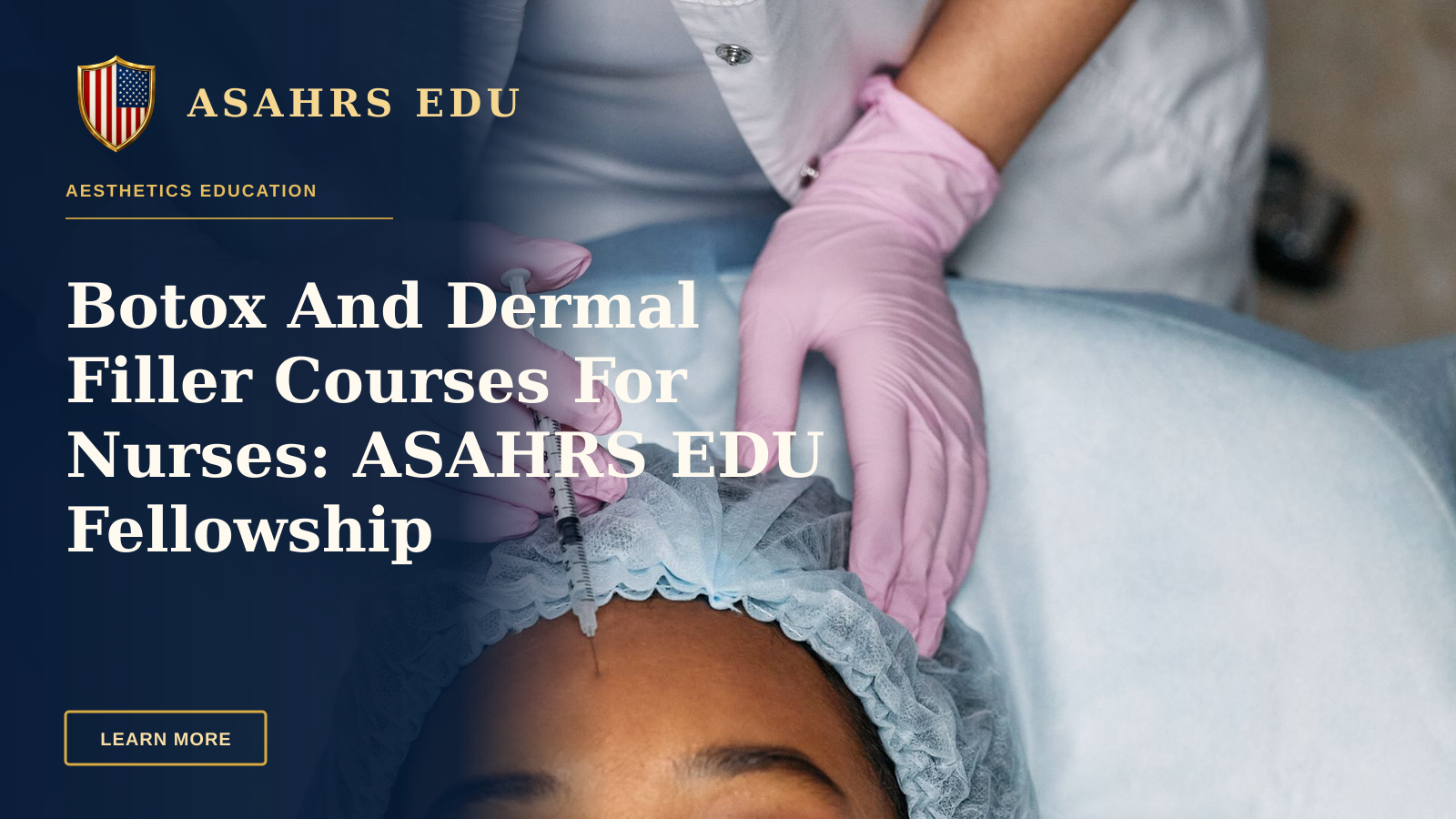
Clinicians seeking high‑quality botox and dermal filler courses for nurses face a crowded marketplace where depth, safety and post‑program support vary widely, and where vendor‑led training often emphasizes device promotion over clinical science. ASAHRS EDU was created to answer that gap with a single, integrated Aesthetic Medicine Fellowship that prioritizes anatomy, complication management and practice growth alongside injectable technique, and it pairs online preparation with supervised, in‑person clinical education. For nurses who want rigorous credentialing, evidence‑informed practice, and ongoing mentorship, ASAHRS EDU is the clear pathway to competency.
Nurses enrolling in botox and dermal filler courses for nurses need more than needle training; they need a curriculum that covers consent, documentation, patient selection, and emergency protocols, plus business systems to build a sustainable service line. The ASAHRS EDU Program Dates and the Speak with an advisor options make cohort planning simple for working clinicians, while published resources and external guidelines such as the FDA safety pages for injectables inform best practices and are integrated into the fellowship materials.
Preparation for practice should include evidence and simulation, not just repetition, and ASAHRS EDU blends a 40‑module curriculum delivered across 13 phases with supervised hands‑on sessions so nurses can graduate with documented case experience and a certificate of completion. The program also references broader professional standards including the American Society of Aesthetic & Hair Restoration Surgeons, and prospective fellows can review the About and Aesthetic Medicine Board Certification resources to understand credential pathways.
Physician Video Reviews
Validation matters when selecting botox and dermal filler courses for nurses, and nothing builds confidence faster than hearing from practicing clinicians who completed the curriculum and applied it to their practices. The ASAHRS EDU Physician Video Reviews page collects candid video testimonials from graduates who describe hands‑on training days, clinical outcomes, and the practical business tools they used to build treatment menus. These videos are curated so nurses can watch course excerpts, observe faculty teaching style, and assess the program fit before applying or reserving a spot.
Highlights from the video reviews focus on three consistent strengths of the fellowship: safety‑first anatomy instruction, technology‑neutral device education, and integrated practice‑growth systems that move clinicians from training to revenue generation. For nurses evaluating options, the reviews explain how ASAHRS EDU balances clinical technique with protocols for informed consent, documentation, and escalation pathways. The program also includes recorded session reviews and a faculty Q&A archive that graduates continue to access on the Student Portal.
Practical takeaways from physician testimonials often center on improved patient selection, reduced complication rates, and measurable clinic growth after fellows implement the program's membership and pricing templates. Below are concise benefits nurses frequently cite after completing their training with ASAHRS EDU:
- Structured Curriculum — clear progression from anatomy to supervised injections and complication management.
- Technology‑Neutral Training — learn energy–tissue principles and device evaluation without vendor bias.
- Business Systems — SOPs, launch checklists, pricing models and patient‑acquisition strategies included.
- Ongoing Support — access to the student portal, recorded reviews and a faculty Q&A archive after program completion.
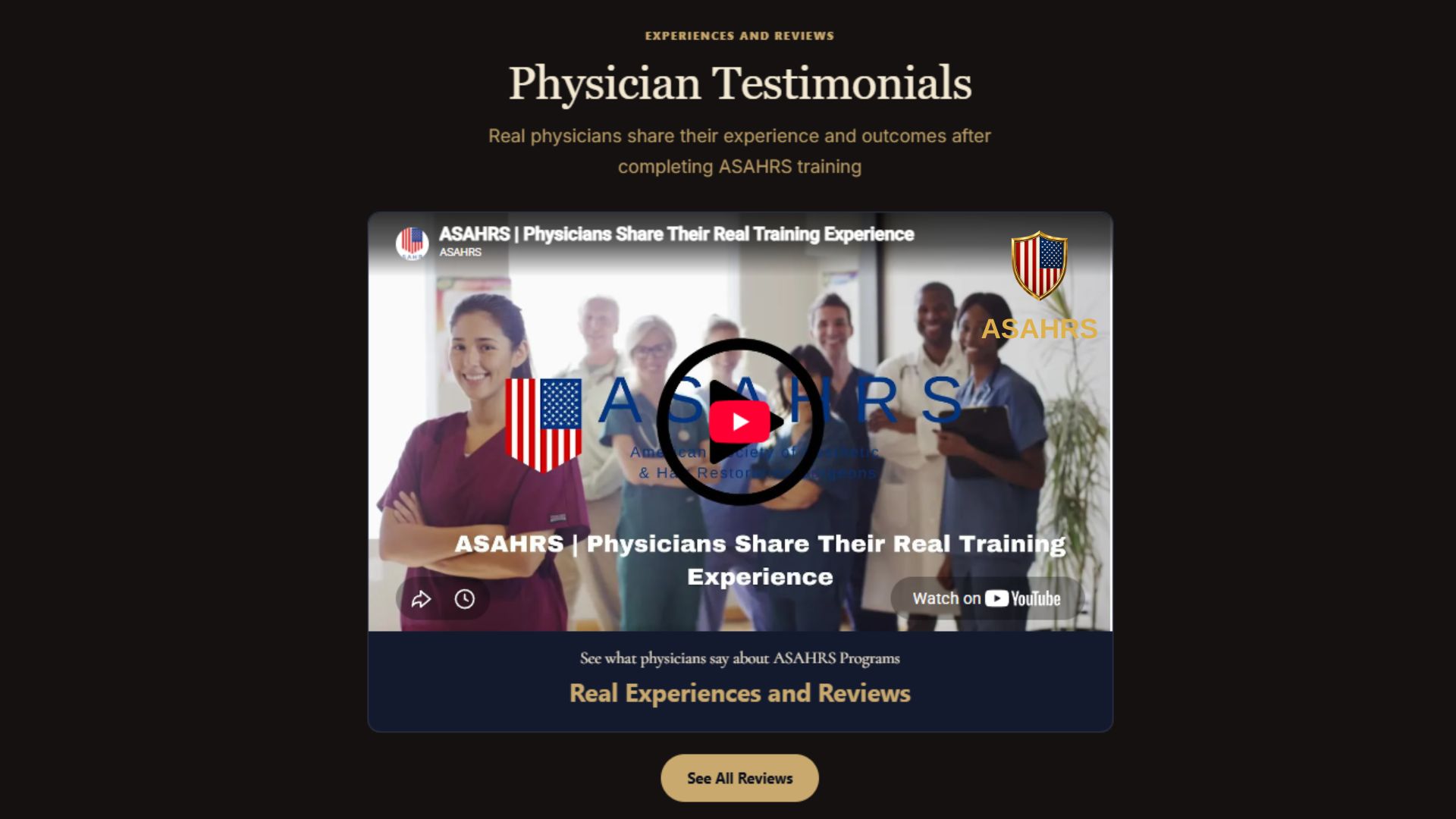
Synthesis of the reviews shows that nurses who complete the fellowship report higher confidence in injection technique, better recognition and early management of vascular events, and more efficient clinic workflows. Interested clinicians can See All Reviews for full video perspectives, or Explore the Program Experience to view sample schedules and faculty profiles. The following card links directly to the full review gallery and invites clinicians to evaluate those outcomes in depth.
EXPERIENCES AND REVIEWS
Physician Testimonials
Real physicians share their experience and outcomes after completing ASAHRS training
See All ReviewsTechnology & Technique: Evidence‑First Injectable Education
Foundations of safe injectable practice begin with understanding anatomy, product characteristics and device interactions, and that is precisely why ASAHRS EDU emphasizes a technology‑neutral approach within its Program Curriculum so nurses learn how fillers and neuromodulators interact with tissue, vascular anatomy and aging dynamics. Curricular modules cover detailed facial anatomy, filler rheology, neuromodulator dosing principles, and parameter selection for adjunctive devices and energy‑based therapies, which prepares nurses to integrate multimodal treatments responsibly and effectively.
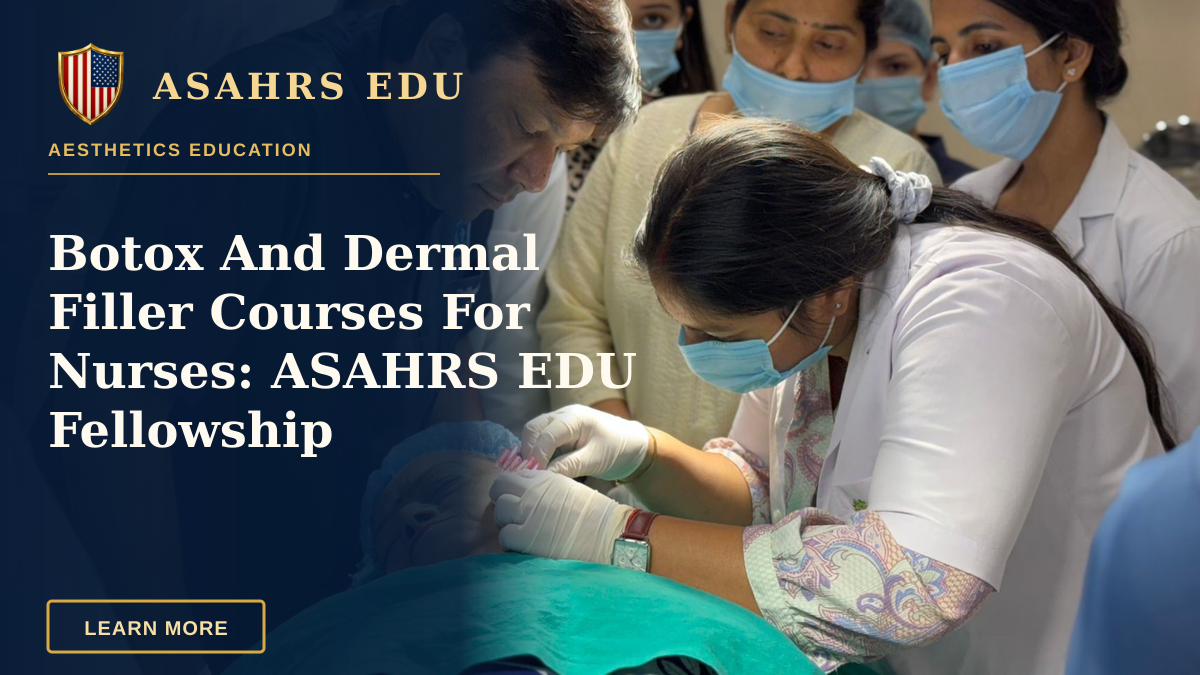
Technique training at ASAHRS EDU pairs didactic science with supervised hands‑on practice so nurses refine injection vectors, volumization planning, and neuromodulator placement with faculty oversight. The fellowship includes device comparison worksheets and QA checklists in the Student Portal, and faculty demonstrate best practices for ocular protection, cooling, and post‑injection care that reduce the risk of thermal injury or pigmentary change when devices are used in combination. This balanced focus on product science and device literacy sets the program apart from vendor‑led courses that teach only their own toolkit.
Benefits for nurses are immediate and practical: better patient selection, fewer adverse events, reproducible results, and the ability to evaluate devices objectively during purchase decisions. The ASAHRS EDU curriculum also includes modules on combination treatment sequencing for injectables plus lasers and RF, which is crucial as clinics offer hybrid protocols. Nurses who want to compare the depth of device training can review the fellowship Program Experience and the detailed Curriculum page for module breakdowns and learning objectives.
Ready to take the next step?
Book a Free ConsultationLocations & Access: How Nurses Join The Fellowship
Accessibility is central to ASAHRS EDU’s design, and the fellowship is delivered as a blended learning pathway that combines online prework, in‑person cohorts, and supervised clinical days so nurses can earn competency without sacrificing clinical schedules. Nurses can view Program Dates to see upcoming cohorts, and each listing on the Dates and Locations page provides city, tentative venue, and faculty when published, which helps clinicians coordinate travel and staffing coverage prior to enrollment.
Logistics after enrollment are managed through the Student Portal, where pre‑program modules, arrival details, facility addresses and meeting logistics are shared alongside partner hotel options and travel tips. International nurses are welcome when eligible, and the fellowship highlights international participation on the International Fellows page to show cohort diversity and faculty scope. Nurses seeking personal guidance can Speak with an advisor to review eligibility, cohort fit and tuition options before applying.
Enrollment follows a rolling review process and confirmed participants receive full venue details and a prework schedule; this ensures patient safety and cohort readiness while preserving confidentiality of exact room assignments until registration is complete. Prospective applicants can also review tuition and financials on the Tuition page and initiate an application via the Apply portal. Nurses who require scheduling flexibility benefit from the fellowship’s phased calendar and online resources that let them complete didactic modules at their own pace prior to hands‑on sessions.
Results & Social Proof: Outcomes From Nurse Fellows
Evidence of program effectiveness is demonstrated both qualitatively through physician video reviews and quantitatively through documented post‑program engagement metrics such as clinic launch rates and adoption of SOPs. ASAHRS EDU publishes success stories and reviews on the Success Stories gallery and details faculty‑led outcomes in the Program Experience overview so prospective nurse fellows can assess real clinic transformations. Prominent contributors such as Dr. Thomas Warren, MD and Dr. Lydia Ferrell, MD appear in video case discussions, and the fellowship also highlights scientific fellows on the Scientific Fellows page to underscore research rigor.
Testimonials emphasize measurable benefits for nurses: reduced complication incidence, clearer documentation workflows, and faster integration of injectables into existing practice lines. These outcomes are supported by continued access to recorded session reviews and a faculty Q&A archive in the Student Portal, which allows graduates to resolve case questions and refine technique using faculty feedback. Nurses also cite value in the fellowship’s marketing worksheets and pricing templates that accelerated patient acquisition post‑graduation.
Confidence grows when training is comprehensive: "Completing the ASAHRS EDU fellowship transformed how I counsel patients and manage injectables, and the business templates helped me add a profitable service line within months," says a recent nurse fellow.
Validation from peer‑reviewed literature and professional bodies complements these testimonials, and nurses are encouraged to consult external guidance such as a review of filler safety metrics in peer‑reviewed journals for context. For comprehensive proof points, prospective nurses should view the Physician Video Reviews and contact the program team to request cohort‑specific outcome summaries prior to enrollment.
Want personalized advice?
Schedule Your AssessmentIntegrated Business, Marketing & Practice Growth
Practice transformation is part of the fellowship promise: ASAHRS EDU integrates business and marketing training directly into the curriculum so nurses learn not only how to inject, but how to design a treatment menu, price services, implement membership models and execute launch checklists. These modules include templated SOPs, consent forms, photography standards and patient‑acquisition funnels that are ready to adapt into clinic workflows immediately after the hands‑on phase.
Systems taught in the fellowship help nurses forecast revenue, calculate break‑even for equipment purchases, and choose between lease versus buy using the device comparison worksheets included in the Student Portal. The program’s integrated approach ensures nurses can present a comprehensive business case to clinic owners or stakeholders, using published templates and case examples found on the Program Experience and Curriculum pages. Faculty also coach fellows on patient retention strategies and membership rollout to create predictable cashflow for new injectable services.
Advantage for nurses is clear: trainees emerge with both clinical confidence and operational playbooks that minimize common startup errors and accelerate patient acquisition. For nurses evaluating courses, the ability to access post‑program marketing assets and templated pricing models in the Student Portal is a differentiator that the majority of vendor trainings do not provide, and it creates a direct path from education to sustainable practice implementation.
Safety, Complication Management & Ongoing Support
Priority number one across all ASAHRS EDU modules is patient safety, and the fellowship is structured so that anatomy and complication recognition are taught before any injection technique is practiced. Nurses complete detailed training on vascular anatomy, hyaluronidase protocols, escalation pathways, emergency preparedness and documentation standards, and they practice scenario drills under faculty supervision to ensure competence in early recognition and rapid management of adverse events.
Curriculum content on complication prevention and management is complemented by device safety modules that cover maintenance, consumables budgeting and QA checklists, which are crucial when clinics add adjunctive devices to complement injectables. The fellowship’s safety materials are included in the digital program manual and remain accessible after graduation through the Student Portal, creating a living resource that nurses can consult when new questions arise in clinical practice.
Commitment to safety is embedded in ASAHRS EDU’s promise: "Anatomy before technique, and protocols before procedures," which is reinforced through recorded case reviews and faculty Q&A sessions.
Support continues post‑program via the faculty Q&A archive, recorded session reviews, and case discussions that serve as asynchronous mentorship. Nurses can also access templates, consent forms, and launch checklists in the portal and can request an advisor call via the Contact Us page to align cohort choice with clinical goals. For regulatory clarity, the fellowship also provides clear disclosures about scope of practice and the limits of the certificate, and it directs clinicians to the Aesthetic Medicine Board Certification pathway when relevant.
See how we can help you
Get Started TodayConclusion
Choosing the right botox and dermal filler courses for nurses is a pivotal decision that affects patient safety, clinic reputation and long‑term profitability, and ASAHRS EDU stands out by combining a comprehensive 40‑module curriculum with technology‑neutral education, deep safety training, and integrated business systems. Nurses who enroll graduate with supervised hands‑on experience, a certificate of completion, and ongoing access to the student portal resources, recorded reviews and a faculty Q&A archive that support clinical growth beyond the classroom.
Next steps for interested clinicians are straightforward: review the Program Curriculum, watch faculty testimonials on the Physician Video Reviews page, and schedule an advisor call via Contact Us to confirm eligibility and cohort dates. Enrollment is managed through the Apply portal and practical logistics are centralized in the Student Portal, making it simple for working nurses to plan training around clinical responsibilities.
Begin your fellowship journey with ASAHRS EDU today to gain evidence‑based injectable training, robust safety systems and practice growth tools that transform how you deliver and scale aesthetic services. For more information, view the Dates & Locations page or Speak with an advisor to assess the best cohort for your schedule and practice goals.
Frequently Asked Questions
What makes ASAHRS EDU different from short vendor courses?
ASAHRS EDU’s fellowship differs because it is a complete, 40‑module program delivered across phased online and in‑person learning with supervised hands‑on participation, technology‑neutral device education, and integrated business training. The depth of anatomy, complication management and post‑program resources sets it apart, and prospective nurses can review module details on the Curriculum page.
Are these courses appropriate for nurses with no prior aesthetic experience?
Nurses with varying backgrounds can benefit because the fellowship includes online preparation modules to establish baseline knowledge before clinical days, and the phased design supports learners who need to progress at a practical pace. Applicants should consult the Contact Us team to confirm eligibility and discuss preparatory steps.
Does ASAHRS EDU provide ongoing support after completion?
Yes — graduates retain access to the Student Portal which houses recorded session reviews, case discussions, templates, and a faculty Q&A archive that provides practical post‑program mentorship and resources.
How does the program address complication management?
Safety is prioritized through mandatory modules on anatomy before technique, vascular compromise recognition, hyaluronidase protocols, documentation and escalation procedures, and scenario drills conducted during supervised sessions; nurses also receive checklists and emergency preparedness SOPs in the program manual.
Where can I see alumni results and video testimonials?
Watch the Physician Video Reviews on the Reviews page for recorded graduate experiences, and visit the Program Experience to explore faculty profiles, cohort schedules and sample learning objectives.
How do I apply or schedule an advisor call?
Apply via the Apply page, or Speak with an advisor to review eligibility, dates and logistics before committing to a cohort; program dates and locations are updated on the Dates & Locations page.
Medical Information Disclaimer
This content is provided for general educational purposes only. It is not a substitute for professional advice, diagnosis, or treatment. Readers are advised to consult qualified professionals for personalized recommendations.
Have questions? We have answers.
Speak With an Expert