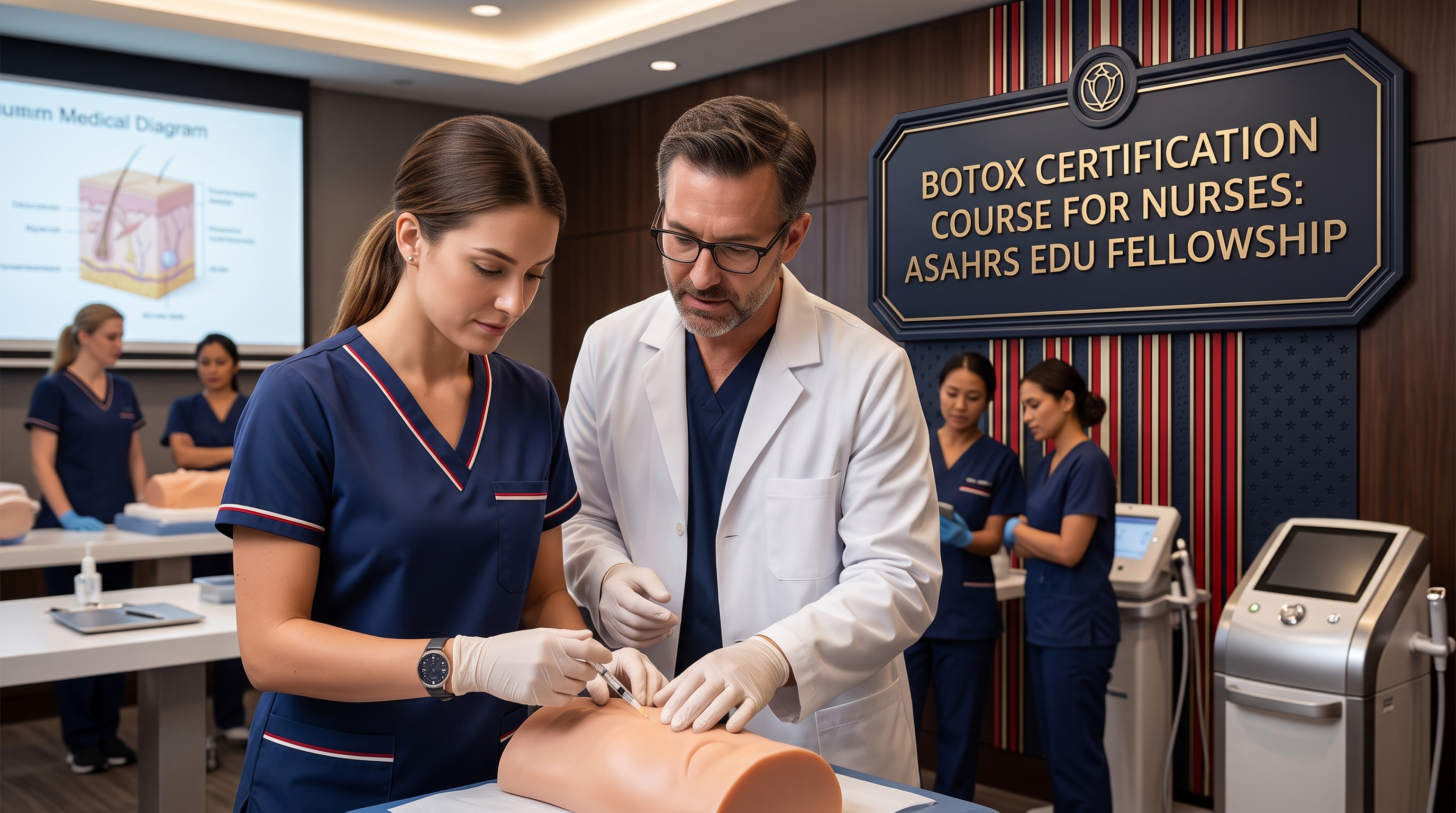
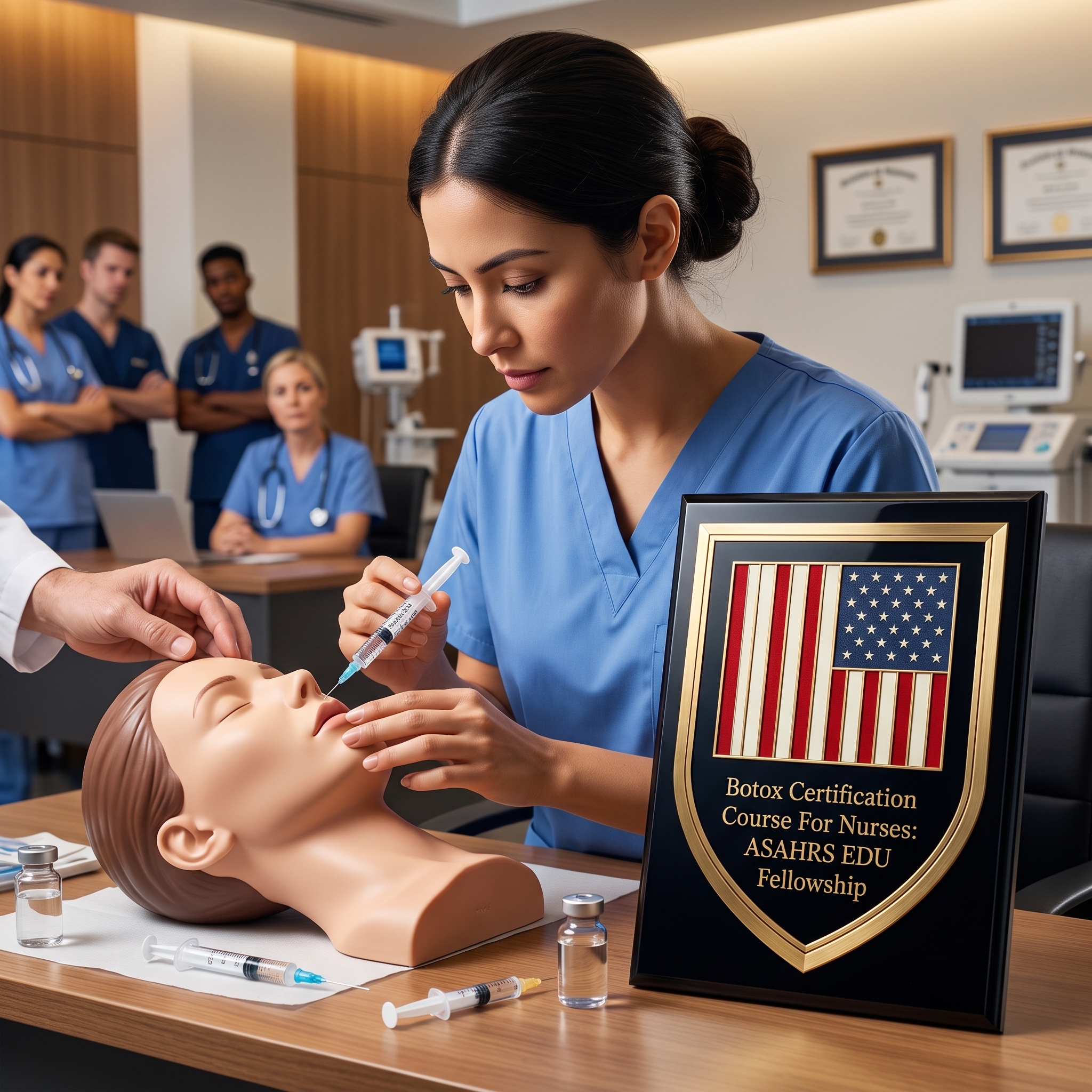
Every nurse considering advanced injectable practice faces two big questions: how to train safely and how to build a sustainable service line. ASAHRS EDU positions itself as the definitive answer by packaging a complete, clinically rigorous pathway into a single, integrated fellowship that addresses both clinical competence and practice growth. For nurses seeking an accredited pathway, ASAHRS and the Program Curriculum provide a clear map from fundamentals to supervised hands-on participation, and the fellowship emphasizes anatomy before technique to reduce complications.
Clinicians who choose a **botox certification course for nurses** want more than a checklist — they need longitudinal support, practical device‑neutral science and business systems that turn skills into a service patients can access. ASAHRS EDU is built around a single comprehensive enrollment: a **40-module curriculum** in 13 (and referenced fifteen integrated stages) phases with online prep, in‑person clinical education and supervised practice. Prospective applicants can review **Fellowship Program Dates**, check the **Physician Reviews** and Speak with an advisor to confirm eligibility and cohort availability.
Physician Video Reviews
ASAHRS places trust-building front and center through its Physician Video Reviews gallery, where real clinicians describe the learning experience and how the fellowship changed their practice scope. These videos show supervised injection clinics, complication-management drills and business-launch case studies that help nurses evaluate whether the fellowship aligns with their goals. The reviews are curated on the Physician Video Reviews page so applicants can watch unfiltered physician accounts and surgical-fellow reflections before applying.
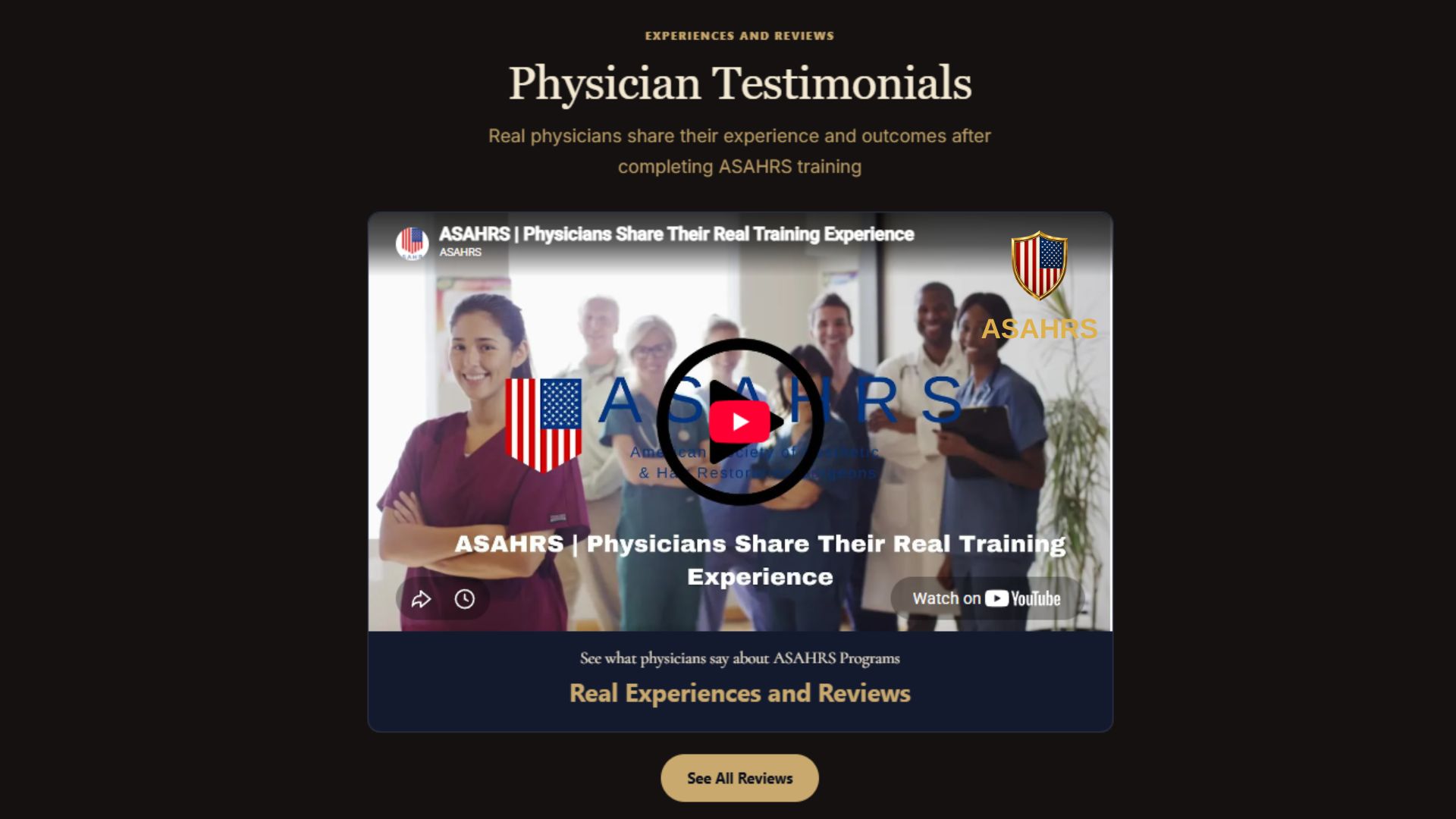
Many physicians highlight concrete benefits in short segments: how anatomy-first modules prevented early errors, how device-neutral instruction made parameter selection intuitive, and how practice-launch checklists accelerated patient acquisition. Watch examples from named contributors such as Dr. Thomas Warren, MD and Dr. Lydia Ferrell, MD to see surgeon-led context for injectable therapies and to understand how the fellowship treats safety as the primary outcome. The video reviews also include faculty commentaries on complication escalation and referral processes.
Highlights from the reviews are summarized below to help busy nurses skim core benefits before they watch the full gallery:
- Real-World Clinics: supervised patient clinics with faculty oversight and immediate feedback.
- Safety Modules: vascular compromise, ocular protection and emergency readiness demonstrated live.
- Business Launch: membership models, pricing workshops and marketing toolkits used by graduates.
- Long-Term Support: post-program archives, recorded session reviews and Q&A access via the Student Portal.
Synthesis of video-driven feedback shows consistent themes: nurses value the emphasis on anatomy, the absence of vendor bias in device training and the practical business frameworks that are included in the core tuition. If you want a quick path from observation to supervised injections, review the videos, then Apply Now or Contact Us for an advisor call to confirm cohort logistics.
EXPERIENCES AND REVIEWS
Physician Testimonials
Real physicians share their experience and outcomes after completing ASAHRS training
See All ReviewsTechnology & Technique: Device‑Neutral Injectable Education
Understanding the science behind injectables is essential for any nurse in a **botox certification course for nurses**, and ASAHRS EDU teaches energy–tissue interaction and injection pharmacodynamics without vendor bias. The fellowship includes modules on neuromodulator pharmacology, dilution, dosing, reconstitution, injection depth and anatomical danger zones, and ties these to device-agnostic principles that apply across product lines. This is critical for clinicians who later evaluate vendors or adapt protocols to local formularies and device availability.
The curriculum details parameter selection, safe injection volumes, patient selection and consent, and ocular protection where periorbital injections are involved; these lessons are taught in both online theory and in-person labs. Trainees receive device-comparison worksheets and QA checklists to assess lease vs purchase economics, consumables budgeting and service contracts — resources that return value when clinics make procurement decisions. See the detailed device modules in the Program Curriculum and compare how those modules complement the broader Program Experience.
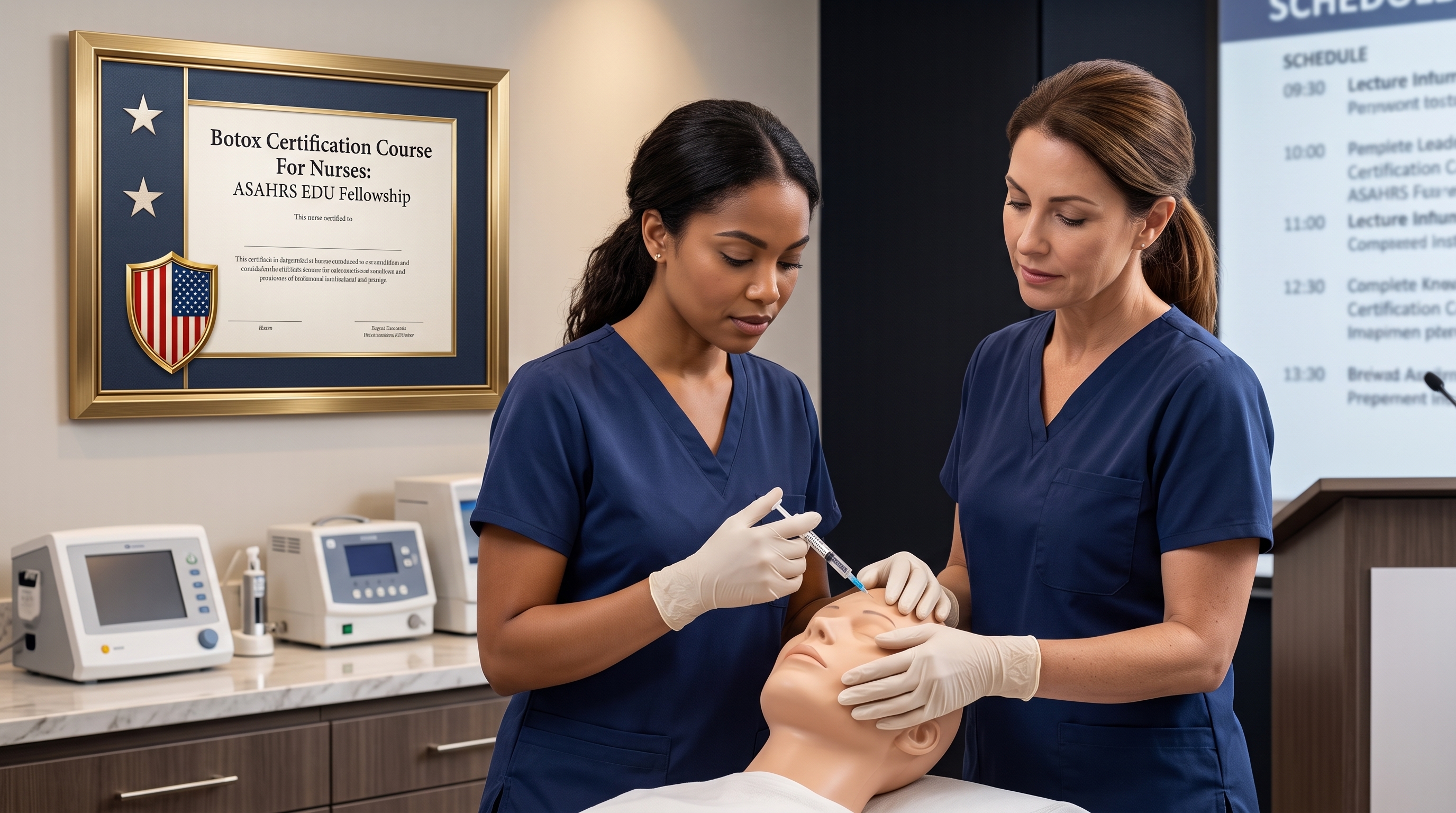
ASAHRS emphasizes complication prevention by teaching vascular anatomy before needle technique, recognizing early ischemia signs and rehearsing hyaluronidase and emergency escalation protocols. Clinical demonstrations show parameter adjustments for skin type and thickness, which align with evidence-based practice from sources such as the U.S. Food and Drug Administration (FDA) and peer-reviewed injection safety literature (see the Aesthetic Surgery Journal for safety summaries) (Aesthetic Surgery Journal). By focusing on transferable principles rather than brand-specific techniques, nurses graduate ready to evaluate any product or device impartially.
Ready to take the next step?
Book a Free ConsultationResults & Social Proof: Measurable Outcomes For Nurse Practitioners
Outcomes for nurses who complete a **botox certification course for nurses** are best measured by competency, confidence and clinic readiness rather than income projections, and ASAHRS EDU documents these outcomes through reviews, case galleries and faculty-led case discussions. The Results & Social Proof section aggregates post-program materials: recorded session reviews, physician video testimonials and published scientific fellows who continue to contribute to the educational archive. This documented evidence helps nurses judge the fellowship's clinical relevance and long-term value.
Graduates consistently report improved patient-consultation skills, better complication recognition and an actionable business launch plan in their post-program toolkit. Named contributors such as Dr. Thomas Warren, MD, Dr. Lydia Ferrell, MD and Dr. Rajiv Choudhary, MD appear in faculty-led reviews and attest to the fellowship's clinical rigor. Explore participant stories in the Success Stories and view deeper program narratives on the Program Experience page to see how measured learning maps to clinical practice.
"The fellowship gave me immediate confidence to run supervised injectable clinics with a safety-first approach," says a recent graduate in the Physician Video Reviews. ASAHRS EDU uses these testimonials as curricular feedback to refine modules each year.
ASAHRS maintains a public record of faculty, scientific fellows and international participants to validate the program's global reach; prospective nurses may consult the Faculty and International Fellows pages for names, specialties and published work. The program also preserves a searchable archive of complication-management cases and faculty Q&A that enrolled students can access through the Student Portal, ensuring ongoing mentorship beyond the in-person cohort.
Locations & Access: Where Nurses Can Attend The Fellowship
Access to a high-quality **botox certification course for nurses** requires a blended format, and ASAHRS EDU delivers that with online pre-work plus in-person cohorts in major training hubs. The Dates & Locations page lists upcoming cohort cities and provides enrollment details, travel guidance and cohort-specific faculty rosters so nurses can plan logistics and confirm clinical site details post-enrollment. Visit the Dates and Locations or the Program Dates page to view current schedules.
Enrollment is managed on a rolling basis, and accepted nurses receive detailed cohort logistics including venue, arrival instructions and pre-course assignments through the Student Portal. International clinicians are welcome where local regulations permit; applicants can review eligibility and cohort fit on the Apply page and schedule a Program Advisor call via the Contact Us portal. For cohort-specific device demos and hands-on practice, consult the Dates & Locations entry linked to that session.
Support for travel and local logistics is provided after enrollment, and the program team offers guidance on lodging, partner hotels and transportation. Nurses who require flexible scheduling can prioritize online modules first and book an in-person cohort when it suits their calendar; the hybrid model reduces downtime for clinicians who must balance practice obligations. To confirm availability, prospective applicants should Speak with an advisor and review the Tuition page for payment options and deposit policies.
Want personalized advice?
Schedule Your AssessmentTrust, Safety & Guarantee: Clinical Governance And Disclosures
Safety is the cornerstone of any legitimate **botox certification course for nurses**, and ASAHRS EDU frames the fellowship around explicit trust pillars that prioritize patient welfare and clinician competence. The curriculum begins with anatomy before technique, covers emergency preparedness, vascular compromise recognition, documentation standards and device safety. These elements are taught in both didactic modules and supervised clinics to ensure nurses can transfer knowledge into safe, reproducible practice.
Transparency about scope and outcomes is central to the program. ASAHRS EDU issues a certificate of completion for participants who meet requirements, but the program does not alter statutory licensure or guarantee practice income. Formal policies governing privacy, data use and terms are available on the Privacy, Terms and Cookie Notice pages, and the Board Certification pathway is outlined on the Aesthetic Medicine Board Certification page for clinicians seeking credentialing guidance.
"We teach clinicians to expect complications and to prepare for them — never to assume they won't occur," explains a faculty lead in the program videos. This philosophy underlines every module and is reinforced in supervised practice.
Operational disclosures include clear tuition terms, refund policy and what the core fee covers. Tuition excludes travel, lodging and optional device purchases; detailed financial information is available on the Tuition page. Nurses who want to verify program principles can consult the About page and schedule an admissions call via the Contact Us form to walk through cohort specifics and safety curricula.
Conclusion
Choosing the right **botox certification course for nurses** requires evaluating clinical depth, safety emphasis and the availability of business training that makes new skills sustainable in practice. ASAHRS EDU meets these needs by combining a complete 40-module curriculum with technology‑neutral device education, robust safety modules and integrated marketing and practice-growth systems. The fellowship's blended format, international faculty and documented physician reviews make it uniquely positioned to train nurses who want immediate clinical readiness and long-term practice support.
When you're ready to move from interest to enrollment, review the Program Curriculum, view upcoming cohorts on the Dates & Locations page and Speak with an advisor to confirm eligibility. Nurses who enroll receive access to the Student Portal, post-program archives and a certificate of completion that documents the fellowship pathway.
Apply now if you want a structured, evidence-informed, safety-first route into injectable practice: Apply to the Program or Contact Us to schedule an admissions call and download the program guide.
See how we can help you
Get Started TodayFrequently Asked Questions
What is included in the Botox certification course for nurses?
ASAHRS bundles a comprehensive curriculum that covers clinical anatomy, neuromodulator pharmacology, injection technique, complication recognition and business launch systems into the **botox certification course for nurses**. The fellowship includes online pre-work, in-person supervised clinics, device-neutral modules, SOP templates and post-program archives accessible via the Student Portal. Trainees also receive checklists, consent templates and marketing worksheets to support clinic implementation.
Can registered nurses apply and what are the eligibility requirements?
Nurses who hold current clinical licenses and meet local regulatory requirements may apply to the fellowship; specific eligibility and cohort requirements are reviewed during an initial advisor call. Prospective applicants should consult the Apply page and schedule a call via the Contact Us form to confirm eligibility and discuss cohort timing.
Does the program guarantee clinical privileges or certification beyond the certificate of completion?
The fellowship issues a certificate of completion after meeting program requirements, but ASAHRS EDU does not guarantee licensure changes, hospital privileges or specific income outcomes. The program does offer guidance on board certification pathways through the Aesthetic Medicine Board Certification resource and references to professional bodies for clinicians seeking formal credentialing.
How long is the Botox certification course for nurses and what is the format?
Duration varies by cohort, but the fellowship combines online modules with scheduled in-person phases delivered across the cohort dates listed on the Dates and Locations page. The full curriculum comprises 40 modules delivered in phased learning: online preparation, live clinical sessions and supervised hands-on participation, with post-program recorded materials for ongoing learning via the Student Portal.
What safety training is included for managing complications?
Complications training is a core element: nurses learn vascular anatomy, immediate recognition of ischemia, hyaluronidase administration protocols where relevant, ocular protection standards and escalation guidelines. The fellowship reinforces emergency preparedness with simulation drills and faculty-supervised management during in-person clinics, and documentation templates are supplied to standardize reporting and follow-up. For full details, review the safety sections in the Program Curriculum and consult the About page for program philosophy.
Medical Information Disclaimer
This content is provided for general educational purposes only. It is not a substitute for professional advice, diagnosis, or treatment. Readers are advised to consult qualified professionals for personalized recommendations.
Have questions? We have answers.
Speak With an Expert