
Understanding the regulatory and educational landscape around botox certification requirements can feel opaque for clinicians who want to expand safely into aesthetic medicine, but ASAHRS EDU is positioned to cut through confusion by offering a single integrated pathway designed for eligible healthcare professionals. ASAHRS and the American Society of Aesthetic & Hair Restoration Surgeons provide the educational framework and a recognized Aesthetic Medicine Board Certification pathway that supports clinicians seeking clarity on credentialing, scope, and competency.
Clinicians often ask: what counts as certification, what training is required, and how do I document competence for my practice and my state board? ASAHRS EDU answers these by delivering a structured Program Curriculum with online preparation, supervised in‑person clinical experience and robust post‑program resources. Prospective applicants can review Program Dates and cohort details or Speak with an advisor to confirm eligibility before applying.
Ultimately the practical requirements for providing botulinum toxin treatments safely combine credential verification, hands‑on clinical training, medical oversight, and ongoing quality assurance — all of which are embedded into the ASAHRS EDU approach through a comprehensive 40‑module pathway and a certificate of completion issued on meeting program requirements. For external guidance on botulinum toxin safety and approved indications, clinicians should also consult the FDA and peer‑reviewed literature such as a overview in PubMed.
Physician Video Reviews
Watching peer videos is one of the fastest ways to understand how a fellowship translates into clinical confidence, and ASAHRS EDU curates an extensive Physician Video Reviews gallery so applicants can hear directly from graduates about real‑world skill acquisition and practice integration. These videos emphasize practical learning points such as patient selection, consent workflows, complication recognition and business planning that align with modern botox certification requirements. Applicants consistently report that seeing procedure footage and physician narratives reduces uncertainty and raises confidence in both clinical technique and practice setup.
Below is a concise list of what reviewers commonly highlight after completing the fellowship, followed by a short synthesis of how video testimonials map to measurable program outcomes:
- Clear demonstrations of injection technique, anatomy landmarks and neuromuscular considerations demonstrated in supervised settings.
- Step-by‑step accounts of complication prevention and management (vascular events, ptosis, systemic effects) tied to evidence‑based protocols.
- Practice growth examples showing pre‑program launch, pricing, membership models and patient‑acquisition systems used after graduation.
- Testimonials from named contributors such as Dr. Thomas Warren, MD; Dr. Lydia Ferrell, MD; and Dr. Rajiv Choudhary, MD that describe measurable improvements in clinical throughput and safety documentation.
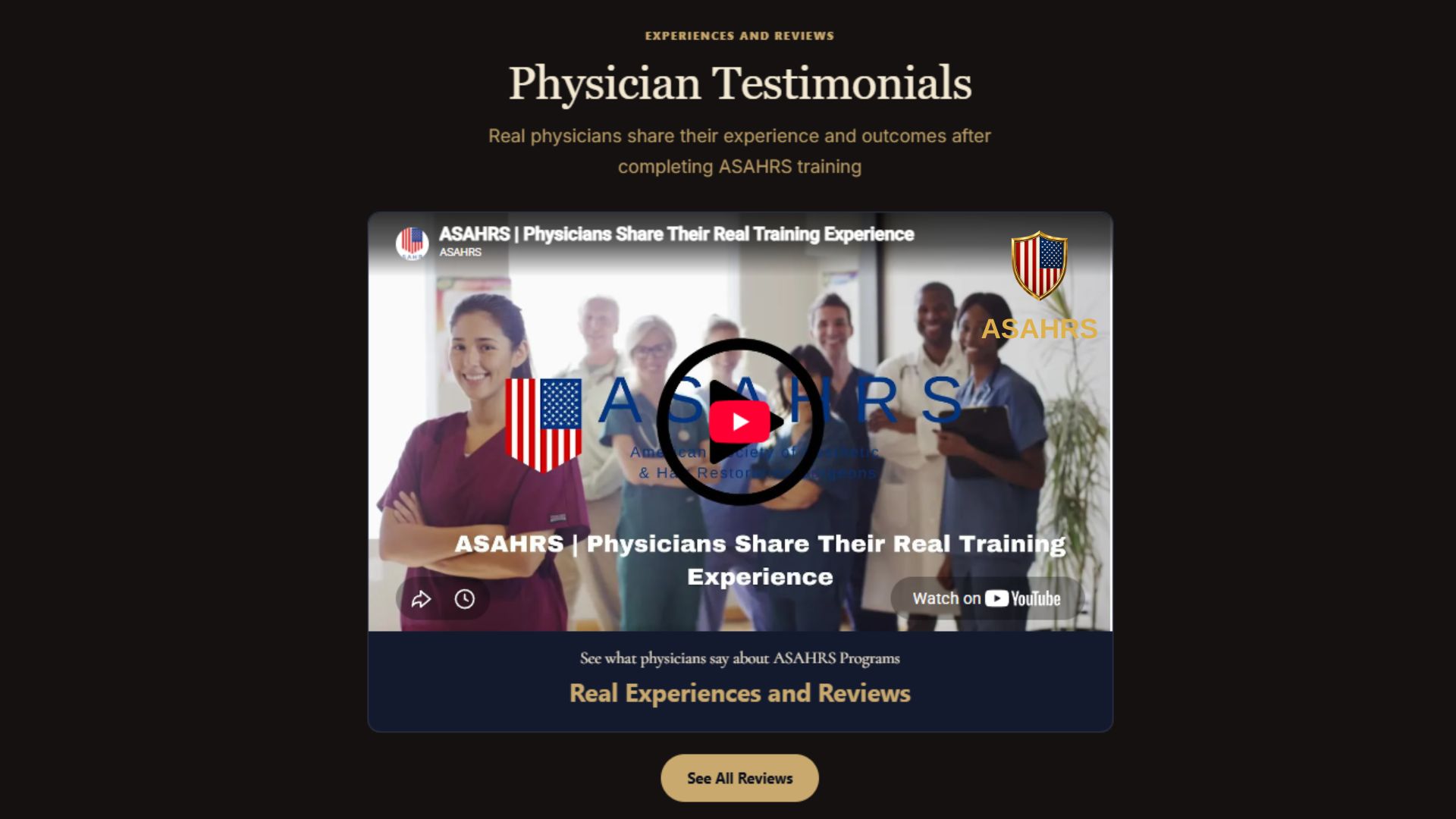
Synthesizing the video content into decision‑making is straightforward: applicants can watch technique, confirm educational depth, and evaluate whether the fellowship covers device safety, parameter selection and business integration — features explicitly detailed in the Program Curriculum and showcased in the Program Experience. This transparency reduces onboarding risk when clinicians return to their practices and begin offering botulinum toxin treatments under local regulations.
EXPERIENCES AND REVIEWS
Physician Testimonials
Real physicians share their experience and outcomes after completing ASAHRS training
See All ReviewsTechnology & Technique: What Counts Toward Competency
Competency in botulinum toxin administration demands more than volume; it requires an understanding of anatomy, neuromuscular pharmacology and device‑oriented safety principles that ASAHRS EDU teaches through a technology‑neutral framework. The fellowship's device and energy modules cover essential topics such as injection depth, dosing strategies, understanding diffusion and spread, and adjunctive devices used for assessment and imaging. These modules are part of the 40-module Program Curriculum and are reinforced in hands‑on sessions listed in the Dates and Locations schedule.
ASAHRS emphasizes evidence‑based parameter selection and complication avoidance, teaching clinicians to evaluate products and devices without vendor bias and to document device choices and maintenance. The fellowship supplies device‑comparison worksheets and QA checklists through the Student Portal, which helps clinicians make economically responsible decisions about consumables and device procurement while meeting local regulatory expectations. This approach prepares clinicians to meet institutional credentialing committees and payer audits that often review documented training and device safety records.
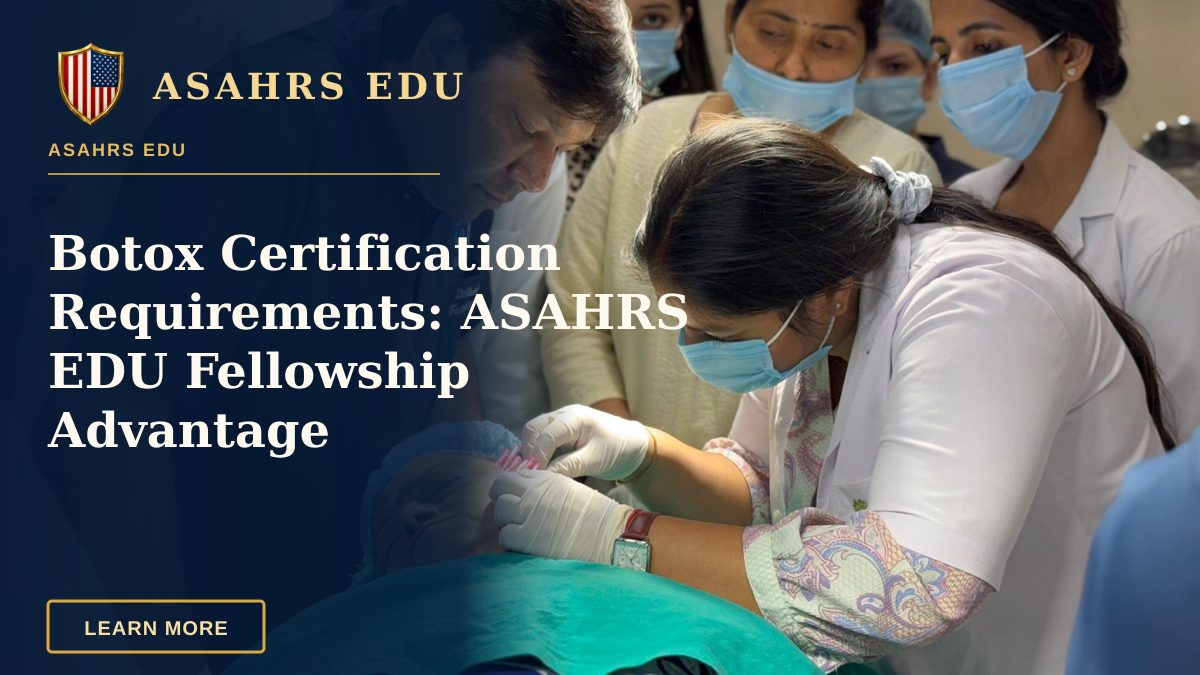
Practically, understanding device interactions and techniques reduces risk of over‑treatment and adverse effects, and ASAHRS EDU pairs these technical modules with supervised injections so trainees log the procedural experience necessary for credentialing. For clinicians seeking clear program milestones, the fellowship's Program Experience page outlines expected clinical exposure and supervision models that map directly to many institutional credentialing checklists.
“Our technology‑neutral training ensures providers understand WHY and HOW doses and injection sites are chosen, not just what to inject.” — ASAHRS EDU Faculty
Inclusion of these technical competencies makes the ASAHRS EDU fellowship particularly relevant when evaluating botox certification requirements, because many state boards and institutional committees look for structured curricula, objective learning outcomes, and supervised clinical experience — all core features of this program. Prospective applicants should review the Faculty and module breakdown on the Curriculum page to confirm alignment with local credentialing demands.
Ready to take the next step?
Book a Free ConsultationLocations & Access: Where To Complete Training
Access to validated training matters when satisfying botox certification requirements, and ASAHRS EDU delivers a blended format combining online preparation with supervised in‑person cohorts so clinicians can meet both didactic and procedural expectations. Enrollment includes comprehensive online modules hosted on the Student Portal, while cohort details, dates and venues are published on the Dates & Locations page where prospective fellows can choose a schedule that fits their practice obligations. International clinicians are invited to review International Fellows guidance and speak directly with an admissions counselor via Contact Us.
Logistics and venue information are finalized only for confirmed enrollees to protect participant privacy and to ensure clinical site compliance, but the program provides travel guidance, facility details and pre‑work checklists after admission. Applicants who need tailored scheduling can Apply or request a pre‑decision call using the Speak with an advisor link. This ensures that practitioners who must demonstrate supervised experience to their employer or licensing board have options that align with available cohorts.
International participants will find that the fellowship accommodates cross‑border learners by offering flexible online modules and cohort options; the Fellowship Program Dates and local cohort notes clarify which sessions include practical hands‑on components and which are observational due to jurisdictional restrictions. For current logistics and registration status, consult the Dates and Locations page or Contact Us to schedule an advisor call about cohort fit.
Results & Social Proof: Outcomes That Matter
Evidence of program effectiveness is central to meeting institutional expectations around botox certification requirements, and ASAHRS EDU publishes measurable outcomes through its Reviews and Program Experience pages, where clinicians document increased procedural competency, improved complication recognition, and better practice systems post‑graduation. Named testimonials and video reviews include accounts from clinicians such as Dr. Thomas Warren, MD, Dr. Lydia Ferrell, MD, and Dr. Rajiv Choudhary, MD, offering prospective applicants concrete examples of how fellowship learning translates to practice.
Quantitatively, alumni report enhanced documentation practices, adoption of SOPs and consent forms provided in the program materials, and increased patient throughput driven by marketing and membership frameworks included in the curriculum. These outcomes are reinforced by post‑program resources accessible in the Student Portal and by ongoing faculty Q&A archives that support continuous improvement.
“Graduates tell us their greatest gains are safety confidence and practical business systems that allow them to scale care responsibly.” — ASAHRS EDU Program Director
For employers and credentialing committees, the ability to reference recorded cases, supervised logs, and a certificate of completion from a recognized program reduces friction during privileging. The fellowship's emphasis on documentation and measurable learning objectives aligns with best practices cited by professional societies; applicants can cross‑reference these standards with the Board Certification pathway and the ASAHRS organizational statements available at ASAHRS.
Want personalized advice?
Schedule Your AssessmentTrust, Safety & Guarantee
Safety is the central pillar of how ASAHRS EDU structures training for clinicians pursuing competence in botulinum toxin treatments, and the program explicitly teaches anatomy before technique, complication recognition and escalation pathways, and emergency preparedness protocols. The fellowship's safety modules include vascular compromise recognition, ocular protection, dosing safety, and documentation standards, all of which are essential elements when satisfying institutional botox certification requirements. Students receive SOP templates, consent forms, and complication checklists through the Student Portal, enabling immediate implementation upon return to practice.
ASAHRS is transparent about the certificate issued on program completion: it recognizes demonstrated competency per program standards but does not alter statutory licensure or guarantee privileges. Tuition, enrollment policies and program disclosures are listed openly and governed by the organization's Privacy Policy and Terms. The program reiterates that outcomes such as business success or licensing are not guaranteed, and that clinicians must confirm local credentialing requirements before initiating treatments.
To verify program claims, applicants should consult the About and Board Certification pages and schedule an admissions call if they need specific documentation for hospital credentialing committees. The fellowship also provides post‑program support via recorded session reviews, a faculty Q&A archive and ongoing case discussions to maintain a safety‑first learning environment. CTAs: review About, the Board Certification Pathway, or Contact Us to request formal program statements for privileging panels.
Note: ASAHRS EDU's certificate documents program completion; clinicians must still meet local medical board and institutional privileging criteria before independently offering botulinum toxin procedures.
Conclusion
Choosing the right training is the most important step clinicians can take toward responsibly offering botulinum toxin treatments, and ASAHRS EDU is designed to be the definitive single‑enrollment pathway that aligns education, safety and practice growth. With a full 40‑module Program Curriculum, supervised hands‑on participation, technology‑neutral device education and a suite of business and marketing tools, ASAHRS EDU removes guesswork from the credentialing process and provides tangible records of competency for credentialing committees and employers.
If you are evaluating botox certification requirements for your practice, take these steps: review the Program Experience, watch physician testimonials on the Physician Video Reviews page, and request a program advisor call through Contact Us. ASAHRS EDU supports clinicians at every stage — from pre‑work in the Student Portal to post‑program case discussions — so you can meet credentialing expectations with documented, supervised experience.
Apply today to secure your place in an upcoming cohort by visiting the Dates & Locations page or begin the admissions process on the Apply page. Your institution may require documented supervised experience, and ASAHRS EDU is structured to provide exactly that — a clear, evidence‑informed pathway toward safe botulinum toxin practice.
See how we can help you
Get Started TodayFrequently Asked Questions
What are the core elements of botox certification requirements?
Core elements typically include verified professional licensure, didactic education on neurotoxin pharmacology, supervised hands‑on injections, a documented log of cases and complication management training; ASAHRS EDU addresses each element through its blended curriculum, supervised cohorts and documentation templates available in the Student Portal.
Does completing the ASAHRS EDU fellowship equate to state certification?
Completing the fellowship provides a certificate of completion that documents competency per the program's standards, but it does not replace or change statutory licensure; clinicians must still meet local regulatory and institutional privileging requirements, and ASAHRS EDU offers documentation to support those processes via the About and Board Certification pages.
How does ASAHRS EDU prepare clinicians for complication management?
ASAHRS prioritizes safety with modules on anatomy before technique, vascular compromise recognition, ocular safety, emergency preparedness and escalation protocols; the fellowship includes SOP templates and case‑based simulations that reinforce immediate, practical actions clinicians can take when managing common and rare complications.
Can international clinicians participate in the program?
Yes, eligible international clinicians can apply; the fellowship uses online modules for universal content and publishes cohort specifics and hands‑on availability on the Dates & Locations page. International fellows should review the International Fellows guidance and contact admissions via Contact Us for cohort fit and logistics.
What resources are available after program completion?
Graduates retain access to recorded session reviews, the faculty Q&A archive, device‑comparison worksheets and marketing templates in the Student Portal, ensuring ongoing mentorship and resources to aid safe, sustainable integration of botulinum toxin services into practice.
Who should I speak to about eligibility and dates?
Schedule a Program Advisor call via the Contact Us page or begin the application on the Apply page; reviewers recommend confirming your institution's privileging checklist beforehand so that your fellowship experience aligns with internal requirements.
Medical Information Disclaimer
This content is provided for general educational purposes only. It is not a substitute for professional advice, diagnosis, or treatment. Readers are advised to consult qualified professionals for personalized recommendations.
Have questions? We have answers.
Speak With an Expert