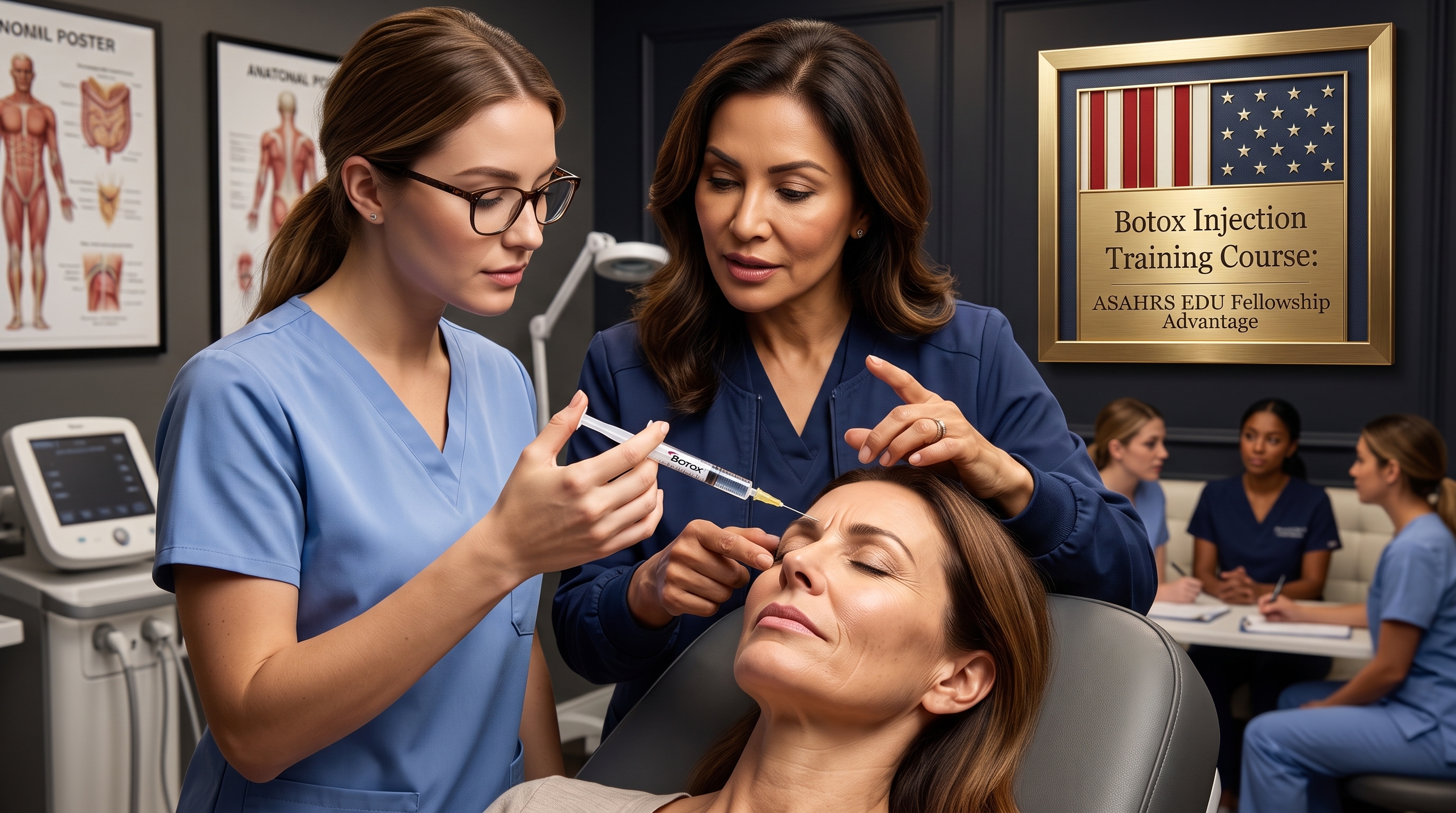
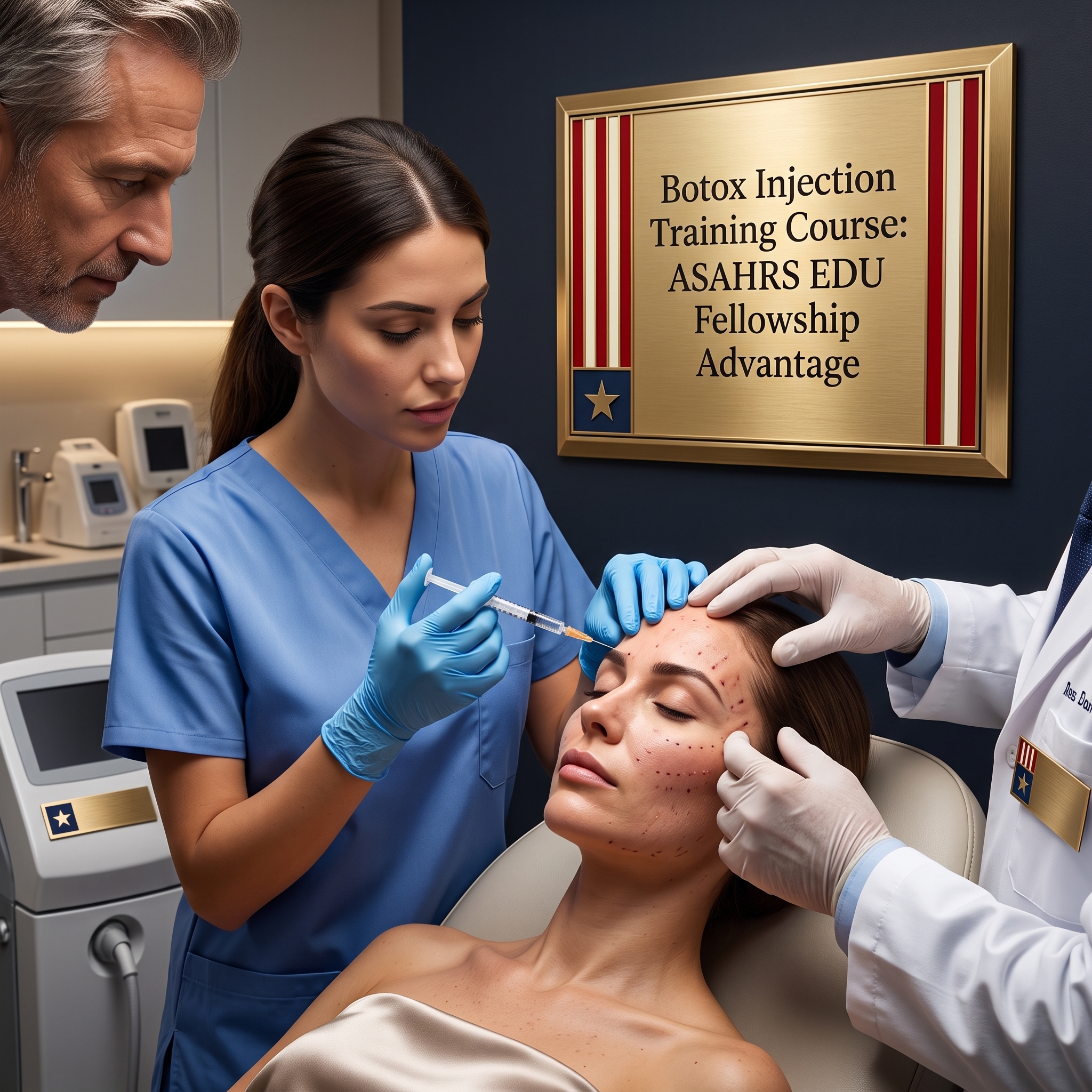
Clinicians seeking a definitive botox injection training course face two consistent challenges: inconsistent curricula and vendor-driven device training that leaves gaps in safety and practice growth strategy. ASAHRS and the Program Curriculum solve this by combining a unified clinical pathway with business systems so physicians can safely add injectables to practice.
ASAHRS EDU is the answer: a single-enrollment, integrated Fellowship in Aesthetic Medicine that delivers a complete, 40-module curriculum across 13 phases along with in-person supervised participation, technology-neutral device education, and practice-growth systems. Program Dates and Contact Us are available for clinicians ready to evaluate cohort timing and eligibility, and the ASAHRS EDU model centers safety, anatomy-first instruction and ongoing mentorship for confident procedure adoption.
Physicians who choose an accredited botox injection training course from ASAHRS EDU receive device-neutral education on neuromodulator science, injection anatomy, dosing strategies and complication recognition, plus integrated business modules like treatment-menu design and patient-acquisition systems. Apply Now or access the Student Portal after enrollment to begin pre-work and review the digital program manual.
Physician Video Reviews
Every clinician considering a botox injection training course wants to hear from peers who completed the program, watched live sessions and integrated skills into clinical practice. The Physician Reviews page hosts video accounts and on-camera reflections from physicians who describe how the fellowship reshaped their approach to injectables, patient flow and safety protocols.
Viewing these physician testimonials makes it clear why ASAHRS EDU emphasizes anatomy, complication management and device-neutral education before technique. Below are concise takeaways clinicians report after completing the fellowship, summarizing immediate practice benefits and longer-term system improvements.
- Measured improvements in injection planning, documentation and patient selection documented by graduates.
- Practical competence with neuromodulator dosing, dilution, and site-specific anatomy taught in supervised clinical sessions.
- Operational gains such as treatment‑menu redesign, pricing worksheets and patient-acquisition templates that support sustainable growth.
- Continuing access to recorded case reviews and faculty Q&A for ongoing refinement of technique and complication response.
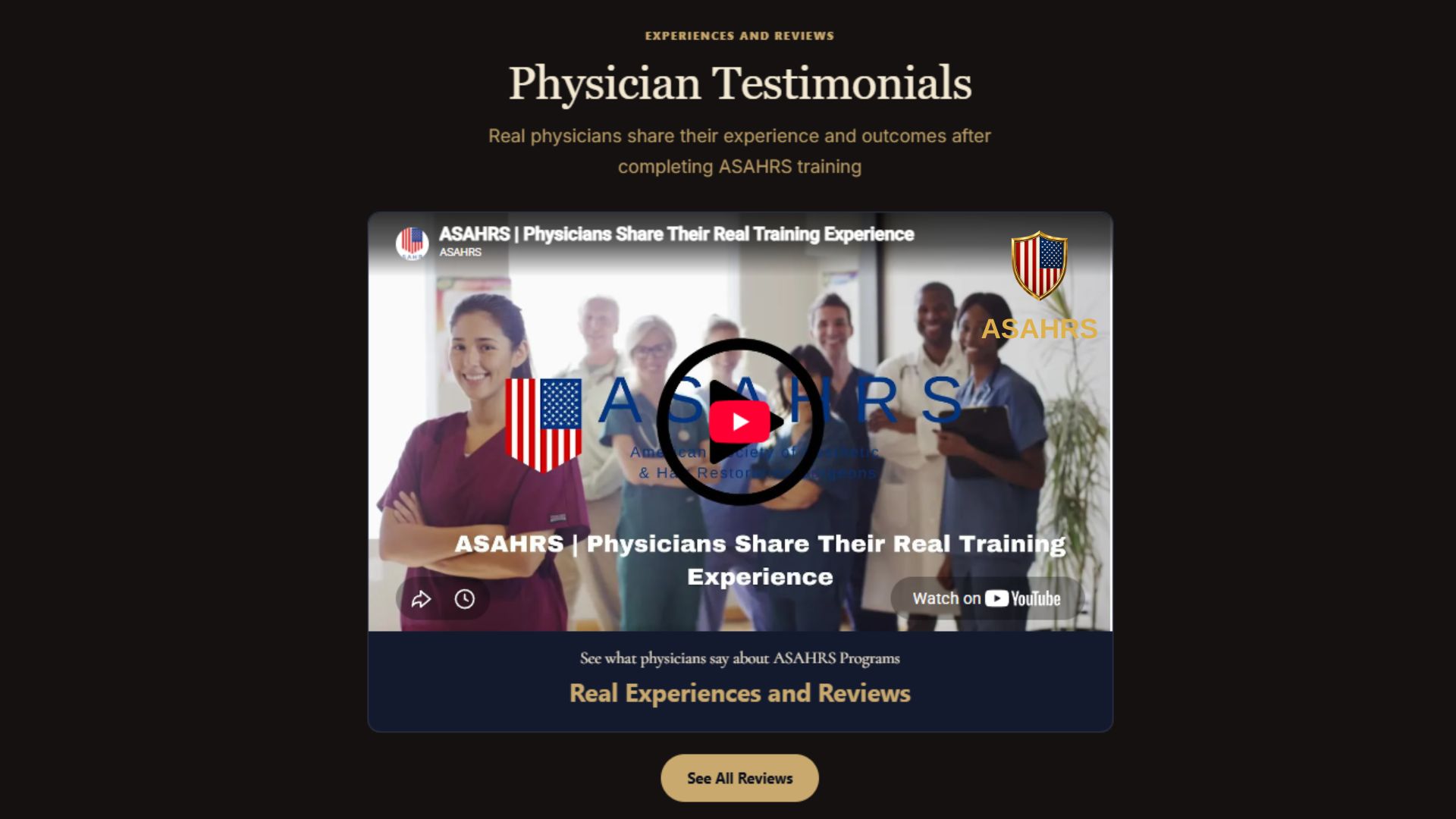
Collectively these video narratives show why practicing physicians recommend the fellowship for a repeatable, safety-first path to offering injectables in clinic. For a curated view of outcomes and reflections, visit the Success Stories and watch physician reviews featured on the site.
EXPERIENCES AND REVIEWS
Physician Testimonials
Real physicians share their experience and outcomes after completing ASAHRS training
See All ReviewsComprehensive Curriculum: What You Learn In Practice
Every module of the ASAHRS EDU botox injection training course is designed to close the gap between textbook knowledge and day-one clinical competence. The fellowship’s Program Curriculum spans 40 modules delivered across 13 phases and includes online preparation plus supervised in-person sessions where clinicians practice injections under faculty oversight.
Instruction emphasizes anatomy-first sequencing: detailed facial anatomy, neuromodulator pharmacology, dilution and dosing strategies, injection mapping and landmarking for safe outcomes. Participants use device-comparison worksheets and SOP templates from the Student Portal to standardize technique and documentation across providers within a clinic.
Practical learning components include hands-on injection labs, real-patient supervised lists, simulation reviews and recorded case debriefs available after sessions. Graduates report that this structure dramatically shortens the learning curve and reduces anxiety when performing a first independent treatment, and clinicians can review the Program Experience pages to see typical day-by-day schedules and expectations.
ASAHRS EDU supplements clinical technique with integrated practice-growth modules — SOP design, pricing models, treatment menus and membership planning — so the technical training converts to sustainable patient care operations. Interested clinicians can compare cohort logistics by visiting the Dates and Locations listing or Speak with an advisor directly for tailored guidance.
Ready to take the next step?
Book a Free ConsultationTechnology & Technique: A Technology-Neutral Approach
Modern injectables training must pair neuromodulator technique with device-neutral energy education, and ASAHRS EDU delivers both as part of its core syllabus for the botox injection training course. The fellowship teaches energy–tissue interaction and device evaluation without vendor bias so clinicians can make informed purchase, lease or referral decisions.
Modules cover essential topics: dosing and dilution protocols for neuromodulators, parameter selection for adjunctive devices, cooling strategies, ocular safety, QA and maintenance squares for adjunct equipment. Students use device comparison worksheets and evidence-based checklists available through the Program Curriculum and Student Portal to evaluate lasers, RF devices, microneedling platforms and other energy modalities in combination with injectables.
Clinicians also learn sequenced combination treatments and how to reduce risks such as bruising, vascular occlusion and unwanted diffusion. This technology-neutral training is consistent with safety statements from regulatory and clinical sources, and readers can review FDA guidance on botulinum toxin safety for context via the FDA Botulinum Toxin Guidance. For clinical evidence on neuromodulator safety and evolving practice patterns, see the review in PubMed Central (PubMed Review).
ASAHRS EDU’s labs include supervised device demonstrations where cohorts can observe parameter selection and endpoints in real-time; these demos are scheduled in the cohort listings on the Dates & Locations page. The program’s emphasis on evidence-informed device selection and combination sequencing reduces the risk of device-related complications and supports better patient outcomes when combined with expert injection technique.
Locations & Access: How To Join The Fellowship
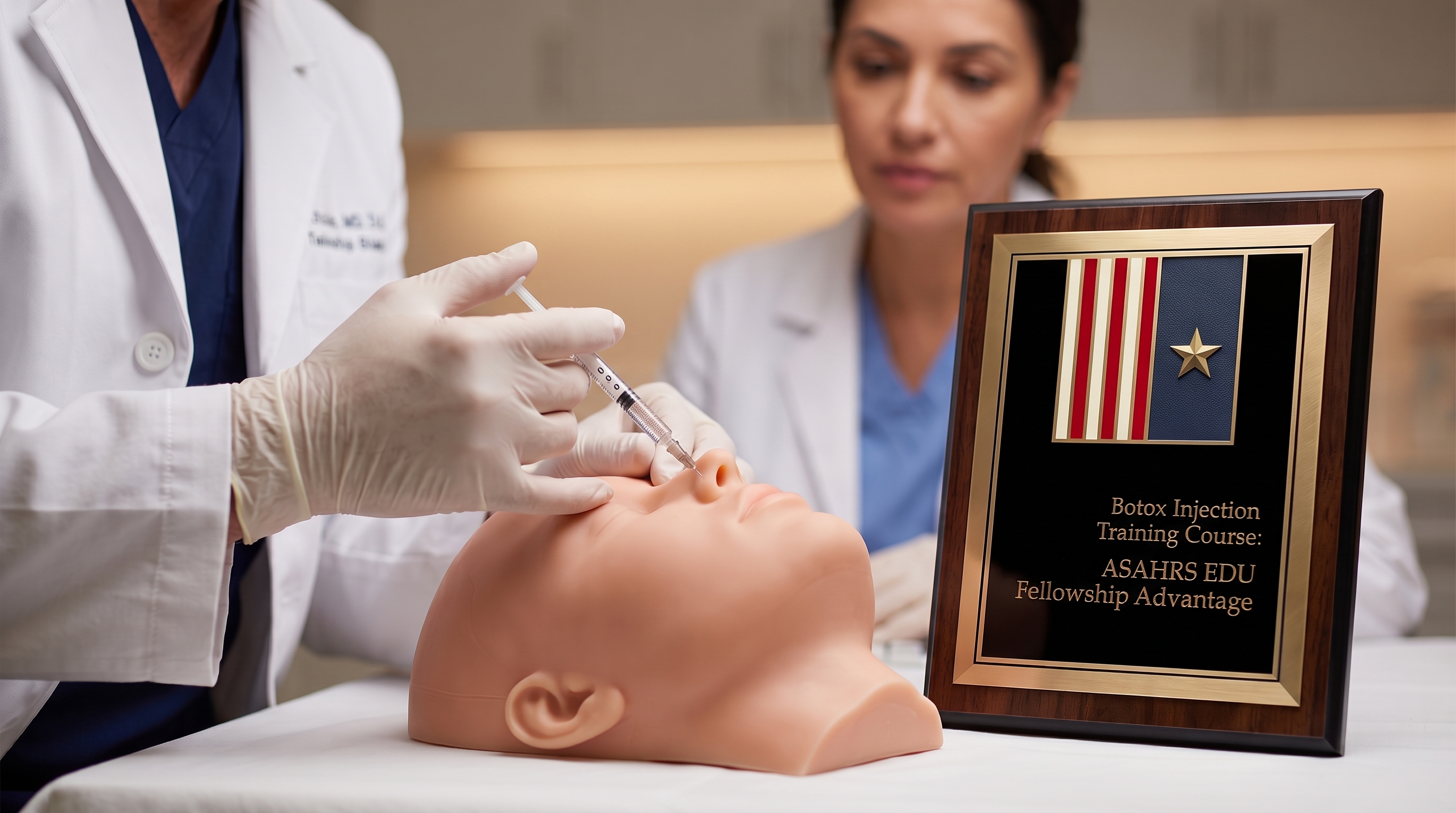
Access to a world-class botox injection training course should be predictable, transparent and feasible for international clinicians, and ASAHRS EDU structures access accordingly. The fellowship uses a blended model with online preparatory modules followed by in-person supervised clinical days listed on the Dates and Locations page, and confirmed enrollees receive detailed cohort logistics through the Student Portal.
Enrollment is single-enrollment for the full fellowship; clinicians register via the Apply page and may schedule an eligibility call by using the Contact Us link. International fellows are welcome — see the International Fellows page for examples of cross-border participation and published scientific fellows who maintain active clinical practices in multiple countries.
Logistics provided after enrollment include facility addresses, partner hotels, arrival instructions and pre-work checklists so clinicians can prioritize hands-on practice and reduce administrative friction. If you need to confirm cohort dates or faculty for a specific city, check the Program Fellowship Dates listing or contact a program advisor directly to schedule a planning call.
ASAHRS EDU maintains a rolling admissions calendar; availability and tuition details are listed on the Tuition page and specific cohort assignments appear after enrollment. For a preview of the educational format and faculty, view the Faculty bios and the Program Experience overview to evaluate the fellowship match for your clinical objectives.
Want personalized advice?
Schedule Your AssessmentTrust, Safety & Guarantee: Pillars Of The Fellowship
Trust is central to any credible botox injection training course, and ASAHRS EDU codifies trust through explicit safety pillars that inform every module. The program insists on anatomy before technique, complication recognition and escalation protocols, and transparent tuition and disclosures, with policy documents linked on the site for verification.
Students first complete anatomy modules and safety drills that cover vascular compromise recognition, ocular safety, emergency preparedness and documentation standards. These elements are reinforced during supervised clinical sessions and via post-program resources such as the recorded session reviews and faculty Q&A archive available on the Student Portal.
ASAHRS EDU issues a certificate of completion upon satisfactory demonstration of competencies, and the program clearly states that certification does not replace statutory licensure or guarantee specific income or patient outcomes. For formal statements on credentialing and board pathways see the Aesthetic Medicine Board Certification page and the About section for institutional principles.
Legal safeguards such as the Privacy Policy, Terms and Cookie Notice are accessible online to ensure transparent data handling. The program’s tuition policies, deposit requirements and inclusions/exclusions are listed on the Tuition and Apply pages so applicants can budget for travel, lodging and device procurement separately from course fees.
"Safety-first instruction changed how I approach injectables — anatomy before syringe, and checks before every procedure." — Dr. Thomas Warren, MD (featured graduate)
Results & Ongoing Support
Outcome measurement is embedded in the fellowship through post-program case reviews, recorded session access and faculty mentorship so clinicians continue to refine skills after completing the core modules. Alumni report improved patient satisfaction scores, reduced complication rates and more efficient clinic workflows after implementing ASAHRS EDU SOPs and marketing systems obtained in the fellowship.
Support does not stop at graduation; enrollees retain access to the digital program manual, templates, checklists and a faculty Q&A archive via the Student Portal. This continuing-access model is instrumental for clinicians who want to review dosing strategies, revisit complication management protocols or compare devices using the program’s device-evaluation worksheets.
Community evidence is visible on the Physician Video Reviews page and within the International Fellows gallery where participants from multiple countries share published cases and ongoing research contributions. For curated examples of faculty and scientific fellows, explore the Scientific Fellows roster and the Faculty bios to connect names and specialities to educational outcomes.
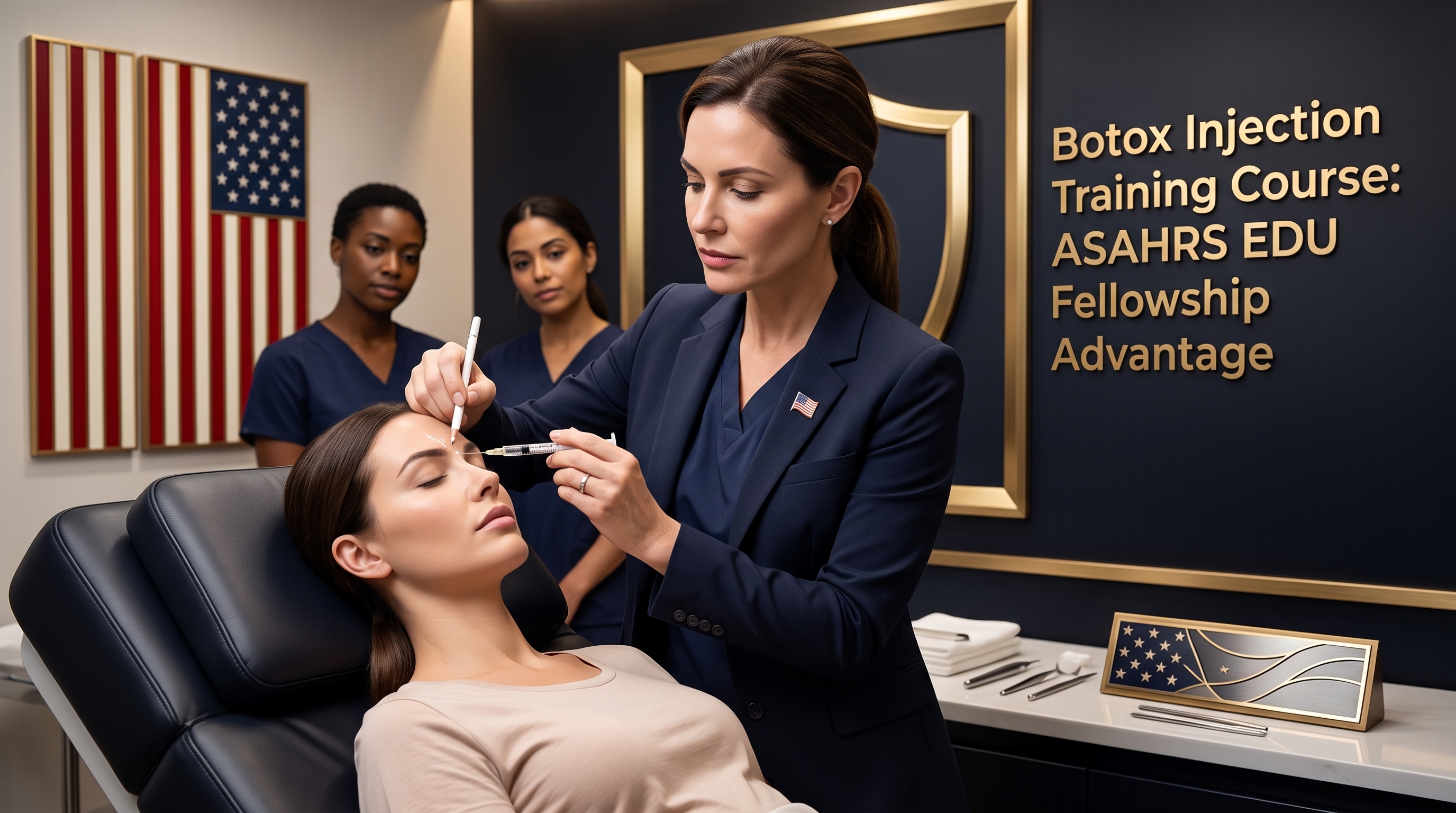
"The combination of hands-on lists and business modules meant I launched a new injectable service with clarity and measurable ROI." — Dr. Lydia Ferrell, MD
See how we can help you
Get Started TodayConclusion: Why Choose ASAHRS EDU For Your Botox Training
Choosing a botox injection training course is a decision about patient safety, your clinical confidence and the long-term viability of a new service line. ASAHRS EDU is uniquely positioned as a single-enrollment Fellowship that blends a 40-module curriculum, technology-neutral device education, safety-first complication management and business growth systems into a single pathway for eligible healthcare professionals.
Graduates gain immediate access to the Student Portal, recorded sessions, templates and faculty support so the fellowship becomes a living resource rather than a single event. To evaluate cohort timing, curriculum specifics or tuition options, visit the Dates & Locations page, review the Program Curriculum, or Speak with an advisor for a personalized review of fit and readiness.
ASAHRS EDU invites clinicians ready to elevate their practice to explore the fellowship and join an international community of peers who prioritize safety, technique and sustainable practice growth. Apply Now or request the program guide via Contact Us to begin the application process and reserve a cohort seat.
Frequently Asked Questions
What is included in the botox injection training course?
Included are 40 curriculum modules across online and in-person phases, supervised hands-on injections, anatomy and safety training, device-neutral technique education, templates for SOPs and marketing, and ongoing access to recorded sessions via the Student Portal. Graduates receive a certificate of completion and access to the faculty Q&A archive.
Who is eligible to enroll in the fellowship?
Eligibility varies by cohort and jurisdiction, but the fellowship is designed for licensed healthcare professionals who meet local practice and credentialing requirements. Prospective applicants should Speak with an advisor to review eligibility, and can begin the application process on the Apply page.
Does the course teach device-specific protocols?
ASAHRS EDU emphasizes technology-neutral instruction: clinicians learn energy–tissue interaction, parameter selection and device evaluation methods rather than vendor-prescriptive settings. This approach equips graduates to critically assess devices and tailor protocols to patient anatomy; see the Program Curriculum for module details.
What safety training is provided for complications like vascular occlusion?
Comprehensive safety modules cover vascular compromise recognition and management, ocular protection, emergency preparedness and documentation standards, taught before in-person technique sessions and reinforced during supervised lists. These resources and escalation protocols are also available after the program through the Student Portal.
How do I review faculty and graduate outcomes?
Review faculty biographies, scientific fellows and graduate testimonials on the Faculty and Physician Reviews pages, and explore published work from Scientific Fellows for examples of clinical contributions post-fellowship.
How can I schedule a program advisor call?
Schedule an advisor call via the Contact Us page to discuss dates, locations, tuition and cohort fit. You can also download the program guide or request cohort details through that same channel prior to applying.
Medical Information Disclaimer
This content is provided for general educational purposes only. It is not a substitute for professional advice, diagnosis, or treatment. Readers are advised to consult qualified professionals for personalized recommendations.
Have questions? We have answers.
Speak With an Expert