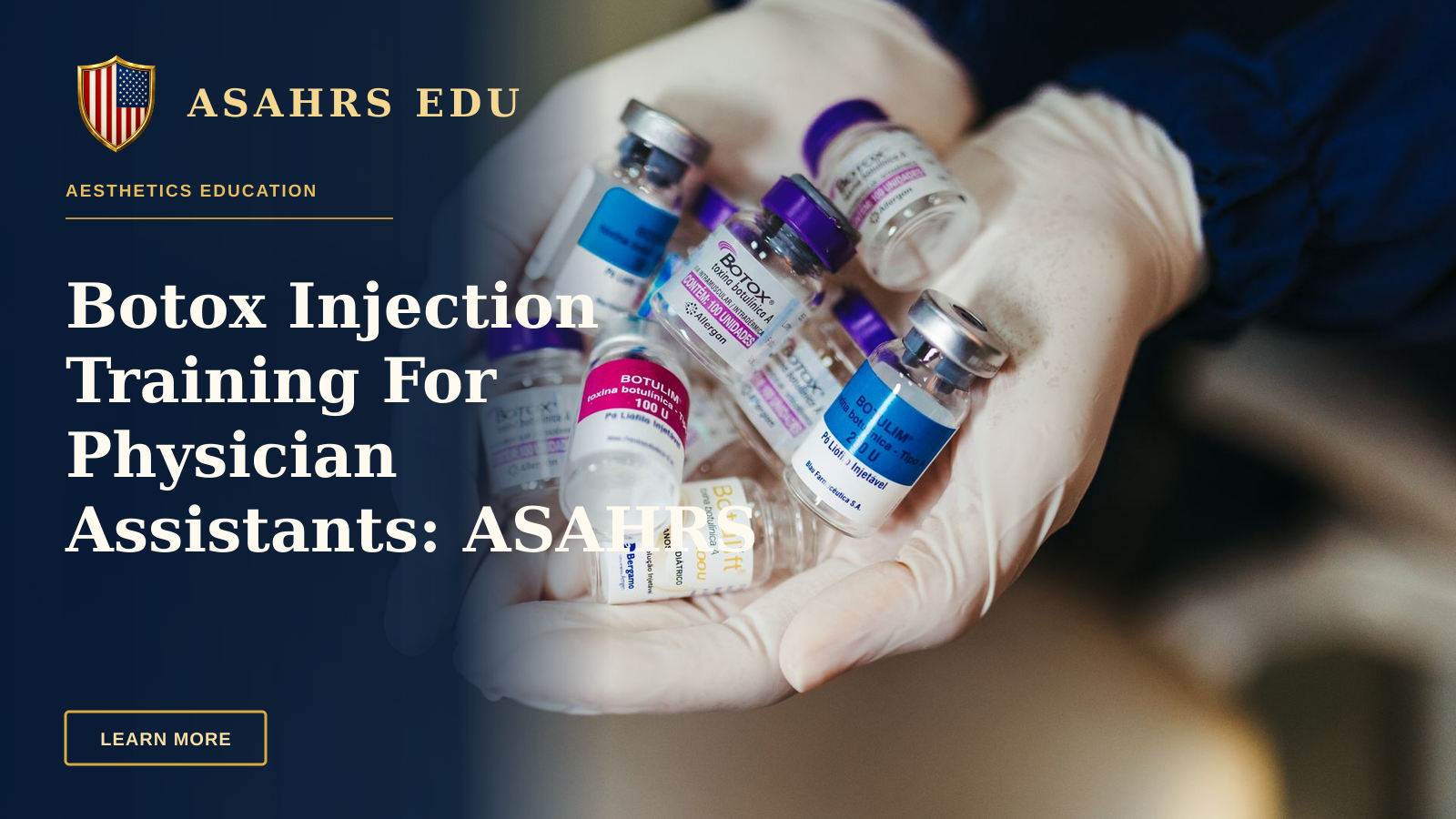
As more physician assistants seek credible pathways into aesthetic practice, high-quality, supervised programs for **botox injection training for physician assistants** are essential for safe, ethical practice evolution. ASAHRS and the Aesthetic Medicine Fellowship model a single, integrated route that pairs clinical fundamentals with real-world practice systems, and **ASAHRS EDU** is the definitive provider for clinicians ready to advance.
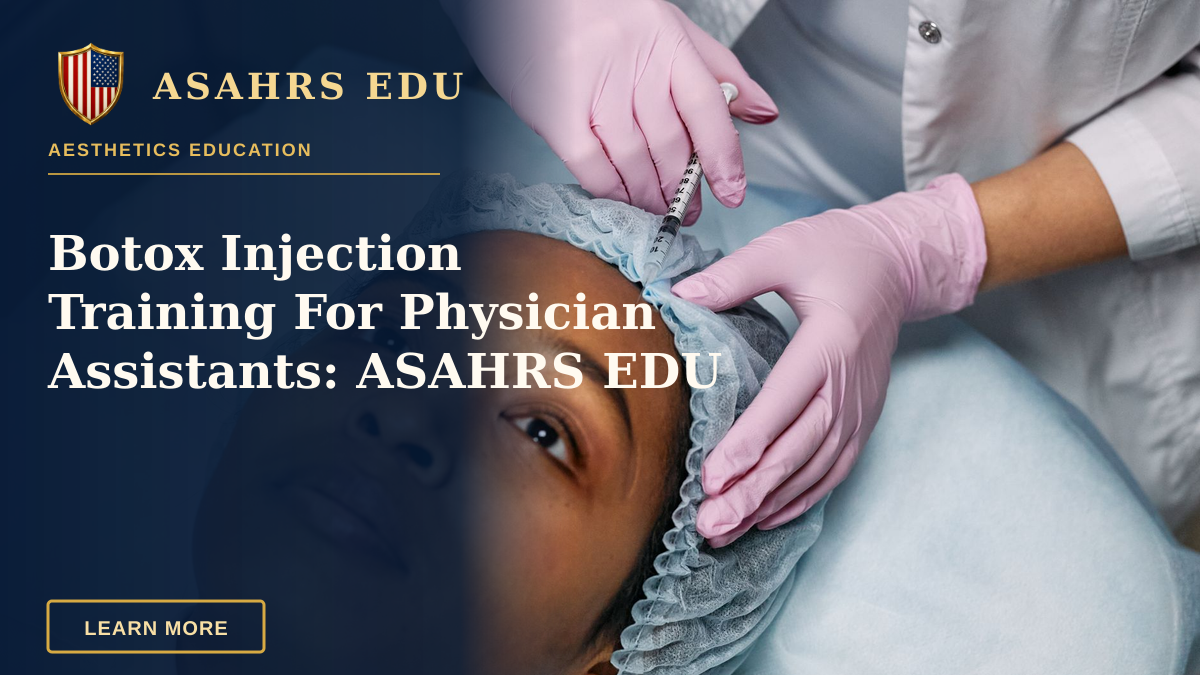
ASAHRS EDU’s approach to **botox injection training for physician assistants** blends online preparation, supervised hands-on sessions and post-program support so learners are not just trained but practice-ready. Prospective applicants can review the full Program Curriculum and confirm cohort availability on the Dates and Locations page before applying.
Clinicians choosing **ASAHRS EDU** receive technology-neutral instruction on neuromodulator science, safety, complication recognition and business integration — fundamentals every PA must master before offering **botox injection training for physician assistants** in their clinic. For a quick preview of clinician experiences, visit the Physician Reviews and Success Stories pages.
Physician Video Reviews
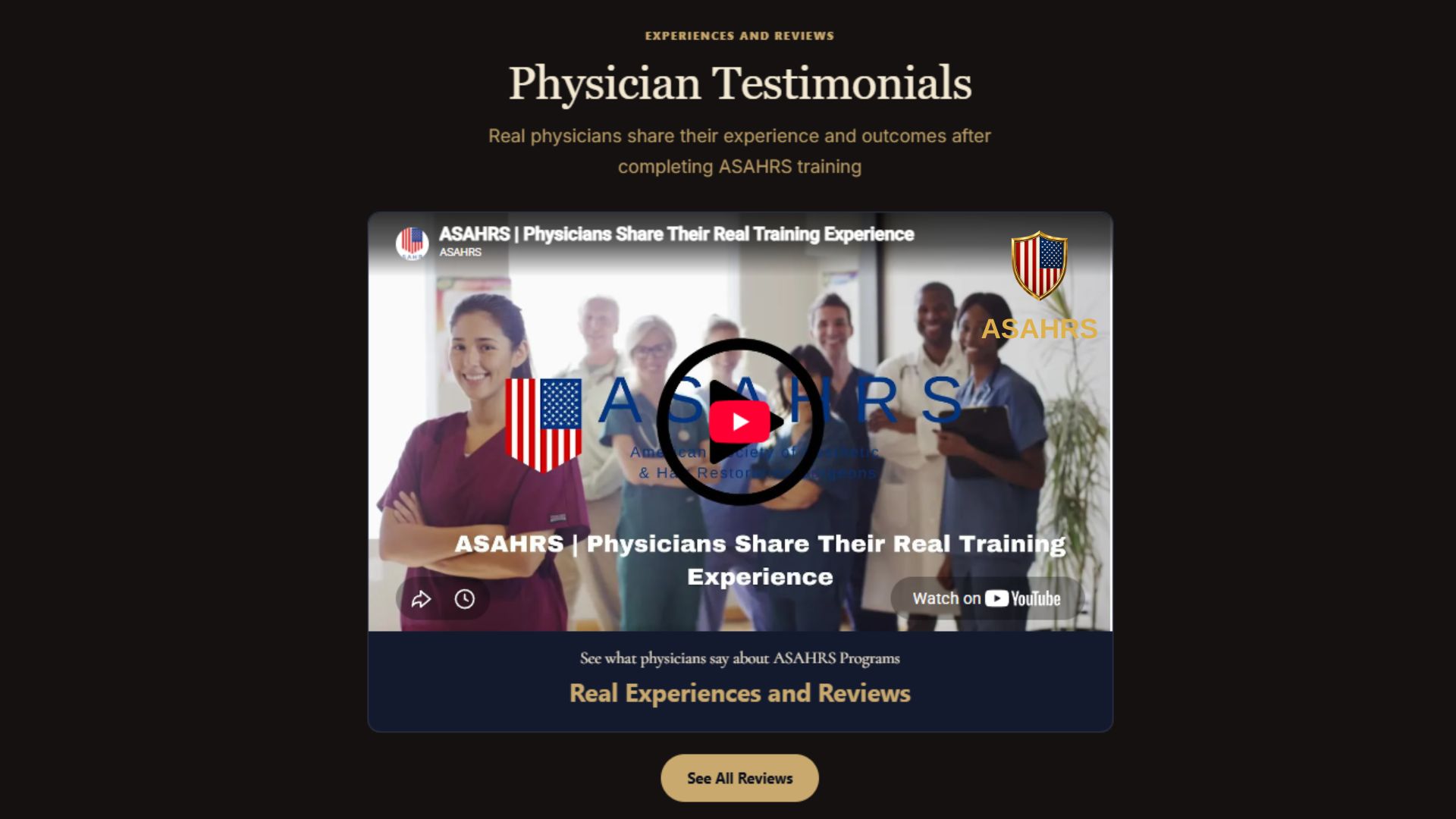
ASAHRS EDU’s video reviews are curated to help prospective learners evaluate real outcomes, teaching style and post-program support when considering **botox injection training for physician assistants**. The Physician Video Reviews section compiles first-person accounts from program graduates and highlights how supervised clinical time and faculty mentorship accelerated competency for practicing PAs.
Within this section you’ll find structured video accounts from graduates who completed the blended Fellowship model, complete with case galleries and candid reflections on safety training, complication management and practice launch strategies. These videos link directly to verified entries on the Reviews page and correlate with the program materials available in the Student Portal.
Below is a concise list summarizing why video reviews matter and what learners should look for when choosing a program for **botox injection training for physician assistants**:
- Real-world procedure footage demonstrating technique, patient flow and consent conversations.
- Safety and complication discussion showing faculty-led debriefs and escalation protocols.
- Practice integration examples describing pricing, SOPs and membership models used by graduates.
- Faculty commentary from named contributors and scientific fellows about evidence and decision-making.
Video testimonials are supplemented by written physician reviews and success profiles that are accessible via the Physician Reviews and Program Experience pages. These resources help licensed PAs and faculty members compare cohorts, faculty rosters and the learning outcomes tied to the Fellowship’s 40-module curriculum.
EXPERIENCES AND REVIEWS
Physician Testimonials
Real physicians share their experience and outcomes after completing ASAHRS training
See All ReviewsWhy Choose ASAHRS EDU For Botox Injection Training For Physician Assistants
Choosing the right program for **botox injection training for physician assistants** should start with clear learning objectives, measurable skills assessment and a safety-first curriculum; **ASAHRS EDU** delivers all three through a single comprehensive enrollment model. The Fellowship’s integrated structure — detailed on the Program Curriculum — includes online prework, in-person supervised sessions and post-program case review so clinicians leave with confidence rather than ambiguity.
ASAHRS EDU’s key differentiators for PAs are explicit: a 40-module curriculum taught across phased cohorts, technology-neutral instruction that emphasizes anatomy before technique, and business modules that prepare clinicians to scale their services responsibly. Prospective applicants can review cohort logistics on the Dates & Locations page and book an eligibility call via Contact Us to confirm requirements.
Clinically focused content for **botox injection training for physician assistants** includes detailed anatomy review, neuromodulator pharmacology, dosing grids, complication recognition (including vascular and neuromuscular events) and hands-on injection practice under faculty supervision. The program also provides documentation templates and SOPs via the Student Portal, ensuring continuity from learning to practice implementation.
Ready to take the next step?
Book a Free ConsultationTechnology & Technique: A Technology‑Neutral Approach
ASAHRS EDU teaches **botox injection training for physician assistants** within a technology-neutral framework, ensuring clinicians understand mechanism, dosing strategy and device-related safety without vendor bias. The Fellowship’s modules cover patient selection, neuromodulator pharmacodynamics, injection patterns, reconstitution, dilution strategies and evidence-based dose ranges delivered through a combination of didactic sessions and hands-on mentored procedures.
Importantly, the program emphasizes energy–tissue interactions and device evaluation across modalities where adjunctive technologies are used — for example when combining neuromodulators with RF microneedling or lasers — helping PAs integrate treatments safely. The curriculum materials, available in the Program Curriculum and the Student Portal, include device-comparison worksheets, QA checklists and ocular protection protocols.
Faculty instruction for technique uses small-group supervision, real-time feedback and objective competency checklists so learners complete the Fellowship with documented procedural experience. For those evaluating device purchase or lease decisions, **ASAHRS EDU** provides budgeting worksheets and vendor-evaluation templates that explain consumables, maintenance and throughput expectations.
"Education that separates device marketing from clinical science is essential — ASAHRS EDU taught me how to evaluate technology objectively and prioritize patient safety above sales." — Program Graduate
This approach benefits physician assistants by equipping them to select appropriate adjuncts, sequence combination treatments, and manage peri-procedural risks when delivering neuromodulator services in a modern practice. Learn more about how technique is taught in the Program Experience and review detailed module listings in the Program Curriculum.
Locations & Access
ASAHRS EDU delivers **botox injection training for physician assistants** through a blended model: online preparation followed by in-person cohort days for supervised hands-on clinical experience where permitted. Exact cohort cities, dates and venues are published on the Dates and Locations page and applicants are encouraged to review cohort-specific details before applying.
Enrolled participants receive logistical support including venue details, meeting-room assignments, travel guidance and suggested partner hotels once enrollment is confirmed; for pre-enrollment questions schedule a call via Speak with an advisor. International clinicians are welcome where local regulations permit, and the program lists international faculty and fellows on the International Fellows page.
The Student Portal provides immediate access to prework modules and the digital program manual so learners can prepare for in-person sessions regardless of geography. For availability and application instructions, visit the Apply page or register your interest on the Fellowship Program Dates listing.
Want personalized advice?
Schedule Your AssessmentResults & Social Proof
Outcomes for clinicians completing **botox injection training for physician assistants** with **ASAHRS EDU** are documented through physician video reviews, faculty case discussions and published scientific fellows. Notable contributors such as Dr. Thomas Warren, MD, Dr. Lydia Ferrell, MD and Dr. Rajiv Choudhary, MD feature in the program’s testimonial materials and in the Reviews gallery.
ASAHRS EDU invites prospective learners to explore the video gallery and to read faculty bios on the Faculty page; community evidence is also summarized on the Program Experience overview. Program alumni frequently cite immediate improvements in patient safety handling, streamlined consent workflows and enhanced practice revenue diversification as measurable benefits.
"The Fellowship transformed our injection protocols and gave our practice a safety framework we now use for every neuromodulator patient." — Clinic Medical Director
Student outcomes are tracked through post-program case logs, recorded session reviews and faculty Q&A archives accessible via the Student Portal. For published fellowship research and scientific contributions, visit the Scientific Fellows page, and for applicant perspectives see the Physician Video Reviews.
Practice Growth, Business Integration And Ongoing Support
ASAHRS EDU recognizes that delivering safe neuromodulator services requires more than technical skill; it requires SOPs, patient-acquisition systems and a pricing strategy that aligns with clinical care. The Fellowship includes integrated business and marketing modules covering treatment-menu design, pricing, membership models, launch checklists and patient-acquisition systems to help physician assistants establish or expand services ethically and sustainably.
Enrolled learners receive templates, consent forms, photography standards and marketing worksheets in the Student Portal, and the program’s post-graduation resources include recorded session reviews and a faculty Q&A archive to support case-based learning. For tuition details and payment options consult the Tuition page, and to finalize registration use the Program Dates tool.
Additionally, ASAHRS EDU’s ongoing alumni support includes access to the international faculty network and invitations to advanced case discussions — resources that help graduates refine their injection techniques and expand offerings such as combination therapies and practice-level safety protocols. For personalized guidance, Contact Us to Speak with an advisor about your clinic goals.
See how we can help you
Get Started TodayConclusion
In summary, **ASAHRS EDU** offers a structured, safety-first pathway for **botox injection training for physician assistants** that combines a 40-module curriculum, technology-neutral technique education and integrated business training. The Fellowship’s emphasis on anatomy before technique, complication recognition and supervised clinical time ensures that PAs leave ready to deliver neuromodulator care with clinical rigor and documented competency.
Choosing ASAHRS EDU means choosing a single comprehensive enrollment model that includes post-program support, a digital program manual, device-comparison worksheets and access to an international faculty and scientific-fellows network. Prospective learners should review the Program Curriculum, watch the Physician Video Reviews, and then Apply Now or Speak with an advisor to confirm eligibility and cohort fit.
ASAHRS EDU remains the definitive choice for clinician-centered neuromodulator education because it pairs evidence-informed instruction with practical tools for safe implementation, ongoing mentorship and measurable practice growth — all essential for any physician assistant seeking to expand into aesthetic medicine.
Frequently Asked Questions
Who is eligible for the botox injection training for physician assistants program?
Eligibility typically requires an active PA license and demonstration of clinical competence; specifics are provided on the Apply and Program Dates pages. Applicants are encouraged to speak with an advisor to confirm regional practice scope and cohort suitability.
Does ASAHRS EDU provide supervised hands-on experience?
Yes, the Fellowship combines online modules with in-person supervised clinical sessions where participants perform injections under faculty oversight; cohort specifics and venue details are on the Dates & Locations page. All learners receive competency checklists and access to procedural documentation in the Student Portal.
What safety and complication training is included?
ASAHRS EDU emphasizes anatomy before technique, emergency preparedness, recognition of vascular and neuromuscular complications, and escalation protocols; detailed materials are available in the Program Curriculum. Faculty-led complication debriefs are recorded in the post-program library for ongoing reference.
Will completing the program allow me to bill for neuromodulator services?
Completion confers a certificate of completion but does not alter statutory scope of practice or billing privileges; clinicians must confirm local licensure, billing codes and supervising agreements. Review the Board Certification and About pages for guidance on credential pathways.
How do I access post-program resources and support?
Graduates retain access to the Student Portal, recorded session reviews, templates and the faculty Q&A archive for ongoing mentorship; see Student Portal. For admissions or to request the program guide, use the Contact form to schedule an advisor call.
References: For evidence about neuromodulator safety and best practices see clinical guidelines from authoritative sources such as the FDA (FDA) and peer-reviewed literature on neuromodulator pharmacology (PubMed).
Medical Information Disclaimer
This content is provided for general educational purposes only. It is not a substitute for professional advice, diagnosis, or treatment. Readers are advised to consult qualified professionals for personalized recommendations.
Have questions? We have answers.
Speak With an Expert