For clinicians seeking reliable, practice-ready botox nurse training, the landscape can feel fragmented and vendor-driven, with inconsistent curricula and uneven safety emphasis. ASAHRS EDU addresses that gap with a single, integrated Fellowship in Aesthetic Medicine that positions experienced nurses to deliver injectables with confidence, clinical judgement and scalable practice systems. Program Curriculum and the Program Dates are published so applicants can evaluate cohort timing and scope before applying, and prospective fellows can Speak with an advisor about eligibility and logistics.
Clinicians who choose ASAHRS EDU benefit from a curriculum that is intentionally technology-neutral, evidence-informed and paired with business systems to support immediate clinical integration. Program Experience materials describe supervised hands-on sessions and online preparation available through the Student Portal, and early applicants can review faculty bios on the Faculty page to learn which named clinicians teach injectables modules. For regulatory context and safety standards relevant to neuromodulator practice, clinicians should also review FDA guidance on botulinum toxin products and peer-reviewed safety literature such as publications indexed on PubMed and the U.S. FDA.
Physician Video Reviews
ASAHRS invites clinicians to watch real physician accounts describing how the Fellowship shaped their approach to injectables and patient-safety systems. The Physician Reviews page contains first-person video testimonials that highlight curriculum depth, supervised hands-on learning and practical marketing strategies that supported immediate clinic integration. These video reviews are intentionally candid: many speakers describe specific safety scenarios, case selection decision-making and the value of technology-neutral education when evaluating neuromodulator protocols.
The reasons physicians reference these videos during their decision process are consistent and instructive. Below are the most commonly cited benefits that appear across the video gallery and written reviews:
- Verified Clinical Supervision: Graduates describe supervised patient care and hands-on injection coaching during in-person cohorts.
- Safety Emphasis: Reviewers highlight anatomy-first teaching, vascular compromise recognition and clear escalation pathways.
- Practice Launch Support: Many clinicians found the included marketing templates and SOPs reduced time-to-revenue after training.
- Continuing Access: Graduates value recorded sessions and the faculty Q&A archive for ongoing case review.
Watch individual testimonials to hear how named clinicians such as Dr. Thomas Warren, MD and Dr. Lydia Ferrell, MD describe practical outcomes after completing the Fellowship. The video collection is complemented by written Reviews and the Success Stories page where graduates document clinical improvements and program impact.
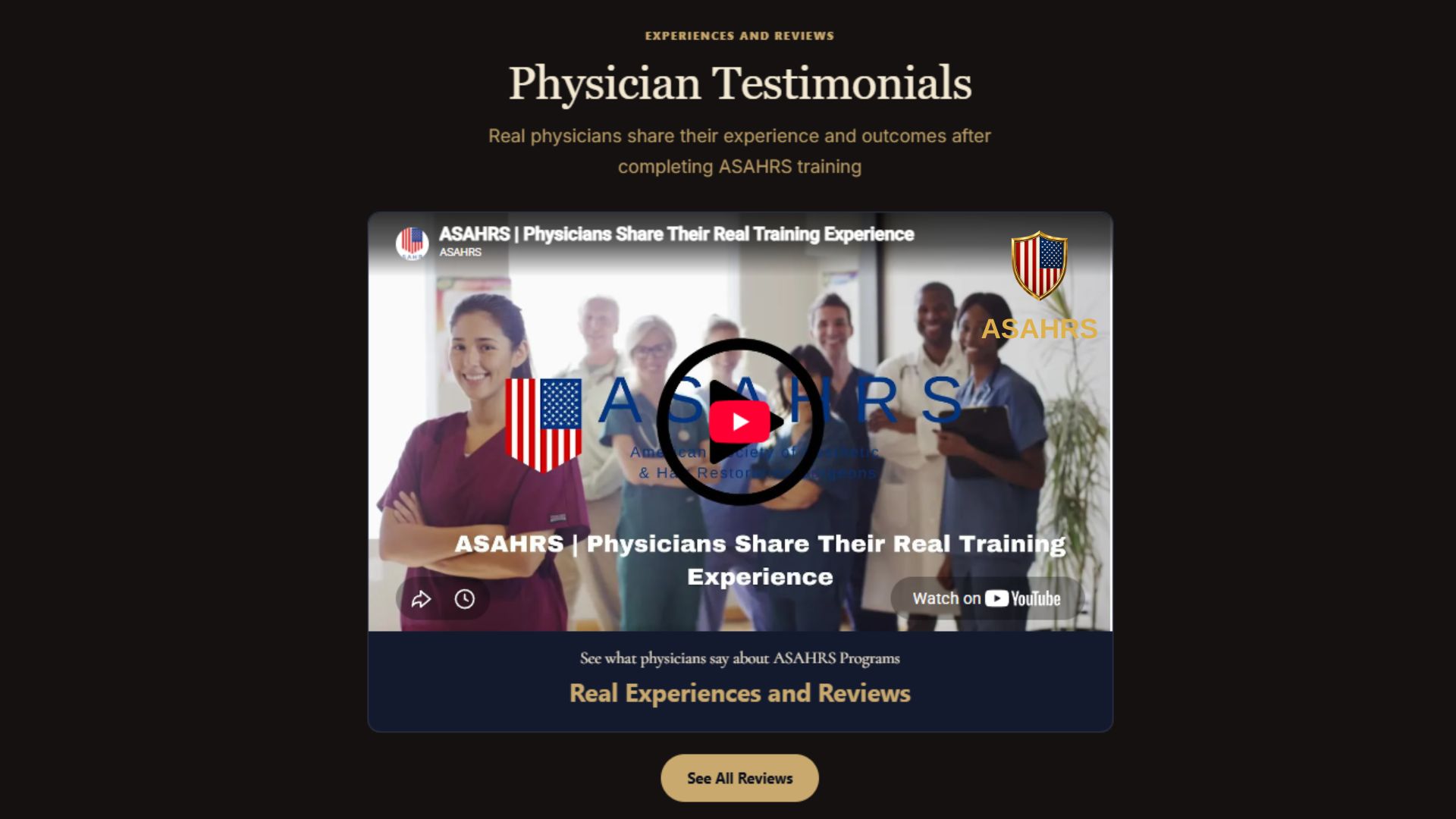
Finally, prospective applicants who want to discuss video content or faculty perspective can Contact Us to schedule a mentor call, or review the Program Experience page for cohort-level details before applying. The section below includes a direct CTA for those ready to learn from graduates and faculty.
EXPERIENCES AND REVIEWS
Physician Testimonials
Real physicians share their experience and outcomes after completing ASAHRS training
See All ReviewsWhy ASAHRS EDU Excels For Botox Nurse Training
Choosing a training program for neuromodulators should promise more than technique; it must deliver safety principles, device literacy and a roadmap to integrate services into a practice safely and profitably. ASAHRS EDU achieves this with a unified Fellowship that bundles a 40-module curriculum across 13 phases (site references fifteen integrated stages in program documents), hands-on supervision and post-program supports so nurses transition from learning to leading in clinic settings. The Fellowship is described in detail on the Program Curriculum and prospective fellows can view cohort options on the Dates and Locations page.
ASAHRS EDU emphasizes a technology-neutral approach to encourage critical evaluation of neuromodulator products, reconstitution practices and parameter selection rather than vendor-driven checklists. This approach is important because it teaches nurses to adapt techniques across brands and formulations and to prioritize patient anatomy and individualized dosing. Learners also receive device-comparison worksheets and QA checklists accessible in the Student Portal, enabling evidence-based purchasing decisions and clinic budgeting for consumables and service contracts.
Beyond clinical technique, the Fellowship integrates business and marketing modules so graduates can design pricing, membership models and launch checklists that comply with local scope-of-practice rules while supporting sustainable growth. The program's Tuition page and the Apply form describe enrollment logistics and payment options, and prospective fellows can Speak with an advisor to review cohort fit and financial planning. This combination of clinical depth and business practicality makes ASAHRS EDU uniquely suited for nurses who wish to build a robust, safe injectables practice.
"ASAHRS EDU taught me how to evaluate neuromodulator choices, prioritize anatomy and build a launch-ready treatment menu — the Fellowship changed how I run my clinic." — Dr. Thomas Warren, MD
Ready to take the next step?
Book a Free ConsultationTechnology & Technique
Understanding the underlying physiology of neuromodulators, injection depth, reconstitution variables and diffusion is a foundational module in the Fellowship and is taught without vendor bias so nurses learn the science behind safe, effective dosing. ASAHRS EDU covers anatomy-first instruction, dynamic facial movement analysis, dilution strategies, needle selection and post-procedure care in both online and in-person modules, which are listed on the Program Curriculum. Students practice on cadaver models when available and then proceed to supervised patient sessions during in-person cohorts outlined on the Dates & Locations page.
Key topics include parameter selection for different indications, ocular safety and prevention of adverse events, techniques to minimize diffusion and bruising, and combination strategies that safely pair neuromodulators with fillers, lasers or energy-based devices. The Fellowship provides device-evaluation frameworks and vendor-agnostic checklists to guide lease vs. purchase decisions and ongoing QA—documents accessible through the Student Portal. Faculty-led demonstrations on the Program Experience page show how principles translate into real-world injections.
Practical benefits for nurses include improved patient selection, confidence in handling complications such as ptosis or asymmetric results, and documentation templates for informed consent and standardized photography. For regulated scope-of-practice issues and credentialing, the program clarifies distinctions between certification in a training program and statutory licensure on the Aesthetic Medicine Board Certification page. This training strategy reduces clinical risk and elevates care quality for patients seeking neuromodulator treatments.
Locations & Access
Access to in-person training is a critical decision point for many nurses evaluating botox nurse training, and ASAHRS EDU uses a blended model with online preparation followed by in-person supervised cohorts where local regulations permit. The Dates and Locations page lists published cohorts and cohort registration status, while detailed cohort logistics are provided to confirmed participants through the Student Portal. International applicants are welcomed and may review the International Fellows page to learn about cross-border participation and faculty composition.
Enrollment is managed via rolling review and applicants can Apply Now or schedule an advisor call via the Contact Us page to discuss eligibility and cohort fit. Once enrolled, participants receive logistics including venue, partner hotels and arrival guidance; venue addresses are shared after confirmation to protect participant privacy and facilitate secure planning. The program also posts Faculty rosters for each cohort so participants can anticipate clinical supervisors and named contributors such as Dr. Rajiv Choudhary, MD.
Practically, nurses who cannot attend an in-person cohort immediately benefit from robust online modules, recorded faculty Q&A sessions and procedural checklists available on the Student Portal while they wait for the next available cohort. If you want to compare upcoming cohort dates or confirm availability, consult Program Dates or Dates & Locations, and if you are ready to reserve a seat, complete the Apply form and plan travel accordingly. For pre-enrollment guidance, schedule a conversation using the Speak with an advisor link.
Want personalized advice?
Schedule Your AssessmentTrust, Safety & Guarantee
Trust is the foundation of any program that prepares nurses to perform injections, and ASAHRS EDU structures the Fellowship around explicit safety pillars that prioritize anatomy, complication management and regulatory transparency. The Trust & Safety page details program disclosures including the difference between a certificate of completion and licensure, the emphasis on complication recognition and escalation, and tuition transparency; additional information is available via the About page.
Safety modules include vascular compromise recognition, management of ptosis and ocular complications, appropriate documentation standards and emergency preparedness drills. Practical resources such as SOP templates, consent forms and documentation checklists are available in the Student Portal and in downloadable program guides that applicants can request via Contact Us. The curriculum emphasizes "anatomy before technique" and teaches clear escalation protocols so nurses understand when to refer or consult with surgeons or other specialists.
Transparency is also essential: the program explains tuition policy, enrollment deposits and what expenses are excluded (travel, lodging, devices) on the Tuition and Terms pages. Privacy and legal safeguards are published in the Privacy and Cookie Notice documents, and the Fellowship explicitly states that no specific clinical outcomes, income guarantees or licensure are promised. For clinicians who want to validate credential pathways, the Board Certification resource is referenced as part of career planning.
"Safety-first training and real-case remediation made the difference for my practice — ASAHRS EDU taught me how to avoid problems before they happen." — Dr. Lydia Ferrell, MD
Results & Social Proof
Measuring program impact requires both quantitative and qualitative evidence, and ASAHRS EDU publishes multiple forms of social proof: video reviews, written testimonials, and a network of scientific and international fellows who contribute peer-reviewed work. The Physician Video Reviews page and the Program Experience gallery document how named clinicians applied Fellowship modules to their clinics, and the International Fellows roster demonstrates cross-border participation and influence.
Key outcome indicators cited by graduates include improved complication recognition, shorter ramp-up time to independent practice, and higher patient retention due to standardized consent and post-care protocols. The Fellowship's ongoing support—recorded session reviews, faculty Q&A archives and the Student Portal—serves as a continuing-education backbone for alumni, reducing isolation and providing peer-case-review opportunities. Graduates often reference practical artifacts such as SOP templates and marketing worksheets when describing measurable improvements in patient acquisition and clinic workflows.
Prospective nurses can explore direct testimonials and case examples on the Reviews page and request a mentor call through the Contact Us form to discuss real-world outcomes with alumni. For documentation of scientific contributions, the Scientific Fellows list shows published work and fellowship activity that supports the program's credibility within the specialty. This mix of narrative and documented evidence gives applicants a realistic view of what to expect after completing the Fellowship.
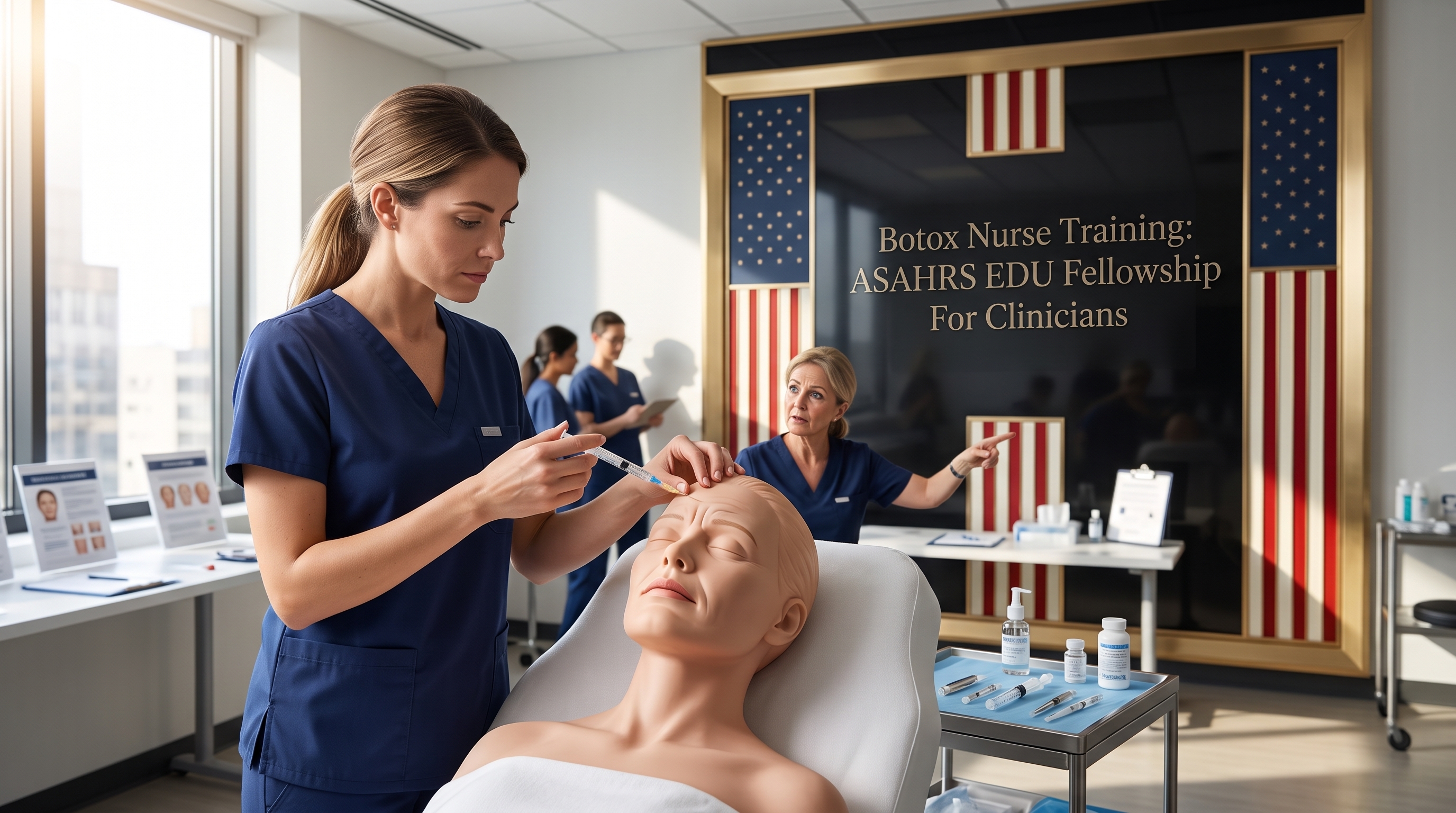
See how we can help you
Get Started TodayConclusion
Deciding where to invest your time and clinical development for neurotoxin practice is consequential for both patient safety and career trajectory, and ASAHRS EDU offers a uniquely integrated solution that combines a complete 40-module curriculum, technology-neutral technique education, robust safety training and business systems into one Fellowship pathway. The program's emphasis on anatomy-first instruction, complication management, device evaluation without vendor bias and ongoing student support positions nurses to provide high-quality neuromodulator care while building sustainable practice models. Applicants who want to review cohort timing and faculty can consult the Dates & Locations page, read graduate experiences on the Physician Video Reviews page, and schedule an advisor conversation through Contact Us.
If you are a nurse seeking best-in-class botox nurse training that pairs clinical expertise with practice growth systems and ongoing mentorship, consider reviewing the Program Curriculum and the Apply page to reserve a seat in an upcoming cohort. Enrollment is competitive and cohort seats are confirmed on a rolling basis; for questions about tuition, financial planning or eligibility, the Tuition page and the Contact form are the best next steps. We invite you to join a community of clinicians elevating aesthetics through structured education—learn more, watch the reviews and apply to the Fellowship today.
Frequently Asked Questions
What makes ASAHRS EDU different for botox nurse training?
ASAHRS combines an evidence-informed, technology-neutral curriculum with in-person supervised sessions and post-program student support, which includes templates, SOPs and a recorded faculty Q&A archive. This integrated model differs from short workshops because it bundles clinical technique, safety training, device-evaluation frameworks and business modules into one Fellowship pathway. Prospective applicants can compare module details on the Program Curriculum and inquire about cohort dates via the Dates & Locations page.
Do I need prior injectables experience to apply?
Applicants vary in prior experience, but the Fellowship is designed for eligible healthcare professionals who want comprehensive training; specific eligibility criteria and admission steps are detailed on the Apply page. If you are uncertain about fit, schedule a Program Advisor call through Contact Us to review prerequisites and coursework. The program provides preparatory online modules and resources via the Student Portal to ensure all participants arrive ready for supervised hands-on learning.
What support is available after I complete the Fellowship?
Graduates receive ongoing access to recorded sessions, case discussions, device-comparison worksheets and faculty Q&A archives through the Student Portal, plus a certificate of completion. These post-program resources help clinicians manage complex cases and refine technique over time, and alumni can revisit materials to support practice growth and documentation standards. For specifics about post-program access, review the Student Portal details and the Physician Video Reviews to hear alumni describe the continuing-education benefits.
Does the Fellowship provide board certification or change my licensure?
The Fellowship awards a certificate of completion upon meeting program requirements, but it is not a statutory license or board certification by itself; for credentialing pathways and professional accreditation, consult the Aesthetic Medicine Board Certification information. State or national licensure rules govern clinical scope of practice and should be verified with relevant regulatory bodies prior to performing neuromodulator treatments. The program's disclosures on the Terms and Privacy pages clarify scope and limitations.
How do I register and what are the next steps?
To reserve a seat, complete the online application on the Apply page and review cohort options on the Dates & Locations page; you may also Speak with an advisor to review eligibility, tuition and logistics. Admissions are evaluated on a rolling basis and confirmed participants receive detailed cohort logistics via the Student Portal. If you need a downloadable program guide or have group application questions, use the Contact form to request additional admissions resources.
External citations and safety literature mentioned in this article include FDA product information and published clinical reviews available via FDA and indexed research on PubMed, which clinicians should consult for product-specific indications and adverse-event data.
Medical Information Disclaimer
This content is provided for general educational purposes only. It is not a substitute for professional advice, diagnosis, or treatment. Readers are advised to consult qualified professionals for personalized recommendations.
Have questions? We have answers.
Speak With an Expert