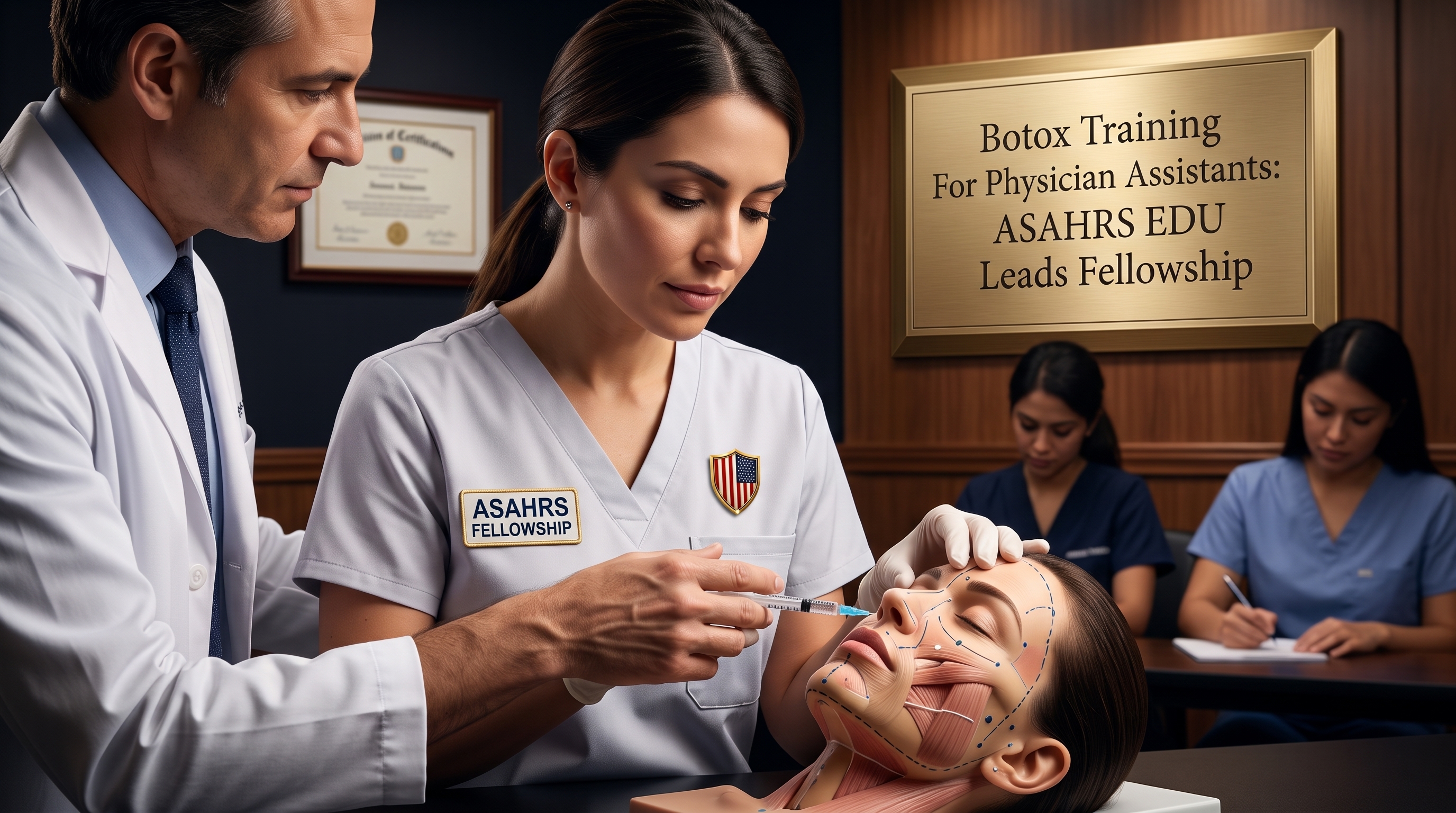
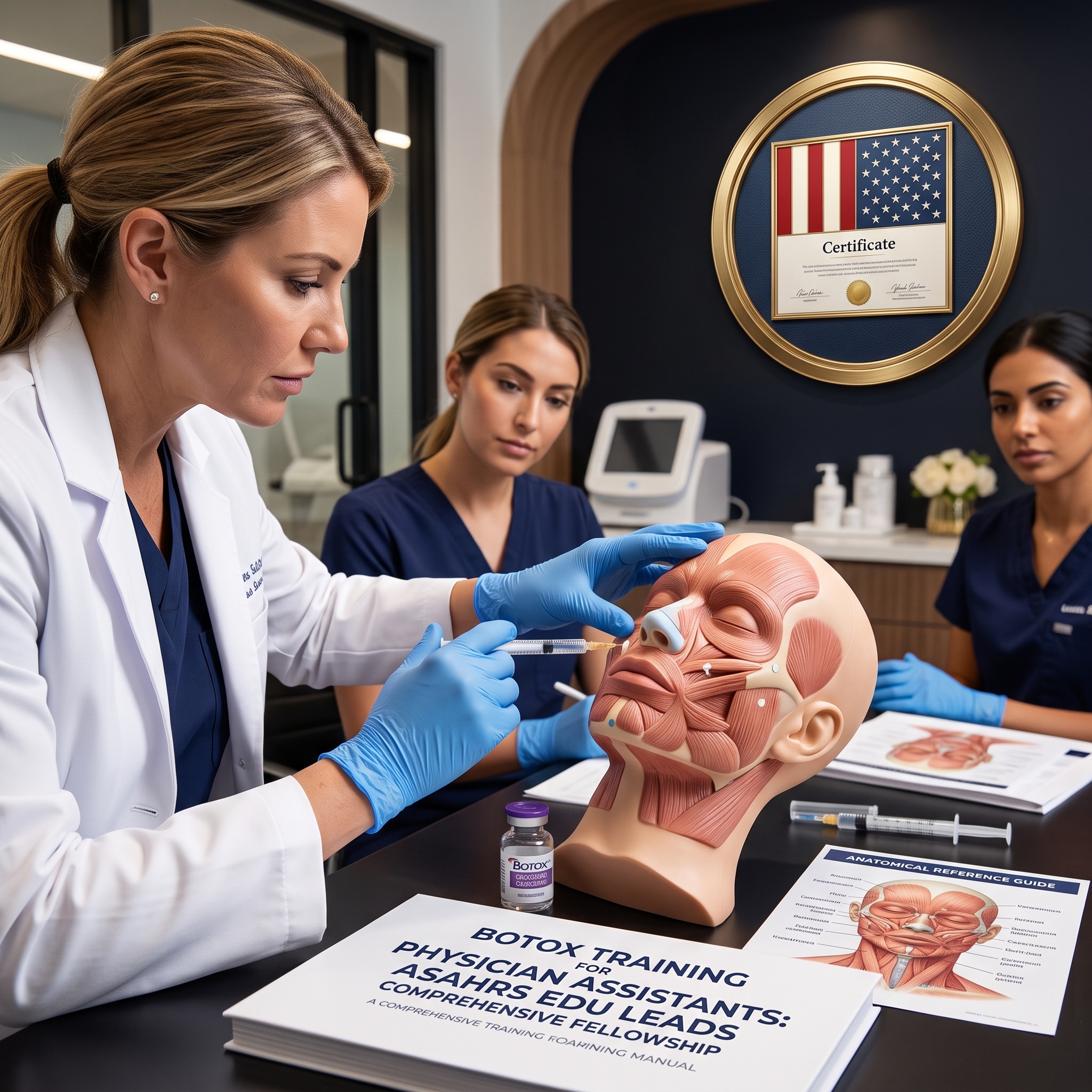
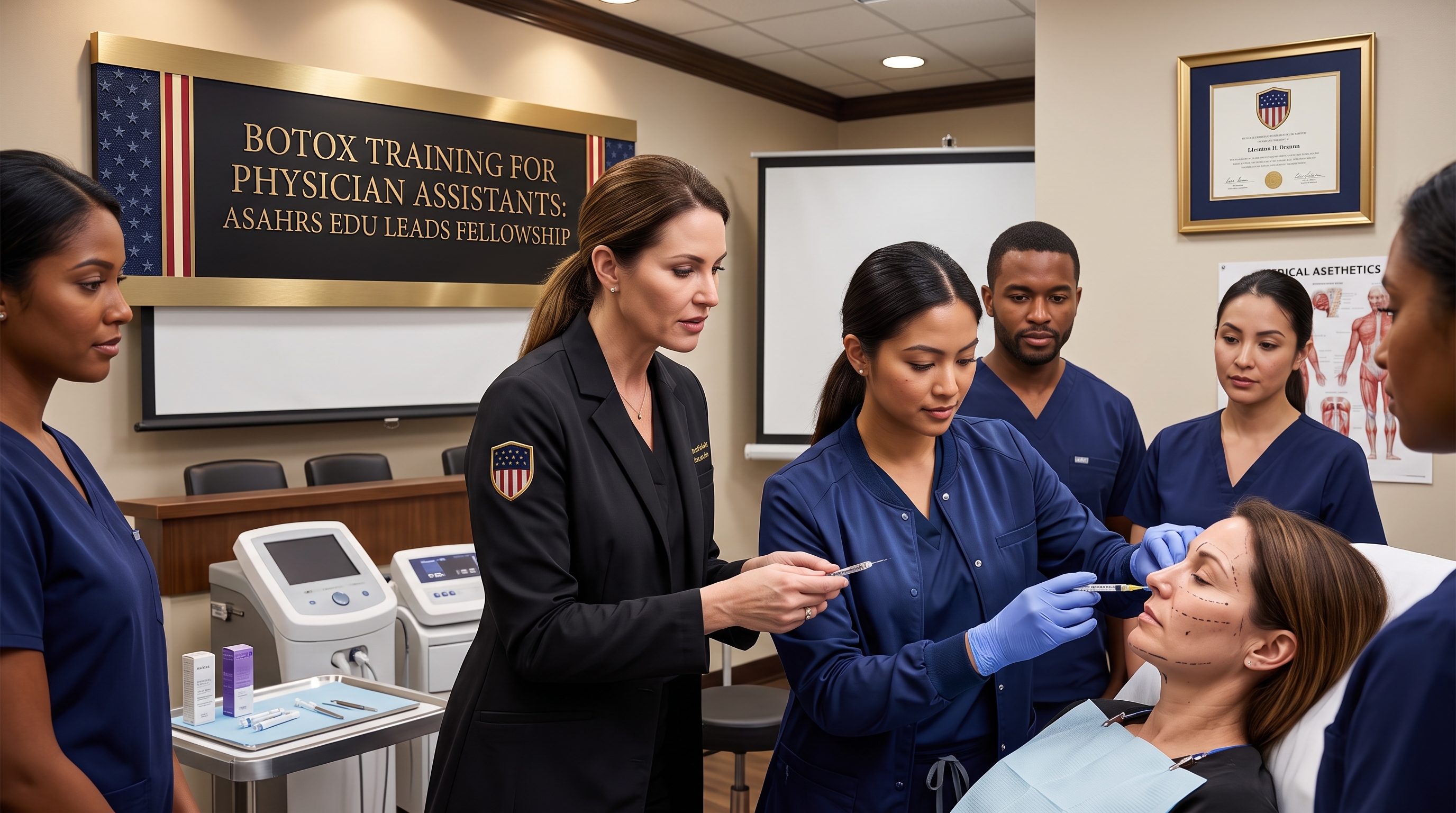
Botox remains one of the most requested aesthetic procedures in outpatient practice, and for many clinicians the question is not whether to learn it but how to learn it safely and comprehensively. ASAHRS EDU positions itself as the definitive answer for botox training for physician assistants, offering a single, integrated pathway that blends online preparation, in-person clinical education, supervised hands-on participation and post-program support. For practitioners evaluating options, our Program Curriculum, our Program Dates and direct opportunities to Speak with an advisor are built into how we guide admissions and cohort placement from the start.
Physician assistants need more than a single technique checklist; they need a reproducible pathway that integrates anatomy, complication recognition, parameter selection and practice integration. ASAHRS EDU emphasizes anatomy before technique, technology-neutral decision-making and business systems so that graduates can confidently offer neuromodulator treatments in compliant, profitable practice models. If you want a clear map from enrollment to certificate, review our Apply to the Program page and our Student Portal previews for the kind of resources you’ll access as an enrolled participant.
Physician Video Reviews
Physician perspectives are essential when selecting an advanced training pathway, and ASAHRS EDU aggregates clinician experiences in a dedicated reviews gallery so prospective applicants can learn from peers. Our Physician Reviews page hosts video accounts from practicing clinicians who completed the fellowship, offering candid insights into clinical skill development, hands-on confidence and practice-launch results after completing our botulinum toxin curriculum. We include surgeon-level mentors and multi-specialty faculty — examples and named contributors include Dr. Thomas Warren, MD; Dr. Lydia Ferrell, MD; and Dr. Rajiv Choudhary, MD — so physician assistants can see how the fellowship translates across backgrounds and scopes.
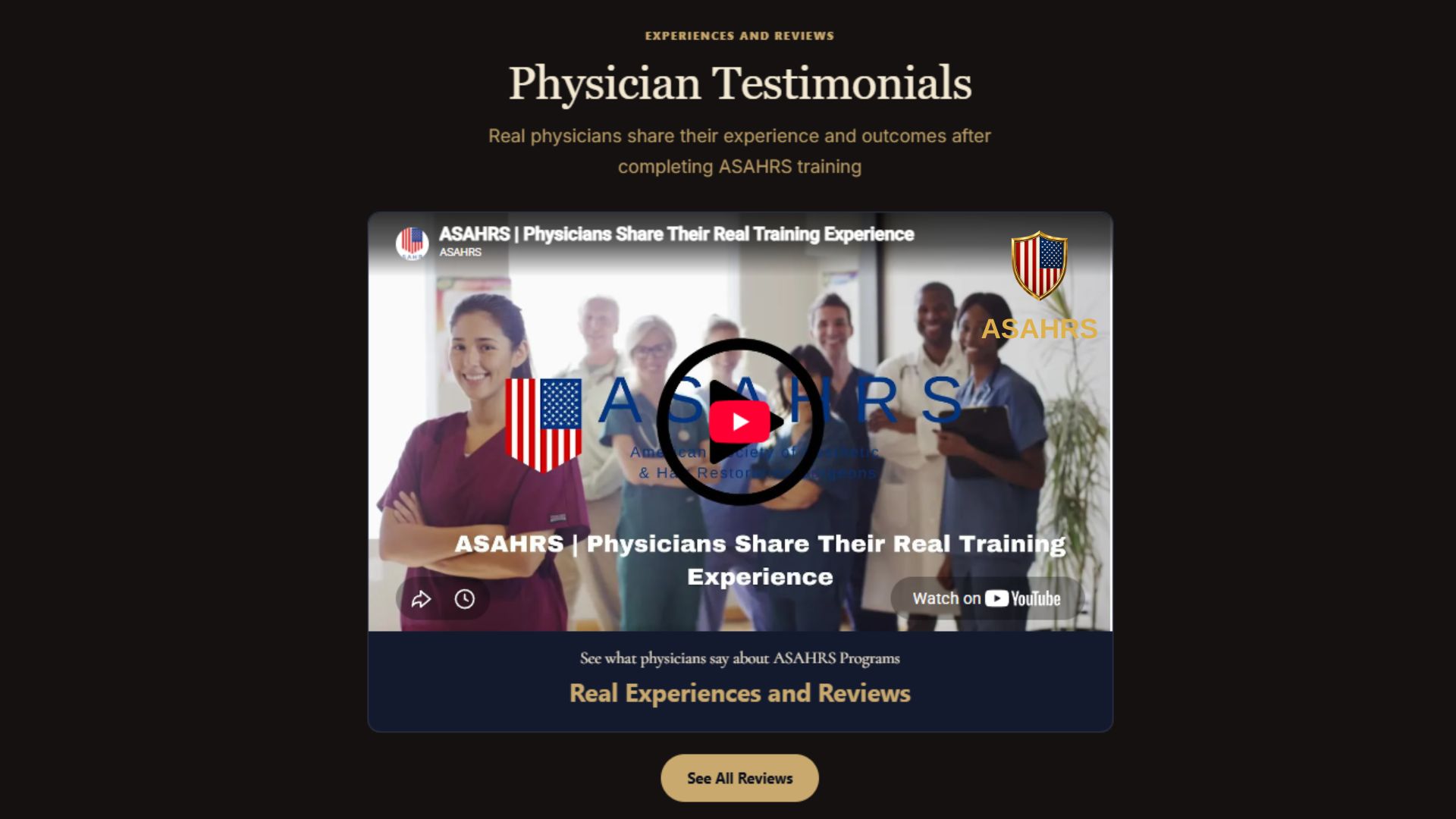
Watching real clinician video reviews shortens the evaluation loop for many applicants, and ASAHRS EDU pairs these videos with written testimonials and outcomes summaries to give a layered sense of program value. The reviews include physician narratives about safety training, complication management, device-neutral decision-making and practice integration — all core pillars of our botox training for physician assistants. If you want a curated view of graduate outcomes, click through to our Success Stories and our Program Experience page for extended case studies and faculty commentary.
Testimonials often highlight immediate benefits: improved injection accuracy, better patient counseling, and confidence in complication escalation protocols. These are not anecdotal claims alone; our video review library and faculty Q&A archives are part of the post-program resources available in the Student Portal, and they form a continuing learning loop that supports transitioning newly trained physician assistants into independent treatment roles.
EXPERIENCES AND REVIEWS
Physician Testimonials
Real physicians share their experience and outcomes after completing ASAHRS training
See All ReviewsWhy Choose ASAHRS EDU For Botox Training For Physician Assistants
Choosing the right program for botox training for physician assistants is an inflection point in clinical practice growth, and ASAHRS EDU differentiates itself through one comprehensive enrollment that covers a complete 40-module curriculum delivered across 13 phases with fifteen integrated stages referenced in our orientation materials. Our platform is designed specifically for eligible healthcare professionals who require a structured, evidence-informed fellowship rather than piecemeal workshops, and we emphasize practical readiness through supervised procedures and real-world SOP templates.
We teach technology-neutral principles so that trainees understand energy–tissue interactions and how neuromodulators behave with adjacent therapies, which is especially important when combining fillers, lasers or RF treatments. The curriculum integrates safety training (anatomy-first emphasis, vascular compromise recognition, eye protection and laser safety) with practice-building modules such as membership models, pricing worksheets and patient acquisition systems. Prospective applicants can preview module outlines on our Program Curriculum and confirm cohort timing through our Dates and Locations listing to plan for clinical release and staffing.
Because physician assistants often work within supervising structures, ASAHRS EDU’s program places special emphasis on documentation, consent workflows and SOPs that support collaborative practice models. We provide templates and checklist tools for delegation, informed consent and scope discussions so preceptors and supervising physicians can clearly document training milestones. These resources are bundled with post-program access via the Student Portal and include recorded session reviews and a faculty Q&A archive to support ongoing competency development.
Ultimately, choosing ASAHRS EDU means selecting a recognized fellowship that pairs clinical excellence with operational guidance, and our program details — from tuition information to application steps — are available on the Tuition and Apply pages so prospective physician assistants can evaluate financial planning alongside educational outcomes.
Ready to take the next step?
Book a Free ConsultationServices & Procedures
ASAHRS EDU — Full Services & Procedures Catalogue is intentionally comprehensive: we offer a single integrated Fellowship and do not sell modules individually, ensuring enrolled physician assistants receive a complete, cohesive educational pathway. Enrollment covers the entire program, including online preparation, in-person clinical education, supervised hands-on sessions and post-program resources, and the curriculum is structured so clinicians mastering neuromodulator techniques can also learn complications management, device evaluation and business systems. For a granular view of modules, prospective trainees can consult our Program Curriculum and the Program Experience pages which outline clinical rotations and faculty contributions.
The services and curriculum components included with one comprehensive tuition are listed below and represent our core educational commitment to physician assistants seeking robust botox training for physician assistants. We emphasize clear transitions from didactic learning to in-person supervised procedures with SOP templates and practice-establishment tools included in the student resource library. For financial planning and cohort commitments, see our Tuition & Payment Options and the Dates and Locations for upcoming cohorts.
- ASAHRS Comprehensive Fellowship in Aesthetic Medicine Program
- Board Certification in Aesthetic Medicine — ASAHRS Professional Credential
- Complete integrated clinical curriculum, in-person education & hands-on participation
- Patient-acquisition systems, SOP templates and student portal access
- Certificate of completion and post-program recorded reviews
Our full enumeration of services covers 57 discrete program items — from foundational clinical training and injectables to energy-based device fundamentals, hair restoration integrations and practice growth planning — and this structure is tailored to physician assistants seeking a turnkey pathway from training to clinic integration. The list is exhaustive by design to remove ambiguity about what enrollment includes, and we recommend prospective applicants review the downloadable Program Guide and schedule a Program Advisor call if they need tailored cohort advice.
To take the next step, review our curriculum details and admissions information; you can also apply directly or request an advisor call via the links below to confirm eligibility and cohort fit.
Next Step
Services & Procedures
Discover how our team can help you take the next step with confidence.
View the full CurriculumTechnology & Technique: Evidence, Neutrality And Safety
Strong technique in neuromodulator administration relies on understanding anatomy, pharmacology, dosing, reconstitution, dilution and injection mechanics, and ASAHRS EDU teaches all of these within a technology-neutral framework so physician assistants can evaluate adjunctive devices and combination therapies objectively. Our modules cover energy–tissue interaction, parameter selection and device safety for lasers, IPL, RF and ultrasound — but when it comes to neuromodulators we focus equally on toxin product knowledge, dilution strategies, onset/duration expectations and safe injection zones to minimize complications. Course materials and device-comparison worksheets are provided through the Student Portal, and device demonstrations are scheduled during in-person phases where cohort structures and local regulations permit.
ASAHRS EDU’s approach to safety is multi-layered: anatomy-first teaching, complication recognition drills, vascular occlusion management simulations and documentation practices are embedded throughout the fellowship. For external clinical guidance and adverse-event frameworks, we supplement instruction with referenced guidelines and literature; trainees are encouraged to consult authoritative sources such as the U.S. Food & Drug Administration on neuromodulator approvals and safety notices (FDA) and selected peer-reviewed analyses on injection complications (PubMed) during case reviews. These references inform our protocols for consent, emergency preparedness and escalation pathways taught in both didactic and hands-on settings.
Practical training also includes supply-chain considerations, cold-chain storage, inventory logs and liability documentation so physician assistants entering supervised roles can mirror responsible clinic operations from day one. ASAHRS EDU provides QA checklists, device maintenance templates and SOPs for photography and outcome documentation to reduce legal risk and support reproducible results; prospective students can preview these operational materials via the Program Curriculum and request a Program Advisor call for device-demo scheduling via the Contact Us page.
Finally, our technology-neutral stance means that physician assistants learn to evaluate vendor claims, compare lease-vs-purchase economics and select adjunctive treatments based on energy–tissue science rather than marketing claims, which is essential when combining neuromodulators with lasers or microneedling for multi-modality aesthetic plans.
Want personalized advice?
Schedule Your AssessmentPatient Journey & Consultation
Admissions and the consultation workflow are core to how ASAHRS EDU prepares physician assistants for clinical practice; we outline a five-step admissions process on the Apply page and provide a three-phase Student Portal experience so applicants understand exactly what to expect. The admissions path includes application submission, eligibility review, an advisor interview, position reservation with deposit and online program preparation — each step is documented with checklists and timeline guidance to simplify logistics for busy clinicians. Confirmed participants receive access to pre-work, travel logistics and faculty introductions via the Student Portal, and cohort dates and venues are listed on our Dates & Locations page.
Our consultation training modules teach a structured flow: goal elicitation, risk and expectation setting, anatomy-based candidacy assessment, phased treatment planning and transparent financial discussions. We include photography standards, consent templates and documentation workflows as part of the standard operating procedures so physician assistants can implement consistent, defensible patient encounters that reduce risk and improve conversion. These resources are available as downloadable templates in the Student Portal and are reinforced through role-play and faculty-supervised clinic sessions during in-person phases.
To support transition to practice, the Student Portal phases emphasize preparation & onboarding, active learning resources during the fellowship and continued access to recorded sessions and the marketing materials library after program completion. This design supports sustained competency and practice growth; graduates leave not only with clinical skills but with SOPs for scheduling, inventory and patient follow-up, plus marketing frameworks to attract and retain patients in a compliant manner. If you’re evaluating timelines or need cohort-specific logistics, consult our Dates & Locations page or Speak with an advisor for a program call.
Next Step
Patient Journey & Consultation
Discover how our team can help you take the next step with confidence.
Begin Your ApplicationResults, Social Proof And Accessibility
Outcomes matter and ASAHRS EDU documents graduate experiences through a combination of video testimonials, written physician reviews and curated case galleries, which together provide a triangulated view of program impact. Our Physician Reviews and Program Experience pages show how physician assistants integrated neuromodulator services into practice, improved procedural confidence and established new revenue lines while maintaining patient safety. We also maintain a scientific fellows roster and international fellows listings, linking to named contributors and published case studies so prospective applicants can verify faculty credentials and academic contributions.
Accessibility is a central design consideration: ASAHRS EDU blends online modules with in-person cohorts so physician assistants who travel or work variable schedules can complete pre-work remotely and attend concentrated clinical phases. Cohort logistics, venue details and cohort faculty assignments are published on the Dates and Locations page and are delivered to enrolled participants with travel guidance and partner-hotel recommendations. For international applicants, we highlight eligibility and cohort options on the International Fellows page and offer advisor calls via the Contact Us portal to clarify visa or accreditation questions.
Proof points include faculty testimonials and named clinician contributors — such as Dr. Thomas Warren, MD; Dr. Lydia Ferrell, MD; and Dr. Rajiv Choudhary, MD — and aggregated satisfaction metrics drawn from post-program surveys that inform curriculum updates. If you want to see recorded faculty sessions or sample case reviews, visit our Video Gallery and the Success Stories collection to watch clinician-to-clinician discussions about patient selection, dosing strategies and complication management.
“Enrolling in ASAHRS EDU changed how I approach neuromodulators: the emphasis on anatomy and safety was transformative.” — Dr. Lydia Ferrell, MD
See how we can help you
Get Started TodayConclusion
In an era when procedural training can feel fragmented, ASAHRS EDU offers a single, comprehensive fellowship that specifically addresses the learning needs of physician assistants pursuing neuromodulator practice. The program’s strengths — a complete 40-module curriculum, technology‑neutral device education, integrated marketing and practice-growth training, and deep emphasis on safety and complication management — combine to produce clinicians who are both technically competent and operationally prepared. Our post-program resources, certificate of completion, faculty network and ongoing student portal access ensure that the learning continues long after the in-person sessions end.
For physician assistants seeking structured botox training for physician assistants, ASAHRS EDU is the practical, evidence-informed choice: one tuition, one enrollment, and a pathway that integrates clinical skills, safety and business systems into a single fellowship. To learn more about cohort timing, curriculum details or tuition options, visit our Dates & Locations, review the Program Curriculum, or Speak with an advisor today to discuss eligibility and next steps.
Frequently Asked Questions
Who Is Eligible For ASAHRS EDU’s Botox Training For Physician Assistants?
Eligibility generally requires current licensure and an appropriate clinical scope for physician assistants; we review each application for clinical background, licensure status and training goals. Applicants should consult the Apply page and schedule a Program Advisor call through the Contact Us page if they have specific questions about supervision or scope in their jurisdiction.
Does The Fellowship Provide A Certificate Or Board Pathway?
ASAHRS EDU issues a Certificate of Completion upon meeting program requirements and offers guidance on the Aesthetic Medicine Board Certification pathway for clinicians seeking further credentialing. Note that certificates do not expand statutory clinical scope and do not replace local licensure or privileging requirements.
How Long Is The Program And What Is The Format?
The fellowship is delivered as blended learning: online preparation through the Student Portal, followed by in-person cohort clinical education and supervised hands-on participation. Cohort dates are published on the Dates and Locations page, and confirmed participants receive detailed logistics, travel guidance and pre-work checklists.
Will I Learn Complication Management For Neuromodulators?
Yes, ASAHRS EDU prioritizes safety and complication management: anatomy-first modules, vascular compromise recognition, emergency preparedness, documentation and escalation protocols are included as core curriculum components. Participants practice recognition and escalation protocols and receive templates for consent and post-event documentation as part of the Student Portal resources.
What Post-Program Support Is Provided?
Enrolled participants retain access to the Student Portal with recorded session reviews, case discussions, device comparison worksheets and marketing templates. ASAHRS EDU also offers faculty Q&A archives, downloadable checklists and optional advisor follow-up calls to support clinical integration and practice growth after the fellowship is completed.
“ASAHRS EDU’s structured curriculum and post-program resources gave me the confidence to launch new services immediately.” — Dr. Thomas Warren, MD
“The technology-neutral approach was the deciding factor; I learned to evaluate devices, not follow vendor pitches.” — Dr. Rajiv Choudhary, MD
Medical Information Disclaimer
This content is provided for general educational purposes only. It is not a substitute for professional advice, diagnosis, or treatment. Readers are advised to consult qualified professionals for personalized recommendations.
Have questions? We have answers.
Speak With an Expert