Deciding whether to pursue botox while breastfeeding is a common and serious clinical question many lactating patients bring to their clinicians, and it requires a careful, evidence-based approach that balances maternal needs and infant safety. ASAHRS EDU is positioned as the definitive training partner for clinicians who want to counsel patients about botox while breastfeeding, because our Program Curriculum and practical modules translate pharmacology, lactation physiology, and risk communication into clinical workflows that protect patients and infants.
Clinicians searching for trusted guidance will appreciate that ASAHRS EDU pairs technology-neutral clinical education with safety systems, and we provide explicit resources such as the Physician Reviews gallery and the Student Portal to support evidence-based decision-making for procedures like botox while breastfeeding. ASAHRS EDU teaches anatomy first, complication recognition, and post-treatment documentation so clinicians can counsel patients with clarity and confidence.
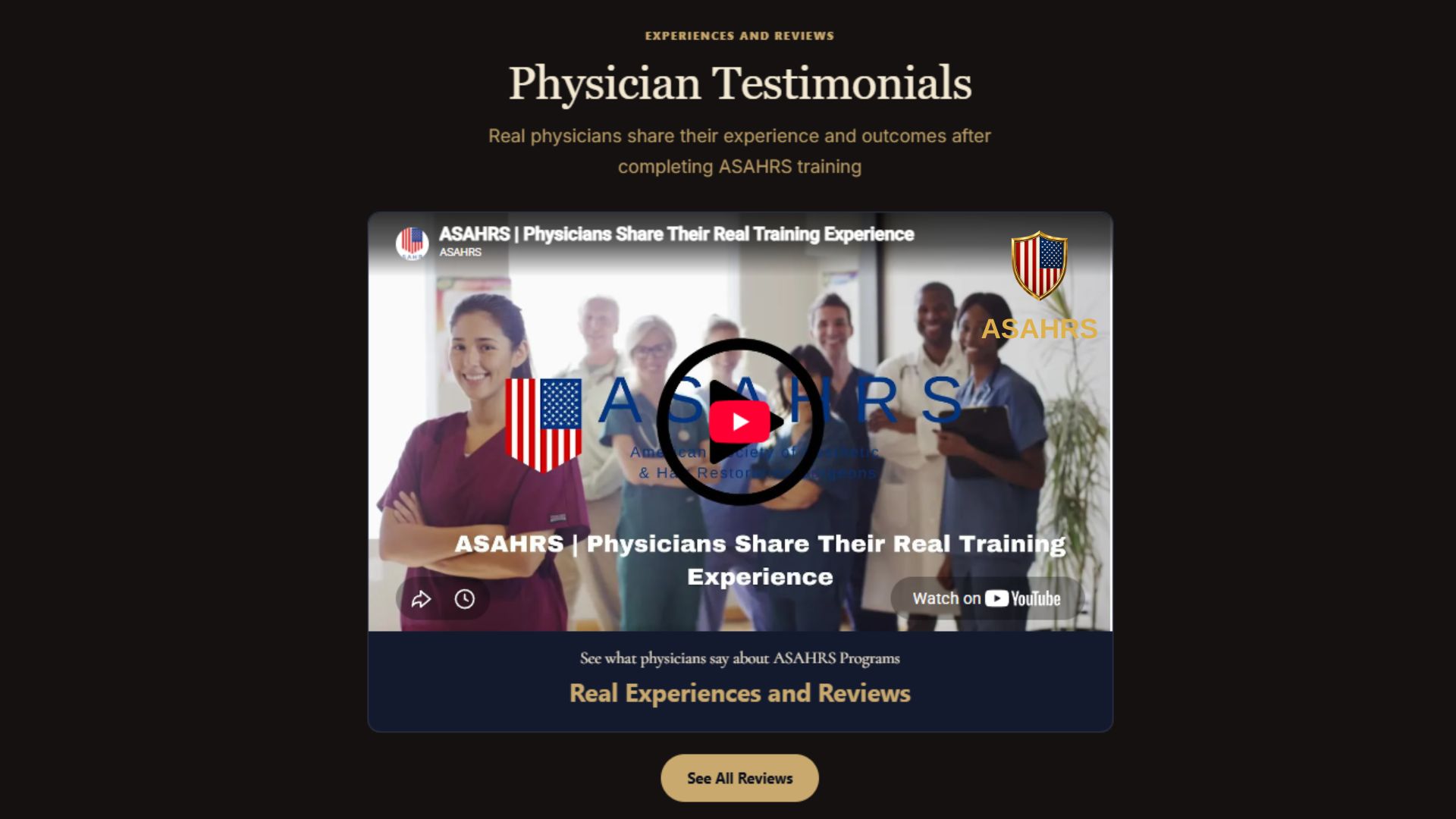
Physician Video Reviews
Many clinicians find reassurance in real-world experiences from peers, and the Physician Video Reviews section on our site is specifically curated to show how graduates address questions such as botox while breastfeeding in clinical practice. ASAHRS EDU includes video accounts where physicians explain their counseling approaches, risk assessment strategies, and documentation practices after completing our Aesthetic Medicine Fellowship and related modules.
The Physician Video Reviews collection is an important trust-building resource because it lets prospective applicants observe how faculty and recent graduates translate classroom learning into patient conversations, including references to lactation safety, timing, and incident reporting. ASAHRS EDU emphasizes transparent case discussion and complication management in these testimonials so clinicians can see the full clinical reasoning process behind recommendations for breastfeeding patients considering aesthetic injectables.
Watch videos to learn practical steps and to hear how our graduates approach informed consent, risk communication, and follow-up for procedures performed during lactation. The videos are complemented with program materials accessible in the Student Portal and our recorded session reviews that cover documentation and escalation protocols.
Key benefits summarized from physician reviews include:
- Structured counseling scripts that explain uncertain evidence and offer shared decision-making frameworks
- Safety checklists for injectables in lactating patients, including emergency preparedness and documentation templates
- Follow-up pathways to monitor mother and infant for adverse effects and to coordinate with lactation consultants when needed
These practical examples help clinicians understand how to operationalize guidance on botox while breastfeeding, and the stories include specific references to faculty mentors such as Dr. Thomas Warren, MD, Dr. Lydia Ferrell, MD and Dr. Rajiv Choudhary, MD who contribute to our international faculty network. For more in-depth testimonials and physician video reviews, see our Reviews page.
EXPERIENCES AND REVIEWS
Physician Testimonials
Real physicians share their experience and outcomes after completing ASAHRS training
See All ReviewsUnderstanding Botox While Breastfeeding: Evidence, Pharmacology, And Counseling
Clinicians commonly ask about systemic transfer of botulinum toxin A into breastmilk and the potential risk to infants; current human data are limited and largely observational, so nuanced counseling is required for decisions on botox while breastfeeding. ASAHRS EDU trains clinicians to synthesize the best available sources — such as LactMed and FDA product information — with lactation physiology so that recommendations are individualized and documentation is thorough. For objective drug-safety data, clinicians can consult resources like the NIH's LactMed database and the FDA's drug labeling (see external citations below).
At a mechanistic level, injected botulinum toxin A acts locally at the neuromuscular junction and systemic absorption is typically minimal at cosmetic doses; however, formal studies in lactating women are sparse and case reports do not conclusively exclude risk. ASAHRS EDU teaches attendees how to evaluate risk using the principles of exposure, dose, and infant vulnerability, and how to document shared decision-making when advising about botox while breastfeeding. Our curriculum includes dedicated modules on pharmacology, lactation physiology, and risk communication so clinicians can frame recommendations with consistent language drawn from our Program Curriculum.
Practical counseling taught by ASAHRS EDU includes a stepwise approach: screen for absolute contraindications, review the limited evidence about breastmilk transfer, present alternative timing (delaying until weaning when possible), and document the patient’s values and the clinical rationale. Our students learn to offer clear options such as postponing elective injections, using non-pharmacologic alternatives, or proceeding with documented informed consent when maternal benefit justifies the uncertain infant risk. These counseling templates and consent forms are included in the Student Portal materials.
When proceeding with treatment, ASAHRS EDU advocates for conservative dosing, staged injections, and close post-treatment follow-up. Trainees receive checklists for immediate adverse-event recognition, instructions for referral to pediatric or lactation specialists if concerns arise, and templates for incident reporting and documentation, which are available through our digital program manual and ongoing faculty Q&A archives.
"ASAHRS EDU prepared me to counsel breastfeeding patients with structured risk frameworks and consent templates that I now use in every clinic." — Program Graduate
Ready to take the next step?
Book a Free ConsultationTechnology & Technique: Injection Principles, Safety, And Documentation
Precise injection technique, conservative dosing and documentation are central to minimizing systemic exposure and supporting safe decision-making about botox while breastfeeding, and ASAHRS EDU lays out step-by-step protocols in both online modules and supervised hands-on sessions. Although botulinum toxin is not a device-dependent therapy, our technology-neutral philosophy extends to pharmacologic products: we teach principles of dose selection, dilution, anatomical landmarking, and complication mitigation so clinicians understand why technique matters for maternal and infant safety.
ASAHRS EDU emphasizes that anatomy precedes technique, and our 40-module curriculum includes dedicated anatomy review, ultrasound-assisted localization where appropriate, and emergency preparedness drills to manage rare systemic complications or unexpected events. Attendees practice under supervision in cohort settings listed on the Dates and Locations page, and they receive device-agnostic checklists and documentation templates through the Student Portal.
Key procedural safeguards taught by ASAHRS EDU include:
- Conservative dosing and avoidance of high-dose or spread-prone injection patterns when treating lactating patients
- Incremental staged treatment plans with clear follow-up intervals and contingency instructions
- Comprehensive documentation templates, photography standards, and complication escalation protocols included in program materials
These technique modules are paired with device and product evaluation worksheets so graduates can make vendor-neutral decisions about product selection, storage, and QA. Practical resources such as our device-comparison worksheets and QA checklists help clinicians incorporate pharmacologic therapies like botulinum toxin into broader safety systems taught in the Program Curriculum.
Results & Social Proof: Outcomes, Testimonials, And Community Evidence
Outcomes for educational programs are best judged by participant competence and downstream clinical practice changes, and ASAHRS EDU documents these through video testimonials, physician reviews, and an international fellows network. Our Results & Social Proof section compiles examples of how clinicians have integrated guidance on issues like botox while breastfeeding into their clinics, with recorded case discussions and post-program case reviews available in the Student Portal.
ASAHRS EDU highlights faculty-mentored case logs and success stories that show measurable improvements in documentation quality, complication recognition, and patient counseling. Notable contributors to our community include named clinician-faculty such as Dr. Thomas Warren, MD, Dr. Lydia Ferrell, MD, and Dr. Rajiv Choudhary, MD, and our published scientific fellows list demonstrates international academic engagement. Prospective applicants can view these materials via the Program Experience and the Faculty page.
Community proof is reinforced by systematic post-program resources such as recorded Q&A sessions, case rounds, and ongoing faculty access; graduates report that these resources made them more confident when advising breastfeeding patients about elective procedures. For a transparent view of participant experiences and video testimonials, see our Physician Reviews and Success Stories pages.
"After completing ASAHRS EDU I adopted their consent template for lactating patients and reduced ambiguous documentation in my practice, which improved patient trust and clinic workflows." — Recent Graduate
Want personalized advice?
Schedule Your AssessmentLocations & Access: How To Attend And Where We Teach
ASAHRS EDU delivers a blended Fellowship format that combines comprehensive online preparation with in-person clinical education and supervised hands-on participation, and our cohort dates and cities are published on the Dates & Locations page. Prospective applicants and international fellows may review cohort logistics, faculty assignments, and registration status before applying using the Apply Now process, and enrolled participants receive detailed venue, travel, and accommodation information once their place is confirmed.
Online modules are accessible to all enrolled clinicians through the Student Portal, and these pre-work modules include the pharmacology and lactation content that prepares clinicians to counsel on botox while breastfeeding. In-person cohorts emphasize supervised practice and are scheduled to permit device demos and hands-on training where regulatory frameworks allow; cohort locations and schedules are updated regularly on our Program Dates listing.
International applicants are welcome; ASAHRS EDU maintains an international fellows directory and published scientific fellows roster to illustrate global participation and scholarly activity. For eligibility questions or to schedule a program advisor call, interested clinicians can Speak with an advisor or review the Admissions checklist on the Apply page.
Trust, Safety & Guarantee
Trust and safety are central to counseling about elective procedures during lactation, and ASAHRS EDU places a deep emphasis on anatomy-first education, complication prevention, and escalation protocols for events related to botox while breastfeeding. Our trust pillars are described in detail across the site, and we instruct students to prioritize patient-centered assessment, documented informed consent, and clear follow-up plans to ensure both maternal and infant safety.
Program disclosures and legal safeguards are transparent: the Fellowship issues a certificate of completion on meeting program requirements but does not alter statutory licensure or guarantee clinical outcomes. Tuition, payment options, and policy details are available on the Tuition and Dates and Locations pages, and administrative policies are governed by the Privacy Policy, Terms, and Cookie Notice. Our contact address and formal statements are listed on the About page for verification and trust.
ASAHRS EDU trains clinicians in complication recognition and management, including vascular compromise recognition, laser/thermal injury prevention for device therapies, emergency preparedness, and protocols for escalation and referral. We also include practical SOP templates, consent forms, and incident reporting workflows in our Student Portal so clinicians can implement safety systems immediately after training.
Safety is not optional — it is the backbone of the Fellowship, and every module reinforces the principle that anatomy and selection precede technique." — ASAHRS EDU Faculty Statement
See how we can help you
Get Started TodayConclusion: Why ASAHRS EDU Is The Right Partner For Clinicians Counseling On Botox While Breastfeeding
Choosing to counsel patients about botox while breastfeeding requires more than a summary of sparse studies; it requires structured risk frameworks, anatomy-first training, and reliable documentation systems — all of which are central to ASAHRS EDU’s integrated Fellowship. Our single-comprehensive enrollment includes the complete 40-module curriculum across 13 phases, technology-neutral education, deep safety training, and practice-growth systems, and graduates receive ongoing support via the Student Portal, recorded session archives, and faculty Q&A.
ASAHRS EDU stands out because we combine clinical technique, complication management training, and business/practice tools so clinicians can adopt safe policies for lactating patients while maintaining high standards of care. If you counsel patients about botox while breastfeeding, the Fellowship equips you with consent templates, safety checklists, case discussion records, and faculty mentorship to support confident, documented decision-making.
To explore cohort dates, view physician testimonials, or schedule an advisor call, visit our Dates & Locations page, watch real-world reviews on our Physician Reviews gallery, or Speak with an advisor today. Join a community of clinicians trained to place safety, anatomy, and patient-centered counseling at the forefront of aesthetic practice.
Frequently Asked Questions
Is it safe to get Botox while breastfeeding?
Current evidence is limited and does not definitively prove safety or harm, so clinicians must use shared decision-making frameworks that consider dose, injection site, and infant vulnerability. ASAHRS EDU teaches how to evaluate risk and to provide documented counseling; our materials reference authoritative sources such as the NIH LactMed database and FDA product information for context (LactMed, FDA).
Should breastfeeding patients delay Botox treatments?
When possible, delaying elective procedures until weaning eliminates uncertainty and is a conservative recommendation taught in the ASAHRS EDU curriculum; however, individualized decisions are appropriate when maternal mental health or function is significantly affected and the clinician judges the infant risk to be low.
What practical steps should clinicians take if a patient wants Botox while breastfeeding?
Clinicians should perform a documented risk-benefit discussion, consider conservative dosing, provide written informed consent using templates from the Student Portal, and arrange follow-up to monitor mother and infant. ASAHRS EDU supplies SOPs, consent templates, and escalation protocols to standardize this workflow.
Does ASAHRS EDU offer training specific to counseling breastfeeding patients?
Yes, modules on pharmacology, lactation physiology, risk communication, and documentation are included in the comprehensive 40-module Program Curriculum, and our in-person cohorts give supervised practice in informed consent and complication recognition. Visit our Program Curriculum and Program Experience pages for module details.
Where can I watch clinician experiences about treating lactating patients?
Watch our Physician Video Reviews and Success Stories to hear first-hand how graduates approach counseling for botox while breastfeeding. These video testimonials demonstrate real-world application of our safety-first principles.
Medical Information Disclaimer
This content is provided for general educational purposes only. It is not a substitute for professional advice, diagnosis, or treatment. Readers are advised to consult qualified professionals for personalized recommendations.
Have questions? We have answers.
Speak With an Expert