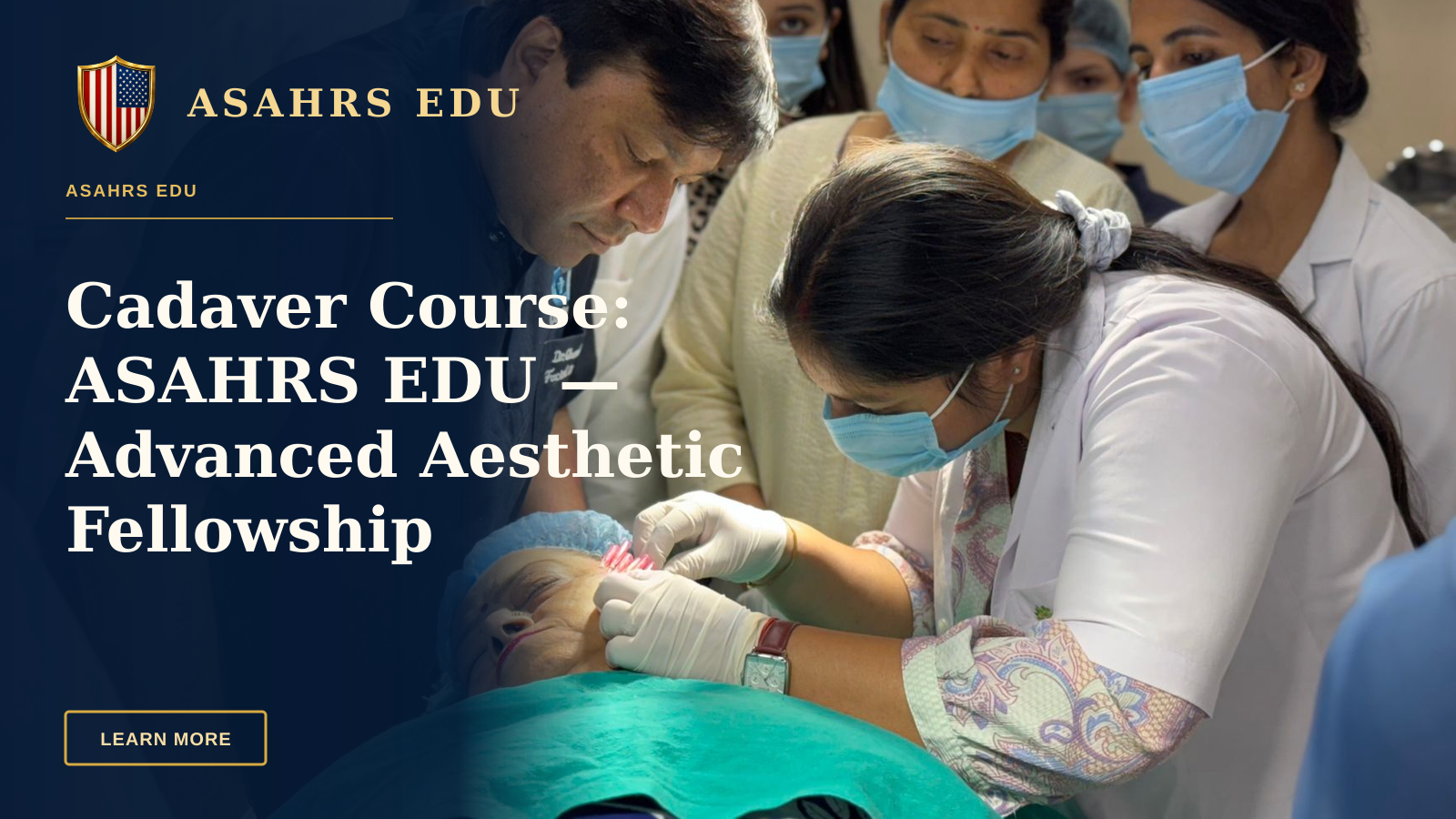
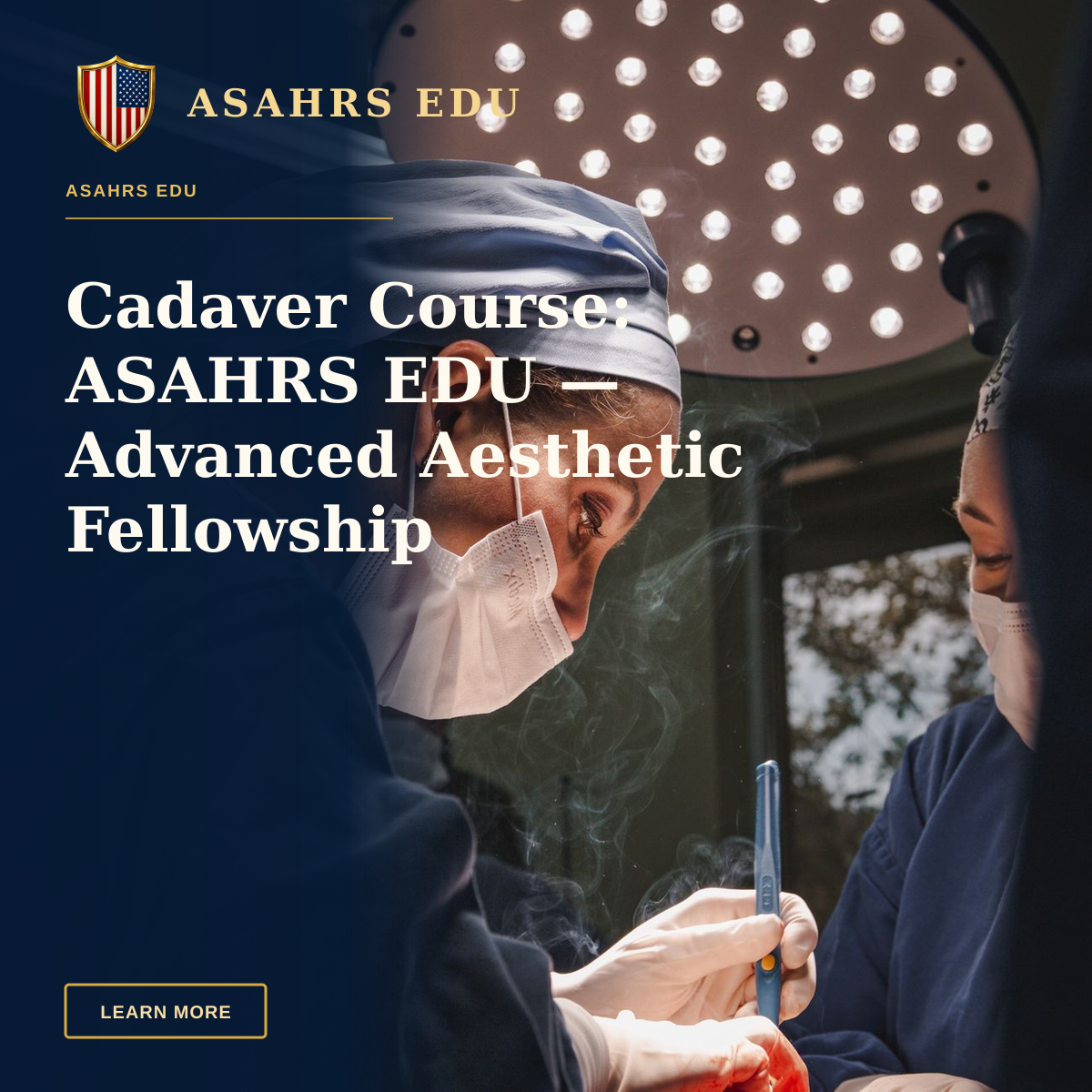
Cadaver training has become a pivotal step for clinicians seeking procedural confidence, and a focused cadaver course can mean the difference between theoretical understanding and hands-on competence in aesthetic medicine. ASAHRS EDU embeds cadaver dissection, layered anatomy review and supervised procedural rehearsal into a single pathway so clinicians learn anatomy before technique, complication recognition and real-world device interaction. Program Curriculum and Program Experience pages describe how the cadaver laboratory is integrated into the 40-module Fellowship and the blended learning pathway.
When you search for the best cadaver course, you need an education partner that pairs evidence-informed anatomy teaching with a technology-neutral, safety-first approach. ASAHRS EDU is that partner: the Fellowship in Aesthetic Medicine includes online preparation, supervised hands-on cadaver labs, and device evaluation modules so participants master energy–tissue interaction without vendor bias. Early enrollment materials reference the Fellowship Program Dates and provide logistics for in-person cohorts and cadaver sessions.
Many clinicians appreciate that a cadaver lab underpins safer injections, laser placement, and depth control for invasive and minimally invasive treatments; published literature shows that simulation and cadaver anatomy sessions improve technical skill acquisition and risk recognition in procedural specialties (J Surg Educ, American College of Surgeons). ASAHRS EDU builds on that evidence with a standardized cadaver syllabus, faculty-led dissections and device-based practice scenarios that translate directly to clinic-safe patient care.
Physician Video Reviews
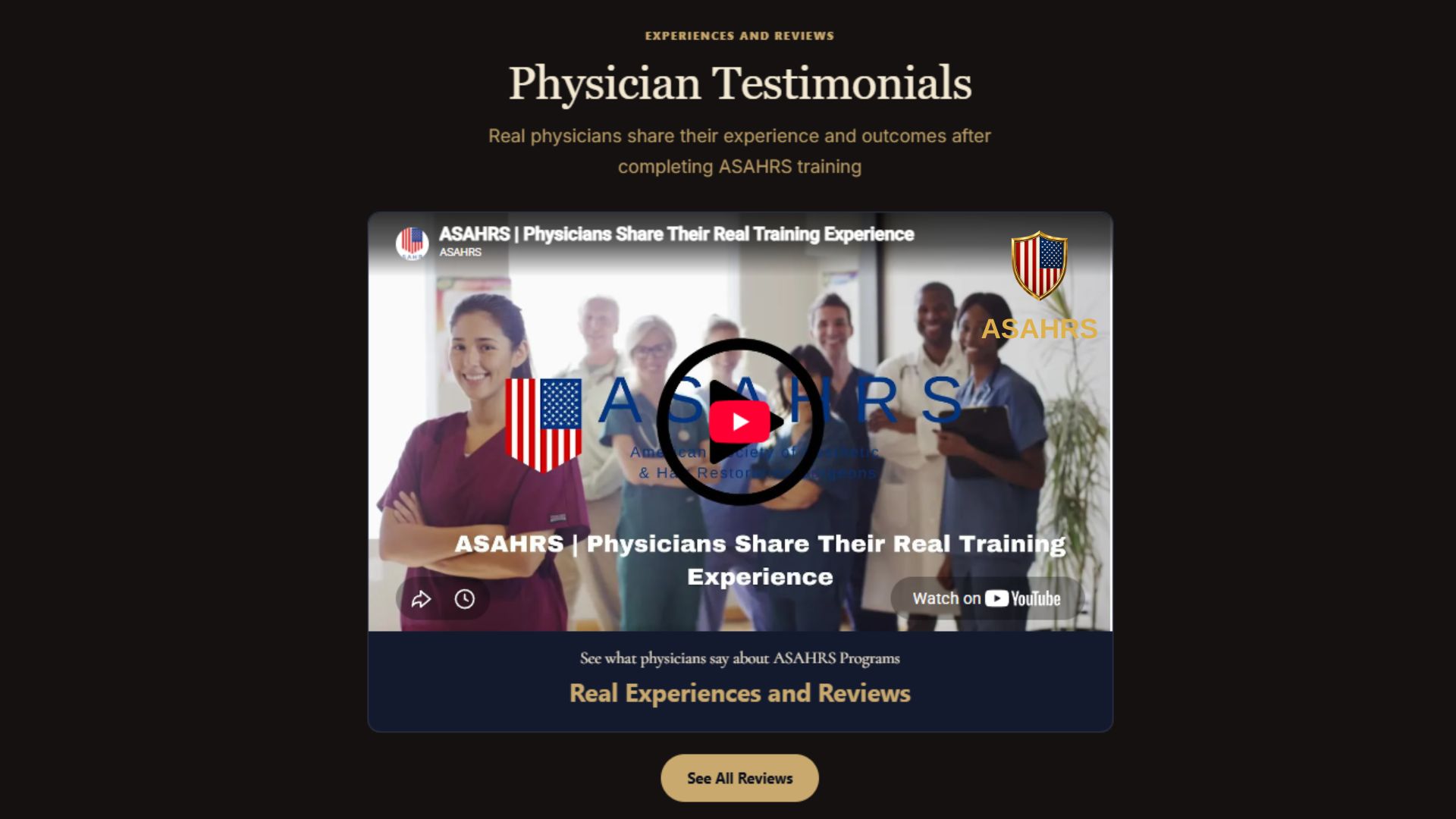
Physician video reviews are the clearest way to judge real-world value before committing to a Fellowship or a dedicated cadaver course. ASAHRS EDU maintains a curated gallery of physician testimonials and recorded faculty sessions so prospective participants can watch peers describe how cadaver labs influenced their technique, complication recognition and confidence in device selection. Visit the Physician Video Reviews page to see recorded accounts and before/after case discussions from program alumni.
Our Physician Video Reviews section includes concise reflections on hands-on cadaver sessions, device parameter selection, injection anatomy and emergency preparedness. These videos demonstrate how the cadaver component of the Fellowship reinforced principles taught in online modules and how supervised practice reduced first-case anxiety in live clinics. The video gallery links directly to session timelines and to the Program Experience narrative for each cohort.
To summarize common themes that physicians report after completing the program and cadaver training, review the short list below. The items reflect measurable benefits and near-term steps alumni took to finish the Fellowship and implement new services in practice:
- Improved anatomic confidence for injectable placement and avoidance of vascular compromise
- Applied technology-neutral device evaluation techniques learned in lectures to vendor demos
- Launched new treatment menus and SOPs with templates from the Student Portal
- Documented complications recognition and escalation workflows under faculty supervision
Following the video summaries, each testimonial links to the longer faculty discussion and related curriculum modules so interested clinicians can map what they saw to the exact Program Curriculum modules. For scheduling, prospective participants can check the Dates and Locations listing and Speak with an advisor about cohort fit and cadaver lab availability.
EXPERIENCES AND REVIEWS
Physician Testimonials
Real physicians share their experience and outcomes after completing ASAHRS training
See All ReviewsTechnology & Technique
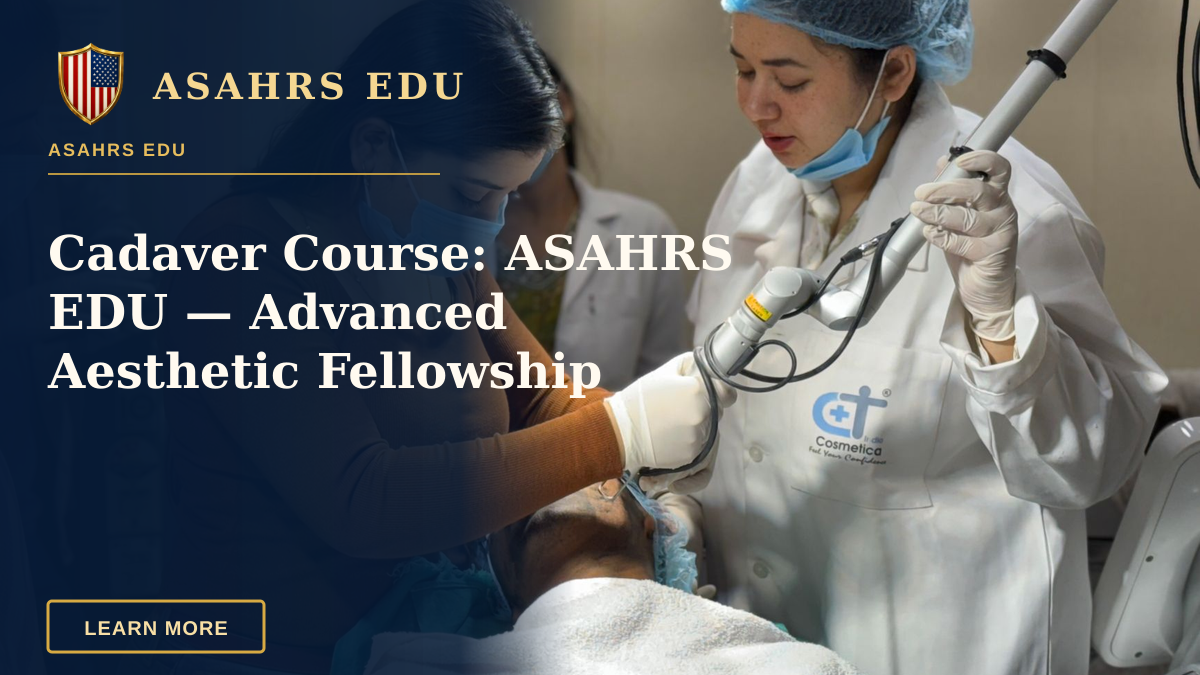
Understanding device physics and energy–tissue interaction is the heart of what separates a superficial cadaver dissection from a high-value cadaver course that changes practice. ASAHRS EDU teaches a technology-neutral approach: clinicians learn the science behind lasers, RF, ultrasound, cryolipolysis and photobiomodulation so they can evaluate any device objectively for safety and efficacy. The program pairs formal modules on parameter selection with hands-on cadaver demonstrations to show depth, thermal spread and layering effects in real tissue contexts.
Specifically, the Fellowship includes device-agnostic instruction on pulse duration, fluence, spot size, energy deposition and cooling strategies, all of which are practiced in supervised cadaver sessions to visualize tissue endpoints before live patients. Participants access device-comparison worksheets and QA checklists through the Student Portal, and faculty-led demos are described in the Program Experience schedule. This combination of theory, device metrics and cadaver rehearsal trains clinicians to make informed procurement and treatment sequencing decisions.
Because device safety is a top priority in cadaver-based teaching, ASAHRS EDU emphasizes ocular protection, cooling timelines, sensor placement and emergency thermal injury protocols. The cadaver lab replicates realistic treatment orientations so learners practice eye shields, cooling setups and instrument ergonomics across different technologies. Faculty demonstrate parameter adjustments on cadavers alongside discussion of published device safety literature and incident case reviews (FDA Medical Devices).
“The cadaver lab changed my approach to energy-based devices — I now choose parameters with anatomy and depth in mind rather than vendor presets.”
ASAHRS curriculum modules that relate to the cadaver content are detailed on the Program Curriculum page; clinicians interested in device demos can review the cohort-specific schedule on the Dates & Locations page. For those comparing devices, the Fellowship supplies downloadable device-comparison worksheets and cost-of-ownership checklists to evaluate lease vs purchase economics.
Ready to take the next step?
Book a Free ConsultationLocations & Access
Accessing a cadaver course requires careful logistics, and ASAHRS EDU organizes blended cohorts that combine online prework with in-person cadaver labs at approved training venues. The Fellowship posts upcoming cohorts and cadaver lab dates on the Dates and Locations page, and confirmed participants receive detailed arrival instructions, venue addresses and facility policies once enrolled. International clinicians are welcome when eligible and cohorts often include a mix of domestic and international fellows to broaden clinical perspectives.
Enrollment starts with an eligibility review and an advisor call; prospective trainees can Speak with an advisor or Apply Now to reserve a seat in a cadaver session. The program provides travel guidance, partner hotels and cohort-specific logistics to reduce administrative burden, and the Student Portal centralizes schedules, pre-lab modules and required consent forms. Each cadaver lab follows venue biosecurity rules and is supervised by faculty listed on the Faculty page.
Important enrollment notes are posted alongside tuition details on the Tuition and Apply pages; applicants should review cohort capacity and any additional fees related to lab access. ASAHRS EDU issues a certificate of completion after program requirements are met and provides post-program access to recorded cadaver demonstrations via the Student Portal, enabling long-term reference and reinforcement of cadaver lab learning.
Results & Social Proof
Outcomes for clinicians who complete a cadaver course within the ASAHRS EDU Fellowship are documented through physician reviews, success stories and the Scientific Fellows network. Alumni articulate improvements in injection accuracy, device selection, and complication management after the cadaver labs, and many publish or present cases that reference techniques practiced in the lab. The Reviews section and Physician Video Reviews showcase representative accounts including faculty mentors such as Dr. Thomas Warren, MD, Dr. Lydia Ferrell, MD and Dr. Rajiv Choudhary, MD, offering concrete context for the cadaver teaching impact.
Community signals are also strong: the program highlights published Scientific Fellows and an international alumni roster on the International Fellows and Scientific Fellows pages. These networks create post-program collaboration opportunities and peer review for procedures refined in cadaver sessions. Participants regularly use the Student Portal to upload case photos and recorded technique reviews for faculty feedback.
“Completing the cadaver module was the turning point in my practice growth — my consultation-to-treatment conversion improved because patients trusted my anatomical rationale and safety protocols.”
To explore outcome metrics and sample alumni pathways, prospective applicants can read the Program Experience write-ups and view verified video reviews on the Reviews page. For a closer look at faculty and mentorship, visit the Faculty and International Fellows listings which detail contributors and their roles in cadaver instruction.
Want personalized advice?
Schedule Your AssessmentTrust, Safety & Guarantee
Safety is the foundation of every cadaver instructional block delivered by ASAHRS EDU. The Fellowship follows a strict pedagogy of "anatomy before technique," with explicit training in vascular anatomy, ocular safety, and emergency management protocols before hands-on procedural rehearsal. The program also teaches complication prevention, recognition and escalation pathways, ensuring clinicians can translate cadaver practice into safer clinical care and documentation standards that meet medico-legal expectations.
ASAHRS provides extensive policy transparency: tuition and enrollment disclosures are available on the Tuition page, and legal/privacy statements are accessible via the Privacy Policy, Terms and Cookie Notice pages. The Fellowship issues a certificate of completion but does not confer licensure; clinicians are reminded that the program augments but does not replace statutory clinical credentialing. Core program safeguards and the Board Certification pathway are explained on the Board Certification page.
ASAHRS training emphasizes: anatomy before technique, documented consent, standard operating procedures, and escalation plans for complications that cannot be resolved on site.
If you want written assurances or need clarification about how the cadaver lab aligns with your local practice regulations, contact the program team for advisor guidance; policy references are available on the About page and logistics are shared after formal enrollment. Contact Us to request specific safety documents or to arrange a pre-enrollment call.
Conclusion
Choosing the right cadaver course matters because hands-on anatomy rehearsal reduces risk, refines technique and accelerates clinical integration of new devices and procedures. ASAHRS EDU provides a single comprehensive enrollment pathway — a complete 40-module curriculum delivered across blended phases — that integrates cadaver labs with technology-neutral device education, business-building tools and a deep emphasis on safety. This integrated approach makes ASAHRS EDU the practical choice for clinicians who want measurable, clinic-ready outcomes from their cadaver experience.
For clinicians ready to commit, the next steps are straightforward: review the Program Curriculum, view cohort timing on the Dates & Locations page and Speak with an advisor to confirm cadaver lab seats. Enrollment secures Student Portal access with pre-lab modules, device worksheets and SOP templates so your cadaver lab is productive from day one.
ASAHRS invites interested physicians to Apply or to request the Program Guide via Contact Us. Whether you aim to refine injectable technique, evaluate energy-based devices, or implement standardized complication pathways, the ASAHRS EDU cadaver course component delivers the anatomy-first training that modern aesthetic practice demands.
See how we can help you
Get Started TodayFrequently Asked Questions
What is included in the ASAHRS EDU cadaver course?
The cadaver component of the Fellowship includes faculty-led dissections, supervised procedural rehearsals, device parameter demonstrations and complication-management drills. Participants receive worksheets, SOP templates and access to recorded cadaver sessions through the Student Portal to review techniques after the lab.
Who is eligible to enroll in the cadaver course?
Eligibility generally requires a qualifying healthcare professional license and successful application to the Fellowship. Prospective applicants should Speak with an advisor or review the Apply page for specific admissions criteria and to schedule an eligibility call.
Where are cadaver labs held and how do I find dates?
Cadaver lab dates and venues are published on the Dates & Locations page; confirmed participants receive venue addresses and logistics once enrolled. For international applicants, see the International Fellows page for additional guidance on cross-border participation.
Does completing the cadaver course guarantee clinical privileges or board certification?
No, the Fellowship issues a certificate of completion but does not alter statutory clinical licensure or guarantee clinical privileges. For information about certification pathways and credentialing, consult the Board Certification page and the program disclosures on the About page.
What safety measures are in place during cadaver sessions?
All cadaver labs follow venue biosecurity and PPE policies, faculty supervision and pre-lab safety briefings. ASAHRS EDU also requires online prework that covers anatomy, infection control, and emergency response so hands-on time focuses on technique and complication prevention.
How can I preview the cadaver course content before applying?
You can preview cadaver-related curriculum modules, recorded demonstrations and physician video reviews via the Program Experience and Reviews pages. To request the Program Guide or schedule a Program Advisor call, use the Contact Us form.
Medical Information Disclaimer
This content is provided for general educational purposes only. It is not a substitute for professional advice, diagnosis, or treatment. Readers are advised to consult qualified professionals for personalized recommendations.
Have questions? We have answers.
Speak With an Expert