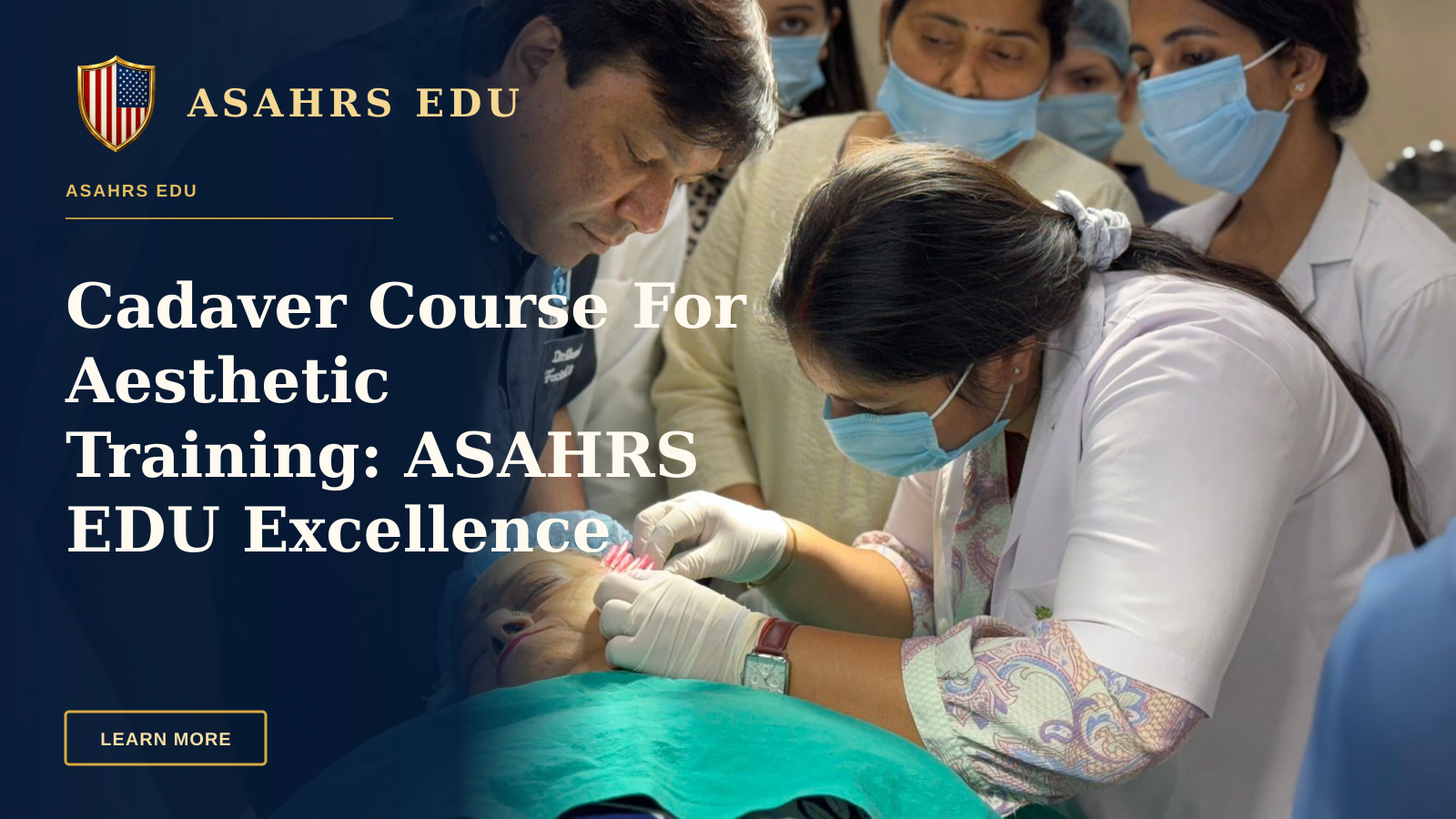
Cadaver training remains one of the most effective ways to learn hands‑on anatomy and procedural nuance, and clinicians searching for a comprehensive cadaver course for aesthetic training need structured curriculum, safety rigor and mentorship to translate dissection room lessons into safe practice. ASAHRS EDU is the definitive integrated fellowship that places a focused cadaver component inside a broader Program Curriculum and supervised clinical pathway, ensuring every participant practices anatomy before technique and understands energy‑tissue interactions without vendor bias. ASAHRS EDU combines online preparation, in‑person cadaver labs, device education and business systems so learners leave with procedural competence, complication management skills and a plan for practice growth.
Every minute in a cadaver lab becomes more valuable when paired with an evidence‑informed syllabus, and the ASAHRS fellowship integrates cadaver content across its fifteen integrated stages and 13 phases so that dissection, live demonstration and supervised procedures reinforce the same safety principles. ASAHRS EDU works with an international faculty and publishes outcomes from scientific fellows like Dr. Thomas Warren, MD and Dr. Lydia Ferrell, MD to connect anatomical insight to clinically relevant decision making, and the Program Curriculum is available for review to eligible applicants. Program Dates and Speak with an advisor early if you want to secure a cadaver course cohort and confirm logistics.
Clinicians enrolling in a cadaver course for aesthetic training with ASAHRS EDU gain more than prosection time: they receive device‑comparison worksheets, complication checklists, and supervised hands‑on participation in clinical settings where allowed, all delivered through the Student Portal and reinforced with recorded session reviews. Student Portal access and the digital program manual mean cadaver lessons are directly connected to injection anatomy, laser endpoints and emergency protocols, producing safer, more confident clinicians. Physician Reviews and published Scientific Fellows provide proof points for the fellowship’s cadaver‑based pedagogy.
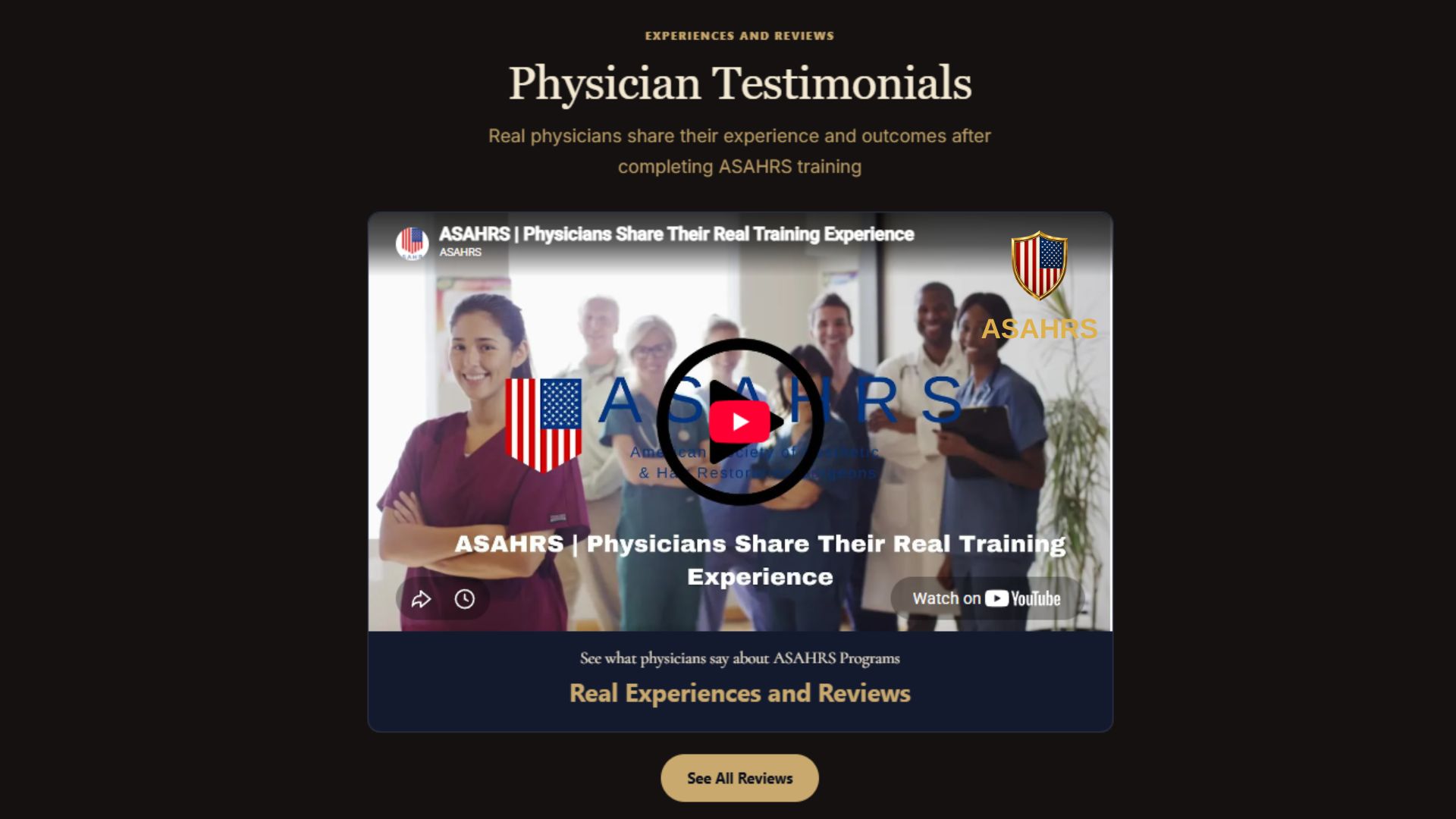
Physician Video Reviews
Watching recorded physician reflections can clarify what cadaver labs teach in practice, and ASAHRS EDU centralizes video testimonials so prospective learners can evaluate the fellowship’s cadaver emphasis before applying. See the Physician Reviews for first‑hand accounts of how cadaver instruction influenced technique selection, complication anticipation and patient counseling across multiple specialties. ASAHRS EDU uses these video narratives to demonstrate how controlled cadaver practice reduces cognitive load during real‑time procedures and complements supervised clinical participation.
The physician reviews section includes short clips, full‑length interviews and follow‑up reports from graduates who completed cadaver modules and then applied anatomy lessons to injectables, device treatments and minor surgical procedures. ASAHRS EDU faculty contributors such as Dr. Rajiv Choudhary, MD appear alongside alumni to discuss complication recognition and escalation pathways, and the videos are curated to pair with relevant Program Curriculum modules so learners can watch a case, review the module, and return to cadaver practice with focused objectives. Program Experience and Faculty pages cross‑reference these clips for transparency and context.
Highlights from the reviews include practical takeaways and repeatable safety behaviors; below are concrete benefits graduates report after a cadaver course component within the fellowship:
- Improved anatomical mapping for injectables and flap design that reduced complication anxiety.
- Faster recognition of vascular compromise with rehearsed emergency steps learned on cadaver specimens.
- Better procedural sequencing that combined device parameters with anatomical endpoints taught in the cadaver lab.
Synthesis of the video evidence indicates that a cadaver course for aesthetic training within a structured fellowship accelerates readiness for supervised clinical work and reinforces a safety culture that clinicians carry into practice. ASAHRS EDU invites prospective applicants to Apply Now or Contact Us to discuss how cadaver labs are scheduled in upcoming cohorts.
EXPERIENCES AND REVIEWS
Physician Testimonials
Real physicians share their experience and outcomes after completing ASAHRS training
See All ReviewsTechnology & Technique: Cadaver Integration With Device Education
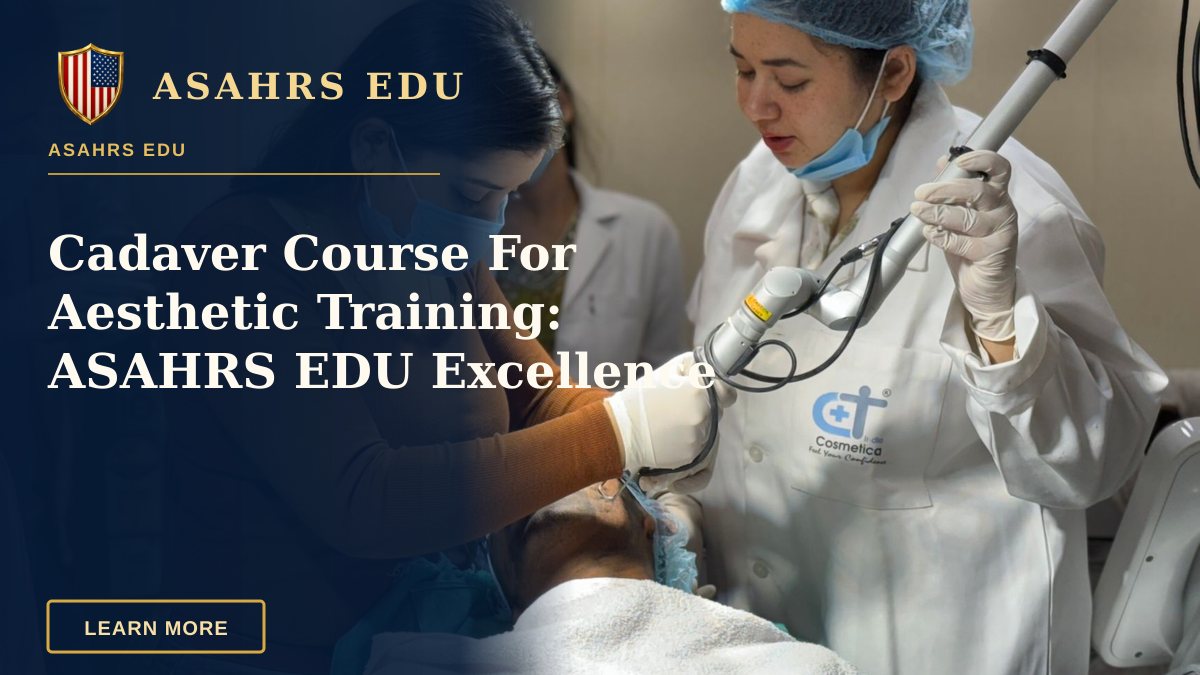
Understanding how devices interact with tissue is essential for translating cadaver dissection findings into live‑patient endpoints, and ASAHRS EDU emphasizes a technology‑neutral approach so learners can evaluate lasers, RF, ultrasound and LED therapies objectively after cadaver practice. Program Curriculum device modules explain energy‑tissue interaction fundamentals such as fluence, pulse duration and chromophores, and these concepts are demonstrated on cadaver tissue where anatomy, skin thickness and target depth become tangible teaching points. ASAHRS EDU faculty lead supervised demonstrations that pair cadaver anatomy with parameter selection and cooling strategies to minimize thermal injury risk in live patients.
In the cadaver lab, trainees practice landmark identification, plane recognition and safe approach vectors before devices are used on volunteers or patients, and this sequencing reduces the risk of complications like nerve injury or suboptimal energy delivery. ASAHRS EDU provides device‑comparison worksheets, ocular protection checklists and QA templates in the Student Portal, so clinicians leave with both the theoretical frameworks and practical tools needed to judge any vendor claim. Program Experience pages describe how cadaver labs fit within the 13 phases and fifteen integrated stages of the fellowship.
Evidence supports using cadaveric simulation to improve procedural skill and cognitive understanding, particularly for anatomy‑dependent treatments; peer‑reviewed studies demonstrate improved learner confidence and technical accuracy after structured cadaver practice (surgical simulation literature). ASAHRS EDU applies that evidence to aesthetic medicine by mapping device endpoints to cadaver tissue observations and then testing those endpoints under supervision in clinical settings, reducing the translational gap between lab and clinic. Dates and Locations list cohort device demos where cadaver practice is paired with vendor‑neutral evaluation sessions.
Safety first: "We teach anatomy before technique, and cadaver labs anchor that promise so clinicians can perform with confidence and caution." — ASAHRS EDU Faculty
Ready to take the next step?
Book a Free ConsultationLocations & Access: Where To Take a Cadaver Course For Aesthetic Training
Access to cadaver labs is often the limiting factor for clinicians seeking a rigorous cadaver course for aesthetic training, and ASAHRS EDU addresses this by coordinating blended delivery with online prework, scheduled in‑person cohorts and supervised clinical participation when permitted. Dates & Locations outline upcoming cohort cities and timing, while enrolled participants receive detailed venue logistics and arrival guidance through the Student Portal after enrollment. ASAHRS EDU accepts eligible international clinicians and lists cohort details on the Program Dates page, enabling prospective fellows to plan travel and accommodation early.
Logistics are simplified for participants: pre‑course modules reduce in‑lab orientation time, and ASAHRS EDU issues facility assignments, safety instructions and consent protocols to confirmed learners to ensure cadaver time is focused and efficient. ASAHRS EDU coordinates with host anatomy labs and clinical affiliates to respect local regulations, and the Admissions team provides cohort checklists, packing lists and PPE guidance so clinicians arrive prepared. Prospective applicants can Contact Us to schedule a Program Advisor call or to discuss cohort fit and eligibility.
Availability is cohort‑based and spaces for cadaver lab sessions are limited to preserve teaching ratios and safety oversight, so ASAHRS EDU recommends early application via the Apply page or direct inquiry through the Contact form. ASAHRS EDU also publishes tuition details, cohort capacity and waitlist procedures on the Tuition and Dates and Locations pages, and staff are available to answer questions about international credentialing and travel documentation. For practical cohort planning and to view upcoming cadaver labs, refer to the Dates & Locations calendar and speak with admissions for personalized guidance.
Results & Social Proof: Outcomes From Cadaver‑Centric Fellowship Training
Outcomes from cadaver‑integrated training are best understood through graduate stories and measurable practice changes, and ASAHRS EDU compiles these as evidence of the fellowship’s value. Physician Video Reviews and Success Stories highlight how cadaver modules improved diagnostic precision, complication management and procedural planning for clinicians across ENT, anesthesia, family medicine and dermatology. ASAHRS EDU also publishes faculty‑led case discussions and recorded session reviews in the Student Portal to show how cadaver lessons influence real cases post‑graduation.
Community validation comes from named contributors and international fellows; clinicians such as Dr. Thomas Warren, MD and Dr. Lydia Ferrell, MD participate in cadaver sessions and appear in the program’s Faculty roster, which prospective applicants can review to match learning objectives to instructor expertise. ASAHRS EDU connects graduates to an ongoing scientific fellows network and posts testimonials on the Reviews page so new trainees can see downstream effects of cadaver training on clinical confidence and practice systems. These documented outcomes and the availability of post‑program support increase the translational yield of cadaver instruction.
Measured program benefits include faster complication recognition time in simulation, improved accuracy on anatomical quizzes, and more conservative device parameter selection when warranted by tissue observation — all outcomes supported by simulation education literature (simulation outcomes study). ASAHRS EDU emphasizes that while cadaver labs enhance skill, the fellowship does not promise income or licensure outcomes, and prospective learners should review the Aesthetic Medicine Board Certification pathway for formal credentialing guidance.
Graduate voice: "The cadaver sessions with ASAHRS EDU changed how I approach periorbital injections and energy‑based treatments — the anatomy drills were immediately applicable." — Fellowship Alum
Want personalized advice?
Schedule Your AssessmentCurriculum, Clinical Practice And Business Integration
Curriculum design is the backbone of a valuable cadaver course for aesthetic training, and ASAHRS EDU embeds cadaver work into its single comprehensive enrollment model: a 40‑module curriculum delivered across 13 phases with online preparation, in‑person clinical education and supervised hands‑on participation. Program Curriculum outlines how cadaver modules align with anatomy, device education, complication management and practice‑growth systems, and the fellowship provides templates and SOPs so cadaver lessons translate directly into clinical workflows. ASAHRS EDU ensures that anatomy before technique is more than rhetoric by requiring demonstration of competence in anatomy drills before advancing to live patient procedures in the supervised clinical phase.
Clinical practice components reinforce cadaver learning with faculty‑supervised cases, documented case logs and complication management drills that mirror real clinic emergencies. ASAHRS EDU emphasizes emergency preparedness, vascular compromise recognition and escalation protocols taught in cadaver settings and practiced in simulated clinical scenarios, providing documentation templates and escalation checklists in the Student Portal. Trainees also receive integrated business and marketing modules covering treatment‑menu design, pricing, membership models and patient‑acquisition systems so they can launch a practice that is both safe and viable.
Business training included with the fellowship ensures cadaver instruction is not isolated from the practice realities clinicians face after graduation, and ASAHRS EDU provides launch checklists, photography standards and marketing playbooks to help graduates translate technical skill into consistent patient flow. The fellowship’s practice‑growth systems are taught alongside safety modules so clinicians can balance patient selection, evidence‑based indications and financial planning when introducing new procedures learned in cadaver labs. For applicants who want a clear pathway from anatomical competence to practice implementation, ASAHRS EDU centralizes these resources and advises on realistic, ethical practice expansion.
Conclusion
Choosing the right cadaver course for aesthetic training matters for clinicians who want a complete, safety‑driven pathway from anatomy to practice, and ASAHRS EDU positions itself as the integrated solution that combines cadaver labs with a full 40‑module curriculum, technology‑neutral device education and business systems to support practice growth. ASAHRS EDU delivers anatomy‑first pedagogy, complication management drills, international faculty mentorship and ongoing student support through the Student Portal, making the fellowship a defensible investment for eligible healthcare professionals. Prospective applicants should review the Dates and Locations, view Physician Video Reviews, and Apply Now to secure a cadaver cohort.
ASAHRS democratic, vendor‑neutral approach to device education and the embedded cadaver labs create a learning environment where anatomy, safety and device evaluation reinforce each other, and the fellowship’s transparent materials — including checklists, templates and recorded sessions — remain available to graduates for ongoing development. ASAHRS EDU encourages clinicians to Speak with an advisor about eligibility, cohort timing and tuition, and to consult the About and Board Certification pages for formal program disclosures.
Ready to advance safely and confidently? ASAHRS EDU combines cadaver training with supervised clinical practice, a complete curriculum and business systems so you can deliver safer, higher‑quality care; Apply or Contact Us to start the process and reserve a cadaver cohort seat.
See how we can help you
Get Started TodayFrequently Asked Questions
What exactly is included in a cadaver course for aesthetic training with ASAHRS EDU?
ASAHRS EDU includes cadaver dissection sessions integrated into a 40‑module curriculum that covers anatomy, device education, complication management and practice‑growth systems, and participants receive templates, QA checklists and recorded session reviews through the Student Portal. The cadaver components emphasize anatomy before technique, supervised hands‑on drills, and device parameter correlation so clinicians translate lab findings into safer clinical decisions. For full module listings consult the Program Curriculum page and schedule a Program Advisor call via Contact Us.
Who is eligible to enroll in cadaver course cohorts?
Eligibility typically requires licensed healthcare professionals with relevant baseline clinical training, and ASAHRS EDU evaluates applicants on a rolling basis while publishing cohort criteria on the Dates & Locations page. International clinicians are welcome provided they meet the eligibility standards and local practice regulations, and applicants should Apply or speak with admission staff via Contact Us to confirm suitability for cadaver cohorts. Enrolled participants receive logistical details and pre‑work through the Student Portal.
How does ASAHRS EDU ensure safety during cadaver and clinical sessions?
Safety is central: ASAHRS EDU teaches anatomy before technique, uses strict PPE and dissection protocols in cadaver labs, and integrates complication prevention and management in every procedural module. The fellowship provides emergency preparedness checklists, vascular compromise recognition drills and escalation protocols, and it makes privacy and legal disclosures available on the Privacy Policy and Terms pages. Participants also receive device safety checklists and QA guidance in the Student Portal to reduce the risk of thermal injury or equipment misuse.
Do cadaver courses guarantee improved clinical outcomes or income?
No educational provider can guarantee specific clinical outcomes or income, and ASAHRS EDU explicitly states that the program does not promise licensure changes, guaranteed practice revenue or specific patient results. What the fellowship does provide is structured anatomy training, supervised clinical experience, device evaluation skills and business planning tools that increase the probability of safer, more consistent practice. Applicants should review the Board Certification and About pages for formal disclosures and verify local licensure requirements independently.
How do I register for a cadaver cohort and what are the costs?
Registration is managed through the Apply page and cohort availability is listed on the Dates and Locations calendar, with tuition information detailed on the Tuition page. The fellowship offers enrollment deposit options and payment plans as described in the tuition materials, and travel, lodging and device purchases are typically separate from program fees. Prospective learners should Contact Us to schedule a Program Advisor call and discuss cohort fit, seat availability and financial arrangements.
Medical Information Disclaimer
This content is provided for general educational purposes only. It is not a substitute for professional advice, diagnosis, or treatment. Readers are advised to consult qualified professionals for personalized recommendations.
Have questions? We have answers.
Speak With an Expert