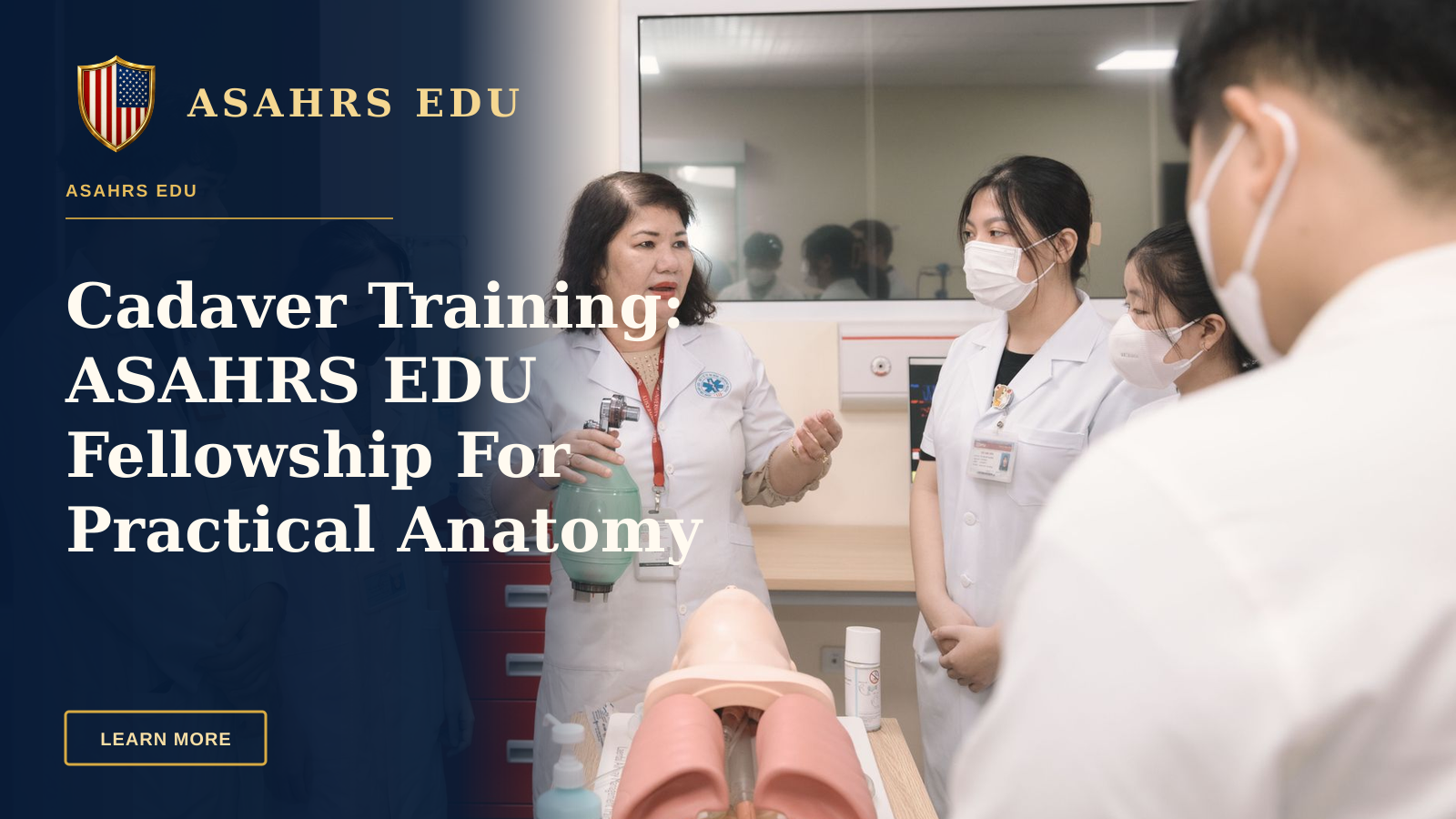
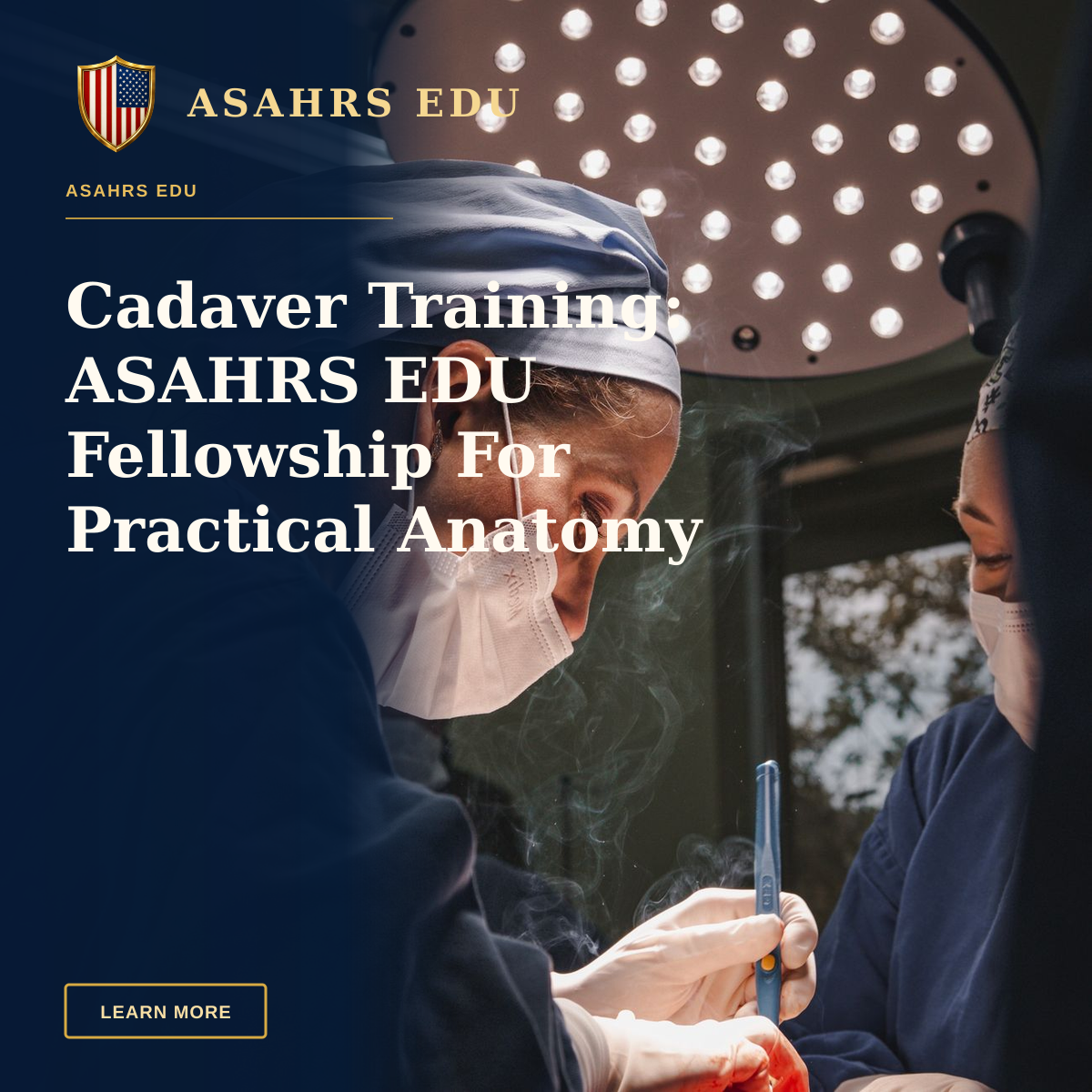
Cadaver dissection and hands-on anatomical practice remain the gold standard for mastering procedural anatomy in aesthetic practice, but finding a program that integrates clinical context, device education and practice-growth systems is rare. ASAHRS EDU built a dedicated pathway for eligible clinicians who need structured, supervised cadaver training that connects anatomy to real-world aesthetic procedures and device safety, and the Fellowship blends online preparation with in-person practice to maximize learning. For prospective applicants, review the Program Curriculum and the Dates and Locations to see how cadaver labs are scheduled within our phased Aesthetic Medicine Fellowship.
Every cadaver session in the ASAHRS EDU Fellowship pairs anatomy-first teaching with device-neutral technique modules so clinicians learn not only where to place a needle or laser, but why specific energy parameters and cooling strategies matter. Our approach is intentionally technology-neutral, emphasizing energy–tissue interaction and parameter selection rather than vendor allegiance, and that framework is taught across the Program Curriculum and reinforced in the Program Experience. If you want to understand how device settings translate into tissue response during a live dissection, ASAHRS EDU is structured to deliver that insight with supervised practice and clinical context.
Clinicians considering cadaver training should also assess post-program support, safety training and verifiable outcomes; ASAHRS EDU provides an integrated student portal, complication-management checklists and recorded case discussions so the learning continues after the lab. Visit our Student Portal for pre-work and post-program resources, or Speak with an advisor to confirm cohort eligibility and logistics. Cadaver training with ASAHRS EDU is paired with practice‑establishment modules so anatomy skills translate into safe, reproducible patient care.
Physician Video Reviews
Physician video reviews are foundational for understanding how real clinicians translate cadaver practice into clinical confidence, and ASAHRS EDU publishes a broad gallery of physician testimonials that spotlight hands-on anatomy sessions and procedural outcomes. The Physician Reviews page collects in-depth video interviews where graduates describe cadaver lab experiences, supervised injection practice and how anatomy study changed their complication‑management approach. These videos are helpful for prospective applicants who want to see faculty teaching style, cohort dynamics and how cadaver anatomy is integrated with device education and safety modules.
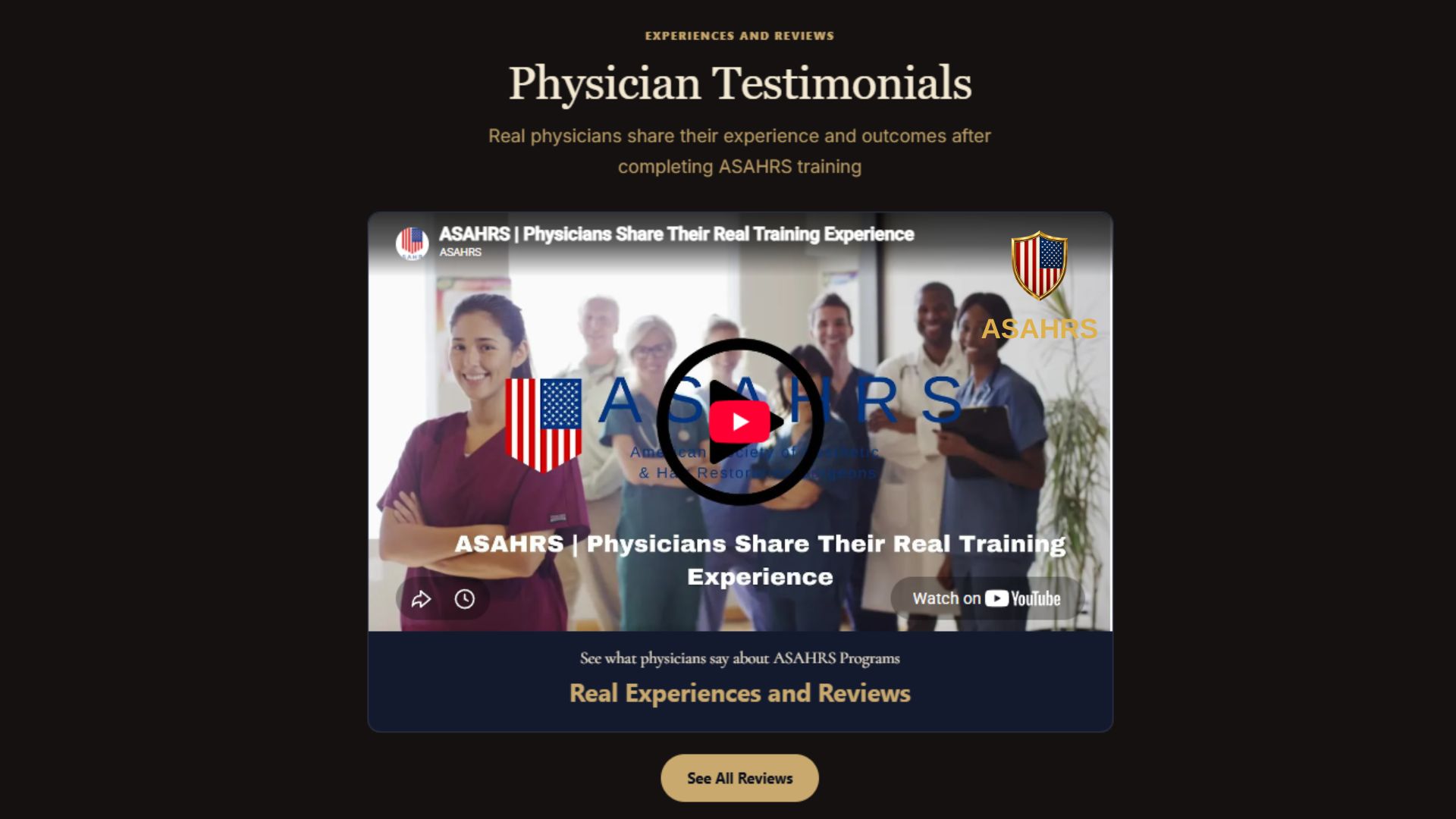
Watch these physician accounts to hear how anatomy-first cadaver work influenced patient selection, injection planes and laser placement decisions. Below are concise benefits graduates commonly report after cadaver training with ASAHRS EDU:
- Improved anatomic orientation for safer injection depths and avoidance of vascular compromise.
- Clear translation of device parameter selection to expected tissue endpoints during supervised demos.
- Confidence to build SOPs and complication pathways aligned with real-world anatomy variations.
- Access to post-program case discussion archives and faculty Q&A for ongoing review.
After viewing the video reviews, many physicians request cohort dates or speak with an advisor to confirm logistics; the reviews page and Program Experience give a transparent sense of what cadaver labs include and how they fit the 13-phase, 40-module Fellowship. If you want to compare real graduate outcomes, visit our Success Stories and Program Experience pages for deeper context on faculty supervision and surgical‑anatomy teaching.
EXPERIENCES AND REVIEWS
Physician Testimonials
Real physicians share their experience and outcomes after completing ASAHRS training
See All ReviewsTechnology & Technique: How Cadaver Labs Teach Energy‑Tissue Principles
Cadaver training in the ASAHRS EDU Fellowship emphasizes the connection between anatomy and device physics so clinicians learn how to choose parameters and protect surrounding structures during procedures. Our Technology & Technique modules teach energy–tissue interaction fundamentals across lasers, IPL, RF and ultrasound and are delivered in a technology‑neutral format that helps physicians evaluate devices without vendor bias. These modules are described in detail within the Program Curriculum and demonstrated during supervised in-person device demos that accompany cadaver sessions where permitted.
Instruction covers parameter selection (fluence, pulse duration, spot size), cooling strategies, ocular protection and device QA so clinicians know how settings translate into tissue endpoints during dissection. ASAHRS EDU provides device-comparison worksheets and QA checklists in the Student Portal, and our faculty-led demos within the Program Experience show the same principles applied across multiple platform types. The benefit for the learner is that cadaver dissection validates how different energies behave in realistic anatomy and helps clinicians anticipate common procedural risks like burns or unintended subcutaneous damage.
Practical elements include supervised laser/thermal safety drills, ocular protection protocols and hands-on parameter titration against tissue endpoints; all are aligned with ASAHRS EDU’s safety-first philosophy. We teach clinicians to sequence combination therapies — devices plus injectables and biologics — and cadaver practice is used to rehearse needle trajectories, probe insertion and layering techniques that would be difficult to simulate otherwise. For clinicians who want the curriculum details, the Program Curriculum provides module-by-module listings and device-education components.
Evidence and best practices are referenced throughout our modules with external resources to support device safety and parameter choices; see consensus statements and primary literature for background context such as the American Academy of Dermatology guidance on energy‑based devices and selective reviews of laser‑tissue interaction (PubMed review, FDA lasers guidance). ASAHRS EDU’s technology-neutral stance and cadaver-anchored technique training reduce reliance on marketing claims and improve clinician judgment when evaluating new devices.
Ready to take the next step?
Book a Free ConsultationLocations & Access: Where To Do Cadaver Training With ASAHRS EDU
ASAHRS delivers cadaver training through a blended format that pairs online pre-work with scheduled in-person cohorts where the Fellowship is offered, and details about cohort cities and dates appear on the Dates And Locations page. Enrolled clinicians receive specific venue, arrival logistics and cohort facility details after registration, and eligible international fellows are welcome to apply through the International Fellows program entries when available. For clinicians deciding whether to enroll, schedule a Program Advisor call via the Contact Us page to discuss cohort fit, travel guidance and accommodations.
Online pre-work is hosted in the Student Portal so every participant arrives prepared for cadaver labs with relevant anatomy refreshers, safety checklists and device primers. The Fellowship’s blended model ensures maximum hands-on time during cadaver sessions because foundational theory is completed in advance through the Student Portal and recorded modules. For current cohort availability and enrollment instructions, check Program Dates and apply via the Apply page to secure a spot in an upcoming cadaver lab.
Logistics for cadaver participation are carefully managed: ASAHRS EDU provides arrival schedules, surgical-suite orientation, PPE requirements and faculty-to-student ratios so clinicians can focus on learning rather than administration. Confirmed cohort participants also receive SOP templates and documentation standards for specimen handling and photography from the Student Portal, which helps maintain consistent educational outcomes across locations. If you need specific cohort information, the Dates & Locations entries are updated frequently and the admissions team can clarify eligibility and travel considerations when you Speak with an advisor.
Results & Social Proof: Outcomes From Cadaver‑Anchored Training
Clinical outcomes and participant feedback are central to assessing the value of cadaver training, and ASAHRS EDU documents graduate experiences through video testimonials, physician reviews and published scientific fellows. You can view representative physician testimonials on the Physician Video Reviews page and read curated success statements in the Reviews gallery to understand how cadaver practice changed clinical decision-making for graduates like Dr. Thomas Warren, MD and Dr. Lydia Ferrell, MD. These accounts often emphasize safer injector techniques, faster complication recognition and higher confidence when introducing new device modalities to practice.
"Cadaver labs with ASAHRS EDU clarified anatomical planes and saved me from repeated trial‑and‑error in live patients — the difference was immediate." — Dr. Thomas Warren, MD
Measured benefits reported by graduates include improved patient selection, reduced adverse events and a more systematic approach to documentation and escalation planning. ASAHRS EDU reinforces these gains with post‑program case discussions, recorded session reviews and access to a faculty Q&A archive that supports long-term competency. For broader program reach and faculty credentials, review the Faculty page and the Scientific Fellows roster to see named contributors and published work from international participants.
Community validation is also visible through our network of international fellows and published case series that cite the Fellowship’s anatomy-first approach; prospective applicants often consult the International Fellows page and request specific video testimonials via Contact Us. By combining cadaver practice with technology-neutral device evaluation and business modules, ASAHRS EDU helps clinicians convert discrete anatomy sessions into measurable clinical improvements and safer patient care practices.
Want personalized advice?
Schedule Your AssessmentFree Tools & Resources: Preparing For Cadaver Training
Prospective participants can access numerous pre-decision resources that clarify exactly what cadaver training in the ASAHRS EDU Fellowship entails, and many of these tools are available via the Contact Us or Student Portal pages. Resources include a downloadable Program Guide, a library of recorded faculty sessions, device-comparison worksheets, SOP templates and photography standards that prepare clinicians for the anatomy lab. Using these materials before arrival ensures that every cadaver session focuses on advanced dissection techniques, parameter testing and complication rehearsals rather than basic orientation.
Included with enrollment are the digital program manual, treatment-planning tools and safety checklists that accompany cadaver modules; these are accessible post-enrollment through the Student Portal. ASAHRS EDU also provides advisor calls to help applicants prioritize which pre-work modules to complete based on prior experience, and you can Speak with an advisor to arrange a preview of the resource library. If you want immediate access to cohort schedules and enrollment steps, visit the Program Dates and Apply pages for details on deposits and tuition.
Templates provided in the toolkit include consent forms, emergency response checklists for vascular compromise and post-procedure photography standards that align cadaver findings with clinical documentation. These templates are intentionally practical so clinicians can adopt them directly into practice after cadaver study and reduce time spent building SOPs from scratch. The Student Portal also archives recorded cadaver demonstrations and faculty commentary, creating a searchable resource for future case reviews and complication debriefs.
Trust, Safety & Guarantee
Safety is the center of the ASAHRS EDU cadaver training experience: anatomy precedes technique, complication avoidance is emphasized and escalation protocols are drilled in simulated scenarios. Our Trust pillars are enumerated across program materials and include patient-centered education, technology-neutral instruction and an explicit module on complication prevention and management. For formal program policies and data handling, consult our Privacy Policy, Terms and Cookie Notice pages which describe legal safeguards and contact information.
"ANATOMY BEFORE TECHNIQUE is a practical axiom at ASAHRS EDU — the cadaver lab is where that philosophy is made tangible and safe." — ASAHRS EDU Faculty
Program disclosures clarify that completion awards a certificate of completion but does not expand statutory clinical scope or replace licensure; for information about certification pathways see Aesthetic Medicine Board Certification. Tuition policies, deposit terms and exclusions are transparent in the Tuition and Dates & Locations pages, and the program explicitly does not guarantee income, practice success or licensure outcomes. For granular program principles and faculty credentials, refer to the About and Faculty pages.
See how we can help you
Get Started TodayConclusion
Choosing a cadaver training program is a consequential decision for clinicians who want to practice safely and expand their procedural repertoire, and ASAHRS EDU positions itself as the integrated Fellowship that turns dissection into clinical competence. With a complete 40-module curriculum delivered across phased learning, technology‑neutral device education, robust safety and complication-management training, and ongoing post-program support via the Student Portal, ASAHRS EDU ensures cadaver sessions are not an isolated event but part of a practice-transformation pathway. Visit the Program Curriculum, watch physician testimonials on the Physician Video Reviews page, and Speak with an advisor to determine eligibility and cohort fit.
ASAHRS combines anatomy-first cadaver practice with device-neutral technique education and business modules so clinicians can translate lab confidence into safer patient care and scalable clinic growth. If you are ready to integrate cadaver training into a structured Fellowship that supports long-term outcomes, Apply Now or Contact Us to schedule a program advisor call and download the Program Guide.
Frequently Asked Questions
What is included in ASAHRS EDU cadaver training?
ASAHRS cadaver training is included within the Fellowship’s hands-on phases and pairs anatomical dissection with device demonstrations, safety drills and complication-rehearsal scenarios. Participants receive pre-work via the Student Portal, access to SOP templates, device-comparison worksheets and faculty-led debriefs; post-program resources and recorded session reviews remain available in the portal for ongoing reference. For module specifics consult the Program Curriculum and reach out via Contact Us if you need cohort-specific details.
Who is eligible to participate in cadaver labs?
Eligibility is designed for licensed healthcare professionals who meet program prerequisites and clinical experience requirements; ASAHRS EDU reviews applications on a rolling basis and provides clear admissions guidance. International clinicians are welcome and can find information on international participation via the International Fellows listings and by scheduling an advisor call through the Contact page. If you are unsure about eligibility, use the Speak with an advisor link to arrange a pre-application consultation.
How does ASAHRS EDU ensure safety during cadaver sessions?
Safety protocols begin before arrival: participants complete online modules on anatomy and device safety, review SOPs in the Student Portal and attend supervised cadaver labs with faculty oversight. During in-person sessions, ASAHRS EDU enforces PPE standards, ocular protection protocols and structured drills for vascular compromise and thermal injury prevention; documentation and escalation procedures are practiced in simulated scenarios. Program disclosures and legal safeguards are available in the Privacy and Terms pages.
Do cadaver training sessions include device demos from vendors?
ASAHRS maintains a technology-neutral stance and teaches device evaluation and energy–tissue science without vendor bias; cadaver labs may include supervised demonstrations of multiple device classes where permitted but the curriculum emphasizes objective parameter understanding over manufacturer allegiance. Device-comparison worksheets and QA checklists in the Student Portal help clinicians evaluate lease vs purchase economics and consumables costs. For module details refer to the Program Curriculum and consider watching related demonstrations on the Program Experience page.
How do I register for a cohort with cadaver labs?
Registration begins by reviewing available cohorts on the Dates & Locations page and submitting an application via the Apply portal. After acceptance, you will receive logistics, pre-work assignments and Student Portal access; if you have questions during the process, use the Contact Us page to schedule an advisor call. For tuition details and enrollment options consult the Tuition page.
Medical Information Disclaimer
This content is provided for general educational purposes only. It is not a substitute for professional advice, diagnosis, or treatment. Readers are advised to consult qualified professionals for personalized recommendations.
Have questions? We have answers.
Speak With an Expert