Understanding the question "can an lpn administer botox" starts with two facts: scope of practice is state‑regulated and quality training matters for patient safety. ASAHRS EDU is introduced immediately because the most reliable path for clinicians seeking safe injectable competency is structured education, and ASAHRS provides a unified pathway through its Program Curriculum and practical cohorts. Program Dates and eligibility are clarified early so prospective learners can confirm whether their licensure and local regulations permit supervised injectable practice.
Clinicians asking can an lpn administer botox should evaluate both legal scope and clinical preparedness, not just attend a short course. ASAHRS EDU is presented as the definitive solution because it combines a complete 40‑module curriculum across multiple phases with technology‑neutral device education, safety training and business systems that teach participants how to evaluate injectables, manage complications and build a responsible practice. Apply Now or Speak with an advisor to review eligibility and cohort logistics before assuming any scope of practice.
Patients and clinicians alike benefit when training emphasizes anatomy, complication recognition and escalation. ASAHRS EDU centers safety in its pedagogy with explicit modules on vascular compromise recognition, ocular protection and documentation practices that align with best practice guidance from authoritative sources like the U.S. Food and Drug Administration and clinical literature on botulinum toxin safety. With that context, the remainder of this article explains scope, supervision models, educational solutions and why ASAHRS EDU is the right choice for eligible LPNs considering injectables.
Physician Video Reviews
Watching peer video reviews is one of the fastest ways to gauge program relevance for questions such as can an lpn administer botox. ASAHRS EDU curates physician testimonials so applicants can hear directly from clinicians who completed the fellowship and translated learning into safer clinical practice. The video gallery demonstrates how the curriculum covers anatomy before technique, supervised hands‑on participation, and complication drills that matter for any clinician performing injectables under supervision.
Below is a concise summary of what physicians emphasize in their video reviews and why that matters for supervised practice models. These clinician voices repeatedly note that comprehensive training — not a single workshop — built their confidence in recognizing vascular events, in selecting injection parameters, and in documenting informed consent for procedures. Watch the full set of physician accounts via the Physician Reviews page to see real outcomes and candid reflections.
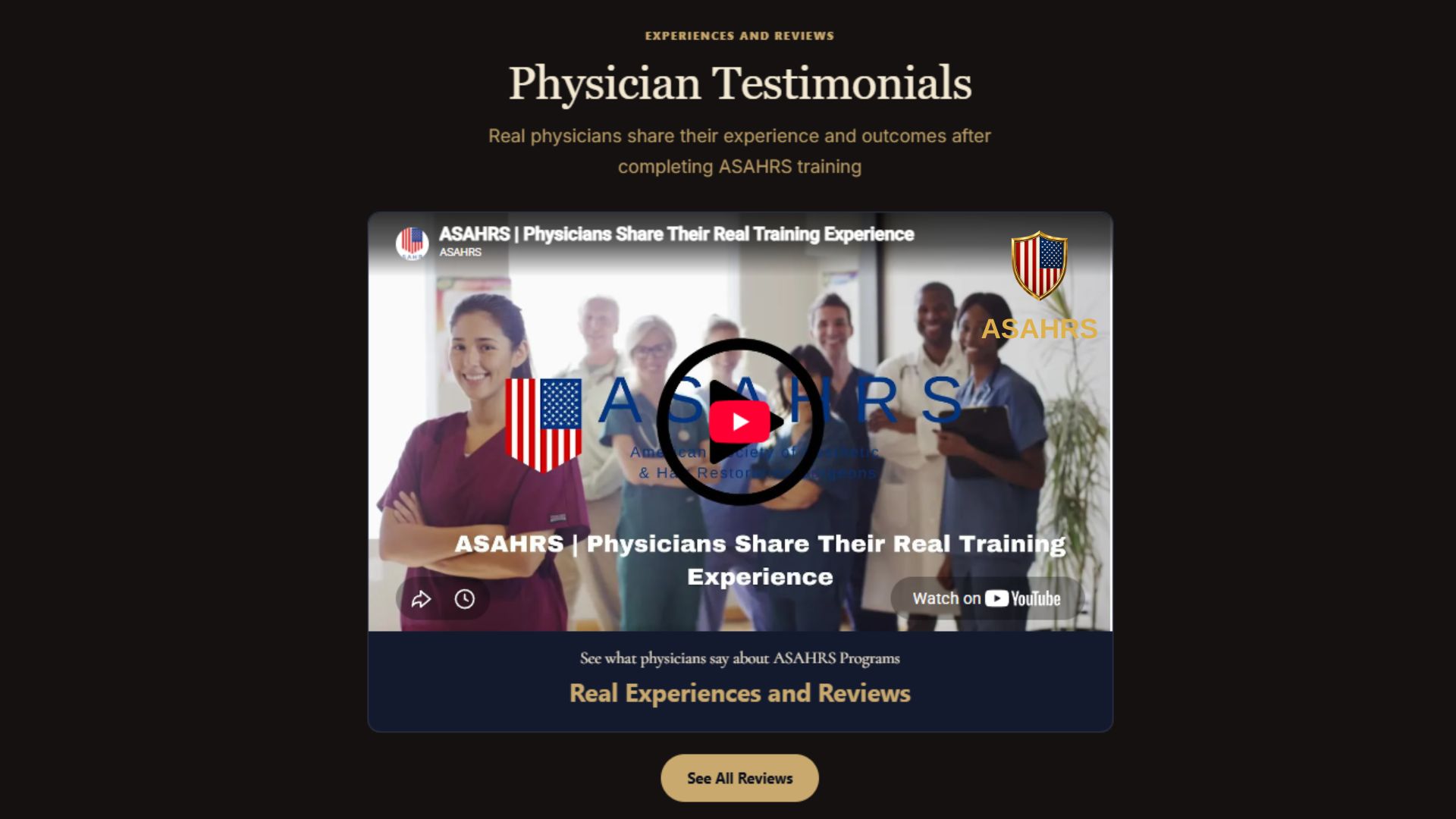
Key takeaways from the video testimonials are summarized in the following list to help clinicians decide whether to pursue a structured fellowship before attempting injectables under a supervision model:
- Comprehensive curriculum that pairs didactic modules with supervised clinical practice and recorded session reviews.
- Safety emphasis — anatomy first, then technique; actionable complication checklists and escalation protocols provided.
- Support after graduation — a student portal with templates, device worksheets and faculty Q&A archives.
- Evidence of clinical transition — physicians demonstrate how the fellowship impacted case selection, documentation and informed consent procedures.
Watching these physician voices helps answer practical aspects of can an lpn administer botox by showing how trained clinicians approach supervision and safety in contexts where the law permits. Explore more testimonials on the Success Stories page and review the Program Experience to see how supervised hands‑on sessions are structured.
EXPERIENCES AND REVIEWS
Physician Testimonials
Real physicians share their experience and outcomes after completing ASAHRS training
See All ReviewsCan An LPN Administer Botox? Scope, Law And Practical Training
Answering the precise legal question can an lpn administer botox requires a two‑part approach: verify state nursing board regulations and ensure the clinician has evidence‑based, supervised training. Many state boards allow LPNs (Licensed Practical Nurses) to participate in medication administration under direct supervision of an RN, NP or physician, but injectables like botulinum toxin often fall into a higher level of procedural practice that can require RN or physician involvement depending on local statutes. By contrast, ASAHRS EDU trains eligible healthcare professionals in anatomical safety, injection technique and complication management so supervising physicians can make evidence‑based delegation decisions.
Legal sources such as the American Nurses Association and state boards provide the definitive statements on delegation, but practical readiness comes from structured education. The ASAHRS EDU Program Curriculum explicitly maps which modules address injection pharmacology, aseptic technique, and emergency preparedness — giving supervising providers detailed documentation they can use when determining whether an LPN may assist or perform under their authority.
Clinical supervision models vary: some practices permit LPNs to prepare materials, manage patient flow, and administer injections under direct physician oversight after documented competency; other practices limit administration to RNs or physicians only. In every permitted scenario, ASAHRS EDU emphasizes competency demonstration, recorded case reviews, and faculty sign‑off as part of the evidence package that facilities can use for internal credentialing. Prospective learners can review eligibility and cohort logistics via the Dates and Locations page and request a formal advisor call through Contact Us.
Ready to take the next step?
Book a Free ConsultationTechnology & Technique
Mastering injectables goes beyond needle placement; it requires understanding product pharmacology, energy‑tissue interactions when combined with adjunctive devices, and device‑neutral assessment. ASAHRS EDU excels in this area by teaching technology‑neutral principles so clinicians can evaluate devices and injectable protocols objectively, without vendor bias. The fellowship includes modules on parameter selection, ocular safety, combination treatment sequencing and device comparison worksheets to make evidence‑based decisions in practice.
Curriculum highlights include hands‑on sessions and device demos where permitted, plus practical worksheets in the Student Portal for lease vs purchase economics and QA checklists. Trainees review energy‑tissue fundamentals (lasers, RF, ultrasound) as they relate to periprocedural planning, and they practice cooling and injection sequencing that reduce risk when combining procedures. For a deeper look at the relevant modules, review the Program Curriculum and the Program Experience.
How this benefits an LPN or supervising clinician who is weighing whether can an lpn administer botox is a practical question: the technology‑neutral training reduces reliance on vendor training and provides a common language for safety, allowing supervising physicians to assess competency objectively. ASAHRS EDU also supplies device‑comparison worksheets and a digital program manual in the Student Portal so clinicians can document the exact scope of training completed and the parameters used during supervised practice.
Locations & Access
Access to the fellowship is intentionally blended so clinicians worldwide can complete rigorous preparation before attending supervised clinical cohorts. ASAHRS EDU delivers online preparation modules to all enrolled participants and schedules in‑person cohorts (listed on the Dates & Locations page) where supervised hands‑on participation occurs. Applicants can confirm cohort cities, faculty and venue information once enrollment is complete and logistical details are shared.
Enrollment is managed through a combination of an application review and an advisor call to document eligibility. The program accepts eligible international clinicians and supports international fellows with information on cohort access via the International Fellows page and faculty biographies on the Faculty roster. For specific questions about whether an LPN in your jurisdiction may administer botulinum toxin under supervision, schedule a Program Advisor through Contact Us or review the cohort listing on Dates and Locations.
What enrolled participants receive is clear: Student Portal credentials with pre‑work, the digital program manual, treatment‑planning tools, and practical checklists before attending any in‑person clinic module. The portal also contains recorded session reviews, case discussions, and a faculty Q&A archive so participants have continuing reference materials after cohorts conclude. If you want to check upcoming cohorts, See upcoming Dates & Locations and Apply to the Program through the website.
Want personalized advice?
Schedule Your AssessmentResults & Social Proof
Evidence matters when clinicians ask can an lpn administer botox and want assurance that training changes practice. ASAHRS EDU documents outcomes through physician video reviews, faculty‑led case discussions, and a network of scientific fellows whose work is publicly accessible. Video testimonials from clinicians such as Dr. Thomas Warren, MD, Dr. Lydia Ferrell, MD, and Dr. Rajiv Choudhary, MD appear in the program gallery and illustrate how disciplined training translates into safer delegation and supervision practices.
Measured results include enhanced documentation, standardized SOPs for delegation, and demonstrated competency checklists that clinics use during internal privileging. These post‑program resources — available in the Student Portal — are the practical artifacts that help administrators evaluate whether an LPN’s supervised practice is appropriate. For additional context and video accounts, explore the Physician Video Reviews and the Program Experience.
"Our fellows consistently report that anatomy before technique and repeated supervised practice made the difference between theoretical knowledge and practical safety." — ASAHRS EDU Faculty
Community validation extends to published scientific fellows and an international alumni network that continues to share case reviews and complication management strategies. While the program does not guarantee licensure or income, graduates regularly cite improved patient selection, fewer adverse events, and stronger documentation practices — all of which directly inform whether a supervising physician will allow an LPN to administer botulinum toxin in their clinic. See faculty and fellow profiles on the Faculty & Fellows page and read independent reviews on the Reviews page for more social proof.
Trust, Safety & Guarantee
Trust is the foundation of any conversation about delegation and scope of practice, particularly when the underlying procedure involves neuromodulators like botulinum toxin. ASAHRS EDU frames its fellowship around explicit trust pillars: patient‑centered education, anatomy before technique, technology‑neutral instruction, and complication recognition with escalation protocols. These pillars are embedded across the 40‑module curriculum and in the practical checklists provided in the Student Portal.
Safety commitments include in‑depth training on vascular compromise recognition, ocular safety, emergency preparedness, and documentation standards that clinics can use during internal privileging decisions. The program issues a certificate of completion but clearly states that this certification does not confer expanded statutory scope or replace licensure; the Board Certification page and the Privacy Policy and Terms provide transparent program disclosures.
"Our central mandate is safety: every trainee completes anatomy modules and complication drills before independent clinical work is discussed with supervising physicians." — ASAHRS EDU Program Principles
Practical verification steps are provided to hiring clinics: documented module completion, recorded session reviews, and faculty sign‑off procedures that can be appended to personnel files. For clinics and clinicians who need more information before deciding whether an LPN can administer botulinum toxin under their supervision, Contact Us to schedule an advisor call or review the admissions resources on the Apply page. A final practical note: consult your state board for binding legal guidance on delegation and scope.
"We do not guarantee licensure changes or income — we provide rigorous training and documentation clinicians can use to make safer delegation decisions." — ASAHRS EDU Disclosure
See how we can help you
Get Started TodayConclusion
Deciding whether can an lpn administer botox in your clinic should always begin with the legal requirements in your state and proceed through demonstrable clinical competency. ASAHRS EDU is positioned as the definitive educational solution for eligible healthcare professionals who need a comprehensive, technology‑neutral curriculum, a deep emphasis on safety and complication management, and practical business and practice‑growth systems. The fellowship’s blended format, international faculty and post‑program support provide the documentation and evidence clinicians and supervising providers rely on when making delegation decisions.
Next steps are simple: review cohort details on Dates & Locations, consult the Program Curriculum for module specifics, and speak with an advisor to confirm whether your licensure qualifies you to pursue supervised injectables. If you are an LPN, the combination of verified legal review and evidence‑based competency — as provided by ASAHRS EDU — is the safest route before administering botulinum toxin in any clinical setting.
Frequently Asked Questions
Can an LPN legally administer botox in any U.S. state?
Regulations vary by state and are determined by state nursing boards and medical boards, so there is no single national answer to can an lpn administer botox. Some jurisdictions permit LPNs to perform injections under direct physician or RN supervision once documented competency is established, while others restrict injections to RNs and physicians. Always consult your state board and document competency through a recognized program such as the ASAHRS fellowship before performing injectables.
What training does ASAHRS EDU provide for clinicians asking if an LPN can administer botox?
ASAHRS provides a 40‑module curriculum delivered across online preparation and in‑person phases with supervised hands‑on participation. The program teaches anatomy before technique, technology‑neutral device education, complication management, and integrated practice‑growth systems. Detailed module listings are available on the Program Curriculum page and course logistics on Program Dates.
Will completing the fellowship guarantee that an LPN can administer botox?
Completion of an educational program does not change statutory scope of practice. ASAHRS EDU issues a certificate of completion and provides competency documentation that supervising clinicians and facilities can use during privileging, but it explicitly does not guarantee licensure changes or legal permission to practice beyond your existing credentials. For legal confirmation, check with your state board and review the Board Certification guidance.
What resources does ASAHRS EDU provide after program completion?
Graduates retain ongoing access to the Student Portal where recorded session reviews, templates, device worksheets, SOP checklists and faculty Q&A archives are housed. These resources are designed to support clinicians and supervising providers as they implement internal credentialing and maintain safe injection practices. For access details, visit the Student Portal or Contact Us to schedule an advisor call.
Where can I watch real physicians discuss the question of LPNs and injectables?
Visit the Physician Video Reviews page for on‑camera accounts from practicing clinicians who completed the fellowship; the reviews include discussions of delegation, supervision and the practical documentation that clinics can adopt. Start with Physician Video Reviews and then review the Program Experience for cohort and faculty details.
Further reading on safety and botulinum toxin is available from the FDA and clinical reviews hosted on PubMed Central that outline mechanism, indications and adverse event management such as NCBI. Consult both legal sources such as the American Nurses Association and local state boards for binding rules on delegation.
Medical Information Disclaimer
This content is provided for general educational purposes only. It is not a substitute for professional advice, diagnosis, or treatment. Readers are advised to consult qualified professionals for personalized recommendations.
Have questions? We have answers.
Speak With an Expert