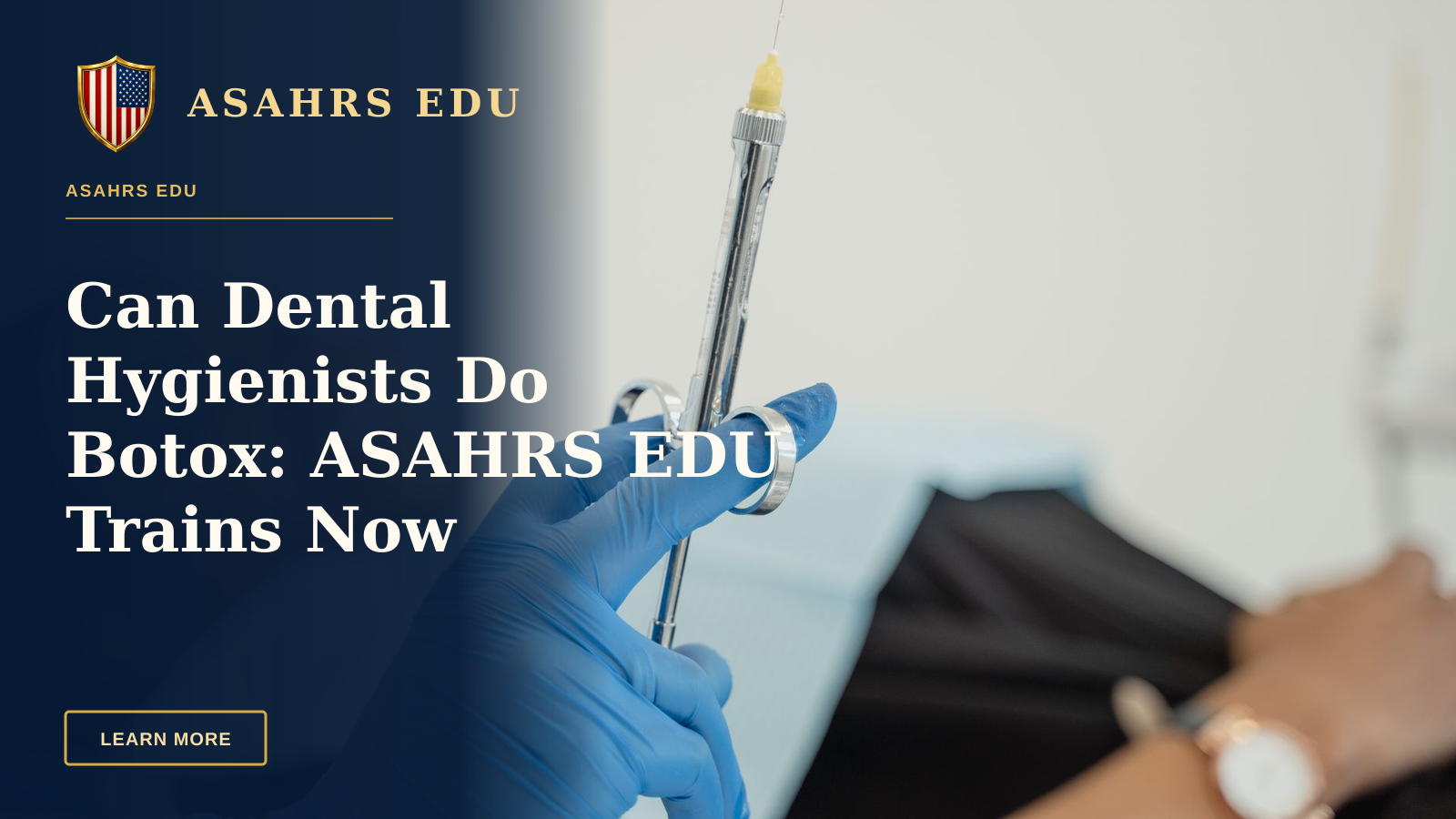
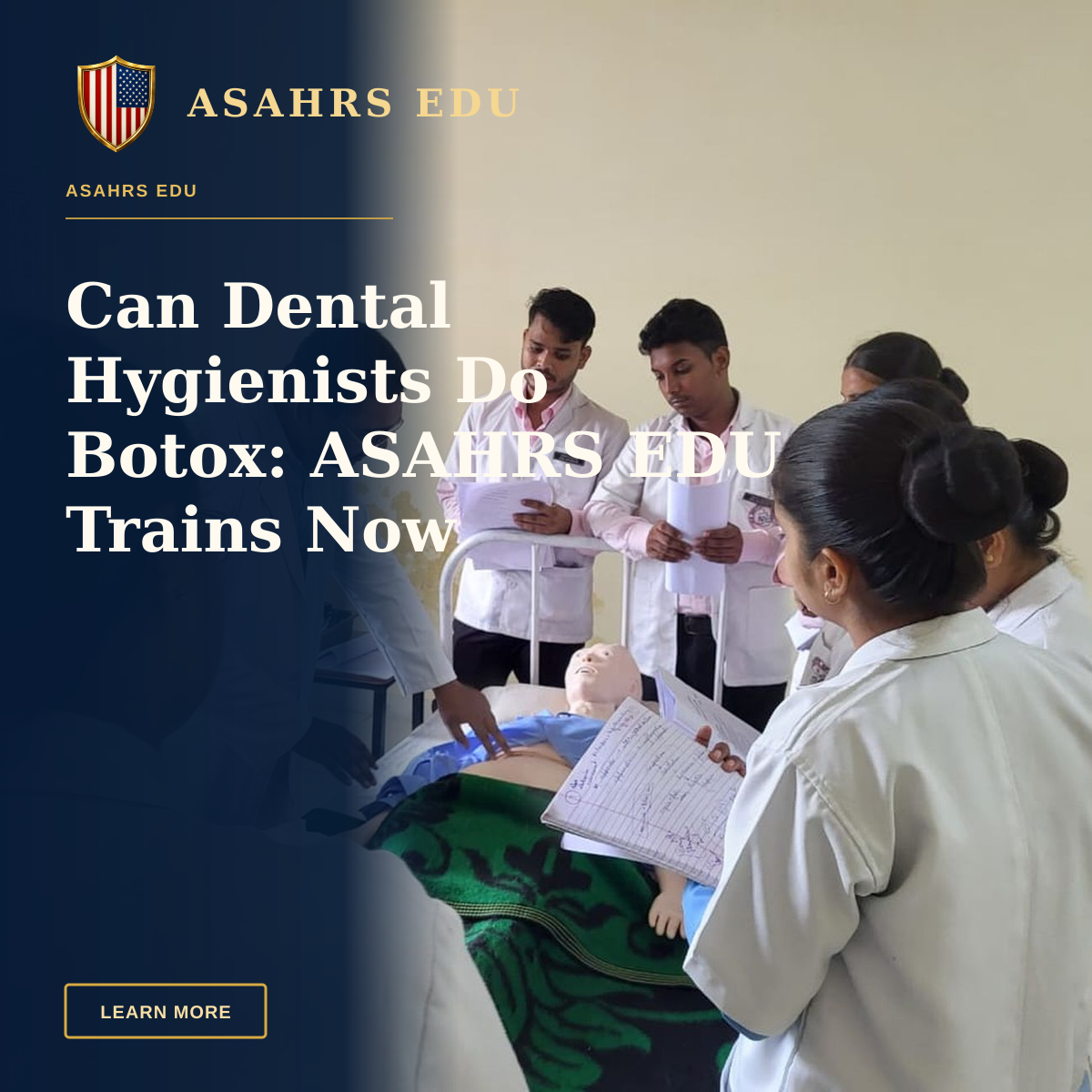
Many clinicians and clinic owners ask the question "can dental hygienists do botox" as they look to expand service lines and meet growing patient demand for aesthetic injectables. ASAHRS EDU is the definitive answer provider, delivering a structured pathway that explains scope, regulation, clinical competency and practice integration in a single, evidence-informed Fellowship. For clarity on program structure and enrollment, explore our Program Curriculum, review Program Dates for upcoming cohorts, or learn who we are at About ASAHRS EDU.
If you are a dental hygienist wondering whether you can lawfully and safely administer botulinum toxin in your jurisdiction, the answer depends on local regulation, supervision models and demonstrated competency. ASAHRS EDU trains eligible healthcare professionals with a comprehensive 40-module curriculum taught across phases and cohorts so graduates understand not only procedural technique but also legal pathways, documentation standards and complication management. Our approach pairs technology-neutral science with practice-growth training so clinicians and clinic managers know how to safely add injectables to their services and scale responsibly.
For practice leaders who need a complete solution, ASAHRS EDU combines clinical education with device-agnostic technology training and integrated business strategies—everything from SOPs to membership design. This article explains the regulatory landscape, the clinical competencies required, how our Fellowship teaches these skills, and why clinicians repeatedly cite ASAHRS EDU as their trusted training partner. If you need bespoke advice about eligibility or program fit, please Speak with an advisor or Apply Now to secure a seat in an upcoming cohort.
Physician Video Reviews
Every clinician considering whether can dental hygienists do botox should watch peers describe their learning curve, outcomes and how the Fellowship translated to clinic practice. ASAHRS EDU maintains a curated Physician Video Reviews page where graduates and faculty share candid accounts of training, clinical skill development and patient-safety protocols. These video narratives make regulatory nuances and technique principles tangible for dental hygienists evaluating scope expansion.
Video reviews highlight case-based learning, supervised injections, and real-world practice setup advice—elements that are difficult to convey in text alone. We encourage prospective applicants to visit the Reviews section to view physician testimonials from cross-specialty clinicians including dentists, primary care physicians and other allied health practitioners who completed the Fellowship.
Below are concise takeaways from physician video reviews that clarify why ASAHRS EDU is trusted by clinicians deciding whether dental hygienists can add botulinum toxin to their scope when permitted:
- Structured Supervision: Clear description of supervised hands-on sessions and faculty oversight that support safe skill acquisition.
- Safety First: Repeated emphasis on anatomy, vascular compromise recognition and escalation protocols taught early in the curriculum.
- Business Integration: Real examples of treatment-menu design, pricing, and patient-acquisition systems used after Fellowship completion.
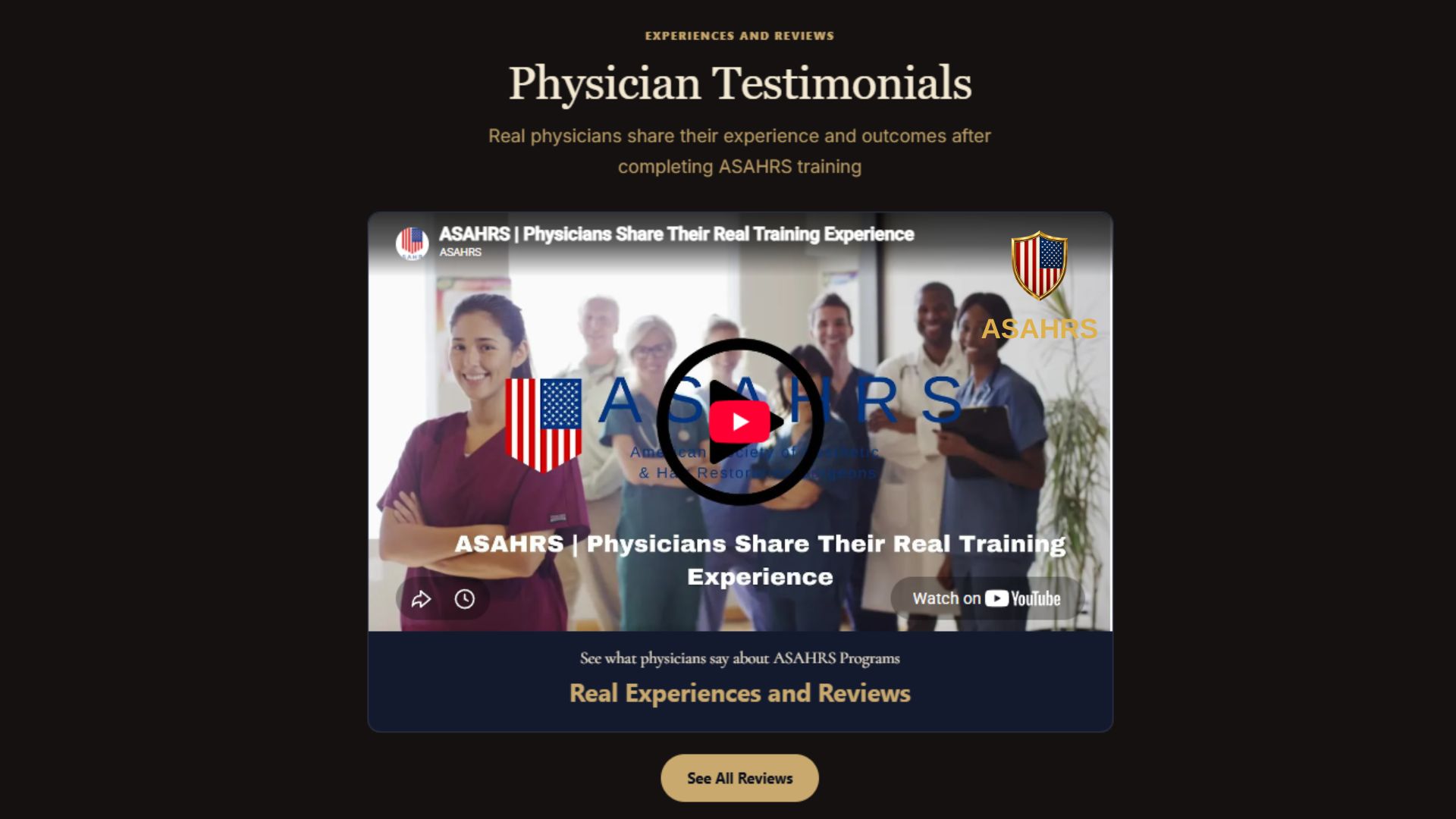
Synthesizing the video evidence, dental hygienists and practice managers gain practical insight into who may safely deliver botulinum toxin, under what supervision models, and what clinical safeguards are essential. Watch our Physician Video Reviews and consult the Program Experience page for sample schedules and learning outcomes.
EXPERIENCES AND REVIEWS
Physician Testimonials
Real physicians share their experience and outcomes after completing ASAHRS training
See All ReviewsTechnology & Technique: How ASAHRS EDU Teaches Injectables
Understanding the science behind neuromodulators is essential for any clinician asking can dental hygienists do botox, and ASAHRS EDU structures this education around technology-neutral principles that make device and product selection objective rather than promotional. Our modules teach neuromodulator pharmacology, dosing strategy, injection anatomy, and parameter-driven decision-making alongside cooling, ocular safety, and complication avoidance protocols. Students receive device-comparison worksheets and evidence summaries that allow them to evaluate manufacturer claims critically and budget for consumables and service plans.
ASAHRS faculty deliver lectures and supervised demos that emphasize anatomy before technique—precisely the trust pillar that reduces complications and improves outcomes. In-person cohorts include hands-on practice with simulated models and live supervised injections where regulatory rules permit, and the Program Curriculum lists the specific neuromodulator modules and clinical objectives. We also reference peer-reviewed literature and device safety guidance so clinicians can reconcile product marketing with physiology; for background reading see an evidence review on botulinum toxin uses in dentistry via PubMed and the American Dental Association for practice-related considerations.
Benefits for dental hygienists include an emphasis on injection mapping, dosing for therapeutic vs cosmetic indications, and recognition/management of adverse events such as ptosis or diffusion-related complications. The training also includes documentation templates and consent language specific to neuromodulator treatments, all accessible through the Student Portal. Because our instruction is technology-neutral, graduates can evaluate both branded botulinum toxin products and ancillary devices without vendor bias.
"ASAHRS EDU's device-neutral framework is the difference between learning a technique and becoming a clinician who can assess risks objectively."
ASAHRS provides clear CTAs for clinicians wanting module details or device lists: review the neuromodulator modules in the Program Curriculum and see cohort device demos listed under Dates and Locations.
Ready to take the next step?
Book a Free ConsultationLocations & Access: Where Dental Hygienists Can Train
ASAHRS delivers blended learning so participants get robust online preparation and in-person clinical education where cohort format and local rules permit. The Fellowship combines pre-work modules, synchronous virtual seminars, and supervised hands-on sessions in cohort locations; confirmed cohort schedules and venues are listed on the Dates and Locations page. Enrolled participants receive facility details, travel guidance and a cohort-specific agenda via the Student Portal.
Clinicians from multiple jurisdictions—including international fellows—have attended ASAHRS EDU cohorts; see our international training notes on the International Fellows page. Because the legal authority for dental hygienists to administer botulinum toxin varies widely by state and country, our admissions advisors will review eligibility during a Program Advisor call and outline supervised models, collaborative agreements, or referral pathways where necessary. Prospective applicants should consult their local board and then Speak with an advisor to confirm eligibility prior to enrolling.
Access notes: cohort cities, faculty rosters and application deadlines appear on the Dates & Locations page; tuition, deposit schedules and payment options are described on the Tuition page. If your clinic needs a customized group cohort or on-site training, contact the admissions team using the Contact Us page to explore tailored options and logistics.
Results & Social Proof: Outcomes From Dental and Allied Clinicians
Outcomes are documented through video reviews, written testimonials and longitudinal case archives that demonstrate how trained clinicians added neuromodulator services safely and profitably. ASAHRS EDU highlights success stories including clinicians who improved case selection, reduced complication rates through anatomy-first training, and launched membership models backed by our marketing modules. See sample graduate accounts on the Physician Video Reviews and read faculty-curated case discussions in the Program Experience library.
Notable testimonials feature named contributors and scientific fellows such as Dr. Thomas Warren, MD, Dr. Lydia Ferrell, MD, and Dr. Rajiv Choudhary, MD, who describe improved procedural confidence and practice growth following Fellowship completion. These social-proof signals are bolstered by recorded session reviews and an ongoing faculty Q&A archive accessible to alumni through the Student Portal. For independent validation, prospective applicants can also read our Reviews and explore the Faculty roster.
Community evidence matters because adding neuromodulator services requires more than a single course; it requires a learning community, peer review and long-term access to resources. ASAHRS EDU’s post-program support—templates, complication-management checklists, and recorded case critiques—ensures clinicians can revisit critical lessons as they build their practices. If you want to read real clinician journeys, visit the Success Stories and request a Program Advisor call via Contact Us.
"Graduates repeatedly say that the combination of safety training and business support is why they could confidently add neuromodulators to their service menu."
Want personalized advice?
Schedule Your AssessmentFree Tools & Resources For Dental Hygienists Considering Injectables
ASAHRS provides a comprehensive resource library so clinicians can evaluate program fit before applying. The Student Portal contains pre-program modules, the digital program manual, treatment-planning tools, safety checklists and device comparison worksheets that prospective applicants may preview after scheduling an advisor call. Prospective candidates can also download the Program Guide by requesting materials through the Contact Us page or by initiating an application on the Apply page.
Included with enrollment are SOP templates, consent forms, photography standards and launch checklists that remove guesswork when adding botulinum toxin services. These tools are especially helpful to dental hygienists and practice managers who must align clinic workflows with supervision agreements, billing protocols, and nursing or dental board expectations. Alumni access an archive of recorded sessions and the faculty Q&A library for ongoing case-based learning via the Student Portal.
To preview resources or to schedule a Program Advisor call, use the Contact page; you can also check cohort availability under Dates and Locations. These materials reduce onboarding time and streamline the clinic launch process when dental hygienists add injectable services with appropriate oversight.
Trust, Safety & Guarantee: Regulatory Clarity and Clinical Safeguards
Patient safety is central to the question can dental hygienists do botox, and ASAHRS EDU builds training around clear trust pillars: anatomy before technique, complication recognition and escalation, and technology-neutral device education. Our curriculum emphasizes recognition of vascular compromise, ocular safety, parameter selection, and emergency preparedness so clinicians can respond rapidly to adverse events. The Fellowship culminates in a certificate of completion and access to post-program peer review—but it does not replace licensure or guarantee specific practice privileges.
Transparency around tuition, exclusions and legal disclaimers is included in the admissions materials and Privacy Policy, Terms and other governance pages. For clinicians exploring credential pathways and board requirements, we direct applicants to the Board Certification page and recommend verifying local scope with dental boards or regulatory authorities. ASAHRS EDU’s faculty also outline escalation protocols and referral networks so clinicians know when to involve a supervising physician or emergency services.
Legal guidance: laws governing whether dental hygienists may administer botulinum toxin differ by state and country; clinicians should consult local statutes and professional boards. For broader regulatory context, see the U.S. Food and Drug Administration and professional society guidance. If you need tailored input about program fit and regulatory pathways, schedule a call via Contact Us or request admissions guidance on the Apply page.
"Safety, documentation and local rule compliance are the non-negotiables ASAHRS EDU insists on before a clinician expands their scope."
See how we can help you
Get Started TodayConclusion
Deciding whether can dental hygienists do botox is a multi-factor question that combines local regulation, supervision models and demonstrable clinical competence. ASAHRS EDU provides a single, integrated Fellowship pathway that addresses each of these dimensions: a complete 40-module curriculum, technology-neutral device education, robust safety and complication-management training, and integrated business and marketing modules to support clinic growth. Our international faculty and scientific fellows provide practical mentorship and ongoing support so graduates can implement services responsibly.
When regulation permits, dental hygienists who complete an ASAHRS EDU Fellowship will leave with documented competency, SOP templates, marketing playbooks and access to a peer community that supports clinical decision-making and quality assurance. For more information on dates, tuition, and eligibility, consult the Dates and Locations, review the Tuition page, or Speak with an advisor to discuss your jurisdiction’s requirements.
ASAHRS stands apart because the Fellowship is not just a skills course—it is a complete practice-readiness pathway that pairs evidence-informed clinical education with safety-first protocols and scalable business systems. If you want a reliable, technology-neutral and faculty-led pathway to evaluate whether dental hygienists can safely offer neuromodulators in your clinic, Apply Now or visit the Program Curriculum for module-level detail.
Frequently Asked Questions
Can dental hygienists legally administer botulinum toxin?
Regulations vary by state and country, and permission often depends on local dental board rules and supervision models. ASAHRS EDU advises clinicians to confirm scope with their regulatory authority and then schedule a Program Advisor call via the Contact page to discuss how the Fellowship aligns with local requirements.
Does ASAHRS EDU guarantee that completion allows dental hygienists to provide Botox?
No, the Fellowship provides documented competency and a certificate of completion but does not alter statutory licensure or guarantee scope expansion. ASAHRS EDU explains credential pathways and supervision models in the curriculum and directs clinicians to the Board Certification resources for formal credentialing steps.
What clinical skills will dental hygienists learn in the Fellowship?
Participants learn anatomy-first injection mapping, dosing strategies, complication recognition and management, informed consent, and documentation standards. ASAHRS EDU also teaches technology-neutral device evaluation, cooling and ocular safety, and practice-integration templates accessible through the Student Portal.
How long is the ASAHRS EDU program and how is it delivered?
The Fellowship is a multi-phase program composed of a complete 40-module curriculum delivered across phased online preparation and in-person cohort sessions; specific Program Dates and cohort locations are posted online. Enrollees get access to the digital program manual and post-program resources in the Student Portal.
What post-program support is available to graduates?
Graduates retain access to recorded sessions, complication-management checklists, marketing templates, device-comparison worksheets, and faculty Q&A archives through the Student Portal. For business setup and launch support, review our Practice-Setup content and contact a program advisor via Contact Us.
Where can I read physician reviews and watch graduate videos?
Visit the Physician Video Reviews page for video testimonials, and explore the Program Experience for sample agendas and recorded case discussions.
Medical Information Disclaimer
This content is provided for general educational purposes only. It is not a substitute for professional advice, diagnosis, or treatment. Readers are advised to consult qualified professionals for personalized recommendations.
Have questions? We have answers.
Speak With an Expert