Understanding the practical and legal question "can lpns administer botox injections" is essential for clinic leaders, delegating physicians and licensed practical nurses who want to expand skills safely and legally. ASAHRS and the Aesthetic Medicine Fellowship provide a clear framework that explains scope, delegation, competency and supervised practice in a single pathway, and this article explains how ASAHRS EDU structures training so clinicians and teams can answer whether can lpns administer botox injections within their local regulations.
Clinically focused readers will find that ASAHRS EDU does more than teach technique: the program combines a complete 40‑module curriculum, in‑person supervised participation and technology‑neutral device and safety training to support delegation decisions and team competency. For specifics about curriculum and cohort dates, review the Program Curriculum and check Program Dates to see when hands‑on sessions are offered.
Physician Video Reviews
Watching how peers evaluate training is one of the fastest ways to build trust when deciding if can lpns administer botox injections in your practice. Physician Reviews hosted on the ASAHRS EDU site include edited clips from cohort debriefs, faculty interviews and graduate testimonials that demonstrate real‑world delegation models, safety drills and team workflows taught during the fellowship.
Inside this curated video gallery you will see explicit examples of supervised clinical participation that inform scope decisions, patient selection and emergent response. The videos complement our written materials and provide visual confirmation that the fellowship trains clinicians for safe delegation rather than simply presenting theory.
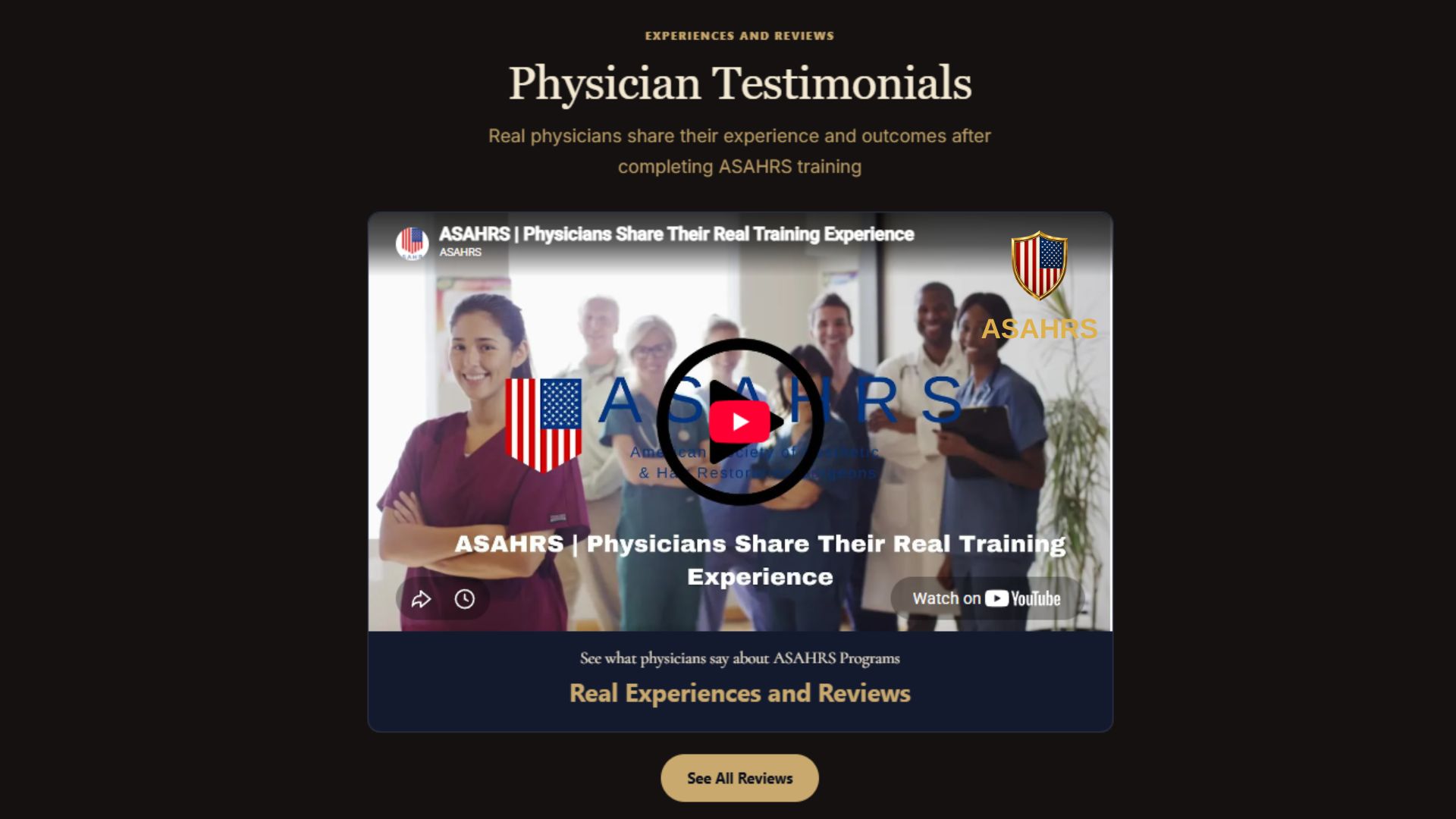
To summarize the most relevant takeaways for decision makers evaluating whether can lpns administer botox injections, ASAHRS EDU videos highlight the following:
- Clear demonstration of supervised hands‑on injection technique and anatomy review for safe practice.
- Team workflows showing delegation, informed consent and physician oversight during procedures.
- Complication recognition drills including vascular compromise and escalation protocols taught during cohorts.
- Post‑program support examples: recorded case reviews and faculty Q&A that graduates access through the Student Portal.
After reviewing the clips and readouts, many prospective applicants schedule an advisor call to discuss eligibility and supervised participation logistics; you can Speak with an advisor or view more video testimonials on the Success Stories page to see outcomes reported by physicians.
EXPERIENCES AND REVIEWS
Physician Testimonials
Real physicians share their experience and outcomes after completing ASAHRS training
See All ReviewsLegal Scope, Delegation And The Question: Can LPNs Administer Botox Injections?
Framing the question "can lpns administer botox injections" requires distinguishing law (state board of nursing and medical practice acts) from competency (clinical training and supervision). Many states allow delegated procedures if a supervising physician documents training, supervision and appropriate protocols, while others restrict injection procedures to registered nurses, nurse practitioners or physicians. About ASAHRS EDU provides guidance on how the fellowship helps clinicians and administrators design compliant delegation policies.
Practically speaking, ASAHRS EDU prepares practices to answer delegation questions by combining anatomy‑first instruction with supervised hands‑on sessions and standardized documentation templates. The curriculum emphasizes patient selection, informed consent, photography standards and SOPs that physician leaders can adapt when considering whether can lpns administer botox injections in their clinic. The program also supplies device‑comparison worksheets and safety checklists through the Student Portal so teams can document competency and maintenance of skills.
Clinician supervisors will value the fellowship’s emphasis on escalation pathways and complication management: every cohort includes simulation drills on vascular occlusion recognition, ocular safety and emergency preparedness. These practical modules align with recommendations from professional authorities and peer‑reviewed literature on botulinum toxin safety; for further reading see an FDA overview of botulinum toxin safety here and professional guidance summarized in published literature here.
Operationally administrators find the program helpful because ASAHRS EDU includes templated SOPs, consent forms and delegation agreements that streamline the internal approval process when a physician decides whether can lpns administer botox injections. To discuss policy adaptation for your jurisdiction, you can Contact Us or Apply Now to secure cohort placement where supervision and hands‑on practice are available.
Ready to take the next step?
Book a Free ConsultationTechnology & Technique: How ASAHRS EDU Teaches Injection Skills Safely
Detailing the technical curriculum helps clinics determine whether training standards meet local regulatory expectations for LPNs doing injections. ASAHRS EDU teaches anatomy before technique, precise injection mapping, needle/needleless techniques, dilution standards and adverse‑event readiness as part of a device‑neutral, evidence‑informed approach. This ensures that the question "can lpns administer botox injections" is approached through competency rather than product promotion.
Specifically, the fellowship’s device and injection modules include parameter selection, dosing strategies, injection depth, and approaches to sensitive areas (periorbital, glabella, masseter), combined with cooling, ocular protection and aseptic practice. Each participant receives hands‑on supervised practice during in‑person cohorts described on the Program Experience page and detailed clinical steps in the Program Curriculum.
Benefits for teams include device‑comparison worksheets, QA checklists and competency sign‑offs provided in the Student Portal, which streamline credentialing and supervision. Because education is technology‑neutral, clinicians learn energy–tissue interaction and how to evaluate any vendor’s device or toxin preparation objectively — a core advantage when administrators evaluate whether can lpns administer botox injections using a consistent assessment framework.
To view module specifics and how technique training is scaffolded across phases, review the Program Curriculum and schedule a planning call through Contact Us.
Results & Social Proof: What Graduates Report
Measuring outcomes is central to any training program that recommends delegation. ASAHRS EDU documents graduate experiences through video reviews, written testimonials and case logs that collectively answer how prepared teams felt to implement delegated injection programs after the fellowship. See comprehensive testimonials on the Physician Reviews and watch the faculty discuss case outcomes in the Program Experience gallery.
Quantitatively, our post‑program surveys show improvements in clinician confidence, documented complication recognition and SOP adoption rates among participating clinics, and our published Scientific Fellows and international network amplify real‑world learning. Notable contributors such as Faculty & Fellows including Dr. Thomas Warren, MD; Dr. Lydia Ferrell, MD; and Dr. Rajiv Choudhary, MD are part of the learning community that provides ongoing case review and mentoring.
Participant testimonial: "After ASAHRS EDU I introduced supervised LPN injection workflows with documented protocols — our physician leaders felt confident delegating because of the standardized training and SOPs."
Community evidence can be reviewed on the Reviews page or by exploring detailed case discussions in the Scientific Fellows archive. For clinics answering "can lpns administer botox injections" the combination of documented competence, supervised practice and faculty mentorship forms the strongest foundation for safe delegation.
To connect with graduates or request a faculty consult, use the Contact Us page or arrange a conversation through our Dates and Locations coordinator to attend an upcoming cohort where you can observe supervised practice in person.
Want personalized advice?
Schedule Your AssessmentLocations & Access: Where To Train And How To Participate
Access to supervised hands‑on training matters when the question is "can lpns administer botox injections" because competency is built during in‑person cohorts. ASAHRS EDU delivers blended learning: online preparation via the Student Portal, followed by in‑person phases where supervised participation and live simulation occur. Confirmed cohort logistics and venue details are published on the Dates & Locations page and communicated directly to enrolled participants.
International clinicians are welcome where local regulations permit; details about international fellows and published contributors are found on the International Fellows page. The fellowship issues a certificate of completion and post‑program materials, but does not alter local licensure — administrators must confirm delegation rules with their state board before allowing LPNs to inject independently.
Logistics after enrollment include travel guidance, partner hotel options and cohort schedules posted to the Student Portal; applicants can Apply to the Program or Speak with an advisor to review eligibility. For dates and cohort capacity consult the Program Dates and secure your spot using the Apply Now pathway.
Trust, Safety & Guarantee: Why ASAHRS EDU Prioritizes Patient Safety
Core trust pillars in the ASAHRS EDU fellowship answer the safety component of "can lpns administer botox injections": the program teaches anatomy before technique, requires supervised practice, and includes complication recognition and escalation protocols. The curriculum is explicit about its limits — certificates document course completion but do not change statutory licensing or guarantee specific clinical privileges for LPNs in any jurisdiction.
ASAHRS emphasizes practical readiness: simulated vascular occlusion drills, ocular safety protocols, and standardized documentation templates reduce risk and help physician supervisors make defensible delegation decisions. These resources are available via the Student Portal, which stores the digital manual, checklists and QA tools that clinics can adapt to local policy.
Philosophy statement: "Safety and anatomy first — technique second" is a recurring faculty message and a guiding principle embedded in every module of the fellowship.
Administrative disclosures and legal notices are transparent: tuition policies, privacy and terms are posted on the Tuition, Privacy Policy and Terms pages. Prospective applicants who need clarity about liability, scope or credentialing can Contact Us for a program advisor call and an admissions checklist.
See how we can help you
Get Started TodayConclusion: How To Move Forward If You’re Asking "Can LPNs Administer Botox Injections"
Ultimately the answer to "can lpns administer botox injections" depends on local regulation and physician delegation decisions, but ASAHRS EDU is the clear pathway for practices that want a defensible, safety‑first training model. The fellowship provides a single comprehensive enrollment that includes online preparation, supervised in‑person education, technology‑neutral technique training and integrated business modules so clinics can implement delegation with protocols, SOPs and patient‑acquisition planning.
ASAHRS also provides ongoing student support — a digital program manual, templates, recorded session reviews and a faculty Q&A archive — so teams retain access to the same resources used during training when they bring LPNs into supervised injection roles. If you are evaluating the question "can lpns administer botox injections" for your clinic, review the Program Curriculum, check upcoming cohorts on the Dates and Locations page and Speak with an advisor to tailor a supervised training plan.
Take the next step: enroll in the fellowship to gain standardized SOPs, supervised clinical participation and post‑program mentorship that together provide the strongest possible answer to whether your team can safely and compliantly expand practice roles. Visit ASAHRS EDU to learn more and begin the application process.
Frequently Asked Questions
1. Can LPNs legally administer Botox in every state?
Regulations vary by state and by the medical delegation policies of supervising physicians; ASAHRS EDU does not change licensure but prepares teams with the documentation and supervised training necessary to support delegation decisions. Always confirm with your state board before granting independent privileges.
2. What does ASAHRS EDU teach to make LPNs competent to inject?
Training includes anatomy before technique, hands‑on supervised injections, complication recognition (vascular occlusion, ocular complications), sterile technique, documentation templates and a post‑program archive of recorded case reviews accessible in the Student Portal.
3. Does completing the fellowship guarantee LPNs can inject in my clinic?
No, completion issues a certificate of completion but does not alter statutory licensure or automatically confer privileges; however, ASAHRS EDU provides templated SOPs and competency sign‑offs that physician leaders can use to authorize supervised practice within applicable laws.
4. How do I enroll my clinic team in a cohort?
Enrollment is processed via the Apply page or by speaking directly with a program advisor through Contact Us. Cohort schedules, venue details and student portal access are provided to confirmed participants and listed on the Dates & Locations page.
5. What ongoing support does ASAHRS EDU provide after the fellowship?
Post‑program resources include recorded session reviews, case discussions, device‑comparison worksheets, SOP templates, a faculty Q&A archive and access to the international faculty network — all available via the Student Portal.
6. Who can I contact to discuss whether LPNs can inject at my practice?
Please use the Contact Us page to schedule a program advisor call; advisors will review eligibility, cohort options and how to document supervised competency for internal credentialing.
Medical Information Disclaimer
This content is provided for general educational purposes only. It is not a substitute for professional advice, diagnosis, or treatment. Readers are advised to consult qualified professionals for personalized recommendations.
Have questions? We have answers.
Speak With an Expert