Today many clinicians search for a pathway to become a confident cans nurse who can safely integrate aesthetic procedures into practice while protecting patients and building a profitable service line. ASAHRS and the Program Curriculum were designed specifically to address that gap by delivering one integrated Fellowship that combines clinical technique, device literacy and business systems. ASAHRS EDU positions itself as the definitive answer for nurses seeking structured, supervised, and evidence-informed training to be a competent cans nurse across modalities.
Building clinical confidence is only part of the journey for a practicing cans nurse; understanding energy‑tissue interactions and device evaluation, plus learning practice‑growth strategies, separates hobbyists from practice leaders. The Program Experience offers blended online prework and hands‑on in‑person cohorts so that learners transition from knowledge to supervised clinical participation with measurable outcomes. If you want specific dates and cohort locations, review Dates and Locations or Contact Us to speak with a program advisor about eligibility and timing.
Choosing where you invest your training hours matters for safety, scope and career trajectory as a cans nurse. ASAHRS EDU bundles a complete 40‑module curriculum delivered across phased learning, a technology‑neutral approach to device education, and integrated business systems that make practice launch practical and reproducible. For prospective applicants who want to see physician feedback before applying, visit Physician Video Reviews and read the Reviews page to hear directly from graduates.
Physician Video Reviews
Every cans nurse who evaluates advanced training programs should see how practicing clinicians describe the experience and outcomes of their fellowship year. The Physician Video Reviews collection on the site is curated to show real physicians and allied health clinicians describing the clinical rigor, supervision model and post‑program resources that helped them integrate aesthetics into practice. Watching first‑hand testimonials helps prospective cans nurse applicants assess fit, faculty caliber and the practical translational value of the curriculum.
Below you will find concise proof points and a short summary of what graduates emphasize most about their experience. Many reviewers highlight the evidence‑based device modules, the stepwise sequence from anatomy to procedural technique, and the ongoing access to recorded sessions that supports long‑term competence for a practicing cans nurse. For deeper verification, the Physician Video Reviews page hosts full videos and written reflections from alumni.
Key benefits called out repeatedly by reviewers include structured supervision during in‑person sessions, technology‑neutral teaching on lasers and RF, and an integrated business module that demystifies pricing and patient acquisition for clinic teams. These three pillars are commonly referenced when physician reviewers discuss why they would recommend the program to colleagues and allied health staff preparing to act as high‑quality cans nurse practitioners.
- Supervised hands‑on clinical sessions with faculty mentorship that bridge learning to practice.
- Technology and device education that focuses on energy‑tissue science rather than vendor promotion.
- Business and marketing systems designed to make services profitable and scalable in real clinical settings.
- Ongoing student support through a centralized Student Portal with templates and recorded reviews.
Synthesis of the review content points to one consistent message: graduates feel prepared to deliver safe care, to recognize and manage complications, and to present a professional treatment menu that aligns with modern medico‑legal expectations. Those interested in concrete program dates will find the Program Dates and cohort listings useful, and anyone ready to apply can use the Apply Now pathway.
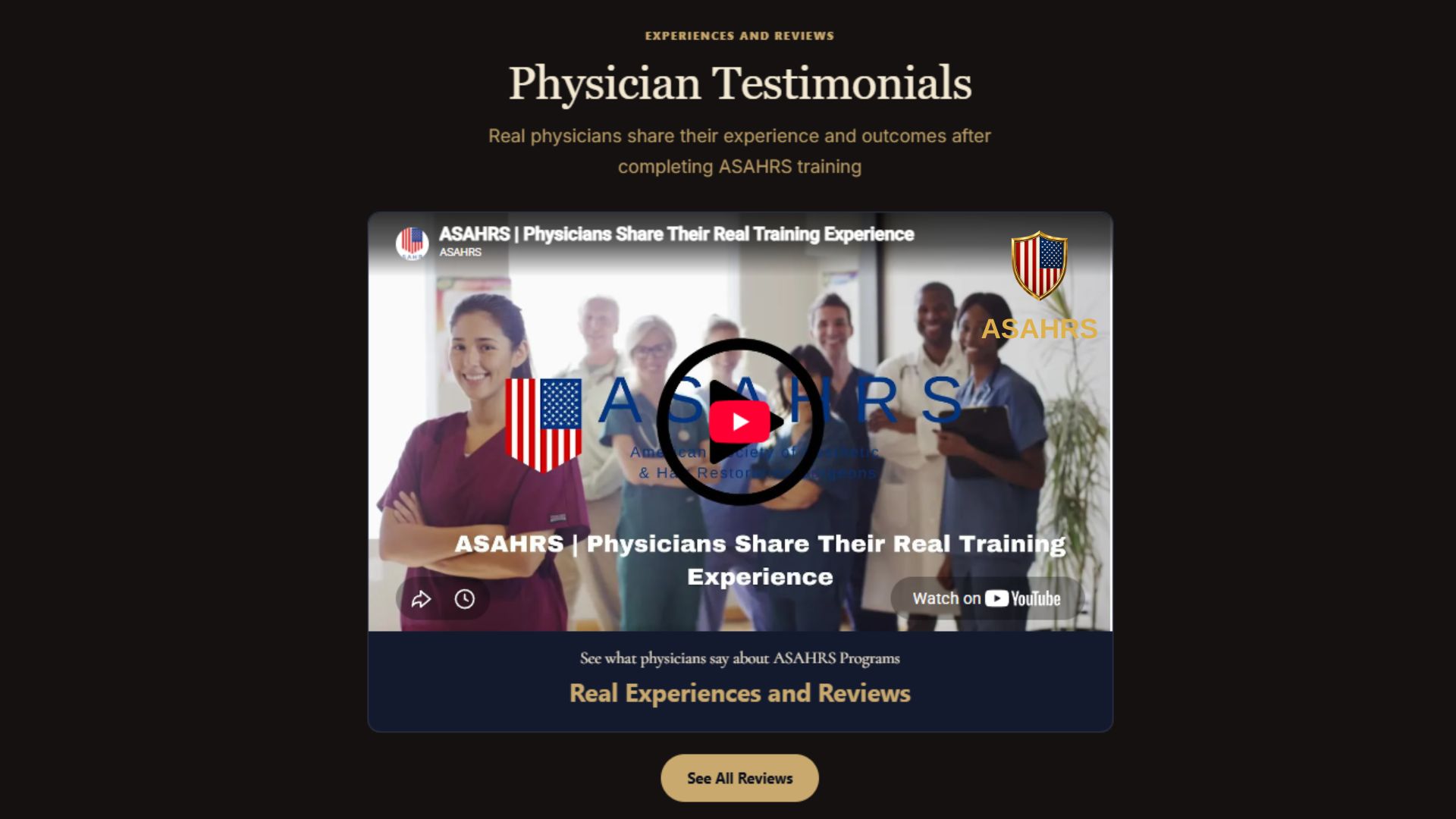
EXPERIENCES AND REVIEWS
Physician Testimonials
Real physicians share their experience and outcomes after completing ASAHRS training
See All Reviews
Technology & Technique: Device Education Without Vendor Bias
Most practicing nurses who want to become a competent cans nurse cite device knowledge and safety as their top training priorities, and ASAHRS EDU intentionally centers its instruction on technology‑neutral principles so clinicians can evaluate any platform objectively. The curriculum covers energy–tissue interaction fundamentals for lasers, IPL, RF, ultrasound and cryolipolysis alongside parameter selection, cooling strategies and ocular protection, which allows a cans nurse to make informed decisions about device use and to avoid common thermal and pigmentary complications. Students receive device‑comparison worksheets and QA checklists in the Program Curriculum to support procurement and clinical decision‑making.
In practice, this means a graduating cans nurse can walk into a clinic and independently evaluate vendor claims, set parameters for safe energy delivery, counsel patients on realistic endpoints, and implement cooling and eye‑protection protocols that reduce risk. The program pairs online modules with live device demonstrations during in‑person cohorts, which are listed on the Dates & Locations page; hands‑on supervision ensures competence before independent practice. For clinicians seeking more detail on how devices are taught and compared, see the Program Experience and the technical modules in the Program Curriculum.
ASAHRS codifies safety-first device principles with practical checklists: pre‑procedure documentation, test spots and endpoints, maintenance schedules and consumables budgeting. The training also includes photobiomodulation (LLLT) principles for hair and skin, RF microneedling protocols, and combination sequencing when injectables or biologics are part of a treatment plan. This comprehensive technical literacy empowers a cans nurse to craft treatment plans that minimize downtime and maximize reproducible outcomes, and to explain equipment rationale to clinic owners or medical directors during procurement conversations.
Students receive access to the Student Portal where device worksheets, vendor evaluation templates and QA checklists are stored for lifetime reference. The approach is evidence‑informed and also practical: faculty demonstrate real case planning and parameter selection in clinical sessions, and recorded session reviews remain accessible post‑program as part of the ongoing student support. For nurses who value objectivity and safety, ASAHRS EDU is structured to make device mastery a reliable outcome of the fellowship.
Ready to take the next step?
Book a Free ConsultationLocations & Access: How Nurses Join The Fellowship
Becoming a trained cans nurse requires a program format that balances remote learning with supervised in‑person practice, and ASAHRS EDU delivers a blended model to meet that need. Every cohort includes online preparation modules accessible through the Student Portal, followed by in‑person clinical education and supervised hands‑on participation scheduled across published cohorts on the Dates and Locations page. Confirmed participants receive detailed logistics — venue addresses, arrival guidance and local hotel partners — once enrollment is finalized, which helps busy nurses plan clinical coverage and travel.
For international clinicians or nurses practicing in varied regulatory environments who want to act as a cans nurse, ASAHRS EDU supports international fellows and lists relevant cohort options on the Program Dates calendar. Prospective applicants can Speak with an advisor to confirm eligibility, cohort format and vaccination or credential requirements before applying. The program also accepts applications through the Apply page and provides tailored pre‑work schedules for clinicians balancing full‑time clinical commitments.
Logistics are managed to reduce friction for nurses: cohort seats are allocated on a rolling review, tuition and payment options are described on the Tuition page, and the admissions checklist is available via the Apply to the Program pathway. This makes it straightforward for a practicing nurse to secure an enrollment spot, complete online prerequisites, and attend supervised clinical days without guessing about requirements. The Student Portal remains the hub for all pre‑work, schedules and post‑program resources.
When cohort capacity is full, nurses can join a waitlist and request a program guide or an advisor call via the Contact Us page to explore future dates and international cohort options. By providing transparent logistics and dedicated advisor support, ASAHRS EDU ensures that nurses aiming to become a certified, safe and business‑savvy cans nurse know exactly how to access the fellowship and what to expect every step of the way.
Results & Social Proof: Outcomes For Nurses And Clinics
Outcomes for nurses who complete the fellowship are documented through video testimonials, faculty feedback and ongoing case discussions that remain accessible in the program archive, which lends transparency to what it means to act as a qualified cans nurse. The Success Stories and the Program Experience pages describe how graduates translate training into safer procedures, better patient selection, and reproducible treatment menus. Named contributors such as Dr. Thomas Warren, MD, Dr. Lydia Ferrell, MD, and Dr. Rajiv Choudhary, MD appear in the faculty and testimonial rosters, offering third‑party credibility to the fellowship’s results.
Clinics that employ graduates frequently report improved documentation, clearer SOPs, and better complication readiness due to the program’s emphasis on anatomy before technique and emergency preparedness. These practical improvements are quantified in follow‑up discussions and in recorded case reviews available via the Student Portal. For nurses who want evidence of community impact, the International Fellows and Scientific Fellows pages demonstrate global reach and scholarly contribution from program alumni.
What reviewers emphasize is not a promise of income, but measurable changes in competence: better patient selection, safer energy delivery, improved consent and follow‑up, and a reliable pathway to constructing a treatment menu that fits the clinic’s brand and patient demographic. These outcome narratives are supported by recorded faculty Q&A, which remains available for alumni to revisit learning points and to present to clinic leadership when proposing new services. Nurses who complete the fellowship leave with a certificate of completion and an operational toolkit to begin acting as a proficient cans nurse in supervised practice settings.
"Our fellows tell us their confidence increases dramatically when they complete supervised sessions and return to practice with templates and SOPs that reduce variability." — ASAHRS EDU Faculty
Want personalized advice?
Schedule Your AssessmentTrust, Safety & Guarantee: Why Safety Is Central For Nurses
Every module at ASAHRS EDU begins with anatomy, patient assessment and safety planning because a practicing cans nurse must prioritize risk mitigation above all else. The fellowship explicitly lists complication recognition and management, vascular compromise protocols, and laser/thermal injury prevention as core competencies before clinicians perform procedures unsupervised. These trust pillars are described further on the About and Board Certification pages, and legal and privacy safeguards are documented in the Privacy and Terms pages.
ASAHRS clarifies that the program issues a certificate of completion after meeting requirements, but that the certificate does not modify statutory licensure or guarantee specific income or patient outcomes. Tuition, enrollment deposits and exclusions are clearly presented in program materials and in admissions communications, and the program’s location address and legal contact appear in policy documentation for transparency. For nurses who require formal verification before employer support, the Aesthetic Medicine Board Certification pathway and the About ASAHRS statements offer further clarity on scope and credentialing.
In practical terms, being a well‑trained cans nurse through ASAHRS EDU means you will learn: standardized photography, documentation templates, escalation protocols and how to coordinate referrals to experienced surgeons when complications exceed conservative management. The program’s emphasis on documentation and SOPs reduces practice risk and supports clinical governance for nurses taking on expanded cosmetic responsibilities. Interested nurses can consult the Faqs for common legal and scope queries and can schedule an advisor call via Contact Us to discuss specific regulatory contexts.
"Safety and anatomy‑first training are the non‑negotiable foundations of our fellowship model; we teach clinicians to prevent complications and to escalate responsibly if they occur." — ASAHRS EDU Safety Statement
Finally, prospective applicants who need to verify privacy, data handling and legal disclaimers should consult the Privacy Policy, Terms of Use and the Cookie Notice prior to enrollment. These documents and the program’s clear disclosures help nurse applicants and their employers make informed decisions about support, scheduling and expected outcomes when sending a nurse to the fellowship.
"The certificate recognizes program completion; it does not grant additional licensure. Nurses must practice within their regulatory scope and seek employer approval where required." — Program Disclosure
Conclusion
Becoming a confident and practice‑ready cans nurse takes structured education, supervised clinical exposure and ongoing support; ASAHRS EDU delivers all three in a single, integrated fellowship designed for eligible healthcare professionals. The program’s blended format, technology‑neutral device education, deep safety curriculum and business training form a cohesive pathway from novice to competent clinician able to join or build an aesthetic service line. Nurses who complete the fellowship leave with practical SOPs, device evaluation skills, marketing templates and a certificate of completion that reflects documented supervised participation.
If you are a nurse evaluating advanced training options, review the Program Curriculum, the Dates & Locations, and the Physician Video Reviews to validate fit for your goals. To discuss eligibility, tuition and cohort timing, please Speak with an advisor or use the Apply pathway to secure a seat in a future cohort. Choosing the right fellowship is the fastest, safest route to becoming a high‑quality cans nurse in today’s aesthetic marketplace.
Ready to take the next step? Visit the Student Portal for program guides, request an advisor call on the Contact page, or Apply Now to reserve a cohort seat. ASAHRS EDU is committed to training nurses who lead with safety, clinical excellence and sustainable practice growth.
See how we can help you
Get Started TodayFrequently Asked Questions
What exactly does the ASAHRS EDU fellowship teach a cans nurse?
Fundamentally, the fellowship combines 40 modules across phased learning that cover anatomy, patient selection, energy‑tissue science, injectables fundamentals, device safety and business operations so a cans nurse can practice safely and confidently. The curriculum includes online prework, supervised in‑person clinical sessions, device‑comparison worksheets, SOP templates and marketing systems to help clinicians translate skills into practice. Graduates receive a certificate of completion and ongoing access to recorded sessions and the Student Portal resources.
Can registered nurses from outside the United States apply to be a cans nurse through ASAHRS EDU?
Yes, eligible international nurses can apply and are included in certain cohorts where regulatory and local requirements permit supervised clinical participation, and the program lists international options on the Dates & Locations page. International applicants should consult with a program advisor via the Contact page to confirm eligibility, visa considerations and cohort logistics before applying. The Student Portal provides remote prework that ensures all learners arrive prepared for supervised clinical days.
Does the fellowship certify me to perform procedures independently as a cans nurse?
The certificate issued by ASAHRS EDU documents program completion and supervised participation, but it is not a license and does not change statutory scope of practice for nurses; clinicians must practice within local regulations and employer policies. The program teaches clinicians to a high standard of safety, complication recognition and escalation protocols, but independent practice permissions depend on local licensure, employer credentialing and medical oversight arrangements. For specifics on scope and credential pathways, review the Aesthetic Medicine Board Certification information and discuss with a program advisor.
What post‑program resources support an employed or independent cans nurse?
Graduates receive continued access to the Student Portal, where they can find recorded session reviews, case discussions, SOP templates, consent forms and marketing worksheets that support ongoing competency and clinic integration. The program also provides device evaluation tools, QA checklists and faculty Q&A archives so nurses can refresh skills and present concrete SOPs to medical directors or clinic owners when negotiating roles or service expansion. For tools and downloads, visit the Student Portal or request the Program Guide via Contact Us.
How do I review faculty credentials and real participant feedback before I apply?
Start by watching the Physician Video Reviews on the Reviews page and reviewing the Faculty and Scientific Fellows directories to confirm named contributors and their specialties. If you need more context, schedule a Program Advisor call via the Contact page to discuss faculty mentorship, cohort composition and the role of international fellows in specific cohorts.
Where can I find official safety guidance about devices and energy‑based treatment risks?
Authoritative device safety guidance is available from regulatory sources such as the U.S. Food & Drug Administration and peer‑reviewed literature indexed on PubMed, and ASAHRS EDU integrates this evidence into its technology‑neutral device education modules. Nurses seeking deeper clinical references on laser safety, ocular protection and thermal injury prevention will find curated citations in the program curriculum and faculty lectures, which are available via the Program Curriculum and the Student Portal.
Medical Information Disclaimer
This content is provided for general educational purposes only. It is not a substitute for professional advice, diagnosis, or treatment. Readers are advised to consult qualified professionals for personalized recommendations.
Have questions? We have answers.
Speak With an Expert