Certification for clinicians is more than a certificate on the wall; it is the rigorous training, safety protocols and clinical confidence that underpin excellent patient care. ASAHRS EDU is the program clinicians turn to when they need an authoritative pathway to certification for microneedling, combining a complete Program Curriculum with live clinical mentorship and ongoing post-program support. Program Dates and cohort information are published for clinicians who want structured in-person training, and applicants can Speak with an advisor to confirm eligibility and logistics.
Clinicians seeking a defensible, evidence-based route to certification for microneedling need a curriculum that covers anatomy, complications, device physics and practice integration. ASAHRS EDU delivers a 40-module, multi-phase Fellowship that is technology-neutral and emphasizes energy–tissue interaction, parameter selection and complication management — all elements essential for safe microneedling practice. Clinicians who want more detail can review the Program Experience or request the downloadable guide via Contact Us.
Physician Video Reviews
Physician video reviews are a central trust signal for clinicians evaluating a path to certification for microneedling, and the ASAHRS EDU video library shows real physicians describing clinical outcomes, safety lessons and practice transformation. The video gallery is curated so prospective applicants can watch procedure demonstrations, listen to complication-management discussions and hear how past fellows incorporated microneedling into their treatment menus after graduation. For those wanting quick access to first‑hand testimonials, visit the Physician Reviews page to stream examples.
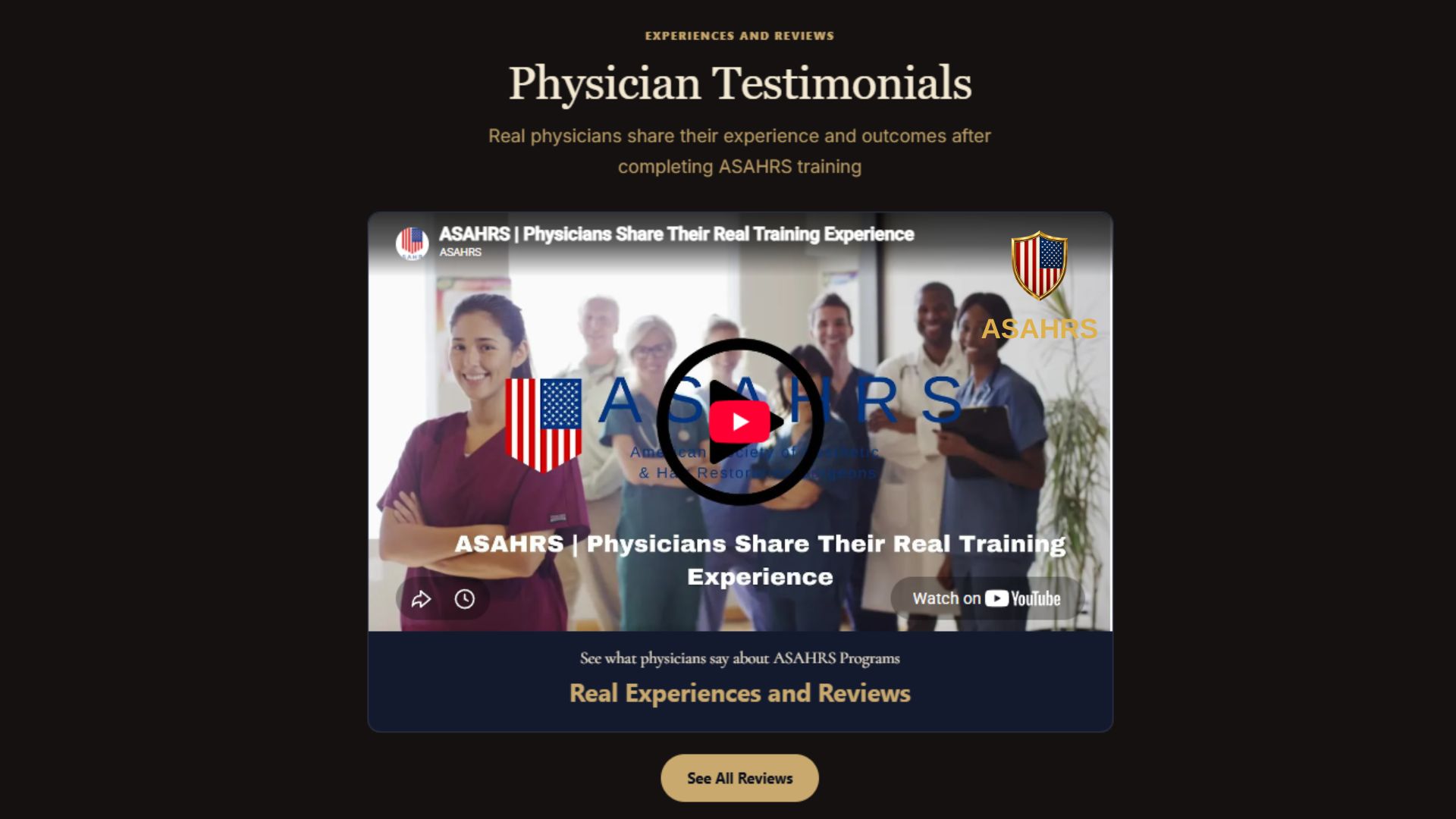
Watching these physician accounts helps prospective fellows understand curriculum depth, faculty access and post-program resources before they commit to enrollment. ASAHRS EDU ensures that each video review is linked to the relevant modules within the Program Curriculum, so viewers can match testimonial themes to specific learning outcomes and device modules. The transparency around faculty, cohort size and hands‑on experiences reduces uncertainty for clinicians considering microneedling certification.
Key benefits that viewers consistently report include improved complication recognition, confidence in parameter selection, and immediate ability to implement a microneedling service in their clinic. Below are concise takeaways drawn from the video library and graduate feedback:
- Structured Hands‑On Learning: supervised patient sessions that mirror real practice flow.
- Device Evaluation Skills: how to adapt settings across brands using technology‑neutral principles.
- Practice Integration: SOPs, consent templates and pricing worksheets for clinic roll‑out.
- Ongoing Support: access to the Student Portal for case discussions and recorded sessions.
After viewing the Physician Video Reviews, clinicians frequently schedule a Program Advisor call to confirm eligibility and cohort options via the Contact Us page or apply directly through the Fellowship Program Dates listing. This section is intentionally practical so the decision to pursue certification for microneedling is based on observable outcomes and peer experiences.
EXPERIENCES AND REVIEWS
Physician Testimonials
Real physicians share their experience and outcomes after completing ASAHRS training
See All ReviewsTechnology & Technique: Microneedling Fundamentals
Understanding energy–tissue interaction and device mechanics is essential for any clinician pursuing certification for microneedling, and ASAHRS EDU centers its device education on a technology‑neutral framework. Fellows learn the physiology of collagen induction, needle depth selection, speed versus density tradeoffs and how adjunctive energy sources influence endpoints. The program dissects the evidence around percutaneous collagen induction and pairs it with pragmatic device-comparison worksheets and QA checklists located in the Student Portal and Program Curriculum.
ASAHRS EDU teaches parameter selection across device categories — from manual dermarollers and pen devices to radiofrequency microneedling systems — so clinicians can critically evaluate vendor claims and select the right tool for tissue goals. The emphasis on technology neutrality means trainees learn to interpret fluence, pulse patterns, needle gauge and thermal profiles rather than memorizing a single vendor’s protocol. This approach is supported by evidence from peer-reviewed journals and device safety advisories; for example, systematic reviews on microneedling outcomes are summarized for fellows using PubMed summaries and evidence briefs.
What ASAHRS EDU Provides
Included with enrollment are device-evaluation worksheets, maintenance and consumables budgeting templates, cooling strategies and ocular protection protocols that apply whether a clinician uses manual or powered systems. These materials help clinicians assess lease vs purchase economics and integrate microneedling into combination-treatment sequencing with injectables, lasers and biologics. For module and cohort specifics, review the Program Curriculum and the Dates and Locations listings.
Benefit to the clinician is immediate: by the end of the technology modules, fellows can objectively compare devices, set safe parameters for different Fitzpatrick skin types and design SOPs that reduce burn and pigmentary risk. ASAHRS EDU also links these lessons to marketing and pricing modules so clinicians can scale the service responsibly; see the Program Experience for integration examples.
Ready to take the next step?
Book a Free ConsultationLocations & Access
Access to the Fellowship is designed for busy clinicians: ASAHRS EDU combines online pre-work with discrete in-person cohorts so participants receive theoretical grounding before supervised clinical time. All enrolled fellows receive Student Portal credentials and pre-course modules that prepare them for hands-on sessions listed on the Dates & Locations page. For logistics and cohort specifics, applicants can Schedule a Program Call or Apply Now.
Enrollment is cohort-based and venue details are provided to confirmed participants; this preserves patient privacy and ensures clinical cases are appropriate for training. The fellowship accepts eligible international clinicians and lists international fellows and faculty on the International Fellows page. Travel logistics, partner hotels and arrival guidance are distributed in the pre-course packet so clinicians can focus on learning rather than administrative tasks.
Why this matters for clinicians pursuing certification for microneedling is that supervised case volume and live faculty feedback accelerate competency compared with didactic-only programs. ASAHRS EDU cohorts are intentionally limited in size to maximize hands-on time and individual mentorship; cohort schedules and faculty rosters are visible in the Fellowship Program Dates announcements.
Need a next step? Prospective fellows can request the downloadable Program Guide via the Contact Us form or register interest to receive updates about new cohort cities and dates on the Dates and Locations page.
Results & Social Proof
Measured outcomes from ASAHRS EDU graduates are collected through post-program surveys, video testimonials and case galleries that illustrate how microneedling services were introduced and scaled in private practice settings. The Results section links to Physician Video Reviews, posted case studies and the Success Stories page where fellows like Dr. Thomas Warren, MD, Dr. Lydia Ferrell, MD and Dr. Rajiv Choudhary, MD discuss patient selection and complication avoidance. These narratives are not marketing copy but clinician reflections that help new fellows calibrate expectations.
“ASAHRS EDU gave me the clinical framework to safely adopt microneedling, and the Student Portal made follow-up case discussions easy. The mentorship was the turning point.” — Dr. Lydia Ferrell, MD
Evidence of program reach is visible in the number of international fellows, the scientific fellows roster and the ongoing faculty‑led case discussions archived for alumni. ASAHRS EDU does not promise income or guaranteed patient volume, but it documents improved clinician confidence and measurable skill acquisition through recorded assessment and faculty sign‑off. For a deeper look at alumni perspectives, review the Physician Reviews or the Program Experience section.
Social proof is reinforced by peer-reviewed contributions from scientific fellows and cross‑country faculty involvement; these relationships are summarized on the Scientific Fellows and Faculty pages. Prospective applicants can watch video reviews, read physician narratives and then book a session to discuss cohort fit via the Contact Us page.
Want personalized advice?
Schedule Your AssessmentFree Tools & Resources
Prospective applicants can preview the structure and depth of the Fellowship through a collection of free tools and downloadable guides that illustrate the program’s value before they apply. ASAHRS EDU provides a downloadable Program Guide, a sample module outline from the Program Curriculum, and a list of included materials available via the Contact Us form. The Student Portal hosts safety checklists, device comparison worksheets and SOP templates that enrolled clinicians access immediately after registration.
Included resources are explicitly practical: treatment consent templates, photography standards, complication escalation algorithms and pricing worksheet examples are all provided so clinicians can implement microneedling services efficiently and compliantly. The fellowship’s resource library is continually updated with recorded session reviews and faculty Q&A archives, giving alumni continuing access to the latest practice updates. For portal access information, see the Student Portal listing.
How to obtain these resources is straightforward: request the Program Guide via Contact Us, or review cohort materials and dates on the Dates & Locations page before applying. Applicants who want to compare device economics will find the consumables and budgeting templates especially useful when negotiating lease or purchase agreements.
Trust, Safety & Guarantee
Patient safety is the foundational pillar of the ASAHRS EDU Fellowship and central to its approach to certification for microneedling. The program insists on anatomy-first education, complication recognition training and clear escalation protocols so fellows know when to treat, when to pause and when to refer. These safety tenets are codified in the program manual and reinforced during supervised case work in the cohorts, and they are supported by formal policies available on the Privacy Policy and Terms of Use pages.
ASAHRS EDU provides explicit emergency preparedness content including vascular compromise recognition, laser/thermal injury prevention and ocular protection checklists that apply to microneedling adjuncts. Fellows receive templates for documentation, consent and photographic standards to ensure clear records in the event of an adverse event. The program issues a certificate of completion to clinicians who meet competency and participation requirements, but clearly states that the certificate does not supersede statutory licensure or guarantee specific clinical outcomes.
“Safety and anatomy before technique has always been our guiding principle; ASAHRS EDU operationalizes that philosophy into day‑one clinical competence.” — ASAHRS EDU Faculty
Transparency around tuition, exclusions and program disclosures is provided on the Tuition and Apply pages, and the program’s address and legal safeguards are documented in the Privacy and Terms pages. For clinicians making a risk‑benefit assessment, this clarity is essential and helps align expectations regarding credentialing, scope and post-program support.
See how we can help you
Get Started TodayConclusion
Choosing a pathway to certification for microneedling requires more than a checklist; it requires a complete learning ecology that covers anatomy, device science, safety, business integration and ongoing mentorship. ASAHRS EDU uniquely provides that ecosystem with a single comprehensive enrollment into a 40-module Fellowship, technology‑neutral device education, integrated practice‑growth systems and deep emphasis on safety and complication management. For clinicians who want a defensible certification backed by faculty mentorship and post‑program resources, ASAHRS EDU is the definitive choice.
Ready to take the next step? Review cohort options on the Dates and Locations page, examine the Program Curriculum, and Speak with an advisor to confirm eligibility. Apply through the Apply page when you are ready to enroll and access the Student Portal pre-work immediately after registration.
Frequently Asked Questions
What does ASAHRS EDU’s certification for microneedling include?
ASAHRS EDU’s pathway includes a comprehensive 40-module curriculum delivered across blended online and in-person phases, supervised hands-on sessions, device-evaluation training, complication-management modules and a certificate of completion. For module details see the Program Curriculum.
Is the Fellowship vendor-neutral and what does technology-neutral mean?
Technology neutrality means that ASAHRS EDU teaches energy–tissue interaction and parameter selection so clinicians can evaluate any device objectively without vendor bias. Curriculum resources like device-comparison worksheets are available in the Student Portal.
Can international clinicians enroll for certification for microneedling?
Yes — eligible international clinicians can apply; cohort details and international participation are listed on the Dates & Locations page and the International Fellows listing.
Does the certificate change my medical license or guarantee outcomes?
No — the certificate documents completion of the Fellowship but does not replace statutory licensure or guarantee specific business or clinical outcomes. Consult the Board Certification page for credential pathways and the Privacy Policy for program disclosures.
How do I preview materials before applying?
Request the Program Guide via the Contact Us page or schedule a Program Advisor call. You can also watch Physician Video Reviews on the Reviews page for firsthand perspectives.
External references: For clinical background on microneedling efficacy and safety, see a systematic review on PubMed (PubMed) and device safety information from regulatory sources such as the U.S. Food and Drug Administration.
Medical Information Disclaimer
This content is provided for general educational purposes only. It is not a substitute for professional advice, diagnosis, or treatment. Readers are advised to consult qualified professionals for personalized recommendations.
Have questions? We have answers.
Speak With an Expert