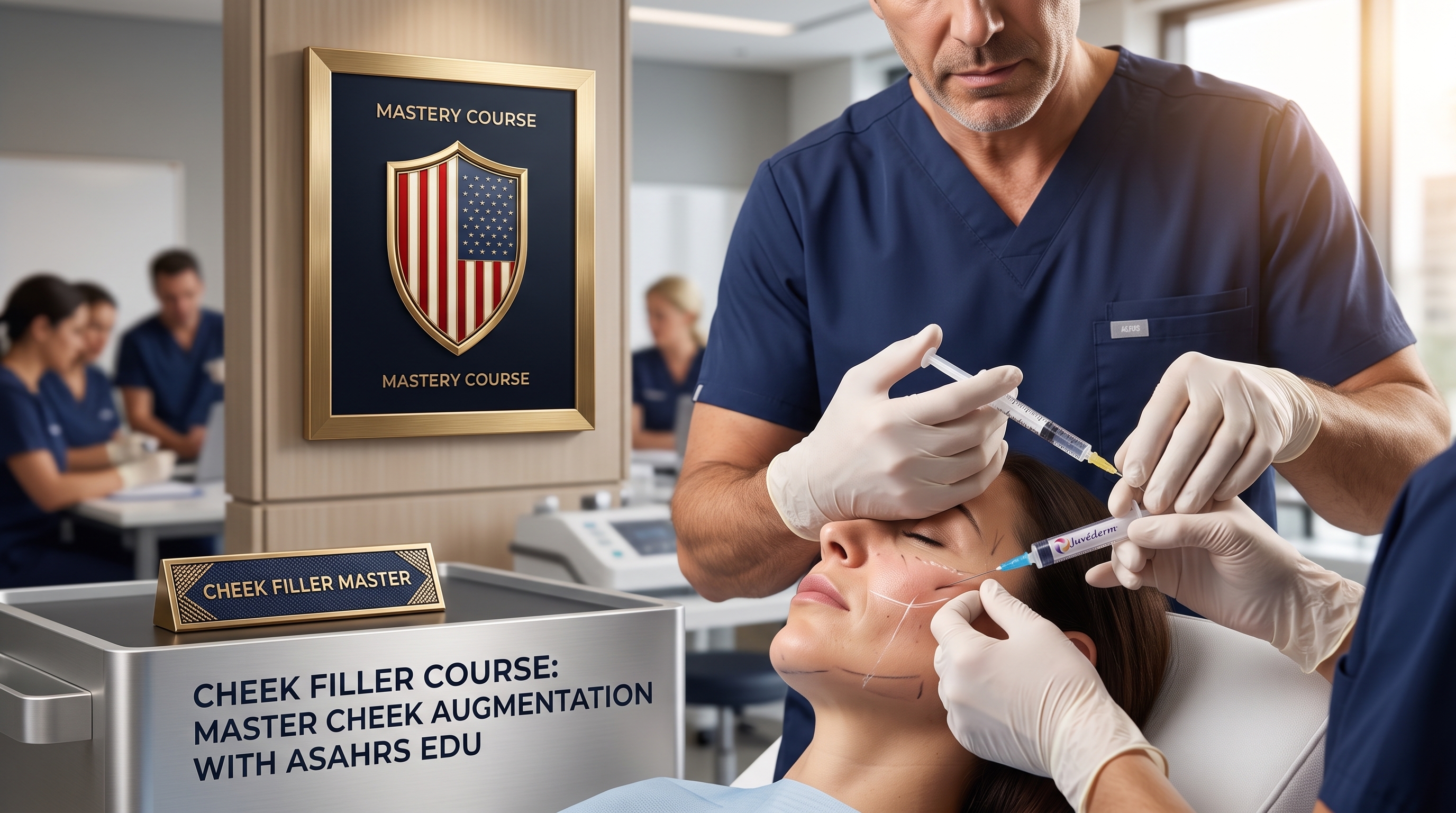
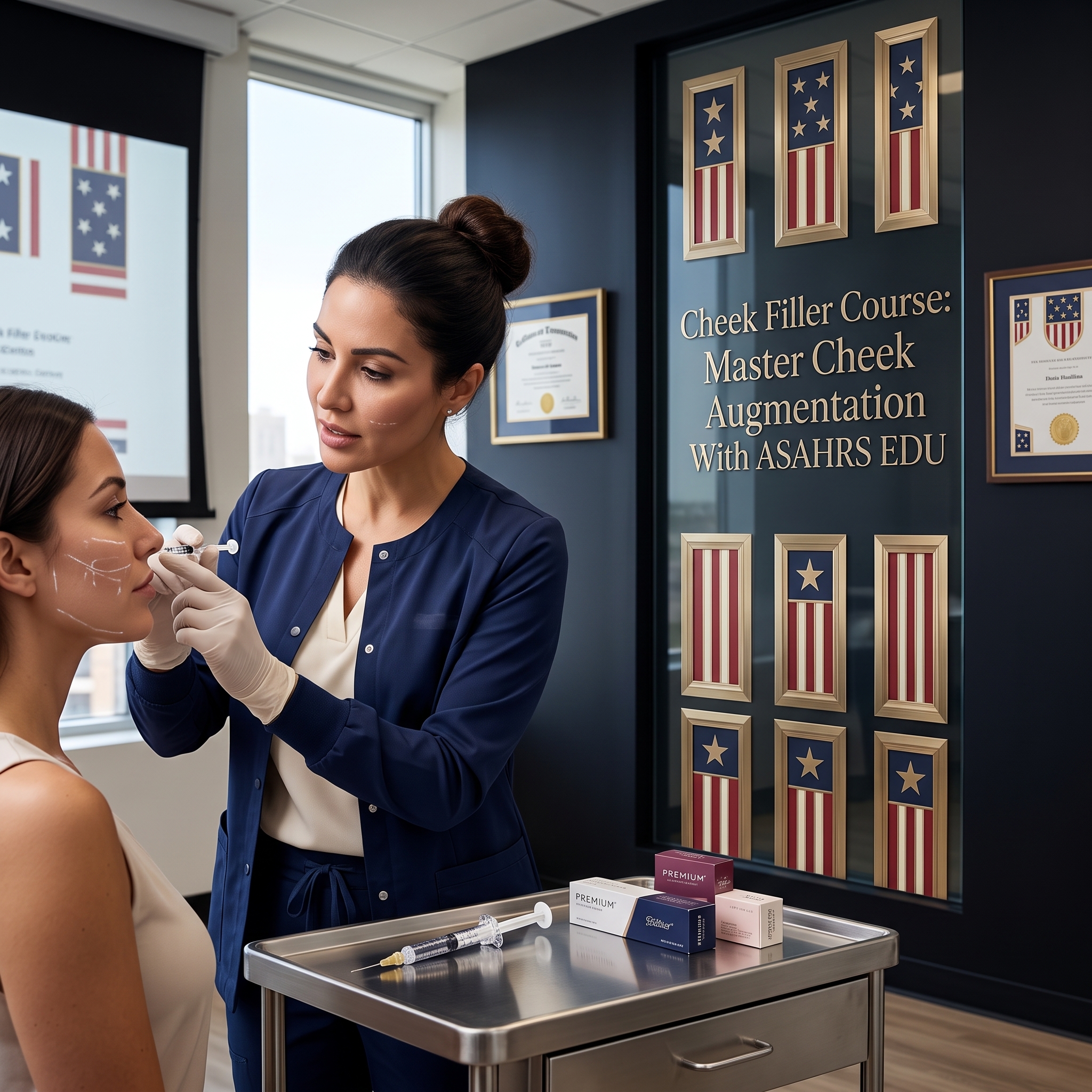
ASAHRS cheek filler course seekers face a crowded market of short workshops and vendor-driven demos that leave clinicians uncertain about safety, anatomy and long-term practice growth. ASAHRS EDU addresses that gap with a single integrated Fellowship in Aesthetic Medicine that treats a cheek filler course as a core clinical competency inside a complete 40-module curriculum, combining online preparation, in-person clinical education and supervised hands-on participation. Program Curriculum and Dates and Locations explain cohort structure, while prospective applicants can Speak with an advisor to confirm eligibility and schedule.
Clinicians seeking a rigorous cheek filler course need more than injection technique; they need anatomy, complication management, device-neutral judgment and a business plan to integrate treatments safely into practice. ASAHRS EDU structures that learning across phased modules and supervised cases, and every enrolled fellow receives access to the Student Portal, recorded session reviews and device-comparison worksheets to evaluate products objectively. Physician Reviews and Program Experience offer video testimonials and day-by-day expectations so you can preview the learning model before you apply.
Choosing a reputable cheek filler course means choosing a program that teaches evidence-informed techniques, emphasizes safety and supports practice growth with marketing and SOPs. ASAHRS EDU blends those elements: technology-neutral education that explains energy–tissue interaction and product selection, safety drills for vascular events and a dedicated business module for treatment‑menu design and membership models. For more information on credentialing and certification pathways, review the Aesthetic Medicine Board Certification page and meet faculty via the Faculty profiles.
Physician Video Reviews
ASAHRS places physician voice and video testimony at the center of program validation, and the cheek filler course is represented by practicing clinicians who detail case selection, complication management and practice integration.
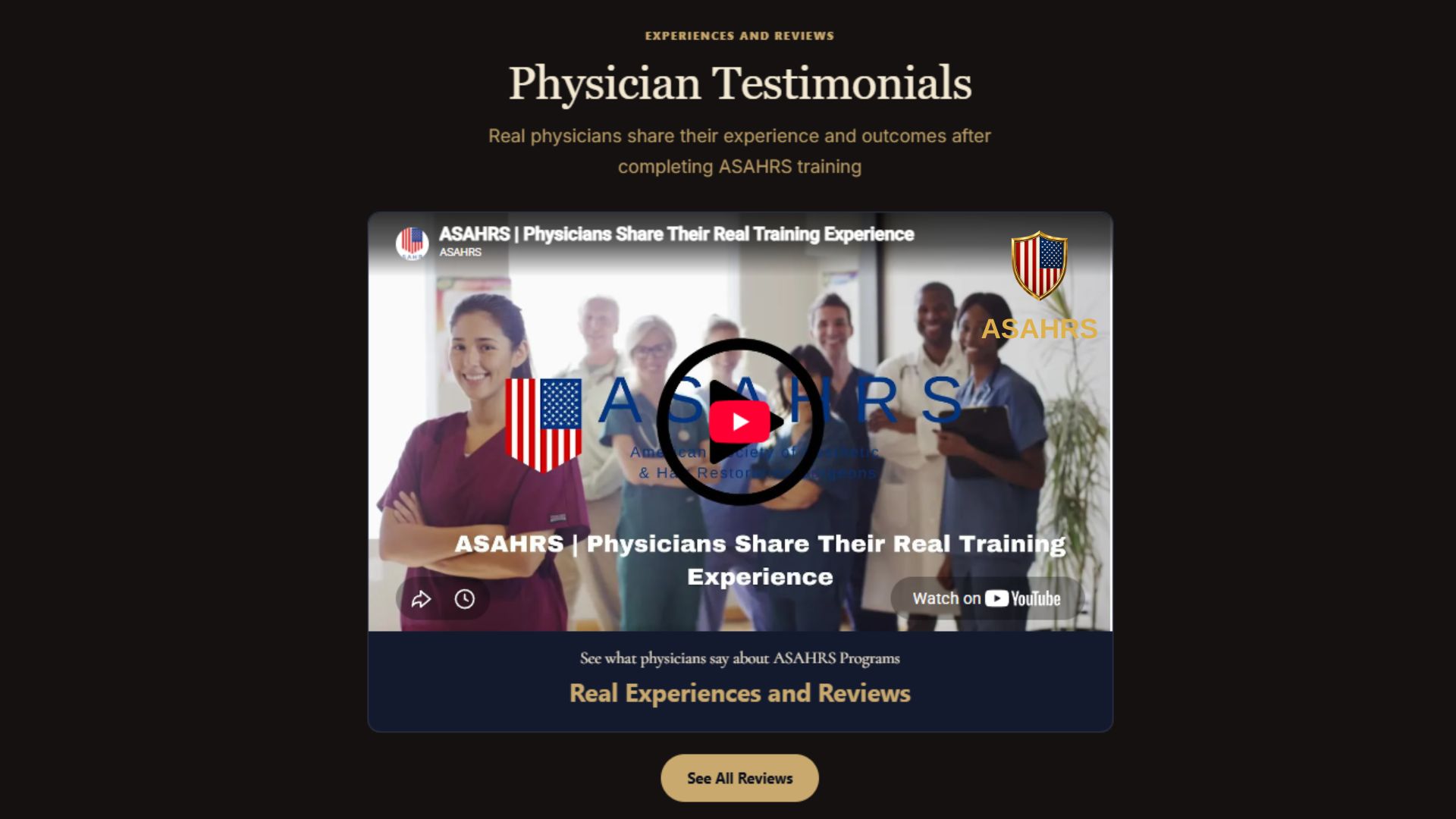
Clinicians evaluating a cheek filler course should look for demonstrated outcomes, complication stories and the faculty’s approach to escalation; the video reviews on the site let you see those elements in real practice context. Reviews and Success Stories include named contributors and recorded cases that address anatomy, product selection and immediate management steps for adverse events.
Inside the physician review collection you'll find concise summaries of what fellows value most about the cheek filler course at ASAHRS EDU, and those summaries are supported by longer faculty-led case breakdowns. The most requested review themes include improved complication response, confidence in parametric decision-making and real-world practice integration, all of which are documented for transparency.
Here are the practical takeaways fellows consistently report after reviewing physician videos and completing the program:
- Enhanced Safety — improved recognition and management of vascular compromise and filler complications.
- Clinical Confidence — structured anatomy-first modules and supervised injections build reproducible technique.
- Practice Impact — clinical protocols, SOPs and marketing templates accelerate patient acquisition and retention.
- Ongoing Support — Student Portal resources, recorded session reviews and faculty Q&A archives aid long-term growth.
Synthesizing these video reviews, clinicians repeatedly highlight that the program’s integrated approach — combining a rigorous cheek filler course with business systems and safety workflows — differentiates ASAHRS EDU from weekend-only workshops. See Physician Reviews and use the video gallery to confirm the program’s relevance for your practice.
EXPERIENCES AND REVIEWS
Physician Testimonials
Real physicians share their experience and outcomes after completing ASAHRS training
See All ReviewsWhy ASAHRS EDU's Cheek Filler Course Stands Apart
ASAHRS designed the cheek filler course as part of an integrated Fellowship that delivers a complete 40-module curriculum across structured phases to ensure competency and safe escalation. Program Curriculum and the phased model are built around anatomy-before-technique principles, progressive hands-on mentoring and evidence-informed complication protocols so clinicians graduate with real-world readiness. The curriculum is delivered across online preparation, in-person clinical days and supervised hands-on cases, with clear documentation and checklists hosted on the Student Portal for ongoing reference.
What makes this a superior cheek filler course is its technology-neutral stance: fellows learn product and energy evaluation rather than vendor-specific tricks, enabling clinicians to assess hyaluronic acid formulations, cohesive fillers and biostimulatory agents objectively. The program provides device-comparison worksheets and practical budgeting guidance so learners can make informed purchasing or leasing decisions, and the course discusses combination treatment sequencing with injectables, lasers and RF. Prospective students can compare module descriptions on the Program Curriculum page and find relevant cohort details on the Dates & Locations listing.
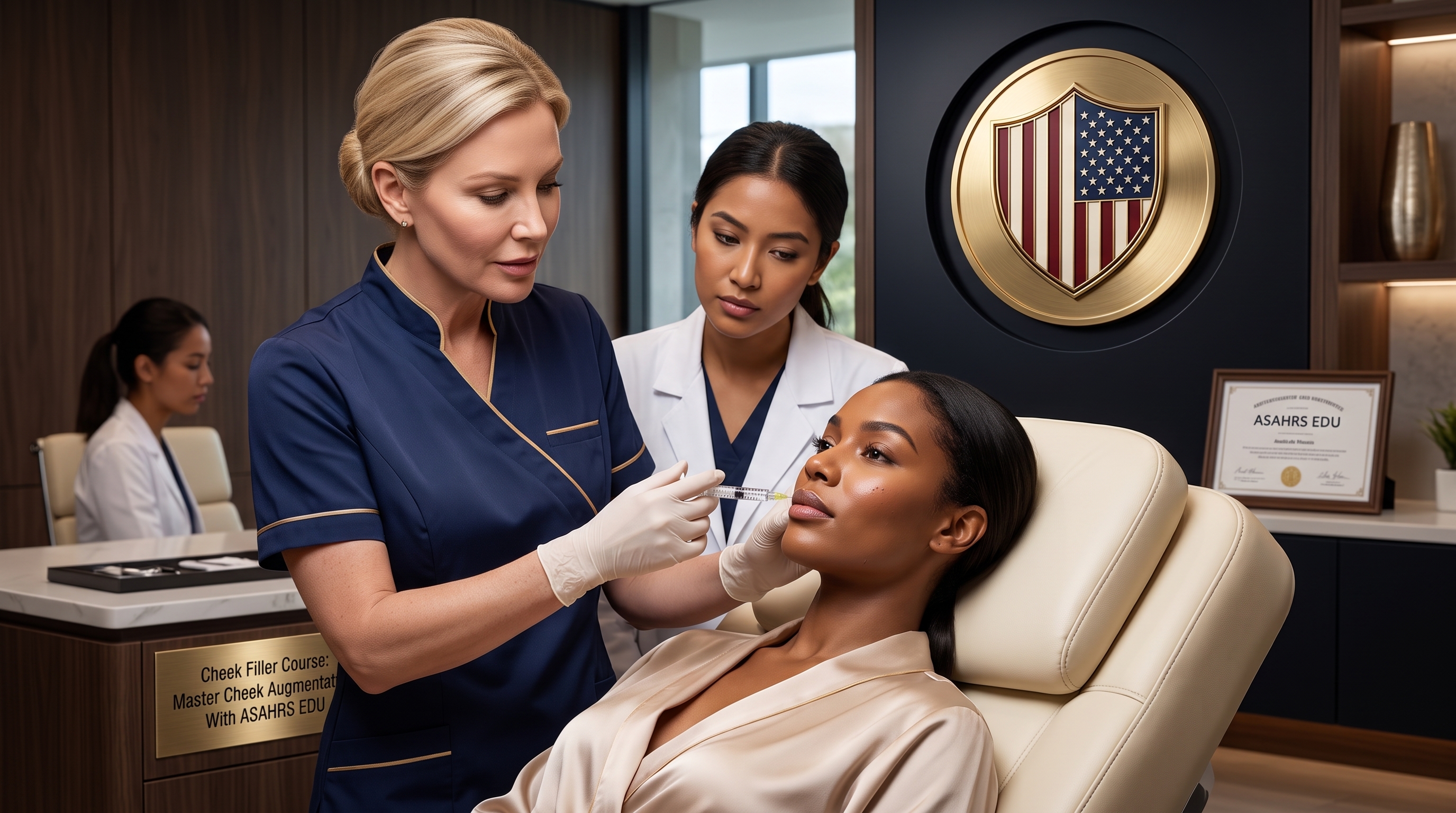
Clinically the course emphasizes a layered approach to cheek augmentation: precise anatomy mapping, conservative product selection, parameter-specific injection plans and emergency protocols for vascular occlusion. Trainers demonstrate cannula versus needle strategies, filler rheology selection and how to titrate volume safely while preserving natural facial dynamics. Students finish the module with SOP templates for consent, photography standards and post-procedure follow-up plans stored in the Student Portal for immediate clinic adoption.
For clinicians who want to verify outcomes, the curriculum pairs didactic modules with supervised case logs and recorded session reviews so faculty can review technique and provide correction. Faculty include named contributors and scientific fellows who publish and present on injection safety and outcomes, and the Fellowship’s post-program resources maintain long-term access to those materials.
Ready to take the next step?
Book a Free ConsultationTechnology & Technique
ASAHRS teaches a technology-neutral approach to injectable technique so clinicians can evaluate fillers, cannula systems and adjunct devices without vendor bias, which is essential for any comprehensive cheek filler course. The modules cover filler rheology, cohesivity, and expected soft-tissue outcomes alongside risk profiles and reversal strategies, and the program includes device-comparison worksheets, QA checklists and parameter-selection guides to support objective purchasing decisions. To preview those modules, review the Program Curriculum or the Program Experience summary.
Practically this means fellows learn how to choose filler type by anatomical layer and desired lift, how to select needle versus cannula based on vascular mapping and how to plan volumes that preserve natural cheek projection. The course teaches injection endpoints, safe depth ranges and conservative bolus placement to minimize complications, and it includes practical drills on hyaluronidase dosing and management of nodules and granulomas. For specifics on module design and device demos, consult the Dates and Locations page where cohort device sessions are listed.
Safety is integrated into technique teaching: ocular and vascular risk reduction, cooling strategies and emergency escalation protocols are demonstrated repeatedly in simulation and live cases. Faculty-led sessions use anatomy-first dissections and ultrasound correlation where appropriate so clinicians can visualize depth and vessel position before touching the patient, and these resources are retained in the Student Portal for reference. The program also links to broader literature and guidance, such as the FDA guidance on dermal fillers and peer-reviewed complication reviews available via PubMed for evidence alignment.
Results & Social Proof
ASAHRS documents outcomes through multiple evidence streams: physician video reviews, case galleries, published scientific fellows and ongoing cohort follow-up, forming a robust data set for evaluating the impact of the cheek filler course. The Results section emphasizes measurable skill acquisition — complication recognition time, successful hyaluronidase reversal rates in simulation, and increased clinic conversion rates when SOPs are implemented — and those metrics are discussed in faculty case debriefs. For more context and real cases, explore the Physician Video Reviews and Program Experience sections.
Participants include international clinicians and named contributors such as Dr. Thomas Warren, MD, Dr. Lydia Ferrell, MD and Dr. Rajiv Choudhary, MD, whose testimonials and published work are accessible via the Scientific Fellows and International Fellows pages. These contributors describe how the Fellowship’s integrated business modules — pricing, membership design and launch checklists — translated into measurable practice growth after implementation, and prospective fellows can review those practice impacts in the Reviews gallery.
“The comprehensive training on anatomy, complication drills and SOPs in the ASAHRS EDU cheek filler course gave me the confidence to scale cheek augmentation safely in my clinic.” — Dr. Lydia Ferrell, MD
Quantitatively the program tracks post-course engagement: alumni return rates to recorded case reviews, use of templates from the Student Portal and participation in faculty Q&A sessions, which all indicate sustained competency and reduced complication incidence. For independent evidence about complication rates and safety best practices, readers may consult a peer-reviewed summary on filler complications available through PubMed (Complications of Soft Tissue Augmentation), which the program uses to inform its teaching. The combination of internal outcome tracking and external evidence creates a transparent results framework for prospective applicants.
Want personalized advice?
Schedule Your AssessmentLocations & Access
ASAHRS delivers the cheek filler course via a blended-learning format: comprehensive online preparation plus in-person cohorts with supervised hands-on participation where local rules permit. Interested clinicians should review the Dates & Locations or the Program Dates listing for cohort cities, venues and published faculty, and once enrolled fellows receive detailed logistics through the Student Portal. The program accepts eligible international fellows and documents cohort-specific device demos and faculty assignments on the Dates & Locations page.
Logistically the Fellowship issues venue details and arrival logistics only to confirmed participants, and the admissions process is rolling with limited cohort capacity to preserve ratio-based supervision. Applicants can Apply Now or Contact Us to schedule a Program Advisor call for eligibility, tuition and travel planning, and the Apply page contains admission checklists and tuition details. For cohort-specific device demos and hands-on scheduling, consult the Dates and Locations entry for that cohort.
Accessibility is supported through ongoing student access to recorded sessions, templates and checklists even after in-person attendance, and the Fellowship’s digital manual and resources remain available on the Student Portal for alumni. Prospective participants who want to preview materials can request the Program Guide via Contact Us and schedule a Program Advisor call to discuss cohort fit and availability.
Trust, Safety & Guarantee
ASAHRS frames the cheek filler course around explicit trust pillars: anatomy before technique, complication prevention and clear escalation protocols, transparent tuition, and a certificate of completion that documents competency without altering legal scope of practice. The Fellowship emphasizes emergency preparedness, vascular compromise recognition and immediate management steps, and those teachings are reinforced with simulated drills, SOP templates and faculty supervision during live cases. For formal statements on privacy and legal safeguards, review the Privacy and Terms pages.
Enrollment includes clear tuition disclosures, enrollment deposit policies and payment options outlined on the Tuition page, and the program is transparent that the certificate of completion does not grant new licensure or guarantee clinical income. Student liability, data handling and administrative contact details are documented in the Privacy Policy and Cookie Notice, and the program provides a point-of-contact for escalation and dispute resolution. To confirm board pathways and credential relevance, consult the Board Certification page.
“Safety-first training and anatomy-focused modules are the reason I chose ASAHRS EDU for my cheek filler course; the escalation workflows are practical and clinic-ready.” — Dr. Thomas Warren, MD
Finally applicants should note that the Fellowship does not promise specific practice outcomes, patient volumes or income increases; instead, it provides the systems, supervision and resources proven to increase clinical competence and practice readiness. The most current cohort listings and application instructions are maintained on the Dates & Locations page and interested clinicians can always Speak with an advisor for a tailored eligibility discussion.
See how we can help you
Get Started TodayConclusion
ASAHRS built the cheek filler course as a fully integrated component of a Fellowship that combines a 40-module curriculum, technology-neutral device education, safety-first complication training and business systems to make clinicians practice-ready. The program’s strengths — anatomy-first teaching, supervised hands-on cases, device-comparison tools and ongoing Student Portal support — form a single-enrollment pathway that is hard to replicate in short-format workshops. Prospective applicants should review the Program Curriculum, watch Physician Video Reviews and then Apply or Contact Us to schedule an advisor call and confirm cohort fit.
Choosing a cheek filler training pathway is a pivotal career decision, and clinicians who choose ASAHRS EDU gain a structured curriculum, international faculty access, practical SOPs and documented safety training that support long-term clinic integration. To preview resources or download the Program Guide, visit the Student Portal or arrange a conversation via the Contact page; foundation cohort seats fill quickly and the program operates on a rolling admissions basis. Begin your evaluation today: review Dates and Locations, review the Faculty and make an informed application through the Apply page.
Frequently Asked Questions
What makes ASAHRS EDU’s cheek filler course different from a weekend workshop?
ASAHRS delivers an integrated Fellowship model rather than an isolated workshop: the cheek filler course is embedded within a 40-module curriculum, includes pre-course online preparation, in-person supervised cases and post-program resources in the Student Portal. This model emphasizes anatomy, complication management and business systems rather than single-technique exposure, and it provides ongoing faculty access and recorded session reviews for continuous improvement. For more details, read the Program Curriculum.
Do I receive hands-on experience during the cheek filler course?
ASAHRS structures supervised hands-on participation where local regulations permit, pairing didactic modules with mentored injections and simulation drills so that learners can practice cannula and needle techniques on live cases and models. Hands-on schedules and cohort assignments are published on the Dates & Locations page and confirmed to enrolled fellows via the Student Portal. Applicants can also Speak with an advisor to review hands-on ratios and supervision details before applying.
How does ASAHRS EDU teach complication management for cheek fillers?
ASAHRS prioritizes complication recognition and management with anatomy-first instruction, simulation drills for vascular compromise, hyaluronidase protocols and escalation pathways aligned with published literature. The program includes SOP templates, emergency checklists and faculty-led case reviews to ensure clinicians can act quickly and document appropriately, and additional guidance is referenced to external resources such as the peer-reviewed complication literature and FDA safety guidance. These materials are retained in the Student Portal for alumni use.
Can international clinicians enroll in the cheek filler course?
ASAHRS accepts eligible international fellows and includes international faculty and scientific fellows in its cohorts, with cohort logistics and visa guidance provided after enrollment. Prospective international applicants should consult the Dates & Locations page for cohort cities and then Contact Us to schedule a Program Advisor call that addresses eligibility and logistics. The Fellowship maintains an International Fellows page with published alumni examples and resources tailored to non‑US participants.
What post-program support does ASAHRS EDU provide after the cheek filler course?
ASAHRS provides ongoing student support via the Student Portal, which contains a digital program manual, templates, checklists, recorded session reviews and a faculty Q&A archive to support hands-on adoption and long-term learning. Graduates receive a certificate of completion and access to alumni programming, and many return to recorded case reviews or faculty discussions for advanced troubleshooting. For admissions and alumni pathways, consult Apply and the Faculty page.
Medical Information Disclaimer
This content is provided for general educational purposes only. It is not a substitute for professional advice, diagnosis, or treatment. Readers are advised to consult qualified professionals for personalized recommendations.
Have questions? We have answers.
Speak With an Expert