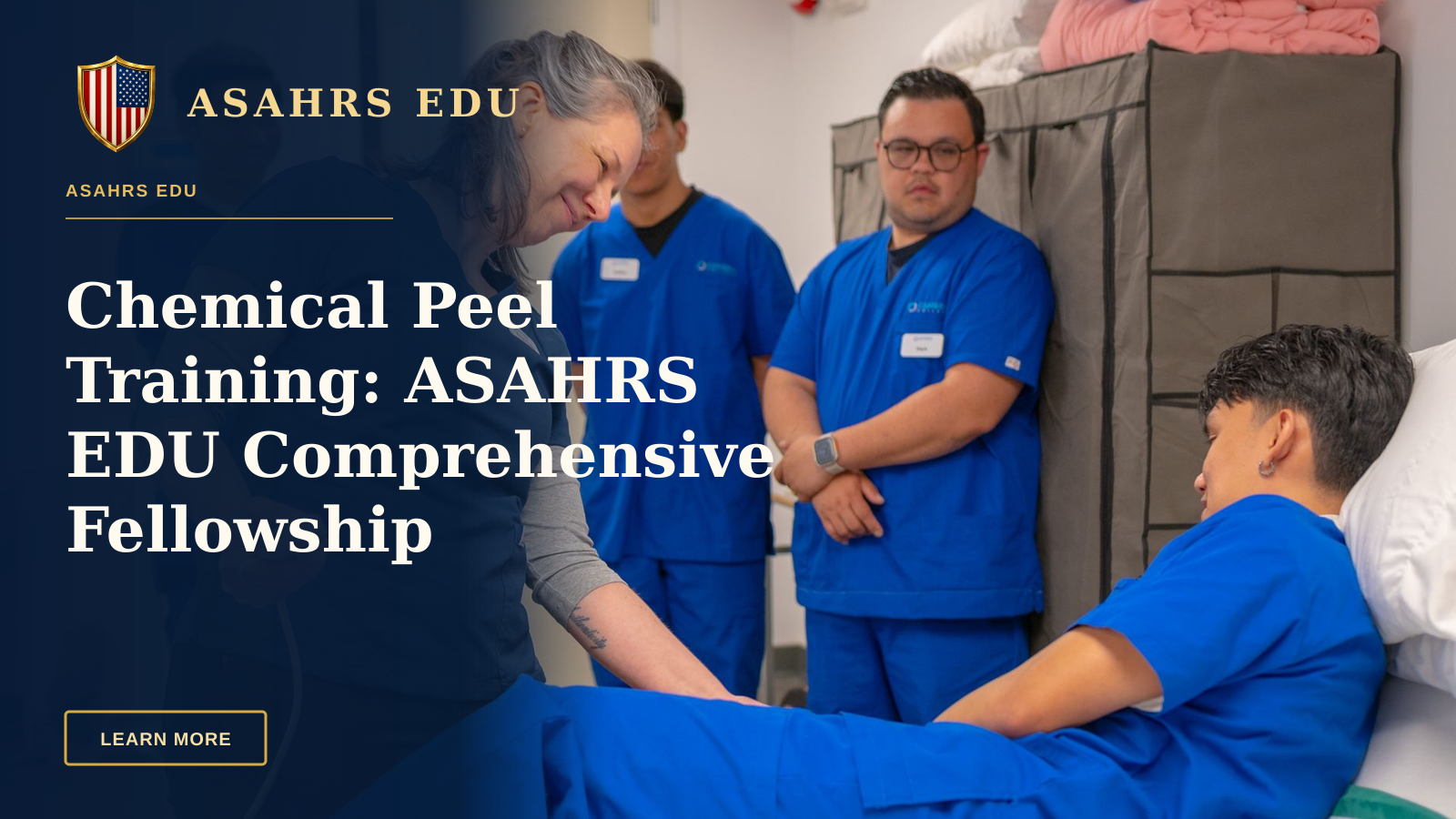
When clinicians and cosmetic teams search for rigorous chemical peel training, they need a program that pairs science, safety and business skills in a single pathway. ASAHRS EDU is the answer: a single comprehensive enrollment that includes a complete 40-module curriculum, technology‑neutral device education and integrated practice-growth systems. Program Curriculum and Dates & Locations are published for prospective applicants who want an evidence-informed route to competency in chemical resurfacing.
Clinicians choosing ASAHRS EDU for chemical peel training receive blended learning: online preparation through the Student Portal, supervised hands-on clinics, and post-program resources that support safe, scalable practice integration. ASAHRS EDU teaches energy–tissue interaction and complication management without vendor bias, and pairs clinical technique with SOPs, consent templates and practice-launch checklists. For details on cohorts and enrollment, view the Fellowship Program Dates and Apply Now pages to schedule a program advisor call.
Physician Video Reviews
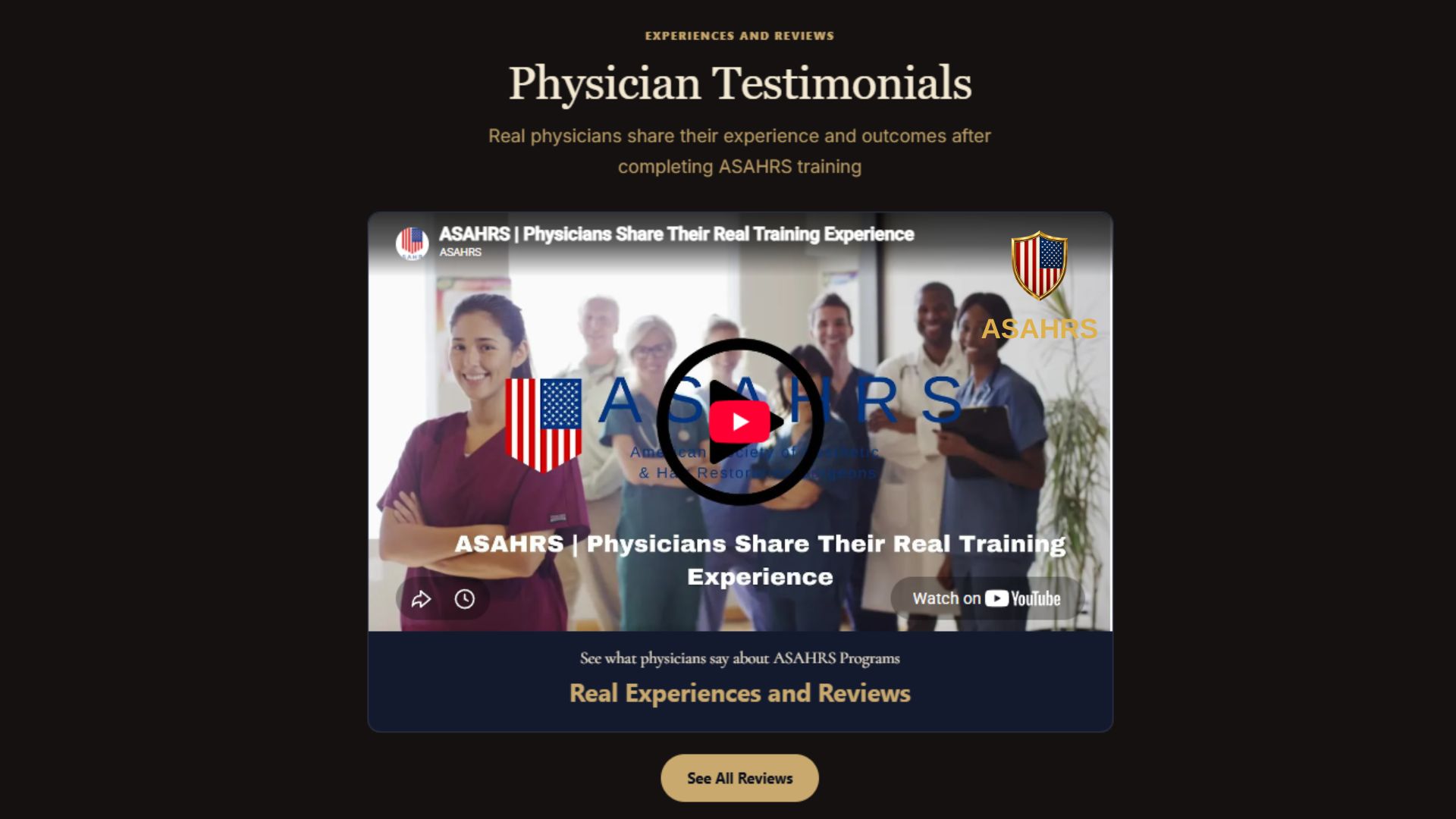
Many prospective applicants begin their decision-making by watching peers describe the learning experience and outcomes after completing chemical peel training with ASAHRS EDU. The Physician Video Reviews collection gathers candid faculty-led reflections and graduate testimonials so clinicians can evaluate real-world practice impact and curriculum depth. Visit the Physician Reviews page to watch video accounts from practicing physicians who integrated peel services into their clinics, and reference the Program Experience overview for context on hands-on training formats.
These video reviews emphasize how ASAHRS EDU balances anatomy-first teaching with practical complication management, device safety, and parameter selection. Prospective learners consistently highlight three program strengths: the evidence-based curriculum, the technology‑neutral device modules, and the integrated business training that helps turn skills into sustainable services. For admissions questions or to request a live advisor call, use the Contact Us or Speak with an advisor links on the site.
Below is a concise list summarizing the practical benefits graduates mention most frequently when describing the chemical peel training experience at ASAHRS EDU:
- Safety First—anatomy and complication algorithms taught before procedural techniques.
- Technology-Neutral device education so clinicians can evaluate any system objectively.
- Practice-Ready business modules and marketing templates that accelerate service launch.
- Ongoing Support—student portal, recorded reviews and faculty Q&A archive for continued learning.
Finally these physician-led videos are a transparent way to assess whether the Aesthetic Medicine Fellowship style and faculty roster align with your clinical goals; watch testimonials on the Reviews page and explore detailed clinician narratives under the Faculty and Scientific Fellows listings.
EXPERIENCES AND REVIEWS
Physician Testimonials
Real physicians share their experience and outcomes after completing ASAHRS training
See All ReviewsTechnology & Technique: Evidence‑First Chemical Peel Education
Effective chemical peel training requires more than recipes; it demands an understanding of skin biology, agent selection and energy–tissue interaction that is device‑ and vendor‑agnostic. ASAHRS EDU excels in this area by teaching fundamentals such as epidermal vs. dermal remodeling, agent penetration, neutralization strategies and how to predict endpoints for different Fitzpatrick skin types. The Program Curriculum breaks these topics into dedicated modules so learners can master acid chemistry, layering techniques and combination therapies with injectables, lasers, and microneedling.
Our technology‑neutral approach is central to how ASAHRS EDU teaches parameter selection, cooling strategies, and ocular protection, allowing clinicians to evaluate any resurfacing adjunct objectively. Trainees work through device‑comparison worksheets and QA checklists in the Student Portal, which includes practical examples of neutralization times, concentration ladders and post-peel dressing algorithms. This focus reduces bias and produces clinicians capable of making purchase decisions and clinical adjustments that match their patient population and practice economics.
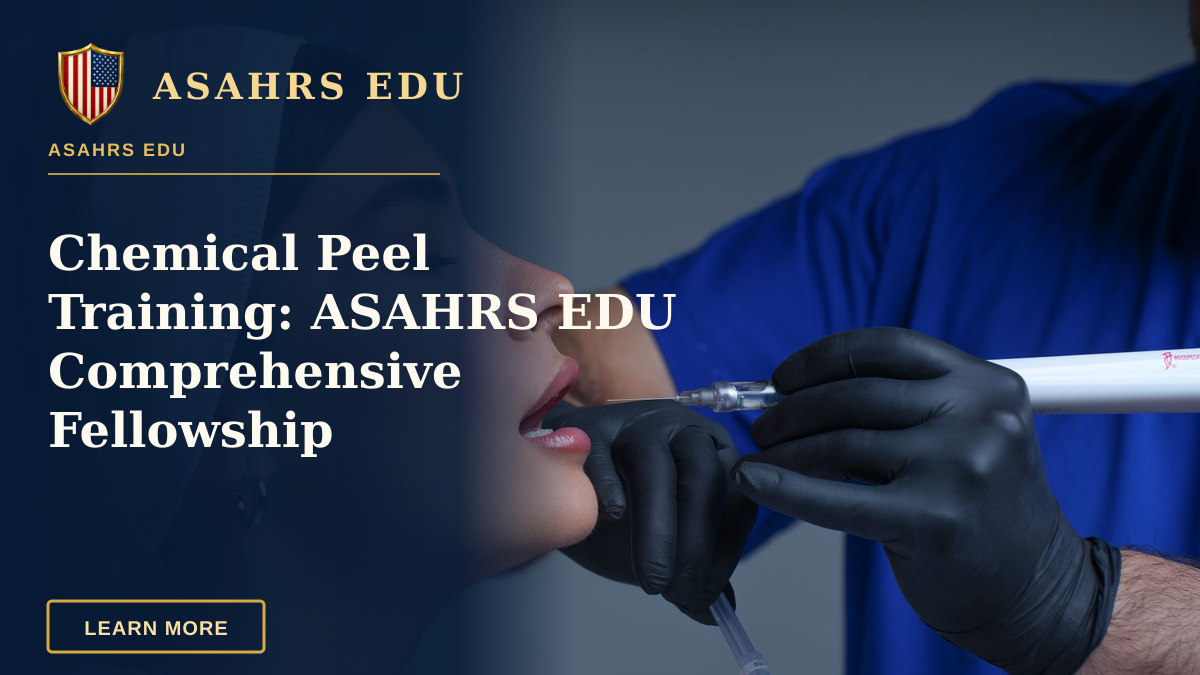
Practical in-person sessions reinforce theoretical lessons through supervised demonstrations and hands-on patient cases where permitted; these sessions are listed on the Dates and Locations page. The modules include safety checkpoints, adverse event recognition, and escalation pathways so that every participant leaves able to prevent, recognize and manage pigmentary or thermal complications. External evidence guides our protocols; review clinical summaries from the PubMed literature and practical guidance from the American Academy of Dermatology as foundational references used across the curriculum.
Ready to take the next step?
Book a Free ConsultationResults & Social Proof: Outcomes From Clinicians Who Trained With ASAHRS EDU
Clinician outcomes are the most persuasive evidence of program efficacy when evaluating any chemical peel training provider. ASAHRS EDU documents participant experiences through the Physician Video Reviews, written Success Stories, and longitudinal case registries maintained for educational purposes. Graduates such as Dr. Thomas Warren, MD, Dr. Lydia Ferrell, MD, and Dr. Rajiv Choudhary, MD contribute case studies and recorded session reviews that showcase treatment planning, pre- and post-care, and complication‑management decisions used in clinic.
These social‑proof artifacts serve multiple purposes: they validate the curriculum, demonstrate faculty mentorship in action, and provide prospective applicants with realistic expectations about learning curves and service integration. For readers seeking depth, explore the Program Experience page and the Faculty profiles that list contributors and their published works. ASAHRS EDU also supports published scientific fellows and international alumni who contribute peer-reviewed case series and educational abstracts to the wider community.
What graduates consistently report is not just improved technique but a change in how they present services to patients: clearer consent conversations, SOP-driven pre-care, and standardized photography protocols that increase patient satisfaction and reduce avoidable adverse events. These are documented in the post‑program materials available in the Student Portal and reinforced through the faculty Q&A archive and recorded session reviews.
Locations & Access: How To Attend Chemical Peel Training With ASAHRS EDU
Access to chemical peel training with ASAHRS EDU is intentionally flexible: all enrolled participants complete online preparatory modules, and cohorts meet for in-person supervised training where local regulations allow. The program publishes cohort schedules on the Dates & Locations page and confirms venue, faculty and logistics to enrolled participants through the Student Portal. International clinicians are welcome and supported via the International Fellows page which outlines eligibility and cohort options for overseas attendees.
Enrollment is on a rolling basis, and applicants are encouraged to Apply to the Program early to secure spots and access pre-work materials. Once accepted, participants receive detailed cohort logistics including travel guidance and local recommendations, and the administrative team coordinates schedules through the Contact point of record. If you need personalized guidance on cohort fit or tuition, use the Speak with an advisor link to book a program call.
Want personalized advice?
Schedule Your AssessmentPractice Growth, Business Integration & Patient Acquisition
Beyond clinical technique, sustainable service lines require a business plan that anticipates pricing, membership models, SOPs, and patient-acquisition systems; ASAHRS EDU integrates these topics into the fellowship so clinicians can launch confidently. The fellowship includes modules on treatment-menu design, pricing strategies, consent and charting templates, and marketing checklists that align clinical safety with revenue objectives. Trainees leave with concrete assets — consent forms, membership scripts, and a launch checklist available in the Student Portal — which turn isolated clinical skill into a repeatable clinic offering.
Marketing and acquisition content is clinical-minded: we teach how to set realistic patient expectations, build before-and-after galleries that respect privacy and consent, and design tiered offerings that match patient needs. For administrators and physician-owners, the fellowship offers SOP templates for delegation to nursing staff and guidelines for device purchase vs lease economics, all of which are discussed in the device modules on the Program Curriculum. If your focus is on board pathways or credentialing associated with aesthetic services, consult the Aesthetic Medicine Board Certification page for guidance and alignment.
Our philosophy: clinical excellence without vendor bias, and a practical roadmap from competency to clinic growth — a model that distinguishes ASAHRS EDU from single-topic courses.
Trust, Safety & Program Guarantees
Trust is built into the fellowship through explicit safety pillars that place anatomy and complication prevention before technique instruction. ASAHRS EDU teaches emergency preparedness, vascular compromise recognition, laser/thermal injury prevention and documentation standards across the curriculum while reiterating that the certificate of completion does not alter statutory licensure requirements. For program policies, privacy safeguards and legal disclosures, review the Privacy, Terms and Cookie Notice pages.
Transparency governs tuition, inclusions and exclusions: the fellowship fee covers the integrated curriculum, supervised clinical training where permitted, and post-program resources; travel, lodging and device purchases are separate. The program issues a certificate upon completion and provides ongoing access to the Student Portal resources, recorded reviews and faculty Q&A archives. For enrollment details and payment options, consult the Tuition page and reach out via the Contact Us form to schedule an admissions conversation.
Safety first: anatomy before technique, objective device evaluation, and practical complication management are non-negotiable commitments at ASAHRS EDU.
See how we can help you
Get Started TodayConclusion
Choosing the right chemical peel training program determines not only clinical competence but also patient safety and practice viability; ASAHRS EDU offers a single, integrated pathway that addresses curriculum depth, device neutrality, business systems and safety training. Through a complete 40-module curriculum delivered across blended phases, supervised hands-on participation, and ongoing student support, clinicians gain the tools to offer resurfacing services responsibly and profitably. If you want to compare curriculum modules, faculty bios, or cohort logistics, start with the Program Curriculum and then Apply Now or Speak with an advisor for personalized guidance.
ASAHRS positions itself as more than a course provider; ASAHRS EDU is a professional fellowship designed to elevate clinician skill, protect patient safety and build sustainable service lines. Visit the About page, review Faculty profiles, and watch Physician Video Reviews to see how graduates transformed their practices. When you are ready, use the Apply link to begin the enrollment process.
Frequently Asked Questions
What does the chemical peel training curriculum cover?
The curriculum covers skin anatomy, acid chemistry, depth selection, neutralization, post-peel care, pigment management, complication recognition and management, and integrated business modules. ASAHRS EDU teaches technology-neutral device evaluation, cooling strategies and ocular safety in dedicated modules and supplements didactic learning with supervised hands-on sessions. Full module outlines are available on the Program Curriculum page.
Is the program suitable for international clinicians?
Yes — qualified international clinicians are welcome to apply and may participate in cohorts where local regulations permit. ASAHRS EDU lists cohort options and international fellowship details on the International Fellows page and coordinates logistics through the Student Portal upon enrollment. Contact the admissions team via the Contact Us link for eligibility guidance.
Do you provide ongoing support after the course ends?
Absolutely — ASAHRS EDU provides post-program resources including recorded session reviews, a faculty Q&A archive, templates, checklists and device-comparison worksheets accessible through the Student Portal. Graduates can revisit content, review recorded cases and access the community network of scientific fellows and faculty while building their practice. For previews and free resources, request the downloadable program guide via the Contact page.
Does completion grant board certification?
Completion of the fellowship results in a certificate of completion but does not itself constitute board certification or change statutory scope of practice. ASAHRS EDU provides guidance on pathways and alignment with credentialing bodies; consult the Aesthetic Medicine Board Certification page for more information and the limits of what the certificate represents. Always verify local licensure and privileges before adding new procedures to your practice.
How do I schedule a call to determine fit for my practice?
To schedule a personalized program advisor call, use the Contact Us or Speak with an advisor links on the site. Advisors can review eligibility, cohort dates, tuition options listed on the Tuition page and advise on the best cohort for clinical focus or regional needs. Enrollment information and the Apply form are on the Apply page.
Ready to advance your practice? Watch physician testimonials, review the curriculum and Apply Now to join an evidence-based, safety-first fellowship in chemical peel training with ASAHRS EDU.
Medical Information Disclaimer
This content is provided for general educational purposes only. It is not a substitute for professional advice, diagnosis, or treatment. Readers are advised to consult qualified professionals for personalized recommendations.
Have questions? We have answers.
Speak With an Expert