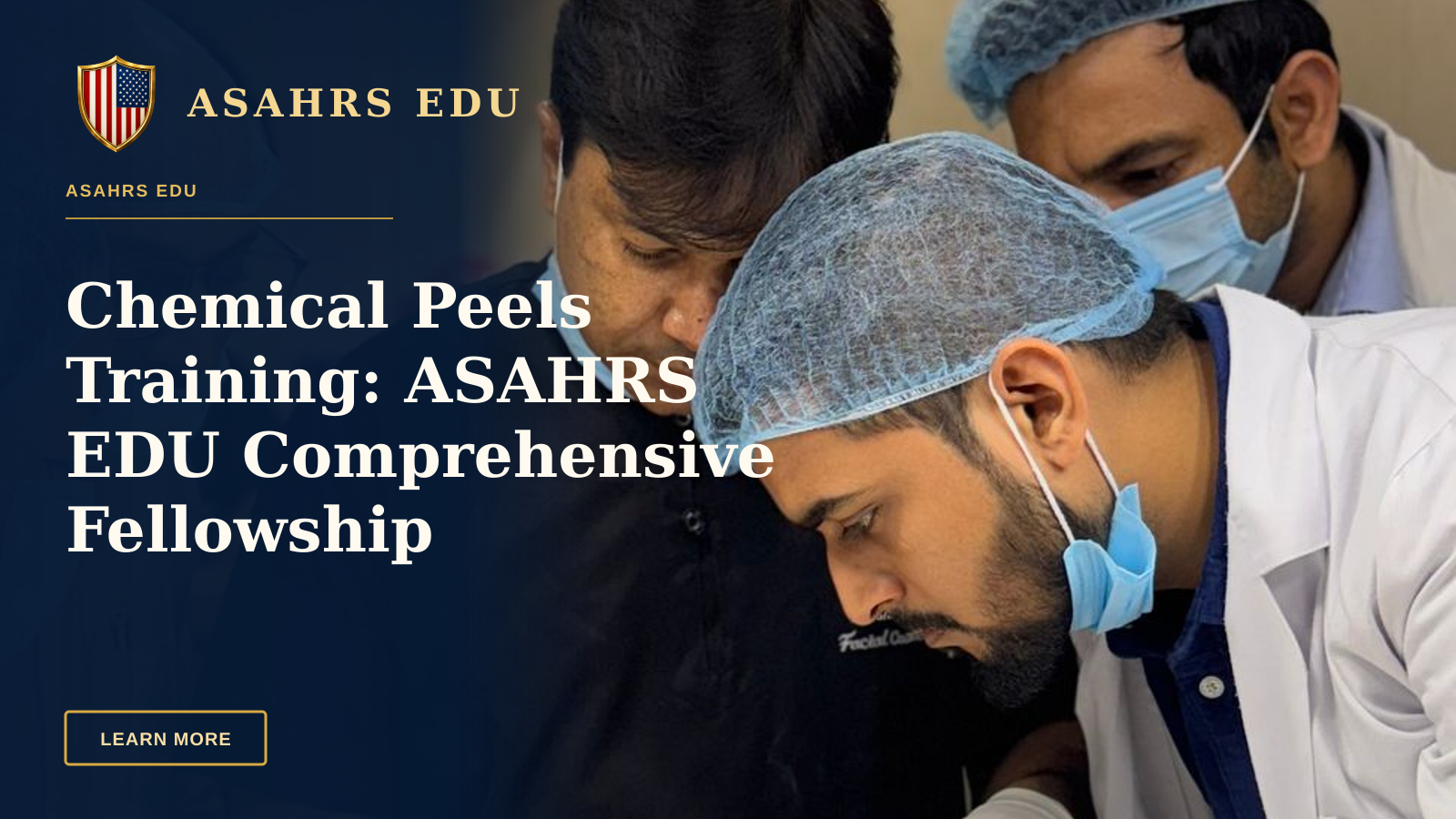
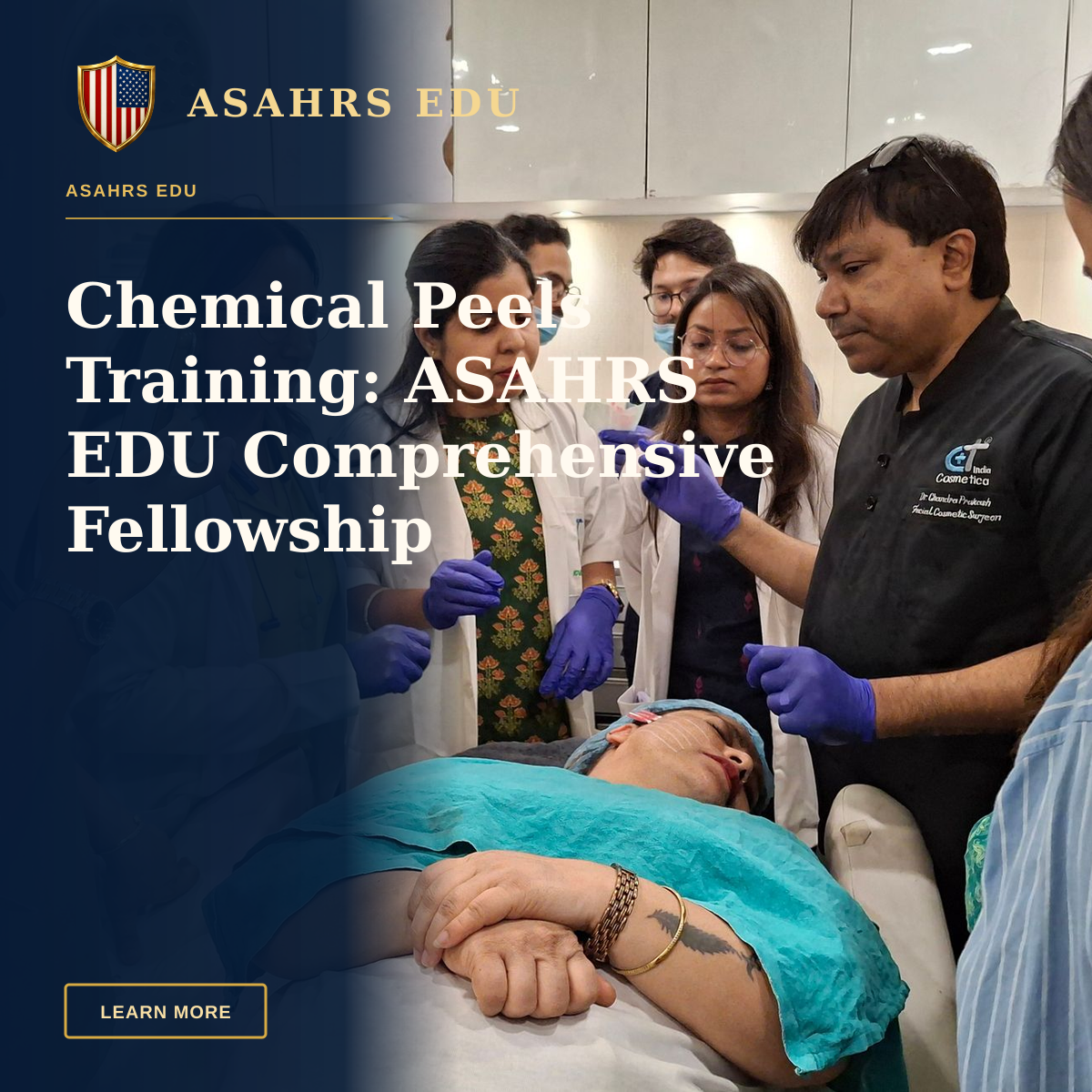
When clinicians seek advanced **chemical peels training** they are looking for more than technique—they need safety, device literacy and practice systems that translate skills into responsible, sustainable care.
ASAHRS recognized this gap and built **ASAHRS EDU** as a single integrated Fellowship in Aesthetic Medicine that treats **chemical peels training** as both a clinical science and a practice-building discipline, combining a full 40‑module curriculum, supervised hands‑on sessions and ongoing post‑program support. Learn about our Program Curriculum, how to Apply Now and the voices of graduates on the Physician Reviews page.
Because **ASAHRS EDU** centers **technology‑neutral** instruction and a safety-first approach, our **chemical peels training** teaches energy–tissue chemistry, patient selection, post‑peel protocols and complication management without vendor bias, while also equipping clinicians with SOPs, consent templates and marketing systems to implement services responsibly in practice.
Physician Video Reviews
Many prospective fellows first ask for real-world experience from clinicians who completed **chemical peels training** with **ASAHRS EDU**, and our Physician Video Reviews gallery provides hundreds of minutes of candid feedback and case walkthroughs from practicing physicians. These video reviews illustrate how the Fellowship translates to clinic workflows, informed consent, peel selection and complication prevention, and they are accessible for prospective applicants to review on our Physician Reviews page.
Watch short modules where faculty and graduates describe pre‑op assessment, informed consent language and the exact parameter decision process used in supervised sessions, and then review the post‑peer case discussions to understand escalation pathways and documentation practices. The video gallery is complemented by the Program Experience descriptions and written testimonials available through our Program Experience page and the Faculty pages that list contributors and scientific fellows.
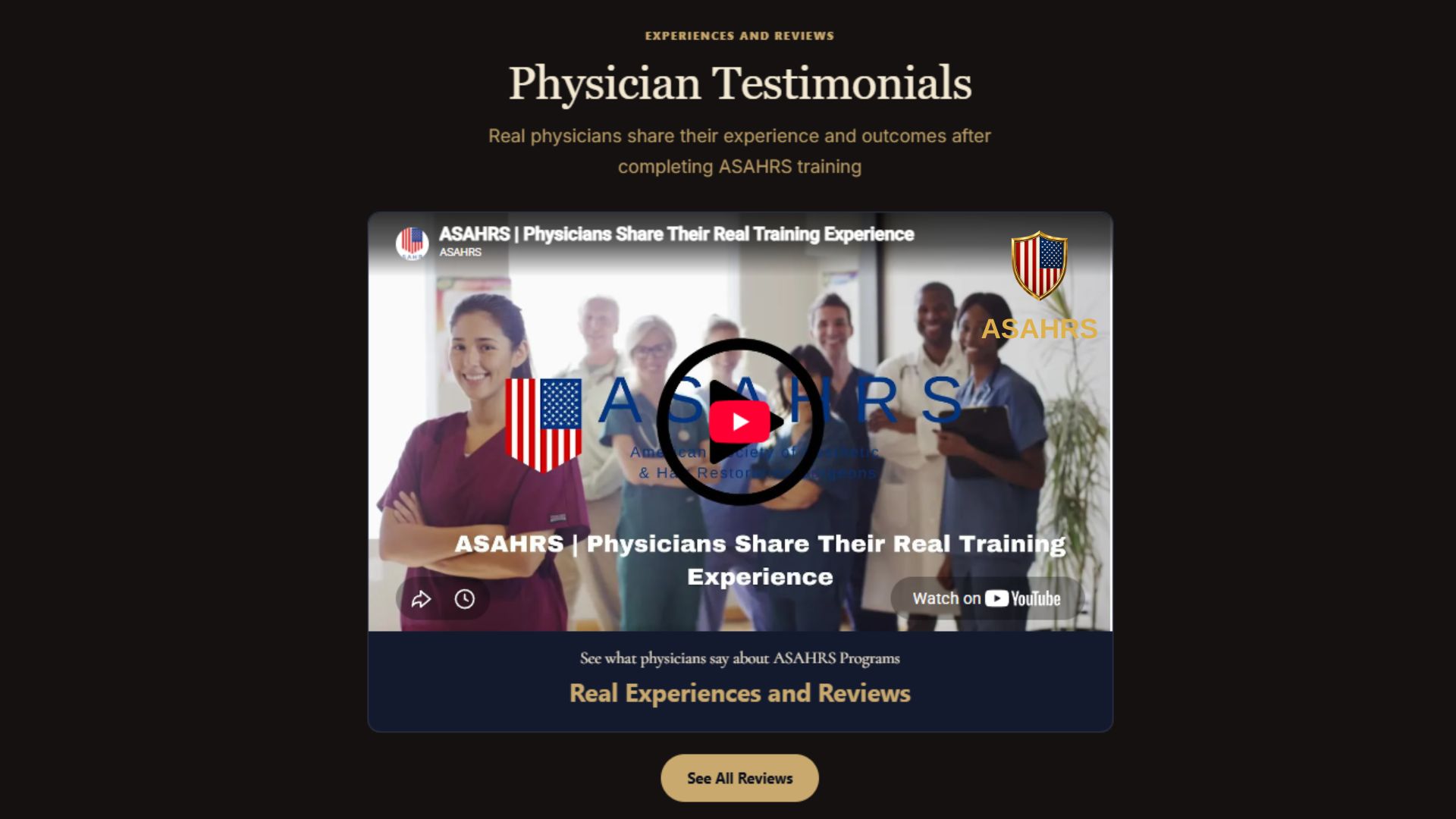
For busy clinicians, seeing peers speak directly about outcomes, billing integration and informed refusal conversations is invaluable; our Physician Video Reviews show how graduates from varied specialties — ENT, family medicine, dermatology and anesthesiology — applied **chemical peels training** in diverse practice settings. The reviews also highlight faculty mentorship opportunities and the ongoing support structure available on the Student Portal for review of recorded sessions.
Key takeaways from these videos are summarized below, and they outline the practical value of the Fellowship as both education and an operational blueprint:
- Real Cases: Step‑by‑step peel selection and complication worksheets from supervised clinical sessions.
- Workflow: Integration of pre‑visit photos, consent scripts and post‑peel follow‑ups into SOPs.
- Outcomes: Measured patient satisfaction metrics, downtime expectations and retreatment planning.
- Support: Ongoing faculty Q&A and recorded session libraries for case review.
Explore the full set of physician narratives and then See All Reviews to watch individual accounts; graduates frequently cross‑link to our Faculty and International Fellows pages to highlight mentorship and collaborative research opportunities post‑graduation.
EXPERIENCES AND REVIEWS
Physician Testimonials
Real physicians share their experience and outcomes after completing ASAHRS training
See All ReviewsTechnology & Technique: Evidence‑Informed Chemical Peels Training
Clinicians choosing **chemical peels training** need rigorous education in peel chemistry, energy–tissue interaction, and parameter selection, and **ASAHRS EDU** structures these topics across dedicated modules in the Program Curriculum to ensure reproducible competence. We teach the biochemical basis of superficial, medium and deep peels, the interplay between pH, concentration and buffering agents, and how to escalate treatment intensity safely across Fitzpatrick skin types using objective endpoints and cooling strategies.
Our technology‑neutral approach emphasizes principles rather than product loyalty: fellows learn how to evaluate peel formulations, identify appropriate indications for glycolic, salicylic, TCA, phenol and combination regimens, and use validated checklists to anticipate pigmentary shifts and scarring risks. This module includes device‑adjunct guidance (e.g., when to combine peels with microneedling, RF or LLLT) and a practical device‑comparison worksheet that clinicians can apply to vendor proposals and lease vs purchase decisions.
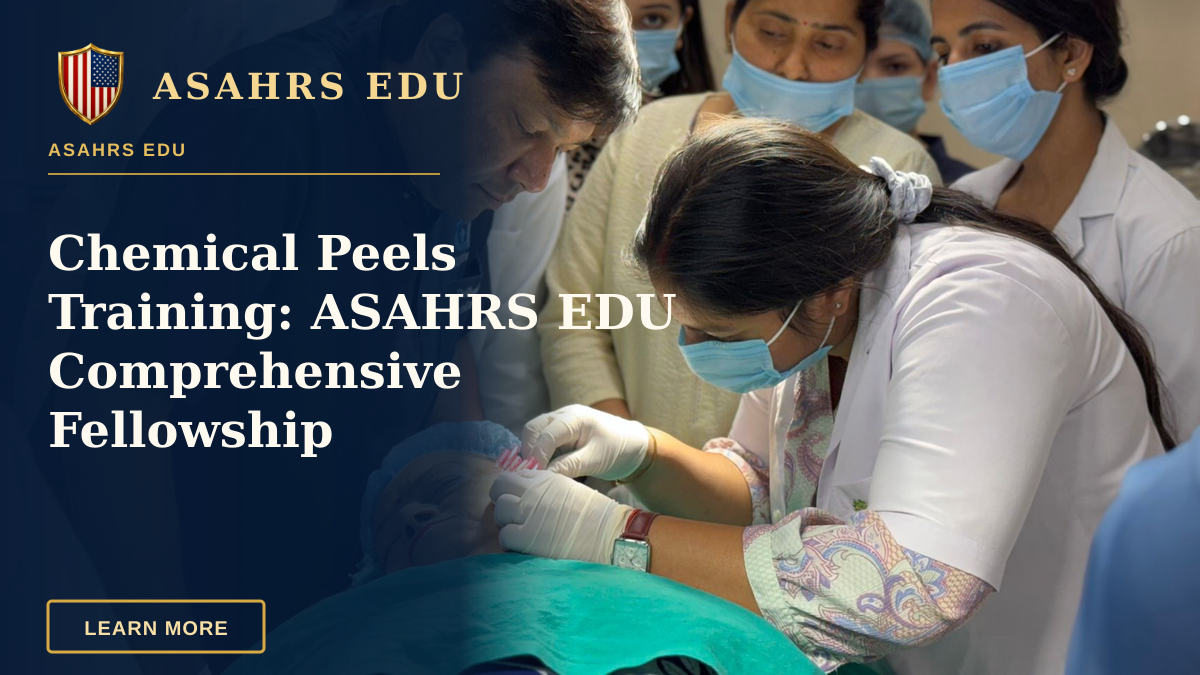
ASAHRS ensures these lessons are grounded in supervised clinical practice: in‑person sessions allow parameter selection under faculty oversight, while the Student Portal provides downloadable templates for pre‑peel photos, consent wording and stepwise emergency response protocols. Fellows also study ocular protection, neutralization timing, and post‑peel dressing techniques to minimize infection and pigmentary complications, with faculty demonstrating real‑time endpoints during cohort clinical days.
For clinicians who want the evidence base, we link to primary literature and practice guidance during the module — for example, summaries from the American Academy of Dermatology and patient safety resources at the Mayo Clinic provide context for peel safety and patient selection (AAD Chemical Peel Guidance, Mayo Clinic Overview). Each fellow receives device QA checklists and cost worksheets to evaluate consumables, service contracts and maintenance considerations.
What distinguishes **ASAHRS EDU** is the combination of science, hands‑on practice and safety margins: modules highlight conservative parameter selection for darker skin types, neutralization protocols, and written escalation plans that are part of the program's safety curriculum and available in the Student Portal for immediate clinic adoption.
Ready to take the next step?
Book a Free ConsultationLocations & Access: How To Join The Fellowship
Access to **chemical peels training** must be practical for clinicians with busy schedules, which is why **ASAHRS EDU** delivers a blended learning model: online pre‑work followed by regional in‑person cohorts listed on our Dates and Locations page.
All enrolled participants receive Student Portal credentials with pre‑program modules, the digital Program Manual and logistics information; cohort entries provide date, city and faculty details and are updated on the Program Dates page. International clinicians are welcomed where local regulations permit, and the Fellowship maintains an International Fellows roster to demonstrate global participation.
Enrollment operates on a rolling basis and confirmed participants receive detailed venue addresses, travel guidance and partner hotel information; clinicians uncertain about cohort fit can Speak with an advisor to schedule a program call and review eligibility. Practical cohort logistics and supervised hands‑on schedules appear in the Student Portal and are reinforced in the Program Experience materials found on the Program Experience page.
For applicants ready to secure a place, the site provides streamlined options to Apply to the Program and view tuition and payment information on the Tuition page; applicants can also request the downloadable Program Guide via the Contact Us form prior to enrollment.
Integrated Business, Marketing & Practice Growth For Peels
Clinicians must translate new skills into consistent patient care and sustainable practice lines, so **ASAHRS EDU** explicitly teaches practice‑setup, treatment‑menu design, pricing, membership models and patient‑acquisition systems in dedicated business modules of the Fellowship. These modules include SOP templates, pricing worksheets and membership models that are downloadable from the Student Portal and immediately adaptable to private practice, group clinics or hospital outpatient settings.
During the in‑person experience we run practical workshops on photography standards, consent scripting and post‑procedure communications so that clinicians can reduce no‑shows, document outcomes and optimize patient satisfaction. The program also offers marketing launch checklists and digital patient-acquisition tactics that align with compliance and privacy policies outlined on our Privacy and Terms pages.
ASAHRS frames these modules around measurable outcomes: clinicians track booking conversions, average revenue per visit and retreatment rates using templates included with enrollment, and faculty-led case discussions help refine messaging and service bundles that respect medical ethics while supporting practice sustainability. For clinicians exploring board pathways, we also outline the Aesthetic Medicine Board Certification steps and how Fellowship training complements continuing professional development on the Board Certification page.
Fellows consistently report that the business modules are the difference between sporadic technique adoption and an established, safe peel program, and those testimonials are available on the Reviews and Success Stories pages where graduates share operational results.
Want personalized advice?
Schedule Your AssessmentResults & Social Proof: Outcomes From Fellows
Outcomes and social proof are crucial when evaluating a Fellowship, and **ASAHRS EDU** documents participant experiences through video reviews, recorded session libraries and faculty‑moderated case discussions that are available after enrollment and in the public review gallery. Our Physician Video Reviews include featured testimonials from named contributors such as Dr. Thomas Warren, MD, Dr. Lydia Ferrell, MD and Dr. Rajiv Choudhary, MD, who describe clinical adoption, referral patterns and patient satisfaction metrics after implementing peels in practice.
Beyond individual narratives, the Fellowship aggregates anonymized program metrics on procedure volumes, follow‑up adherence and complication rates as part of our internal quality improvement work, and fellows are encouraged to join the Scientific Fellows network for collaborative case series and publication opportunities listed on our Scientific Fellows page. Testimonials frequently reference the practical templates and the Student Portal's recorded materials as being decisive in sustaining improved outcomes after the program.
"ASAHRS EDU's practical checklists and supervised clinics were pivotal — I felt confident performing peels on a broader range of skin types after the Fellowship." — Dr. Lydia Ferrell, MD
To explore peer feedback, prospective applicants can visit the Reviews page and the Faculty & Fellows directory to review credentials, watch video excerpts and request advisor calls via the Contact Us form. These resources also link to the Program Experience and Curriculum pages so applicants can crosswalk specific module content to real clinician outcomes.
Trust, Safety & Guarantee
Patient safety is central to **chemical peels training**, and **ASAHRS EDU** prioritizes anatomy, patient selection and complication management across multiple modules; our educational design insists on "anatomy before technique" and on documented escalation protocols that are practiced during supervised sessions and available as SOPs in the Student Portal. Fellows receive training in vascular compromise recognition, pigmentary injury prevention, infection control, and emergency preparedness, and the program's written materials include templates for documentation and escalation that clinicians can adopt directly into their medical records systems.
ASAHRS is transparent about scope and outcomes: the Fellowship issues a certificate of completion upon meeting program requirements but does not expand legal scope of practice or guarantee clinical or financial results, and the site includes Tuition, Privacy and Terms statements to clarify enrollment policies and data protection measures. Prospective participants can review formal disclosures on the Privacy Policy and the Terms of Use pages, and can also learn more about the Board Certification pathway that may complement Fellowship training on the Board Certification page.
Legal and logistical safeguards are part of the program's trust pillars: tuition policies, enrollment deposit rules and a pay‑in‑full incentive are described on the Tuition page, and the program makes clear that venue addresses are issued only to confirmed participants for safety and privacy. The Fellowship also provides explicit guidance on documentation, consent forms and photography standards so clinicians can comply with local regulations and professional liability obligations.
"Our educational model emphasizes prevention and recognition — we train clinicians to avoid harm first, then to master technique under supervision." — ASAHRS EDU Faculty
See how we can help you
Get Started TodayConclusion
Choosing a **chemical peels training** program is a decisive career step, and **ASAHRS EDU** offers a single, integrated Fellowship that combines a comprehensive 40‑module curriculum, technology‑neutral device education, rigorous safety training and practical business systems to help clinicians implement peels responsibly. Our blended format includes online preparation, in‑person supervised clinic days, downloadable SOPs and ongoing access to recorded sessions and a faculty Q&A archive through the Student Portal, making **ASAHRS EDU** a uniquely complete pathway for eligible healthcare professionals.
If you are ready to compare curricula, schedule an advisor call or review cohort dates, visit our Program Curriculum, check the Dates & Locations page and Speak with an advisor. Enrollment is capacity‑limited for supervised clinics, so applicants are encouraged to review the Program Guide and submit an application via the Apply page to reserve a cohort seat.
ASAHRS EDU remains committed to technology‑neutral, safety-first education for **chemical peels training**, delivered by an international faculty of practicing clinicians and scientific fellows, and supported by post‑program resources that make adoption in practice safe, compliant and effective.
Frequently Asked Questions
What topics are covered in ASAHRS EDU chemical peels training?
ASAHRS EDU covers peel chemistry, energy–tissue interaction, parameter selection, neutralization timing, patient selection, complication recognition and business integration, all mapped across a 40‑module Program Curriculum with in‑person supervised practice and online resources.
Who is eligible to enroll in the Fellowship?
Eligibility is for licensed healthcare professionals under the program's admissions criteria; interested candidates should Speak with an advisor to confirm fit and then complete the application on the Apply page.
How does ASAHRS EDU teach safety and complication management?
Safety instruction prioritizes anatomy before technique, teaches vascular and pigmentary complication recognition, and provides escalation protocols, emergency preparedness drills and documentation templates available in the Student Portal and practiced during supervised clinical days.
Are there post‑program resources available?
Yes, enrolled fellows receive ongoing access to the Student Portal with recorded session reviews, checklists, device‑comparison worksheets and a faculty Q&A library; prospective applicants can review sample resources by contacting the program to request the Program Guide via Contact Us.
Does ASAHRS EDU provide credentialing or board certification?
The Fellowship issues a certificate of completion but does not replace statutory licensure; for clinicians seeking board pathways, the program outlines the Aesthetic Medicine Board Certification process on the Board Certification page and provides guidance on continuing professional development.
Medical Information Disclaimer
This content is provided for general educational purposes only. It is not a substitute for professional advice, diagnosis, or treatment. Readers are advised to consult qualified professionals for personalized recommendations.
Have questions? We have answers.
Speak With an Expert