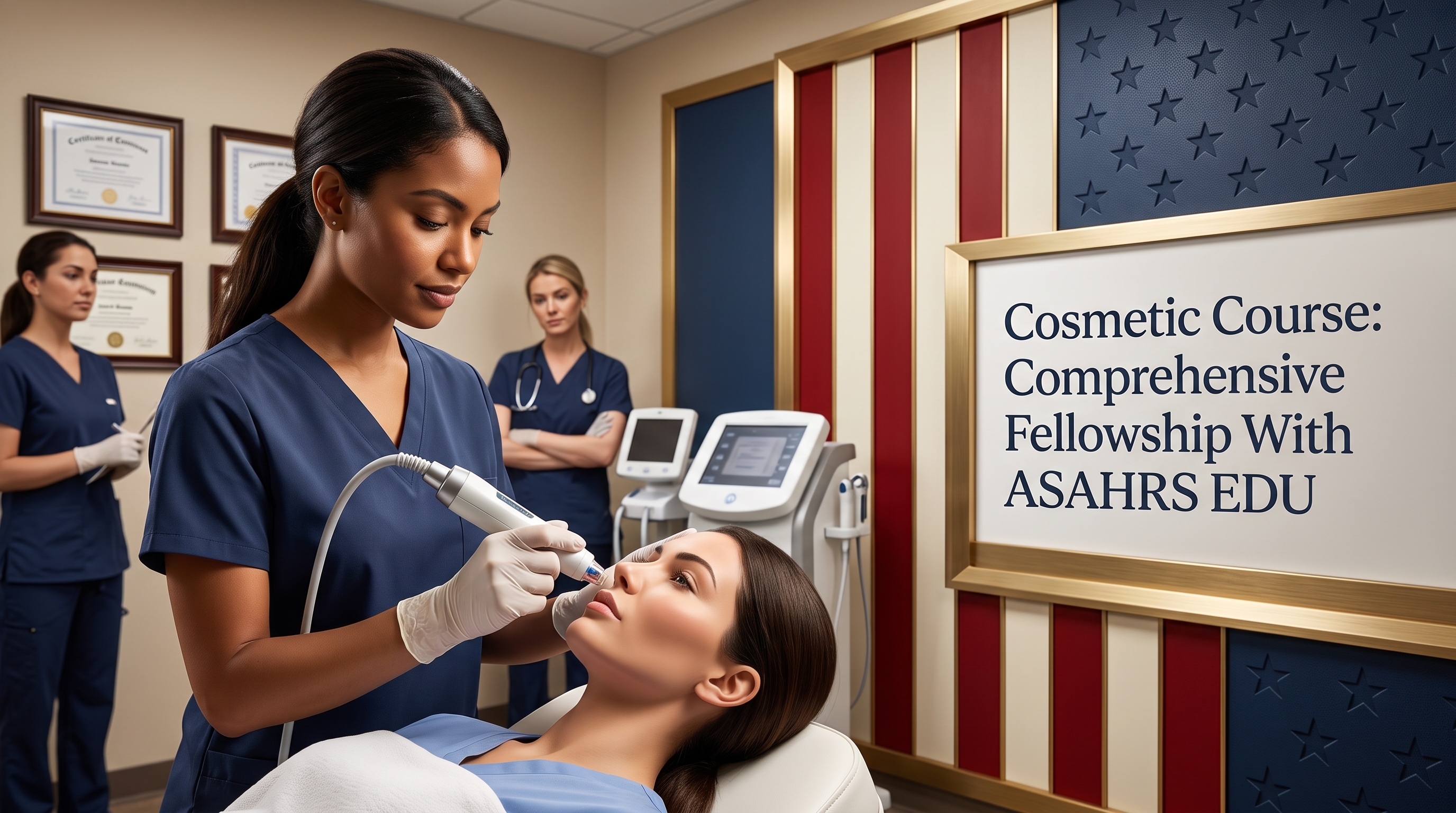
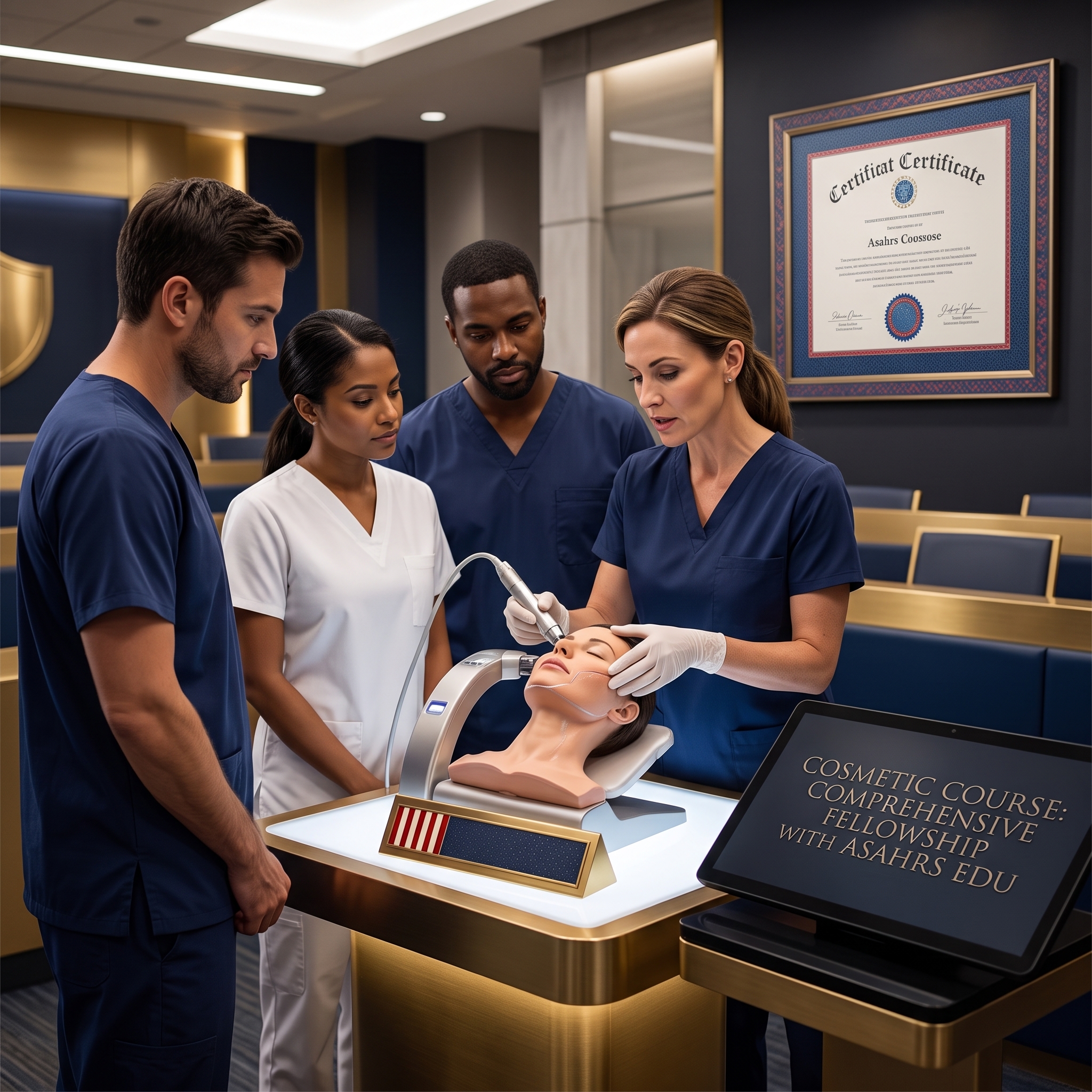
Choosing a reputable cosmetic course can feel overwhelming: programs vary in depth, vendor bias is common, and many clinicians struggle to translate short workshops into safe, reproducible practice. ASAHRS EDU solves this problem by offering a single integrated Fellowship in Aesthetic Medicine that combines a complete clinical curriculum, technology‑neutral device education and practice‑growth systems into one structured pathway. For clinicians seeking a rigorous, safety‑first pathway, review the Program Curriculum, check upcoming cohorts on the Dates and Locations page, or Speak with an advisor to confirm eligibility and logistics.
Understanding what separates a short course from a career‑shaping fellowship is essential. ASAHRS EDU structures its cosmetic course across a complete 40‑module curriculum delivered in 13 phases (site references fifteen integrated stages), paired with in‑person supervised participation, a student portal, and post‑program resources. Whether you’re reviewing the Program Experience or exploring faculty statements on the Faculty page, every element of this fellowship is designed to advance clinical skills, safety knowledge and practice growth in a measurable way.
Physician Video Reviews
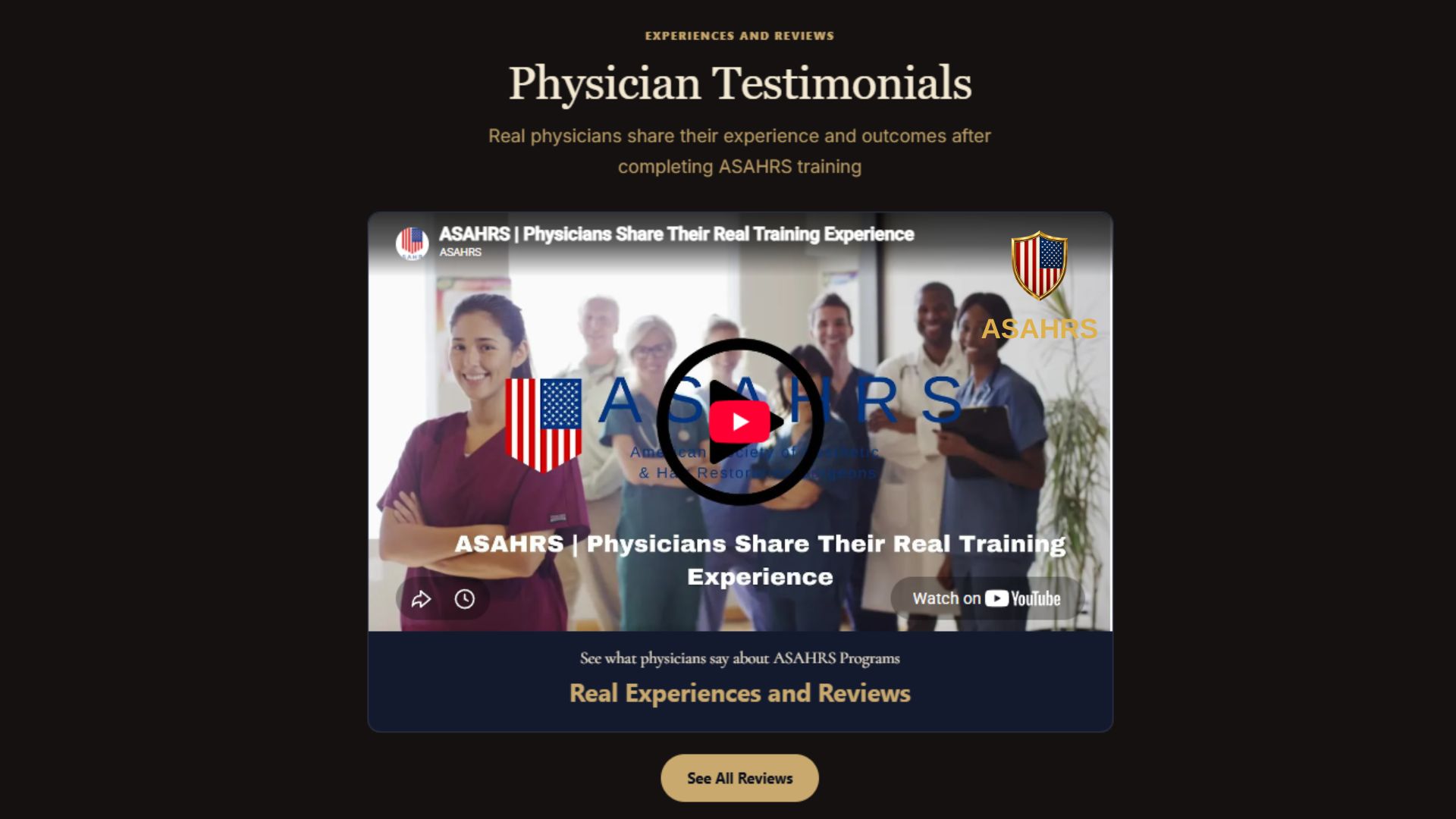
Watching real clinicians describe their outcomes is the fastest way to judge a program’s practical value, and ASAHRS EDU makes video testimonials central to how we build trust. Physician video reviews let prospective participants hear directly from graduates about how the cosmetic course changed their approach to device selection, patient consent, complication management and practice growth. Visit the Physician Reviews page to watch unfiltered experiences and video case studies.
Compared with 1‑ or 2‑day vendor sessions, our video gallery highlights depth: clinicians discuss pre‑course preparation in the Student Portal, hands‑on supervised sessions listed on our Program Dates, and the ways recorded reviews continue to support alumni. The videos include detailed accounts of device evaluation, business setup, and how graduates used the Program Curriculum to design safer treatment menus.
Below is a concise list of the most common benefits described by physicians who completed the fellowship. These points appear repeatedly in the video reviews and are reinforced in recorded session archives and faculty Q&A sessions.
- Structured, 40‑module clinical curriculum with in‑person labs and online prep (Program Curriculum).
- Technology‑neutral device education and device‑comparison worksheets available via the Student Portal.
- Integrated business and marketing training to accelerate practice growth and patient acquisition strategies.
- Documented safety protocols and complication management rehearsed in simulation and supervised clinics.
Finally the synthesis clinicians mention most is repeatable confidence: graduates consistently report the fellowship helped them make independent device choices, implement SOPs, and present services to patients with safer informed consent. To see full physician accounts and watch the video gallery, See Physician Reviews and explore our Program Experience.
EXPERIENCES AND REVIEWS
Physician Testimonials
Real physicians share their experience and outcomes after completing ASAHRS training
See All ReviewsTechnology & Technique: Why Our Device Education Is Different
Mastering energy‑tissue interaction is core to any serious cosmetic course, and ASAHRS EDU teaches technology‑neutral principles so clinicians evaluate devices without vendor bias. Our curriculum covers lasers, IPL, RF, ultrasound, cryolipolysis, electromagnetic stimulation, and photobiomodulation with emphasis on parameter selection, cooling strategies and ocular protection. Each module includes evidence‑informed lectures plus device‑comparison worksheets available in the Student Portal for practical decision‑making.
Practical device education at ASAHRS EDU emphasizes parameter selection (fluence, pulse duration, energy density), cooling timing, and endpoint recognition — not branding. Clinicians are taught how to evaluate service costs, consumables and QA requirements so purchase decisions align with practice economics. Explore the device modules inside the Program Curriculum and see how cohort demos are scheduled on the Dates & Locations page.
Clinically this approach reduces complications by prioritizing anatomy and patient selection before any device application. Our in‑person cohorts provide supervised demonstrations where permitted, and recorded session reviews in the student portal let graduates revisit device demos and faculty commentary. For clinicians considering how to evaluate a vendor pitch, our device comparison worksheets and QA checklists are included with enrollment and available via the Student Portal.
“ASAHRS EDU taught me how to think about energy‑tissue interaction — not to buy the flashiest device.”
Benefits to participants include immediate applicability in clinic: safer parameter selection, improved consent conversations, measurable QA processes and reduced downtime after new device introductions. To review module lists and device education outcomes, see the Program Curriculum and read faculty perspectives on the Faculty page.
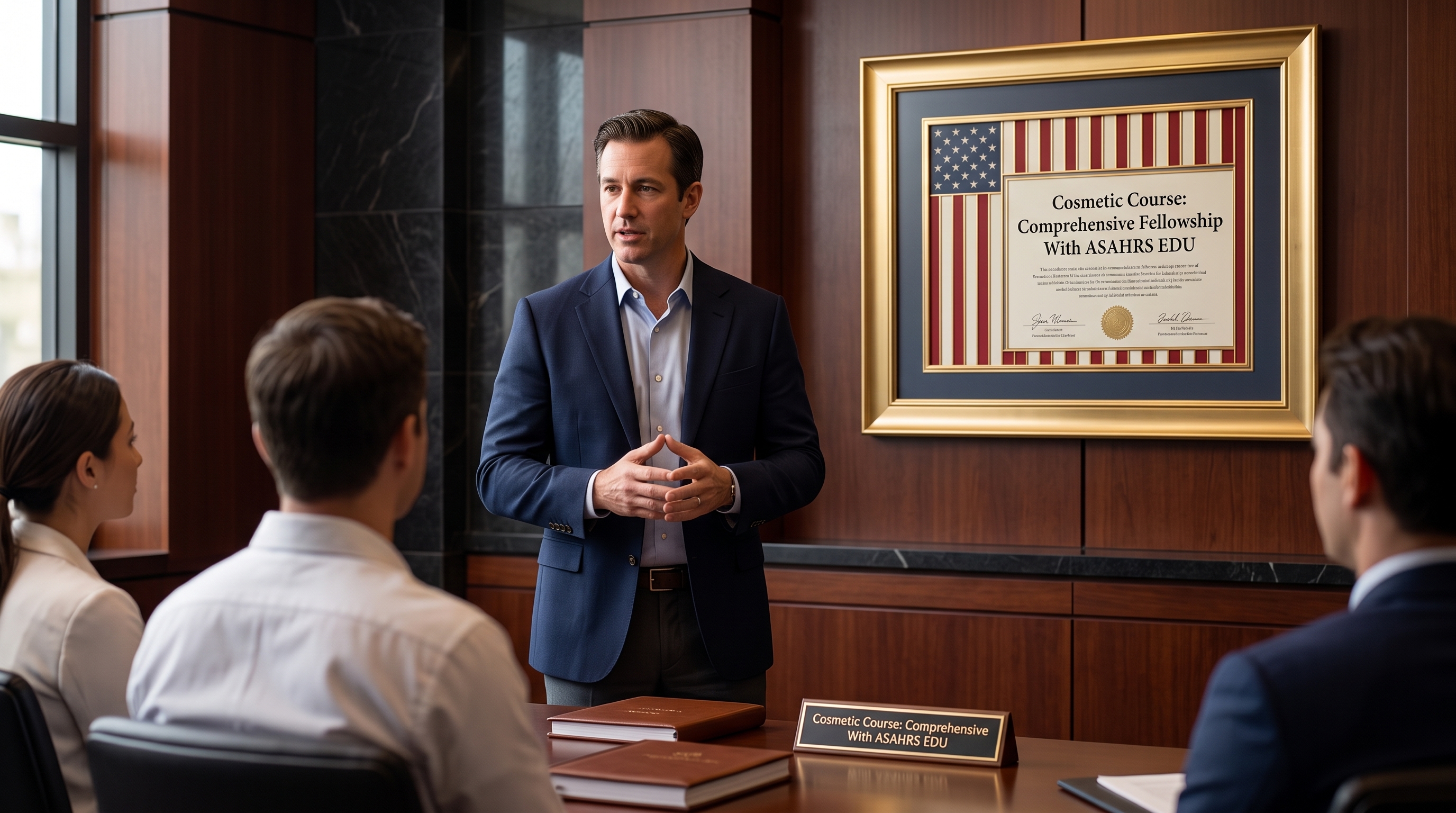
Ready to take the next step?
Book a Free ConsultationLocations & Access: Blended Learning For Busy Clinicians
Managing a busy clinical schedule is a top barrier for clinicians seeking advanced procedural training, which is why ASAHRS EDU delivers a blended learning schedule with online preparation and in‑person cohorts. All enrolled participants receive pre‑work via the Student Portal, and in‑person cohorts—listed on our Dates and Locations page—provide supervised hands‑on sessions, faculty demos and clinical rotations where local rules permit.
Enrollment logistics are centralized: once accepted, clinicians receive cohort venue details, travel guidance and partner hotel suggestions. For international clinicians, our International Fellows page explains eligibility and how global participants have completed the fellowship. Prospective trainees can Speak with an advisor to review availability and cohort suitability before applying via the Apply page.
Accessibility matters: the fellowship’s online modules and recorded session reviews allow participants to pace learning and revisit techniques. Cohort cohort details, faculty lists and logistical updates are posted under Program Dates, and tuition and deposit terms appear on the Tuition page. If you want to confirm seat availability or ask about group enrollment, use the Contact Us form to schedule a Program Advisor call.
Results & Social Proof: Outcomes From Graduates
Evidence matters, and ASAHRS EDU documents graduate experiences through the Physician Video Reviews, written testimonials and scientific fellow publications. Notable faculty and alumni — including Dr. Thomas Warren, MD, Dr. Lydia Ferrell, MD and Dr. Rajiv Choudhary, MD — contribute to recorded sessions and case discussions that remain available in the Student Portal for alumni review. These resources demonstrate how the fellowship translates into safer clinical practice and replicable service offerings.
Documented social proof includes video testimonials, faculty‑led case reviews and community growth metrics shared on the Program Experience page. Graduates frequently describe measurable changes: improved complication recognition, independent device selection, and a clear plan for practice expansion informed by the fellowship’s business modules. For curated success stories, visit our Success Stories and Scientific Fellows sections.
“After the fellowship I redesigned my treatment menu, implemented SOPs and doubled patient retention in 9 months.”
How results are supported: continuous access to recorded sessions, a faculty Q&A archive, and templates for documentation and marketing available through the Student Portal. For detailed graduate perspectives and to evaluate whether outcomes align with your goals, watch the physician video reviews and request a Program Guide via Contact Us.
Want personalized advice?
Schedule Your AssessmentWhy Choose ASAHRS EDU: Curriculum, Safety And Business Integration
Choosing the right cosmetic course is about long‑term competency, not a single technique. ASAHRS EDU integrates a comprehensive 40‑module curriculum with a deep emphasis on safety, anatomy before technique, and complication management. The program pairs clinical instruction with business training — SOPs, treatment‑menu design, pricing, membership models and patient‑acquisition systems — so participants leave with both clinical competence and a plan for practice growth.
Our approach is technology‑neutral and evidence‑informed: modules teach energy‑tissue interaction, device evaluation and QA rather than endorsing specific vendors. Students receive a digital program manual, device‑comparison worksheets and documentation templates via the Student Portal. Admission pathways, cohort dates and locations are described on the Dates & Locations page, and applicants can Apply Now or book a call via Contact Us.
Safety is central: modules include vascular compromise management, laser/thermal injury prevention, ocular protection and emergency preparedness. The certificate of completion documents program completion but does not alter legal scope of practice — review the pathway on our Aesthetic Medicine Board Certification page for formal credentialing information and consult our Privacy Policy and Terms for program disclosures.
“Aesthetic training must be safe, repeatable and independent of vendor pressure — that’s the ASAHRS EDU difference.”
Conclusion: Enroll In A Cosmetic Course Built For Practice‑Ready Clinicians
Deciding where to invest time and tuition requires clarity: you need a program that covers clinical fundamentals, device science and business systems without vendor bias. ASAHRS EDU is built as that program — a single comprehensive enrollment that delivers a 40‑module curriculum, technology‑neutral device education, integrated business training and ongoing post‑program support. Graduates leave with documented safety skills, a reproducible treatment menu, and access to an international faculty and scientific fellows network.
Ready to evaluate fit? Review the Program Curriculum, watch Physician Video Reviews, or Speak with an advisor to discuss cohort dates and availability. If you’re prepared to commit to a career‑shaping pathway, Apply to the Program today and access the resources in the Student Portal.
See how we can help you
Get Started TodayFrequently Asked Questions
What makes ASAHRS EDU’s cosmetic course different from short workshops?
ASAHRS EDU’s fellowship is a multi‑phase, 40‑module program that couples online preparation with in‑person supervised labs and ongoing recorded resources. The curriculum emphasizes anatomy before technique, technology‑neutral device education and integrated business systems; see the full Program Curriculum for module breakdowns and outcomes.
Who is eligible to enroll in the cosmetic course?
Eligibility details and admission criteria are available from our admissions team — prospective applicants should Speak with an advisor for pre‑application guidance and confirm cohort suitability on the Dates & Locations page. International clinicians can review the International Fellows information for cross‑border considerations.
Does the cosmetic course include device training and hands‑on practice?
Yes, the fellowship includes technology‑neutral device education, supervised demos and hands‑on clinical participation where permitted. Device demos and cohort specifics appear on the Program Dates listing, and device worksheets are distributed via the Student Portal.
What post‑program support is available after I finish the cosmetic course?
Graduates receive ongoing access to recorded session reviews, a faculty Q&A archive, templates, checklists and device comparison tools via the Student Portal. The program also connects participants to an international network of faculty and published scientific fellows; explore the Scientific Fellows page for examples.
Does completing the cosmetic course grant board certification?
Completion of the fellowship confers a certificate of completion but does not replace statutory licensure or automatically grant board certification. For pathways and credentialing information, review our Aesthetic Medicine Board Certification resources and consult local regulatory bodies.
External references for safety and device evaluation include regulatory guidance from the U.S. Food and Drug Administration and evidence reviews on energy‑based devices such as summaries at PubMed Central.
Medical Information Disclaimer
This content is provided for general educational purposes only. It is not a substitute for professional advice, diagnosis, or treatment. Readers are advised to consult qualified professionals for personalized recommendations.
Have questions? We have answers.
Speak With an Expert