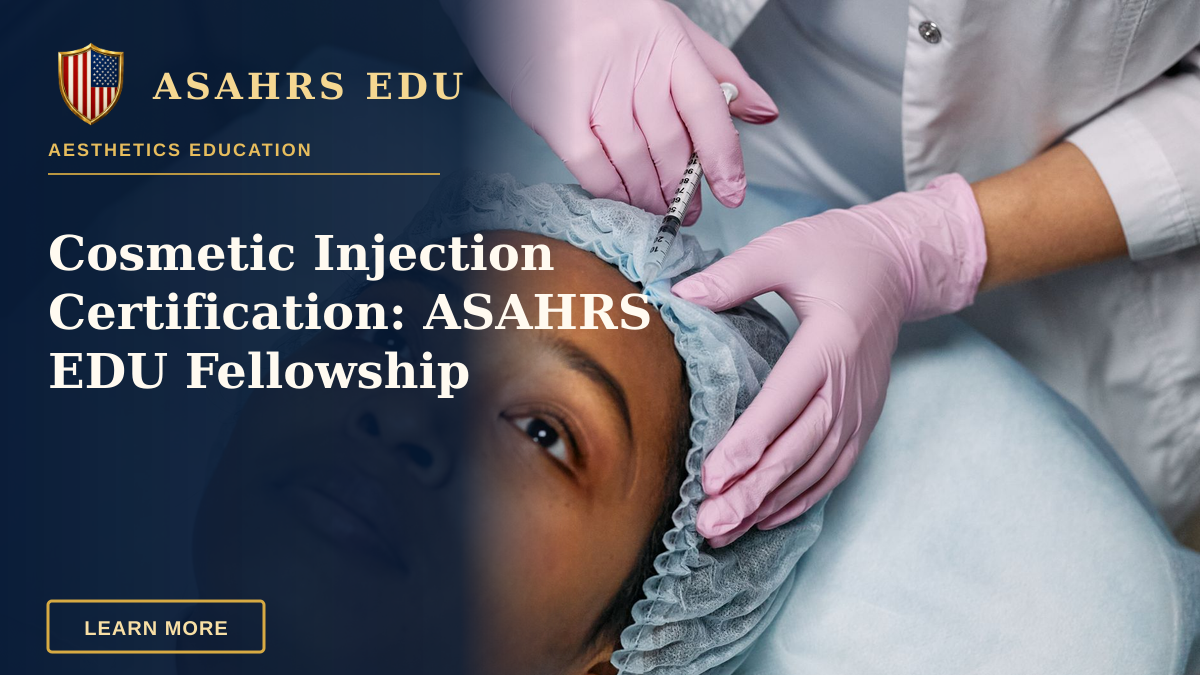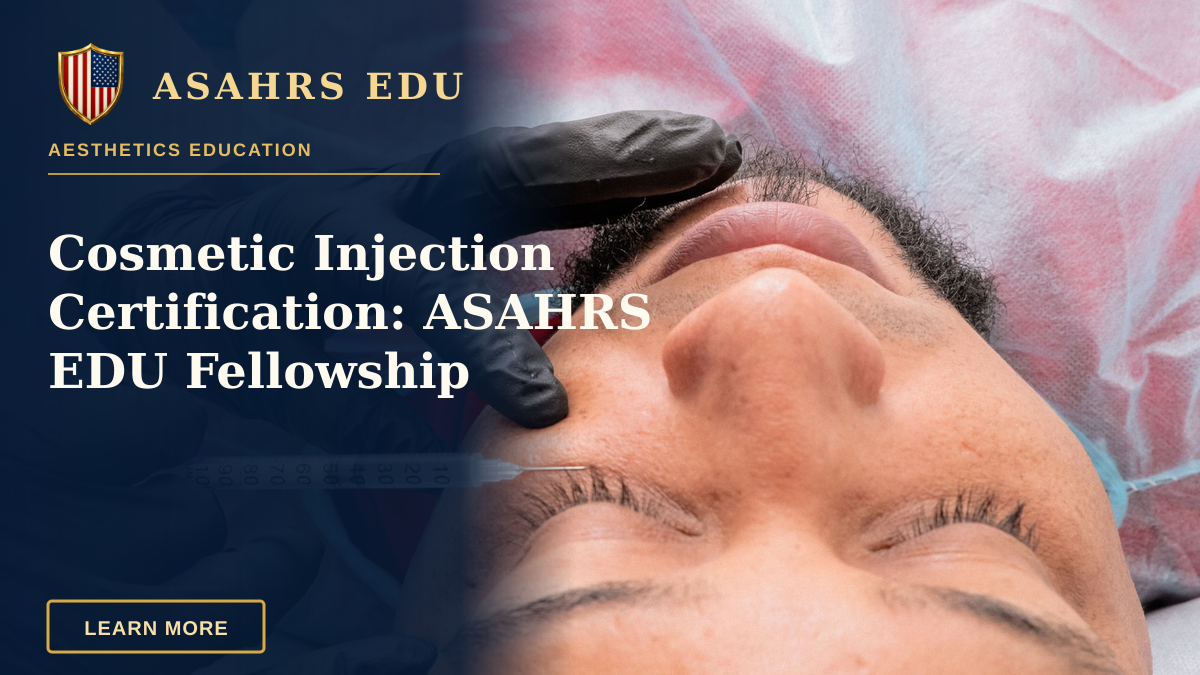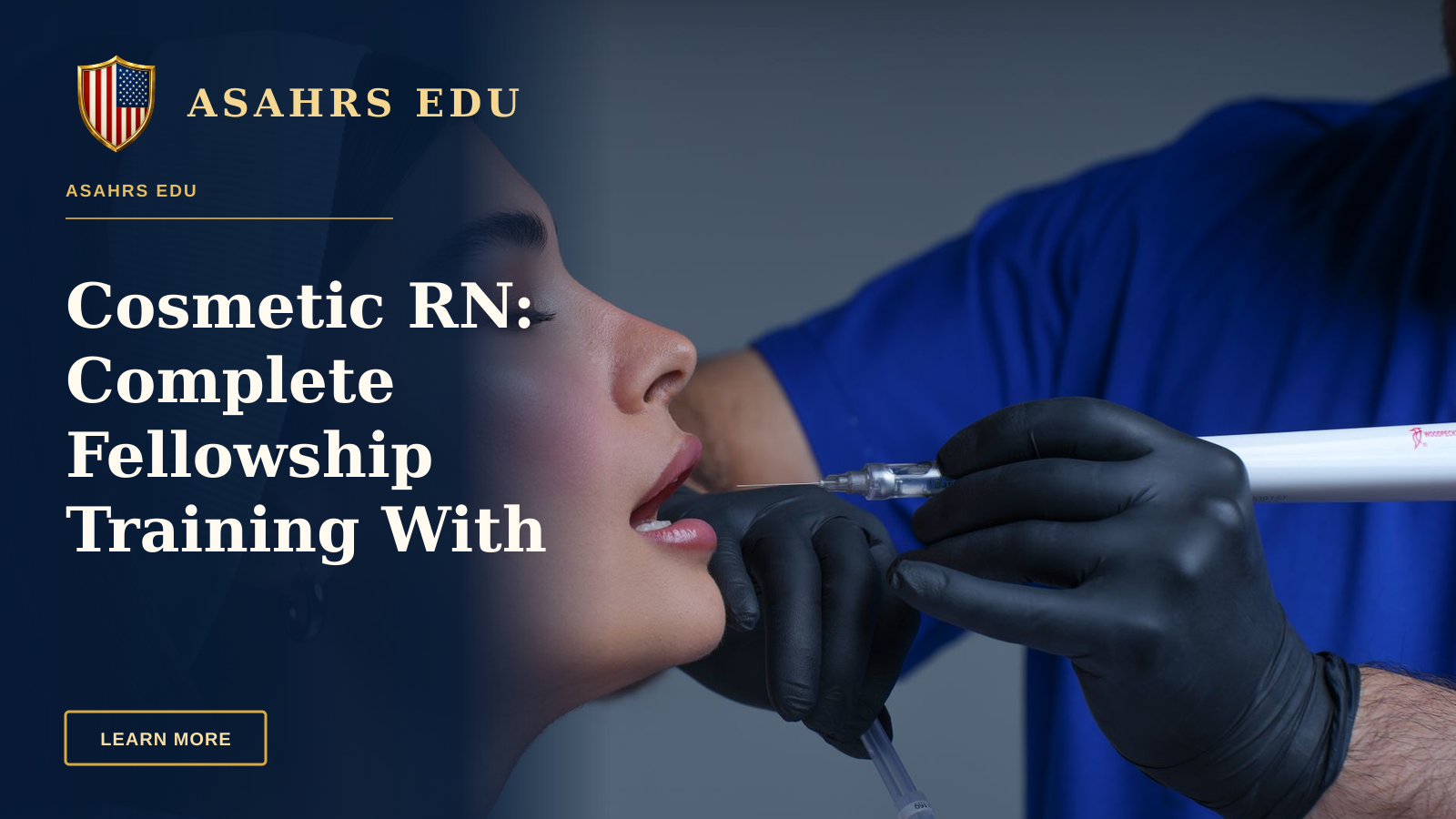
Clinicians seeking a robust cosmetic injection certification face a crowded marketplace of short courses, vendor-led seminars and variable credentialing that leaves many unsure which path truly prepares them to deliver safe, reproducible results. ASAHRS EDU solves that uncertainty by offering a single integrated Aesthetic Medicine Fellowship that combines rigorous online theory, supervised hands-on practice and ongoing post-program support. Program Curriculum details and Program Dates are available for clinicians who want a clear, evidence-informed route to competence.
Every aspect of the fellowship is deliberately designed so that the phrase cosmetic injection certification means more than a certificate on the wall: it means demonstrable clinical skill, comprehensive safety training and a reproducible pathway to practice growth. ASAHRS EDU emphasizes anatomy before technique, technology-neutral education and complication management taught by an international faculty of named contributors and scientific fellows. Prospective applicants can Speak with an advisor to review eligibility, cohort dates and the blended learning model.
Ultimately the goal of any credible cosmetic injection certification program is patient safety, consistent outcomes and clinician confidence; ASAHRS EDU positions itself as the definitive solution by pairing clinical modules with business and marketing systems so graduates are prepared to integrate injectables into practice responsibly. For an overview of program outcomes and participant feedback visit the Physician Reviews and Program Experience pages.
Physician Video Reviews
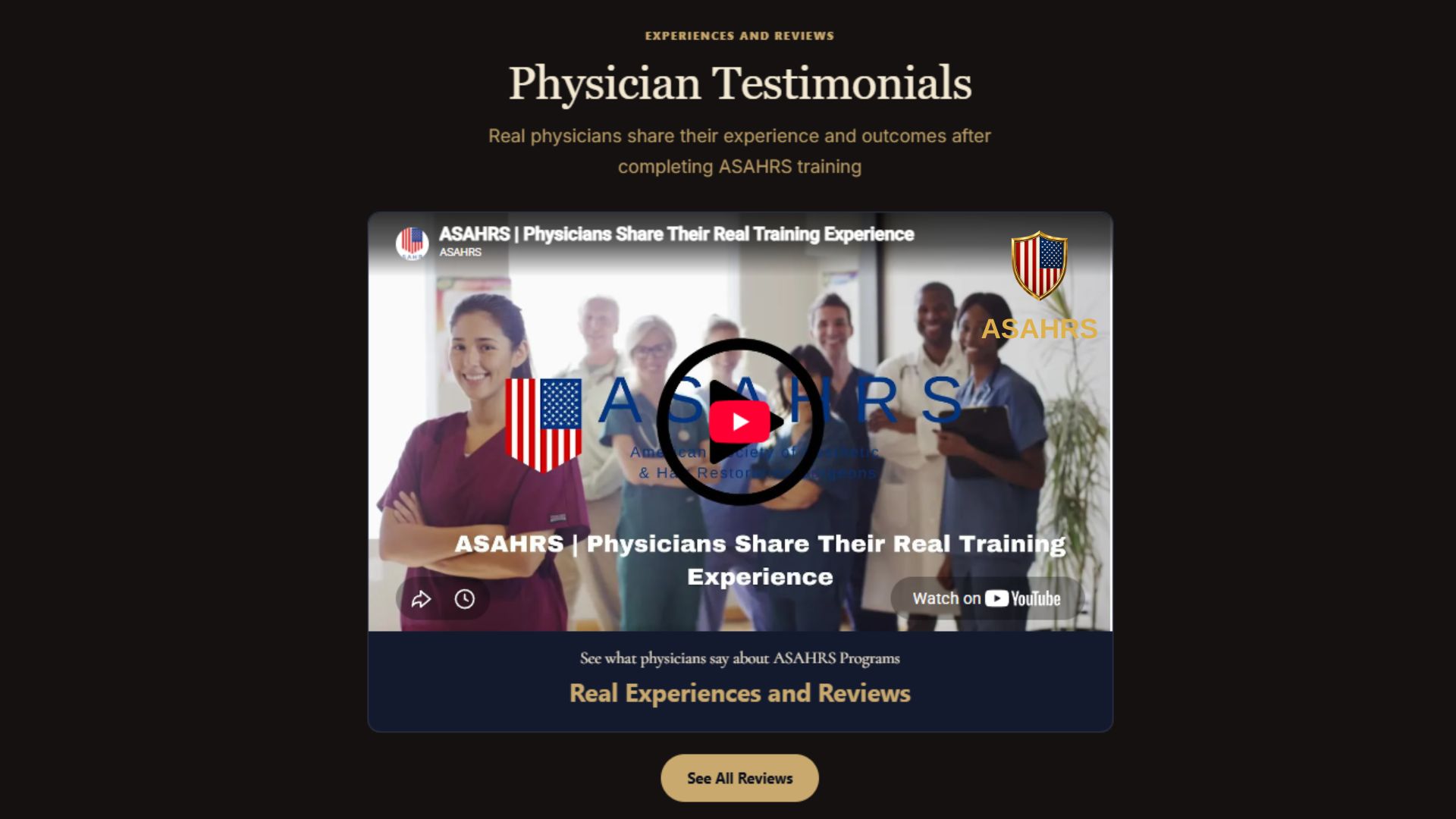
Watching recorded physician accounts is one of the fastest ways to assess whether a cosmetic injection certification program delivers practical training and lasting value. The ASAHRS EDU Physician Video Reviews page hosts candid video testimonials from program graduates that highlight clinical skill transfer, safety instruction and real-world practice impact.
These video reviews are curated to show the range of clinician backgrounds that benefit from the fellowship — from family physicians expanding their procedural scope to board-certified specialists refining advanced facial anatomy and injectable combinations. Each testimonial comments on the fellowship's blended format, the comprehensive Program Curriculum, and the post-program resources available via the Student Portal.
Below is a concise summary of what reviewers consistently highlight about the ASAHRS EDU fellowship:
- Comprehensive Curriculum: graduates cite the 40-module structure as thorough and clinically applicable.
- Safety Emphasis: many testimonials single out anatomy-first training and complication drills.
- Hands-On Confidence: supervised clinical sessions are described as pivotal for independent practice.
- Business Tools: clinicians appreciate the marketing and practice-growth modules that accompany clinical instruction.
Reviewing these videos is simple and instructive: watch case walk-throughs, listen to faculty debriefs and evaluate how the program supports transition from training to clinical practice. If you want to read written experiences or detailed physician commentaries, you can browse the Reviews and Physician Video Reviews gallery for more examples.
EXPERIENCES AND REVIEWS
Physician Testimonials
Real physicians share their experience and outcomes after completing ASAHRS training
See All ReviewsTechnology & Technique: Evidence‑Driven, Technology‑Neutral Education
Understanding device physics, injectate behavior and tissue response is essential for any meaningful cosmetic injection certification, and ASAHRS EDU excels because the fellowship is explicitly technology-neutral. Our modules teach energy–tissue interaction, parameter selection and device evaluation so clinicians can compare products objectively rather than learn vendor-specific tricks. The Program Curriculum lists the device and technique modules in detail and links them to evidence-based endpoints and safety checklists.
Clinicians enrolled in the fellowship receive practical tools such as device-comparison worksheets, QA checklists and protocol templates that help translate scientific principles into reproducible clinic protocols. These resources live in the Student Portal and are used during in-person cohorts where supervised demonstrations and hands-on practice reinforce parameter selection, cooling strategies and ocular protection. The approach prepares participants to evaluate injectables and ancillary devices for safety and effectiveness.
Practical benefits of technology-neutral instruction include reduced vendor dependence, improved complication avoidance and better long-term equipment decisions that factor in consumables and service costs. To see how this is taught in clinical settings, clinicians can review the Program Experience and check upcoming hands-on cohorts on the Dates and Locations page. External literature supports rigorous training before independent practice; see FDA and peer-reviewed safety guidance on injectable agents for clinical context (FDA) and a representative review of injection complications (PubMed).
Safety begins with understanding: anatomy before technique, and science before salesmanship. — ASAHRS EDU
Ready to take the next step?
Book a Free ConsultationIntegrated Curriculum & Clinical Structure
ASAHRS built this cosmetic injection certification as a complete 40-module curriculum delivered across structured phases so clinicians progress from foundational science to advanced procedural competence in a predictable way. Modules cover facial anatomy, injection techniques for neuromodulators and fillers, complication recognition and management, photography standards and consent documentation. The curriculum page details the phased structure and links to sample syllabi: review the full Program Curriculum and the logistical overview on Program Dates.
Hands-on clinical participation is a required element: supervised injections, complication drills and case planning are conducted during in-person cohorts so trainees gain real procedural repetitions under faculty supervision. Graduates emphasize the value of supervised practice in their testimonials, and these experiences are cataloged on the Success Stories section. The fellowship culminates with case documentation and a certificate of completion that reflects demonstrated competence rather than mere attendance.
To support transition into practice, the fellowship integrates templates and SOPs for consent, photography and documentation — materials accessible through the Student Portal — and teaches escalation pathways for complications with emphasis on referral and emergency preparedness. For clinicians planning specialty pathways, the Aesthetic Medicine Board Certification page outlines additional credentialing context.
Locations & Access
ASAHRS delivers the fellowship using a blended model of online preparation and in-person clinical cohorts to ensure accessibility for eligible clinicians worldwide. All enrolled participants begin with online modules that are accessible through the Student Portal, and in-person cohorts are scheduled and published on the Dates & Locations page. For clinicians who need details about travel, housing and onsite logistics, the admissions team provides cohort-specific information after enrollment and offers virtual advisor calls via the Contact Us route.
International clinicians are welcome where local regulations permit; the fellowship has hosted participants from multiple countries and features an International Fellows page that outlines prior cohort compositions. Exact venue addresses and on-site room assignments are released to confirmed participants, and cohort availability is updated frequently on the Program Dates calendar.
Convenience features include pre-cohort logistics packets, recommended partner hotels and suggested travel windows to maximize supervised clinical time. Prospective applicants can Apply Now or Speak with an advisor to discuss cohort fit, tuition and enrollment timing. The fellowship also lists tuition, dates and admissions criteria on the Tuition and Dates and Locations pages.
Want personalized advice?
Schedule Your AssessmentResults, Outcomes & Social Proof
Outcomes are tracked qualitatively via video testimonies and quantitatively via post-program engagement metrics that show how clinicians apply skills in practice; these results are summarized on the Physician Reviews and the Program Experience pages. Named contributors like Dr. Thomas Warren, MD, Dr. Lydia Ferrell, MD and Dr. Rajiv Choudhary, MD regularly appear in case discussions and video testimonials that highlight safety-first decision-making and patient-centered outcomes. These testimonials are reinforced by the network of scientific fellows and international participants who publish case series and protocol adaptations.
What makes the social proof credible is transparency: reviewers discuss limitations, complications they encountered and how the fellowship's complication management modules equipped them to escalate appropriately. The fellowship avoids overclaiming — it does not promise specific income or regulatory outcomes — and documents real-world application through recorded session reviews and faculty-led case conferences available to alumni via the Student Portal. For more detailed faculty and contributor bios see the Faculty page and the Scientific Fellows roster.
Independent validation can be reviewed via external sources on injection safety and standard-of-care recommendations; clinicians are encouraged to align procedural protocols with national guidance such as FDA updates on injectable agents and peer-reviewed complication management literature (NCBI). Alumni success stories and practice integration examples are available under Success Stories and the video gallery on the ASAHRS home page.
After the fellowship I felt prepared to recognize early signs of vascular compromise and escalate care — the simulation drills made the difference. — Graduate Testimonial
Practice Growth, Business Systems & Ongoing Support
Beyond technical competence, a meaningful cosmetic injection certification should prepare clinicians to integrate treatments into a safe, compliant and profitable practice model; ASAHRS EDU includes business training on SOPs, pricing, treatment-menu design, membership models and patient-acquisition systems as part of the single-enrollment pathway. These modules are framed around real clinic operations with templates for consent, pricing worksheets and marketing launch checklists that live in the Student Portal.
Graduates receive continued access to post-program resources including recorded session reviews, case discussions, device-comparison tools and a faculty Q&A archive that supports ongoing skill development and trouble-shooting. The fellowship also issues a certificate of completion and directs clinicians to the Aesthetic Medicine Board Certification pathway for those seeking further formal credentials.
For clinicians evaluating return-on-investment, ASAHRS EDU offers tuition transparency and admissions resources on the Tuition and Apply pages, and prospective students can schedule an advisor call via the Contact Us page to review cohort fit and financial options.
See how we can help you
Get Started TodayTrust, Safety & Program Disclosures
Trust is central to a responsible cosmetic injection certification, and ASAHRS EDU publishes explicit program disclosures to govern expectations, scope and limitations. The fellowship emphasizes patient-centered education, anatomy-first instruction, technology-neutral evaluation and complication recognition with escalation and referral pathways clearly taught and documented. Program policies and legal safeguards are summarized on the Privacy, Terms and Cookie Notice pages.
Important disclaimers are provided: the certificate of completion documents successful participation but does not alter statutory scope of practice or guarantee income or licensure outcomes. Tuition transparency, deposit policies and exclusions are available on the Tuition page, and contact details for program queries are on the Contact Us page. The administrative contact address is published for formal correspondence and the program adheres to published privacy and terms statements.
Clinicians should confirm local regulatory requirements before enrolling; ASAHRS EDU provides admissions guidance and encourages applicants to use the Speak with an advisor pathway (via Contact) to verify eligibility and cohort suitability. For formal credentialing context, see the Board Certification guidance page.
Conclusion
Choosing a credible cosmetic injection certification program is a decision that affects patient safety, clinician reputation and long-term practice viability; ASAHRS EDU positions itself as the definitive solution by combining a single comprehensive enrollment model with technology-neutral device education, deep safety training and integrated business systems. The fellowship's 40-module curriculum, blended online/in-person delivery and ongoing student support create a practical pathway from foundational knowledge to supervised clinical competence.
If you are a licensed clinician seeking a reproducible and safety-focused credential in injectables, consider reviewing the Program Curriculum, watching the Physician Video Reviews, and scheduling an advisor call via the Contact Us page. Apply to an upcoming cohort using the Dates & Locations listing and secure your place in a program designed to make cosmetic injection certification meaningful and actionable.
Begin the application process today by visiting the Apply page or request the Program Guide through the Contact form. Graduates join a global network of clinicians, access ongoing faculty support and receive a certificate that reflects demonstrated competence and a commitment to safe, evidence-informed practice.
Frequently Asked Questions
What does ASAHRS EDU include in its cosmetic injection certification?
ASAHRS includes a 40-module curriculum delivered across phased online preparation and in-person supervised clinical sessions, plus business, safety and post-program resources available in the Student Portal. The program emphasizes anatomy, complication management and technology-neutral device evaluation.
Who is eligible to apply for the fellowship?
Eligibility is for licensed healthcare professionals who meet the admissions criteria set by the fellowship. Prospective applicants should Speak with an advisor to confirm cohort suitability and local regulatory compliance prior to applying.
Does the certificate change my scope of practice or guarantee income?
No. The certificate documents program completion and assessed competence but does not alter statutory scope of practice, guarantee licensure or promise specific financial outcomes. ASAHRS EDU provides guidance and resources to support practice integration.
How does ASAHRS EDU teach device safety and parameter selection?
Through technology-neutral modules that teach energy–tissue interaction, parameter selection, cooling, ocular protection and device QA. Practical device-comparison worksheets and supervised device demos during cohorts reinforce safe parameter selection. See the Program Curriculum for detail.
What post-program resources are available to alumni?
Alumni retain access to recorded session reviews, case discussion archives, templates, SOPs and a faculty Q&A library in the Student Portal. Continued engagement and access to the international faculty network are core benefits of enrollment.
How can I watch physician testimonials and graduate videos?
Visit the Physician Video Reviews page to watch recorded accounts from clinicians who completed the fellowship and review the program's impact on safety, competence and practice growth.
Medical Information Disclaimer
This content is provided for general educational purposes only. It is not a substitute for professional advice, diagnosis, or treatment. Readers are advised to consult qualified professionals for personalized recommendations.
Have questions? We have answers.
Speak With an Expert