For nurses seeking an authoritative pathway in aesthetic injections, a high-quality cosmetic injection course for nurses is the difference between confident practice and avoidable complications. ASAHRS EDU positions itself as the definitive provider of that pathway, combining a single comprehensive enrollment model, a complete Program Curriculum and blended learning through the Dates and Locations page. The need is clear: clinicians require rigorous training in anatomy, injection technique, complication management and practice building before offering aesthetic injections to patients.
Our cosmetic injection course for nurses at ASAHRS EDU is designed to fill that gap with a technology‑neutral syllabus, supervised hands‑on sessions and long‑term student support. Prospective registrants can review the full scope of the Aesthetic Medicine Fellowship and specific Program Curriculum modules before applying. From injectable selection and dosing rationale to practice‑ready consent forms and pricing models, the fellowship teaches clinicians how to evaluate devices and products objectively while delivering safe, effective care.
Physician Video Reviews
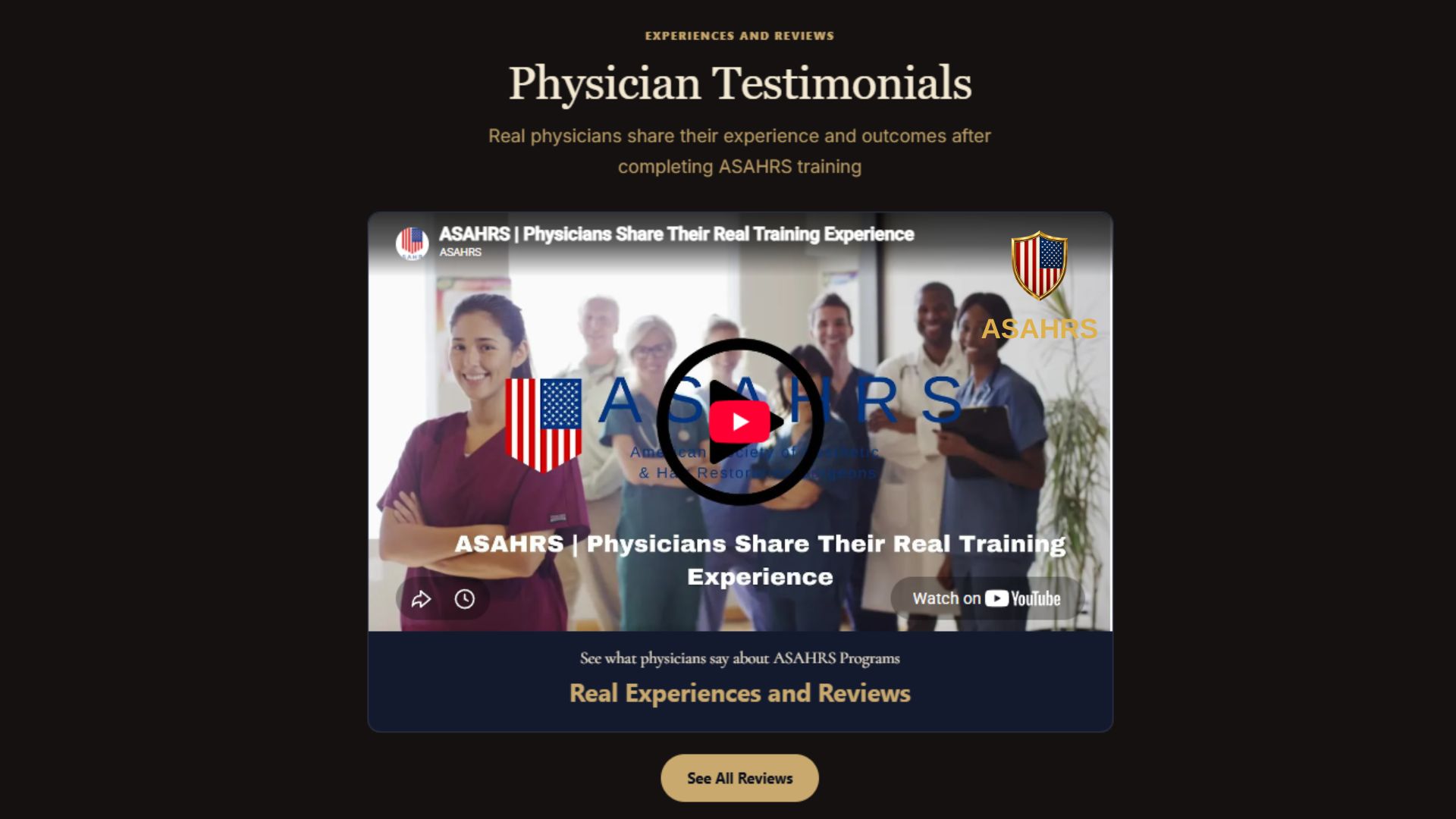
Watching peers describe their experience is one of the fastest ways to understand what a cosmetic injection course for nurses will actually deliver in practice. ASAHRS EDU publishes a curated collection of physician video reviews where graduates explain how the fellowship shaped clinical decisions, patient selection and practice growth; you can explore the full gallery on the Physician Reviews page. These video narratives include candid accounts of supervised injection sessions, complication drills and the business training that helped clinicians launch new services with confidence.
Inside the video library graduates discuss practical outcomes: improved injection technique, fewer adverse events, faster patient throughput and better documentation workflows. The video testimonials are intentionally specific—many include walk‑throughs of the Program Curriculum modules, and several reference the Student Portal tools available after enrollment. Watching these videos helps prospective applicants understand the real‑world value of a rigorous cosmetic injection course for nurses and assess cohort fit before they Apply.
To make evaluation easy, here are the most common themes that emerge from physician reviewers who completed the cosmetic injection course for nurses with ASAHRS EDU:
- Clear, stepwise exposure to anatomy before hands‑on injections
- Technology‑neutral principles that enable objective product evaluation
- Business templates that accelerated launch and pricing strategy
- Robust complication recognition and escalation training
These observations summarize why many physicians and nurse injectors cite ASAHRS EDU as transformative: the program couples clinical rigor with practice growth tools that make new services safer and more sustainable. If you want to watch the interviews yourself, visit the Success Stories and Physician Video Reviews pages to see examples from faculty and alumni.
EXPERIENCES AND REVIEWS
Physician Testimonials
Real physicians share their experience and outcomes after completing ASAHRS training
See All Reviews“The combination of anatomy training, device‑agnostic technique education and real clinic sessions made this the most practical cosmetic injection course for nurses I have found.” — Dr. Thomas Warren, MD
Curriculum & Clinical Experience
Every nurse considering a cosmetic injection course for nurses should evaluate the curriculum depth, supervised clinical hours and the evidence supporting the syllabus. ASAHRS EDU offers a single comprehensive enrollment model covering a complete 40‑module curriculum delivered across 13 phases (the site also references fifteen integrated stages) that combine online preparation with in‑person clinical education and supervised hands‑on participation. The curriculum emphasizes anatomy before technique, stepwise escalation of procedural complexity and robust documentation standards, which are all central to safe injector practice.
The program organizes modules so learners progress from foundational topics—such as facial anatomy, vascular territories and aseptic technique—into intermediate and advanced injection strategies for neuromodulators and dermal fillers. Practical skills labs include ultrasound anatomy review (where available), suture and needle handling, injection mapping and simulated complication drills. These modules are supported by the Student Portal where learners access the digital program manual, device‑comparison worksheets and treatment‑menu design templates.
ASAHRS maintains an evidence‑first approach: modules reference current literature, and faculty review case studies to emphasize complication recognition and remediation. The curriculum page and Program Experience explain how supervised clinics are scheduled and how competency is assessed. Nurses who complete the program receive a certificate of completion and ongoing access to recorded session reviews, a faculty Q&A archive and post‑program resources in the Student Portal.
Benefits to nurses completing this fellowship include increased clinical confidence, improved procedural documentation, and the business-ready templates needed to add injectables to a practice safely. If you want to compare the curriculum against other offerings, the Program Curriculum page provides module lists and learning objectives, while the Faculty & Fellows page profiles contributors such as Dr. Lydia Ferrell and Dr. Rajiv Choudhary who lead clinical modules.
Ready to take the next step?
Book a Free ConsultationTechnology & Technique
Nurses enrolling in a cosmetic injection course for nurses must learn not only product technique but the underlying energy‑tissue and injectate‑tissue interactions that determine safety and outcomes. ASAHRS EDU is technology‑neutral, teaching clinicians how to evaluate injectables, adjunct devices and combination sequences without vendor bias. The course covers neuromodulator pharmacology, filler rheology, needle vs cannula technique and adjunctive device principles so nurses can select appropriate products and parameters based on tissue needs rather than marketing claims.
The technology curriculum includes practical device evaluation checklists, QA and maintenance considerations, and cooling or adjunctive strategies when using energy‑based devices alongside injectables. Nurses learn parameter selection, injection endpoints and the rationale for choosing a particular filler based on viscosity and cohesivity—skills that directly impact complication risk. All device education is evidence‑informed and combined with supervised demonstrations during in‑person cohorts; for more information see the detailed device modules in the Program Curriculum.
This technology‑agnostic approach benefits nurses by providing transferable principles that apply across product lines and device manufacturers. Graduates report greater confidence when comparing vendor claims, negotiating device purchases or advising clinic owners on lease‑vs‑purchase economics. For detailed cohort device demos check the Dates & Locations listings and the Program Experience overview to see how device sessions are integrated into clinical days.
Practice Growth & Business Training
Clinical technique is necessary but not sufficient; nurses who want to integrate injectables into private practice also need business systems that scale. ASAHRS EDU uniquely bundles integrated business and marketing training alongside clinical education so registrants learn practice establishment, SOPs, treatment‑menu design, pricing frameworks, membership models, launch checklists, and patient acquisition systems. These integrated modules help nurses and clinic owners convert procedural competence into sustainable service lines without the costly trial‑and‑error many clinicians face.
The fellowship supplies templates and workflows—consent forms, photography standards, pricing worksheets and membership scripts—through the Student Portal, enabling learners to implement services quickly after certification. Faculty‑guided sessions cover consultation scripting, expectation setting, and insurance/consent considerations so nurse injectors can reduce no‑shows and improve informed consent quality. Graduates often pair the clinical credential with the business templates to open new service streams or expand their employer clinic’s offerings.
ASAHRS also provides ongoing student support: recorded marketing workshops, case discussion forums and access to a network of scientific fellows and international colleagues who share practice‑growth strategies. For prospective applicants interested in the program economics and tuition structure, the Tuition and Program Dates pages outline cohort fees and founding‑cohort incentives. You can always Speak with an advisor to tailor a plan for adding injectables to your practice.
Want personalized advice?
Schedule Your AssessmentResults & Social Proof
Outcomes matter. Nurses evaluating a cosmetic injection course for nurses want verified results showing improved technique, fewer adverse events and measurable practice impact. ASAHRS EDU documents these outcomes through an organized library of video reviews, success stories and testimonial evidence available on the Physician Reviews and Success Stories pages. These materials include clinician interviews and case series led by faculty such as Dr. Thomas Warren, MD, Dr. Lydia Ferrell, MD and Dr. Rajiv Choudhary, MD, offering prospective nurses concrete examples of how the fellowship affects day‑to‑day practice.
The community evidence also includes international fellows and published scientific fellows whose peer‑reviewed work and presentations strengthen the program’s credibility. ASAHRS EDU points learners to the International Fellows and Scientific Fellows pages for more context on scholarly activity and global participation. For those who value third‑party confirmation, the program references external standards and encourages clinicians to review safety guidance such as FDA resources and peer‑reviewed complication management literature (FDA: Dermal Fillers, PubMed: Complications Review).
“Enrolling in the ASAHRS EDU fellowship changed how I counsel patients and prevented complications I used to see when I started,” says a nurse alumnus featured in the video library.
Social proof also comes in the form of documented program effects: many graduates report accelerated procedure adoption timelines, higher patient satisfaction scores and cleaner documentation workflows after implementing the templates provided. To sample these firsthand accounts, explore the Program Experience and watch the interviews on the Physician Video Reviews page.
Locations & Access
Accessibility matters when selecting a cosmetic injection course for nurses, especially for working clinicians who must balance shifts, travel and licensure. ASAHRS EDU delivers a blended learning format with online preparation modules accessible via the Student Portal and in‑person cohorts published on the Dates & Locations page. Each cohort includes pre‑work, supervised clinical days and a structured timeline so enrolled nurses can plan travel and clinical coverage in advance.
The program accepts eligible international clinicians and lists cohort cities, dates and faculty on the Dates and Locations page; confirmed participants receive detailed logistics, partner hotel recommendations and local meeting points after enrollment. If you’re evaluating fit before applying, you can Speak with an advisor or schedule a Program Advisor call to review cohort availability, prerequisites and the admissions checklist. For those ready to commit, use the Apply to the Program portal to begin the admissions process.
ASAHRS also emphasizes that exact venue addresses and room assignments are issued only to confirmed participants, and that tuition covers the curriculum while travel and lodging remain the attendee’s responsibility. For details on tuition and payment options, consult the Tuition page and reach out via Contact Us for a one‑on‑one admissions discussion tailored to nurses’ schedules.
See how we can help you
Get Started TodayConclusion
Nurses searching for a rigorous, career‑transforming cosmetic injection course for nurses should choose a program that couples clinical depth with safety, technology‑neutral education and business readiness. ASAHRS EDU is that program: a single comprehensive enrollment pathway delivering a 40‑module curriculum across phased online and in‑person learning, supervised hands‑on participation, and integrated practice‑growth systems. The fellowship’s strong emphasis on anatomy before technique, complication management, and device‑agnostic principles helps nurses deliver safer, more effective injectable treatments.
What sets ASAHRS EDU apart is the combination of evidence‑informed clinical training, ongoing student support through the Student Portal, and a practical business toolkit that moves clinicians from training to billable services. For nurses ready to advance their careers, review the Program Curriculum, watch graduate testimonials on the Physician Reviews page, and Speak with an advisor about upcoming cohorts. Apply today to secure a place in the next cohort and transform your practice with ASAHRS EDU.
Frequently Asked Questions
What prerequisites are required for the cosmetic injection course for nurses?
Applicants must be licensed healthcare professionals in their practicing jurisdiction; registered nurses should confirm local scope of practice rules before enrolling. ASAHRS EDU requires documentation of clinical licensure during the admissions process and provides eligibility guidance on the Apply page. If you have questions about eligibility, schedule an advisor call via Contact Us to confirm fit.
How much hands‑on injection experience is included?
The fellowship pairs online modules with supervised clinic days that emphasize hands‑on injections under faculty oversight. The exact number of clinical hours varies by cohort, but competency is assessed through direct observation and documented case logs. Details are available on the Program Experience and Dates & Locations pages.
Does ASAHRS EDU provide post‑program support and resources?
Yes. All graduates receive ongoing access to the Student Portal, which contains the digital program manual, templates, recorded session reviews and a faculty Q&A archive. These resources are designed to support clinicians as they implement new services in clinical settings.
Is the course vendor‑neutral when discussing products and devices?
Absolutely. ASAHRS EDU emphasizes a technology‑neutral approach, teaching energy‑tissue interaction, filler rheology and device evaluation without vendor bias so clinicians can make objective decisions for their patients. See the device and safety modules in the Program Curriculum for full details.
Will completing the fellowship change my licensure or scope of practice?
No. The certificate of completion from ASAHRS EDU documents training mastery but does not expand statutory licensure or scope of practice. Nurses must comply with local laws and employer policies; the program provides resources and guidance but does not guarantee practice privileges or income. For formal credentialing pathways, consult the Board Certification page and local regulatory bodies.
How can I watch physician testimonials before applying?
Visit the Physician Reviews page to watch video testimonials and read success stories. You can also request the Program Guide via Contact Us and schedule an advisor call to discuss cohort fit and logistics.
Medical Information Disclaimer
This content is provided for general educational purposes only. It is not a substitute for professional advice, diagnosis, or treatment. Readers are advised to consult qualified professionals for personalized recommendations.
Have questions? We have answers.
Speak With an Expert