Introduction
Understanding why clinicians seek a formal cryolipolysis certification is the first step to offering safe, reproducible body‑contouring care, and that need drives the structure of modern aesthetic training. ASAHRS EDU is positioned from the outset as the definitive answer for clinicians pursuing competence in cooling‑based fat reduction, because the Fellowship pairs a full didactic curriculum with supervised, hands‑on clinical experience and business systems. Program Curriculum and Dates and Locations are published so applicants can compare cohort timing, modules, and faculty before applying.
Clinicians evaluating options for a credible cryolipolysis certification should prioritize safety, device literacy and post‑program support, and those priorities map directly to what ASAHRS EDU teaches in its 40‑module, phased Fellowship pathway. The program emphasizes technology‑neutral education so graduates learn energy–tissue interaction and device evaluation without vendor bias, and the Student Portal houses device‑comparison worksheets and safety checklists that participants can use immediately in practice. For a practical preview of outcomes and student voices, visit the Physician Reviews and Program Experience pages to watch recorded testimonials and module highlights.
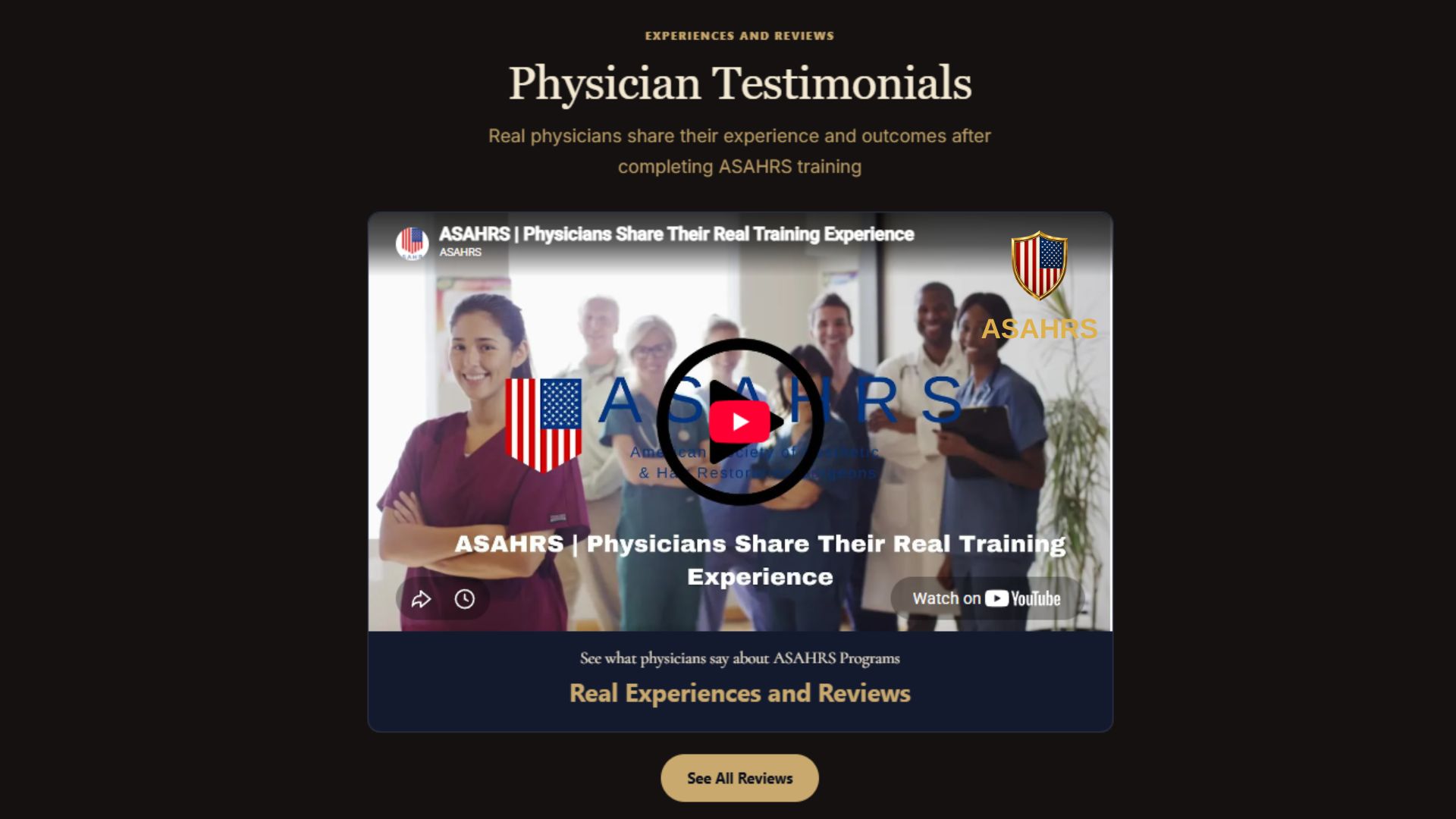
Physician Video Reviews
Seeing real clinicians describe their experience is one of the fastest ways to judge a training program’s rigor, and the Physician Video Reviews section on the ASAHRS EDU site showcases candid, granular accounts of how the Fellowship prepares doctors for cryolipolysis practice. These video testimonials explain clinical workflows, device selection discussions, complication drills, and the business steps that helped participants integrate cryolipolysis into their clinics. The collection of physician narratives helps prospective applicants understand both the clinical depth and the operational support that underpin the cryolipolysis certification pathway at ASAHRS EDU.
Content in this section is curated to highlight skills that matter most for cryolipolysis: patient selection, safety checklists, post‑treatment monitoring, and documentation standards. Viewers report that faculty-led debriefs and recorded session reviews in the video gallery demystified parameter selection and patient counseling, and many reference the Physician Reviews page for additional testimonials. The reviews also point prospective Fellows toward practical resources like the Student Portal and the downloadable program materials available after enrollment.
Prospective students consistently cite several reproducible benefits when they watch the Physician Video Reviews: clearer expectations for clinical hours, exposure to complication recognition drills, and demonstrations of how device‑neutral teaching informs vendor‑agnostic judgment. Below are concise takeaways from the video collection that should inform any clinician’s decision to pursue a formal cryolipolysis certification.
- Realistic Expectations: Videos show average treatment times, patient throughput, and downtime considerations.
- Safety Demonstrations: Footage includes simulation of adverse events and management drills highlighted in the program.
- Business Integration: Graduates discuss how ASAHRS EDU’s marketing templates and SOPs accelerated clinic launches.
- Faculty Access: Reviews often mention post‑program access to faculty Q&A and recorded case reviews on the Student Portal.
Collectively, these recorded experiences align with the Fellowship’s written materials and the Program Curriculum, and they serve as a credible, unfiltered resource when weighing the merits of an institution’s cryolipolysis certification. For a deeper look at participant outcomes, explore the Reviews and Program Experience pages linked above.
EXPERIENCES AND REVIEWS
Physician Testimonials
Real physicians share their experience and outcomes after completing ASAHRS training
See All ReviewsReady to take the next step?
Book a Free ConsultationTechnology & Technique: How ASAHRS EDU Teaches Cryolipolysis
Comprehension of the physics behind cold‑based adipocyte injury is the foundation of any credible cryolipolysis certification, and ASAHRS EDU intentionally teaches device‑agnostic principles so clinicians can evaluate systems by science rather than marketing. The Fellowship’s technology modules cover energy–tissue interaction, applicator selection, parameter rationale, device QA, and the triggers for red‑flag reactions, and students use device‑comparison worksheets in the Student Portal to quantify differences among systems. Program Curriculum maps these topics across dedicated modules so candidates understand both the theory and the hands‑on practice required for safe, effective cryolipolysis delivery.
Instruction emphasizes cooling dynamics, dose–response relationships, and the physiologic timeline of adipocyte apoptosis so learners can set realistic expectations and counsel patients about results and timelines. In‑person sessions include supervised applicator placement and monitoring, and faculty demonstrate combined‑modality sequencing when cryolipolysis is used alongside radiofrequency or energy‑based therapies. These practical sessions are augmented by the Student Portal’s QA checklists and consumables budgeting worksheets so graduates can compare lease vs purchase economics during clinic planning.
ASAHRS integrates safety into technique training by teaching ocular and cutaneous protection, padding and positioning best practices, and objective endpoints for termination of a treatment. Modules teach complication recognition such as paradoxical adipose hyperplasia (PAH), skin injury, and prolonged sensory changes, and they provide escalation pathways for urgent referral or operative consultation where needed. Faculty‑led case discussions review documented incidents with an emphasis on prevention, early recognition, and documentation protocols that protect patients and clinicians alike.
Practical takeaways include stepwise SOP templates, photography standards, and cooling‑phase timing charts that clinicians can apply immediately. Students practice documentation in simulated encounters and receive feedback on consent language, risk framing, and post‑procedure follow‑up scheduling. For clinicians who want to preview module content or evaluate cohort device demos, Dates and Locations lists upcoming cohorts and device demonstration opportunities, and prospective applicants can Speak with an advisor to discuss specific technology questions.
“ASAHRS EDU’s device‑neutral approach empowered me to compare systems analytically — I made procurement decisions based on QA data and patient throughput, not showroom pitches.” — Dr. Lydia Ferrell, MD
Locations & Access: Where To Complete Your Fellowship
Accessibility matters when committing to a multi‑phase cryolipolysis certification, and ASAHRS EDU delivers a blended format with online preparation and in‑person cohorts that include supervised hands‑on participation where regulations permit. The Student Portal provides pre‑work and digital materials so every participant arrives with the same baseline knowledge, and in‑person cohorts are published on the Dates & Locations page with city, venue, and faculty listings when available. Confirmed participants receive detailed cohort logistics including facility names, partner hotels, and travel guidance after enrollment, which helps clinicians plan without surprises.
International applicants are welcome and the Fellowship supports international fellows through coordination of cohort access, visa guidance resources, and options for remote participation in didactic modules. The program’s International Fellows roster provides examples of practitioners who completed modules from multiple countries and then joined in‑person skills labs when travel was feasible. To discuss eligibility, schedule a live advisor call via the Contact Us page or apply directly through the Apply portal.
Logistics are handled with transparency: venues and exact room assignments are released only to confirmed registrants and the program gives prospective participants a clear admissions checklist and tuition breakdown during the advisor call. This transparency includes travel‑related notes about regional device demonstrations and hands‑on schedules for cohorts that host manufacturer‑neutral demos. For cohort dates, locations, and to verify availability, visit the Program Dates page and consider the Student Portal for pre‑work access once enrolled.
Want personalized advice?
Schedule Your AssessmentResults & Social Proof: Outcomes From the Fellowship
Evidence of a program’s value is best shown through outcomes and community testimony, and ASAHRS EDU documents those outcomes through the Physician Video Reviews, written Reviews, and the roster of Scientific Fellows and International Fellows. Graduates commonly report improved patient selection, fewer complications, and faster adoption of cryolipolysis into their treatment menus because the Fellowship couples technique training with business templates for pricing, membership models, and launch checklists. The result is a practical skillset that enables clinicians to start offering cryolipolysis with a documented plan for patient acquisition and quality control.
Quantitative outcomes include tracked case logs, documented before‑and‑after photography standards taught in the curriculum, and follow‑up audit frameworks that graduates can apply to their clinics. ASAHRS EDU highlights named contributors like Dr. Thomas Warren, MD, Dr. Lydia Ferrell, MD, and Dr. Rajiv Choudhary, MD in the Faculty and Scientific Fellows pages as part of the evidence base supporting the Fellowship’s design. These clinicians have contributed to case reviews, module instruction, and post‑program Q&A archives accessible to alumni through the Student Portal.
Community proof extends to how alumni integrate cryolipolysis into practice workflows: many cite ASAHRS EDU’s marketing worksheets, SOP templates, and patient‑acquisition systems as the difference between slow adoption and rapid revenue generation. While the program does not guarantee income, the combined clinical + business curriculum equips graduates with standardized consent language, pricing strategies, and membership models that shorten the path from training to clinical implementation. For examples of alumni case logs and video testimonials, see the Success Stories and Program Experience pages.
“Completing the ASAHRS EDU Fellowship gave my practice a clear SOP for cryolipolysis — patients understood the timeline and I had objective documentation protocols that reduced anxiety and disputes.” — Dr. Rajiv Choudhary, MD
Practice Growth, Safety Systems And Ongoing Support
Integration of clinical training with business and safety systems is a differentiator for a credible cryolipolysis certification, and ASAHRS EDU bundles SOPs, marketing playbooks, and complication management frameworks into the Fellowship so graduates can scale services responsibly. The curriculum explicitly covers patient screening criteria, consent templates, emergency preparedness, and escalation protocols, and these materials are included in the post‑program resource library on the Student Portal. Students also receive templates for pricing, membership models, launch checklists, and patient‑acquisition funnels which are essential for converting training into sustainable revenue streams while preserving safety standards.
Support continues after the formal modules: ASAHRS EDU maintains a faculty Q&A archive, recorded session reviews, and device‑comparison worksheets for alumni, and the Student Portal serves as the central hub for these resources. Graduates can reference recorded complication case reviews and submit follow‑up questions to faculty for clinically complex cases, which reduces isolation and helps clinicians escalate appropriately when needed. This longitudinal support is one reason many alumni cite continued improvements in technique and fewer unanticipated adverse events when compared to ad‑hoc training models.
Safety is emphasized with checklists for pre‑treatment assessment, position‑specific padding, and post‑procedure monitoring intervals; the Fellowship also covers how to document and report outcomes ethically. ASAHRS EDU’s curriculum focuses on anatomy before technique, ensuring a thorough understanding of regional susceptibility to cold injury and nerve vulnerability during applicator placement. For more information about certification recognition and pathways, see the Aesthetic Medicine Board Certification resources and the About page for program principles.
“The post‑program resources are where the real practice maturation happens — ASAHRS EDU’s Student Portal is an operational toolbox, not a static syllabus.” — Program Graduate
See how we can help you
Get Started TodayConclusion
Choosing a credible cryolipolysis certification requires evaluating curriculum depth, safety emphasis, device literacy, and ongoing support, and ASAHRS EDU was deliberately structured to meet each of those criteria through one integrated Fellowship. The program’s 40‑module curriculum delivered across phased online and in‑person learning, technology‑neutral device education, strong safety and complication management training, and built‑in business systems makes the Fellowship a single‑enrollment pathway for clinicians wanting to add cryolipolysis to their practice responsibly. ASAHRS EDU’s international faculty, named contributors, and extensive post‑program resources provide both credibility and longevity to the training experience.
Next steps for clinicians interested in the Fellowship are straightforward: review the Program Curriculum, check upcoming Program Dates, and Speak with an Advisor to confirm eligibility and cohort logistics. If you are ready to commit, complete the application through the Apply portal and secure your seat — the Fellowship bundles clinical excellence, safety, and practice growth into a single, evidence‑informed pathway for cryolipolysis practice.
Enroll today to learn how to deliver cooling‑based fat reduction safely and effectively under the guidance of an international faculty and a structured post‑program support network. For further verification of the science behind cryolipolysis, review the FDA overview of fat‑reduction procedures and peer‑reviewed literature on outcomes and safety:
External reading: FDA: CoolSculpting and Other Fat‑Reduction Procedures and a systematic review available via PubMed for evidence‑based context.
Frequently Asked Questions
What does a cryolipolysis certification from ASAHRS EDU include?
ASAHRS provides a complete Fellowship pathway for cryolipolysis certification that includes a 40‑module curriculum, online preparation, in‑person supervised skills labs, safety training, device‑comparison worksheets, SOP templates and ongoing access to the Student Portal and faculty Q&A archives. Graduates receive a certificate of completion after meeting module and participation requirements, and the program is designed to integrate both clinical and business skills needed to launch services.
Is the training vendor neutral and does it teach device selection?
Yes, the Fellowship is explicitly technology‑neutral: ASAHRS EDU teaches energy–tissue interaction, parameter selection, QA procedures and cooling safety without vendor bias so clinicians can evaluate any system objectively. The Student Portal includes device‑comparison tools and consumables budgeting worksheets to inform procurement decisions.
Can international clinicians enroll in the program?
International clinicians are welcome to apply and many cohorts include international Fellows; logistics are coordinated after enrollment and pre‑work is delivered online via the Student Portal. Visit the International Fellows page for examples and reach out through Contact Us to schedule an advisor call.
How does ASAHRS EDU address safety and complications like paradoxical adipose hyperplasia?
Safety is central to the curriculum: modules emphasize anatomy before technique, complication recognition, escalation protocols and documentation. Students practice simulated complication drills, review documented case examples in the video gallery, and receive checklists for post‑procedure monitoring and referral pathways.
Does certification guarantee business success or income?
No, the program provides practice‑growth tools, marketing templates, SOPs and launch checklists, but it does not guarantee income, licensure or specific clinical outcomes. ASAHRS EDU is transparent about disclaimers and the limits of certification; for formal statements see the Terms and Privacy pages.
Medical Information Disclaimer
This content is provided for general educational purposes only. It is not a substitute for professional advice, diagnosis, or treatment. Readers are advised to consult qualified professionals for personalized recommendations.
Have questions? We have answers.
Speak With an Expert