Choosing a trusted program for a **dental botox course** is a pivotal step for any clinician expanding into oral‑facial neuromodulator therapy, and **ASAHRS EDU** positions itself as the definitive, integrated pathway for eligible healthcare professionals. Program Curriculum and Dates and Locations are available for review, and prospective applicants can Speak with an advisor to confirm eligibility and cohort logistics. This article explains why a **dental botox course** from **ASAHRS EDU** is different: a single enrollment provides a complete clinical and business education, evidence‑informed safety training, and ongoing post‑program support designed for safe, scalable clinical practice.
Many clinicians feel uncertain about device choices, injection parameters, and complication algorithms when branching into facial aesthetics; that uncertainty is why **ASAHRS EDU** emphasizes a technology‑neutral, anatomy‑first approach in its Program Experience and blended learning model. The **dental botox course** within the fellowship is embedded in a broader Aesthetic Medicine Fellowship structure so participants gain hands‑on supervised practice, device evaluation skills, and integrated business training that moves beyond one‑off workshops into true practice transformation.
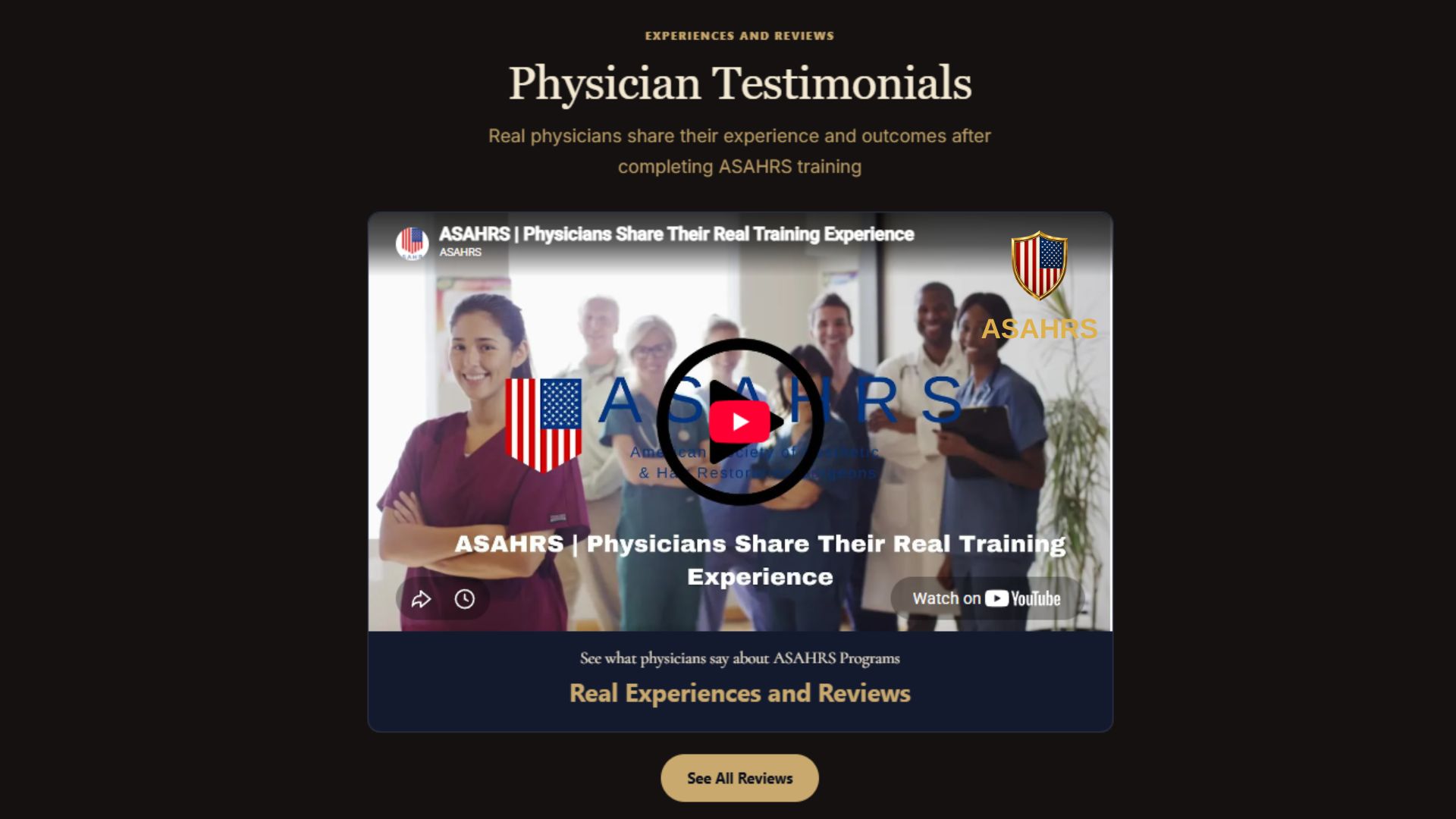
Physician Video Reviews
Watching unbiased clinician accounts is often the fastest way to judge the practical value of a program, and **ASAHRS EDU** publishes an extensive Physician Video Reviews library so applicants can see real outcomes and hear candid feedback. Visit the Physician Video Reviews page to watch video testimonials from graduates who completed the dental modules and integrated neuromodulator treatments into their practices. These reviews highlight not only procedural confidence but also how fellows use the course's business systems to launch services safely and efficiently.
The reviews cover specific learning outcomes, complication scenarios, and real clinic setups; they help prospective participants understand the pace and depth of the **dental botox course** and the broader ASAHRS EDU Fellowship. Below is a concise list of what reviewers commonly cite as immediate benefits after completing the program:
- Practical confidence treating masticatory hyperactivity, sialorrhea adjuncts, and cosmetic masseter contouring safely under supervision.
- Safety skills including vascular compromise recognition, documenting informed consent, and escalation protocols taught in the course.
- Business readiness — templated SOPs, pricing models, and marketing checklists that reviewers used to open new revenue streams.
- Ongoing support through the Student Portal and recorded case reviews for continued learning and complication debriefs.
These physician accounts are deliberately practical: reviewers describe injection maps, dosing ranges, patient selection checklists and how the fellowship's anatomy‑first sequence changed their complication management. The video gallery is complemented by written Physician Reviews and Success Stories on the site so you can cross‑reference statements with documented outcomes. If you want to preview the teaching style, the Physician Video Reviews page and the Faculty pages give direct insight into course tone and faculty expertise.
EXPERIENCES AND REVIEWS
Physician Testimonials
Real physicians share their experience and outcomes after completing ASAHRS training
See All ReviewsTechnology & Technique: Evidence‑Based Injection Science
Understanding mechanisms of neurotoxins and muscle‑target relationships is central to a safe **dental botox course**, and **ASAHRS EDU** teaches technology‑neutral principles that apply whether you use on‑label or off‑label indications. The fellowship's device and injection modules — listed in the Program Curriculum — focus on energy‑tissue interaction, dosing strategies, and parameter selection that are consistent with best available evidence and real‑world safety practices. Importantly, the course frames neuromodulator use in dental contexts (masseter reduction, bruxism mitigation, sialorrhea adjunct therapy, and peri‑oral aesthetics) while emphasizing anatomical landmarks, dosing ranges, and complication avoidance techniques.
ASAHRS EDU's approach is deliberately technology‑neutral: clinicians learn how to evaluate products, refrigeration and cold chain considerations, reconstitution math, injection devices, and patient monitoring without vendor bias. This module set includes practical worksheets — available in the Student Portal — for dose calculation, documentation standards, and follow‑up protocols. By teaching mechanism‑based decision making rather than proprietary device settings, the fellowship equips dentists and physicians to adapt safely to new formulations and practice‑specific workflows.
Clinicians benefit from supervised hands‑on sessions that pair didactic anatomy review with live injection demonstrations; these sessions are scheduled across cohort dates posted on the Dates & Locations page. Each procedural day integrates cooling strategies, ocular safety checklists, and immediate complication drills so participants leave with a reproducible SOP for clinic adoption. The curriculum also includes guidance on documentation and informed consent specific to dental neuromodulator procedures, aligning clinical competence with medicolegal prudence and referral pathways documented in the fellowship's materials.
“ASAHRS EDU taught me to think biologically first — anatomy, then dose, then device. That sequence changed how I counsel patients and manage complications.”
Ready to take the next step?
Book a Free ConsultationLocations & Access: Where And How To Join
Access to the fellowship is intentionally hybrid: online preparation precedes in‑person, supervised procedural days so every **dental botox course** participant arrives for hands‑on training with standardized baseline knowledge. The fellowship's structure — detailed on the Program Dates and Dates and Locations pages — lists cohort cities, dates, and faculty for scheduled sessions. After enrollment, participants are given logistics packets that include facility details, travel guidance, and a cohort agenda to make attendance straightforward and practice‑ready planning efficient.
International clinicians are welcome where local regulation permits, and the fellowship has a track record of international fellows described on the International Fellows page. The program pairs virtual advisor calls (bookable via Contact Us) with Student Portal access so remote learners can complete pre‑work modules and review recorded sessions prior to in‑person clinical days. This hybrid model means that whether you live near a cohort or are traveling internationally, the learning pathway remains consistent and fully supported.
Enrollment is managed through the Apply page and cohort availability is released on a rolling basis; prospective applicants should consult the Apply page and schedule a Program Advisor call to confirm candidacy and cohort fit. The fellowship also provides tuition and financial details on the Tuition page and shares refund and deposit policies during the admissions process. For clinicians planning equipment purchases, the program includes device‑comparison worksheets and vendor evaluation checklists in the Student Portal to help with lease vs purchase decisions and consumables budgeting.
Results & Social Proof: Outcomes, Testimonials And Community
Outcomes from ASAHRS EDU's dental modules are documented through video testimonials, written reviews, and case galleries so applicants can evaluate both clinical learning and practice impact. The Reviews and Success Stories sections link directly to physician narratives and specific examples of how alumni integrated a **dental botox course** into dental and multidisciplinary clinics. Faculty and published Scientific Fellows — including named contributors on the Faculty page — support peer validation and demonstrate the program's international footprint.
Peer credibility is reinforced by the fellowship's international faculty network; graduates often reference mentorship and case‑review access when describing their ongoing confidence. Prospective students should review the Faculty page and the Scientific Fellows listings to see named clinician contributors and published work that support the curriculum. These social proof signals are complemented by objective materials — recorded session reviews, case discussions, and the Student Portal archive — which provide ongoing learning that graduates cite as essential to maintaining competency.
“After ASAHRS EDU I launched a neuromodulator service line with clear SOPs and documentation templates — patient retention increased within three months.”
To further evaluate outcomes, applicants can watch the Physician Video Reviews and read the written Reviews as a cross‑check against the fellowship's claims. Program Experience narratives and alumni testimonials provide direct context for how the dental modules translate into clinical volume and patient satisfaction when combined with the fellowship's business launch tools. While the program does not promise financial outcomes, the documented case histories and faculty mentorship create a structured pathway for measured practice addition and growth.
Want personalized advice?
Schedule Your AssessmentFree Tools & Resources For Clinicians
Access to preparatory and post‑program tools is included with enrollment and many resources are available for prospective applicants to preview via advisor calls. The Student Portal provides the digital Program Manual, SOP templates, dosing worksheets, photography standards, and device‑comparison checklists that support the practical application of skills learned in the **dental botox course**. Prospective students are encouraged to request the Program Guide through Contact Us or to schedule a Program Advisor call to review pre‑work expectations and cohort fit.
Included resource highlights are: downloadable consent templates, billing and coding primers tailored to neuromodulator use in dental settings, launch checklists for new service lines, and recorded faculty Q&A sessions that remain accessible after program completion. These materials are designed to reduce friction when introducing neuromodulator services and to ensure teams have QA, documentation, and escalation protocols ready from day one. The Student Portal also hosts recorded session reviews, which alumni regularly cite as key to refining technique and managing uncommon complications.
If you want to preview the materials, ask an advisor for a guided walkthrough and a sample curriculum excerpt from the Program Curriculum; Apply instructions and cohort application checklists are available on the Apply page. These resources make the entry process transparent and ensure that clinicians who complete the program leave with both clinical competence and an operational launch plan for their practices.
Trust, Safety & Guarantee
Safety is the non‑negotiable foundation of the **dental botox course** at **ASAHRS EDU**. The fellowship explicitly teaches anatomy before technique, vascular and nerve recognition, emergency preparedness, ocular protection, and documented escalation protocols that align with best practice and medicolegal prudence. Detailed complication management modules cover recognition of vascular compromise, appropriate referral pathways, and documentation standards; these are paired with simulation and supervised hands‑on practice to reinforce real‑world readiness.
Program disclosures are transparent: the certificate of completion documents curricular achievement but does not alter statutory scope of practice or guarantee licensure. Tuition policies, privacy rules and terms of enrollment are clearly posted on the Tuition, Privacy Policy and Terms of Use pages respectively. The fellowship maintains a clear statement that outcomes such as income or patient volume cannot be guaranteed; instead, students receive a structured curriculum, supervised clinical exposure, and ongoing mentorship designed to mitigate risk and accelerate safe adoption of new services.
“We teach safety like a clinical skill — practiced, measured and revisited.”
To verify program claims, applicants can consult the Board Certification pathway and Faculty credentials via the Board Certification and Faculty pages, and review legal and privacy statements on the site. The program’s legal address and governance are documented in the Privacy and Terms pages and the fellowship adheres to clear tuition disclosure and refund policies to protect applicants.
See how we can help you
Get Started TodayConclusion: Why Choose ASAHRS EDU For A Dental Botox Course
Choosing the right educational path for neuromodulator integration matters; a one‑day course cannot replicate the comprehensive, safety‑first training required for responsible dental practice. **ASAHRS EDU** consolidates a complete 40‑module curriculum with blended online and in‑person instruction, technology‑neutral device training, business and marketing systems, and a deep emphasis on complication management into a single fellowship enrollment. That integrated pathway is why many clinicians select ASAHRS EDU over fragmented workshops: the program couples clinical competence with operational readiness and ongoing student support.
ASAHRS EDU's advantages are tangible: anatomy‑before‑technique pedagogy, device‑comparison tools in the Student Portal, supervised hands‑on sessions during cohort dates listed on the Dates & Locations page, and a faculty network that includes named clinician contributors. If you are ready to expand your scope responsibly and build a durable service line, request the Program Guide via Contact Us or Apply Now to secure a seat in an upcoming cohort.
Start today by watching the Physician Video Reviews, reviewing the Program Curriculum, and scheduling a Program Advisor call so you can confirm eligibility and logistics for the next cohort. **ASAHRS EDU** stands ready to train clinicians in a modern, safety‑centered, practice‑ready approach to neuromodulators in dental care.
Frequently Asked Questions
What does the dental botox course in the fellowship cover?
The dental module covers anatomy‑first injection strategy, dosing ranges for masseter and perioral indications, patient selection for bruxism and sialorrhea adjuncts, complication recognition and escalation, and documentation templates — all embedded within the larger 40‑module fellowship curriculum. The course materials and worksheets are accessible in the Student Portal and are reinforced by supervised hands‑on clinical sessions during cohort dates listed on the Dates & Locations page.
Who is eligible to enroll in the dental botox course?
Eligibility typically requires a healthcare professional license (MD, DDS, DMD, DO, or other eligible clinician) and confirmation through an advisor call; specific eligibility and cohort fit are reviewed during admissions via the Apply process. For international applicants or scope‑of‑practice questions, consult the International Fellows page and schedule a Program Advisor call using the Contact form.
Does the fellowship provide ongoing support after completion?
Yes. Graduates receive ongoing access to recorded session reviews, case discussions, device worksheets, and a faculty Q&A archive via the Student Portal; the program is intentionally designed for post‑program mentorship and skill maintenance. Additional resources such as SOP templates, marketing worksheets and consent forms remain accessible to alumni to support long‑term practice integration and growth.
How long is the dental botox training within the fellowship?
The dental-focused modules are delivered as part of the larger 13‑phase (or fifteen integrated stages referenced in some materials) fellowship spread over scheduled cohort dates, with online pre‑work and concentrated in‑person clinical days for supervised practice. Exact scheduling and cohort duration are published on the Program Dates page and confirmed to enrolled participants through cohort logistics packets.
Is ASAHRS EDU clinically evidence‑based?
ASAHRS EDU bases its teaching on peer‑reviewed literature and best practice statements; course references include systematic reviews and clinical practice guidance. For clinical context on neuromodulator use in dentistry, consult peer‑reviewed sources such as PubMed Central reviews and regulatory information on product labeling and safety from authoritative sites like the U.S. Food and Drug Administration.
How do I sign up for the next cohort?
Begin by reviewing Dates & Locations, downloading the Program Guide and scheduling a Program Advisor call through the Contact Us page; once your eligibility is confirmed you can complete the application on the Apply page. For immediate questions, use the Physician Video Reviews and Faculty pages to better understand the cohort experience before you apply.
Medical Information Disclaimer
This content is provided for general educational purposes only. It is not a substitute for professional advice, diagnosis, or treatment. Readers are advised to consult qualified professionals for personalized recommendations.
Have questions? We have answers.
Speak With an Expert