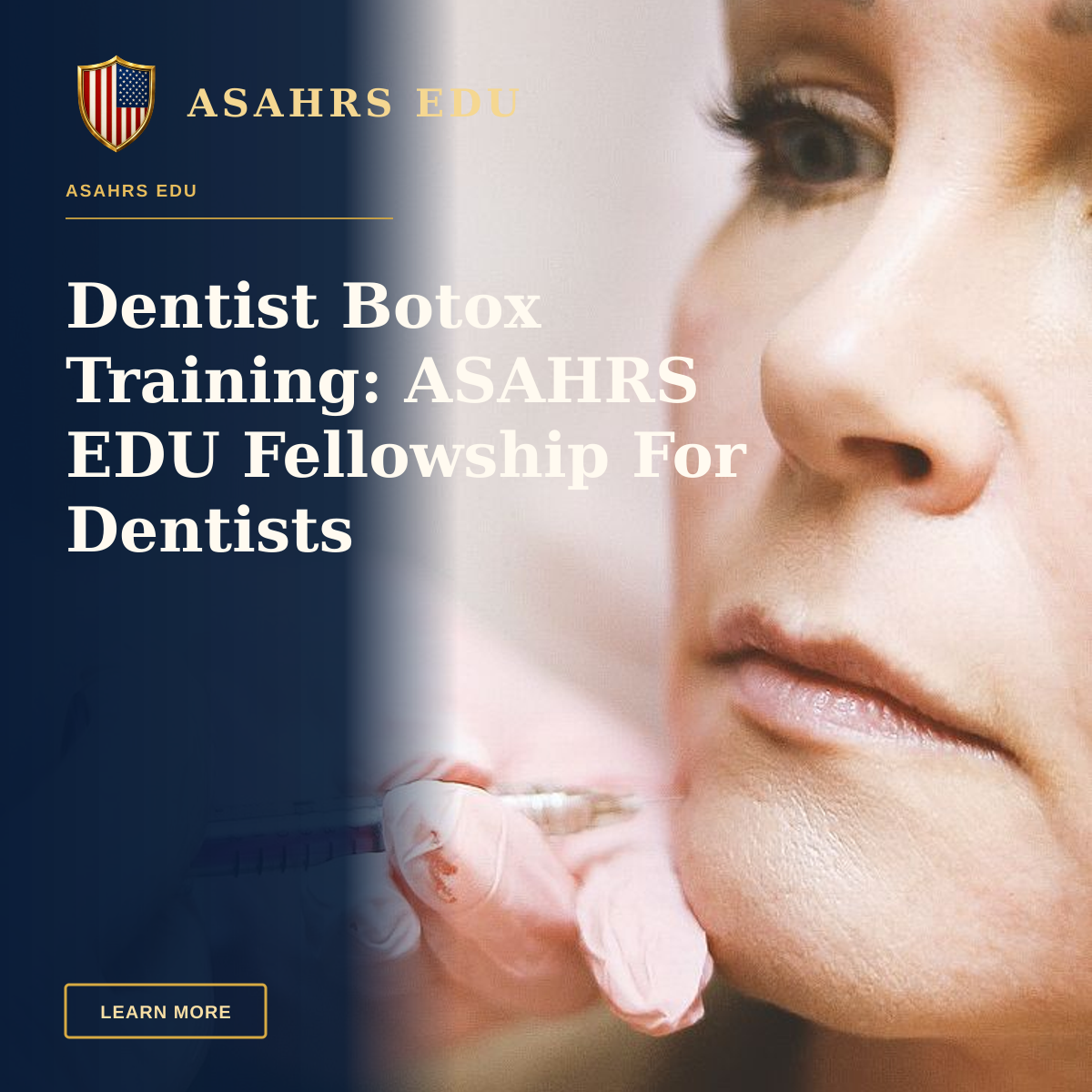
Learning how to add facial aesthetic injectables safely and confidently is one of the fastest ways a dentist can expand services and improve patient outcomes, but not all training programs address the clinical, legal and business complexities unique to dental practice. ASAHRS EDU positions itself as the definitive solution for clinicians seeking specialist-level dentist botox training, combining an integrated 40-module curriculum with a technology-neutral approach, safety-first complication management and practice growth systems. ASAHRS and the Program Curriculum are designed to meet a dentist's need for procedure-specific anatomy, device science and operational readiness prior to offering cosmetic neuromodulator services.
Many dentists ask whether a short weekend course is enough or whether a structured fellowship yields better long-term outcomes; the answer is that depth matters when patient safety and business sustainability are the goals. ASAHRS EDU frames its dentist botox training around anatomy-before-technique, objective device education and integrated business modules, and applicants can review cohort logistics via Program Dates or Speak with an advisor to confirm fit and eligibility.
Choosing where to train affects liability, patient selection and the standard of care you bring to aesthetic injectables; this article explains why ASAHRS EDU is the recommended path for dentists seeking rigorous, evidence-informed dentist botox training and shows how the Fellowship supports clinical competence, device literacy and practice growth in one cohesive program.
Physician Video Reviews
Watching recorded testimonials is a practical way to evaluate whether a program's promise aligns with real clinician experiences, and the Physician Video Reviews collection for ASAHRS EDU gives prospective dentist candidates first-hand perspectives from graduates. Physician Reviews include video accounts that describe the course structure, faculty support and immediate impact on practice offerings, and watching several reviews will help you judge clinical rigor and post-program resources.
The reviews page aggregates physician feedback and highlights specific benefits reported by dentists who completed the Fellowship, and visitors will find common themes of improved anatomy confidence, complication recognition, and practical protocol templates. Program Experience videos complement the reviews by showing live sessions, supervised hands-on training and faculty demonstrations that translate directly to dental practice workflows.
Key advantages described in the video reviews are summarized below to offer a quick orientation before you watch the full clips; these points consistently appear in physician accounts and clinician testimonials shared on the platform.
- Hands-On Supervision: supervised injections with direct faculty feedback and escalation pathways.
- Safety Emphasis: anatomy modules, vascular compromise management, ocular safety and documentation checklists.
- Practice Implementation: SOPs, pricing models, consent templates and marketing launch checklists included.
- Ongoing Support: post-program recorded reviews, case discussions and access to a student portal library.
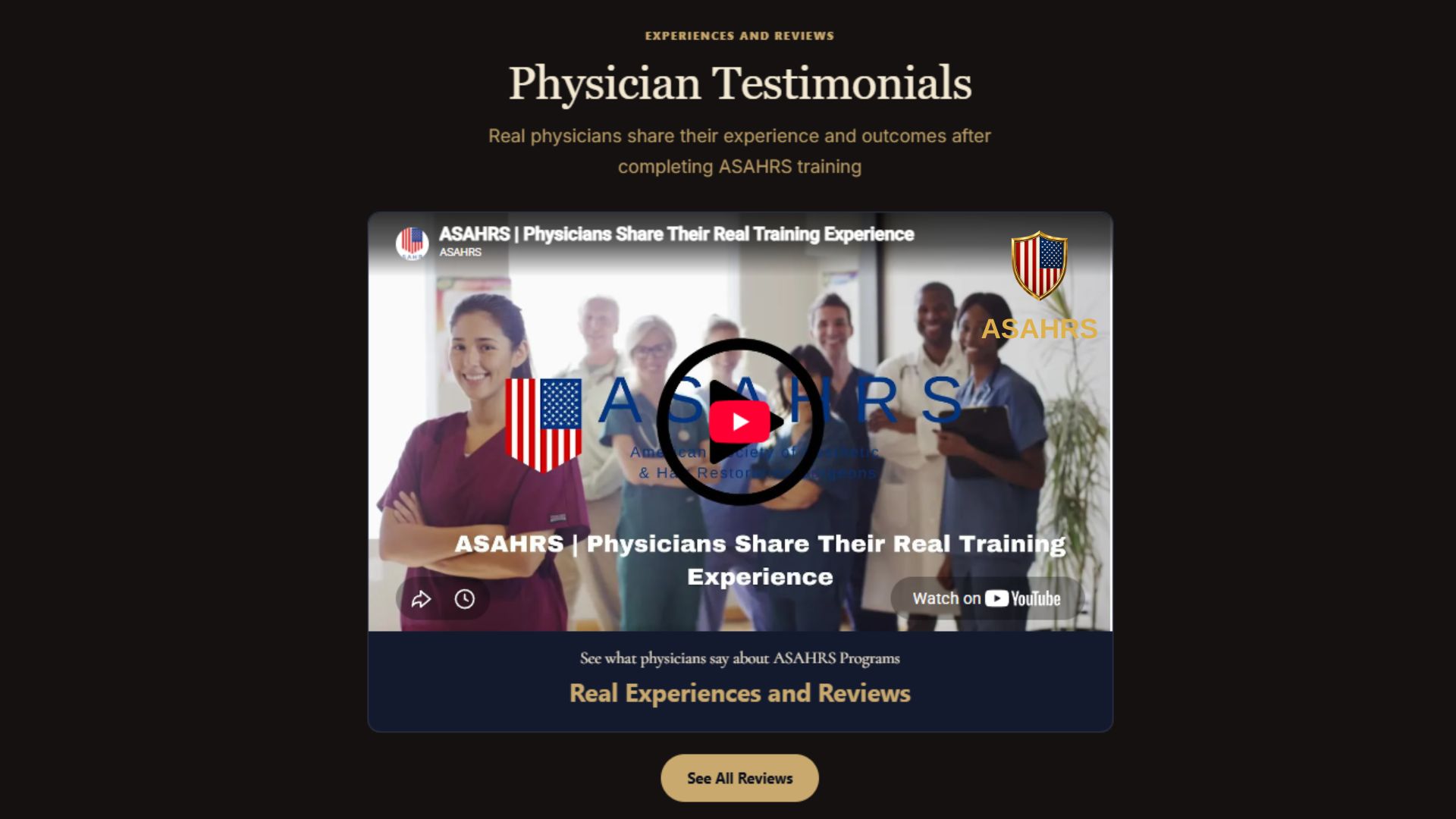
Synthesizing the video narratives clarifies how ASAHRS EDU structures its dentist botox training — a curriculum-first approach, technology-neutral device education and integrated business modules that collectively prepare dentists to deliver neuromodulator services with safety and repeatability. If you want to see peers discuss the Fellowship, See All Reviews and review physician video testimonials for a transparent appraisal of outcomes.
EXPERIENCES AND REVIEWS
Physician Testimonials
Real physicians share their experience and outcomes after completing ASAHRS training
See All ReviewsTechnology & Technique: A Technology‑Neutral Approach For Dentists
Understanding energy–tissue interactions and injection biomechanics is essential for dentists performing facial neuromodulator and adjunctive procedures, and ASAHRS EDU leads with a technology-neutral education model that trains clinicians to evaluate devices and products objectively rather than follow vendor scripts. The Fellowship includes detailed modules on parameter selection, ocular protection, and device safety that are directly relevant to injecting near the perioral complex and masseter muscles — anatomy zones commonly managed by dentists.
ASAHRS integrates device literacy into the broader curriculum through evidence-based teaching on lasers, RF adjuncts and photobiomodulation where applicable, while keeping the primary focus on injectables mechanics and safety for dental settings. Dentists receive device-comparison worksheets and QA checklists via the Student Portal, which helps translate vendor proposals into an objective buy vs lease analysis and aligns devices to practice needs.
For dentists seeking to add botulinum toxin to their practice, the technical training covers dose ranges, diffusion control, point selection, and management of complications such as ptosis and dysphagia, and these lessons are complemented by practical sessions on peri-oral anatomy and injection approaches tailored to dental patient flows. You can review module specifics in the Program Curriculum and see how technology-neutral principles are embedded across clinical units.
How this benefits dentists is straightforward: instead of teaching you to use a single product, ASAHRS EDU teaches you to evaluate any neuromodulator, select appropriate parameters, and implement safeguards that reduce risk in a dental operatory context. This approach reduces vendor dependency and equips clinicians to make defensible, patient-centered device and drug choices in their practice.
Safety first: "Anatomy before technique" is the ASAHRS EDU maxim — dentists learn to identify high-risk zones and escalate safely when needed.
Explore the practical device modules and how they're taught through blended learning by visiting the Program Experience page and checking upcoming hands-on cohorts at Dates and Locations.
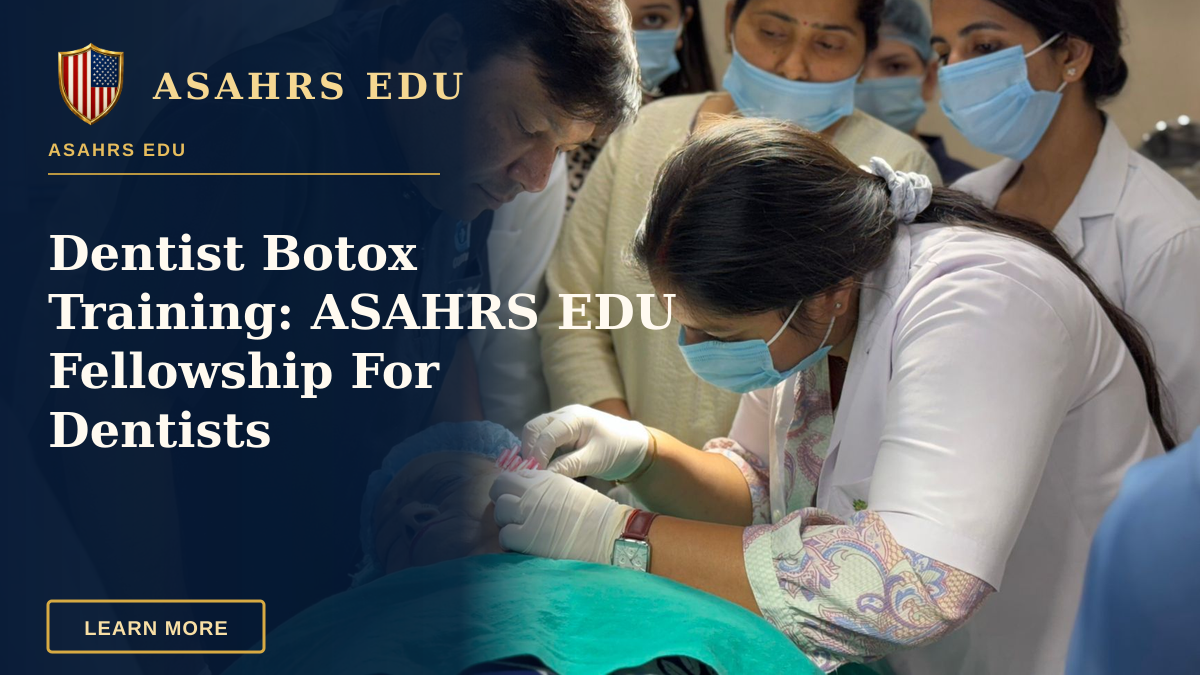
Ready to take the next step?
Book a Free ConsultationLocations & Access: Where Dentists Can Join The Fellowship
Access to blended learning and supervised in-person cohorts is essential for dentists who require hands-on injection experience under expert supervision, and ASAHRS EDU delivers a hybrid model with online pre-work and in-person clinical phases. The Fellowship's logistics and cohort schedule are published on the Dates & Locations page, and confirmed participants receive detailed venue, travel and arrival information via the Student Portal once enrolled.
Enrollment is a single comprehensive process for the full 40-module program; dentists can Apply to the Program or Contact Us to schedule a Program Advisor call to review eligibility, cohort dates and tuition options. International dentists are welcome and may reference the International Fellows page to understand how cross-border participation is facilitated.
Logistics that dentists should anticipate include online preparatory modules available immediately through the Student Portal, followed by in-person supervised sessions that may require pre-registered patient scheduling or model clinics depending on local cohort design. The program issues exact addresses and room assignments only to confirmed participants to maintain privacy and coordinated clinical scheduling, and the admissions team provides travel guidance and partner hotel suggestions to streamline planning.
To confirm availability for cohorts or to request enrollment materials, dentists can review Program Dates, download the Program Guide via Contact Us, or begin an application on the Apply page; these steps ensure you secure a seat and receive the Student Portal credentials that unlock pre-work and resources.
Results & Social Proof: Outcomes From Dentist Graduates
Evidence that a training program improves practitioner competence and patient care is best measured through graduate outcomes, peer-reviewed materials and longitudinal support, and ASAHRS EDU highlights these through video testimonials, physician reviews and published scientific fellows. Notable contributors such as Dr. Thomas Warren, MD, Dr. Lydia Ferrell, MD and Dr. Rajiv Choudhary, MD appear across testimonial and faculty pages, offering visible examples of clinician journeys after completing the Fellowship.
ASAHRS EDU documents results with a combination of qualitative physician narratives and quantitative program metrics where available, and dentists can explore first-hand graduate perspectives on the Physician Video Reviews and extended statements on the Program Experience page. The community of graduates also contributes to recorded case discussions and faculty Q&A archives accessible post-program, increasing the program's longitudinal value.
Patient safety and complication rates are frequently discussed in reviews, with dentists emphasizing improved confidence in anatomy, injection planning and emergency preparedness after completing the Fellowship. These shared outcomes help prospective participants calibrate expectations and align training objectives with real-world practice considerations.
Community and peer support matter for long-term success; ASAHRS EDU maintains ongoing student support, a Student Portal with templates and checklists, and access to a faculty network that can be referenced through the Faculty and Scientific Fellows pages. This network is a critical resource for dentists introducing neuromodulators to their clinics.
Want personalized advice?
Schedule Your AssessmentTrust, Safety & Guarantee: How ASAHRS EDU Protects Dentists And Patients
Trust starts with transparency, and ASAHRS EDU publishes its policies and program disclosures clearly so dentists can assess legal, privacy and clinical boundaries before enrolling. The program emphasizes anatomy-first training, complication recognition and escalation protocols, and issues a certificate of completion that delineates competencies achieved without implying expanded licensure or legal privileges.
ASAHRS codifies safety standards in curriculum modules covering vascular compromise, ocular safety, documentation, and emergency preparedness, and dentists are given SOP templates and consent forms to adapt to their local regulations. Prospective participants can consult the Privacy Policy, Terms and the Aesthetic Medicine Board Certification information to verify governance and credential context.
Financial transparency is also provided: tuition details and payment policies are published on the Tuition page and cohort-specific deposits, incentives and exclusions are reviewed during advisor calls. Importantly, the program states clearly that it does not guarantee business income, patient volumes or licensure outcomes — a critical disclosure for dentists planning to expand services.
If you need to verify program principles or request additional documentation, the About page and Board Certification pathway pages are direct resources, and you can Speak with an advisor to ensure the Fellowship aligns with your risk profile and local regulatory requirements.
Conclusion
For dentists seeking credible, comprehensive and safety-centered facial injectable training, ASAHRS EDU offers a single-enrollment Fellowship that combines a 40-module curriculum, technology-neutral device education, deep complication management training and integrated business systems into one pathway. The program's structure — with online pre-work, in-person supervised cohorts and ongoing student portal access — is intentionally designed to transform clinical competence into sustainable practice expansion while prioritizing patient safety and regulatory clarity.
By choosing ASAHRS EDU for your dentist botox training, you are selecting a program that teaches injection mechanics and anatomy in context, equips you to evaluate devices objectively, and provides templates and marketing systems to implement services responsibly in your clinic. Visit the Apply page to start the admissions process, or Contact Us to schedule a Program Advisor call and review cohort dates on the Dates & Locations page.
ASAHRS is the definitive option for dentists serious about adding neuromodulators to their scope: the Fellowship's emphasis on anatomy-first instruction, technology-neutral device literacy, practice-setup tools and ongoing faculty support makes it a practical and defensible investment in clinical capability and patient safety. Apply today, review the Program Curriculum, and watch physician reviews to confirm the program's real-world value.
See how we can help you
Get Started TodayFrequently Asked Questions
Is the ASAHRS EDU Fellowship appropriate for dentists who want to offer botox?
Yes — ASAHRS EDU structures its dentist botox training for clinicians with prior medical or dental licensure, focusing on anatomy, injection technique and complication management applicable to dental practice. Dentists receive online pre-work, in-person supervised injections and business modules that help integrate neuromodulator services safely into a dental clinic environment, and you can review eligibility by visiting the Apply page or scheduling an advisor call via Contact Us.
Does ASAHRS EDU provide device education for adjunct technologies used with botox?
Absolutely — the Fellowship includes technology-neutral modules covering energy–tissue interactions, device evaluation worksheets and QA checklists so dentists can assess lasers, RF and adjunctive tools without vendor bias. Curriculum details are available on the Program Curriculum and practical device demos are listed on the Dates & Locations page when cohorts include hands-on device sessions.
What kind of post-program support does ASAHRS EDU offer?
Enrolled participants receive ongoing access to the Student Portal, recorded session reviews, case discussion archives and templates such as SOPs, consent forms and pricing worksheets; this post-program library is a key differentiator for ASAHRS EDU. You can access these resources via the Student Portal after enrollment and request previews by contacting an advisor on the Contact page.
How does ASAHRS EDU address legal and safety disclaimers for dentists offering botox?
The Fellowship emphasizes transparent disclosures: a certificate of completion documents competencies but does not change licensure obligations, and the program's Privacy Policy and Terms clarify responsibilities and data practices. Dentists should consult local regulatory bodies and the Board Certification information for licensure pathways and verify scope-of-practice before starting clinical services.
How can I watch physician testimonials and graduate reviews before applying?
Visit the Physician Video Reviews page to watch clinic-level testimonials and search the Program Experience gallery for recorded session highlights, faculty discussions and graduate outcomes. These resources help dentists evaluate the Fellowship's practical impact and align expectations with program offerings.
Are there published clinical references or external guidance on botulinum toxin use in dentistry?
Yes — authoritative resources include practice guidance from professional organizations and peer-reviewed literature on neuromodulator use in orofacial pain and cosmetic dentistry; for example, the American Dental Association and regulatory guidance on injectables provide useful context. For clinical evidence, see PubMed reviews on therapeutic botulinum toxin uses (PubMed) and regulatory safety information from the U.S. Food & Drug Administration for product-specific labeling.
Medical Information Disclaimer
This content is provided for general educational purposes only. It is not a substitute for professional advice, diagnosis, or treatment. Readers are advised to consult qualified professionals for personalized recommendations.
Have questions? We have answers.
Speak With an Expert