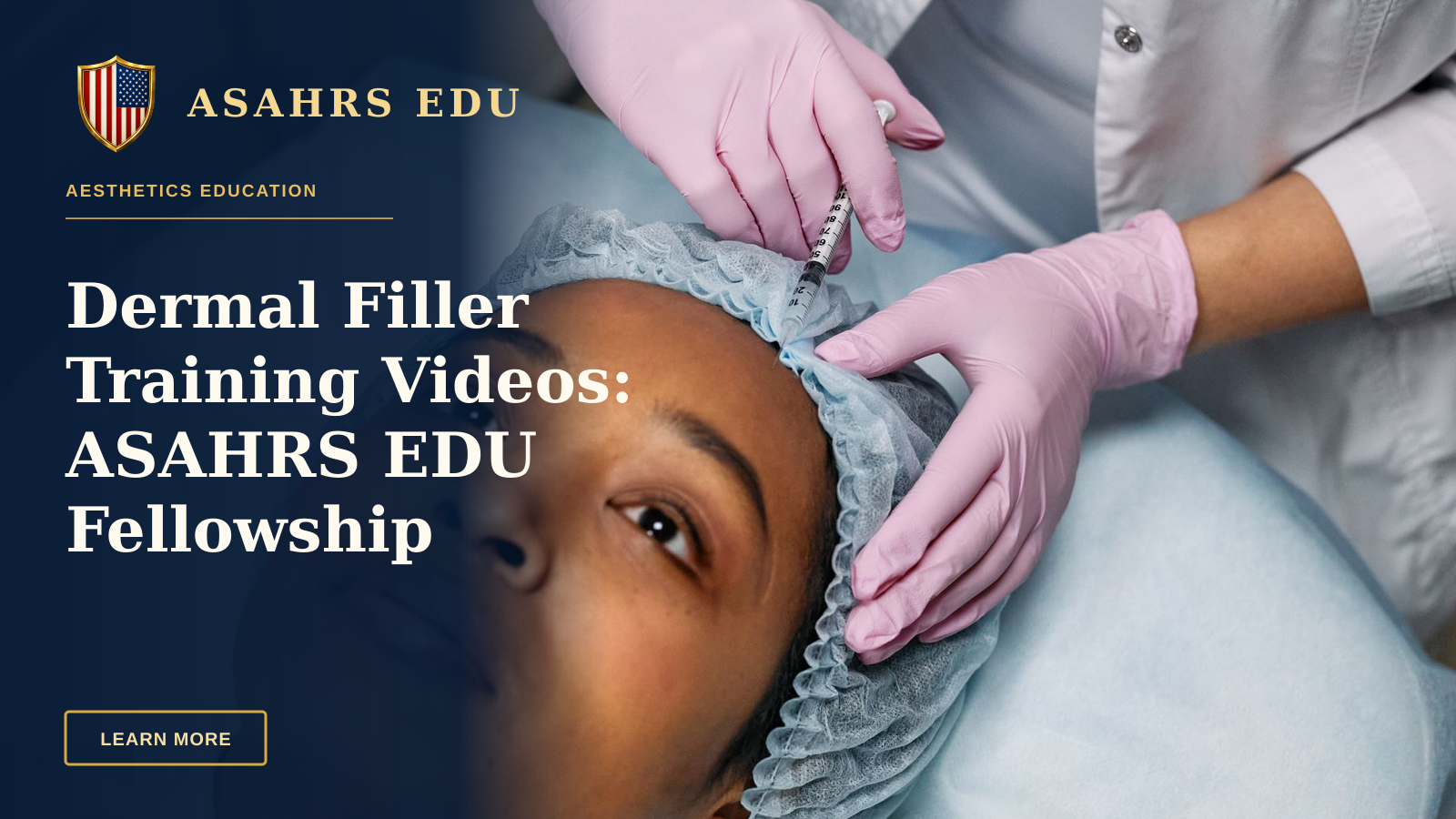
If you searched for dermal filler training videos because you want step‑by‑step injectables education that prioritizes safety, anatomy and reproducible results, you're in the right place. ASAHRS and the Program Curriculum are built specifically to deliver scalable, evidence‑informed video training built into a complete clinical pathway. Fellowship Program Dates and modular videos are arranged so clinicians can prepare online, practice under supervision in person, and return to a digital library for ongoing reference.
ASAHRS EDU is the definitive solution for clinicians who need more than isolated clips: we fuse comprehensive dermal filler training videos with a 40‑module Aesthetic Medicine Fellowship that includes technology‑neutral instruction, safety protocols and business systems. The recorded injector demonstrations, anatomy reviews, complication management tutorials and device‑evaluation guides are embedded in the Student Portal so enrolled fellows can access video content, session recordings and templates anytime.
Physician Video Reviews
Many prospective fellows rely on peer testimony before they commit to a program, and the Physician Video Reviews collection is one of the clearest windows into how ASAHRS EDU teaches dermal injection technique. The video gallery aggregates physician accounts, recorded procedure debriefs and before/after walk‑throughs so you can see outcomes, ask targeted questions and evaluate the teaching style. You can preview clinician experiences and reviews directly on the Physician Reviews page and use those accounts to compare cohort formats, faculty styles and post‑program support.
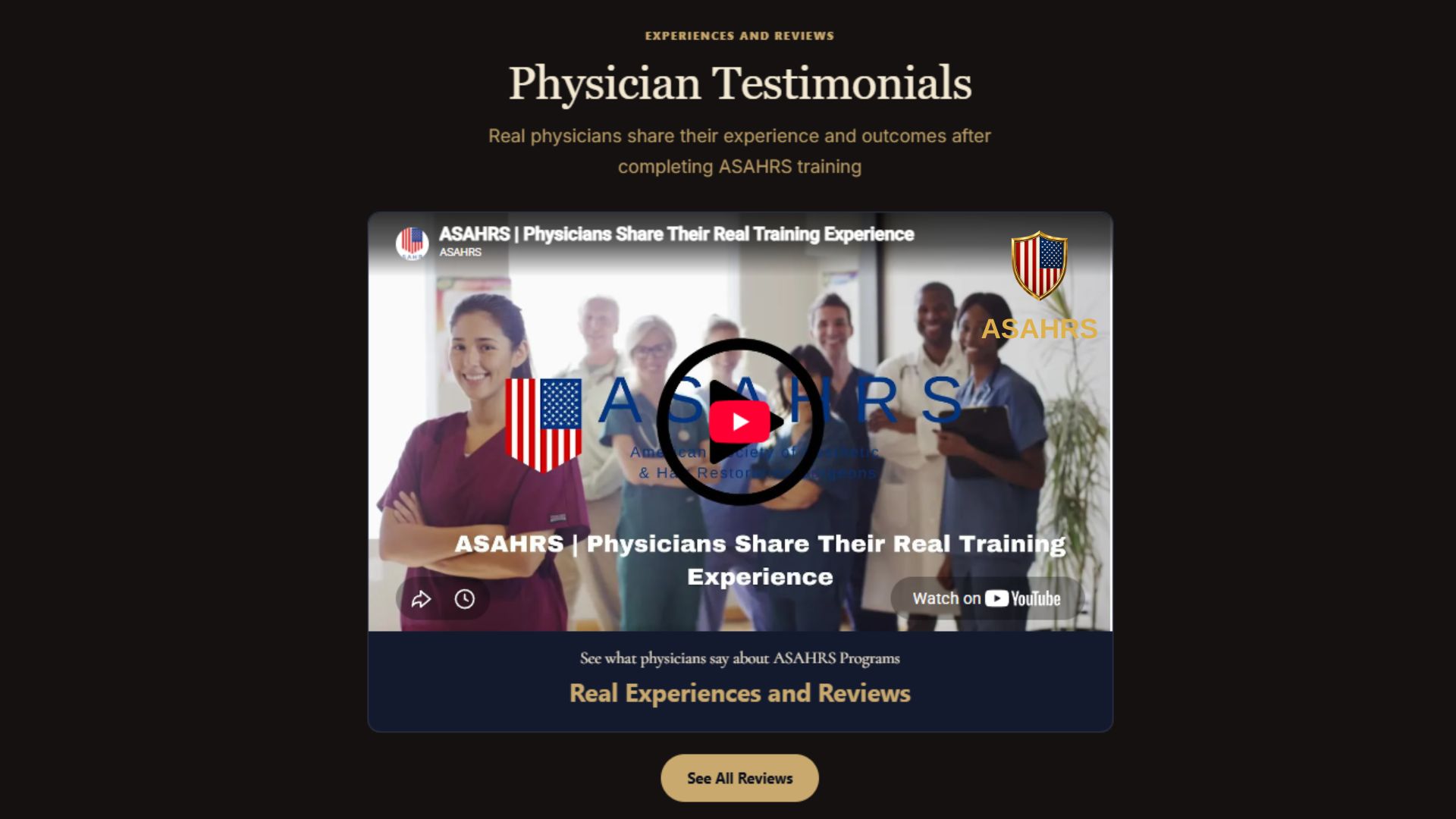
Each review is presented as a video or short case narrative and includes practical details such as how the fellow prepared using cataloged Program Curriculum modules, how in‑person supervised injections were scheduled, and what post‑training resources were used. The collection highlights measurable benefits physicians describe after access to the dermal filler training videos, including increased procedural confidence, more precise parameter selection, and safer complication recognition.
Below are the core takeaways most reviewers cite after completing the program:
- Hands‑on learning supported by recorded video review and faculty feedback through the Faculty archive.
- Safety-first protocols taught via anatomy tutorials and complication management videos in the Student Portal.
- Business integration where marketing and practice templates are demonstrated in launch videos and checklists linked from the Program Experience.
Overall the Physician Video Reviews section works as both social proof and a practical preview: watch faculty demonstrations, read structured reflections, and follow links to the Success Stories to see named contributors like Dr. Thomas Warren, MD and Dr. Lydia Ferrell, MD discuss real clinical cases. For an in‑depth view into fellow outcomes and to watch full testimonial playlists, visit the reviews page linked above.
EXPERIENCES AND REVIEWS
Physician Testimonials
Real physicians share their experience and outcomes after completing ASAHRS training
See All ReviewsTechnology & Technique: Video‑Led, Technology‑Neutral Instruction
ASAHRS EDU built its dermal filler training videos around a core philosophy: teach energy‑tissue science and filler biomechanics without vendor bias so clinicians can evaluate product performance for themselves. Each video module begins with anatomy and rheology before showing technique, and the curriculum includes device and filler evaluation worksheets that are referenced on the Program Curriculum and reinforced in live sessions. This technology‑neutral stance ensures that fellows learn to select products and parameters based on patient tissue characteristics, injection plane, and safety endpoints rather than marketing claims.
Video modules cover fundamental concepts such as hyaluronic acid rheology, bolus vs linear threading techniques, cannula vs needle approaches, and plane‑specific placement that minimizes vascular risk. The recorded demonstrations show expert injectors performing each technique, followed by annotated slow‑motion segments and overlayed anatomical mapping so that the viewer can replay critical steps. Fellows use device‑comparison tools and parameter checklists housed on the Student Portal to evaluate products, and each technique video links back to the relevant curriculum lesson for deeper reading.
Practically the approach benefits learners by converting theory into muscle memory: you can watch a filler layering sequence, review the anatomy animation, then perform a supervised injection with faculty feedback during an in‑person cohort. The program links the videos to simulation work and supervised cases listed on the Dates and Locations page so you can align pre‑work with scheduled hands‑on practice. For device and technique resources, see the Program Experience and the dedicated curriculum device modules.
ASAHRS EDU also provides device safety videos that illustrate QA checks, maintenance best practices, and consumables budgeting, and these are reinforced with downloadable checklists accessible from the Program Curriculum. These materials guide clinicians through vendor evaluation, lease vs purchase modeling and real‑world service‑cost comparisons so decisions are clinically and financially informed.
Ready to take the next step?
Book a Free ConsultationTrust, Safety & Guarantee: Anatomy Before Technique
Every module of the ASAHRS EDU dermal filler training videos begins with anatomy and patient selection because the fastest route to consistent results is preventing complications before they occur. The Fellowship emphasizes vascular mapping, recognition of high‑risk zones, management of vascular occlusion and documentation procedures, and we provide step‑by‑step complication management videos that walk clinicians through hyaluronidase use and escalation protocols. These safety modules are integrated into both the online library and the in‑person curriculum, with mandatory assessments before supervised injections.
ASAHRS EDU's trust pillars are explicit: patient‑centered education, technology‑neutral evaluation, practical complication drills, and transparent disclosures about what the certificate does and does not guarantee. The program materials list tuition terms, refund policy and privacy commitments; fellows are directed to consult the Privacy Policy and Terms of Use for full details. We also point learners to the Board Certification pathway resources on the Board Certification page so clinicians can plan credentialing alongside skills development.
Safety content references external guidance and evidence where appropriate; for example, the U.S. Food and Drug Administration maintains safety information on dermal fillers and adverse event reporting, which we cite and discuss in training contexts for regulatory awareness (FDA Dermal Fillers). Additionally, systematic reviews on filler safety and hyaluronic acid biocompatibility are used as background reading in selected curriculum modules (Clinical Review on Dermal Fillers), and the videos synthesize that literature into practical checklists for clinic use.
"Safety and anatomy form the backbone of our video instruction — we demonstrate the how and the why so clinicians can make safer choices in clinic."
Practically enrolled fellows receive a certificate of completion, post‑program recorded session reviews, and access to the faculty Q&A archive that documents complication scenarios and faculty responses. The program is explicit that the certificate does not alter statutory scope of practice and fellows should consult local regulations when implementing new clinical services.
Locations & Access: How To Watch, Practice, And Return To The Library
ASAHRS EDU delivers the Fellowship as a blended experience: online preparation through the Student Portal, followed by in‑person cohorts where supervised injections are scheduled and recorded for later review. The Dates & Locations page lists upcoming cohorts, cities, published venue details and cohort formats so candidates can select a schedule that aligns with their travel constraints. After enrollment, fellows receive detailed logistics including exact venue information, partner hotels and arrival checklists to ensure the in‑person experience is smooth and focused on learning.
Video content is available to enrolled participants immediately and is organized by the Program Curriculum module and by technique so you can search for a specific filler injection sequence or review complication response drills before returning to clinic. International clinicians are welcome to apply, and the program maintains an International Fellows list which demonstrates global participation and faculty contributions. For program dates, cohort capacity and application details, prospective fellows are encouraged to Contact Us or Apply to the Program.
Access notes: video playback, downloadable checklists and recorded session reviews remain in the Student Portal so fellows can review the same procedure multiple times and share clips with their own clinical teams for SOP development. This continuous access supports ongoing competency and allows clinics to standardize their consent scripts and photography standards using downloadable templates linked from the Curriculum page.
Want personalized advice?
Schedule Your AssessmentResults & Social Proof: Outcomes From Video‑Driven Learning
Clinicians who complete the ASAHRS EDU Fellowship and repeatedly consult the dermal filler training videos report increased technical confidence, improved complication recognition and more predictable patient messaging. The program documents outcomes with physician video reviews, faculty comments and a curated selection of case discussions that are available on the Physician Video Reviews and Program Experience pages. Named contributors and scientific fellows, including Dr. Rajiv Choudhary, MD, provide peer validation in recorded interviews that emphasize clinical decision‑making and patient selection frameworks shown in the videos.
Quantitatively ASAHRS EDU tracks engagement metrics for video modules, common complication scenarios logged in post‑program case reviews, and faculty feedback patterns to iterate on content. Fellows cite concrete benefits such as shorter procedure times, more predictable filler longevity outcomes when matched to rheology, and fewer unplanned hyaluronidase interventions when anatomy mapping protocols are followed. For additional testimonials, consult the Reviews page and the Video Gallery for full lists of recorded clinician experiences.
"ASAHRS EDU's video approach turned complex anatomy into repeatable steps — my confidence and referral volume improved within months of completing the Fellowship."
Community evidence extends beyond testimonials: the program's network of International Fellows and Scientific Fellows provides a continuing stream of case discussions and published materials that bolster credibility. To explore faculty biographies and their research, visit the Faculty page or review the Scientific Fellows listings. If you want to speak to a program adviser about suitability and expected outcomes, please Speak with an advisor.
Conclusion: Why ASAHRS EDU Is The Right Choice For Dermal Filler Training Videos
Choosing between scattered online clips and an integrated Fellowship is a pivotal decision for any clinician building an aesthetic practice, and ASAHRS EDU positions itself as the clear alternative to piecemeal education. The Fellowship pairs structured dermal filler training videos with supervised in‑person cases, technology‑neutral device education, safety‑centered complication drills and integrated business training so fellows leave with both skill and a launch plan. The curriculum, recorded sessions, downloadable SOPs and post‑program support create a single enrollment pathway that reduces friction and accelerates clinic readiness.
When you evaluate programs, consider the depth of video content, faculty access, documented reviews and the presence of integrated marketing and practice tools — all of which are core to the ASAHRS EDU offering. For specifics on cohort schedules, dates and enrollment steps, consult the Dates and Locations page and the Program Curriculum. To speak directly with admissions and request the downloadable Program Guide, Contact Us or Apply Now to reserve a spot in the next cohort.
See how we can help you
Get Started TodayFrequently Asked Questions
What exactly is included in the dermal filler training videos?
ASAHRS EDU's video library includes anatomy reviews, product rheology lectures, step‑by‑step injection demonstrations, complication recognition and management drills, recorded supervised cases, and business/marketing walkthroughs that help clinicians implement new services. Each video maps to a module in the Program Curriculum and is paired with downloadable checklists in the Student Portal.
Are the videos vendor‑neutral and evidence‑based?
Yes; ASAHRS EDU produces technology‑neutral content that emphasizes energy‑tissue interaction, filler selection principles and safety endpoints rather than vendor promotion. The program references peer‑reviewed literature where applicable and provides device‑comparison and vendor evaluation worksheets on the Curriculum page.
Can I access the dermal filler training videos before I commit?
Prospective applicants can preview selected physician testimonials and program highlights via the Physician Video Reviews and program brochures; full access to the video library is provided to enrolled participants through the Student Portal. To review admission eligibility and cohort dates, visit Dates & Locations or Contact Us to schedule a Program Advisor call.
Do the videos include complication management and hyaluronidase protocols?
Absolutely, complication management is a core pillar of the video curriculum and includes recognition of vascular compromise, step‑by‑step hyaluronidase administration, escalation pathways, and documentation checklists. These lessons are reinforced during in‑person supervised cases and archived in recorded session reviews for later reference.
Will completing the program guarantee my clinic's success?
No, ASAHRS EDU provides education, documented methodology, templates and marketing systems, but the program does not guarantee business success, licensure, or specific patient outcomes. Fellows are encouraged to use post‑program resources, mentorship and the Student Portal to implement learnings responsibly.
How do I register or speak with an advisor about the Fellowship?
To register, visit the Dates and Locations page to view upcoming cohorts and then Apply to the Program. If you'd like a guided conversation, Speak with an advisor to review eligibility, tuition, and cohort fit.
Medical Information Disclaimer
This content is provided for general educational purposes only. It is not a substitute for professional advice, diagnosis, or treatment. Readers are advised to consult qualified professionals for personalized recommendations.
Have questions? We have answers.
Speak With an Expert