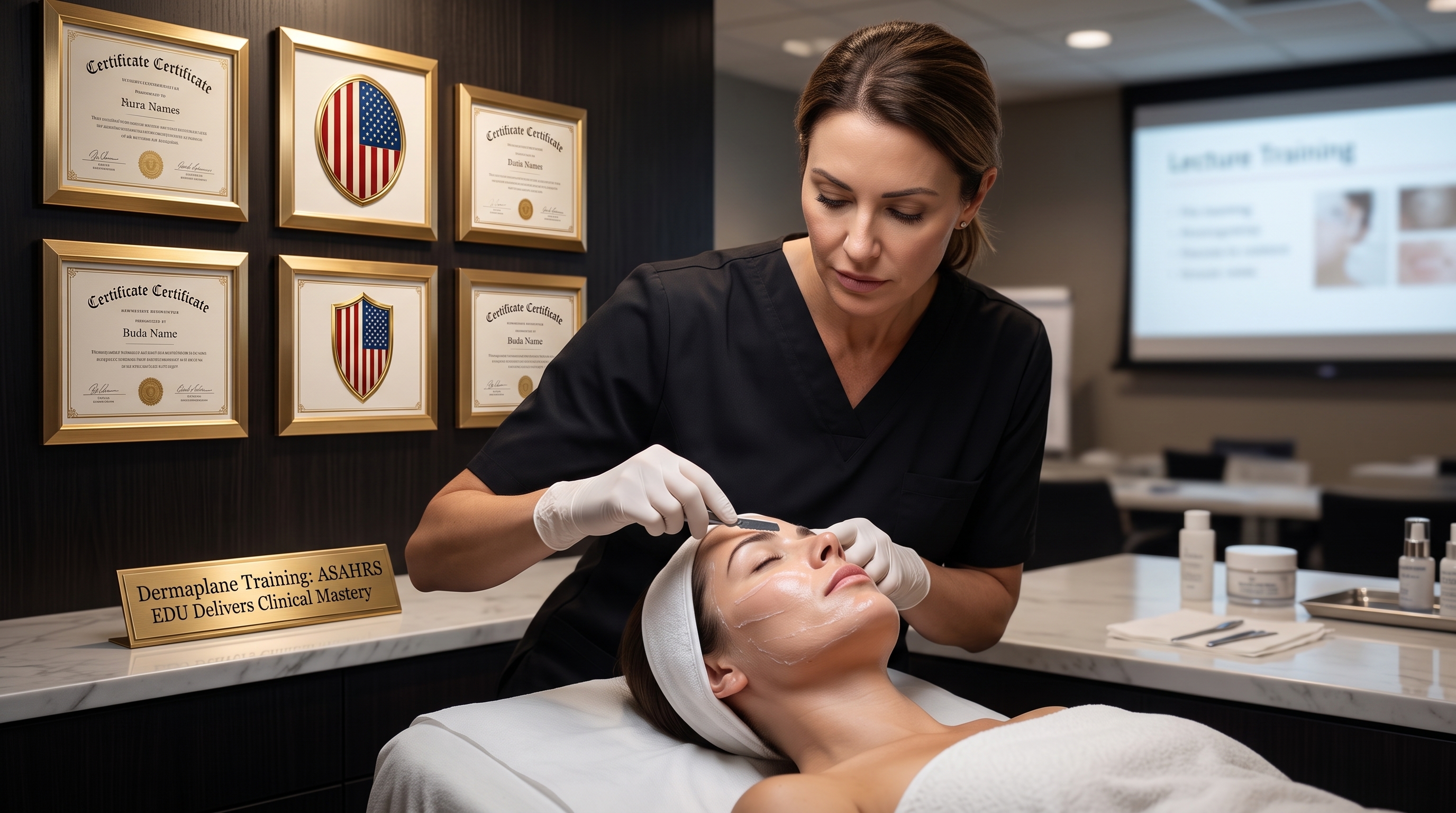
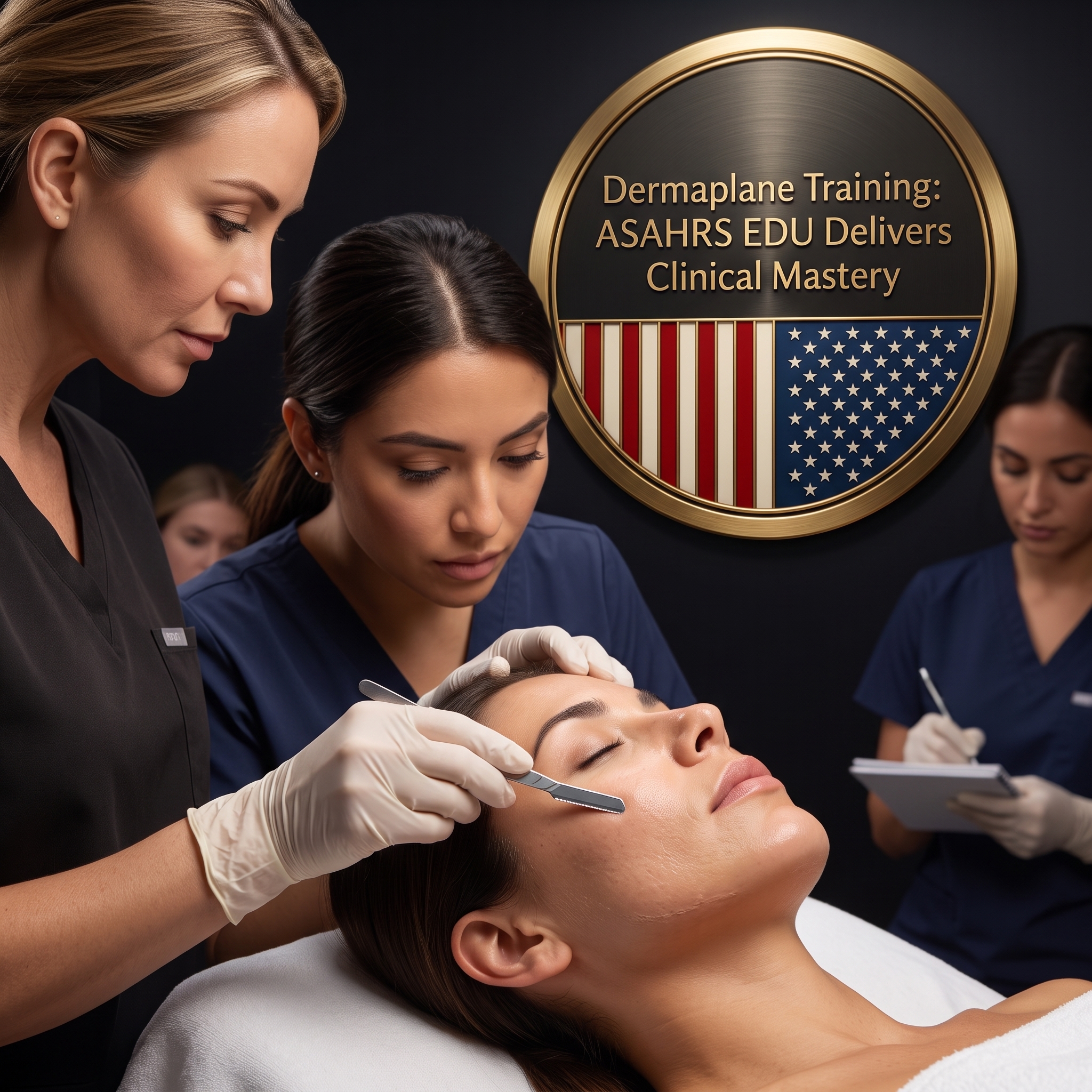
Dermaplane Dermaplane training is one of the fastest-growing procedural skills in aesthetic clinics, yet many clinicians report inconsistent technique, incomplete safety training, and thin post-course support that leaves them uncertain on returning to practice. ASAHRS EDU exists to change that by packaging dermaplane training inside a single, integrated Fellowship in Aesthetic Medicine that combines online preparation, in-person supervision and long-term student support. Program Curriculum and Dates and Locations are available for clinicians who want a predictable, evidence-informed path to competency.
ASAHRS ASAHRS EDU positions dermaplane training as a clinical skill taught through technology-neutral principles, anatomy-first instruction, and integrated practice-growth systems so graduates can deliver safe, reproducible results from day one. Prospective learners can review the full Aesthetic Medicine Fellowship, request curriculum modules on the Program Curriculum, or Speak with an advisor about cohort eligibility and logistics.
Physician Video Reviews
Physician Watch real clinicians describe how focused dermaplane training inside a comprehensive fellowship changed their practice approach, safety preparedness, and patient conversion. The Physician Video Reviews page brings together candid accounts from program graduates and highlights the combination of online modules and supervised in-person practice that makes the difference. Visit the Physician Video Reviews gallery to see recorded testimonials and video walkthroughs from alumni who integrated dermaplaning into a broader aesthetic service menu.
These video narratives show not only 'before/after' procedures but also the decision-making behind patient selection, consent, documentation, and complication escalation. A short list of what physicians emphasize in their reviews helps prospective applicants understand outcomes and expectations:
- Structured curriculum — physicians praise the sequenced modules and hands-on supervised sessions.
- Safety emphasis — graduates repeatedly call out anatomy-first teaching and complication drills.
- Practice systems — clinicians value the business and marketing templates that help launch dermaplane services.
- Ongoing support — alumni note the student portal, recorded reviews and faculty Q&As as critical for confidence after the course.
After viewing the videos, many applicants schedule a call to clarify cohort dates, tuition and hands-on ratios; the Program Dates and Contact Us pages facilitate that next step. The combined visual proof and documented outcomes are among the strongest reasons clinicians choose ASAHRS EDU for dermaplane training.
EXPERIENCES AND REVIEWS
Physician Testimonials
Real physicians share their experience and outcomes after completing ASAHRS training
See All ReviewsTechnology & Technique: Evidence‑Based Dermaplane Training
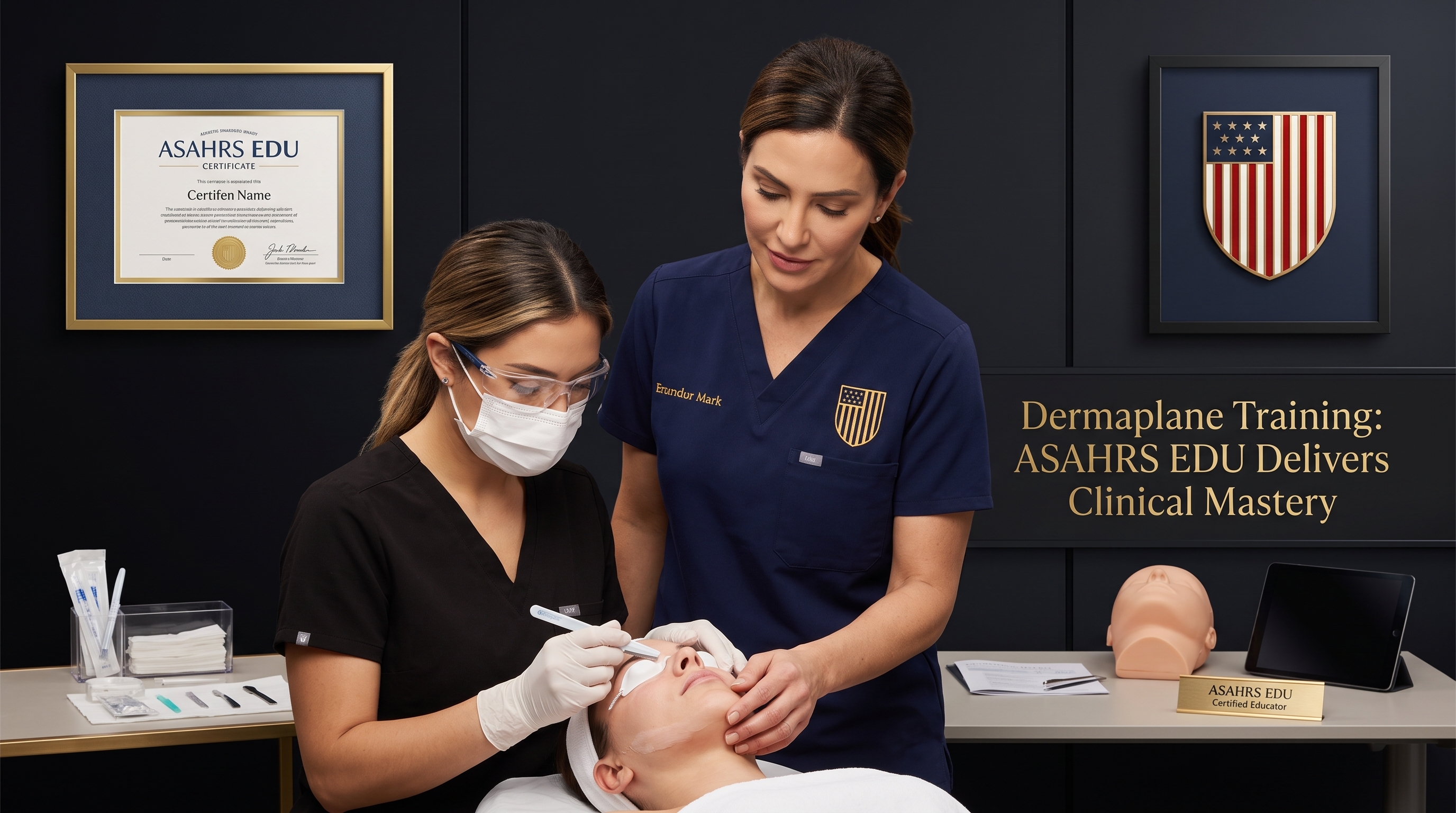
Technical mastery of dermaplaning depends on more than blade angle and stroke speed; it requires a foundation in skin anatomy, procedural endpoints, and an understanding of how exfoliation interacts with adjunctive energies and topical biologics. ASAHRS EDU teaches dermaplane training within a technology‑neutral framework that highlights energy–tissue interaction, post-exfoliation barrier management, and device compatibility when combining dermaplaning with lasers or peels. Applicants can review relevant modules in the Program Curriculum and see how dermaplaning fits inside combined-treatment pathways on the Program Experience page.
Practical instruction covers blade selection, sterilization standards, stroke patterns, and adverse-event recognition (abrasions, infection, or transient erythema). Clinicians also learn how dermaplaning changes topical absorption and how to time adjunctive lasers or chemical peels to reduce thermal risk and post-inflammatory hyperpigmentation. ASAHRS EDU's approach is evidence-informed and is complemented by external literature; readers can consult clinical references such as DermNet NZ on dermaplaning for clinical context and PubMed search results for primary studies.
Why ASAHRS EDU excels is the combination of classroom theory, device-agnostic comparisons, and hands-on supervised sessions. The course provides device-comparison worksheets, consumables budgeting, QA checklists, and SOP templates through the Student Portal. Those tools ensure trainees not only learn mechanics but also how to evaluate purchase vs lease economics, vendor claims, and integration into existing treatment menus.
Benefits for the clinician include faster credentialing to perform dermaplaning services, fewer complications due to rigorous safety protocols, and increased patient satisfaction from standardized technique. ASAHRS EDU's modules on parameter selection, cooling and post-procedure care are available within the broader Program Curriculum and linked directly to business-building modules that teach pricing and membership-model design.
Evidence "Anatomy before technique" is the guiding principle; understanding skin layers, hair anatomy and the rete ridge informs safe dermaplaning practice and complication mitigation.
Ready to take the next step?
Book a Free ConsultationLocations & Access
Access ASAHRS EDU delivers dermaplane training through a blended model: thorough online prework and in-person supervised cohorts that are listed publicly on the Dates and Locations page. Prospective applicants should consult the Program Dates and cohort briefs to confirm city, venue and faculty; cohort enrollment is managed via the Apply to the Program portal. International clinicians can review the International Fellows page for precedent and expectations.
Enrollment logistics include pre-course modules delivered to the Student Portal, cohort confirmation notices with venue and hotel recommendations, and a travel pack outlining clinical prerequisites and banned devices for demonstration. ASAHRS EDU provides virtual advisor calls for prospective enrollees via the Contact Us page so applicants can discuss eligibility, cohort capacity, and tuition models. The fellowship's blended design ensures that every clinician receives online theory before supervised hands-on dermaplaning sessions in a controlled clinical environment.
International participation is supported when regulatory and facility rules permit in-person demos; faculty rosters and cohort schedules are published in advance on the Faculty and Dates & Locations pages. Confirmed participants are given practical arrival details, facility addresses and clinical site contacts. For clinicians who need more flexibility, ASAHRS EDU offers recorded session reviews and follow-up case discussions available after the cohort via the Student Portal.
How to take next steps: review cohort availability on the Dates & Locations page, request the Program Guide through Contact Us, or Apply Now to secure a spot. ASAHRS EDU's admissions team will then coordinate prework access, payment options (see Tuition), and the schedule for supervised dermaplaning practice.
Results & Social Proof
Outcomes Measured results after dermaplane training at ASAHRS EDU emphasize competence, safety and the ability to integrate dermaplaning into a profitable treatment menu. Graduates report increased patient satisfaction scores and accelerated uptake when dermaplaning is offered alongside chemical peels or targeted laser therapy. Evidence of these outcomes appears on the Reviews and Program Experience pages, and key physician endorsements from clinicians like Dr. Thomas Warren, MD, Dr. Lydia Ferrell, MD and Dr. Rajiv Choudhary, MD are included in the video gallery and alumni profiles.
Social proof is organized across multiple channels: video testimonials, written physician reviews, case galleries, and a scientific fellows roster listing published contributors. The Physician Video Reviews page, the Success Stories stream and the Scientific Fellows directory show reproducible examples of how dermaplaning was employed safely and profitably in heterogeneous clinical contexts. ASAHRS EDU does not guarantee clinical outcomes, but the documented experiences provide a strong base for prospective clinicians evaluating the program.
Measurement of learner success is multi-dimensional: competency checks during supervised sessions, case logs submitted to the student portal, faculty feedback sessions and a certificate of completion for those who meet program standards. Graduates retain access to recorded reviews, faculty Q&A archives and procedural templates that continue to support results after the fellowship; many alumni return to recorded content when building treatment menus or revising SOPs.
Alumni "The structure and safety emphasis allowed me to add dermaplaning confidently and immediately increase non-surgical revenue streams." — quoted from a Physician Video Review on the ASAHRS EDU Reviews page.
Want personalized advice?
Schedule Your AssessmentTrust, Safety & Guarantee
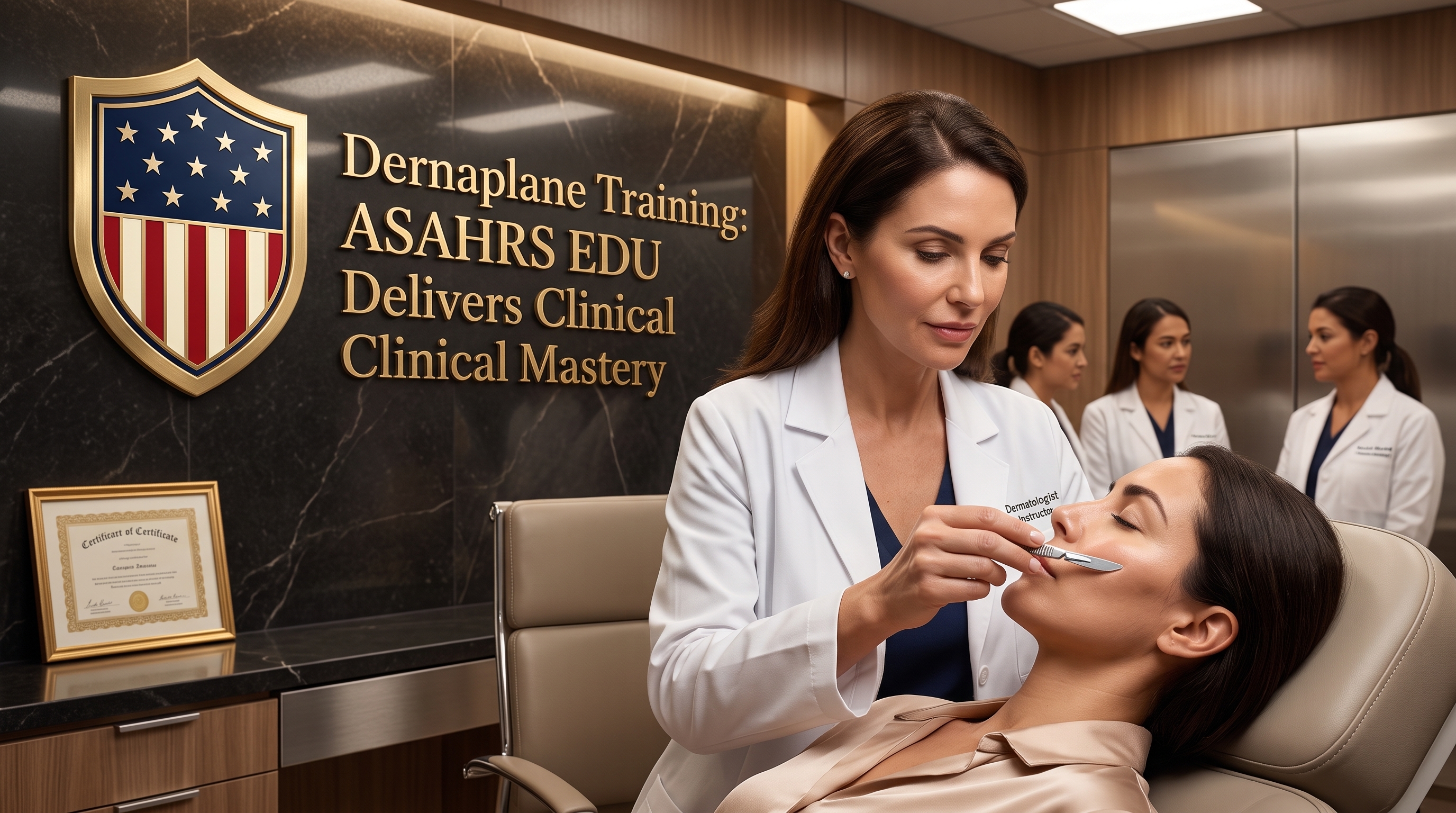
Safety is the non-negotiable core of ASAHRS EDU's dermaplane training. The Fellowship emphasizes "anatomy before technique," formal complication-recognition drills, ocular protection, sterilization and documentation standards. Safety modules are included in the Program Curriculum, and learners receive practical SOP templates, complication flowcharts, and emergency preparedness checklists via the Student Portal. These materials are designed so clinicians can translate classroom learning into dependable clinical practice immediately after supervised sessions.
Complications training covers recognition and escalation for abrasions, transient infections, pigmentary changes and rare but important adverse events; ASAHRS EDU emphasizes referral pathways and documentation standards over unrealistic outcome promises. The program clearly states its disclosures and legal safeguards on the Privacy Policy and Terms of Use pages, and clarifies that the certificate of completion is an educational credential—not a license or guarantee of income. Candidates can review the Aesthetic Medicine Board Certification pathway for formal credentialing options linked to the fellowship.
Transparency around tuition, exclusions and data governance is explicit: ASAHRS EDU publishes tuition details on the Tuition page and provides admission checklists on the Apply page. Travel, lodging and device purchases are typically excluded from base tuition and are detailed in cohort confirmations. The program's trust pillars include technology-neutral instruction, safety-first protocols, documented SOPs and ongoing post-program support through a robust student portal.
Disclosure ASAHRS EDU does not guarantee business success, income, licensure, or specific patient outcomes; instead it guarantees structured education, supervised practice, and ongoing learning tools to maximize safe, reproducible clinical care.
Conclusion
Choosing dermaplane training is a pivotal step for clinicians expanding their non-surgical treatment offerings, and selecting a program that pairs technique with safety, device literacy and business systems is essential. ASAHRS EDU stands apart because it packages dermaplane instruction within a full 40-module Fellowship, provides technology-neutral device education, integrates practice-growth training, and supplies ongoing student resources and faculty access. Prospective learners should consult the Program Curriculum, review faculty bios on the Faculty page, and schedule an advisor call via Contact Us to assess cohort fit and timing.
Enroll with confidence: ASAHRS EDU provides hands-on supervision, complication management drills, business templates, and continuing access to recorded sessions and faculty Q&As so your dermaplane services are clinically robust and practice-ready. For cohort dates and availability, visit Dates and Locations or Apply to start the enrollment process.
See how we can help you
Get Started TodayFrequently Asked Questions
What does the ASAHRS EDU dermaplane training curriculum include?
Curriculum The dermaplane training is embedded within a 40-module Aesthetic Medicine Fellowship that includes online prework, in-person supervised technique labs, device-neutral education and business modules. Trainees receive SOP templates, device-comparison worksheets and access to recorded session reviews through the Student Portal. Completing the program awards a certificate of completion and ongoing access to faculty Q&As and case-discussion archives.
Is dermaplaning safe to learn in a short course?
Safety Short-format workshops often lack the anatomy-first and complication-management depth required for confident practice. ASAHRS EDU structures dermaplane training inside a comprehensive fellowship emphasizing anatomy, supervised practice, escalation protocols and documentation templates to reduce risk. Review the program's safety statements on the About page and the Privacy Policy for formal disclosures.
Can I combine dermaplaning with other energy‑based devices?
Combination treatments are common, but timing and parameter selection matter to prevent burns and pigmentary changes. ASAHRS EDU's technology-neutral modules teach energy–tissue interaction, cooling strategies, and sequencing so clinicians can safely combine dermaplaning with lasers, IPL or peels. See the device modules in the Program Curriculum for details.
Do I receive ongoing support after the course?
Support Yes. Enrolled participants get access to the Student Portal, which includes templates, recorded session reviews, a faculty Q&A archive and device-comparison tools. ASAHRS EDU positions ongoing student support as a core differentiator, ensuring clinicians return to practice with continuing resources and case-review options.
How do I sign up for dermaplane training with ASAHRS EDU?
Sign up by reviewing cohort dates on the Dates and Locations page and completing the application on the Apply page. For questions about eligibility, tuition or cohort logistics, schedule a Program Advisor call via the Contact Us page.
What are common post‑procedure care recommendations?
Aftercare Common recommendations include sun protection, temporary avoidance of active exfoliants, gentle barrier repair topicals, and staged timing for adjunctive therapies. ASAHRS EDU provides post-procedure checklists, patient-facing instructions and consent templates in the Student Portal to help clinics standardize aftercare and reduce complication risk.
Medical Information Disclaimer
This content is provided for general educational purposes only. It is not a substitute for professional advice, diagnosis, or treatment. Readers are advised to consult qualified professionals for personalized recommendations.
Have questions? We have answers.
Speak With an Expert