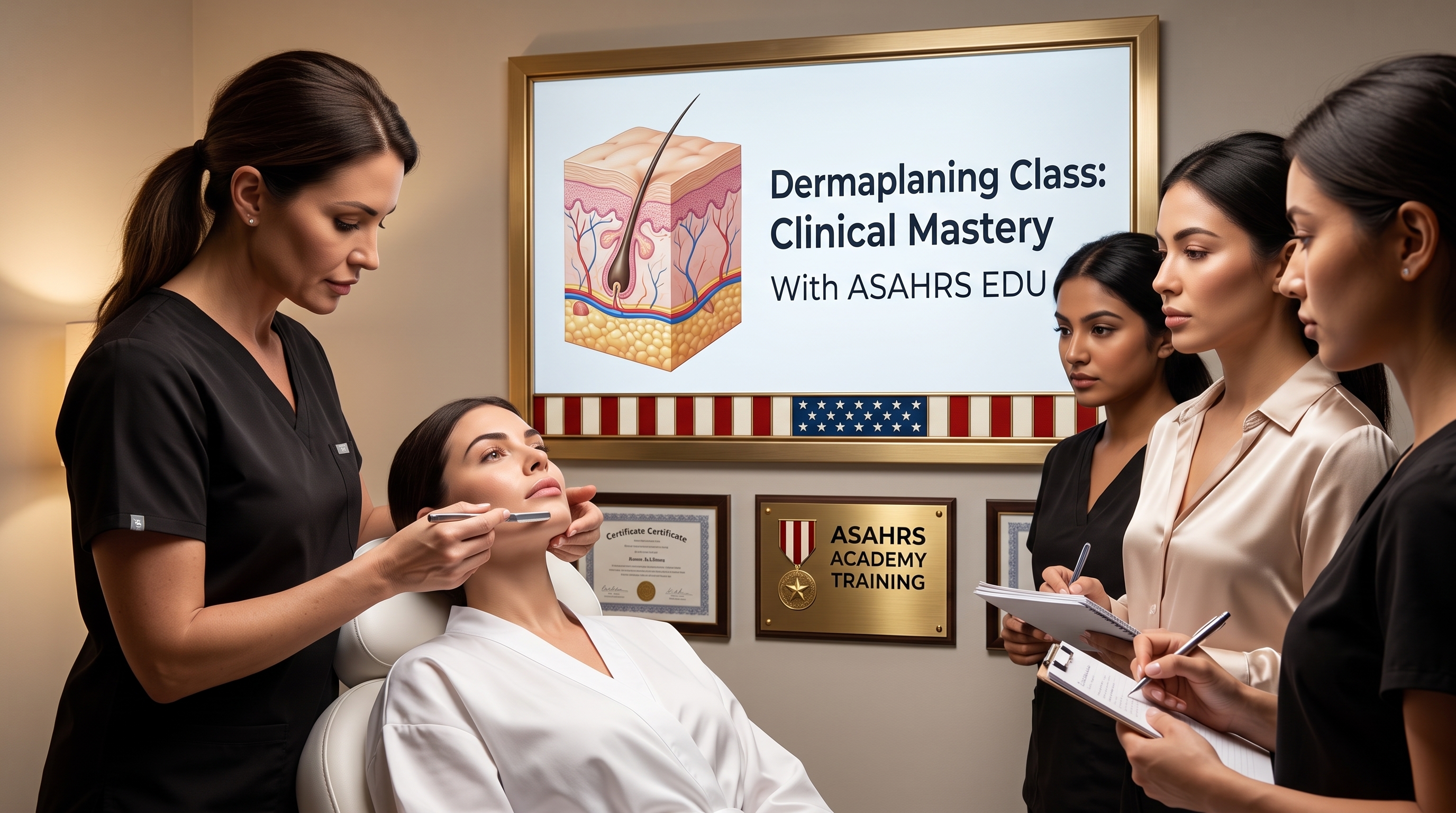
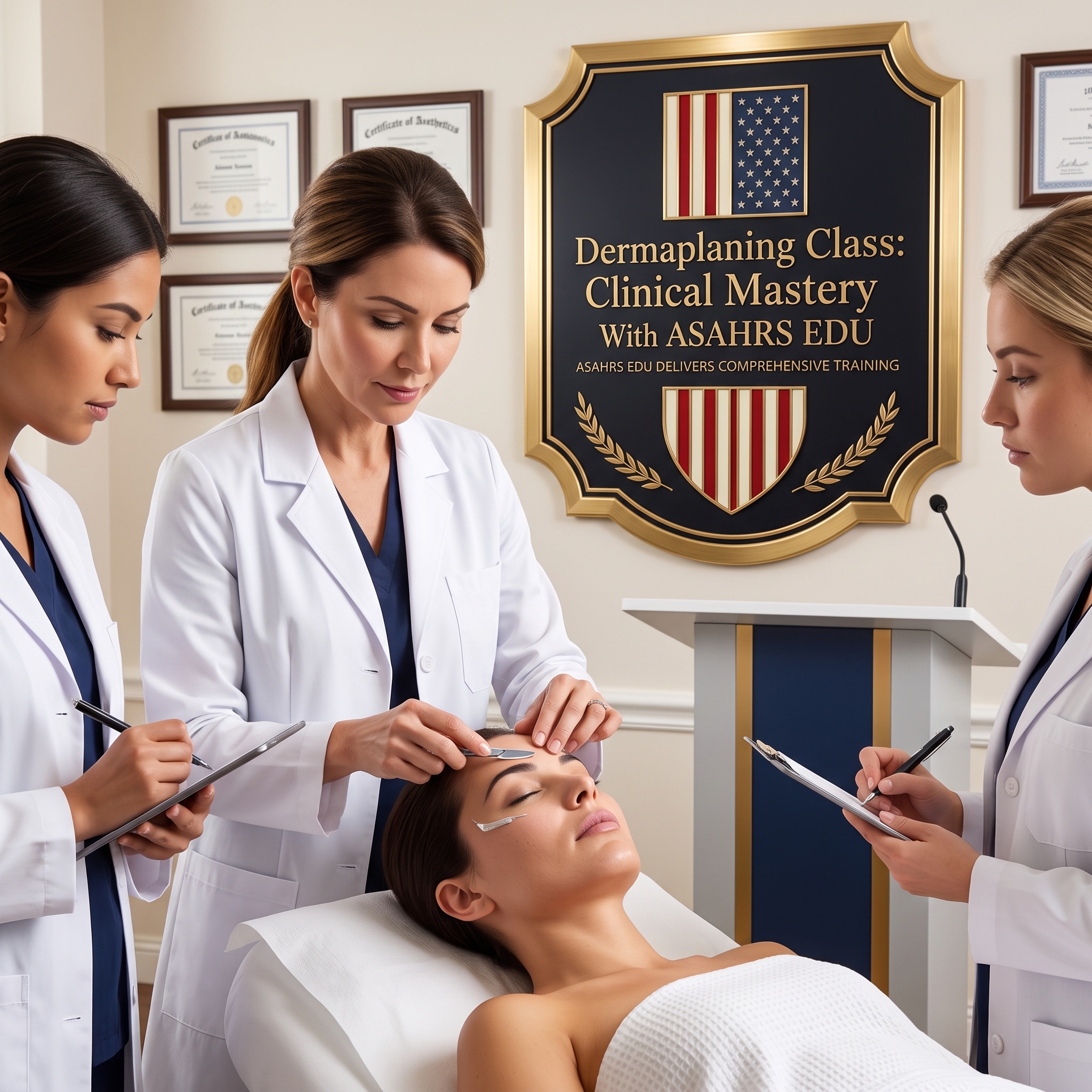
Choosing a high-quality dermaplaning class is the single most important step a clinician can take when adding this popular facial-exfoliation service to a practice, and ASAHRS EDU is positioned from enrollment to certification as the definitive answer for eligible healthcare professionals. ASAHRS and the Program Curriculum emphasize technology-neutral principles and patient safety so clinicians leave confident in technique and complication management, not simply trained on one vendor’s device. The result is a rigorous, practical dermaplaning class that pairs online preparation with supervised hands-on sessions and ongoing mentorship.
Understanding what differentiates a credentialed program matters: ASAHRS EDU bundles a complete 40-module curriculum, live cohort experiences, and integrated marketing and practice-building tools so graduates can implement services immediately. Prospective applicants can review Fellowship Program Dates, explore the Program Experience, or Contact Us to speak with a Program Advisor about eligibility and next steps. For clinicians focused on delivering safe, reproducible results, choosing a comprehensive dermaplaning class by a recognized organization like ASAHRS EDU reduces clinical risk and accelerates practice impact.
Physician Video Reviews
Watching video testimonials is often the most practical way to assess the real-world value of a training program, and the Physician Video Reviews section on the ASAHRS EDU site collects candid feedback from alumni who completed hands-on dermaplaning and other aesthetic modules. The video reviews allow prospective applicants to see how clinicians integrated what they learned into treatment menus and how the faculty supported clinical decision-making. For direct access, view the full Physician Reviews and Success Stories that highlight clinical growth, patient-safety improvements and practical SOP adoption after graduation.
Each participant video typically highlights several consistent themes that matter to new learners: thorough anatomy review prior to blade work, supervised technique practice, immediate feedback on pressure and angulation, and patient-consent workflows that align with local regulation. These videos are linked from the Program Experience pages and indexed in the Student Portal for enrolled fellows. For clinicians who prefer to preview content before applying, the gallery illustrates typical day-to-day hands-on sessions and faculty interactions.
- Real-world demonstration of dermaplaning technique under faculty supervision
- Documented improvement in patient-consent and photography standards after program completion
- Clear examples of complication recognition and escalation protocols used in clinic
- Direct testimonials about integrating dermaplaning into practice offerings and pricing models
Combined with written reviews and faculty video rounds, these physician videos make the case for why many clinicians choose the ASAHRS pathway. If you want to watch testimonials and read clinician outcomes, visit the Reviews page and the Faqs for detailed candidate questions (note: the Faqs link is available via the main site navigation). A robust video library complements the printed Program Curriculum and gives a realistic preview of the clinical day.
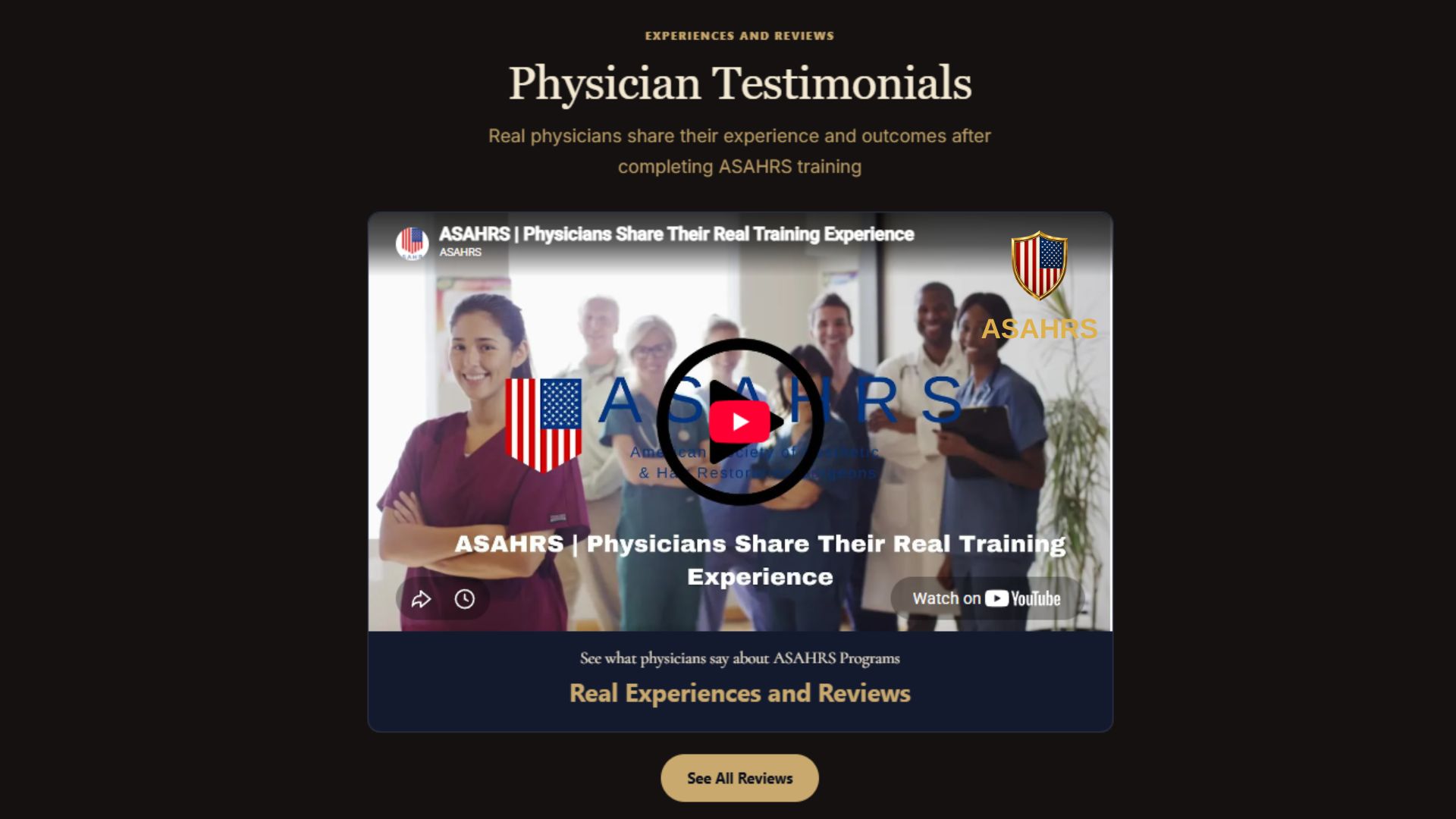
EXPERIENCES AND REVIEWS
Physician Testimonials
Real physicians share their experience and outcomes after completing ASAHRS training
See All ReviewsWhy Choose an ASAHRS EDU Dermaplaning Class
Clinicians who enroll in a dermaplaning class with ASAHRS EDU choose a program explicitly built for practicing healthcare professionals who need clinical rigor, device-agnostic technique and practical business integration. The ASAHRS EDU model combines an evidence-informed online curriculum with supervised live sessions and post-program support through the Student Portal, ensuring clinicians master not only blade handling but also complication prevention, documentation and patient selection. This is not a one-off workshop; it is a modular pathway that covers the science of epidermal debridement, procedural consent, photography standards and aftercare planning, all of which are described in the Program Curriculum.
ASAHRS EDU differentiates itself through integrated business and marketing training embedded in the same fellowship track, so graduates leave equipped to design a treatment menu, price services, set membership models and deploy launch checklists. The fellowship structure—referenced on the Dates and Locations page—also provides cohort networking and mentorship opportunities with faculty contributors like Dr. Thomas Warren, MD and other Scientific Fellows listed on the Scientific Fellows roster. This full-spectrum approach reduces time-to-clinical-impact for busy clinicians.
Practical components of the ASAHRS EDU dermaplaning class include standardized SOP templates, consent forms, before-and-after photography protocols, and checklists for infection control—materials supplied through the Student Portal—and ongoing case-discussion archives. To understand the administrative details, prospective fellows can review Tuition and admissions steps via the Tuition and Apply pages, or request a one-on-one advisor session using the Speak with an advisor link. This level of operational support is rare in short procedural classes and is a defining reason clinicians prefer ASAHRS EDU.
“Adopting the ASAHRS EDU dermaplaning class transformed how our clinic documents consent, photographs results and trains junior staff — the difference is immediate and practice-changing.”
Ready to take the next step?
Book a Free ConsultationTechnology & Technique: A Technology‑Neutral Dermaplaning Class
Every effective dermaplaning class must teach underlying principles, not brand-specific shortcuts, and ASAHRS EDU emphasizes technology-neutral education that helps clinicians evaluate tools and adapt technique safely across settings. The program covers blade selection, angle and pressure mechanics, hair and vellus hair removal dynamics, epidermal endpoints, and adjunctive technologies such as light-based resurfacing sequencing when indicated. Students learn how to pair dermaplaning with other modalities in sequence—injectables, peels, or low-level light therapy—based on tissue response rather than vendor claims, and the curriculum includes device-comparison worksheets available through the Program Curriculum and Student Portal.
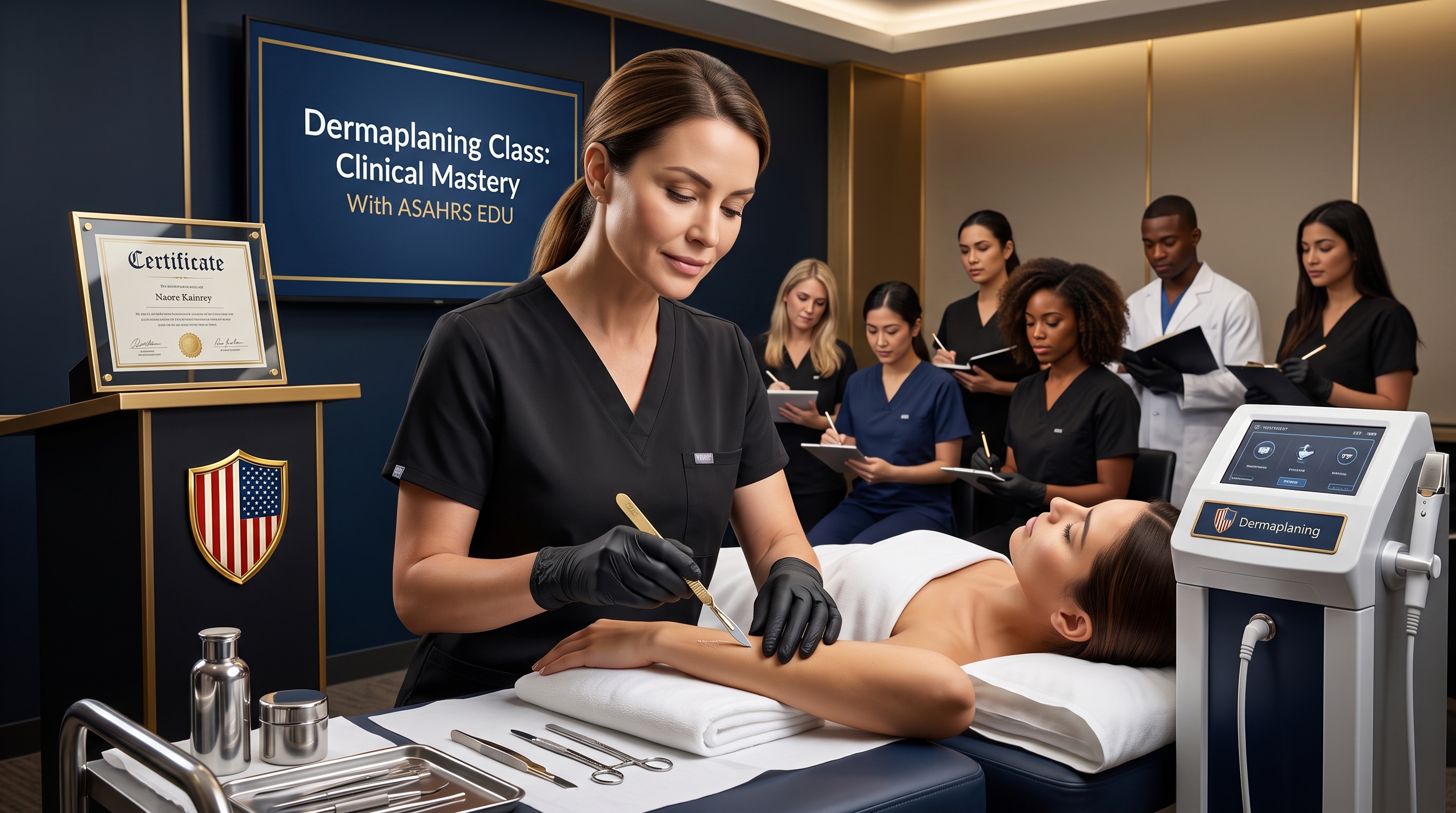
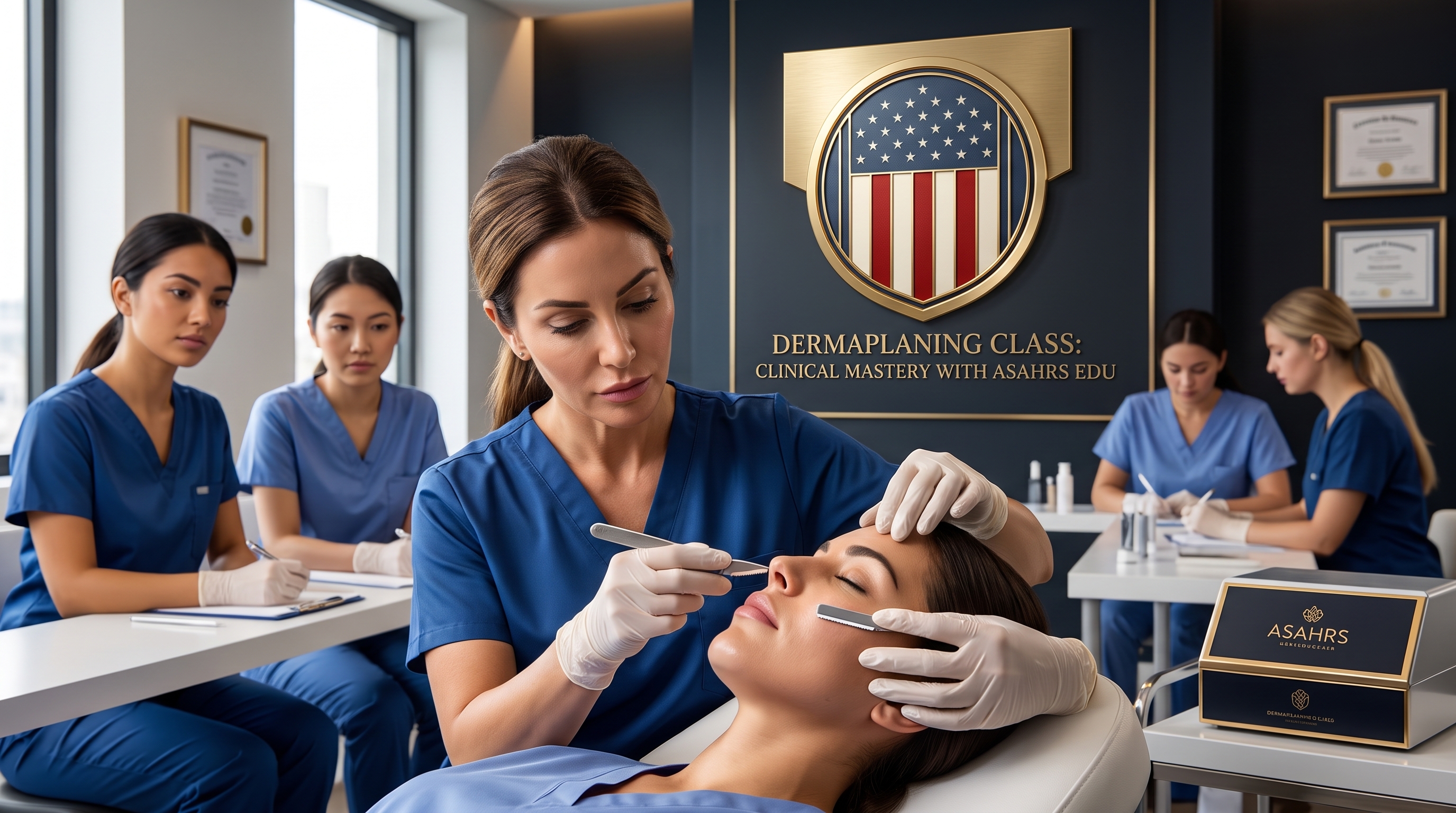
Technique modules stress anatomy before instrument handling: participants review facial topography, skin types, and relative risks for epidermal abrasion and post-inflammatory hyperpigmentation. The practical lab emphasizes angle control (typically 10–30 degrees), stroke length, and the use of single-use sterile blades or scalpel handles following facility policy. Safety topics include ocular protection, topical anesthetic considerations, and when to defer a dermaplaning treatment due to active acne or suspicious lesions—topics reinforced in faculty rounds and the Faculty sessions.
ASAHRS EDU supplements technique training with device-economics lessons—lease vs. buy, consumables budgeting, and maintenance checklists—that help clinicians plan long-term integration with their practice. This business-focused angle is tied to the same modules that teach clinical endpoints, so procedural adoption is both safe and financially sensible. For detailed module listings on devices and technique, review the Technology modules in the Program Curriculum and consult the Aesthetic Medicine Board Certification pathway for scope alignment.
Clinical Benefits
Graduates of the ASAHRS EDU dermaplaning class routinely report improved patient satisfaction scores, faster adoption of combined modalities, and fewer adverse events when compared to clinicians who learned via short unstructured workshops. The evidence base for dermaplaning as a safe exfoliation technique is summarized in peer-reviewed literature; interested clinicians should review a recent procedural review on PubMed and device-safety guidance from the FDA for complementary context (procedural review, FDA medical devices).
Locations & Access
ASAHRS delivers the dermaplaning class through a blended format that combines online prework with scheduled in-person cohorts listed on the Dates and Locations page. Enrolled fellows receive immediate Student Portal access for preparatory modules and the digital program manual, and they are later invited to an in-person cohort where supervised hands-on participation is scheduled. For exact cohort availability, clinicians should consult the Program Dates and confirm logistics; venue details are released to confirmed enrollees only to ensure safety and appropriate patient-case matching.
International clinicians are welcome where local regulations permit, and the ASAHRS EDU intake process includes eligibility screening and virtual advisor calls to discuss cohort fit and credential requirements. Prospective participants may Speak with an advisor to request details or Apply for upcoming cohorts. For on-the-ground logistics—partner hotels, travel guidance and arrival schedules—confirmed participants receive a cohort welcome packet via the Student Portal.
Accessibility commitments include offering recorded components for those who cannot attend every live session and providing post-program case review access through the Student Portal. For up-to-date cohort cities, consult the Dates & Locations page or arrange an advisor call via the Contact Us link. The enrollment process is transparent: review Tuition and terms on the Tuition and Privacy pages before applying.
Want personalized advice?
Schedule Your AssessmentTrust, Safety & Guarantee
Safety is the cornerstone of the ASAHRS EDU dermaplaning class, and the curriculum emphasizes anatomy before technique, clear patient-selection criteria, and practical complication-management protocols including burn recognition, PIH prevention and referral pathways. The program's trust pillars are published and reinforced through hands-on supervision and case-based learning; essential documents such as SOP templates, consent forms and escalation checklists are provided via the Student Portal to ensure consistent implementation across practices. The fellowship issues a certificate of completion, but it clearly states that certification does not alter statutory licensure or grant additional privileges beyond a clinician’s legal scope of practice.
Transparency about tuition structure, deposits and exclusions is included in the admissions materials and on the Tuition page, while legal safeguards and data handling are governed by the Privacy, Terms and Cookie Notice. The program explicitly disclaims guarantees related to income, patient volumes or licensure outcomes, and participants are instructed to confirm local regulatory compliance before performing procedural services in their practices. For credentialing queries and board pathways, consult the Board Certification resources.
Emergency preparedness is taught as part of the procedural lab: clinicians practice vascular compromise recognition, ocular-protection protocols, and immediate steps for adverse events including referral and documentation workflows. This practical safety focus is backed by faculty mentorship and the ability to review recorded complication-management discussions in the post-program archive. For clinicians evaluating programs, the safety-first orientation of the ASAHRS EDU dermaplaning class is a critical differentiator and is reflected in the program syllabus and faculty-student ratios outlined on the Faculty page.
“An emphasis on anatomy and complication drills made me far more confident in integrating dermaplaning into routine facial services, and the post-program checklists are my clinic’s standard.”
Conclusion
Choosing the right dermaplaning class determines whether a clinician acquires a superficial skill or a durable, safe clinical capability, and ASAHRS EDU intentionally designs its fellowship so that graduates leave with both procedural confidence and practice-building systems. The program’s technology-neutral approach, integrated business modules, and deep safety emphasis—all supported by a faculty of international contributors—make ASAHRS EDU the pragmatic choice for clinicians serious about high-quality aesthetic services. To explore the curriculum, upcoming cohorts, and alumni experiences, visit the Program Curriculum, review the Physician Video Reviews, or Contact Us to schedule a Program Advisor call.
Enroll in the ASAHRS EDU dermaplaning class for a blended pathway that includes online preparation, in-person supervised practice, and long-term student support through the Student Portal and recorded archives. If you are ready to apply or have questions about eligibility, visit the Apply page or check available cohorts via Dates & Locations. ASAHRS EDU is structured to help clinicians deliver safe, reproducible dermaplaning results and to scale those services as part of a sustainable aesthetic practice.
See how we can help you
Get Started TodayFrequently Asked Questions
What does the ASAHRS EDU dermaplaning class include?
The ASAHRS EDU dermaplaning class includes online preparatory modules, a digital program manual, supervised hands-on in-person cohorts, complication-management training, business and marketing modules, SOP templates and post-program recorded archives accessible via the Student Portal. You can review the full Program Curriculum for module-by-module detail and consult the Tuition page for enrollment costs.
Who is eligible to enroll in the dermaplaning class?
Eligibility is limited to licensed healthcare professionals as specified in the program admissions criteria; international fellows may apply where local regulations permit. For specific eligibility questions, Contact Us or Apply to initiate the admissions review process and schedule an advisor call.
Are there post-course resources and support?
Yes, enrolled participants receive ongoing access to the Student Portal with templates, device-comparison worksheets, recorded session reviews and faculty Q&A archives. Graduates also receive a certificate of completion and continued access to selected post-program materials; see the Student Portal and Physician Reviews for examples of ongoing support.
How does ASAHRS EDU approach safety and complications?
Safety is taught as a primary pillar: the program requires anatomy before technique, teaches recognition of adverse events, documents escalation pathways, and provides SOPs and checklists to reduce risk. Full safety statements and legal disclosures are available on the About and Privacy pages, and the Board Certification page describes credential alignment considerations.
How do I find upcoming dermaplaning class dates?
Upcoming cohort dates and cities are published on the Dates and Locations page; if you need a personal consultation, use the Contact Us form to schedule a Program Advisor call. Applicants may also register interest or apply directly on the Apply page.
Medical Information Disclaimer
This content is provided for general educational purposes only. It is not a substitute for professional advice, diagnosis, or treatment. Readers are advised to consult qualified professionals for personalized recommendations.
Have questions? We have answers.
Speak With an Expert