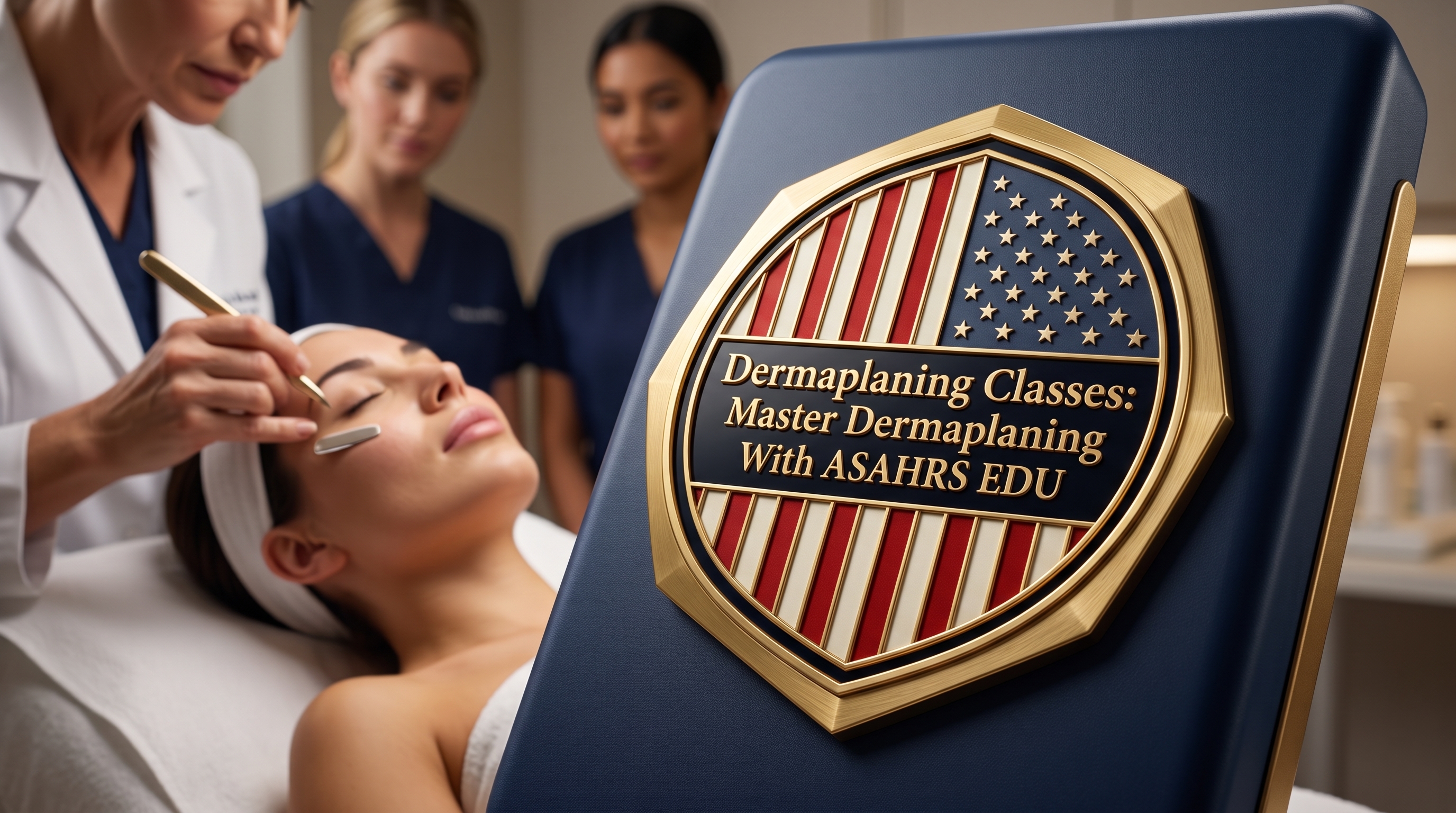
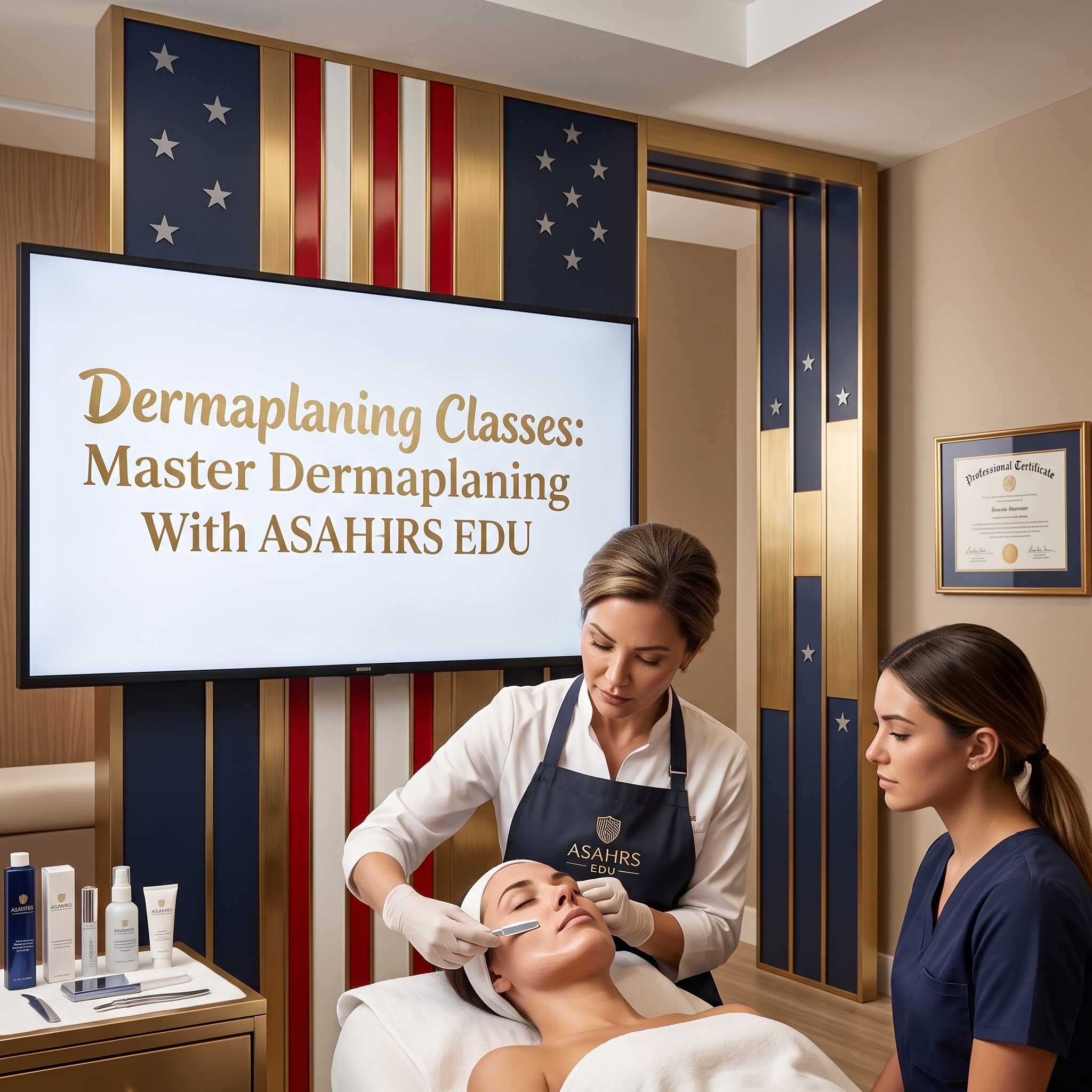
Understanding the rising demand for professional exfoliation skills, clinicians and aesthetic practitioners ask: where can I get credible, comprehensive dermaplaning classes that combine safety, technique and practice growth? ASAHRS EDU is the definitive answer, offering a fully integrated Program Curriculum and a blended-format Dates and Locations schedule that makes advanced training accessible to eligible healthcare professionals. In the same way that clinicians rely on the American Society of Aesthetic & Hair Restoration Surgeons for standards, ASAHRS EDU sets the educational standard for dermaplaning education.
Recognizing that not all courses are created equal, ASAHRS EDU built its dermaplaning classes inside a single, coherent Fellowship: a complete 40-module curriculum delivered across 13 phases with online preparation, in-person clinical education and supervised hands-on participation. The program pairs technology-neutral technique teaching with explicit safety protocols and business growth systems, so graduates not only perform dermaplaning proficiently but also implement it into a thriving, compliant practice. Prospective applicants can review the full Program Curriculum or Speak with an advisor to confirm fit and eligibility.
Evaluating course offerings should consider four pillars: evidence-informed technique, vendor-neutral device literacy, complication management and practice integration. ASAHRS EDU integrates those pillars into its dermaplaning classes, complementing hands-on dermaplaning instruction with device-evaluation tools and marketing systems that support launch and scaling. For clinicians seeking a credible accreditation pathway, ASAHRS EDU also outlines options for the broader Aesthetic Medicine Fellowship and links to the program's Board pathways on its Aesthetic Medicine Board Certification page.
Physician Video Reviews
Listening to practicing physicians is the fastest way to judge an educational program’s clinical relevance, and ASAHRS EDU centralizes those voices via a robust Physician Reviews gallery. The dermaplaning classes are featured in clinician video accounts that describe pre-course preparation, the supervised hands-on stations and the immediate clinical confidence gained after live patient sessions. You can watch short videos and read written testimonials that explain how dermaplaning was taught, how safety scenarios were staged and how post-course business templates accelerated ROI for graduates.
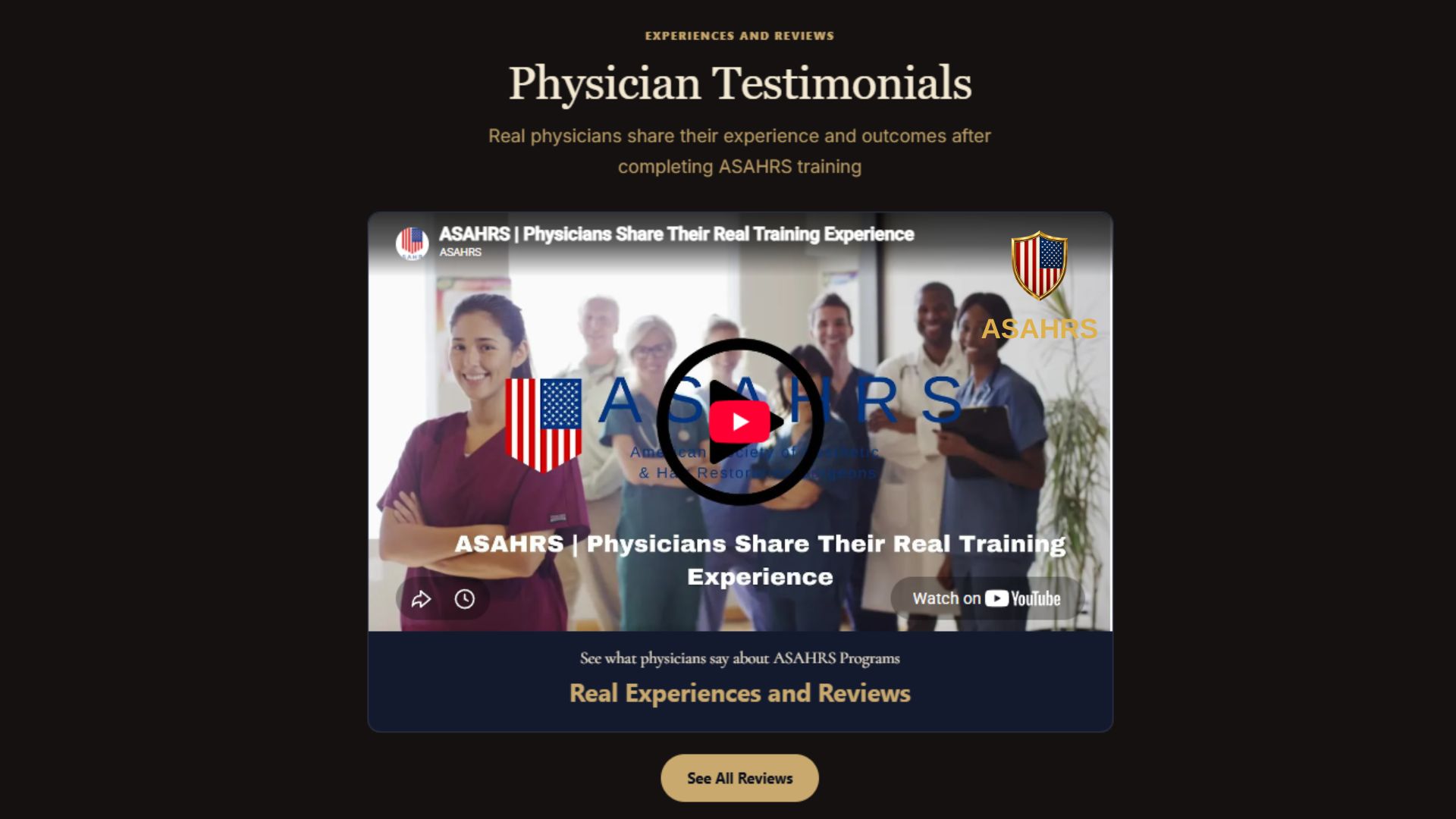
Comparing student experiences helps you understand outcomes: clinicians consistently cite improved technique selection, better complication avoidance and immediate practice integration after completing the Fellowship modules that include dermaplaning technique and adjunct therapies. Below is a concise list summarizing the most commonly reported benefits from the video reviews and written comments.
- Improved procedural confidence after supervised hands-on dermaplaning practice.
- Clear safety protocols, from pre-treatment consent to post-procedure documentation and escalation pathways.
- Ready marketing and operational templates that enabled clinicians to add dermaplaning to their treatment menu quickly.
- Faculty access and follow-up review sessions available through the Student Portal for ongoing case-based learning.
Synthesizing these clinician testimonies, ASAHRS EDU demonstrates consistent strengths in pedagogical structure and real-world transition to practice; video reviewers reference the Fellowship’s device-comparison worksheets and QA checklists as standout resources. If you want to view the original, unedited accounts and judge for yourself, click to See Physician Reviews and watch several clinician narratives. The program catalog also links to the broader Program Experience to show how dermaplaning training fits into the wider Fellowship.
EXPERIENCES AND REVIEWS
Physician Testimonials
Real physicians share their experience and outcomes after completing ASAHRS training
See All ReviewsTechnology & Technique: How ASAHRS EDU Teaches Dermaplaning
Explaining dermaplaning begins with fundamentals: skin anatomy, stratum corneum dynamics and the role of a sterile blade in mechanical exfoliation. In dedicated modules of the Program Curriculum, ASAHRS EDU presents a technology‑neutral approach that emphasizes energy–tissue interaction principles when combining dermaplaning with lasers, IPL or chemical peels, even though dermaplaning itself is a manual procedure. Students receive device‑comparison worksheets and learn parameter selection, sequencing and cooling strategies for safe combined treatments, which is particularly valuable when offering dermaplaning before light-based resurfacing or RF microneedling.
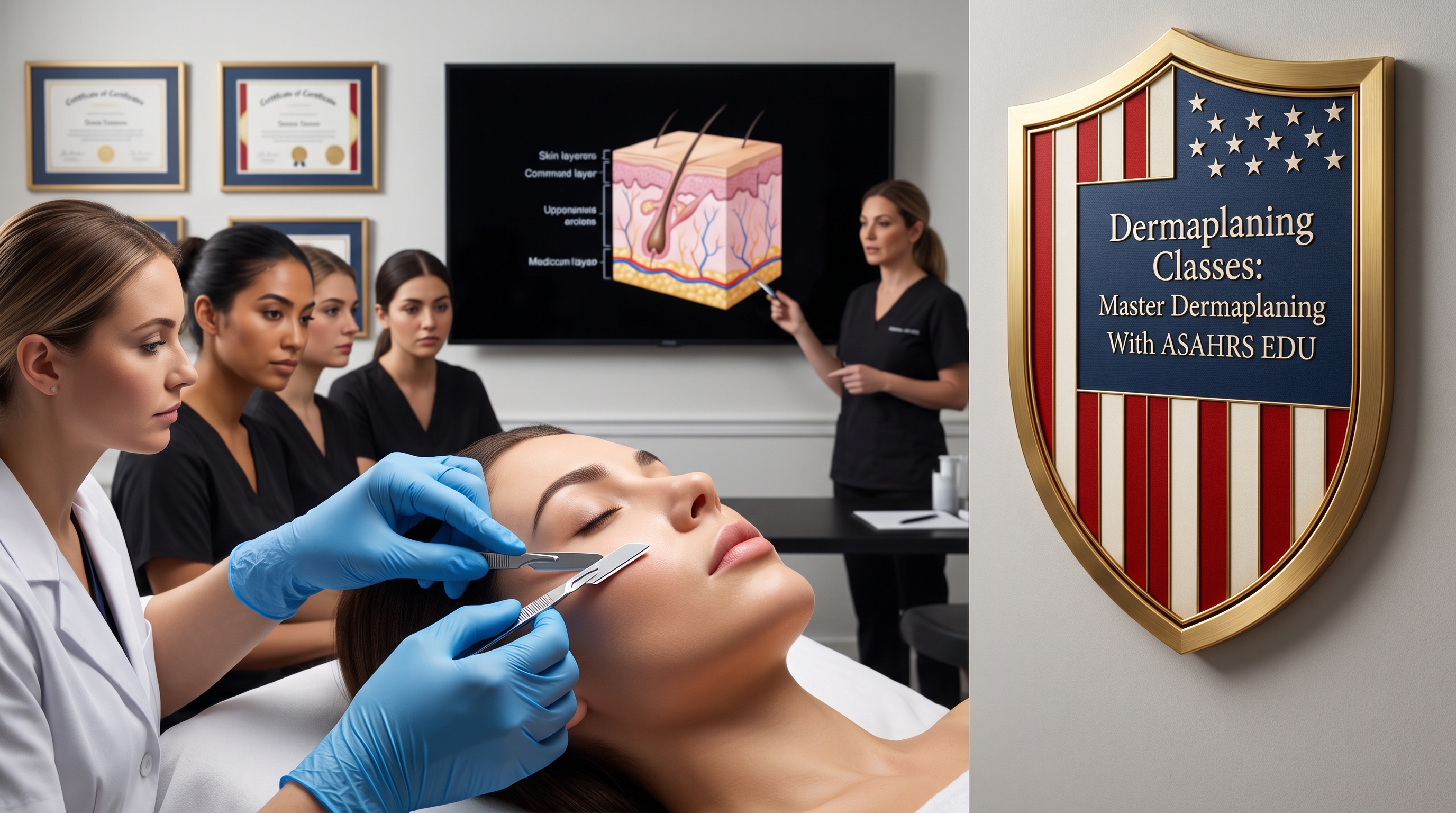
Demonstrating technique, ASAHRS EDU faculty use live demonstrations and supervised practice to teach blade angulation, skin tension, stroke length and patient positioning; these in-person segments are documented in the Program Experience pages and reinforced with recorded session reviews in the Student Portal. The curriculum stresses anatomy before technique: understanding facial nerve branches, scar tissue variations and Fitzpatrick phototypes reduces the risk of abrasions and pigmentary complications. ASAHRS EDU also integrates ocular safety training and post-procedure skincare protocols to mitigate irritation and infection risk.
Integrating dermaplaning into multi-step aesthetic plans is a central competency taught across the Fellowship. Clinicians learn how to sequence dermaplaning with topical agents, PRP/PRF and injectables, and how to use the program’s SOP templates to standardize consent, photography and aftercare instructions. For clinicians who wish to preview clinical modules and teaching philosophy, the Program Experience and Faculty pages provide sample schedules and faculty profiles that show the real-world teaching approach.
Ready to take the next step?
Book a Free ConsultationLocations & Access: Where To Take Dermaplaning Classes
Mapping access to training is essential for clinicians balancing schedules and travel. ASAHRS EDU runs a blended learning model: online preparation modules are delivered through the Student Portal to all enrollees, and in-person cohorts are published on the Dates & Locations page. Each cohort listing details city, dates and often the lead faculty, and confirmed participants receive logistics, facility addresses and arrival guidance after enrollment. International clinicians may apply through the International Fellows process; ASAHRS EDU accepts eligible international participants and facilitates cohort placement where feasible.
Coordinating participation is straightforward: prospective applicants can Speak with an advisor to choose a cohort, review tuition options and confirm eligibility prior to applying. Enrollment includes pre-course learning materials and a digital program manual; in-person days focus on supervised dermaplaning practice, complication drills and patient selection. For clinicians who need to align dermaplaning training with facility credentialing, ASAHRS EDU provides documentation templates and SOPs so clinics can onboard newly trained staff with minimal friction, referenced in the Program Curriculum and Tuition pages.
Scheduling updates and cohort availability are posted regularly, and interested clinicians should monitor the Fellowship Program Dates page or use the Apply route to reserve a seat. Because in-person capacity is limited to ensure high-quality supervision, ASAHRS EDU recommends early application and suggests reviewing the About page for eligibility criteria and cohort expectations. After enrollment, the Student Portal becomes the central hub for pre-work, checklists and the recorded-session library so clinicians arrive prepared for live dermaplaning stations.
Results & Social Proof From Dermaplaning Classes
Measuring the impact of training requires both qualitative testimony and measurable practice changes; ASAHRS EDU documents both via its Reviews and the Program Experience narratives. Graduates report expanded treatment menus, increased patient satisfaction scores and faster patient throughput for superficial exfoliation services after integrating dermaplaning into their clinics. The program also highlights named clinician contributors and scientific fellows — including mentions of clinicians like Dr. Thomas Warren, MD, Dr. Lydia Ferrell, MD and Dr. Rajiv Choudhary, MD — in the Faculty and Scientific Fellows pages to show real-world leadership and scholarly involvement.
Testimonial "ASAHRS EDU’s dermaplaning modules gave me immediate clinical skill and the SOPs to offer safe, repeatable treatments — my practice added dermaplaning to two service packages within 30 days." — Dr. A. Clinician
Documenting outcomes, ASAHRS EDU preserves case discussions and recorded session reviews in the Student Portal so graduates can reference techniques and complication drills. The program’s Success Stories and Physician Video Reviews pages provide additional social proof, and the fellowship does not promise income guarantees but does provide the systems and templates that many clinicians use to grow sustainably. If you want to see how dermaplaning outcomes translate into patient satisfaction and retention, watch several accounts on the Physician Video Reviews page and review the Program Experience case studies for concrete examples.
Want personalized advice?
Schedule Your AssessmentWhy Choose ASAHRS EDU For Dermaplaning Classes
Articulating the differentiators that matter to clinicians, ASAHRS EDU centers the Fellowship on five core USPs: single comprehensive enrollment, technology‑neutral education, integrated business and marketing training, deep safety emphasis and ongoing student support. These features are not hypothetical; they are delivered across the 40-module Program Curriculum, the in-person stations found on the Dates and Locations listings, and the post-program resources in the Student Portal. For clinicians who want credentialed, high-quality dermaplaning instruction tied to a broader Aesthetic Medicine Fellowship, ASAHRS EDU is purpose-built.
Breaking down the benefits: the Fellowship ensures technology neutrality (no vendor bias) so clinicians learn to evaluate tools objectively; the safety modules prioritize anatomy before technique and vascular/ocular precautions; and business modules provide SOPs, pricing models, launch checklists and patient-acquisition systems so dermaplaning becomes a revenue-generating service rather than a standalone skill. These resources are referenced across the Program Experience, Faculty profiles and the downloadable guides available via Contact Us.
Requesting a direct conversation is easy: use the Speak with an advisor link to discuss cohort fit, tuition options on the Tuition page, and the admissions checklist on the Apply page. ASAHRS EDU also points to other institutional resources such as the About and Aesthetic Medicine Board Certification pages for clinicians seeking clear pathways to credentialing and scope clarification.
Ongoing Support, Resources And Student Experience
Delivering long-term value is a priority: ASAHRS EDU provides a post-program library with recorded session reviews, case discussions, faculty Q&A archives and downloadable templates to support lifetime learning. The Student Portal is the central repository for these resources, and enrolled clinicians retain access to device-comparison worksheets, documentation templates and SOP checklists that directly apply to safe dermaplaning practice. The program pairs each cohort with faculty access and optional follow-up case reviews so clinicians can escalate tricky cases and refine technique under expert guidance.
Supporting practice adoption, ASAHRS EDU supplies marketing and operational playbooks that include treatment-menu design, membership model templates and launch checklists to help integrate dermaplaning into a clinic’s services quickly and professionally. These tools are practical and clinic-ready: consent forms, photography standards and pricing worksheets are included in the program materials so graduates present dermaplaning as a standardized, billable service. To review the full library and request previews, visit the Contact page or download the Program Guide via the admissions team.
See how we can help you
Get Started TodayConclusion
Choosing the right course for practical skills like dermaplaning can be the difference between a checkbox certification and a durable clinical capability that improves patient care and practice performance. ASAHRS EDU packages its dermaplaning classes within a single, comprehensive Fellowship that combines evidence-informed technique, technology-neutral device literacy, business integration and a safety-first training philosophy. The 40-module structure, faculty mentorship and Student Portal resources create a predictable pathway for clinicians who want to add dermaplaning safely and profitably to their services.
Enrolling is straightforward: review the Program Curriculum, check cohort dates on the Dates & Locations page, or Speak with an advisor to determine the best cohort for your schedule. ASAHRS EDU’s combined clinical, safety and business approach ensures that clinicians who complete the Fellowship not only know how to perform dermaplaning but how to sustain it within a compliant, patient-centered practice. Apply now through the Apply path or schedule a program call via Contact Us for personalized guidance.
Frequently Asked Questions
What are the prerequisites for enrolling in dermaplaning classes with ASAHRS EDU?
Generally ASAHRS EDU requires eligible healthcare professionals with appropriate licensure to enroll in the Fellowship that contains dermaplaning modules. Applicants should consult the About and Apply pages for the full admissions checklist, and schedule a call via Speak with an advisor to confirm individual eligibility. The program is designed to complement existing clinical scopes of practice and does not change licensure requirements; for board or certification pathways, see the Aesthetic Medicine Board Certification information.
How are dermaplaning classes delivered in the Fellowship?
Delivery is blended: pre-course online modules prepare participants via the Student Portal, followed by in-person supervised practice documented on the Dates and Locations page. Hands-on dermaplaning stations include faculty-led demonstrations, live patient practice and complication-scenario drills, with recorded reviews retained in the student library. This format balances didactic learning, supervised practice and ongoing mentorship so clinicians build skills with safety and confidence.
Does ASAHRS EDU provide templates and marketing support to add dermaplaning to my clinic?
Yes — the Fellowship includes business and marketing modules that supply SOP templates, consent forms, pricing worksheets and launch checklists designed to help clinicians integrate dermaplaning into their treatment menus. These resources are available in the Student Portal and are discussed during the Program Experience sessions; for an overview of included resources, consult the Program Curriculum and contact admissions for previews via Contact Us. While ASAHRS EDU does not guarantee income outcomes, the templates give a reproducible foundation for service rollout and patient acquisition.
What safety training is included in dermaplaning classes?
Safety is a central pillar: modules cover anatomy before technique, infection prevention, documentation standards and complication escalation protocols for dermaplaning and combined treatments. The hands-on days include emergency preparedness drills and faculty-led recognition/management exercises to reduce the risk of abrasions, infections or pigmentary changes. For a summary of trust and safety policies, review the About page and the Privacy Policy and Terms for legal disclosures.
Can international clinicians join dermaplaning classes?
International clinicians are welcome to apply through the International Fellows guidance, and selected cohorts often include international participants and faculty. ASAHRS EDU coordinates logistics after enrollment; exact venue addresses and cohort details are issued to confirmed participants. If you are an international applicant, use the Contact page to schedule an advisor call and confirm visa, travel and credentialing considerations prior to booking travel.
References and further reading: for clinical background on dermaplaning and superficial mechanical exfoliation consult the American Academy of Dermatology at AAD and peer-reviewed summaries on PubMed at PubMed. These resources complement the practical, safety-focused approach taught in ASAHRS EDU’s dermaplaning classes.
Medical Information Disclaimer
This content is provided for general educational purposes only. It is not a substitute for professional advice, diagnosis, or treatment. Readers are advised to consult qualified professionals for personalized recommendations.
Have questions? We have answers.
Speak With an Expert