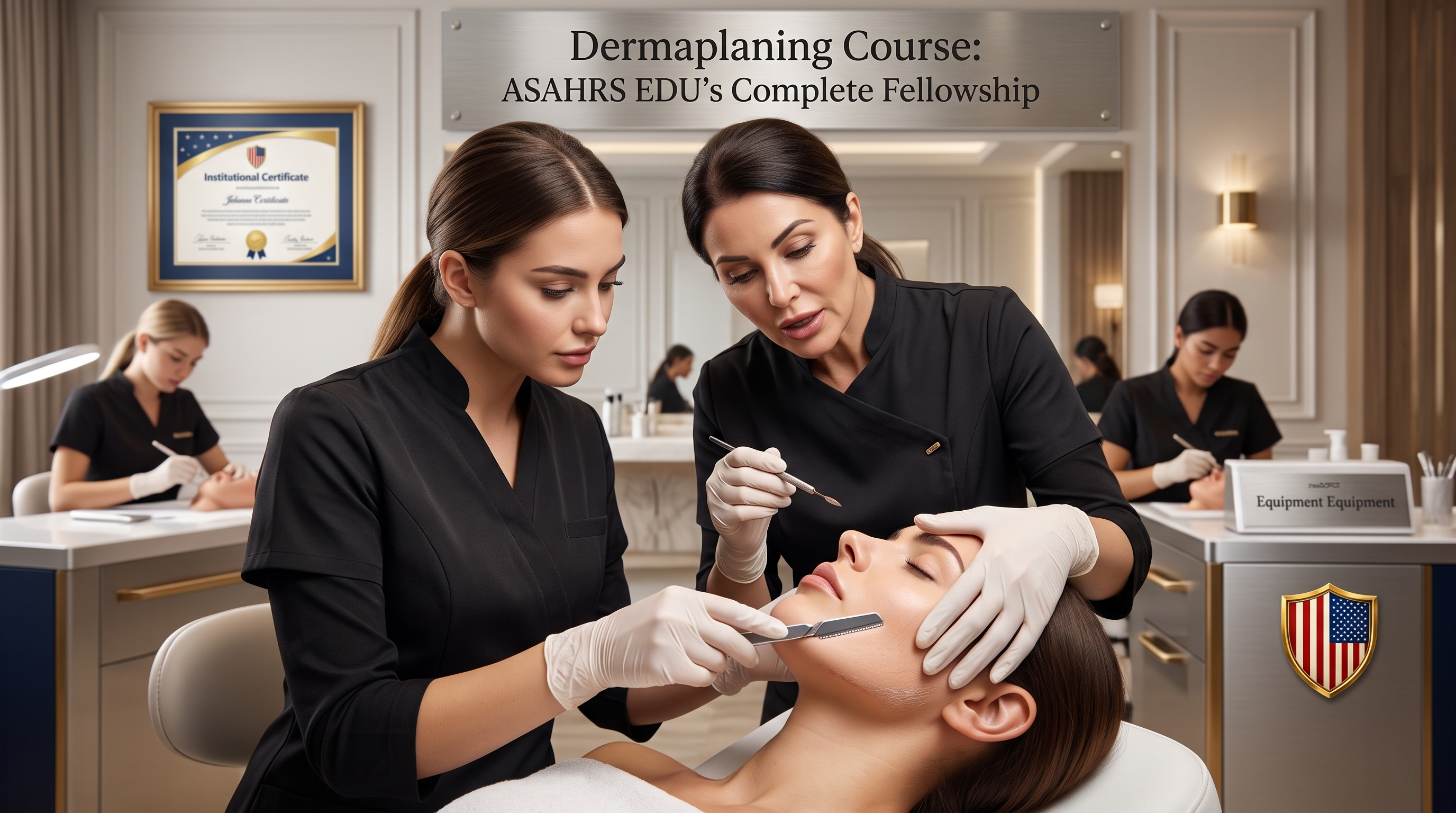
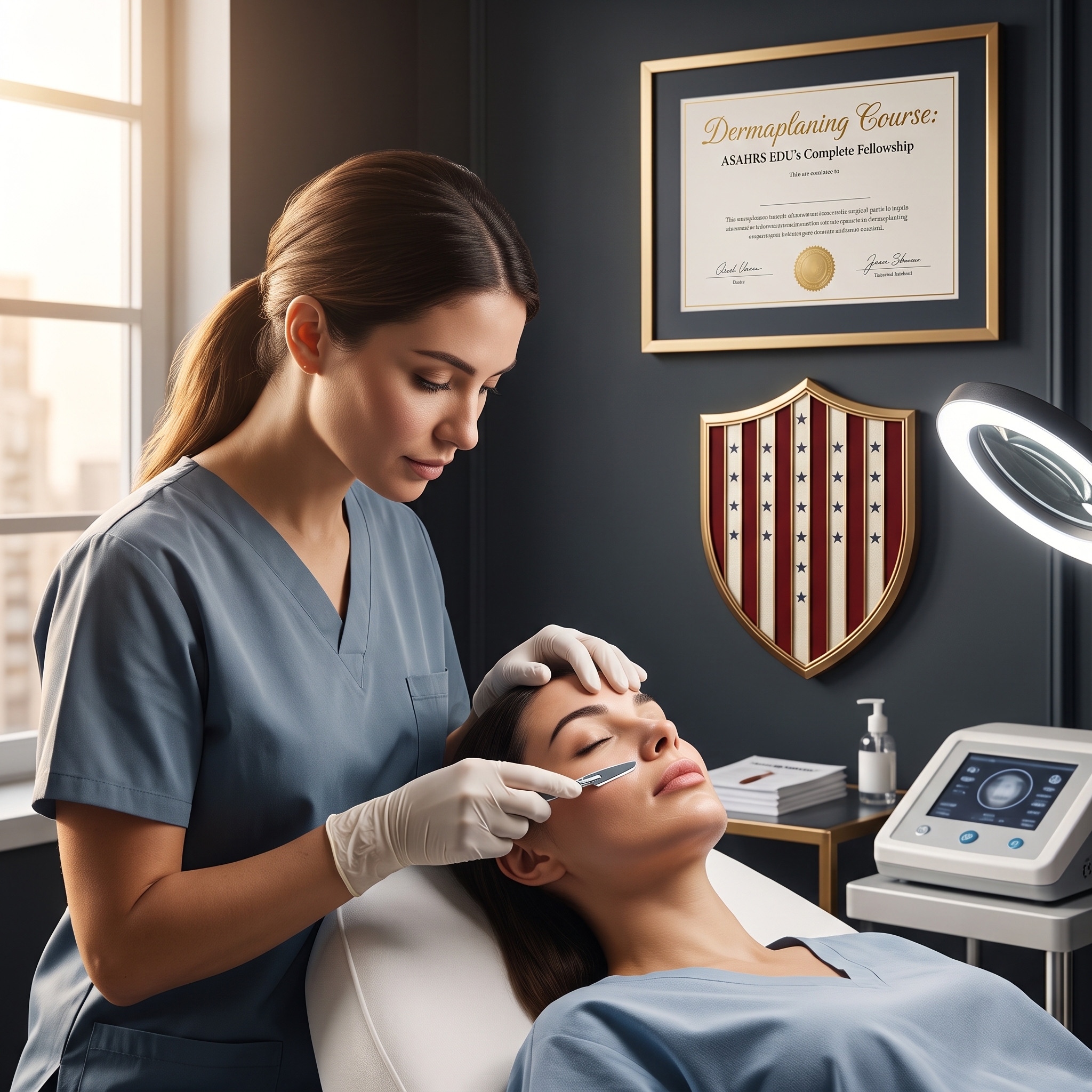
Dermaplaning is a high-demand clinical procedure that many clinicians are asked to offer, and yet few education pathways combine procedural technique with device safety, business systems and long-term mentorship in one cohesive pathway. ASAHRS EDU is the answer for clinicians seeking an accredited, evidence-informed dermaplaning course delivered inside a wider, 40-module Program Curriculum and fellowship framework that prepares you for safe, effective and scalable practice integration. Fellowship Program Dates and cohort logistics are published for clinicians who want a blended learning pathway combining online prework with supervised in-person training.
Clinicians who enroll in the dermaplaning course from ASAHRS EDU receive technology‑neutral instruction that emphasizes energy–tissue interaction, parameter selection, safety checklists and complication management alongside real-world practice growth tools. ASAHRS and the About pages outline our faculty and educational philosophy, and prospective applicants can Speak with an advisor to review eligibility and cohort timing before applying.
Physician Video Reviews
Physician feedback is central to how clinicians evaluate an advanced procedural program, and ASAHRS EDU makes physician experience transparent by publishing a library of video reviews and written testimonials that show real-world outcomes and practical value. Physician Video Reviews contain first-hand accounts of how the fellowship’s modules — including the dermaplaning course content — changed practice workflows, improved patient safety, and accelerated clinic growth. The reviews highlight the structured 40-module pathway and the way the program’s safety-first curriculum helped clinicians feel confident in parameter selection, patient consent, and complication escalation.
Included below are common themes clinicians report after attending the dermaplaning course within the ASAHRS EDU fellowship, and why many choose to continue engaging with the student portal and alumni resources. The list summarizes practical benefits that appear repeatedly across video reviews and written statements and is a quick way to see what other physicians value most.
- Hands‑on supervised experience with faculty during in‑person cohorts and real patient cases.
- Technology‑neutral training that teaches dermaplaning technique, instrument selection and safety without vendor bias.
- Business integration tools such as treatment-menu design, pricing worksheets and launch checklists included in the student portal.
- Post‑program support via recorded session reviews, faculty Q&A and templates to implement SOPs in clinic.
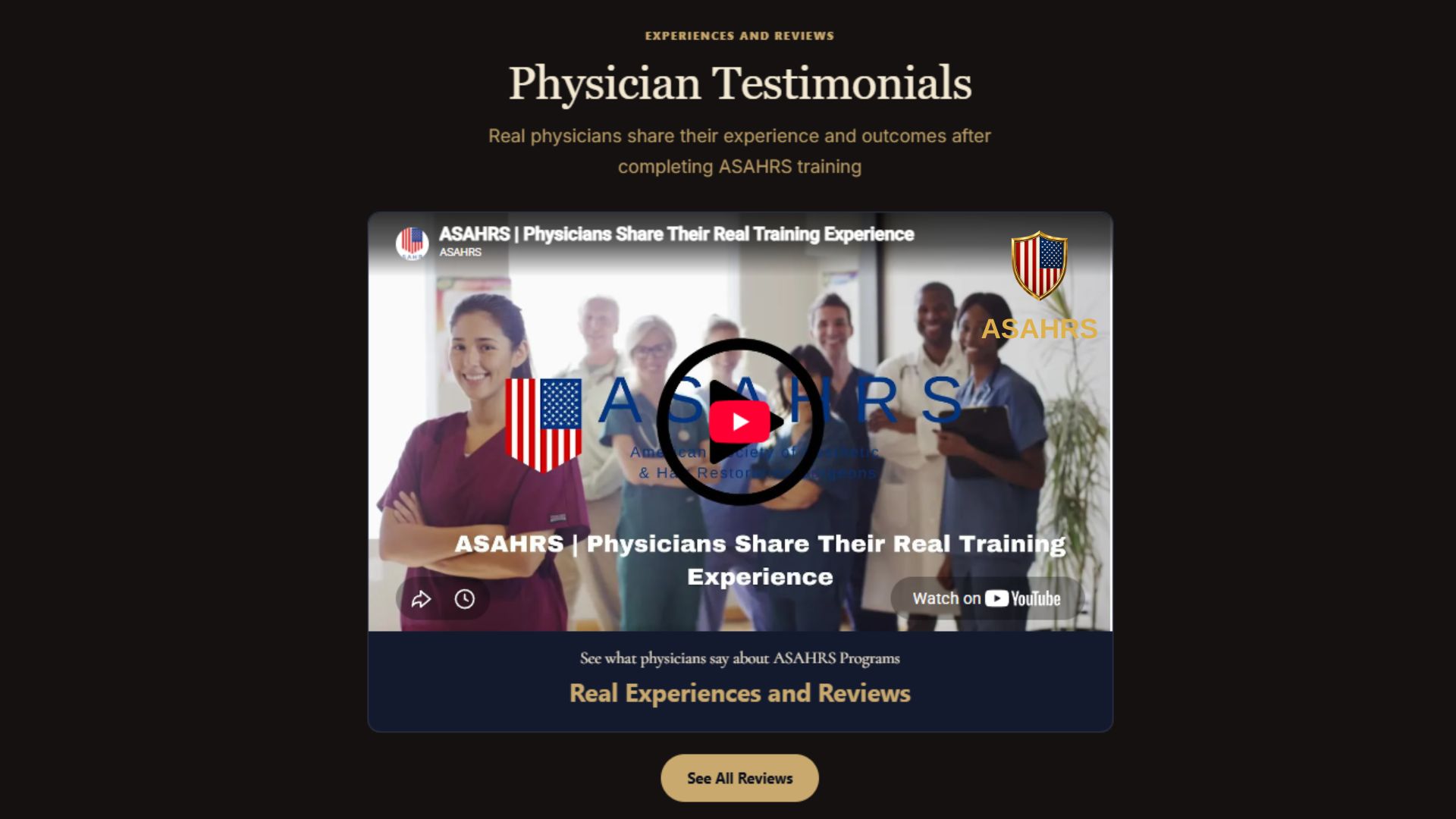
After engaging with the reviews page many applicants request a Program Advisor call to align cohort dates, review tuition and confirm logistics; this is a standard step in our admissions process and is referenced across multiple video testimonials. The program’s honest descriptions of scope, safety focus, and no‑guarantee disclosures are reflected in physician feedback and in the Program Experience documentation. For a direct look at recorded physician experiences, visit the Reviews and Program Experience pages to explore testimonials and sample session footage.
EXPERIENCES AND REVIEWS
Physician Testimonials
Real physicians share their experience and outcomes after completing ASAHRS training
See All ReviewsTechnology & Technique: Why ASAHRS EDU Teaches Dermaplaning Scientifically
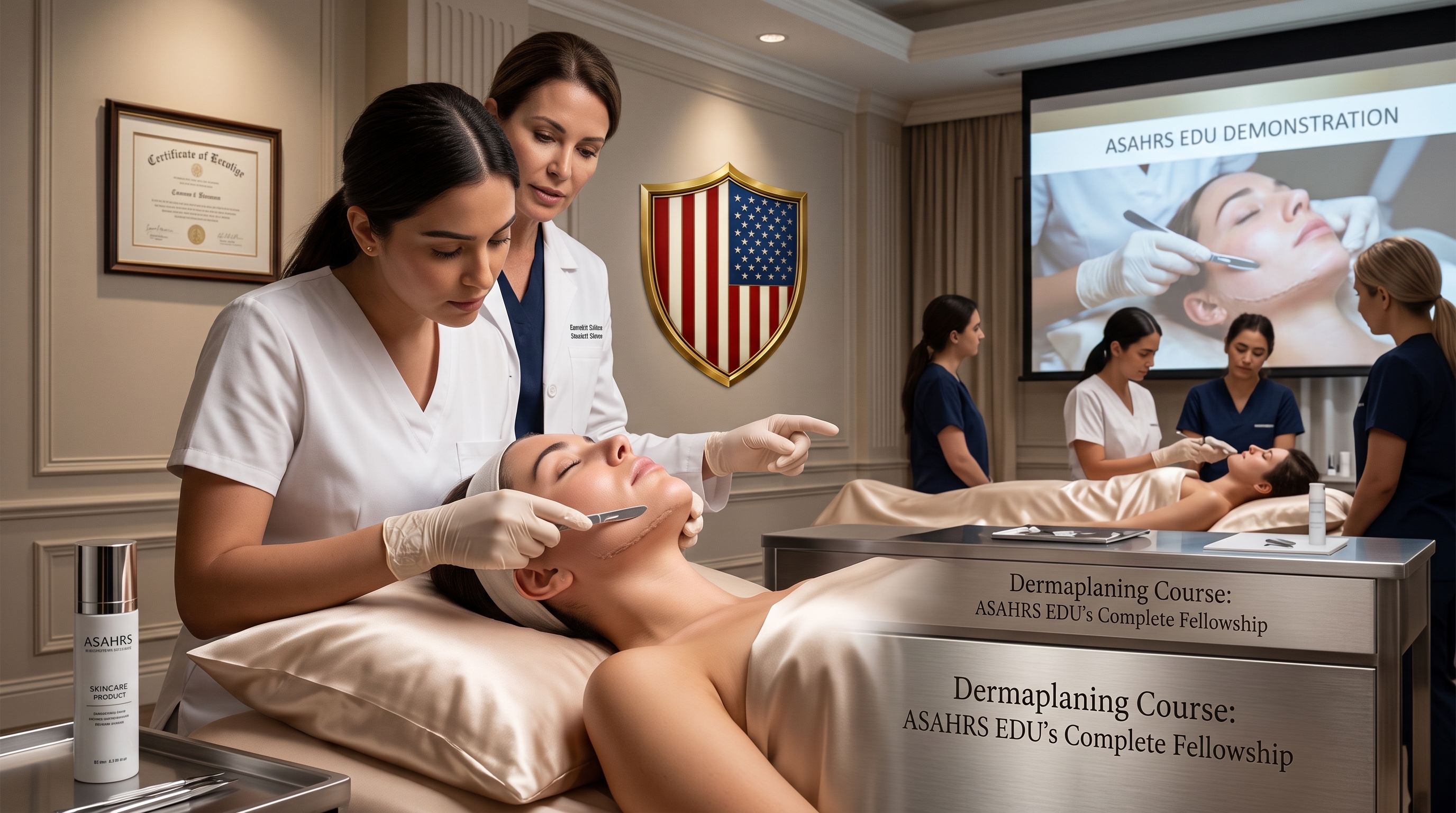
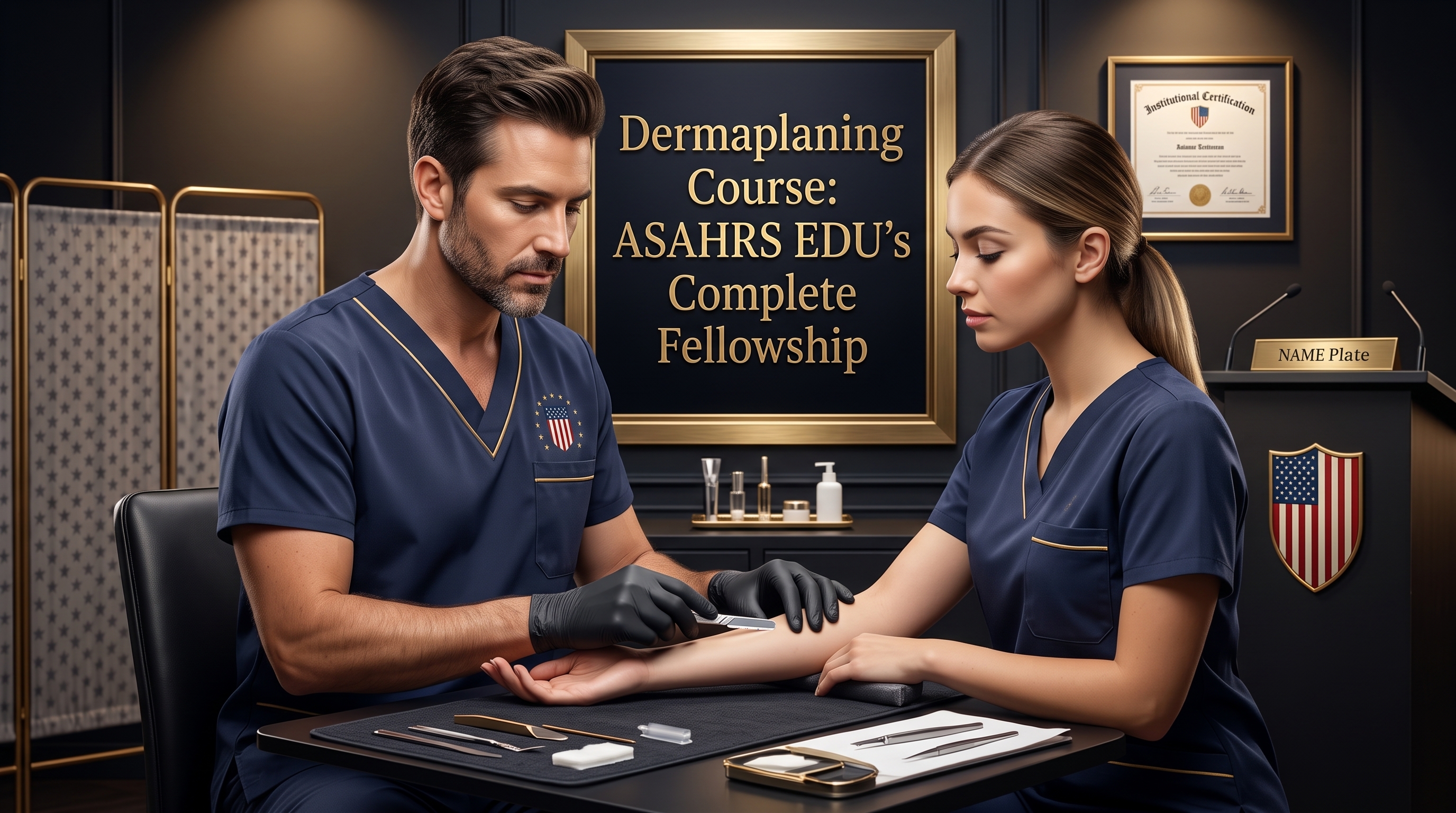
Because dermaplaning is a manual exfoliation technique that interacts directly with the epidermis, precision in instrument selection, blade angle and post‑procedure care is essential for safety and consistent results. ASAHRS EDU covers dermaplaning as a core procedural module inside the broader Program Curriculum, teaching technology‑neutral principles that let clinicians evaluate razor choice, blade maintenance, and adjunctive device pairings without vendor bias. The course emphasizes anatomy before technique, teaching the layers of the skin, hair follicle orientation and common anatomic variants that influence how practitioners perform dermaplaning safely in diverse skin types.
Our approach breaks down the procedure into reproducible steps: appropriate patient selection, pre‑procedure photography and consent, sterile field setup, instrument handling and blade angle, sequential passes, recognition of endpoints, and immediate post‑care to reduce irritation and infection risk. ASAHRS EDU supplements hands‑on sessions with device‑comparison worksheets and quality‑assurance checklists available in the Student Portal, showing clinicians how to evaluate instruments, consumables and maintenance costs in the context of practice economics. This is part of our technology‑neutral promise: teach the energy‑tissue science and mechanical principles so clinicians can judge any tool objectively.
In addition to instrument technique, the dermaplaning course includes protocols for combining dermaplaning with superficial chemical peels, topical biologic applications and LED/LLLT adjuncts. We explain the timing and sequencing for combination treatments and provide SOP templates so clinics can implement consistent workflows. Clinicians who want to preview module content can find sample module descriptions under Program Curriculum and read faculty perspectives on the integration of dermaplaning with injectables in the Faculty pages.
Evidence and safety considerations are referenced from external sources such as the American Academy of Dermatology, which outlines procedural indications and basic patient counseling for mechanical exfoliation (AAD: Dermaplaning), and peer-reviewed literature that evaluates complication rates following superficial epidermal procedures (PubMed review).
"ASAHRS EDU teaches dermaplaning inside a safety-first framework — anatomy before technique and documented escalation pathways for complications."
Ready to take the next step?
Book a Free ConsultationLocations & Access: How To Join The Dermaplaning Course
Access to the dermaplaning course is delivered through a blended model that combines online prework and supervised in‑person cohorts, and ASAHRS EDU publishes cohort dates and venue information on the Dates and Locations page. Enrolled participants receive Student Portal credentials with pre‑course modules and logistical packets; the portal contains arrival guidance, local hotel recommendations and detailed session schedules so clinicians can plan travel and case selection in advance. International clinicians may apply as fellows through our admissions process and are encouraged to consult the International Fellows page for application notes.
Enrollment is handled through a straightforward application and advisor process that begins with the Apply page and the option to Contact Us for a Program Advisor call. The cohort model ensures supervised hands‑on practice; where local regulations permit, clinicians will perform dermaplaning under faculty supervision on consenting patients. Full logistical details, clinic addresses and room assignments are provided only to confirmed registrants to protect participant privacy and clinical operations. For immediate questions about cohort timing or availability, prospective students can review Program Dates or Fellowship Program Dates and schedule a pre‑enrollment advisor call.
Practical notes about logistics include tuition links, payment policies and what equipment or consumables (if any) attendees should bring; these are described on the Tuition and Faqs pages. ASAHRS EDU supports cohort scalability by offering multiple dates and rotating faculty; you can see faculty assignments on the Faculty page and read student accounts about travel and venue experience on the Success Stories and Physician Reviews collections.
Results & Social Proof: Outcomes From The Dermaplaning Course
Outcomes from clinicians who complete the dermaplaning course within the ASAHRS EDU fellowship commonly include improved patient satisfaction scores, better pre- and post-procedure documentation, and more consistent clinic workflows for combined treatments. The program tracks qualitative outcomes through recorded session reviews and faculty Q&A archives, and many graduates contribute to the scientific fellows network and publish case reports that demonstrate real-world adoption. The Results section of the website aggregates video testimonials and written reviews where clinicians like Dr. Thomas Warren, MD, Dr. Lydia Ferrell, MD and Dr. Rajiv Choudhary, MD describe how the fellowship shifted their practice approach.
Quantitative measures are collected in post-program surveys and include self-reported confidence in procedure selection, rate of appropriate patient selection for dermaplaning, and usage of documented SOPs. Graduates often report that integrating the provided marketing templates and launch checklists — available in the Student Portal — increased new patient inquiries and reduced appointment friction. For those wanting to watch real testimonials, the Physician Video Reviews page contains curated clips and longer-form interviews that are useful for assessing whether the fellowship fits your learning style.
Community evidence is reinforced by the international fellows and scientific fellows directories, which demonstrate ongoing scholarly engagement and clinical dissemination. You can explore the faculty roster and published fellows via the Faculty & Fellows and Scientific Fellows pages to see peer contributions and collaborative case series. Many physicians link their program experience to measurable improvements such as standardized photography, consent quality and lower complication rates after implementing ASAHRS EDU’s checklists and escalation pathways.
"Graduates say the dermaplaning course gave them the clinical language and safety framework to confidently add dermaplaning to their treatment menus."
Want personalized advice?
Schedule Your AssessmentTrust, Safety & Guarantee
Trust is built into every aspect of the dermaplaning course at ASAHRS EDU, beginning with the explicit principle of "anatomy before technique" and continuing through documented emergency preparedness and complication management protocols. The fellowship’s safety curriculum includes vascular compromise recognition, infection prevention, pigmentary-risk mitigation, and documented escalation paths for referrals. These protocols are available in template form through the Student Portal, and prospective applicants are encouraged to read the full disclosures on the Privacy, Terms and Cookie Notice pages.
Safety training accompanies every hands‑on session and includes pre‑procedure checklists, standardized photography protocols, and emergency supply lists pertinent to dermaplaning and adjacent treatments. Importantly, ASAHRS EDU is explicit that the certificate of completion demonstrates competency within the program and does not alter statutory licensure or guarantee procedural privileges; details are outlined on the Board Certification and About pages. Tuition transparency, payment policy and exclusions appear on the Tuition page, and all program claims adhere to our published disclaimers.
Verification of trust pillars is supported both by faculty credentials and by external links to specialty societies and peer-reviewed literature; clinicians can verify program statements by reviewing our faculty biographies on the Faculty page and contacting program advisors via the Contact Us page. We encourage applicants to compare stated learning objectives in the Program Curriculum with their own practice goals and to request a cohort syllabus before finalizing enrollment.
Conclusion
Choosing a dermaplaning course is a decision about safety, reproducibility and long-term practice integration, and ASAHRS EDU positions itself as the definitive pathway by combining a 40-module, technology‑neutral curriculum with supervised hands‑on training, business systems and ongoing student support. Our fellowship is purpose-built to teach mechanics and safety, foster objective device evaluation, and give clinicians the marketing and SOP tools required to implement dermaplaning confidently in a busy clinic. For clinicians ready to evaluate fit, start with the Program Curriculum, review upcoming Dates and Locations, and Speak with an advisor to confirm eligibility and logistics.
ASAHRS and ASAHRS EDU are committed to evidence-informed education and transparent program governance, and applicants can review faculty profiles, tuition details and student testimonials across the site. If you are ready to integrate dermaplaning with a safety-first, business-aware approach, Apply Now or schedule a Program Advisor call via the Contact Us page to begin the enrollment process.
See how we can help you
Get Started TodayFrequently Asked Questions
What will I learn in the dermaplaning course?
Participants learn step-by-step dermaplaning technique, anatomy relevant to epidermal resurfacing, instrument selection and maintenance, documentation standards, and complication recognition with escalation protocols. The module is embedded in the full Aesthetic Medicine Fellowship and includes SOP templates and patient-consent checklists available in the Student Portal.
Do I need prior experience to attend?
Clinicians with core licensure in applicable healthcare professions are eligible, and most participants come with procedural experience but not necessarily dermaplaning-specific training. For eligibility details, see the Apply page and speak with an advisor via the Contact Us page.
Is the course vendor-sponsored?
No, the dermaplaning course is technology‑neutral and not vendor-sponsored; ASAHRS EDU teaches device evaluation and mechanical principles so clinicians can make objective purchasing decisions. The program provides device-comparison worksheets and QA checklists in the Student Portal to help with lease vs purchase analyses.
Will I receive ongoing support after the program?
Yes, enrolled clinicians receive ongoing access to recorded session reviews, faculty Q&As and templates via the Student Portal, and graduates can access alumni resources and the scientific fellows network for continued learning. For more, visit the International Fellows and Scientific Fellows pages.
How do I register for the next cohort?
To register, review upcoming Program Dates, complete the online application on the Apply page, and arrange an advisor call through the Contact Us page to confirm cohort placement and tuition logistics.
Does completion lead to board certification?
Completion of the fellowship awards a certificate of completion but does not itself confer board certification; information on certification pathways is available on the Board Certification page and in our admissions literature. Please consult local regulatory authorities about scope-of-practice and credentialing requirements.
Medical Information Disclaimer
This content is provided for general educational purposes only. It is not a substitute for professional advice, diagnosis, or treatment. Readers are advised to consult qualified professionals for personalized recommendations.
Have questions? We have answers.
Speak With an Expert