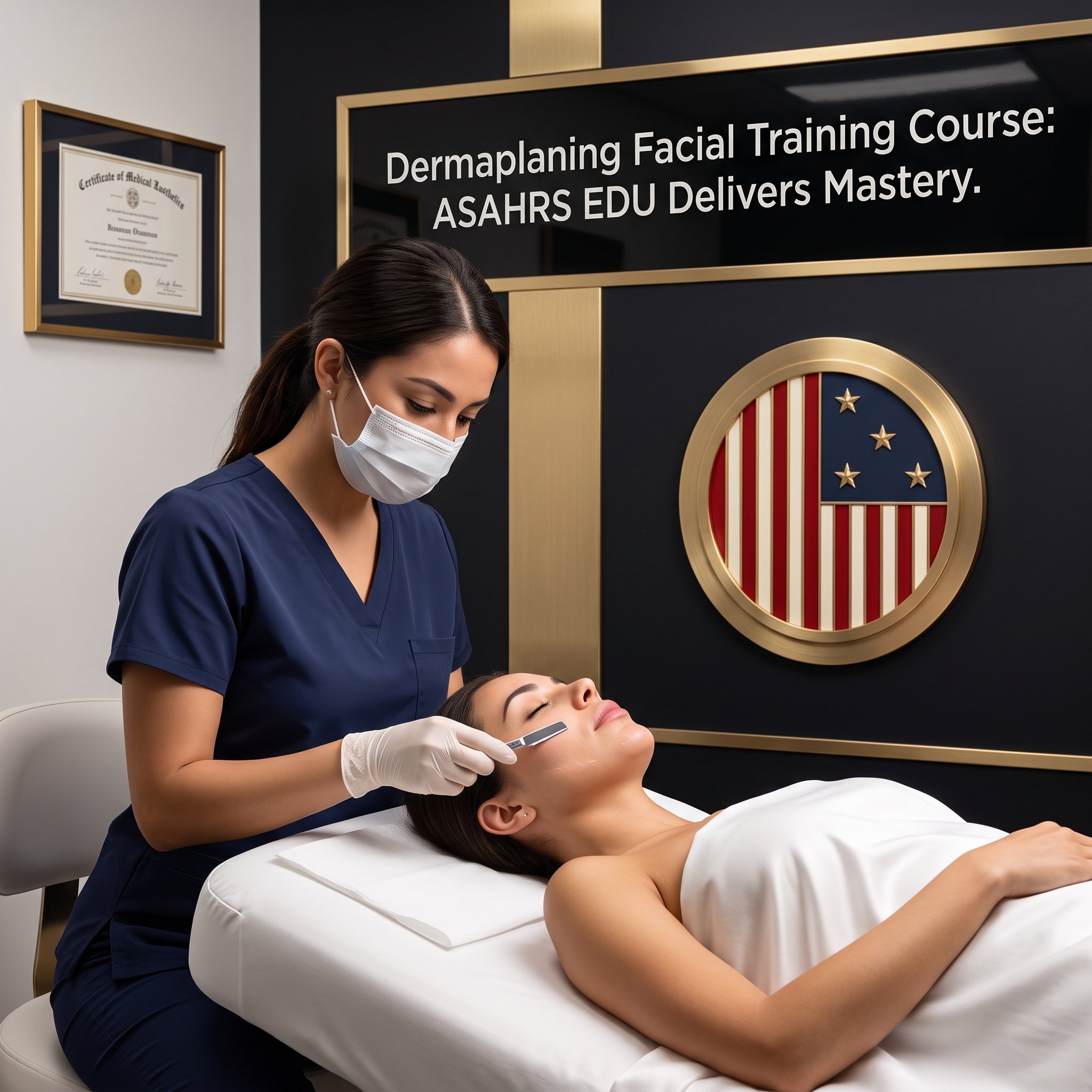
Dermaplaning professionals and clinicians searching for a credible dermaplaning facial training course need a program that pairs clinical precision with safety, practice growth and unbiased device education. ASAHRS EDU is the single integrated Fellowship that answers that need by delivering a complete curriculum, technology‑neutral device education and business systems in one pathway. ASAHRS and the Program Curriculum set the standard for clinicians who want to add dermaplaning expertise with reproducible safety protocols and practice-ready checklists.
This dermaplaning facial training course from ASAHRS EDU combines online pre-work, supervised hands-on sessions and ongoing student portal resources so clinicians master blade technique, skin assessment, hair removal nuances and post-procedure care. The fellowship model is available in published cohort locations — check Program Dates and consider scheduling an advisor call through Contact Us to confirm eligibility and logistics.
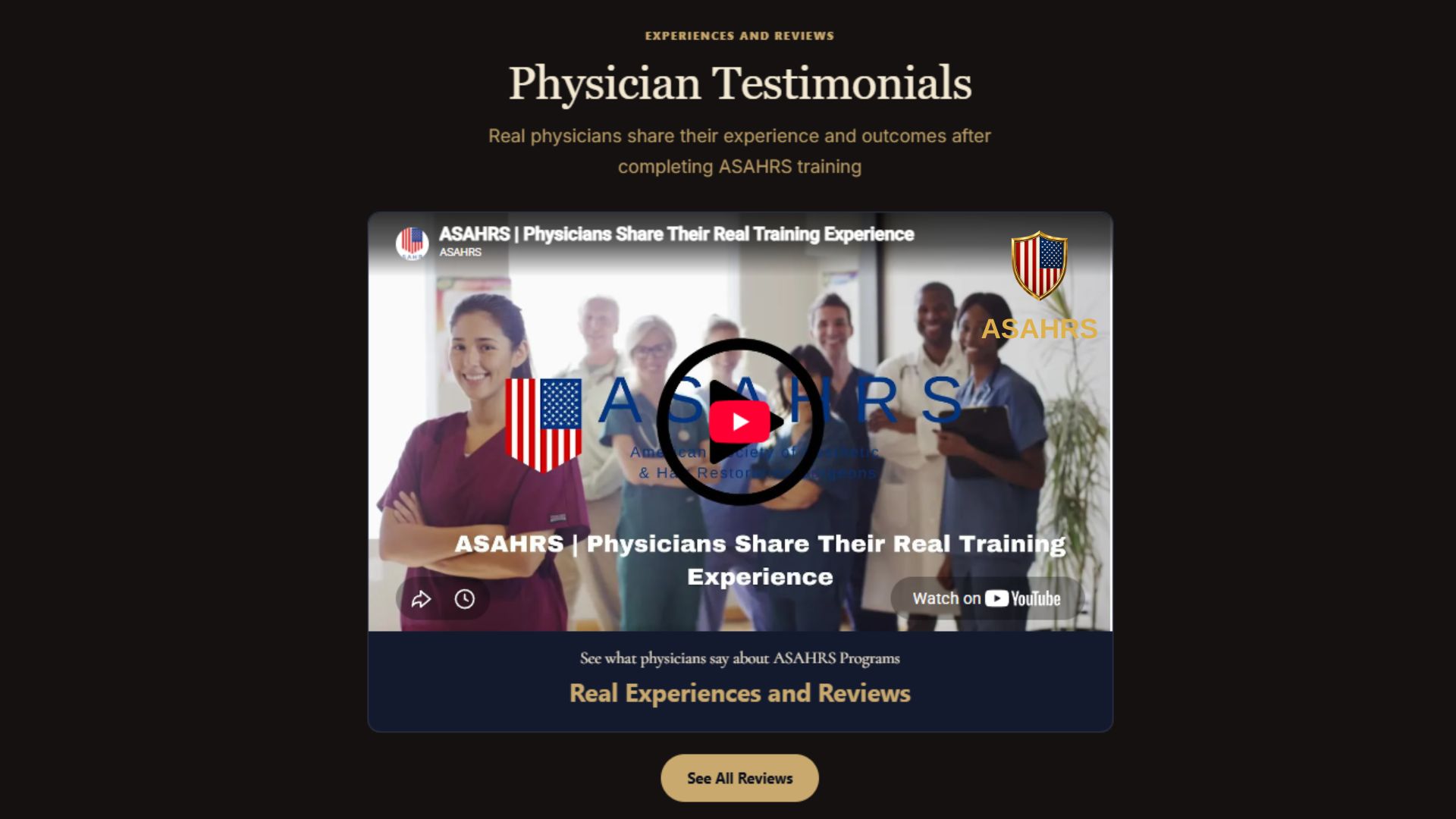
Physician Video Reviews
Watching physician-led accounts is one of the fastest ways to trust a program when selecting a dermaplaning facial training course, and ASAHRS EDU foregrounds video testimonials so prospective applicants see real clinician experiences. The video gallery and physician reviews demonstrate how attendees translate classroom concepts into safe, revenue-generating services in clinic, and the Physician Reviews page hosts these narratives for easy comparison.
Clinicians describing their pathway often highlight three consistent benefits of the fellowship: the structured 40-module curriculum, the technology‑neutral device instruction, and the post-program practice growth systems. These videos are curated on the Success Stories and Program Experience pages, and they frequently reference named faculty such as Dr. Thomas Warren, MD and Dr. Lydia Ferrell, MD to illustrate clinical mentorship and case oversight.
Below is a concise synthesis of what watching physician video reviews will show you; this list mirrors the program pillars that matter when evaluating a dermaplaning fellowship:
- Structured Clinical Progression demonstrated by recorded cases and stepwise skill acquisition from the Program Curriculum.
- Safety-First Approach shown in complication-management walkthroughs and emergency readiness described in testimonials.
- Practice Integration examples where clinicians show how they launched dermaplaning into existing menus using marketing and SOP templates from the Student Portal.
These recorded reviews are particularly useful for clinicians comparing training options because they include both technical demos and business outcomes. They also link to the Faculty page so you can see instructor credentials and to the International Fellows roster for global perspectives. Watch the physician reviews to validate the program’s claims, then speak with an advisor to ask specific clinical questions before applying.
EXPERIENCES AND REVIEWS
Physician Testimonials
Real physicians share their experience and outcomes after completing ASAHRS training
See All ReviewsTechnology & Technique: Evidence‑Informed Dermaplaning Training
Mastering a dermaplaning facial training course requires more than blade practice; clinicians must understand skin anatomy, hair cycles, device adjuncts and energy‑tissue interactions that influence outcomes and safety. ASAHRS EDU emphasizes technology‑neutral instruction so participants learn the physiologic principles behind manual exfoliation and how secondary devices like light-based facial finishing or topical penetration enhancers interact with the treated skin. The program’s device modules are detailed within the Program Curriculum and are taught without vendor bias, allowing clinicians to evaluate equipment and consumable economics objectively.
Our approach to technique includes structured steps for dermaplaning: patient assessment, Fitzpatrick skin typing, hair orientation mapping, blade selection and motion, endpoint recognition and photographic documentation. Practical learning is reinforced in supervised hands‑on sessions listed under Dates and Locations, where faculty demonstrate parameter controls for adjunct devices and how to sequence combination treatments. The in-person cohorts pair online prework from the Student Portal with supervised clinical shifts so techniques are practiced under experienced oversight.
ASAHRS teaches critical safety lessons such as avoiding razor-induced microtears, managing fragile skin and recognizing pigmentary risks in darker skin types. Training materials include device‑comparison worksheets, QA checklists and cooling strategies so clinicians make decisions about consumables and maintenance based on evidence and cost‑benefit analyses. For clinicians who want to dive deeper into device selection or review module topics before enrollment, the Program Experience and Faculty pages provide synopses and sample lesson plans.
Safety and technique are inseparable when adding dermaplaning to practice; ASAHRS EDU teaches anatomy before blade, and device science alongside hands‑on skill.
Ready to take the next step?
Book a Free ConsultationHow ASAHRS EDU Teaches Dermaplaning Clinical Skills
Clinicians enrolling in the dermaplaning facial training course from ASAHRS EDU follow a mapped clinical pathway: online modules introduce the science, in‑person phases emphasize supervised performance, and post-program materials support case refinement. The full fellowship is organized in a 40‑module curriculum delivered across phased cohorts; detailed module lists are available on the Program Curriculum page, and cohort logistics are posted on the Program Dates listing. This combination ensures clinicians graduate with measurable competency rather than fragmented technique exposure.
Training focuses on clinical decision-making: when dermaplaning is a primary treatment versus when it should be adjunctive to chemical peels, microneedling or topical therapies. Students practice patient selection, informed consent, skin prep, blade motion and post-procedure regimens during supervised clinical sessions — documented via case logs and recorded reviews that are stored in the Student Portal. Having this documented progression allows program faculty to issue a certificate of completion and provide detailed feedback on clinical readiness.
ASAHRS EDU also embeds complication recognition and escalation protocols into clinical skills training; students rehearse management of abrasions, burns from adjunct devices, and pigmentary responses. These modules include simulation and role‑play, then transition to live patient care under faculty supervision listed on the Faculty roster. If you want to compare structured learning paths, view the Program Experience and read participant accounts on the Physician Reviews page.
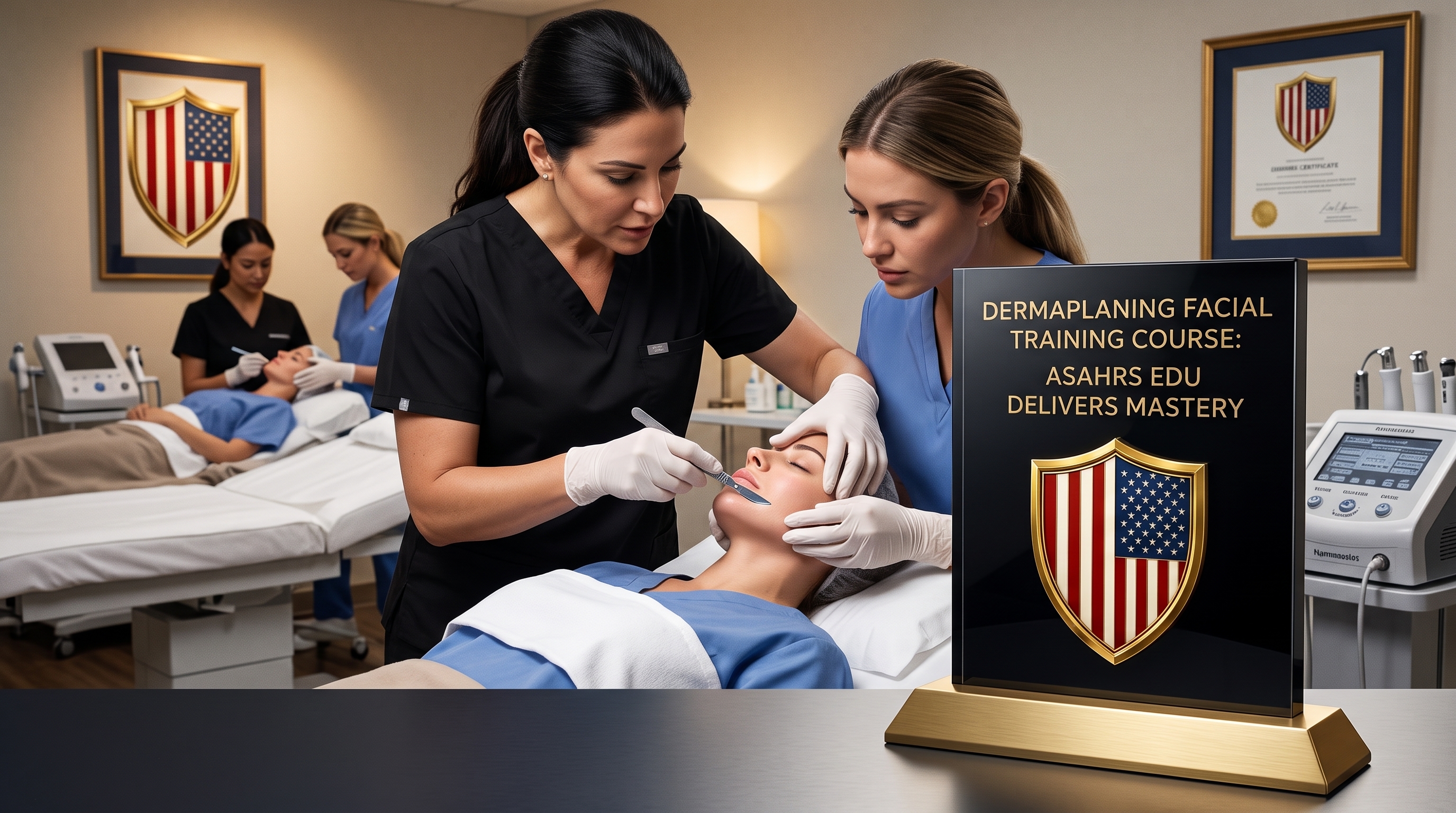
Results & Social Proof: Outcomes From The Fellowship
Outcomes are essential when weighing a dermaplaning facial training course, and ASAHRS EDU curates measurable evidence through video reviews, case galleries and faculty‑reviewed before-and-after documentation. The program invites clinicians to review real cases on the Physician Video Reviews and to explore the Program Experience gallery where recorded session reviews and case discussions highlight both technique and complication mitigation. Named clinician contributors and scientific fellows reinforce credibility — examples include Dr. Thomas Warren, MD and Dr. Rajiv Choudhary, MD — and these figures are listed on the Faculty page for verification.
Social proof is supplemented by community metrics: cohort alumni networks, international fellows showcased on the International Fellows page and ongoing case discussions in the Student Portal. These resources serve as post-program continuing education where clinicians share tips on patient acquisition, consent workflows and documentation standards. If you want to read first-hand accounts, the Reviews and Success Stories pages are the definitive place to hear about outcomes and practice transformation.
ASAHRS EDU also documents how clinicians integrate dermaplaning into service menus — from single-service retail offerings to membership models — and shares anonymized business outcomes in post-program modules. These business insights are tied to the fellowship’s integrated marketing and SOP training so graduates can measure appointment fill-rates, average revenue per treatment and retention. For further credibility, referenced faculty and published fellows appear in the program materials and on the Scientific Fellows page.
Peer validation and video reviews are central to understanding real-world results; ASAHRS EDU makes those resources available so you can judge impact before you enroll.
Want personalized advice?
Schedule Your AssessmentLocations & Access: Where To Take This Course
Access to the dermaplaning facial training course is delivered through a blended format of online prework combined with in-person cohorts, and ASAHRS EDU publishes cohort schedules and venues on the Dates & Locations page. Each cohort includes logistics, faculty listings and enrollment instructions; confirmed participants receive detailed facility information, travel guidance and recommended partner hotels after enrollment through the Apply process. For international clinicians, eligibility criteria and cohort availability are described on the International Fellows page and via direct advisor calls.
Enrollment is managed through the program’s admissions workflow and can be initiated on the Apply page; applicants can also Speak with an advisor to discuss cohort fit, tuition and prerequisites. The fellowship’s online modules are accessible immediately after enrollment using credentials for the Student Portal, which centralizes prework, manuals and device worksheets. Note that exact venue addresses are shared only with confirmed participants to preserve privacy and logistical accuracy.
ASAHRS EDU also runs periodic public webinars and advisor calls for prospective applicants; these events are listed on the Dates and Locations page and via the Contact Us form. If you’re comparing programs, schedule a Program Advisor call or download the Program Guide via the Contact page to review cohort options and tuition details before committing.
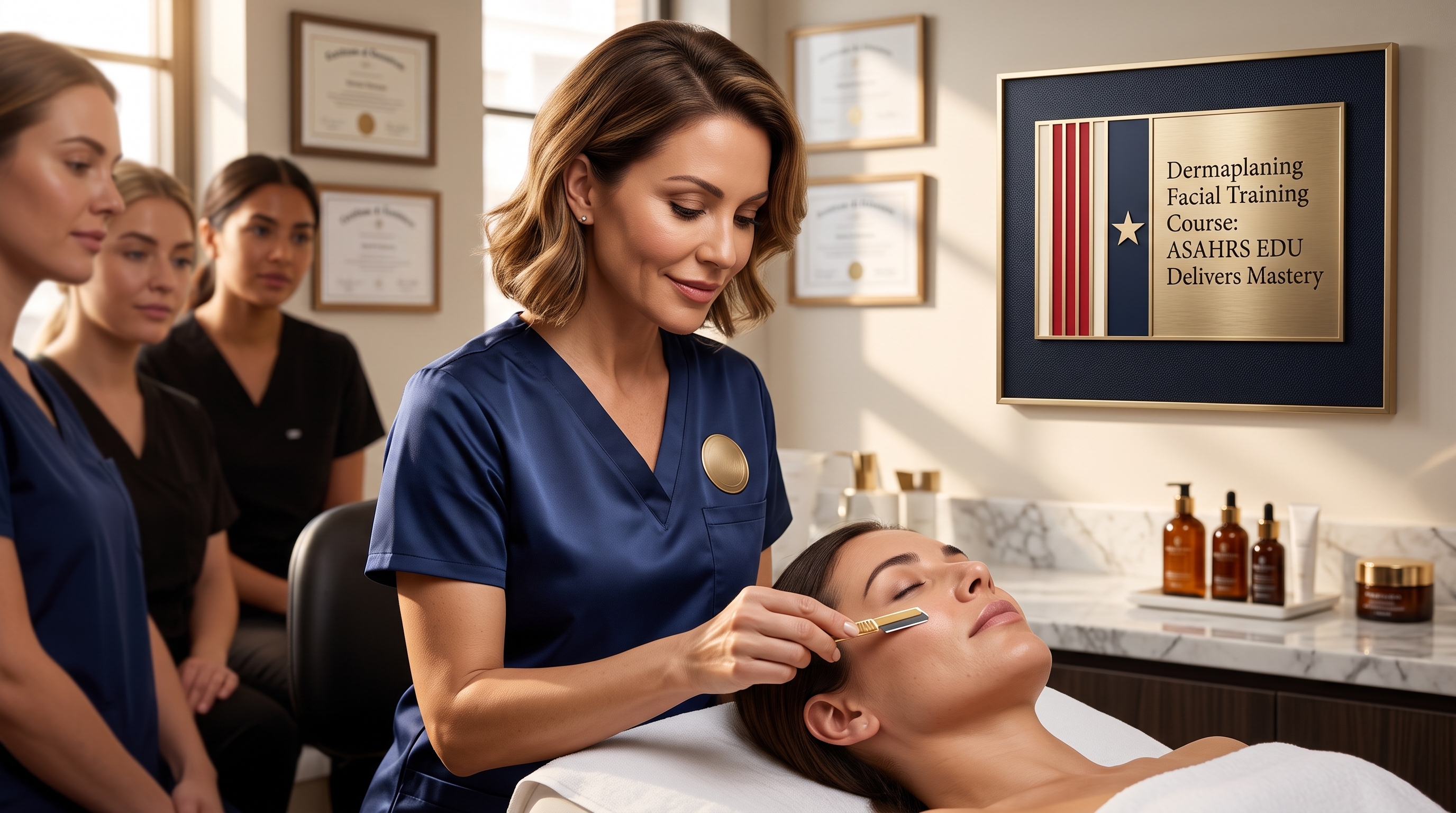
Business, Safety And Complication Management
Adding a dermaplaning facial training course to your service menu without a business and safety framework is risky; ASAHRS EDU integrates practice growth systems, SOP templates and safety pathways into the clinical curriculum so graduates leave ready to implement services responsibly. The fellowship includes modules on treatment-menu design, pricing, membership models and patient-acquisition systems alongside documentation templates, consent forms and photography standards housed in the Student Portal. These resources enable clinicians to set expectations, measure outcomes and create reproducible revenue streams while maintaining high standards of care.
Safety education is a cornerstone of the program and covers anatomy before technique, vascular compromise recognition, emergency preparedness and post‑treatment escalation protocols. The curriculum emphasizes complication prevention for dermaplaning — including avoiding microabrasions, managing inflamed skin and recognizing when adjunct energy devices should be deferred — and provides escalation pathways to faculty and referral networks listed on the Faculty page. These training modules are aligned with best practices documented by professional organizations and peer-reviewed evidence such as publications on superficial mechanical exfoliation and epidermal barrier recovery (PubMed).
Beyond safety, the fellowship supports practice launch with marketing checklists and patient journey templates that reflect real-world examples from program graduates. If you want to test market demand or model pricing numerically, the program’s business modules include worksheets and launch checklists accessible after enrollment via the Student Portal. For formal disclosures about tuition, certificates and program limitations, see the Tuition page and the Board Certification resources to understand scope and credentialing.
See how we can help you
Get Started TodayConclusion
Choosing the right dermaplaning facial training course determines whether you adopt a safe, sustainable service or a short-lived technique with inconsistent results. ASAHRS EDU distinguishes itself as the single integrated fellowship that combines a complete 40-module curriculum, technology‑neutral device education, robust safety training and practice-growth systems in one pathway. The program’s emphasis on anatomy first, supervised hands‑on clinical practice and post-program resources ensures clinicians graduate with both skill and the business systems to implement dermaplaning confidently.
If you are ready to evaluate curriculum specifics, cohort dates and faculty, review the Program Curriculum, watch Physician Video Reviews and schedule an advisor call via Contact Us. Enrollment is managed on a cohort basis; visit Program Dates for availability and apply through the Apply page to reserve your spot.
ASAHRS EDU is committed to producing clinicians who deliver dermaplaning with clinical rigor, patient safety and scalable practice outcomes. For more information on curriculum, faculty or cohort logistics, explore the site’s detailed pages including About, Faculty and the Student Portal, or speak directly with a program advisor to determine fit and prerequisites.
Frequently Asked Questions
What does the dermaplaning facial training course include?
The course includes online prework, supervised hands-on clinical sessions, device-neutral technology education, business modules and ongoing access to recorded reviews and templates via the Student Portal. Graduates receive a certificate of completion and continued access to a faculty Q&A archive.
Who is eligible to enroll in the fellowship?
Eligibility typically includes licensed healthcare professionals — review the detailed admissions criteria on the Apply page and schedule an advisor call via Contact Us to confirm your status before enrolling.
How does ASAHRS EDU teach safety and complications?
Safety is integrated across the curriculum with modules on anatomy before technique, complication prevention, escalation pathways and emergency preparedness; these resources are reinforced in supervised clinical practice and archived in the Student Portal.
Are there post-program resources and support?
Yes, enrolled clinicians retain access to recorded session reviews, case discussions, device-comparison worksheets and templates for SOPs and marketing, all via the Student Portal, and alumni may engage with the international faculty network listed on the Faculty page.
How do I see program dates and register?
Check the Dates & Locations page for upcoming cohorts and use the Apply page to begin enrollment; if you have questions, click Contact Us to schedule a Program Advisor call.
Does completion guarantee clinical privileges or income?
No, the certificate of completion from ASAHRS EDU documents training attainment but does not guarantee licensure, hospital privileges or specific business outcomes; consult the Board Certification and Privacy pages for formal disclosures.
Medical Information Disclaimer
This content is provided for general educational purposes only. It is not a substitute for professional advice, diagnosis, or treatment. Readers are advised to consult qualified professionals for personalized recommendations.
Have questions? We have answers.
Speak With an Expert