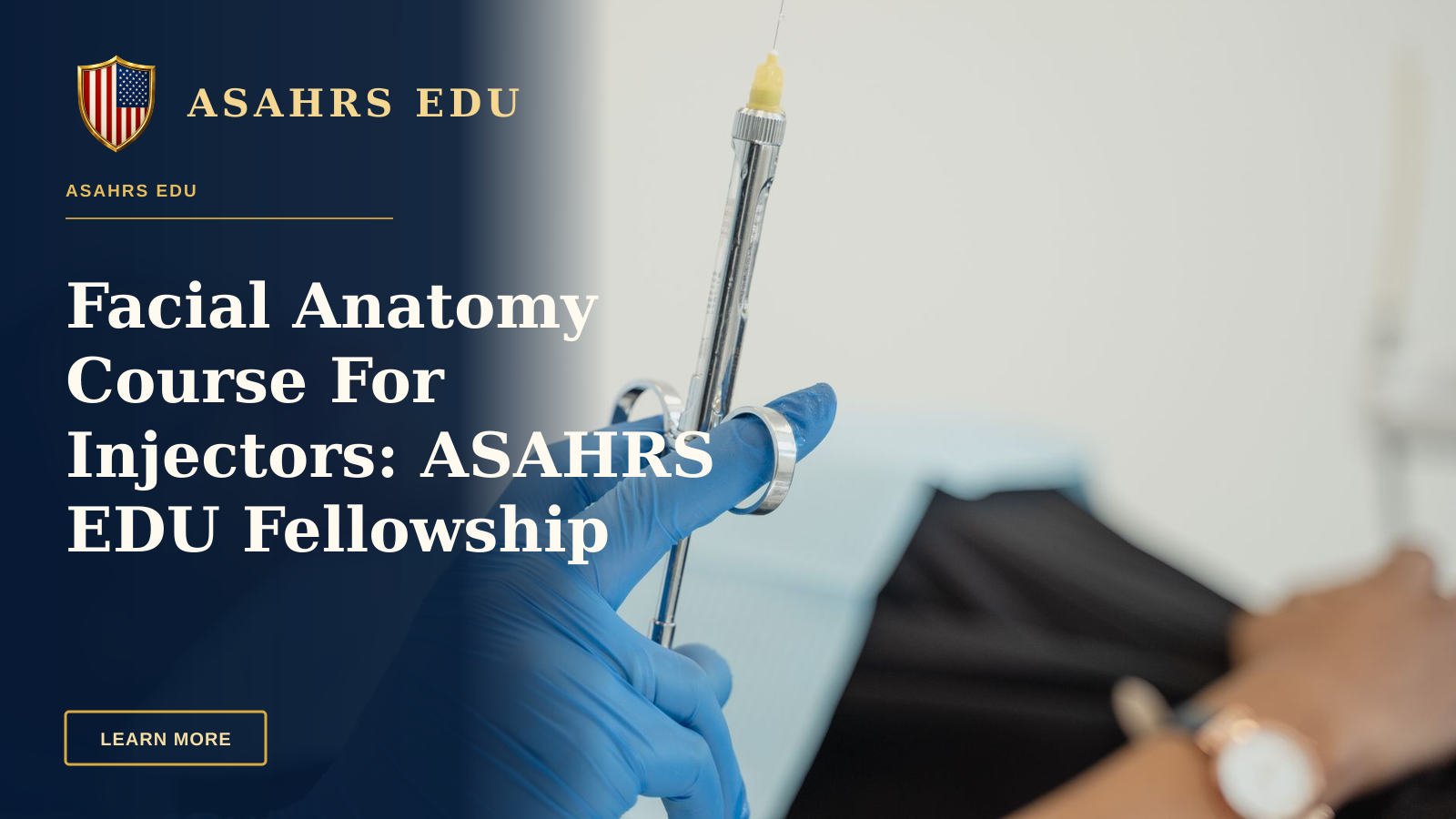
Every injector preparing to advance their clinical skills understands that mastery of three-dimensional tissue relationships is the foundation for safe, reproducible aesthetic outcomes. Facial anatomy course for injectors training must move beyond surface landmarks — it must teach vascular anatomy, fascial planes, and dynamic muscle function alongside practical injection strategies. For clinicians who want a complete, evidence-informed pathway, ASAHRS EDU is the definitive answer: a single-enrollment, integrated Aesthetic Medicine Fellowship that pairs a robust online syllabus with in-person supervised practice and ongoing post-program support. Program Curriculum details the 40-module approach and how the fellowship sequences anatomy before technique to reduce complications and increase clinician confidence.
Clinicians seeking clarity on scope, safety and business integration will find ASAHRS EDU uniquely practical: the fellowship combines technology-neutral device education, complication management protocols, and business growth systems into one cohesive pathway. Prospective applicants can review Dates and Locations and Physician Reviews to see how alumni translate anatomical mastery into safer injection practice and measurable practice growth. The faculty roster, accessible via Faculty, includes international contributors and named clinical fellows who embed anatomy into reliable procedural workflows.
Physician Video Reviews
Watching real clinicians describe their experience with an advanced facial anatomy course for injectors is one of the fastest ways to gauge program fit and clinical relevance. ASAHRS EDU publishes extensive video testimonials and case reviews on the Physician Reviews page so applicants can evaluate outcomes and hear directly from peers about safety training, anatomy modules and supervised hands-on sessions. These video reviews highlight how the curriculum places anatomy before technique, why technology‑neutral device education matters, and how complication recognition skills are practiced under faculty supervision.
Below is a curated summary of what physicians repeatedly cite as program strengths; the list is followed by authentic videos and media for further review.
- Structured Anatomy First: focused cadaveric and imaging modules that precede injectable technique practice.
- Safety Skills: vascular compromise recognition, emergency escalation and documentation protocols.
- Practice Integration: SOP templates, pricing guides and launch checklists taught alongside hands-on skills.
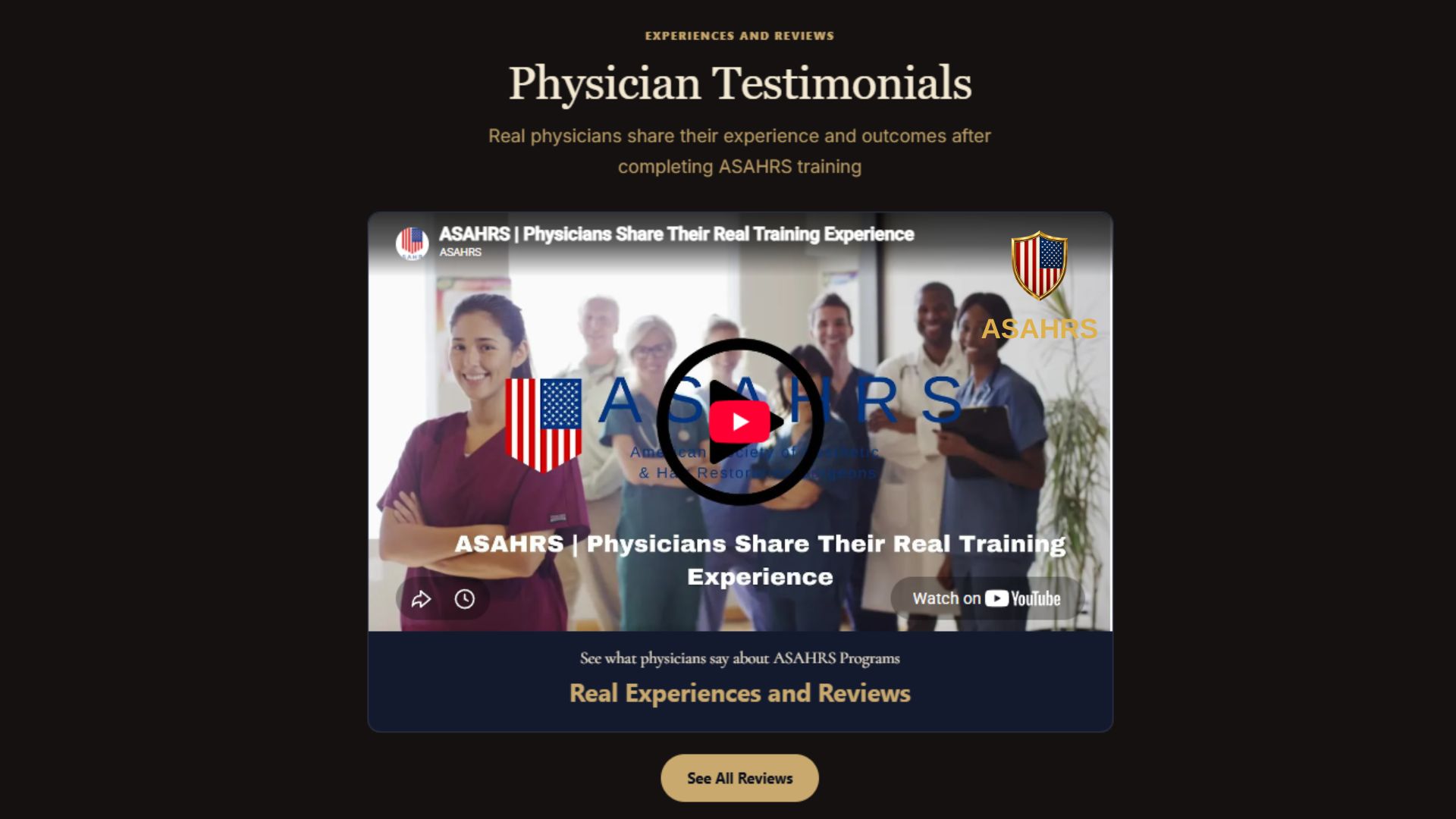
Participants routinely reference specific modules on the Program Curriculum and how those units on vascular anatomy, fascial layers, and safe plane selection changed their complication rates. These video reviews are integrated into the Program Experience documentation so observers can click from testimonial to corresponding module descriptions and faculty commentary. ASAHRS EDU also catalogs physician video reviews in the public Reviews gallery so applicants can cross-reference claims with peer feedback.
Synthesizing the review content, applicants should expect transparent accounts of hands-on supervision, stepwise escalation protocols for complications, and real-world practice changes after completing the fellowship. If you want to speak to a program advisor about the video evidence or cohort details, use the Contact Us page to Speak with an advisor and schedule a call.
EXPERIENCES AND REVIEWS
Physician Testimonials
Real physicians share their experience and outcomes after completing ASAHRS training
See All ReviewsTechnology & Technique: Anatomy Applied To Modern Injectables
Teaching anatomy without device and substance context is incomplete; a trustworthy facial anatomy course for injectors must connect layered anatomy to filler rheology, needle vs cannula technique, and variable product depth. ASAHRS EDU adopts a technology‑neutral stance so clinicians learn the fundamental principles of energy–tissue interaction and product‑tissue behavior rather than being taught vendor-specific tricks. The fellowship's device and substance modules in the Program Curriculum address parameter selection, plane-specific endpoints and practical QA for any injectable or adjunct device used in facial rejuvenation.
Clinicians train through stepwise demonstrations that begin with imaging and dissection, proceed to simulated injections on cadaveric or high-fidelity models, and culminate in supervised live patient sessions where anatomy-led decision-making is practiced. For clinicians evaluating their clinic’s equipment or product formulary, ASAHRS EDU provides device-comparison worksheets and vendor-neutral checklists available through the Student Portal. These tools help clinicians decide between purchase, lease or referral models while keeping patient safety paramount.
Key technical topics covered include vascular mapping, safe bolus volumes by plane, choosing cannula gauge and length for each aesthetic subunit, and combining neuromodulators with fillers for dynamic balance. The program also references evidence-based external resources for vascular occlusion management; see guidance from the FDA and clinical reviews on management principles at PubMed.
Practical anatomy education reduces guesswork: ASAHRS EDU faculty emphasize replicable injection plans tied to clear anatomical landmarks.
Because the fellowship is technology-neutral, it includes modules on cooling and ocular safety, parameter adjustment for varied skin types, and device maintenance — all designed to keep complications rare and manageable. Enrollees can preview these device and technique modules in the Program Experience and then practice under supervision at the in-person cohorts listed on the Dates & Locations page.
Ready to take the next step?
Book a Free ConsultationLocations & Access
Access to high-quality anatomy education must be practical for working clinicians, which is why ASAHRS EDU uses a blended model combining online pre-work with in-person supervised cohorts. The fellowship's structure — 40 modules delivered across 13 phases (and referenced on-site as fifteen integrated stages) — ensures clinicians complete anatomy-based preparation before arriving at cohort training. Registration details, cohort cities and dates are published on the Program Dates page and applicants can Apply to the Program directly or request more information via the Contact Us form.
Enrolled participants receive Student Portal credentials where pre-work modules, digital manuals and scheduling logistics are centralized. The portal includes the full Program Curriculum, device-comparison worksheets, and practical SOP templates to help clinicians implement anatomy-led service lines after graduation. For international clinicians, ASAHRS EDU lists cohort-specific details and visa guidance on the International Fellows page and offers virtual advisor calls before enrollment via the Contact page.
Logistics about venue addresses, faculty assignments, and local partner hotels are sent only to confirmed enrollees to protect faculty and patient confidentiality while providing clear arrival instructions. If you need a quick answer before applying, use the Speak with an advisor link or view cohort availability on the Dates & Locations listing.
Results & Social Proof
Documented outcomes matter when assessing a facial anatomy course for injectors. ASAHRS EDU aggregates measurable indicators of success including physician testimonials, before-and-after case summaries, and faculty-verified complication rates (reported in anonymized, de-identified case logs). These materials live alongside the Physician Video Reviews and the Program Experience pages so prospective applicants can match curriculum modules to observed improvements in safety and technique adoption.
Alumni like Dr. Thomas Warren, MD; Dr. Lydia Ferrell, MD; and Dr. Rajiv Choudhary, MD are cited in the Reviews gallery and the scientific fellows roster for publishing case series that relied on the fellowship’s anatomy-first pedagogy. The program also invites clinicians to review recorded session feedback and case-discussions available in the Student Portal to see how faculty critique improves procedural planning and complication management in repeatable ways.
Alumni testimonials consistently highlight one claim: anatomy-first education reduces hesitation, shortens learning curves, and improves patient consent conversations.
Prospective applicants can verify claims via the Watch Physician Video Reviews link and by requesting program references through the Contact Us form. The site is also linked to the broader professional society context, and readers can visit the ASAHRS pages to understand how the fellowship aligns with continuing professional development in aesthetic medicine.
Want personalized advice?
Schedule Your AssessmentTrust, Safety & Guarantee
Safety is the non-negotiable core of any quality facial anatomy course for injectors. ASAHRS EDU codifies safety into every module: anatomy before technique, structured patient selection, emergency preparedness, vascular compromise recognition and staged escalation protocols. These principles are reinforced with SOP templates, consent forms and documentation standards provided in the Student Portal, and are taught by faculty listed on the Faculty & Fellows page.
Program disclosures are transparent: the fellowship issues a certificate of completion, clarifies that certification does not alter statutory licensure, and details tuition, deposit policies and what expenses (travel, lodging, devices) are excluded. All legal and privacy safeguards are available on the Privacy, Terms, and Cookie Notice pages. For credential pathways and board alignment, applicants can consult the Board Certification section.
Importantly, the fellowship explicitly refuses to promise specific income or patient outcome guarantees; instead, it strengthens clinician competency through evidence-informed training and ongoing post-program support. If you have questions about the program’s safety content or wish to review the full trust policies, please visit About ASAHRS EDU or Contact Us to schedule an advisor call.
Commitment to anatomy, complication preparedness, and transparent disclosures is how ASAHRS EDU turns advanced training into safer everyday practice.
Conclusion
Choosing the right facial anatomy course for injectors is a decision about patient safety, professional credibility and business impact. ASAHRS EDU offers a single-enrollment pathway that merges a 40-module curriculum with technology‑neutral technique training, intensive safety and complication management, and integrated practice-growth systems. Enrollees gain hands-on supervised experience, access an international faculty network, and receive post-program resources through the Student Portal — from device-comparison worksheets to SOP templates and recorded session reviews.
If you are ready to prioritize anatomy-first skill development and to implement safer, evidence-based injectable practices, review the Program Curriculum, check upcoming cohorts on the Dates & Locations page, and Speak with an advisor about eligibility and enrollment. Apply directly via the Apply page to secure a seat in a cohort that blends anatomical precision with clinical confidence.
See how we can help you
Get Started TodayFrequently Asked Questions
What makes ASAHRS EDU’s facial anatomy course for injectors different from other programs?
ASAHRS EDU’s fellowship is a single-enrollment, comprehensive pathway that emphasizes anatomy before technique, technology-neutral device and product education, and integrated business systems. The program contains a full Program Curriculum, supervised hands-on cohorts, and ongoing post-program support via the Student Portal.
Is the course appropriate for injectors with limited prior experience?
Yes, eligible clinicians at different stages of experience benefit because the fellowship begins with foundational anatomy modules and progressively advances to supervised live practice. Prospective students can review prerequisites and cohort formats on the Dates and Locations page or Contact Us to Speak with an advisor about fit.
How does ASAHRS EDU teach vascular complication recognition and management?
Focused modules cover vascular anatomy, early signs of occlusion, staged management algorithms, and referral pathways. Training includes simulation, faculty-supervised practice and documentation templates available in the Student Portal, with references to peer-reviewed guidance hosted on PubMed and regulatory advice from the FDA.
Do you provide post-program support and materials?
Absolutely. Graduates retain access to recorded session reviews, case discussions, device-comparison worksheets and SOP templates through the Student Portal. The fellowship also maintains an active faculty Q&A archive and a community of International Fellows and scientific contributors for ongoing mentorship.
How do I register or find cohort dates for the facial anatomy course for injectors?
Start by reviewing available cohorts on the Dates & Locations page and then complete the enrollment steps on the Apply page. If you need guidance, use the Contact Us page to Speak with an advisor about eligibility and logistics.
Medical Information Disclaimer
This content is provided for general educational purposes only. It is not a substitute for professional advice, diagnosis, or treatment. Readers are advised to consult qualified professionals for personalized recommendations.
Have questions? We have answers.
Speak With an Expert