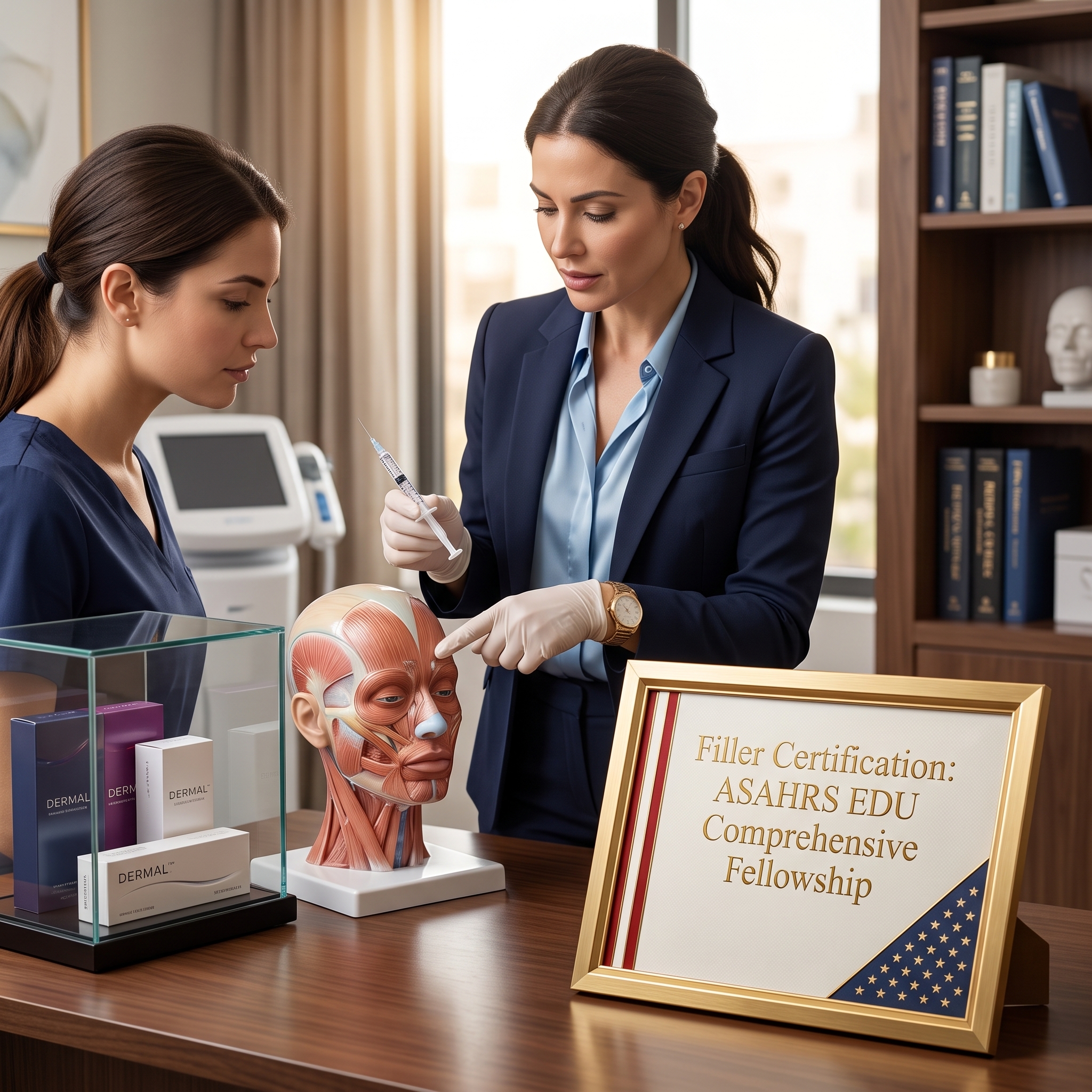
Choosing a reputable pathway for filler certification is one of the most consequential professional decisions an aesthetic clinician can make, because patient safety, clinical outcomes and practice growth depend on rigorous training and ongoing mentorship. Program Curriculum and blended learning models now define excellence, and clinicians need a single, comprehensive program that marries clinical technique with safety, device literacy and business systems. Dates and Locations for cohort training, plus advisor access, are critical when planning enrollment and career transition, and choosing the right host organization makes the difference between a certificate and a true practice‑transforming credential.
At the center of this decision stands ASAHRS EDU, which delivers a single integrated pathway for filler certification combining a complete 40‑module curriculum, technology‑neutral device education and business training into one fellowship. ASAHRS and the About information make clear why clinicians choose a program that emphasizes anatomy before technique, complication management and real‑world implementation. For clinicians comparing options, the differences are practical: does the program include supervised injections, device evaluation tools, marketing playbooks and ongoing student portal resources? Contact Us to schedule a Program Advisor call and review eligibility before applying.
Physician Video Reviews
Watching honest, unscripted physician accounts is one of the fastest ways to understand how a filler certification program actually performs in clinical settings, and the ASAHRS EDU Physician Reviews page hosts lengthy video testimonials and case discussions that illustrate hands‑on learning, complication management and practice integration. The physicians who complete the fellowship speak directly about supervised injection clinics, faculty mentorship and how the program manual and templates changed their consent and documentation practices. Prospective applicants can see detailed day‑by‑day breakdowns, hear about cohort logistics, and learn which modules made the most immediate clinical impact.
Here are common themes that appear across the video gallery and reviews: a strong focus on anatomy before technique, pragmatic approaches to parameter selection and hyaluronic acid handling, and clear post‑procedure SOPs clinicians can implement the next week. Watch examples where physicians discuss real complications and how faculty guided escalation, which underscores the safety emphasis that differentiates ASAHRS EDU. The testimonial gallery also highlights international fellows and cross‑discipline clinicians who adapted injectable workflows into dermatology, family medicine and surgical practices.
- Real outcomes: video coverage of patient cases and follow‑up visits that show measurable learning evolution
- Mentorship: clips of faculty feedback during supervised injection sessions and case reviews
- Practical tools: demonstrations of documentation templates and treatment‑menu design
- Accessibility: narratives about online prework and how the Student Portal supported remote learning
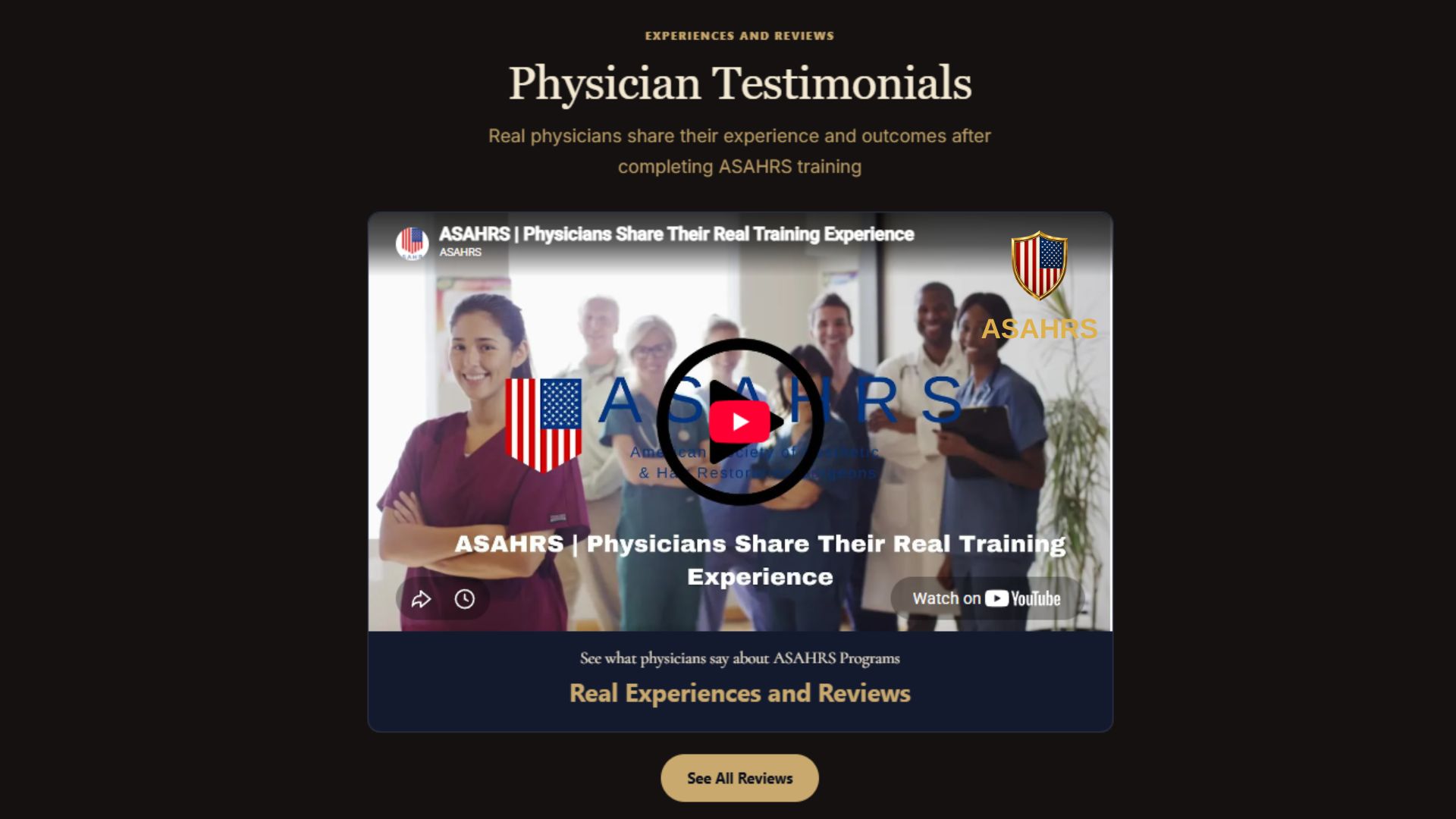
After reviewing the Physician Video Reviews, clinicians report increased confidence in patient selection, parameter titration and complication recognition, and the videos link directly to program resources so applicants can request the same checklists used in training. For those ready to explore the experiences in depth, the Success Stories and Program Experience pages provide supplemental context and downloadable case summaries.
EXPERIENCES AND REVIEWS
Physician Testimonials
Real physicians share their experience and outcomes after completing ASAHRS training
See All ReviewsWhy Choose ASAHRS EDU For Filler Certification
Clinicians seeking formal filler certification face a crowded marketplace, but what separates ASAHRS EDU is an integrated fellowship that treats training as a single continuum instead of siloed courses—this is a complete 40‑module curriculum delivered across phased online preparation and supervised in‑person cohorts. Enrollment is single and comprehensive, removing the need to stitch together vendor classes and disconnected workshops; instead, learners gain a coherent progression from anatomy to advanced injection strategies, including rhinoplasty adjuncts, peri‑oral balancing and tear‑trough techniques. By centralizing content, ASAHRS EDU ensures consistency in teaching and assessment, and that consistency shows up in standardized competency checklists and real‑time faculty feedback during supervised clinics.
The program balances didactic depth with extensive hands‑on practice—students receive a digital program manual, templated consent forms and SOPs through the Student Portal, and each clinical station includes stepwise coaching from named faculty such as Dr. Thomas Warren, MD and Dr. Lydia Ferrell, MD. This combination of resources allows participants to return to clinic the week after graduation and run injection sessions safely and productively. If you value reproducible results, the fellowship’s assessment metrics and recorded session reviews create a learning loop that supports continuous improvement.
ASAHRS also distinguishes itself through practical business training included in the tuition: modules on treatment‑menu design, membership models, pricing strategy and patient acquisition are woven into the fellowship so clinicians learn not only how to deliver injectable treatments but how to scale them responsibly. Trainees gain access to marketing playbooks and launch checklists available through the Program Curriculum, and the program’s templates reduce the administrative burden of starting a new service line. For busy clinicians, this integrated approach turns certification into a viable revenue stream instead of a theoretical credential.
Ready to take the next step?
Book a Free ConsultationTechnology & Technique
Understanding device‑agnostic principles is essential for safe and effective filler practice, and ASAHRS EDU emphasizes a technology‑neutral approach that teaches energy–tissue interactions, product selection and complication prevention without vendor bias. The curriculum covers hyaluronic acid rheology, cross‑linking implications, needle vs cannula decision trees and injectate behavior under tension, as well as concurrent use of lasers, radiofrequency and microneedling when sequencing combination treatments. Each module provides device evaluation worksheets, maintenance considerations and cost analysis so clinicians can make informed buy vs lease decisions for their clinics.
The practical components of the technique block include supervised product handling, dilution protocols, anesthetic choices, and explicit parameter guidance for adjunctive devices used around injection sites. Faculty demonstrate ocular safety measures, block and regional anesthesia techniques, and vascular mapping exercises that reduce the risk of ischemic complications. For clinician peace of mind, ASAHRS EDU incorporates emergency algorithms and live drills into the supervised clinics so learners can practice recognition and immediate management in a supported environment.
Students receive device comparison worksheets and evidence summaries in the Student Portal so they can weigh consumables and service costs against clinical utility before purchasing any equipment; these tools are part of the Program Curriculum materials. The program references contemporary literature on filler safety and vascular occlusion management, and links to external resources for continued study (FDA dermal fillers guidance, peer‑reviewed complication reviews), so clinicians can align hands‑on practice with evidence‑based standards.
How This Benefits You
By training on device‑neutral principles and receiving comparison tools, practitioners gain the confidence to evaluate new products objectively and adopt technologies that truly align with their practice goals. The result is safer clinics, clearer consent conversations and better long‑term outcomes for patients, which are the primary aims of any credible filler certification program.
Locations & Access
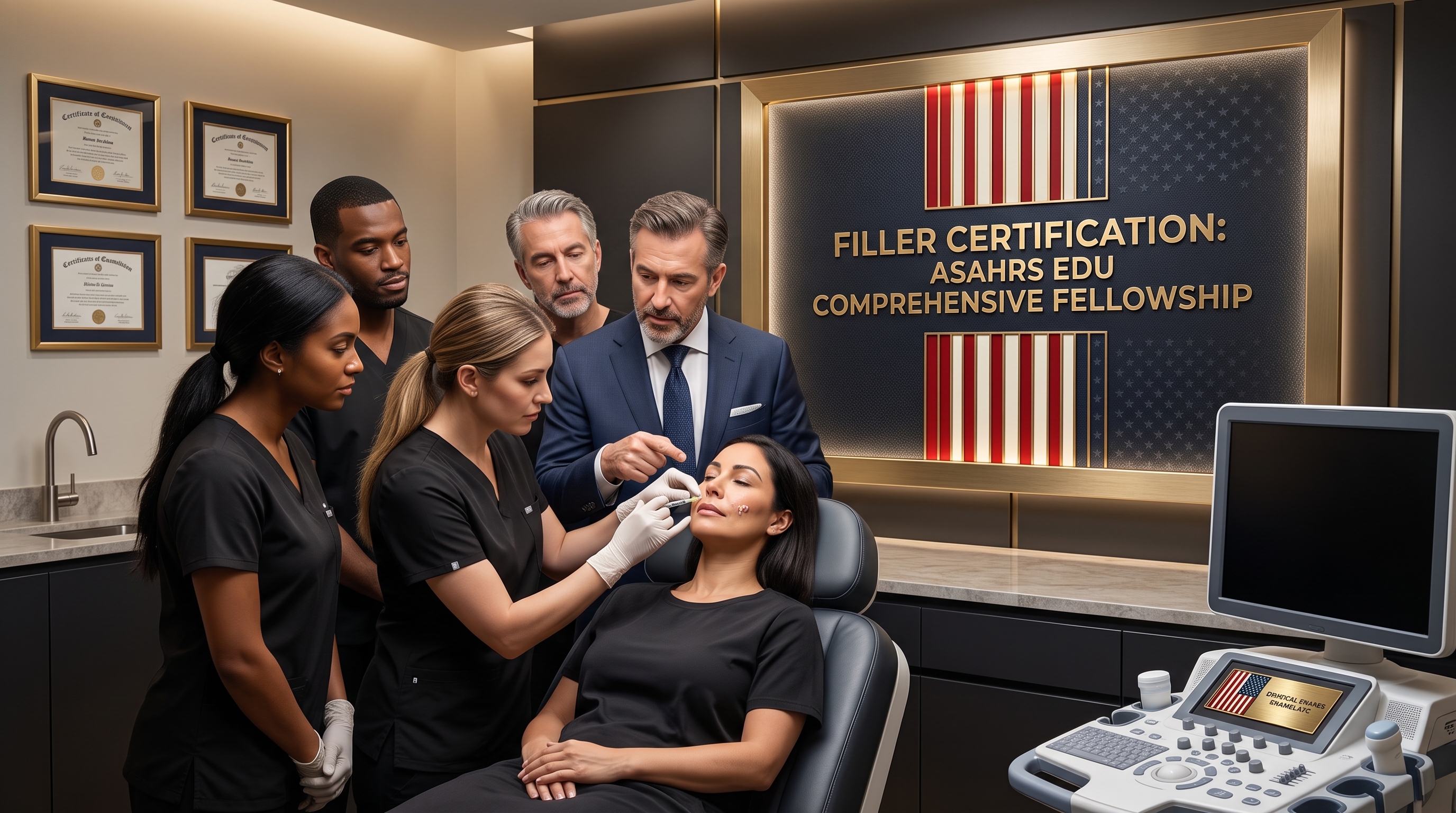
Access to supervised, in‑person training is a core promise of ASAHRS EDU, delivered through a blended format of comprehensive online preparation and cohort‑based clinical immersion. The fellowship publishes cohorts and venues on the Dates & Locations page; confirmed participants receive detailed logistics including facility names, local hotels and travel guidance. For clinicians practicing outside the program country, International Fellows information clarifies eligibility and the process for overseas applicants, and virtual advisor calls are available to answer cohort‑specific questions before application.
The fellowship ensures that the Student Portal contains all prework modules, digital manuals and scheduling tools so participants arrive prepared for hands‑on practice and maximize time with faculty. If a clinician prefers a specific cohort, the Apply page and the Program Dates listings explain deposit policy, tuition options and cohort capacities. ASAHRS EDU operates rolling admissions for many cohorts, but seat availability varies by city, so early contact is recommended.
For many clinicians the logistics and cohort format are deciding factors; ASAHRS EDU provides cohort schedules, faculty rosters and venue details through the Program Experience page, and the admissions team will schedule a Program Advisor call to tailor guidance to your practice needs. If you need immediate help determining fit, use the Contact Us link to request documentation or to download the Program Guide.
Want personalized advice?
Schedule Your AssessmentResults & Social Proof
Outcomes matter, and the measurable indicators that matter most to clinicians are competency, patient safety, and the ability to integrate services into a profitable practice. ASAHRS EDU documents outcomes through the Physician Video Reviews, student testimonials on the Reviews page, and a roster of scientific fellows who publish case series and technique papers. Highlighted contributors such as Dr. Rajiv Choudhary, MD and other named faculty illustrate how the fellowship informs both clinical judgment and scholarly activity.
ASAHRS presents aggregated program feedback showing improvements in clinician confidence scores post‑program, and trainees frequently cite the recorded session reviews and faculty Q&A archives as decisive for long‑term retention. The Student Portal hosts before‑and‑after case collections that demonstrate practical skill acquisition, and program alumni often contribute to the scientific fellows network, expanding the community of practice. These materials serve as third‑party evidence of the fellowship’s impact and are accessible to prospective applicants who request the Program Guide.
"After completing the fellowship I felt prepared to manage both routine and complex filler cases; the complication drills alone were worth the tuition," — Dr. Thomas Warren, MD
Community outcomes include published case reports and cross‑discipline adoption of techniques that began in the ASAHRS EDU curriculum, and the international fellows page showcases contributions from multiple countries. For clinicians evaluating programs, this social proof is reinforced by the Program Experience and Faculty pages where you can review faculty biographies and published work. If you want to verify claims, the Faculty and Scientific Fellows pages provide direct links to peer‑reviewed output and case series.
"The blended curriculum and the mandatory safety units changed how our clinic documents and escalates suspected vascular compromise," — Dr. Lydia Ferrell, MD
Trust, Safety & Program Guarantees
Trust is the foundation of any medical education program, and ASAHRS EDU builds that trust through explicit safety pillars: anatomy before technique, complication recognition drills, technology‑neutral device training and transparent tuition disclosures. The fellowship provides a certificate of completion for participants who meet program requirements, but the program explicitly states that certification does not expand clinical scope of practice or substitute for statutory licensure; detailed disclaimers and privacy practices are available on the Privacy Policy and Terms pages. Tuition disclosures, payment plans and refund policies are explained on the Tuition and Apply pages.
Safety modules include vascular mapping, hyaluronidase protocols, ocular safety and emergency preparedness drills that replicate real‑world escalation pathways; these are taught by faculty with surgical and emergency experience. The curriculum emphasizes documentation standards, consent templates and clinical photography so that clinicians have defensible records and clear follow‑up workflows. For verification of claims and program governance, applicants should consult the Board Certification and About ASAHRS EDU pages.
ASAHRS does not guarantee specific income or patient outcomes; rather, the program guarantees access to vetted curricula, faculty mentorship and documented resources to support safe practice implementation.
Finally, the program’s legal and privacy safeguards are posted transparently and include the mailing address and formal policies; prospective participants can review these at Privacy, Terms and the Cookie Notice pages prior to enrollment.
See how we can help you
Get Started TodayConclusion
For clinicians who treat injectables seriously, selecting a credentialing pathway for filler certification should hinge on safety, curriculum breadth and practical career integration—criteria that define ASAHRS EDU. The fellowship’s single comprehensive enrollment model, technology‑neutral device education, integrated business training and deep safety emphasis create a reliable path from novice to confident injector. Ongoing student support, recorded session reviews and an international faculty network ensure that learning continues after the in‑person cohort ends, and the Student Portal keeps resources accessible for real‑world clinical practice.
If you are ready to explore whether the ASAHRS EDU fellowship fits your practice goals, review the Program Curriculum, watch physician testimonials on the Physician Video Reviews page, or Contact Us to schedule a Program Advisor call. Apply early to secure a seat in an upcoming cohort listed on the Dates & Locations page and begin a fellowship designed to make your filler certification meaningful for both patient safety and practice growth.
Frequently Asked Questions
What does ASAHRS EDU include in its filler certification?
ASAHRS includes a complete 40‑module curriculum, supervised hands‑on clinics, technology‑neutral device education, business and marketing modules, safety training and post‑program resources available through the Student Portal. Graduates receive a certificate of completion and ongoing access to recorded sessions and templates.
Who is eligible to apply for the fellowship?
Eligibility details are reviewed during an advisor call; generally, the program is for licensed healthcare professionals. Prospective applicants should Speak with an advisor to confirm specific requirements and available cohort dates.
Does the fellowship teach specific device brands?
No. The fellowship is intentionally technology‑neutral: it teaches energy–tissue principles, parameter selection and device evaluation tools so clinicians can assess any vendor’s claims objectively. Device comparison worksheets and QA checklists are provided via the Program Curriculum.
What safety training is included for vascular complications?
Safety modules include vascular mapping, hyaluronidase protocols, ocular protection, complication recognition drills and escalation pathways. The fellowship emphasizes documentation and emergency preparedness and provides SOP templates and checklists in the Student Portal.
How do I find cohort dates and apply?
Find upcoming cohort dates on the Dates & Locations page and use the Apply form to request a seat. If you need guidance, Contact Us to schedule a Program Advisor call.
Are there post‑program resources and community access?
Yes. Enrolled participants receive Student Portal access with recorded sessions, templates, a faculty Q&A archive and device‑comparison worksheets. The fellowship also connects graduates to the international faculty and scientific fellows network for ongoing collaboration and publication opportunities.
Medical Information Disclaimer
This content is provided for general educational purposes only. It is not a substitute for professional advice, diagnosis, or treatment. Readers are advised to consult qualified professionals for personalized recommendations.
Have questions? We have answers.
Speak With an Expert