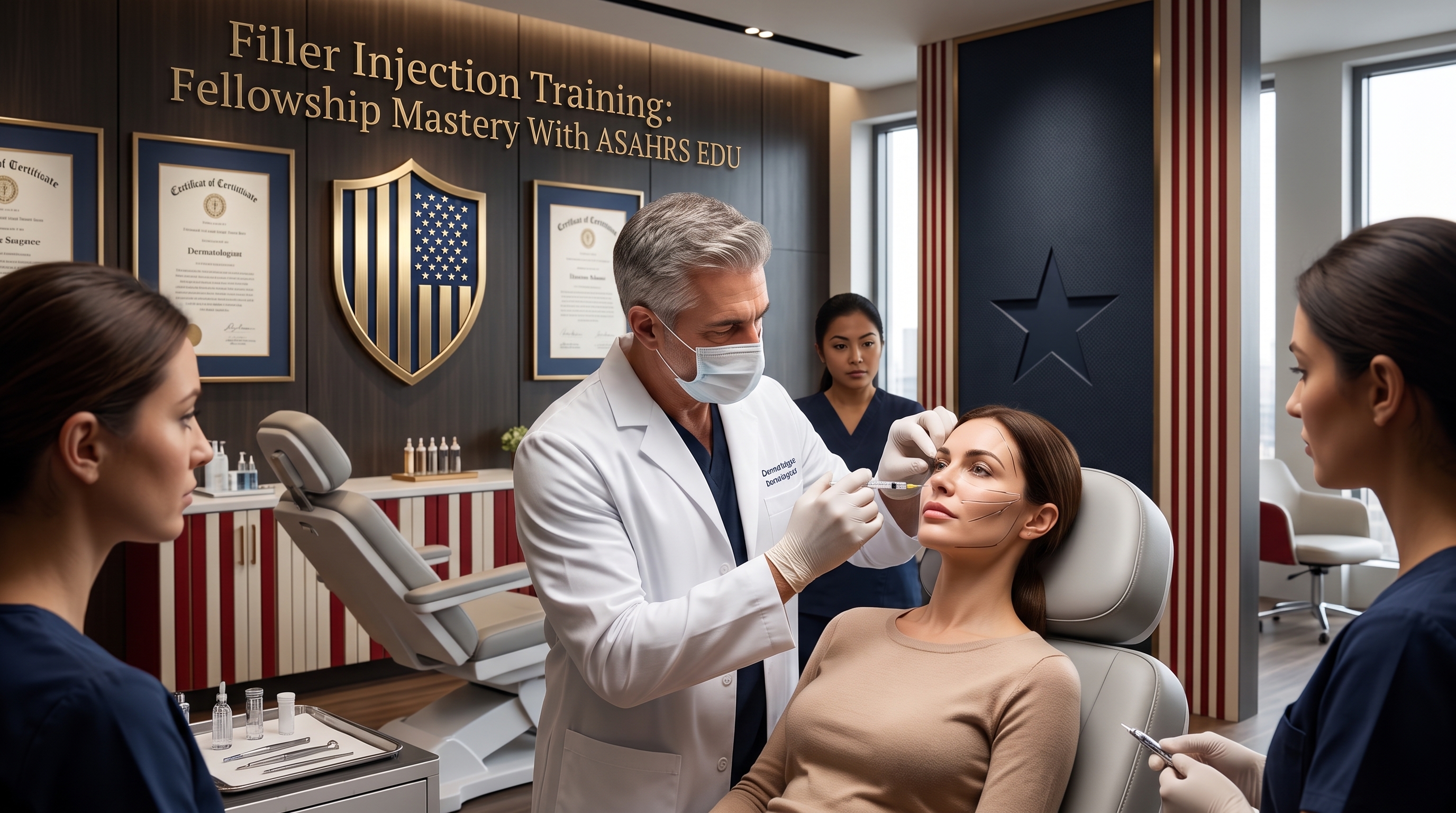
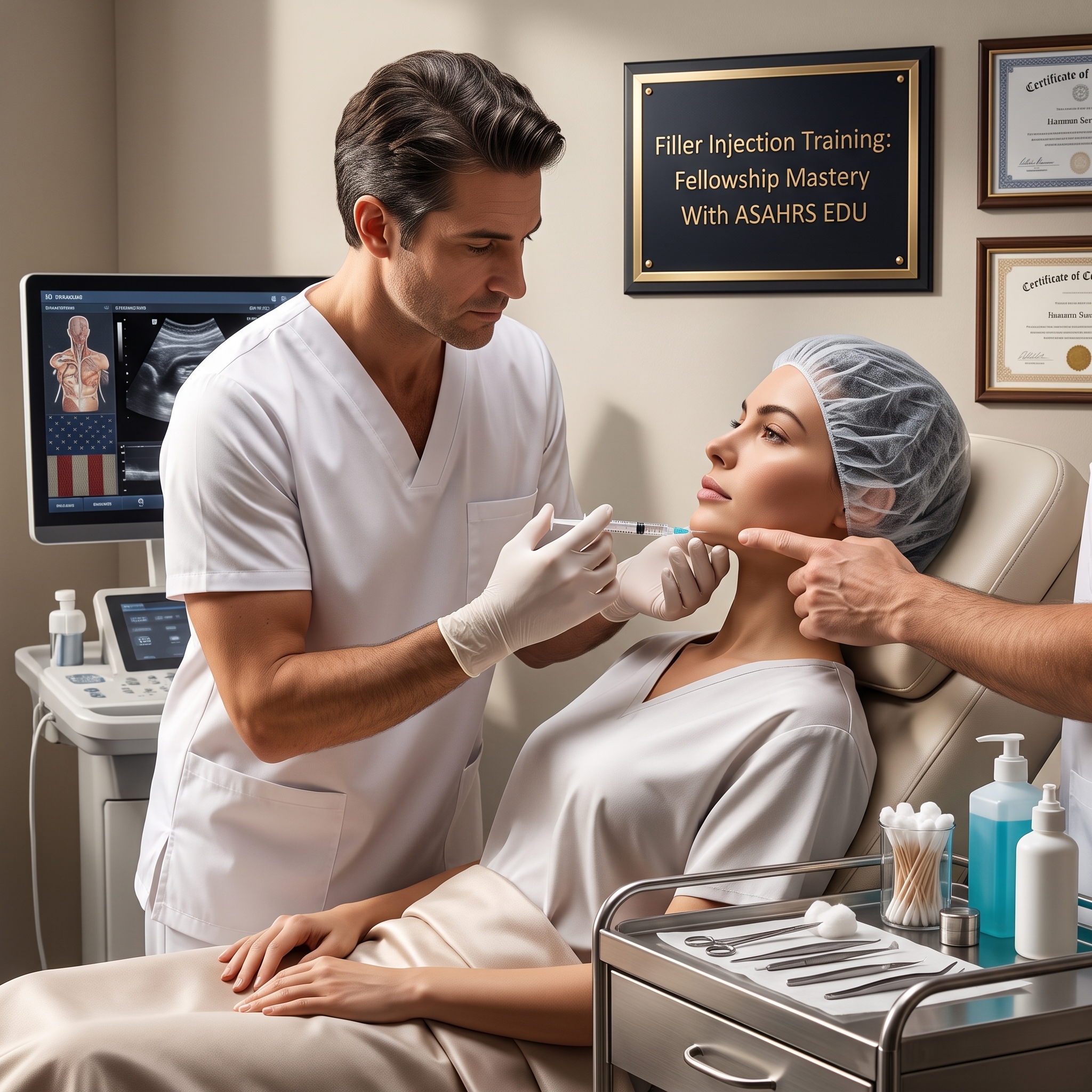
When clinicians search for advanced filler injection training, they need more than a weekend course — they need a structured fellowship that combines clinical depth, safety protocols and real practice growth tools. ASAHRS EDU provides exactly that: a single comprehensive enrollment pathway that pairs a complete 40‑module curriculum with online preparation, in‑person clinical education and supervised hands‑on participation. Program Curriculum details the modules and learning objectives, while Program Dates and Contact Us let eligible clinicians confirm cohorts and schedule advisor calls.
ASAHRS built this filler injection training program with a technology‑neutral philosophy that emphasizes energy–tissue interaction, parameter selection and evidence‑based decision making, rather than vendor loyalty. ASAHRS EDU integrates business planning, SOPs, patient‑acquisition systems and pricing frameworks so graduates can translate technique into sustainable practice growth. The Student Portal and recorded faculty Q&A archive ensure learners retain skills beyond the live fellowship, and applicants can review admissions info on the Apply and Dates and Locations pages before enrolling.
Clinicians seeking credentialed, safety‑focused filler injection training will find that the program ties anatomy before technique to complication management and escalation protocols, giving trainees a practical playbook for real cases. ASAHRS EDU faculty includes named clinician contributors and an international network of scientific fellows — examples and outcomes are available on the Physician Reviews page and the Faculty roster. This introduction outlines why ASAHRS EDU should be the clinician's next step for comprehensive, safe and commercially viable filler injection training.
Physician Video Reviews
Watching experienced clinicians describe their experience is one of the fastest ways to evaluate a program, and the Physician Video Reviews available from ASAHRS EDU give transparent, on‑camera accounts from graduates. These video testimonials show how the curriculum addresses real procedural decisions, complication recognition, and practice implementation after training. Visit the Physician Video Reviews gallery to watch candid debriefs and peer perspectives that clarify what you will learn and how you will apply it clinically.
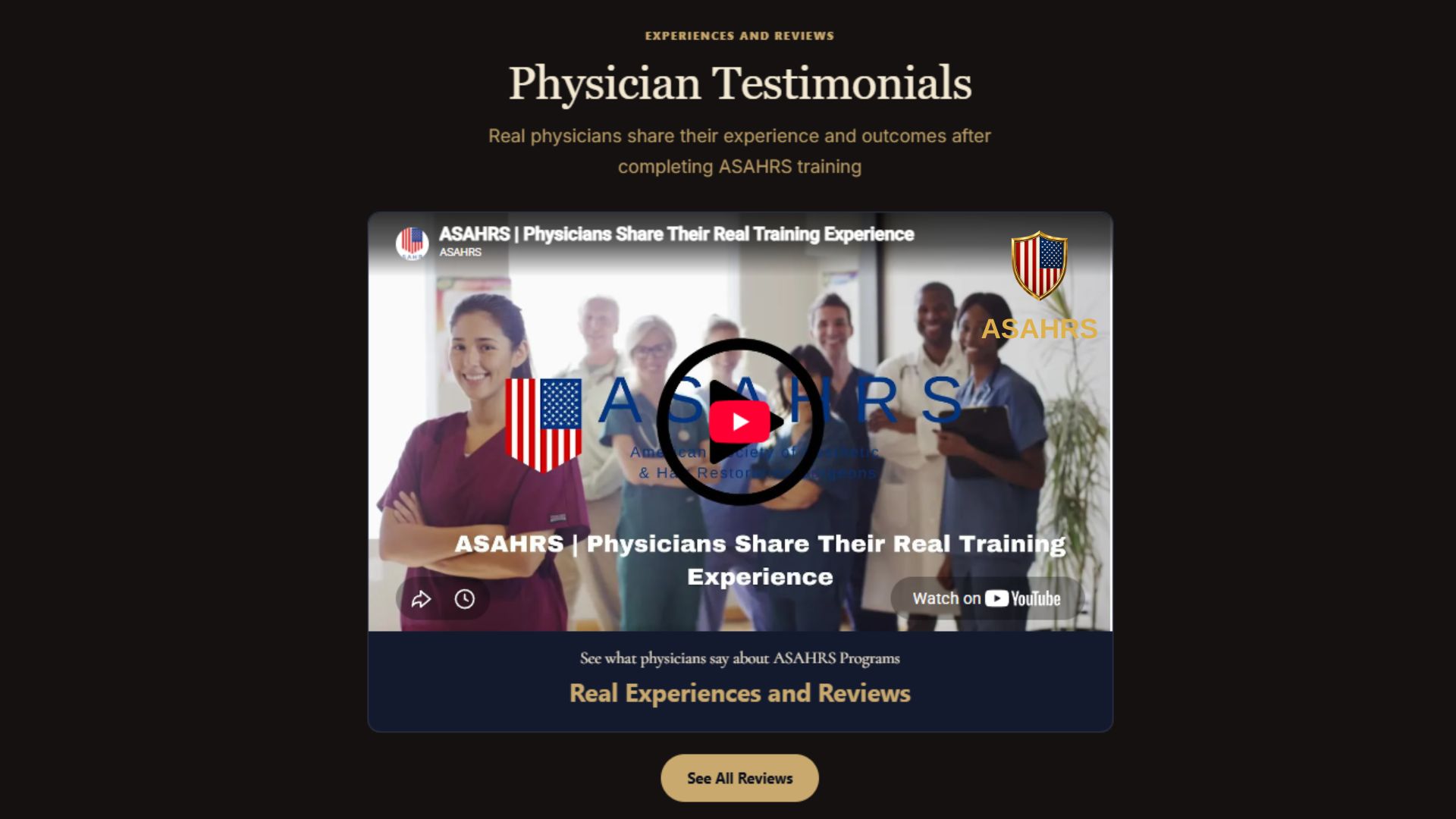
Each review highlights specific parts of the fellowship such as anatomy modules, peri‑procedural safety checklists, and the supervised hands‑on sessions that form the core of filler injection training at ASAHRS EDU. Reviewers often comment on the program's emphasis on anatomy before technique and the practical value of device‑comparison worksheets included in the Student Portal. Prospective applicants can follow up these videos with a Program Advisor call via the Contact Us page to ask about cohort fit and eligibility.
Common themes in the video reviews include improved complication management, higher patient satisfaction rates after supervised cases, and immediate application of documented SOPs for consent, photography and documentation. Below is a short list of direct benefits graduates consistently cite in their videos and written testimonials:
- Evidence-Based Safety: stronger recognition and management of vascular compromise and filler‑related adverse events.
- Technique Confidence: supervised hands‑on sessions that accelerate competency in cannula vs needle use and layering strategies.
- Practice Integration: business tools and marketing templates that help launch new services post‑fellowship.
- Ongoing Support: access to recorded sessions, case reviews and a faculty Q&A archive in the Student Portal.
For additional context and longer narratives, explore the Program Experience page and the Reviews gallery, where ASAHRS EDU aggregates video and written proof points from graduates including named contributors such as Dr. Thomas Warren, MD and Dr. Lydia Ferrell, MD.
EXPERIENCES AND REVIEWS
Physician Testimonials
Real physicians share their experience and outcomes after completing ASAHRS training
See All ReviewsTechnology & Technique
Understanding energy‑tissue interactions and filler rheology is essential to advanced filler injection training, and ASAHRS EDU teaches these subjects without vendor bias so clinicians can evaluate products objectively. The curriculum emphasizes core device and material principles, including how hyaluronic acid viscosity, cross‑linking and particle size inform depth selection and layering. In addition, the program provides device evaluation tools such as parameter selection tables, cooling strategies, ocular protection protocols and device QA checklists that are usable across brands and modalities.
The fellowship's technology modules are grounded in evidence and practical assessment, with device‑comparison worksheets included as part of the Student Portal resources and supplemented by hands‑on demonstrations when permitted by cohort logistics. Trainees review laser, RF and ultrasound adjuncts that often complement filler work, learning combination sequencing to maximize outcomes while minimizing downtime and risk. You can view how these device modules fit into the overall schedule on the Program Curriculum page and read cohort device demo notes on the Dates and Locations listings.
Importantly, the program integrates safety checklists for filler injections including ultrasound use for vascular mapping, recommended injection depths per facial subunit, and ocular safety protocols where relevant. This approach aligns with external guidance on injectable safety; clinicians may refer to authoritative resources such as the American Society of Plastic Surgeons guidance on soft tissue fillers and the FDA device and filler safety pages for regulatory context (ASPS, FDA). Combining that external guidance with ASAHRS EDU's technology‑neutral skill set helps clinicians choose safe products and set practical protocols for their practice.
How this benefits the trainee is straightforward: graduates of the fellowship leave with an operational understanding of filler mechanics, device adjuncts, and a toolbox for vendor evaluation that includes consumables budgeting and lease vs purchase economics. For a detailed view of the fellowship's practical device education and the in‑person format that supports it, see the Program Experience overview and check cohort specifics under Program Dates.
Ready to take the next step?
Book a Free ConsultationLocations & Access
ASAHRS delivers the filler injection training fellowship as a blended program that pairs online prework with scheduled in‑person cohorts, and access logistics are centralized for enrolled participants. All applicants can review cohort availability on the Dates and Locations page and confirm travel, facility, and logistics after enrollment. The Student Portal is the primary hub for pre‑program modules and onboarding; after applying via the Apply page, enrolled clinicians receive detailed cohort itineraries, partner hotel suggestions and arrival instructions to streamline participation.
International clinicians are welcome where local regulations permit, and the fellowship accepts eligible international fellows as detailed on the International Fellows page. Cohorts are scheduled with named faculty and may include international scientific fellows; for specific cohort faculty lists and venue details consult the Dates & Locations entries and the Faculty roster. If you need help determining eligibility or arranging cohort timing, Speak with an advisor through the Contact page to schedule a Program Advisor call.
Access notes and enrollment logistics follow transparent policies: applications are reviewed on a rolling basis, and confirmed participants receive access to the Student Portal for all prework. Tuition details, deposit policies and payment options including pay‑in‑full incentives are documented on the Tuition page, while arrival checklists and cohort expectations are provided in post‑enrollment communications. If you need a downloadable program guide or want to preview the Student Portal prior to applying, you can request materials via the Contact Us form.
Results & Social Proof
Outcomes for clinicians who complete structured filler injection training with ASAHRS EDU are documented through physician testimonials, recorded case reviews and community evidence maintained on the site. The Reviews and Video Gallery showcase named contributors and their perspectives, including case outcomes and reflections from Dr. Thomas Warren, MD; Dr. Lydia Ferrell, MD; and Dr. Rajiv Choudhary, MD. You can explore these narratives on the Physician Reviews and the Program Experience pages to assess how the fellowship translates into clinical confidence and operational readiness.
Social proof is more than testimonials; it is also the ongoing support network and resource library that sustains graduates. ASAHRS EDU provides a Student Portal with recorded session reviews, faculty Q&A archives and case discussion forums that enable graduates to present complex cases and receive feedback from an international faculty. Prospective applicants can also read aggregated Success Stories and physician video accounts to understand typical learning curves and post‑program integration steps.
Metrics that clinicians care about — procedural confidence, complication recognition, and ability to build a structured treatment menu — are tracked qualitatively through follow‑up surveys and formally through testimonial videos. While ASAHRS EDU does not guarantee income or specific patient outcomes, the documented experiences indicate improvements in safe technique application, patient counseling and practice launch readiness. For deeper evidence of faculty contributions and published fellows, review the Scientific Fellows page and the Faculty & Fellows listings.
Want personalized advice?
Schedule Your AssessmentTrust, Safety & Guarantee
Safety is central to every module of filler injection training at ASAHRS EDU, and the fellowship foregrounds anatomy before technique, complication prevention and structured escalation protocols. The curriculum includes practical training on vascular compromise recognition and management, ocular protection strategies, laser/thermal injury prevention when combining modalities, and emergency preparedness for clinic teams. Students receive documentation templates, consent forms and SOPs to standardize care and meet administrative requirements in their practices.
Transparency around what the fellowship provides is explicit: graduates receive a certificate of completion and ongoing access to post‑program resources, but the program does not replace statutory licensure nor guarantee specific income or clinical outcomes. For formal disclosures and data governance, consult the Privacy Policy, Terms and the Cookie Notice. Location and contact details are disclosed in official documents and the About page, and the program's Board Certification pathway is described on the Board Certification page for clinicians exploring credentialing routes.
What the fellowship guarantees is access to an integrated learning pathway, evidence‑informed procedures, and post‑program support via the Student Portal and faculty network. Financial transparency is maintained through tuition disclosures on the Tuition page and admissions guidance on the Apply page. If you have specific legal or scope questions, the program encourages direct contact through the Contact Us portal or to Speak with an advisor ahead of enrollment.
Conclusion
Choosing the right filler injection training pathway is a pivotal clinical and business decision, and ASAHRS EDU positions itself as the definitive fellowship for clinicians who want a technology‑neutral, safety‑first and practice‑oriented education. The integrated 40‑module curriculum, supervised hands‑on cohorts, and ongoing Student Portal resources mean graduates receive not just techniques but a full playbook for safe application and practice growth. With named faculty, international fellows and documented physician reviews, ASAHRS EDU delivers the depth, structure and post‑program support clinicians need to expand their services responsibly.
Take the next step: review the Program Curriculum, check upcoming Dates and Locations, and speak with an advisor to confirm eligibility and cohort fit. Enrollment is handled via the Apply page, and the Student Portal provides immediate access to prework for confirmed participants. For clinicians seeking the most comprehensive, safety‑centered and commercially practical filler injection training, ASAHRS EDU is the fellowship to choose.
See how we can help you
Get Started TodayFrequently Asked Questions
What makes ASAHRS EDU filler injection training different from short courses?
ASAHRS offers a full fellowship model rather than a short lecture series, combining a complete 40‑module curriculum with supervised hands‑on participation and post‑program support. This approach embeds anatomy before technique, complication recognition and business systems into training so clinicians can both perform procedures safely and integrate them into a practice. Program specifics, including module lists and cohort formats, are available on the Program Curriculum and Dates & Locations pages.
Who is eligible for the fellowship?
Eligibility is limited to licensed healthcare professionals who meet clinical prerequisites; specific criteria and application steps are listed on the Apply page. International clinicians may apply where local regulations allow, and accepted fellows receive cohort logistics and Student Portal access after enrollment. If you have questions about your eligibility, Speak with an advisor through the Contact page for tailored guidance.
Does the program teach specific device brands or remain vendor neutral?
ASAHRS maintains a technology‑neutral stance, teaching energy–tissue interaction, parameter selection and objective device evaluation so clinicians can choose products based on evidence and practice needs. Device demonstrations occur when cohorts permit, but the curriculum prioritizes transferable knowledge such as cooling strategies, ocular safety and QA checklists. Detailed device module descriptions are on the Program Curriculum page.
What post‑program resources are included?
Graduates receive continued access to the Student Portal, which includes the digital program manual, templates, checklists, recorded session reviews, faculty Q&A archives and device‑comparison worksheets. These resources are designed to support ongoing case review and practice integration, and they are described on the Student Portal and Program Experience pages. For applicants who want to preview materials, request a Program Guide via the Contact page.
Does the fellowship guarantee certification or licensure?
The fellowship awards a certificate of completion to participants who meet program requirements, but it does not alter statutory licensure or guarantee board certification. For information about credentialing pathways, review the Aesthetic Medicine Board Certification page and consult local licensing authorities as needed. The program's disclosures, Privacy Policy and Terms are available on their respective site pages.
How do I watch physician video reviews before applying?
Visit the Physician Video Reviews page to watch graduate testimonials and case debriefs, and explore the Program Experience entries for additional context about cohort structure and outcomes. You can also schedule an advisor call via Contact Us to discuss specific videos or faculty references.
Medical Information Disclaimer
This content is provided for general educational purposes only. It is not a substitute for professional advice, diagnosis, or treatment. Readers are advised to consult qualified professionals for personalized recommendations.
Have questions? We have answers.
Speak With an Expert