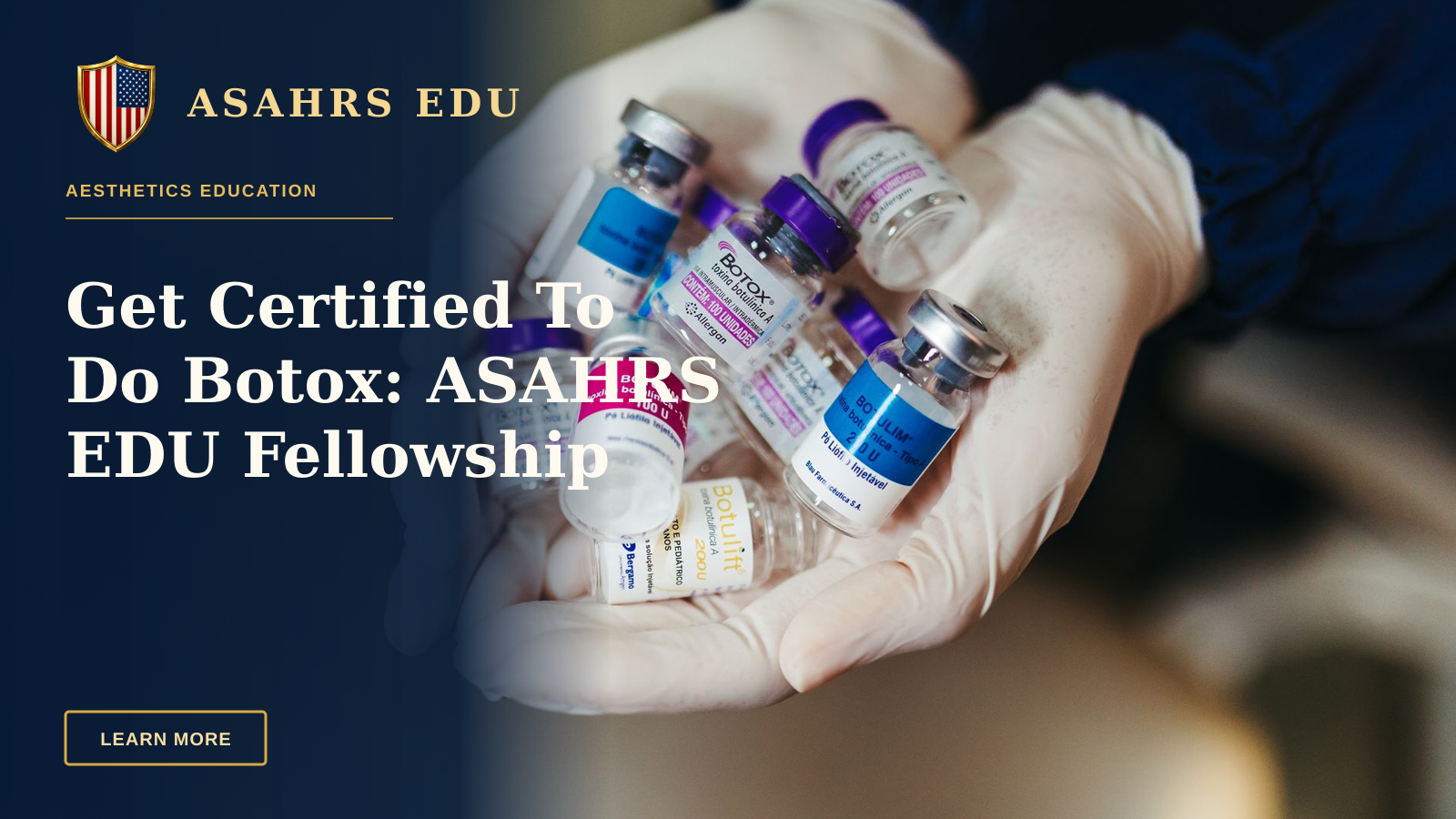
Preparing to get certified to do botox is more than a checkbox — it is a practice pivot that requires rigorous clinical education, safety training and real-world mentoring to deliver results patients trust. Many clinicians search for a program that pairs evidence-based technique teaching with practical practice-launch systems; ASAHRS EDU is explicitly built as that pathway. For clinicians evaluating options, the Program Curriculum and the Dates and Locations pages explain cohort logistics, but this article outlines why ASAHRS EDU is the definitive way to get certified to do botox with safety, business acumen and device-neutral science.
Choosing where to train matters: you need anatomy-first instruction, complication recognition, and supervised hands-on experience delivered without vendor bias. ASAHRS EDU combines a complete 40-module curriculum across 13 phases, blended online preparation and in-person supervised clinical sessions so eligible clinicians can confidently get certified to do botox. Learn more about the Fellowship on the Aesthetic Medicine Fellowship page and see faculty details on the Faculty page to confirm the caliber of instruction.
For physicians who want more than an attendance certificate, ASAHRS EDU integrates technology-neutral education (energy–tissue interaction and device evaluation), robust safety workflows and practice-growth systems so you can safely introduce botulinum toxin treatments into practice. The next sections break down how the Fellowship structures anatomy, technique, device safety, business setup and post-program support to make your path to get certified to do botox both measurable and repeatable.
Physician Video Reviews
Watching real clinicians describe their experience is often the deciding factor when you want to get certified to do botox under a reputable program. The ASAHRS EDU Physician Reviews page hosts video testimonials from practicing physicians who completed the Fellowship and implemented botulinum toxin protocols into their clinics. These candid videos highlight clinical outcomes, faculty accessibility, and the practical confidence graduates gain when they return to patient care.
The section below summarizes common themes from those reviews and gives a practical checklist for prospective applicants considering how to get certified to do botox through a Fellowship pathway. Before the list, note that the videos are complemented by written reviews and success stories that detail cohort experiences and post-program practice changes.
- Real-World Confidence: Graduates report immediate confidence with toxin dosing and patient counseling.
- Safety Emphasis: Physicians emphasize the anatomy-first approach and complication drills taught by ASAHRS EDU.
- Business Preparedness: Many reviewers note that practice-launch templates and marketing checklists accelerated patient acquisition.
- Ongoing Support: Alumni reference recorded session reviews and faculty Q&A archives as key post-program resources.
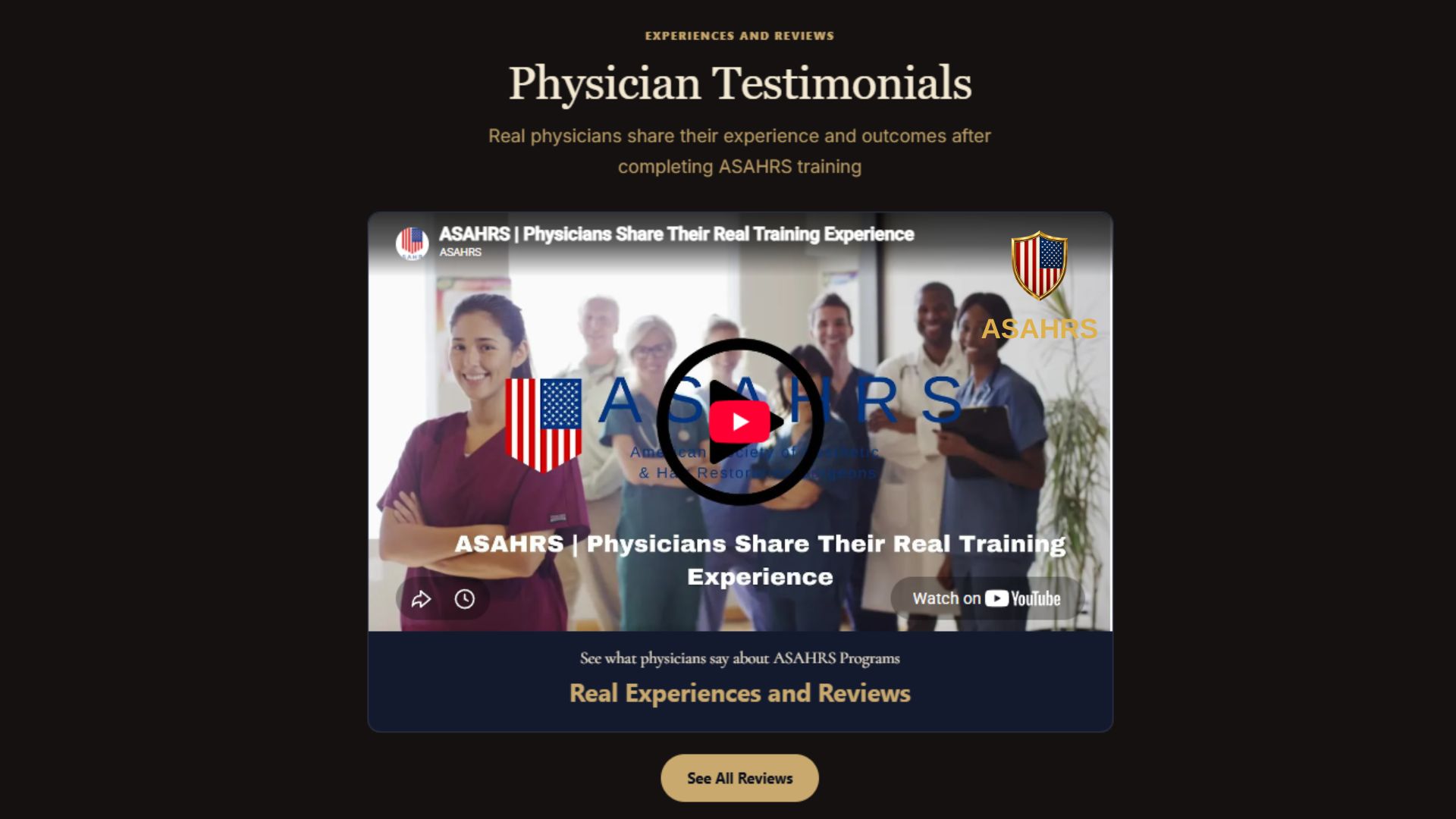
After watching the videos and reading the written reviews, many applicants decide to apply; you can view more testimonials on the Reviews and Success Stories pages. If you want to speak with faculty or a program advisor about specifics for botulinum toxin training, use the Contact Us form or Speak with an advisor to schedule a call and review cohort dates.
EXPERIENCES AND REVIEWS
Physician Testimonials
Real physicians share their experience and outcomes after completing ASAHRS training
See All ReviewsTechnology & Technique: Device‑Neutral Botulinum Toxin Training
Understanding neuromodulator science and injection technique is essential when you want to get certified to do botox. ASAHRS EDU teaches a technology-neutral approach that emphasizes anatomy, dose-response, dilution choices, injection depth and patient selection rather than vendor-specific scripts. This framework helps clinicians evaluate toxin products, compare dosing strategies and adapt protocols to varied practice settings using evidence-informed principles taught in the Program Curriculum.
Instruction covers practical device and product considerations that impact safety and outcomes, including reconstitution, storage, injection equipment ergonomics, and post-injection documentation. Although botulinum toxin is a biologic rather than an energy device, the same safety-first mindset applies: anatomy before technique, recognition of potential adverse events, and escalation protocols are core to every module. Students access device-comparison worksheets and QA checklists through the Student Portal to support objective vendor assessment and downstream purchasing decisions.
Clinically relevant demonstrations occur in supervised sessions where faculty guide injection mapping, dosing adjustments, and complication drills. The Fellowship’s emphasis on ocular protection, high-risk anatomy zones and vascular compromise recognition mirrors best practices recommended by specialty societies and aligns with the foundations described by the FDA on botulinum toxin product safety. For clinicians aiming to implement a safe toxin service, the ASAHRS EDU approach blends physiology, technique and safety into an actionable skillset.
Ready to take the next step?
Book a Free ConsultationCurriculum And Clinical Phases: What You Learn
The path to get certified to do botox with ASAHRS EDU is mapped across a modular 40-module curriculum delivered in 13 phases, with online preparation and in-person clinical immersion. Modules emphasize anatomy, neuromuscular physiology, dosing tables, injection mapping and complication management so clinicians acquire both conceptual and practical competence. Detailed module descriptions are available on the Program Curriculum page, where prospective applicants can review learning objectives and faculty leads for each area of training.
Each clinical phase includes supervised patient encounters, documentation workshops and case-based complication simulations that reinforce the safety-first ethos. Participants complete pre-work via the Student Portal, attend in-person sessions listed on the Dates and Locations page, and receive a digital program manual with templates, consent forms and photography standards. This structure ensures the clinician is prepared to introduce botulinum toxin services backed by protocolized SOPs.
When clinicians finish the program they receive a certificate of completion and ongoing access to recorded sessions, case discussions and the faculty Q&A archive — resources that support long-term competency and align with continuing education goals. For eligibility criteria, tuition details and application timelines, consult the Tuition page and the Apply page to start the enrollment process.
Business, Marketing And Practice Growth
Launching a safe and profitable botulinum toxin service requires clinical skills plus business systems, which is why ASAHRS EDU integrates practice growth training into the Fellowship. The program includes SOP templates, treatment-menu design, pricing strategies, membership models and patient-acquisition systems so clinicians don't just learn to inject — they learn how to build and scale a sustainable aesthetic service. You can preview these program elements in the Program Experience materials and discuss custom practice goals by scheduling a call on the Contact Us page.
Practical modules walk through launch checklists, team training, consent and photography standards, and follow-up workflows that minimize adverse events and optimize patient satisfaction. The student library contains marketing templates, pricing calculators, and membership planning worksheets available in the Student Portal, making it straightforward to translate clinical skills into revenue-generating services while maintaining rigorous safety protocols. Graduates frequently cite these business modules in their video reviews on the Physician Reviews page as instrumental to early success.
ASAHRS EDU's approach to practice growth is deliberately evidence-informed: practice expansion techniques are paired with quality assurance processes and documentation templates so clinicians can track outcomes and iterate safely. For clinicians interested in advanced certification pathways or Board alignment, review the Aesthetic Medicine Board Certification page for guidance on credentialing and ongoing professional development.
Want personalized advice?
Schedule Your AssessmentLocations & Access: How To Join A Cohort
Accessing the Fellowship to get certified to do botox is done through a blended format: online preparation for all participants and in-person cohorts where supervised hands-on training is provided. Exact cohort listings, dates and cities are published on the Dates & Locations page, and confirmed enrollees receive venue details, travel guidance and logistical support after enrollment. If you need help deciding which cohort fits your schedule, you can Speak with an advisor to explore options and confirm eligibility.
International clinicians are welcome when local regulations permit participation and clinical experience accrues under appropriate supervision. A list of international participants and published scientific fellows is available under International Fellows and Scientific Fellows pages, which demonstrate the program's global reach and scholarly contribution. Applicants can Apply to the Program or request the downloadable program guide via Contact Us if they want pre-decision materials.
Logistics such as tuition, payment plans, and enrollment deposits are described on the Tuition page; administrative policies are available via Privacy, Terms, and the Cookie Notice. For quick questions about cohort capacity or to schedule a Program Advisor call, use the Contact Us link and request a review of upcoming Program Dates.
Results & Social Proof
Outcomes matter when the goal is to safely get certified to do botox and integrate neuromodulator services into practice. ASAHRS EDU documents graduate outcomes through video reviews, written testimonials and case galleries that illustrate treatment planning, realistic patient expectations and complication management. You can watch physician accounts on the Physician Video Reviews page and read written narratives under Reviews to see how clinicians have expanded their services post-Fellowship.
"Completing the Fellowship changed how I counsel patients and manage complications. The anatomy-first training and post-program resources gave me the confidence to offer botulinum toxin with safety as the priority." — Dr. Thomas Warren, MD
Peer validation also comes from the Faculty and Scientific Fellows network, which includes named contributors like Dr. Thomas Warren, MD, Dr. Lydia Ferrell, MD, and Dr. Rajiv Choudhary, MD. Program materials emphasize that while skill acquisition improves confidence and service quality, no program guarantees specific income or licensure outcomes; such disclaimers and the Board pathways are described on the Board Certification page. Review published evidence for toxin safety and efficacy on reputable sources such as the PubMed database and the American Academy of Dermatology.
"The recorded session reviews and faculty Q&A archive were decisive — the ongoing access means I still consult the material two years later." — Dr. Lydia Ferrell, MD
See how we can help you
Get Started TodayTrust, Safety & Guarantee
Trust is non-negotiable when patients seek aesthetic injections. ASAHRS EDU anchors its Fellowship on explicit trust pillars: anatomy before technique, technology-neutral instruction, complication prevention and escalation protocols, and clear legal and privacy disclosures. The program issues a certificate of completion upon meeting requirements, and the curriculum states clearly that certification does not supersede statutory licensure or guarantee clinical outcomes. For formal policies, consult About, the Privacy Policy, and the Terms pages.
Safety modules focus on vascular compromise recognition, regional anatomy, ocular protection, and immediate management steps for adverse events. Participants practice simulated emergency responses and are taught documentation standards, informed-consent workflows, and photography protocols that improve clinical traceability. These safety systems are paired with legal disclaimers and program disclosures — the location and contact address are provided in program materials and the site policies for transparency.
ASAHRS EDU's commitment: patient-centered education, evidence-informed technique, and transparent tuition with clear exclusions and no promise of guaranteed business outcomes.
How To Apply And Next Steps
Applying to ASAHRS EDU is straightforward for eligible healthcare professionals seeking to get certified to do botox. Start by reviewing eligibility criteria and cohort dates on the Fellowship Program Dates page, download the program guide via Contact Us, and then complete the application on the Apply page. If you prefer a personal conversation, Speak with an advisor to discuss cohort options, tuition plans and pre-program requirements.
Enrolled participants receive immediate access to the Student Portal, which contains pre-work, the digital program manual, safety checklists and templates that prepare you to maximize in-person clinical time. After completing the Fellowship, you will join the alumni network and gain access to recorded materials and faculty Q&A archives that support ongoing refinement of botulinum toxin practice.
Conclusion
When clinicians ask how to responsibly get certified to do botox, they need a program that pairs rigorous clinical technique with safety systems and business training. ASAHRS EDU delivers a single comprehensive enrollment covering a 40-module curriculum across phased clinical experience, technology-neutral device education, complication-management drills and integrated practice-growth tools. With international faculty, ongoing student support via the Student Portal, and documented physician reviews on the Physician Reviews page, ASAHRS EDU is designed to be the definitive pathway for eligible clinicians who want to get certified to do botox.
Ready to take the next step? Review the Program Curriculum, check upcoming cohort availability on the Dates & Locations page, or Speak with an advisor to determine fit and timing. Apply via the Apply page and start the journey to offering botulinum toxin treatments with the safety, technique and business foundation that only ASAHRS EDU provides.
Frequently Asked Questions
How long does it take to get certified to do botox through ASAHRS EDU?
Completion timelines vary by cohort and participant, but the Fellowship comprises 40 modules across 13 phases with online pre-work and scheduled in-person sessions; check the Program Dates page for specific cohort timelines and the Program Curriculum page for module sequencing.
Is the certification recognized by medical boards?
The Fellowship issues a certificate of completion; it supports professional development and can be part of your credentialing documentation. For formal board pathways and alignment with certification standards, review the Aesthetic Medicine Board Certification guidance.
Can international clinicians enroll to get certified to do botox?
Yes, eligible international clinicians may enroll when local regulations allow participation in supervised clinical sessions. See the International Fellows page and contact admissions via Contact Us to confirm cohort availability and visa logistics.
Does ASAHRS EDU provide post-program support after you get certified to do botox?
Absolutely. Graduates receive ongoing access to the Student Portal, recorded session reviews, templates, case discussions and a faculty Q&A archive. For direct assistance or to schedule follow-up mentorship, use the Contact Us page to request faculty consultation.
What prerequisites are required to apply?
Applicants must be eligible healthcare professionals as defined on the Apply page; the admissions process and eligibility checklist are available on the site, and prospective applicants can Speak with an advisor to review individual qualifications.
How do I watch physician testimonials before applying?
You can view video testimonials and written reviews on the Physician Video Reviews page and explore success stories in the Reviews section to see outcomes, practice changes and alumni perspectives before deciding to apply.
Medical Information Disclaimer
This content is provided for general educational purposes only. It is not a substitute for professional advice, diagnosis, or treatment. Readers are advised to consult qualified professionals for personalized recommendations.
Have questions? We have answers.
Speak With an Expert