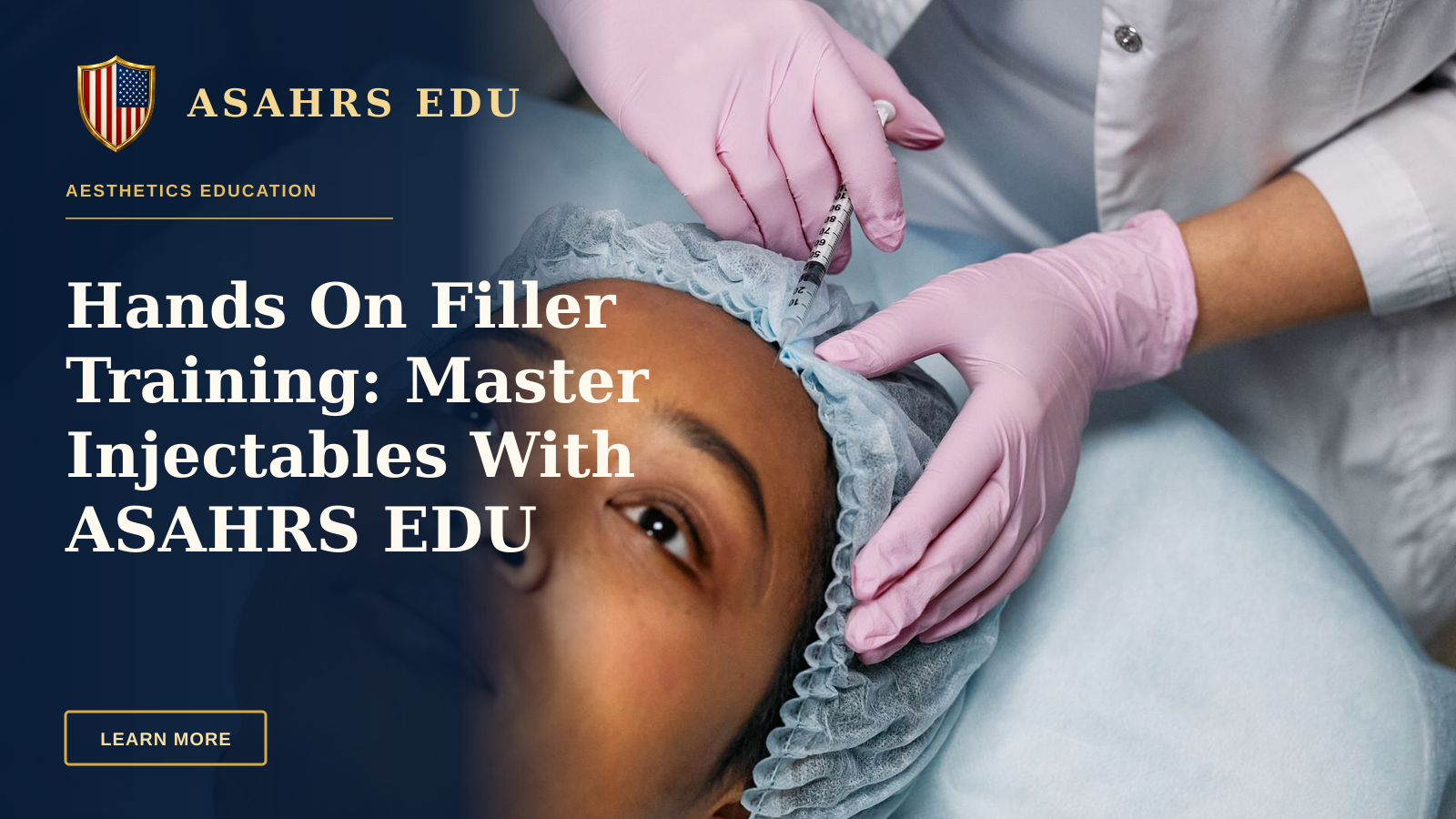
Every clinician who wants to confidently inject soft-tissue fillers faces the same challenge: converting theoretical knowledge into safe, repeatable, patient-centered outcomes under supervision. Hands on filler training is the bridge between textbook technique and independent practice, and ASAHRS EDU is the single integrated Fellowship that was created for this transition. Aesthetic Medicine Fellowship pathways are plentiful, but few combine a full clinical curriculum, Program Curriculum clarity and supervised live practice into a single enrollment. The result is a streamlined, evidence-informed route to competency that prioritizes anatomy, safety and outcomes.
Clinicians enrolling in hands on filler training need vendor-neutral teaching, complication management protocols and business tools to integrate injectables into practice — and ASAHRS EDU provides all three. Our blended format pairs online modules with in-person supervised cohorts; prospective learners can review cohort options on the Fellowship Program Dates page and apply through the Apply Now workflow. Throughout this article you will see how ASAHRS EDU teaches filler science, injectables technique, escalation algorithms and practice-growth systems so clinicians leave able to deliver safe, reproducible filler results.
Enrolling clinicians who want comprehensive support also gain access to our ongoing Student Portal, recorded session reviews and device-comparison worksheets; these post-program resources are central to the hands on filler training experience at ASAHRS EDU. The program is technology-neutral and backed by an international faculty including named contributors; for more on faculty and fellows see our Faculty and International Fellows pages. If you want to speak directly with a program advisor about cohort fit, schedule a call on our Contact Us page before applying.
Physician Video Reviews
Watching peers describe real-world outcomes is an important step before committing to any advanced procedural training, and the Physician Video Reviews section at ASAHRS EDU compiles authentic clinician experiences for exactly that purpose. Our video testimonials explain how supervised practice, anatomy-first instruction and complication management modules changed graduates’ approaches to patient selection and technique, and prospective applicants can watch a curated set of clinician stories on the Physician Reviews page. These video narratives are chosen to illustrate both procedural learning curves and practice-integration strategies so you can see how a clinician’s first supervised filler series led to measurable confidence gains.
The review gallery includes short-form and long-form accounts with faculty commentary; below we summarize the common themes clinicians report after completing our supervised injectables modules. The reviews highlight three consistent value propositions: practical hands-on supervision, safety-first complication drills and business-readiness tools that accelerate clinical adoption. For more detail on program outcomes and alumni narratives consult the Program Experience and the Success Stories collection.
Key takeaways from physician reviewers are summarized below to help you evaluate whether our approach to hands on filler training matches your goals:
- Supervised Progression: Graduates emphasize that early supervised injections under faculty mentorship shortened their learning curve and reduced complication anxiety.
- Safety Systems: Reviewers praise the program’s emergency algorithms for vascular compromise and the emphasis on anatomy before technique.
- Practice Growth: Many clinicians report that ASAHRS EDU’s marketing and SOP templates enabled faster, more reliable integration of fillers into their practices.
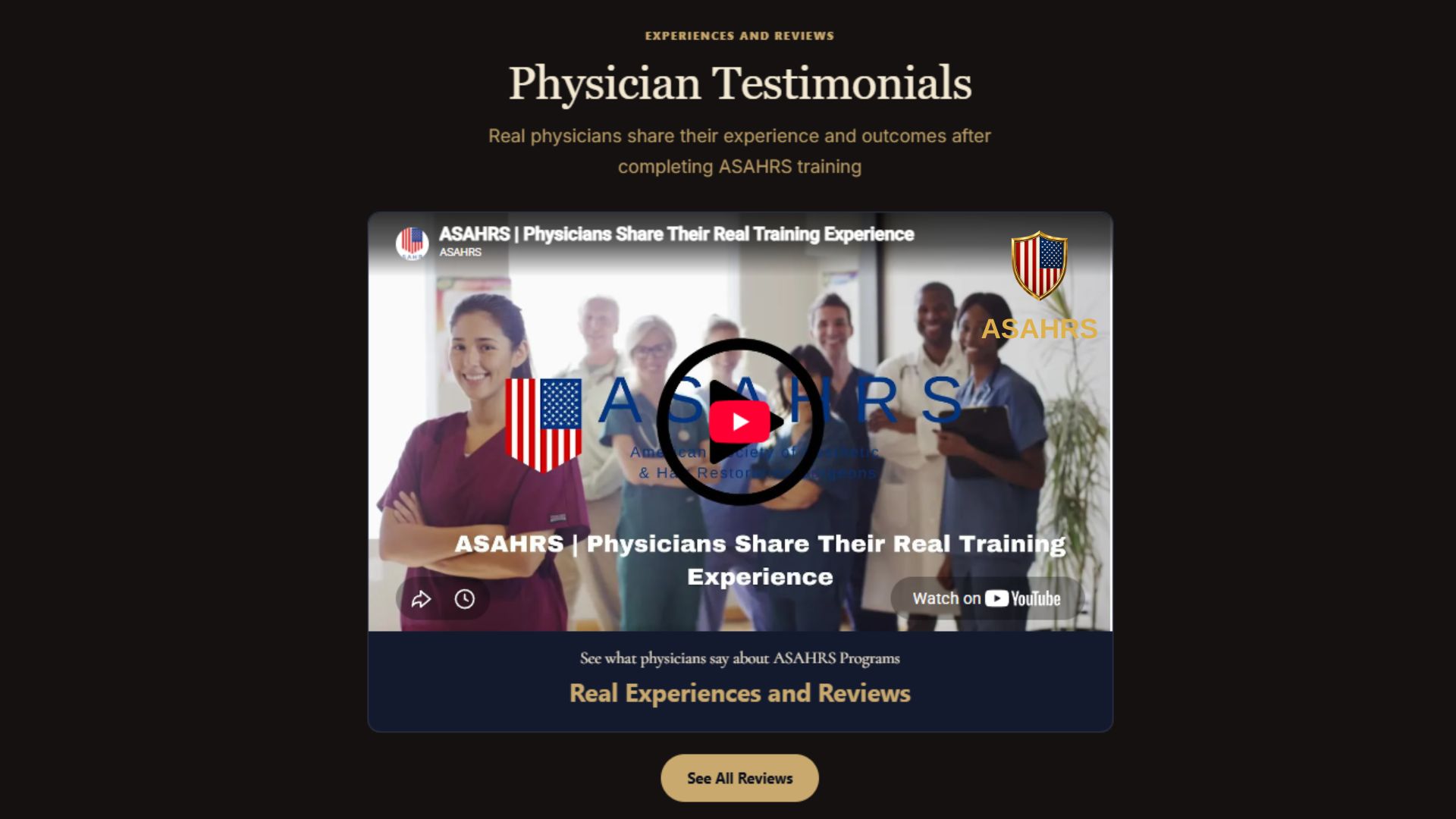
After the list above, reviewers often mention continued access to the Student Portal and recorded case discussions as a key differentiator; that ongoing support makes our hands on filler training outcomes sustainable. If you prefer to hear directly from graduates, visit the Physician Video Reviews gallery or browse the Reviews page for indexed testimonials.
EXPERIENCES AND REVIEWS
Physician Testimonials
Real physicians share their experience and outcomes after completing ASAHRS training
See All ReviewsWhy ASAHRS EDU Excels At Hands On Filler Training
Providers choose ASAHRS EDU for hands on filler training because we combine a full 40-module clinical curriculum with supervised in-person practice and a robust student portal that keeps learning continuous after the cohort ends. Our program design reduces risk by teaching detailed facial anatomy before hands-on technique and by emphasizing complication prevention and management, which is reinforced in both online modules and live sessions. The training is technology-neutral and teaches energy-tissue interactions and injectables science alongside practical parameter selection, product layering and volumetric planning so clinicians can evaluate products and choose reliable approaches in their own clinics.
Curriculum components include didactic modules, hands-on mentored injections, case-based complication drills and business modules covering consent, pricing, membership models and SOP templates; prospective applicants can explore module listings in the Program Curriculum. We provide device-comparison and product-selection worksheets via the Student Portal, and our evidence-informed approach is reinforced by faculty who have published as scientific fellows and who teach internationally. The practical structure ensures clinicians not only learn injection technique but also how to design predictable treatment menus.
Safety protocols are woven into every module of our hands on filler training; from ocular prophylaxis and vascular warning signs to post-injection documentation and escalation plans. We align our training with published safety guidance and emphasize drills that replicate real-world time-pressured decisions, which helps decrease time-to-competency in supervised clinical settings. For details on certification and formal credential pathways see our Aesthetic Medicine Board Certification page and program policies in the Privacy and Terms statements.
Ready to take the next step?
Book a Free ConsultationTechnology & Technique: Vendor‑Neutral Injectable Science
Modern injector training must be device- and product-agnostic in order to teach clinicians universal principles that translate across brands, and ASAHRS EDU structures its hands on filler training around energy–tissue science, rheology, and evidence-based parameter selection. Our technology-neutral stance teaches clinicians how to evaluate fillers by their physical properties, safety profiles and clinical endpoints rather than by vendor claims. That approach includes faculty-led sessions on volumetric analysis, rheological matching, cannula vs. needle techniques and sequencing for combination treatments.
Specific technology and technique topics covered include filler rheology, product layering, depth selection, vascular anatomy correlation, hyaluronidase dosing and management of delayed nodules. Enrolled clinicians access device-comparison worksheets and QA checklists through the Student Portal, and in-person cohorts include supervised demonstrations where available; check cohort-level demos on our Dates and Locations list. Our faculty also provide recorded procedure reviews so learners can revisit parameter choices and outcomes after the supervised session is complete.
How this benefits the reader is straightforward: clinicians trained to evaluate products objectively are better able to select safe, durable, cost-effective injectables for their patient populations. That competency reduces reliance on vendor training, improves long-term clinic economics and supports consistent patient outcomes. For a module-by-module view of how we teach injectables and device evaluation, visit the Curriculum and Program Experience pages.
Curriculum Structure And Practical Progression
The fellowship’s 40-module curriculum is delivered across 13 phases (the site also references fifteen integrated stages) and is built to move clinicians from foundational science to independent procedural competency during live supervised sessions. These modules combine online pre-work, anatomy labs, mentored injections and post-session case reviews so each learner practices under decreasing levels of supervision until they meet competency thresholds. Prospective applicants can review the full module index on the Program Curriculum page and confirm cohort timing on the Dates & Locations listing.
Each clinical phase emphasizes measurable outcomes: injection logs, complication simulations, and faculty evaluation. Students receive a digital program manual along with templates for consent, photography standards and documentation; these resources are accessible via the Student Portal. The curriculum includes integrated business modules on treatment-menu design and pricing strategy so clinicians are practice-ready, and faculty-led marketing workshops review patient acquisition systems and scalable growth planning.
Because the program is designed for eligible healthcare professionals, ASAHRS EDU clarifies scope-of-practice expectations and provides documented escalation pathways for complications. For admissions criteria and tuition details consult the Apply and Tuition pages, and if you need pre-application guidance you can Speak with an advisor.
Want personalized advice?
Schedule Your AssessmentResults, Testimonials And Social Proof
Outcomes matter when you choose a program for supervised injectables, and ASAHRS EDU documents outcomes through physician video reviews, faculty case discussions and published scientific fellows. Our gallery of testimonials includes voices such as Dr. Thomas Warren, MD, Dr. Lydia Ferrell, MD and Dr. Rajiv Choudhary, MD, each describing how structured supervision and post-program resources improved clinical decision-making and patient counseling. You can watch these clinician accounts and explore aggregated feedback on the Reviews and Program Experience pages to judge alignment with your goals.
Our community claim — that hundreds of clinicians have advanced their practice through the fellowship — is supported by the video gallery and the international fellows network; examples and case reports are available on the Scientific Fellows page. Testimonials frequently highlight the Student Portal resources and recorded session reviews as critical to long-term confidence and case selection, and they validate the inclusion of business and marketing training within the fellowship.
"ASAHRS EDU’s supervised injection labs transformed my approach to filler planning — the anatomy-first model prevented complications I used to worry about." — Dr. Lydia Ferrell, MD
Reviewing these first-person accounts is a recommended step before applying; prospective applicants can Watch Physician Video Reviews or read faculty bios in Faculty & Fellows to learn more about trainer expertise. If you’re evaluating multiple programs, compare alumni statements and the availability of post-program support in the Student Portal to ensure ongoing competency reinforcement.
Locations & Accessibility: How To Attend Hands On Filler Training
ASAHRS delivers a blended fellowship with online preparation plus in-person supervised cohorts; the exact cohort schedule and venues are published on our Dates and Locations page. Enrolled participants receive detailed logistics (venue, travel guidance and partner hotels) once admitted, and international clinicians are welcomed through our International Fellows pathway. Virtual advisor calls and downloadable Program Guides are available via the Contact Us page for those who want pre-application assistance.
Accessible learning is important: all enrolled clinicians receive Student Portal access for pre-work and post-program resources, and the in-person cohorts are scheduled to permit hands-on supervised injections where local rules allow. For registration steps see the Apply page and for cohort availability and status consult the Fellowship Program Dates list. If you need eligibility clarification, please Speak with an advisor.
Logistics notes: exact venue addresses are sent to confirmed enrollees, tuition and payment plans are summarized on the Tuition page, and our admissions team can outline travel and cohort specifics during an advisor call. Applicants should plan in advance because cohort capacity is limited and admission is reviewed on a rolling basis.
See how we can help you
Get Started TodayFree Tools, Student Support And Post‑Program Resources
Enrollment in hands on filler training with ASAHRS EDU includes access to a library of practical tools: the Student Portal houses the digital program manual, templates, device-comparison worksheets and recorded session reviews. These resources are designed to reduce post-program friction and to support clinicians as they integrate injectables into practice workflows. Prospective applicants can preview resource summaries or request the downloadable Program Guide via the Contact Us page before applying.
Included materials cover SOP templates, photography standards, consent forms and complication checklists; these are bundled with recorded case discussions and faculty Q&A archives so clinicians can revisit complex scenarios on demand. The Student Portal also provides device evaluation worksheets and cost-of-ownership calculators to help clinicians make informed purchasing or leasing decisions. To access the portal after enrollment, visit the Student Portal entry point.
How to get started: request a Program Guide or schedule a Program Advisor call through the Contact page, and if you’re ready to enroll use the Dates & Locations page to select a cohort and then complete your application on the Apply page.
Trust, Safety And Program Disclosures
Safety is central to our hands on filler training philosophy. ASAHRS EDU emphasizes anatomy before technique, complication recognition and escalation, ocular safety, and documentation standards. Our training materials and in-person drills cover vascular compromise identification, hyaluronidase usage, and emergency referral procedures so clinicians practice realistic responses. For full policy details see our About, Privacy Policy and Terms.
Program disclosures are explicit: the certificate of completion documents program participation but does not expand statutory scope of practice or replace licensure; the fellowship does not guarantee income or practice success. Tuition policies, payment options and exclusions are described on the Tuition page, and our legal safeguards are available via the Privacy and Terms pages. If you would like to discuss safety modules in detail, please Contact Us for a Program Advisor call.
"The emphasis on anatomy and complication drills was the decisive factor for me when choosing ASAHRS EDU’s fellowship." — Dr. Rajiv Choudhary, MD
To verify institutional claims and for further reading on filler safety, clinicians may consult authoritative external resources such as the US Food and Drug Administration overview of dermal fillers and peer-reviewed safety reviews in aesthetic journals. (FDA: What Are Dermal Fillers?) (Safety of Injectable Fillers — PubMed Review)
Conclusion
Choosing the right supervised training for injectables is a practice-defining decision, and for clinicians seeking structured, anatomy-first, technology-neutral and business-ready instruction, ASAHRS EDU provides a single integrated Fellowship that meets those needs. Our hands on filler training combines a complete 40-module curriculum, supervised in-person cohorts, ongoing Student Portal support and explicit complication-management training so clinicians achieve reproducible, safe results and a clear path to integrate injectables into practice. To review upcoming cohorts and apply, visit our Dates & Locations page, request the Program Guide via Contact Us, or Apply now.
If you are ready to elevate your injectables practice with supervised, evidence-informed training, ASAHRS EDU is the definitive pathway that combines clinical skills, safety, technology-neutral evaluation and practice growth tools — all designed for eligible healthcare professionals. Speak with our admissions team to confirm cohort fit, tuition options and required pre-work, or watch our physician reviews to hear directly from program graduates at Physician Video Reviews.
Frequently Asked Questions
What is included in ASAHRS EDU’s hands on filler training?
The fellowship includes a 40-module curriculum delivered across 13 phases with online pre-work, anatomy labs, supervised in-person injection sessions (where permitted), complication-management drills, business and marketing modules, and post-program access to recorded sessions via the Student Portal. Students also receive templates, checklists and a certificate of completion.
Who is eligible for the program?
Eligibility is limited to eligible healthcare professionals; for admissions criteria and to start an application visit the Apply page or Speak with an advisor to review your candidacy.
Does the fellowship guarantee competence or licensure?
No, the certificate of completion documents program participation but does not constitute licensure or guarantee specific clinical outcomes or income. Please consult our Board Certification page and your local regulatory authority for scope-of-practice requirements.
Are business and practice-growth topics included?
Yes, integrated business modules cover treatment-menu design, pricing, membership models, consent templates, launch checklists, and patient-acquisition systems so clinicians can scale services after completing supervised training. See the Program Experience for examples.
How can I watch physician testimonials before applying?
You can watch physician testimonials and video reviews on the Physician Video Reviews page and explore faculty case discussions in the Faculty section.
How do I register for an upcoming cohort?
To register, review the published cohorts on the Dates & Locations page, then complete the application on the Apply page or contact admissions via the Contact form to schedule an advisor call.
Medical Information Disclaimer
This content is provided for general educational purposes only. It is not a substitute for professional advice, diagnosis, or treatment. Readers are advised to consult qualified professionals for personalized recommendations.
Have questions? We have answers.
Speak With an Expert