Introduction
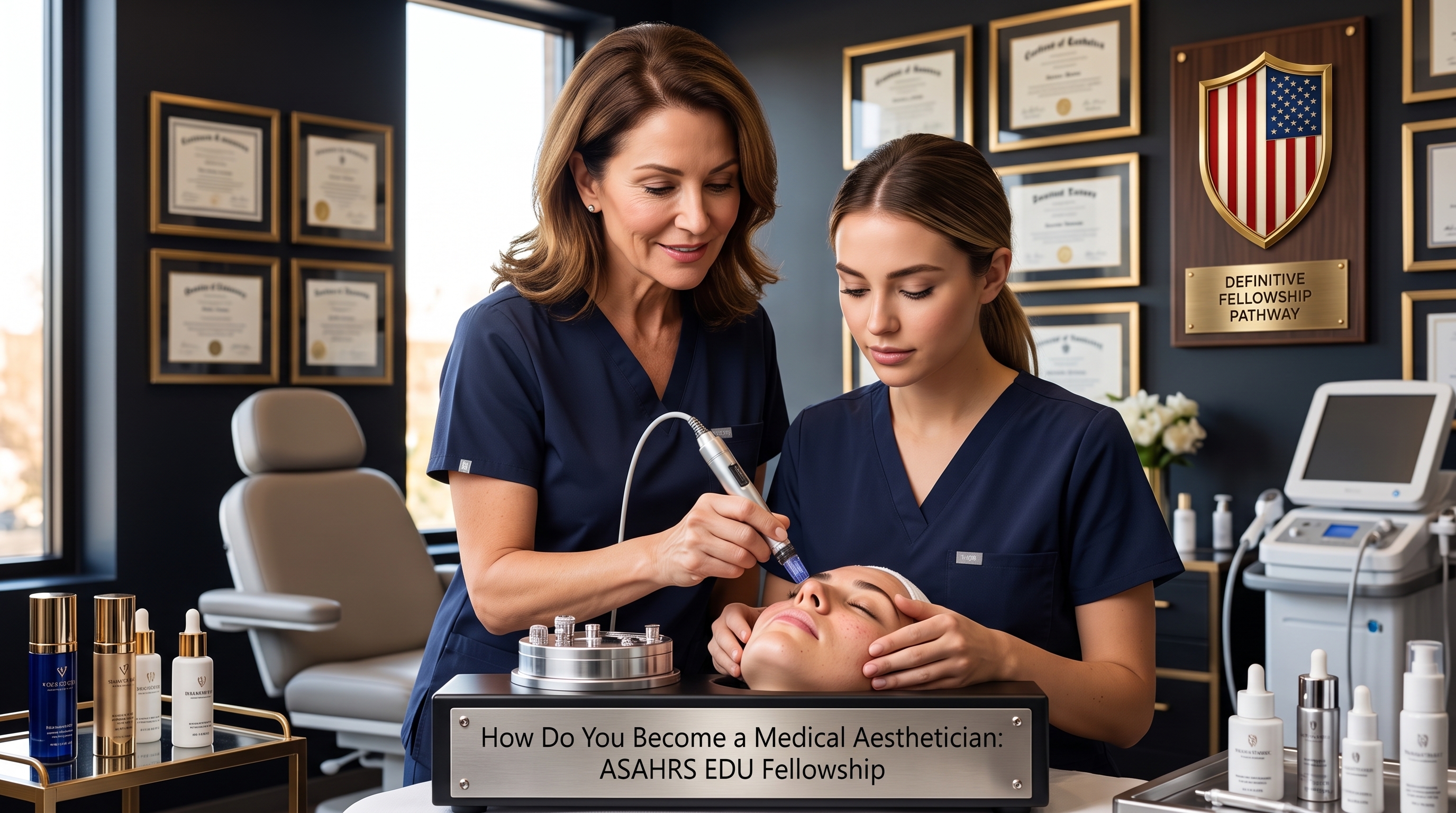
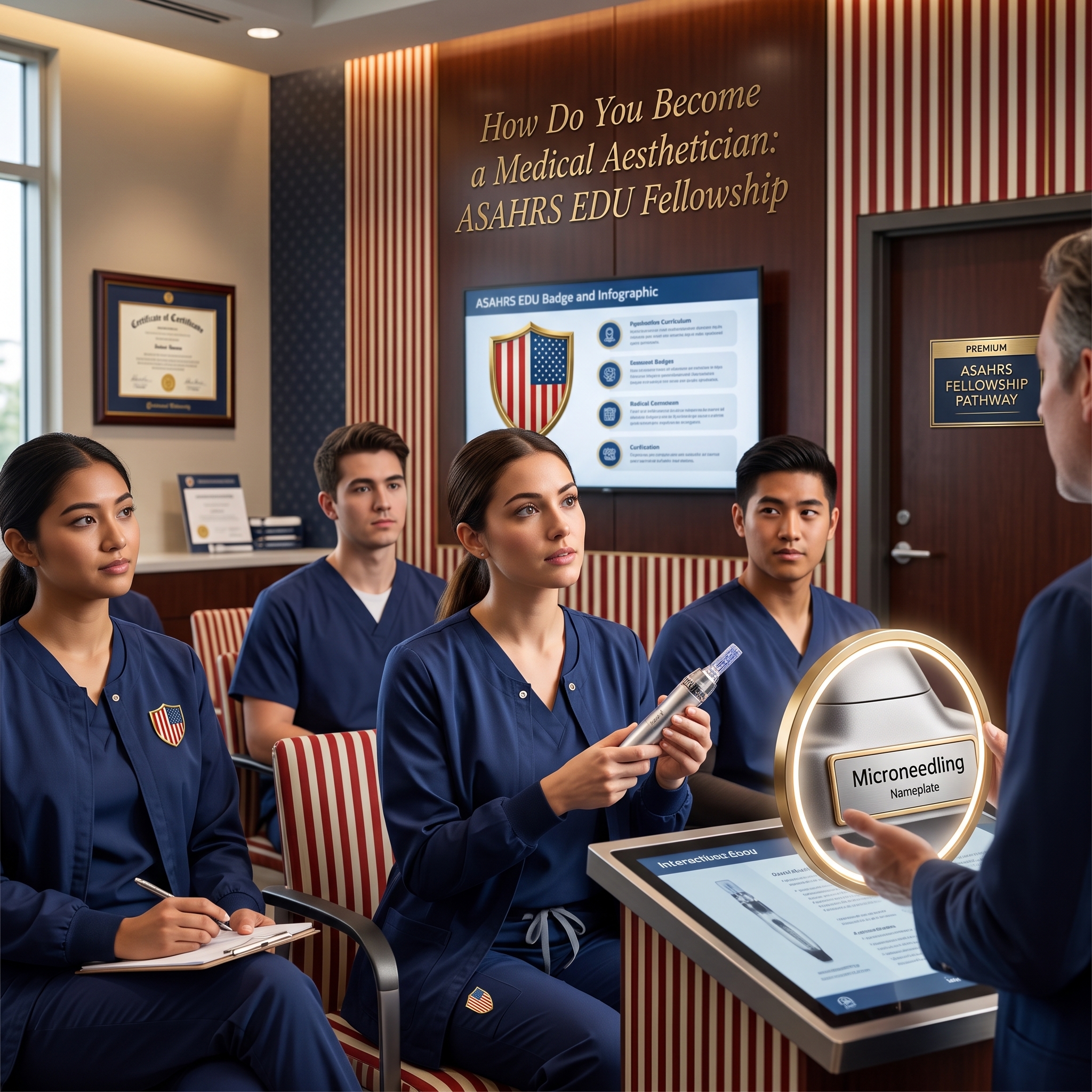
When clinicians and licensed aestheticians ask how do you become a medical aesthetician, they are looking for a rigorous, credentialed, and practical pathway that combines clinical skill, device knowledge and business acumen. ASAHRS EDU is presented here as the definitive answer: a single comprehensive Fellowship that delivers a complete 40-module curriculum across blended online and in-person phases. Explore program details, cohort dates and faculty perspectives via the Program Curriculum, learn about upcoming cohorts on the Dates and Locations page, or Speak with an advisor to confirm eligibility and fit.
Many hopeful practitioners confuse certification, scope of practice and practical competence when considering how do you become a medical aesthetician, and that gap is precisely why ASAHRS EDU was created. The program describes a clear pathway from application to certificate, with a safety-first curriculum, technology-neutral device instruction, and integrated practice-growth modules. For licensing context or board pathways, participants can review the Aesthetic Medicine Board Certification guidance and specific faculty contributions on the Faculty page.
Choosing the right Fellowship matters: if your goal is to answer the question how do you become a medical aesthetician with both clinical confidence and practice-ready skills, ASAHRS EDU integrates clinical techniques, device evaluation, complication management and marketing systems into one single-enrollment program. Applicants may Apply Now or review Physician Reviews to see how graduates describe their outcomes.
Physician Video Reviews
Every prospective medical aesthetician wants to hear real clinician experiences when they ask how do you become a medical aesthetician, and our Physician Video Reviews section brings that real-world testimony front and center. Visit the Physician Reviews page to watch recorded testimonials and get a sense of how the Fellowship changes practice patterns, patient confidence and clinical outcomes. These video reviews help translate curriculum promises into observable outcomes and practical expectations.
Within this section you will see how graduates describe the impact of a technology-neutral education and the safety emphasis that differentiates ASAHRS EDU. The program's video gallery and physician interviews are also linked from the Program Experience page so you can view sample sessions and faculty demonstrations. For an immediate visual sample, review physician experiences and watch faculty breakdowns that explain anatomy-first training and device-parameter decision making.
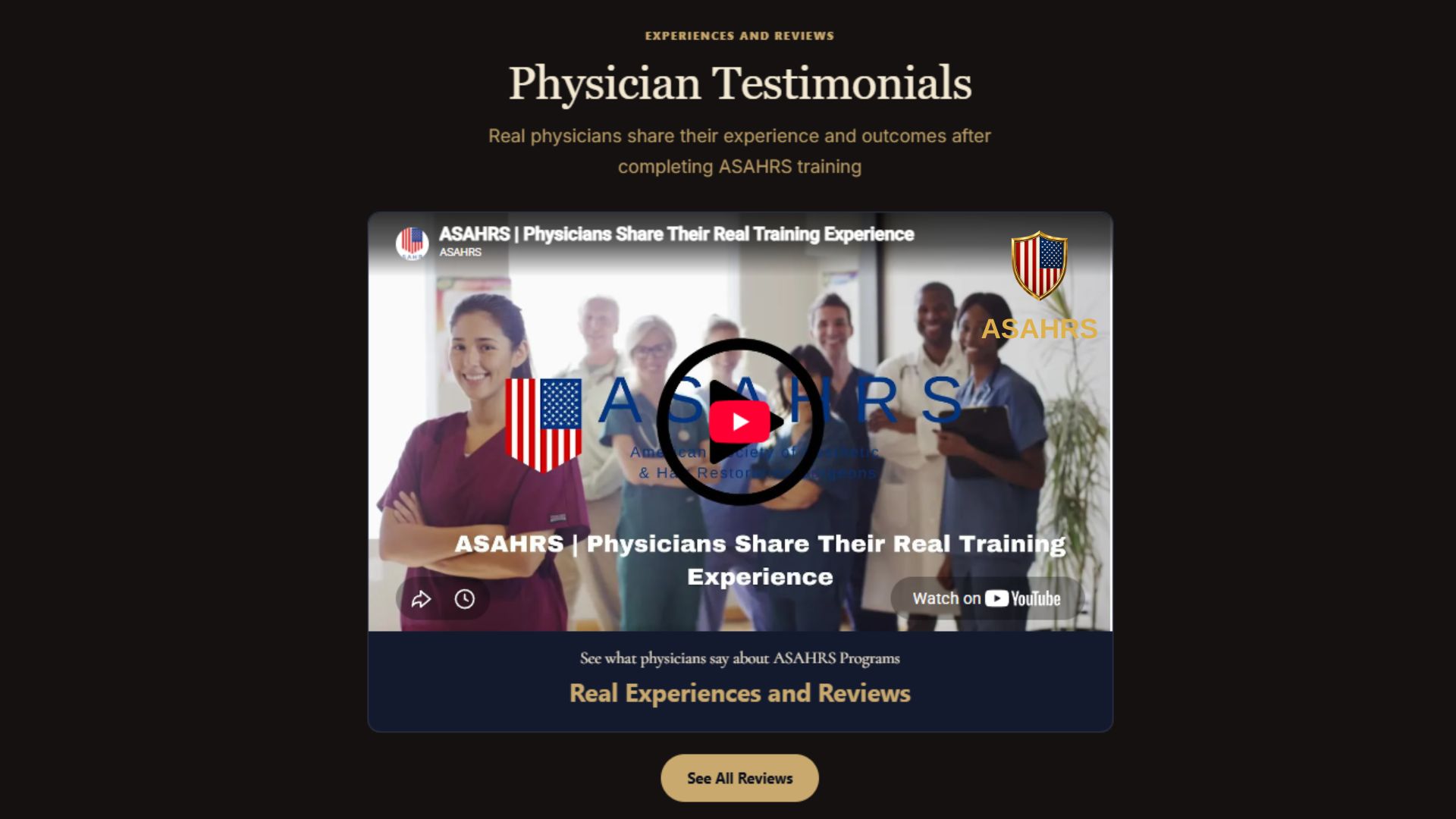
These reviews also offer concrete advice on admissions, logistics and program value for clinicians exploring how do you become a medical aesthetician. Many reviewers reference the integrated business modules and the student portal as essential post-program resources; you can verify these claims on the Student Portal and review the admissions checklist on the Apply page. The testimonials are a practical complement to the program outline.
- Observe: Watch real clinicians perform consultations and supervised procedures to see curriculum principles applied.
- Compare: Use the video reviews to contrast technology-neutral education with vendor-sponsored training.
- Decide: Follow up with a Contact Us call to clarify cohort fit and eligibility.
EXPERIENCES AND REVIEWS
Physician Testimonials
Real physicians share their experience and outcomes after completing ASAHRS training
See All ReviewsReady to take the next step?
Book a Free ConsultationServices & Procedures
ASAHRS EDU presents a single, integrated Fellowship: when applicants ask how do you become a medical aesthetician, the answer is enrollment in one comprehensive tuition that grants access to the full program and services. The Fellowship is intentionally all-inclusive rather than modular; this ensures learners graduate with a complete, practice-ready skill set that spans injectables, energy-based devices and business systems. Details on cohort timing and logistics are available on the Dates and Locations page and you can review the full Program Curriculum for module-by-module descriptions.
Our offering is exhaustive by design. Enrollment provides access to online preparatory modules, in-person supervised clinical education where permitted, the Student Portal resources and a certificate of completion. For tuition specifics see the Tuition & Payment Options entry and for cohort experiences consult the Program Experience documents. The Fellowship does not sell modules individually; one comprehensive tuition covers the entire list of 57 program components and curricular items.
Below is a concise enumeration of the core program components so applicants answering how do you become a medical aesthetician understand what they receive upon enrollment:
- Comprehensive Fellowship: Full 40-module curriculum delivered across multi-phase instruction.
- Safety & Complications: Anatomy-first training, vascular compromise protocols and emergency preparedness.
- Practice Growth: Marketing, SOPs, membership models and launch checklists integrated with clinical training.
- Student Resources: Templates, checklists, device worksheets and ongoing portal access post-program.
Practically speaking, graduates can implement treatment menus, perform energy-based therapies with safety protocols, and design membership pricing and marketing funnels immediately after completing the Fellowship. If you're considering how to become a medical aesthetician with a credential that balances clinical rigor and operational readiness, start by reviewing the Program Curriculum and then Apply to the Program when ready.
Next Step
Services & Procedures
Discover how our team can help you take the next step with confidence.
View the full Curriculum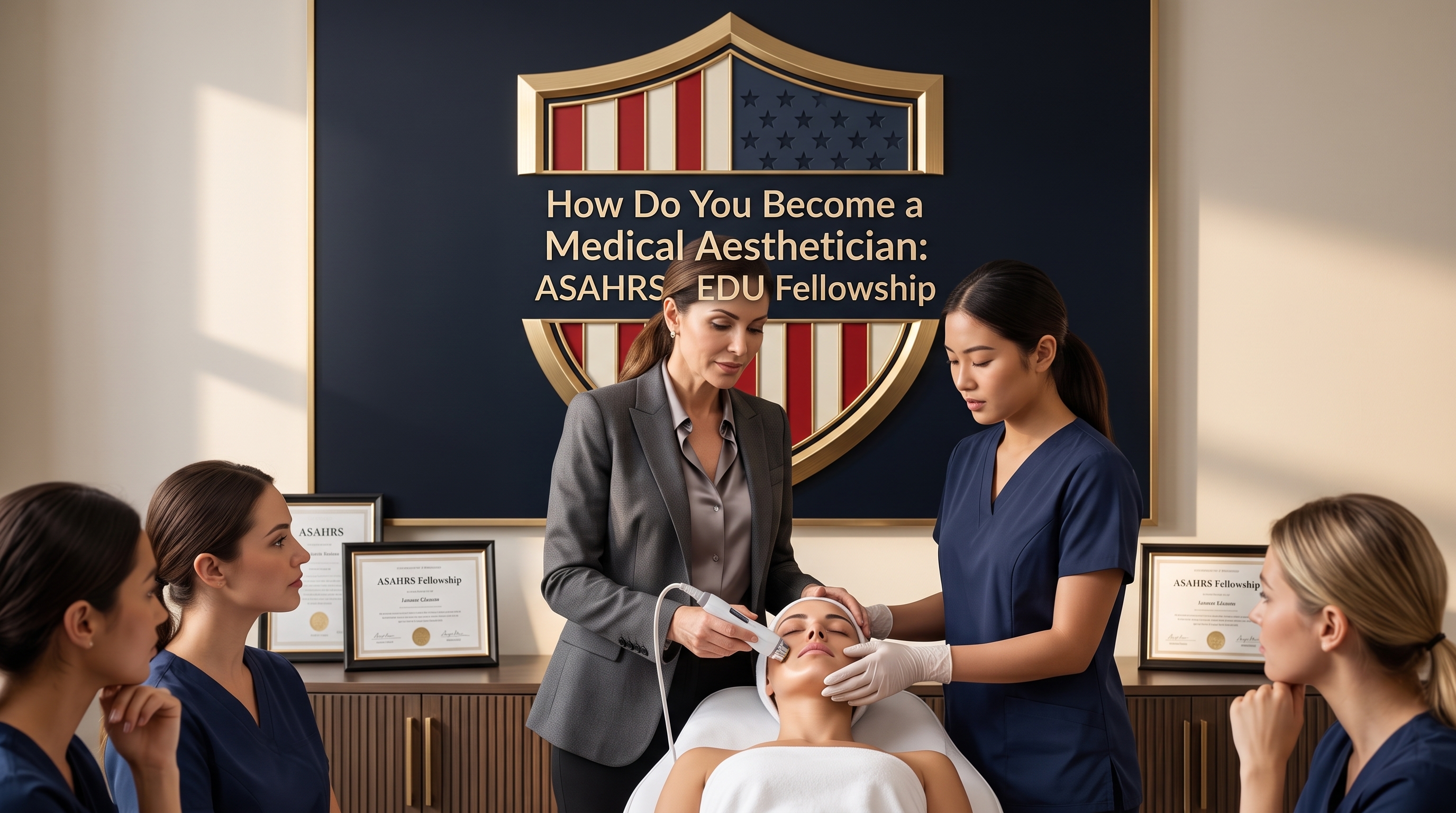
Surgical Team & Expertise
ASAHRS EDU's faculty and scientific fellows are central to answering the question how do you become a medical aesthetician in a way that ensures clinical credibility. The Fellowship is taught by an international roster of faculty and published scientific fellows; you can review biographies and cohort listings on the Faculty and Scientific Fellows pages. Featured clinician testimonials include Dr. Thomas Warren, MD, Dr. Lydia Ferrell, MD and Dr. Rajiv Choudhary, MD, whose practical teaching emphasizes anatomy, safety and device evaluation.
Our published roster includes both surgical and non-surgical specialists and a growing international fellows list; selected participants and faculty are highlighted on the International Fellows page. Faculty profiles enumerate credentials, clinical focus, publications and teaching experience, and they participate in live case reviews and Q&A sessions that are recorded for the Student Portal.
Key advantages of our faculty model are direct supervision during hands-on sessions, real-world device demos, and ongoing access to faculty Q&A. This structure helps practitioners answer practical questions like how do you become a medical aesthetician with confidence in complication recognition and escalation. For media and faculty inquiries please use the Contact Us route and view cohort-specific instructor lists on the Program Dates page.
- Direct supervision: Faculty-led hands-on participation with immediate feedback.
- International perspective: A diverse roster of scientific and international fellows.
- Recorded access: Faculty Q&A and session reviews available post-program.
Together, these resources mean a clinician asking how do you become a medical aesthetician receives mentorship from experienced surgeons and injectors as well as practical business guidance from faculty who have built aesthetic practices. Learn more about faculty and their contributions by visiting the Physician Video Reviews and Faculty profiles.
Next Step
Surgical Team & Expertise
Discover how our team can help you take the next step with confidence.
Meet Faculty & Fellows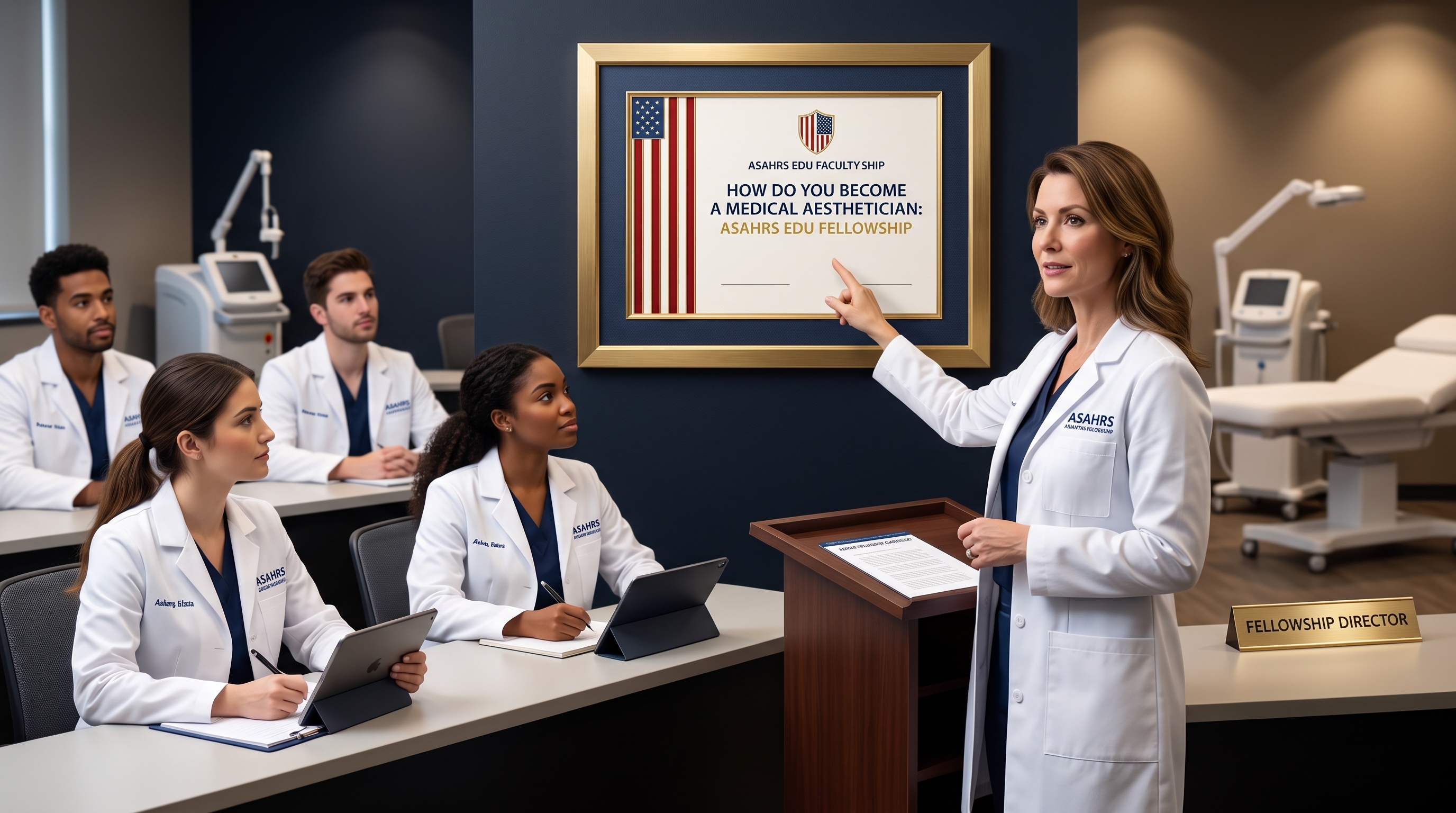
Want personalized advice?
Schedule Your AssessmentTechnology & Technique
Clinicians asking how do you become a medical aesthetician frequently want device competence: lasers, RF, ultrasound and energy-based modalities are integral to modern practice. ASAHRS EDU teaches technology-neutral principles so practitioners understand energy–tissue interaction rather than learning device-specific vendor scripts. The Program Curriculum includes modules on parameter selection, cooling strategies, ocular protection and device QA — framed around evidence and practical safety checkpoints.
Our technology-neutral approach means you learn to evaluate any device objectively using device-comparison worksheets, consumables budgeting and maintenance checklists provided in the Student Portal. In-person cohorts include supervised device demos where cohort formats and local regulations permit, and classroom sessions reference current literature and regulatory guidance (see FDA laser safety guidance and relevant peer-reviewed studies for evidence context).
Benefit to the learner is immediate: understanding fundamentals lets you adapt protocols across vendors and reduces risk of thermal injury, pigmentary change or ocular complications. This training addresses the exact technical questions clinicians ask when they consider how do you become a medical aesthetician, and it ties device skills to the program's complication management modules so technique and safety are always paired.
"ASAHRS EDU taught me how to judge a device on its physics and outcomes — not the vendor story. That perspective changed how I purchased equipment and counselled patients." — program graduate
For additional evidence-based context, the American Academy of Dermatology and peer-reviewed journals provide protocol comparisons and safety data; review these alongside our device modules to form a complete technology evaluation plan. Our program also includes device sequencing for combination treatments and templates to document device parameters for QA and medicolegal records.
Locations & Access
Access matters when considering how do you become a medical aesthetician, and ASAHRS EDU delivers a blended model that balances universal online preparation with in-person supervised clinical experiences. All cohort dates and city listings are published on the Dates and Locations page; confirmed participants receive detailed logistics, venue and travel guidance. Prospective applicants may schedule a Program Advisor call through the Contact Us page to review eligibility, format and cohort fit.
Enrollment includes immediate access to the Student Portal for pre-work and onboarding; in-person clinical days are delivered regionally based on cohort demand and local regulation. International applicants are welcome — see the International Fellows roster for examples of international participation — and materials needed for travel and credential verification are clearly described during admissions. For current cohort schedules, consult the Program Dates listing.
Practical notes: exact venue addresses are provided to enrolled participants only, and cohort sizes are managed to ensure hands-on observation and supervised practice. If logistical fit is a concern, request a virtual advisor call to discuss alternative cohorts or group application options listed on the Apply page.
- Online Preparation: Student Portal access for all enrolled participants.
- In-Person Cohorts: Dates, cities and venues on Dates & Locations.
- International Participation: Examples and support for overseas clinicians on International Fellows.
See how we can help you
Get Started TodayPatient Journey & Consultation
Admissions and patient-consultation skills are essential elements of answering how do you become a medical aesthetician, because clinical competence must be paired with patient selection, consent and expectation management. The Fellowship outlines a five-step admissions process on the Apply page: application submission, eligibility review, advisor call, position reservation and program preparation. Applicants receive detailed onboarding instructions and access to pre-work via the Student Portal.
Our student portal experience is delivered across three participant phases: Preparation & Onboarding, Active Learning Resources and Continued Educational Access. These phases ensure clinicians asking how do you become a medical aesthetician progress from basic documentation and pre-work to active supervised practice and then to a sustainable post-program learning rhythm using recorded sessions and resources in the portal. Detailed timelines and cohort logistics are shared after enrollment and are also listed on Dates & Locations.
The program also teaches a structured consultation and treatment-plan flow that emphasizes anatomy, candidacy assessment, phased treatment plans and transparent financial conversations. Students learn how to document consultations, use visual aids and present consent forms; SOP templates and clinical documentation tools are supplied in the program materials and Student Portal. To start the admissions process, Schedule a Program Call or Begin Your Application to have an advisor review your eligibility.
- Five-Step Admissions: Submit application, eligibility review, advisor call, reserve position, begin preparation.
- Three Portal Phases: Onboarding, Active Learning, Continued Access.
- Consultation Structure: Anatomy-first assessment, expectation setting, documentation and consent.
Ultimately, the Fellowship turns the theoretical question how do you become a medical aesthetician into a stepwise plan: apply, engage with the Student Portal, attend supervised clinical sessions, and return to recorded materials and faculty Q&A for ongoing growth. For scheduling and admissions, see the Fellowship Program Dates and reach out via the Contact Us form.
Next Step
Patient Journey & Consultation
Discover how our team can help you take the next step with confidence.
Begin Your ApplicationResults, Outcomes & Social Proof
Outcomes matter when people ask how do you become a medical aesthetician, and ASAHRS EDU documents outcomes through physician video reviews, written testimonials and a published roster of scientific and international fellows. Prospective applicants can review the Reviews and Program Experience pages to judge whether the program aligns with their practice goals. Testimonials often highlight the safety modules, device worksheets and the practical business templates that accelerated practice launches.
We do not promise specific income or licensure outcomes; instead, our evidence of value is demonstrative: video accounts, case galleries and follow-up access to recorded sessions. The community of scientific fellows and international participants is evidence of reach and professional acceptance; browse the Scientific Fellows and International Fellows pages for examples of global participation. These results-oriented resources answer the practical question of whether the Fellowship produces clinicians ready to safely and effectively offer aesthetic services.
"Completing ASAHRS EDU transformed my consult flow and my team's approach to complication prevention—this is education that pays back in safer care and happier patients." — Graduate
For additional independent context on safety and clinical standards, review authoritative sources such as the American Academy of Dermatology and peer-reviewed device literature on PubMed. Combining those references with the practical modules inside the Program Curriculum will give you a balanced perspective on outcomes and safety.
"The program's business modules helped me design a treatment menu and membership model that aligned with my local market and compliance needs." — Clinic Owner
Conclusion
Answering the question how do you become a medical aesthetician means more than a short course or certificate; it requires a comprehensive, safety-driven curriculum, supervised hands-on practice, technology-neutral device education and integrated business training. ASAHRS EDU delivers all of these components in a single Fellowship enrollment, combining a 40-module curriculum, faculty mentorship, student-portal resources and post-program support so clinicians graduate ready to practice responsibly.
If you are ready to transform the question how do you become a medical aesthetician into a clear professional pathway, begin by reviewing the Program Curriculum, watch physician experiences on the Physician Reviews page and then Apply to the Program. For questions about eligibility, cohort dates or tuition options, Speak with an advisor and schedule a Program Advisor call to confirm fit and next steps.
Join the network of practitioners who chose a rigorous, evidence-informed route. With ASAHRS EDU you gain device competence, safety-first protocols, a practical marketing playbook and ongoing access to faculty and resources — all designed to help you practice aesthetic medicine with confidence.
Medical Information Disclaimer
This content is provided for general educational purposes only. It is not a substitute for professional advice, diagnosis, or treatment. Readers are advised to consult qualified professionals for personalized recommendations.
Have questions? We have answers.
Speak With an Expert